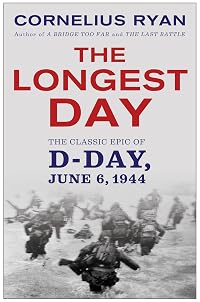
The Longest Day
by Cornelius Ryan
On This Page
Description
The classic account of the Allied invasion of NormandyThe Longest Day is Cornelius Ryan's unsurpassed account of D-day, a book that endures as a masterpiece of military history. In this compelling tale of courage and heroism, glory and tragedy, Ryan painstakingly re-creates the fateful hours that preceded and followed the massive invasion of Normandy to retell the story of an epic battle that would turn the tide against world fascism and free Europe from the grip of Nazi Germany.
This show more book, first published in 1959, is a must for anyone who loves history, as well as for anyone who wants to better understand how free nations prevailed at a time when darkness enshrouded the earth.
. show less
Tags
Recommendations


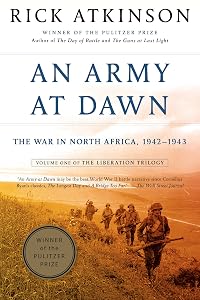
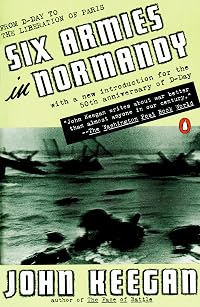
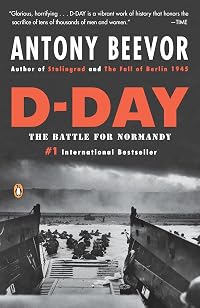
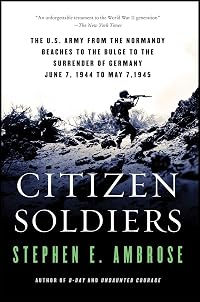




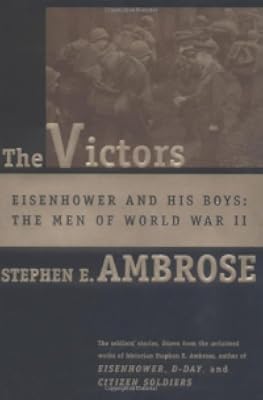
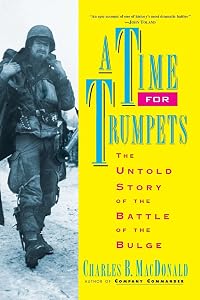
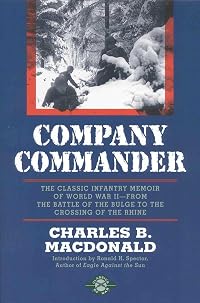
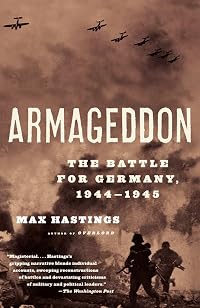

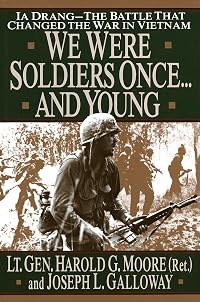
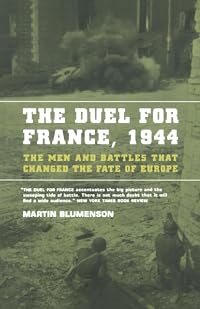
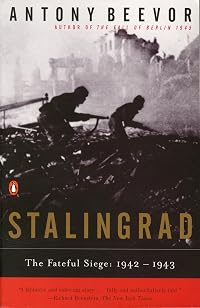
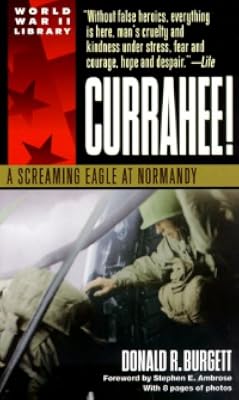

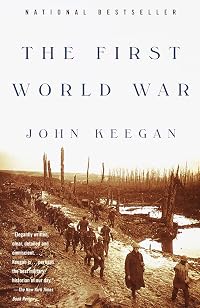

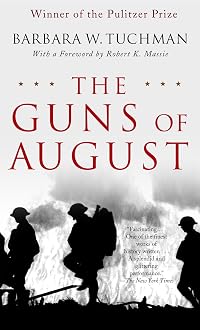
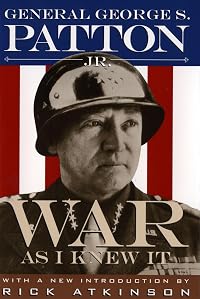

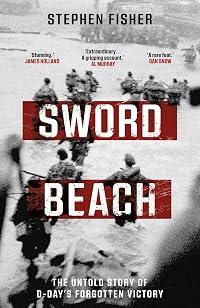


Member Recommendations

phm A great follow-up to The Longest Day about Operation Market Garden -- inspiring, moving, and renews faith in your fellow man.
50
missmaddie Both of these books paint a picture of war through the lives of those who participated in the war effort, whether it be on the front lines like in The Longest Day or back at home like in The Invention of the Information Age.
03
Member Reviews
To this day, one of the best and most researched accounts of D-Day I have ever had the pleasure to read. I really enjoyed how Ryan put in the effort to research and recount, not just the perspective of the Allies, but also of the Nazis, as that is something you don't normally get.
Most say that history is written by the victors, and that's not entirely true. History is written by the survivors, but historians rarely bother to get the perspective of the losing side without being heavily biased. While it is difficult, it's not impossible and Ryan's historical masterpiece is a testament to that, even including snippets of the work of the French Underground. Small glimpses into what was going on in the German high command and at the local show more level with the resistance show the chinks in the armor that allowed the Allied victory and began the downfall of the Nazi party. The Longest Day is a beautiful narrative from countless records, both Allied and Axis, as well as the first hand accounts of 383 souls that were an integral part in one of the most important military battles in the modern world. A must read for history buff and researcher alike. show less
Most say that history is written by the victors, and that's not entirely true. History is written by the survivors, but historians rarely bother to get the perspective of the losing side without being heavily biased. While it is difficult, it's not impossible and Ryan's historical masterpiece is a testament to that, even including snippets of the work of the French Underground. Small glimpses into what was going on in the German high command and at the local show more level with the resistance show the chinks in the armor that allowed the Allied victory and began the downfall of the Nazi party. The Longest Day is a beautiful narrative from countless records, both Allied and Axis, as well as the first hand accounts of 383 souls that were an integral part in one of the most important military battles in the modern world. A must read for history buff and researcher alike. show less
Have you seen the movie? They make such a prominent statement in the opening credits that it is "based on the book by Cornelius Ryan" that I've always had a mind to read it.
After all, while the story is epic, the movie just "tries too hard" in parts. Isn't the breaching of fortress Europe enough of a plot? No! Movie-goers also need a schmaltzy love story too. Surely the book can't be that contrived?
The good news is that it is not. It shares the "tell a story through a mosaic of slice-of-life vignettes" approach, yet does it with compelling integrity. It is gritty and unrelenting; sometimes poignant, but always authentic. The book's most rewarding and fascinating aspect is how it shows in rich detail the diverse impact of action and show more inaction, decision and indecision - and often just plain luck - in the final outcome of the day. show less
After all, while the story is epic, the movie just "tries too hard" in parts. Isn't the breaching of fortress Europe enough of a plot? No! Movie-goers also need a schmaltzy love story too. Surely the book can't be that contrived?
The good news is that it is not. It shares the "tell a story through a mosaic of slice-of-life vignettes" approach, yet does it with compelling integrity. It is gritty and unrelenting; sometimes poignant, but always authentic. The book's most rewarding and fascinating aspect is how it shows in rich detail the diverse impact of action and show more inaction, decision and indecision - and often just plain luck - in the final outcome of the day. show less
This was another book club read and although I've said that I don't like military history, this book is written in a way that I was able to read and learn and even enjoy doing so. Ryan's research was extensive, but he selected and condensed those myriad details into a single approachable volume. I was especially impressed that his research covered both sides of the
The great thing about The Longest Day is its spirit. There's a feeling of embarking on an adventure. It's upbeat and at times very funny. This is not a gritty human tragedy, it still retains some of the can-do sacrifice for the greater good spirit of its time, being published just 15 years after the event. Cornelius Ryan (b. 1920) was of that generation. It's also a valuable work of original research built from 100s of interview with participants on both sides, including higher-level German officers. Yet, it remains entertaining and easy to read like the best creative nonfiction. All around a remarkable book that easily earns 5-stars for longevity as a classic.
I think people view history as a boring and tedious subject because they forget that flesh and blood people are often the backbone of historical events. People who could have been the reason for their very being. Cornelius Ryan didn't forget that the importance of D-Day didn't lie in how it happened but whomade it happen. In his introduction he makes it clear that The Longest Day is not an military account of June 6th, 1944 but "a story of people..." within a 24 hour time span. The detail and clarity with which Ryan writes about seemingly ordinary men and women makes The Longest Day extraordinary.
Have you seen the movie? They make such a prominent statement in the opening credits that it is "based on the book by Cornelius Ryan" that I've always had a mind to read it.
After all, while the story is epic, the movie just "tries too hard" in parts. Isn't the breaching of fortress Europe enough of a plot? No! Movie-goers also need a schmaltzy love story too. Surely the book can't be that contrived?
The good news is that it is not. It shares the "tell a story through a mosaic of slice-of-life vignettes" approach, yet does it with compelling integrity. It is gritty and unrelenting; sometimes poignant, but always authentic. The book's most rewarding and fascinating aspect is how it shows in rich detail the diverse impact of action and show more inaction, decision and indecision - and often just plain luck - in the final outcome of the day. show less
After all, while the story is epic, the movie just "tries too hard" in parts. Isn't the breaching of fortress Europe enough of a plot? No! Movie-goers also need a schmaltzy love story too. Surely the book can't be that contrived?
The good news is that it is not. It shares the "tell a story through a mosaic of slice-of-life vignettes" approach, yet does it with compelling integrity. It is gritty and unrelenting; sometimes poignant, but always authentic. The book's most rewarding and fascinating aspect is how it shows in rich detail the diverse impact of action and show more inaction, decision and indecision - and often just plain luck - in the final outcome of the day. show less
In The Longest Day, Cornelius Ryan chronicles the D-Day invasion of Normandy on June 6, 1944, beginning with the preparations leading up to it in order to set the stage, both on the Allied side and from the perspective of the German defenders.
I found his discussion of Rommel's role in preparing the defenses and how he came to be absent when the invasion actually came particularly fascinating. Rommel is a difficult figure to unravel as he was relatively honorable for a German commander in some respects---e.g., he wasn't a Nazi, didn't get along with Hitler, respected his enemies and treated prisoners relatively well, etc.---but he still put his consummate military skill in the service of Hitler's Nazi regime and was thereby responsible show more for much unnecessary death and suffering on both sides. (In these respects he's somewhat similar to Robert E. Lee in the American Civil War who was anti-slavery and anti-secession but still fought for the Confederacy.) Rommel even designed and deployed some nasty German weapons such as underwater mines used off the beaches of Normandy to blow Allied landing craft out of the water. Ryan does a good job presenting these multifaceted aspects of his character.
The second part of the book deals with the the airborne invasion the night before to pave the way for the amphibious landings on the morning of the 6th, which are the subject of the third part. Both are as compelling as anything Ryan has written, because he has prepared the reader to fully understand what's at stake by establishing the context. This book has definitely given me a much deeper appreciation of the meaning of the events of D-Day, as I'm sure it has done for many others, which is why it is deservedly a classic of military history (along with his other books, A Bridge Too Far and The Last Battle, which I also recommend).
http://www.amazon.com/review/RP9QA6F60N8V5 show less
I found his discussion of Rommel's role in preparing the defenses and how he came to be absent when the invasion actually came particularly fascinating. Rommel is a difficult figure to unravel as he was relatively honorable for a German commander in some respects---e.g., he wasn't a Nazi, didn't get along with Hitler, respected his enemies and treated prisoners relatively well, etc.---but he still put his consummate military skill in the service of Hitler's Nazi regime and was thereby responsible show more for much unnecessary death and suffering on both sides. (In these respects he's somewhat similar to Robert E. Lee in the American Civil War who was anti-slavery and anti-secession but still fought for the Confederacy.) Rommel even designed and deployed some nasty German weapons such as underwater mines used off the beaches of Normandy to blow Allied landing craft out of the water. Ryan does a good job presenting these multifaceted aspects of his character.
The second part of the book deals with the the airborne invasion the night before to pave the way for the amphibious landings on the morning of the 6th, which are the subject of the third part. Both are as compelling as anything Ryan has written, because he has prepared the reader to fully understand what's at stake by establishing the context. This book has definitely given me a much deeper appreciation of the meaning of the events of D-Day, as I'm sure it has done for many others, which is why it is deservedly a classic of military history (along with his other books, A Bridge Too Far and The Last Battle, which I also recommend).
http://www.amazon.com/review/RP9QA6F60N8V5 show less
Members
- Recently Added By
Lists

Stories of War and Revolution
146 works; 55 members

History can be Interesting (or Horrifying or Fun...)
14 works; 2 members

Books I Would Love to See Everyone Read
5 works; 1 member

Books about World War II
241 works; 22 members

Books I Often Recommend
8 works; 1 member

The Well-Educated Mind Reading Challenge
75 works; 7 members

Well-Educated Mind
150 works; 3 members

Pleasant Surprises
18 works; 1 member

Pleasant Surprises: Books That Exceeded Our Expectations
418 works; 142 members

Mustich's 1000 Books to Read Before You Die: A Life Changing List
1,001 works; 20 members
THE WAR ROOM
813 works; 24 members

Books recommended in the history category on FiveBooks.com
329 works; 4 members
Author Information

16+ Works 7,097 Members
Some Editions
Awards and Honors
Awards
Distinctions
Notable Lists
Series
Belongs to Publisher Series
Work Relationships
Is contained in
Has the adaptation
Common Knowledge
- Canonical title
- The Longest Day
- Original title
- The Longest Day
- Original publication date
- 1959
- People/Characters
- Josef "Pips" Priller
- Important places
- Normandy, France; Omaha Beach, Normandy, France; Juno Beach, Normandy, France; Utah Beach, Normandy, France; France
- Important events
- World War II (1939 | 1945); D-Day (1944-06-06); Operation Overlord (1944-06-06 | 1944-08-30)
- Related movies
- D-Day the Sixth of June (1956 | IMDb); The Longest Day (1962 | IMDb); Up from the Beach (1965 | IMDb); Saving Private Ryan (1998 | IMDb); Band of Brothers (2001 | IMDb); D-Day: Normandy 1944 (2014 | IMDb) (show all 7); Day of Days: June 6, 1944 (2014 | IMDb)
- Epigraph
- "Believe me, Lang, the first twenty four hours of the invasion will be decisive... the fate of Germany depends on the outcome... for the Allies, as well as Germany, it will be the longest day."
-Field Marshal Erwin ... (show all)Rommel
to his aide. April 22, 1944 - Dedication
- FOR ALL THE MEN 0F D DAY
- First words
- The village was silent in the damp June morning.
- Quotations
- "Blessent mon coeur d'une langueur monotone."
As they approached Le Havre, Priller climbed for cover in the clouds. They flew for a few more minutes and then broke through. Below them was a fantastic fleet-hundreds of ships of every size and type, stretching endlessly, i... (show all)t seemed, all the way back across the Channel. There was a steady procession of landing craft carrying men toward shore, and Priller could see the white puffs of explosions on and behind the beaches. The sands were black with troops, and tanks and equipment of all sort littered the short line. Priller swept back into the clouds to consider what to do. There were so many planes, so many battleships offshore, so many men on the beaches, that he figured he’d have time for just one pass over the beaches before being shot down. There was no need for radio silence now. Almost lightheartedly, Priller spoke into his microphone. “What a show! What a show!” he said. “There’s everything out here-everywhere you look. Believe me, this is the invasion!” Then he said, “Wodarczyk, were going in! Good luck!” They hurtled down toward the British beaches at over 400 m.p.h., coming in at less than 150 feet. Priller had no time to aim. He simply pressed the button on his control stick and felt his guns pounding. Skimming along just over the tops of men’s heads, he saw upturned, startled faces. On Sword, Commander Philippe Kieffer of the French commandos saw Priller and Wodarczyk coming. He dived for cover. Six German prisoners took advantage of the confusion and tried to bolt. Kieffer’s men promptly mowed them down. On Juno Private Robert Rogge of the Canadian 8th Infantry Brigade heard the scream of the planes and saw them “coming in so low that I could clearly see the pilots’ faces.” He threw himself flat like everyone else, but he was amazed to see one man “calmly standing up, blazing away with a Sten gun.” On the eastern edge of Omaha, Lieutenant (j.g.) William J. Eisemann of the U.S. Navy gasped as the two FW-190s, guns chattering, zoomed down “at less than fifty feet and dodged through the barrage balloons.” And on H.M.S Dunbar, Leading Stoker Robert Dowie watched every antiaircraft gun in the fleet open up on Priller and Wodarczyk. The two fighters flew through it all unscathed, then turned inland and streaked up into the clouds. “Jerry or not,” said Dowie, unbelievingly, “the best of luck to you. You’ve got guts.” - Last words
- (Click to show. Warning: May contain spoilers.)In the Church of St. Samson the bell tolled midnight.
Classifications
- Genres
- History, General Nonfiction, Nonfiction
- DDC/MDS
- 940.542142 — History & geography History of Europe History of Europe 1918- Military history of World War II Campaigns and battles by theatre European theatre France
- LCC
- D756.5 .N6 .R9 — History of Europe, Asia, Africa and Oceania History (General) World War II (1939-1945)
- BISAC
Statistics
- Members
- 2,757
- Popularity
- 6,709
- Reviews
- 53
- Rating
- (4.13)
- Languages
- 16 — Chinese, Czech, Danish, Dutch, English, Estonian, Finnish, French, German, Hungarian, Italian, Norwegian (Bokmål), Polish, Portuguese, Spanish, Swedish
- Media
- Paper, Audiobook, Ebook
- ISBNs
- 87
- ASINs
- 77