On This Page
Description
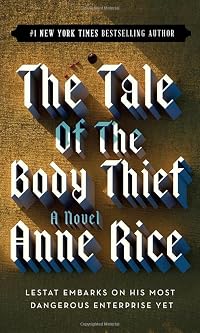
NATIONAL BESTSELLER • In another feat of hypnotic storytelling, Anne Rice continues the extraordinary Vampire Chronicles that began with the now classic Interview with the Vampire and continued with The Vampire Lestat and The Queen of the Damned.Lestat speaks. Vampire-hero, enchanter, seducer of mortals. For centuries he has been a courted prince in the dark and flourishing universe of the living dead. Lestat is alone. And suddenly all his vampire rationale—everything he has show more come to believe and feel safe with—is called into question. In his overwhelming need to destroy his doubts and his loneliness, Lestat embarks on the most dangerous enterprise he has undertaken in all the danger-haunted years of his long existence.
The Tale of the Body Thief is told with the unique—and mesmerizing—passion, power, color, and invention that distinguish the novels of Anne Rice. show less
Tags
Recommendations



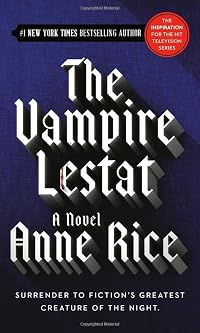
















Member Recommendations

Member Reviews
Back in the day, I read the first three books of Anne Rice’s THE VAMPIRE CHRONICLES, followed by THE MUMMY, and then, though I had multiple books by her on my shelf, I stopped reading her for no good reason. I’ve always been a horror fan, one who has tried their hand at writing some vampire fiction on my own, but Anne Rice and I just went our separate ways. That is until recently, when I picked up my copy of THE TALE OF A BODY THIEF and got back into her world of bloodsucking immortals.
As a writer, I have always had great respect for Anne Rice, not just for her writing, but for the way she promotes herself and her work; she is the classic example of the scribbler who came up with a new take on an old genre and then struck a chord show more with an audience. Back in the 1970’s, she had the notion to write a novel told from the vampire’s point of view, this coming at a time when vampire lovers mostly had to make do with paperback copies of DRACULA, or hybrids like Richard Matheson’s I AM LEGEND. Then came INTERVIEW WITH THE VAMPIRE in 1976, which introduced us to Lestat De Lioncourt, a young French nobleman from the late 18th Century, the first of a whole cast of Undead characters inhabiting a unique universe. INTERVIEW was followed by THE VAMPIRE LESTAT, and QUEEN OF THE DAMNED, and a literary juggernaut was launched. Rice’s books appealed not only to traditional horror fans, but also to readers of romantic fiction and the burgeoning Goth culture, while developing a large gay fan base, and a following among those who just wanted something different. It helped that New Orleans native Rice proved to be a hell of a salesman for own work, becoming a distinct personality in her own right after many appearances on TV talk shows which highlighted her long raven black hair, and equally dark attire; many fans thought she was a vampire herself; detractors said she was so deluded she actually thought she was creature of the night. Anyway, through good hard work, she made herself into a mini industry that has produced 35 books and sold nearly a 100 million copies. And her influence has been enormous, without Rice, there would never have been an Angel or Spike, nor Edward Cullen either for that matter.
THE TALE OF THE BODY THIEF came out in 1991, a couple of years after THE QUEEN OF THE DAMNED, and at the time, many fans thought it was something of a letdown after the epic arc of the first three novels, still, it was a huge bestseller. For me, diving back into the Vampire Chronicles after all this time, BODY THIEF was an easy entrance back into Rice’s world, as it does not force the reader to get back up to speed with the huge cast from the earlier books. Lestat is back front and center, and there is an appearance by Louis, a New Orleans bloodsucker made by Lestat two centuries before, along with the ghost of Claudia, the vampire child they created and then lost. It seems that after the near apocalyptic events of QUEEN, Lestat has fallen into despair and disillusionment with his vampire existence, cutting himself off from his fellow bloodsuckers; his only friend is the elderly mortal David Talbot, the leader of the Talemasca, a group that studies the supernatural. The lonely Lestat is approached by Raglan James, a young man who claims he has the ability to switch bodies, telling Lestat that he is really a 70 some year old man who has purloined the young body he now inhabits after hijacking it in a British mental institution, where it was in a fatal coma. James has a proposition for Lestat, they switch bodies for a few days, so that Lestat may regain his humanity, while James can enjoy being inside the immensely powerful body of a vampire for a short time. What could possibly go wrong? Though Lestat is warned by Louis and David that this is the worst of all possible ideas, and the reader can clearly see that James is bad news, the offer prompts an itch that Lestat just has to scratch.
The best part of the book is the middle part where Lestat, now in a human body, finds that being a mortal is not quite what he remembered it to be; not with a bout of pneumonia, and learning how to take a dump again, among other indignities. But he also finds love with a nun on leave from her order, and gets to enjoy some good hot sex. Of course James is a kleptomaniac with no intention of returning the vampire’s body; Lestat turns to his Undead compatriots for help and is spurned, only his mortal friend, David, will aide him, and together they set out to track James down and return Lestat to his rightful body. But no plan ever works out as anticipated, and the plot takes some twists and turns before it is all resolved. There is one ending, where the reader is warned that they may regret going any further, but it is in this final chapter where we are reminded why Lestat is one of modern fictions most renowned anti-heroes.
A lot of this book is Rice at her best, especially when Lestat and David have lengthy conversations about God and the Devil, and the nature of good and evil, this is something Rice is famous for, and it is clear Lestat is her alter ego, especially when he talks about what he has learned after observing the human condition for two centuries. Truly her vampires have a marvelous gift of gab; it is one of the hallmarks of her style. I may not always agree with what Rice is saying through her characters, but it is always worth hearing. The other secret to the success of her vampire books is that she surreptitiously makes the reader feel as though they are one of the beautiful immortals themselves, that when Lestat is talking to them in the first person, he is conversing with one of his own kind.
Reading it today, there are some things about BODY THIEF that badly date it, such as mentions of faxes and laser disks, and the absence of cell phones and the internet; there is a sexual encounter between Lestat and a waitress that might not pass muster today, and I doubt it would get past an editor in its present form.
But for me, reading THE TALE OF THE BODY THIEF was like getting reacquainted with members of a family you knew years ago, Lestat being a brother with many siblings to catch up with, while at the center is a matriarch, her hair a little grayer with the passage of time. Anne Rice’s writing has taken some interesting turns in the years since BODY THIEF came out, and now that I’m back in the coven, so to speak, I look forward to reading them all. show less
As a writer, I have always had great respect for Anne Rice, not just for her writing, but for the way she promotes herself and her work; she is the classic example of the scribbler who came up with a new take on an old genre and then struck a chord show more with an audience. Back in the 1970’s, she had the notion to write a novel told from the vampire’s point of view, this coming at a time when vampire lovers mostly had to make do with paperback copies of DRACULA, or hybrids like Richard Matheson’s I AM LEGEND. Then came INTERVIEW WITH THE VAMPIRE in 1976, which introduced us to Lestat De Lioncourt, a young French nobleman from the late 18th Century, the first of a whole cast of Undead characters inhabiting a unique universe. INTERVIEW was followed by THE VAMPIRE LESTAT, and QUEEN OF THE DAMNED, and a literary juggernaut was launched. Rice’s books appealed not only to traditional horror fans, but also to readers of romantic fiction and the burgeoning Goth culture, while developing a large gay fan base, and a following among those who just wanted something different. It helped that New Orleans native Rice proved to be a hell of a salesman for own work, becoming a distinct personality in her own right after many appearances on TV talk shows which highlighted her long raven black hair, and equally dark attire; many fans thought she was a vampire herself; detractors said she was so deluded she actually thought she was creature of the night. Anyway, through good hard work, she made herself into a mini industry that has produced 35 books and sold nearly a 100 million copies. And her influence has been enormous, without Rice, there would never have been an Angel or Spike, nor Edward Cullen either for that matter.
THE TALE OF THE BODY THIEF came out in 1991, a couple of years after THE QUEEN OF THE DAMNED, and at the time, many fans thought it was something of a letdown after the epic arc of the first three novels, still, it was a huge bestseller. For me, diving back into the Vampire Chronicles after all this time, BODY THIEF was an easy entrance back into Rice’s world, as it does not force the reader to get back up to speed with the huge cast from the earlier books. Lestat is back front and center, and there is an appearance by Louis, a New Orleans bloodsucker made by Lestat two centuries before, along with the ghost of Claudia, the vampire child they created and then lost. It seems that after the near apocalyptic events of QUEEN, Lestat has fallen into despair and disillusionment with his vampire existence, cutting himself off from his fellow bloodsuckers; his only friend is the elderly mortal David Talbot, the leader of the Talemasca, a group that studies the supernatural. The lonely Lestat is approached by Raglan James, a young man who claims he has the ability to switch bodies, telling Lestat that he is really a 70 some year old man who has purloined the young body he now inhabits after hijacking it in a British mental institution, where it was in a fatal coma. James has a proposition for Lestat, they switch bodies for a few days, so that Lestat may regain his humanity, while James can enjoy being inside the immensely powerful body of a vampire for a short time. What could possibly go wrong? Though Lestat is warned by Louis and David that this is the worst of all possible ideas, and the reader can clearly see that James is bad news, the offer prompts an itch that Lestat just has to scratch.
The best part of the book is the middle part where Lestat, now in a human body, finds that being a mortal is not quite what he remembered it to be; not with a bout of pneumonia, and learning how to take a dump again, among other indignities. But he also finds love with a nun on leave from her order, and gets to enjoy some good hot sex. Of course James is a kleptomaniac with no intention of returning the vampire’s body; Lestat turns to his Undead compatriots for help and is spurned, only his mortal friend, David, will aide him, and together they set out to track James down and return Lestat to his rightful body. But no plan ever works out as anticipated, and the plot takes some twists and turns before it is all resolved. There is one ending, where the reader is warned that they may regret going any further, but it is in this final chapter where we are reminded why Lestat is one of modern fictions most renowned anti-heroes.
A lot of this book is Rice at her best, especially when Lestat and David have lengthy conversations about God and the Devil, and the nature of good and evil, this is something Rice is famous for, and it is clear Lestat is her alter ego, especially when he talks about what he has learned after observing the human condition for two centuries. Truly her vampires have a marvelous gift of gab; it is one of the hallmarks of her style. I may not always agree with what Rice is saying through her characters, but it is always worth hearing. The other secret to the success of her vampire books is that she surreptitiously makes the reader feel as though they are one of the beautiful immortals themselves, that when Lestat is talking to them in the first person, he is conversing with one of his own kind.
Reading it today, there are some things about BODY THIEF that badly date it, such as mentions of faxes and laser disks, and the absence of cell phones and the internet; there is a sexual encounter between Lestat and a waitress that might not pass muster today, and I doubt it would get past an editor in its present form.
But for me, reading THE TALE OF THE BODY THIEF was like getting reacquainted with members of a family you knew years ago, Lestat being a brother with many siblings to catch up with, while at the center is a matriarch, her hair a little grayer with the passage of time. Anne Rice’s writing has taken some interesting turns in the years since BODY THIEF came out, and now that I’m back in the coven, so to speak, I look forward to reading them all. show less
My greatest sin has always been that I have a wonderful time being myself. My guilt is always there; my moral abhorrence for myself is always there; but I have a good time.
2.5 or 3 stars
I have mixed feelings on this book. Like book 3, there were parts I really liked and parts where I thought the book was terribly slow and dragging.
A guy asks Lestat to swap bodies with him, to trade the body of an average mortal man for the body of a centuries old vampire with skills Akasha taught him. Everybody he talks to says it’s an awful idea.
And Lestat, the whole dumbass, says yes. Truly no self preservation, this man.
Lestat is pretty much the author’s favourite in every book I’ve read except the first one. Everyone is obsessed with him and show more he can do everything. We get it, we get it! Lestat is the specialest little boy who ever lived and died!
In a way I was glad to see him get some well-deserved suffering, (Well well well, if it isn’t the consequences of your own actions), but he’s also annoyingly whiny about it all. Man, Lestat sure likes to hear himself talk….
He promises action in the prologue/monologue, but it takes until 20% to meet the mysterious body swapper at 40% for the swap to occur.
However, he can be a very entertaining immortal drama queen. Lestat struggling to be human was probably the funniest this series has ever been. He felt like dying from a bite of hot spaghetti and has no concept of money. He also randomly adopts a dog? No reason whatsoever.
Now, this is plain stupidity, I thought, and it was perhaps my fifteenth act of plain stupidity.
“Of course I deserve it,” I said, stroking Mojo. “That’s the simplest thing about dealing with me, apparently. I always deserve the worst! The worst disloyalty, the worst betrayal, the worst abandonment! Lestat the scoundrel.”
Whatever’s going on up there in his head needs to be studied.
Some of my favourite things were the connections to books 1 and 2.
Lestat and Louis fight over their books! Louis painted Lestat as his antagonist and Lestat straight up claimed Louis’s memoir is flawed in his own. I wanted the fallout of their contradicting published books so badly! None of that happened in book 3, so I was happy to read it here.
I also loved Lestat’s memories of Claudia. She and Louis were the main characters in book 1 and I’m glad she didn’t just… disappear from everyone’s minds the way the twins aren’t relevant anymore, or how interview boy wasn’t in Armand’s book.
I still have some questions. Did the humans in this world ever connect the dots between the rockstar and the books? Aren’t they both bestselling author’s? Lestat is off to new adventures, but what about the big cast from book 3? What is Armand up to these days? Does Gabrielle know about her son’s colossal misadventure?
Maybe they’re both absent because they don’t want to deal with Lestat. Louis and Marius said “not my problem” and to be honest, I can’t blame them.
Also: Lestat sexually assaults a woman and cries about it, then later vampirically assaults a man and cries about it again.
Both the woman he raped and the man whose body David Talbot ends up in are nameless and of little consequence and that feels weird. Both a rape and body stealing are big things that warrant a significant place in the story, not just as something for Lestat to feel guilty over, but in their own right.
The book spends who-knows-how-many pages debating God, morality and souls. Why are these two people, with souls of their own, not as important?
In the end Lestat learned nothing and he kinda deserved that show less
2.5 or 3 stars
I have mixed feelings on this book. Like book 3, there were parts I really liked and parts where I thought the book was terribly slow and dragging.
A guy asks Lestat to swap bodies with him, to trade the body of an average mortal man for the body of a centuries old vampire with skills Akasha taught him. Everybody he talks to says it’s an awful idea.
And Lestat, the whole dumbass, says yes. Truly no self preservation, this man.
Lestat is pretty much the author’s favourite in every book I’ve read except the first one. Everyone is obsessed with him and show more he can do everything. We get it, we get it! Lestat is the specialest little boy who ever lived and died!
In a way I was glad to see him get some well-deserved suffering, (Well well well, if it isn’t the consequences of your own actions), but he’s also annoyingly whiny about it all. Man, Lestat sure likes to hear himself talk….
He promises action in the prologue/monologue, but it takes until 20% to meet the mysterious body swapper at 40% for the swap to occur.
However, he can be a very entertaining immortal drama queen. Lestat struggling to be human was probably the funniest this series has ever been. He felt like dying from a bite of hot spaghetti and has no concept of money. He also randomly adopts a dog? No reason whatsoever.
Now, this is plain stupidity, I thought, and it was perhaps my fifteenth act of plain stupidity.
“Of course I deserve it,” I said, stroking Mojo. “That’s the simplest thing about dealing with me, apparently. I always deserve the worst! The worst disloyalty, the worst betrayal, the worst abandonment! Lestat the scoundrel.”
Whatever’s going on up there in his head needs to be studied.
Some of my favourite things were the connections to books 1 and 2.
Lestat and Louis fight over their books! Louis painted Lestat as his antagonist and Lestat straight up claimed Louis’s memoir is flawed in his own. I wanted the fallout of their contradicting published books so badly! None of that happened in book 3, so I was happy to read it here.
I also loved Lestat’s memories of Claudia. She and Louis were the main characters in book 1 and I’m glad she didn’t just… disappear from everyone’s minds the way the twins aren’t relevant anymore, or how interview boy wasn’t in Armand’s book.
I still have some questions. Did the humans in this world ever connect the dots between the rockstar and the books? Aren’t they both bestselling author’s? Lestat is off to new adventures, but what about the big cast from book 3? What is Armand up to these days? Does Gabrielle know about her son’s colossal misadventure?
Maybe they’re both absent because they don’t want to deal with Lestat. Louis and Marius said “not my problem” and to be honest, I can’t blame them.
Also: Lestat sexually assaults a woman and cries about it, then later vampirically assaults a man and cries about it again.
Both the woman he raped and the man whose body David Talbot ends up in are nameless and of little consequence and that feels weird. Both a rape and body stealing are big things that warrant a significant place in the story, not just as something for Lestat to feel guilty over, but in their own right.
The book spends who-knows-how-many pages debating God, morality and souls. Why are these two people, with souls of their own, not as important?
In the end Lestat learned nothing and he kinda deserved that show less
The fourth Vampire Chronicles book is as far as I ever intend to go, and boy is it a doozy. Lestat is quite possibly the dumbest immortal alive, and would 100% fall for email scams about bitcoin. It's a fun romp through the brat prince realising that actually, no, he does NOT want to be human again, and causing problems for all his loved ones along the way.
So… this is very Ricean. Our hero Lestat has the chance to be human again. He takes it, of course, despite believing that no one could refuse the dark gift. He thinks it would be temporary, but this is clearly wishful thinking in the face of his unreliable body thief. He’s also haunted by dreams of Claudia.
Trapped in this mortal body, Lestat is horrified by peeing and pooping and illness and immediately asks Louis to turn him back.
Louis refuses, of course, because he is Louis and would only agree to the bargain if it were for keeps. ;) He would never take Lestat’s new humanity away and curse him to the dark.
Much pondering of vampire nature. Much pondering of God, or lack of same. An affair with a nun, who has lost her faith but show more not her desire to serve goodness. Much Rice, thematically.
And Lestat finally gets to choose.
If you like meandering meditations on good and evil, you’ll like this. And if you don’t, why are you reading Anne Rice? ;) show less
Trapped in this mortal body, Lestat is horrified by peeing and pooping and illness and immediately asks Louis to turn him back.
Louis refuses, of course, because he is Louis and would only agree to the bargain if it were for keeps. ;) He would never take Lestat’s new humanity away and curse him to the dark.
Much pondering of vampire nature. Much pondering of God, or lack of same. An affair with a nun, who has lost her faith but show more not her desire to serve goodness. Much Rice, thematically.
And Lestat finally gets to choose.
If you like meandering meditations on good and evil, you’ll like this. And if you don’t, why are you reading Anne Rice? ;) show less
One of my favorite Anne Rices. I think her interestingness peaked in this book, and the two Lestat books on either side of it - The Vampire Lestat and Memnoch the Devil. Before that she was too straightforward, and after that too weird, but this hits the sweet spot in between. Lestat, always craving the new experience, trades bodies with a mortal. Unfortunately, when the time is up, the mortal doesn't want to give his body back.
Lestat has become thoroughly disillusioned with his life as a vampire. Isolated, bored and generally dissatisfied he tries to end it all – which doesn’t work out as planned given his incredible power level
When someone makes him an offer he can’t refuse, though he really really really should as multiple people tell him. But since when has the Brat Prince listened to the advice of others?
He agrees to the Body Thief’s proposal – he will swap his incredible vampiric body for that of the Body Thief’s human one – letting Lestat experience humanity while the Body Thief, Raglan, a deeply unsavoury character, plays around with Lestat’s amazing powers
It does not go well.
I love that Lestat becomes human and hates it! Especially show more since this follows both Louis and Lestat playing the “woe, I wanna be human!” game – and since Louis is probably responsible for an entire genre worth of vampires moodily staring into the night and cursing their immortal super powers. I love how perfectly Lestat sums up just how much better it is to be a vampire, how awesome being a vampire is, how incredible his powers are – and no, getting to see the pretty sunshine does not make up for having to do all the nasty organic things that he hasn’t had to deal with for the best part of two centuries. I love how gross he finds the daily life of being a human. I love how hard he finds it, how painful, how difficult.
Yes, he looks hellaciously whiny when he complains to Louis about it, but it is a powerful moment – Lestat (and Louis) have reached such a power level that being human is beyond their conception. The struggles of humanity are insurmountable tortures to Lestat because he is so separated from them.
The real world parallels for this are many and deep (for example, the number of extremely privileged, wealthy people putting marginalised cultures, experiences et al on shiny pedestals without even beginning to understand what it actually means to be those people) and it’s an extremely well maintained theme throughout.
Are there things about being human Lestat likes? Yes. Is being a vampire an inherently lonely experience? That’s extremely clear as the human Lestat makes his connections (which fall apart when he becomes a vampire) but it has become clear over and over (and is overtly stated in this book) that the few remaining vampires in the world simply cannot get along for any great length of time. Of course there are attractions, but those can only be realised by ignoring a huge wealth of pain and hardship and difficulty that being a human brings compared to the vast abilities of vampiredome.
While I generally find the endless philosophical debates in this series incredibly, painfully dull, I actually really liked Lestat and Gretchen (not so much the fever dreams) with their delving into what is goodness, what makes a life worthwhile, what is a good life. It’s a big, meaty, thought provoking topic which was handled quite well – albeit long windedly. I also liked Gretchen’s point about her celibacy – she views celibacy as a way of ensuring all of her life can be dedicated to helping others without the ties or distractions of a relationship. As her growing preoccupation with her celibacy and desire to have sex grew, she recognised that as a distraction in and of itself and therefore the moral choice was, basically, to scratch the itch. It’s a fascinating moral viewpoint – the whole conversation really works (except for the repetition).
I like the development of the antagonist as well, for all his cunning his flaws are written large – and there’s a lot of thought gone into the whole concept of stealing a body; after all, would we really know how to move a body that is a different shape from our own? Let alone a body with super powers? I imagine, given Lestat’s incredible abilities, the only sensible response at controlling that power for the first time is some kind of terror – like a new driver suddenly behind the wheel of a Maserati.
Then there’s the negative. Firstly, the standard problem I’ve complained about with every book in this series – this book doesn’t need an editor, it needs to be assaulted by a drunk man with a chainsaw who’ll just chop huge chunks of it away quite randomly. Again, this book could have been half, a third as long as it actually is. We had a lot of random Claudia hallucinations that just seem to be there to fill up space. Lestat begins the book all suicidal which we’re told about at length, including his suicide plan… he then gets over it. After an interminable amount of time bemoaning his existence and trying to end it all, he decides he’s done that now and moves on – the whole thing feels like a painfully pointless way to give Lestat a tan.
In fact, the whole beginning of the book is like some kind of test of reader dedication to see if they have the mettle to keep reading. Beyond the Claudia hallucinations, unnecessary recaps and random not!suicide, we have a truly horrendously long conversation between David and Lestat that covers nothing of any real relevance – except maybe to try and tell us that these two are bestest buds ever, even though none of the books felt the need to develop that. Oh and Lestat kills serial killers and romances and kills old people for some unknown reason which, despite having zero plot relevance, required so many many many pages to describe. I also have a repeated notes with a growing number of exclamation marks saying “ENOUGH WITH THE BLOOD REMBRANDT!” I think a full quarter of the beginning of this book is spent on utter pointlessness.
Unfortunately this book moved Lestat from a character I found somewhat intriguing to one I found infuriating in the extreme. If something were to brutally murder Lestat I wouldn’t feel sad, I would smugly declare he got what was coming to him.
Lestat has the impulse control of a small child – no, small children show greater restraint. And not just in agreeing to Raglan’s deal – but in the end with David, in his interactions with Louis, most of what he did as a human, his early book angst, in fact, just about everything Lestat does, he does on a whim with little to no thought of the consequences. And he always has (Claudia is a classic example).
I could handle that – if he learned. If for one millisecond he learned. If he once decided to plan or consider or look back on his past mistakes or if he showed even a modicum of character growth. He doesn’t. Ever.
Read More show less
When someone makes him an offer he can’t refuse, though he really really really should as multiple people tell him. But since when has the Brat Prince listened to the advice of others?
He agrees to the Body Thief’s proposal – he will swap his incredible vampiric body for that of the Body Thief’s human one – letting Lestat experience humanity while the Body Thief, Raglan, a deeply unsavoury character, plays around with Lestat’s amazing powers
It does not go well.
I love that Lestat becomes human and hates it! Especially show more since this follows both Louis and Lestat playing the “woe, I wanna be human!” game – and since Louis is probably responsible for an entire genre worth of vampires moodily staring into the night and cursing their immortal super powers. I love how perfectly Lestat sums up just how much better it is to be a vampire, how awesome being a vampire is, how incredible his powers are – and no, getting to see the pretty sunshine does not make up for having to do all the nasty organic things that he hasn’t had to deal with for the best part of two centuries. I love how gross he finds the daily life of being a human. I love how hard he finds it, how painful, how difficult.
Yes, he looks hellaciously whiny when he complains to Louis about it, but it is a powerful moment – Lestat (and Louis) have reached such a power level that being human is beyond their conception. The struggles of humanity are insurmountable tortures to Lestat because he is so separated from them.
The real world parallels for this are many and deep (for example, the number of extremely privileged, wealthy people putting marginalised cultures, experiences et al on shiny pedestals without even beginning to understand what it actually means to be those people) and it’s an extremely well maintained theme throughout.
Are there things about being human Lestat likes? Yes. Is being a vampire an inherently lonely experience? That’s extremely clear as the human Lestat makes his connections (which fall apart when he becomes a vampire) but it has become clear over and over (and is overtly stated in this book) that the few remaining vampires in the world simply cannot get along for any great length of time. Of course there are attractions, but those can only be realised by ignoring a huge wealth of pain and hardship and difficulty that being a human brings compared to the vast abilities of vampiredome.
While I generally find the endless philosophical debates in this series incredibly, painfully dull, I actually really liked Lestat and Gretchen (not so much the fever dreams) with their delving into what is goodness, what makes a life worthwhile, what is a good life. It’s a big, meaty, thought provoking topic which was handled quite well – albeit long windedly. I also liked Gretchen’s point about her celibacy – she views celibacy as a way of ensuring all of her life can be dedicated to helping others without the ties or distractions of a relationship. As her growing preoccupation with her celibacy and desire to have sex grew, she recognised that as a distraction in and of itself and therefore the moral choice was, basically, to scratch the itch. It’s a fascinating moral viewpoint – the whole conversation really works (except for the repetition).
I like the development of the antagonist as well, for all his cunning his flaws are written large – and there’s a lot of thought gone into the whole concept of stealing a body; after all, would we really know how to move a body that is a different shape from our own? Let alone a body with super powers? I imagine, given Lestat’s incredible abilities, the only sensible response at controlling that power for the first time is some kind of terror – like a new driver suddenly behind the wheel of a Maserati.
Then there’s the negative. Firstly, the standard problem I’ve complained about with every book in this series – this book doesn’t need an editor, it needs to be assaulted by a drunk man with a chainsaw who’ll just chop huge chunks of it away quite randomly. Again, this book could have been half, a third as long as it actually is. We had a lot of random Claudia hallucinations that just seem to be there to fill up space. Lestat begins the book all suicidal which we’re told about at length, including his suicide plan… he then gets over it. After an interminable amount of time bemoaning his existence and trying to end it all, he decides he’s done that now and moves on – the whole thing feels like a painfully pointless way to give Lestat a tan.
In fact, the whole beginning of the book is like some kind of test of reader dedication to see if they have the mettle to keep reading. Beyond the Claudia hallucinations, unnecessary recaps and random not!suicide, we have a truly horrendously long conversation between David and Lestat that covers nothing of any real relevance – except maybe to try and tell us that these two are bestest buds ever, even though none of the books felt the need to develop that. Oh and Lestat kills serial killers and romances and kills old people for some unknown reason which, despite having zero plot relevance, required so many many many pages to describe. I also have a repeated notes with a growing number of exclamation marks saying “ENOUGH WITH THE BLOOD REMBRANDT!” I think a full quarter of the beginning of this book is spent on utter pointlessness.
Unfortunately this book moved Lestat from a character I found somewhat intriguing to one I found infuriating in the extreme. If something were to brutally murder Lestat I wouldn’t feel sad, I would smugly declare he got what was coming to him.
Lestat has the impulse control of a small child – no, small children show greater restraint. And not just in agreeing to Raglan’s deal – but in the end with David, in his interactions with Louis, most of what he did as a human, his early book angst, in fact, just about everything Lestat does, he does on a whim with little to no thought of the consequences. And he always has (Claudia is a classic example).
I could handle that – if he learned. If for one millisecond he learned. If he once decided to plan or consider or look back on his past mistakes or if he showed even a modicum of character growth. He doesn’t. Ever.
Read More show less
This was a good continuation of the story, though not my favorite since it was so single-focused. I loved Mojo
Members
- Recently Added By
Lists

Bloody Good Vampire Books
394 works; 27 members

The Best Vampires, Werebeasts, Witches Books
192 works; 12 members

Vampire Chronicles - Anne Rice
13 works; 1 member
Best Vampire & Werewolf Fiction
221 works; 146 members
Guilty Pleasures
223 works; 86 members

Horror (Owned TBR)
60 works; 1 member
Author Information

Anne Rice was born Howard Allen O'Brien on October 4, 1941 in New Orleans, Louisiana. She received a bachelor's degree in political science in 1964 and master's degree in English and creative writing in 1972 from San Francisco State University. She published her first short story in 1965 called October 4, 1948. Her first book, Interview with the show more Vampire, was published in 1976. It was made into a film starring Brad Pitt, Kirsten Dunst, and Tom Cruise in 1994. She wrote various series in the same genre including the rest of the Vampire Chronicles, the Mayfair Witches books, and The Wolf Gift Chronicles. Her novel, Feast of All Saints, became a Showtime mini-series in 2001. Her other works include Cry to Heaven, Servant of the Bones, and Violin. In 1998, Rice returned to the Catholic Church and for some time only wrote for Christ or about Christ. These works include Christ the Lord: Out of Egypt, Christ the Lord: The Road to Cana, and Called Out of Darkness. Anne Rice died on December 11, 2021 at the age of 80. (Bowker Author Biography) show less
Some Editions
Awards and Honors
Awards
Distinctions
Series

Belongs to Publisher Series
Goldmann (43400)
Work Relationships
Is contained in
10 Anne Rice Books: Interview with the Vampire, The Feast of All Saints, Tale of the Body Thief, Lasher, Taltos, Servant by Anne Rice
5 Titles in Vampire Chronicles By Anne Rice - Vampire Lestat - Tale of the Body Thief - Queen of the Damned - Merrick - by Anne Rice
9 Book Collection of Anne Rice: The Queen of the Damned, The Tale of the Body Thief, Interview With The Vampire, Memnoch by Anne Rice
Interview with the Vampire / The Vampire Lestat / The Queen of the Damned / The Tale of the Body Thief / Memnoch the Devil by Anne Rice
Collector's Set (5-Paperback Books): Taltos, The Tale Of The Body Thief, Queen Of The Damned, The Vampire Lestat, Interview With The Vampire by Anne Rice
Exit to Eden / Feast of All Saints / Interview With the Vampire / Lasher / Merrick / The Mummy / Pandora / Queen of the Damned / Servant of the Bones / The Tale of the Body Thief / The Vampire Lestat / Vittorio the Vampire / The Witching Hour by Anne Rice
Lasher / Cry to Heaven / Pandora / The Feast of All Saints / The Mummy / Memnoch the Devil / The Tale of the Body Thief / Taltos / Servant of the Bones by Anne Rice
Interview With the Vampire / The Vampire Lestat / The Queen of the Damned / The Tale of the Body Thief / Memnoch the Devil / The Vampire Armand by Anne Rice
Interview With the Vampire / The Vampire Lestat / The Queen of the Damned / The Tale of the Body Thief by Anne Rice
Anne Rice 3 Pack- The Tale of the Body Thief / Memnoch the Devil / The Vampire Armand (The Vampire Chronicles, 4, 5 & 6) by Anne Rice
Interview With the Vampire / The Vampire Lestat / Queen of the Damned / The Tale of the Body Thief / Memnoch the Devil / The Vampire Armand / Merrick by Anne Rice
Has as a reference guide/companion
Common Knowledge
- Canonical title
- The Tale of the Body Thief
- Original title
- The Tale Of The Body Thief
- Original publication date
- 1992-10-04; 1992
- People/Characters
- Lestat de Lioncourt; David Talbot; Raglan James; Louis de Pointe du Lac; Gretchen
- Important places
- Miami, Florida, USA; Barbados; Georgetown, Washington, D.C., USA; New Orleans, Louisiana, USA
- Epigraph
- Sailing to Byzantium
by W.B. Yeats
I.
THAT is no country for old men. The young
In one another's arms, birds in the trees
- Those dying generations - at their song,
The salmon-falls, the mackerel-cr... (show all)owded seas,
Fish, flesh, or fowl, commend all summer long
Whatever is begotten, born, and dies.
Caught in that sensual music all neglect
Monuments of unageing intellect.
II.
An aged man is but a paltry thing,
A tattered coat upon a stick, unless
Soul clap its hands and sing, and louder sing
For every tatter in its mortal dress,
Nor is there singing school but studying
Monuments of its own magnificence;
And therefore I have sailed the seas and come
To the holy city of Byzantium.
III.
O sages standing in God's holy fire
As in the gold mosaic of a wall,
Come from the holy fire, perne in a gyre,
And be the singing-masters of my soul.
Consume my heart away; sick with desire
And fastened to a dying animal
It knows not what it is; and gather me
Into the artifice of eternity.
IV.
Once out of nature I shall never take
My bodily form from any natural thing,
But such a form as Grecian goldsmiths make
Of hammered gold and gold enamelling
To keep a drowsy Emperor awake;
Or set upon a golden bough to sing
To lords and ladies of Byzantium
Of what is past, or passing, or to come. - Dedication
- For my parents,
Howard and Katherine O'Brien.
Your dreams and your courage will be with me alll of my days - First words
- The Vampire Lestat here. I have a story to tell you.
- Last words
- (Click to show. Warning: May contain spoilers.)The tale is told.
- Original language
- English
- Canonical DDC/MDS
- 813.087381
- Disambiguation notice
- This is the 1992 novel The Tale of the Body Thief. Please do not combine it with any of the adaptations.
Classifications
- Genres
- Horror, Fiction and Literature, Fantasy, General Fiction
- DDC/MDS
- 813.087381 — Literature & rhetoric American literature in English American fiction in English By type Genre fiction Adventure fiction Horror fiction; Ghost fiction Horror fiction Vampires and the undead
- LCC
- PS3568 .I265 .T34 — Language and Literature American literature American literature Individual authors 1961-
- BISAC
Statistics
- Members
- 9,864
- Popularity
- 1,019
- Reviews
- 70
- Rating
- (3.48)
- Languages
- 14 — Danish, Dutch, English, French, German, Hungarian, Italian, Polish, Portuguese, Romanian, Russian, Spanish, Swedish, Turkish
- Media
- Paper, Audiobook, Ebook
- ISBNs
- 65
- UPCs
- 1
- ASINs
- 36