
The Red Pony
by John Steinbeck
On This Page
Description
Classic Literature. Fiction. Literature. Raised on a ranch in northern California, Jody is well-schooled in the hard work and demands of a rancher's life. He is used to the way of horses, too; but nothing has prepared him for the special connection he will forge with Gabilan, the hot-tempered pony his father gives him. With Billy Buck, the hired hand, Jody tends and trains his horse, restlessly anticipating the moment he will sit high upon Gabilan's saddle. But when Gabilan falls ill, Jody show more discovers there are still lessons he must learn about the ways of nature and, particularly, the ways of man. show lessTags
Recommendations
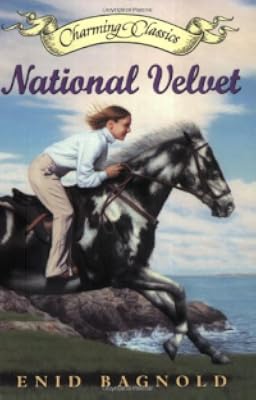
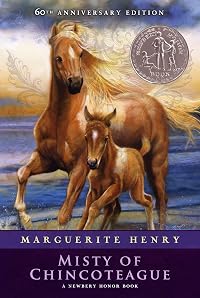
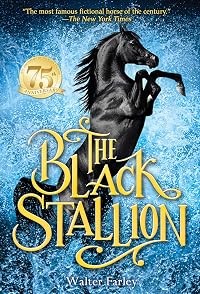

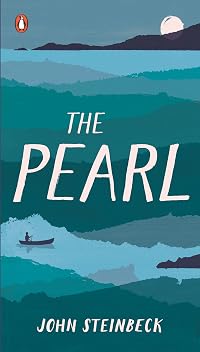






Member Recommendations
Member Reviews
The Red Pony is the kind of book that I hope every book I pick up will be like. And when a book is one of those books, I am awash in deep gratitude. I even feel a sense of relief. Oh, at last!
Merely four short stories all about the same boy told in just under 100 pages. I can simply write the chapter titles here and instantly be immersed back in each with vivid detail: The Red Pony, The Great Mountains, The Promise, and The Leader of the People. Just four chapters and I wouldn't dare to wish for more. It is perfection where it stands. And that's because it's not about a boy growing up. It's about a boy. Outside of these pages he will grow up and carry these heartbreaks into manhood and perhaps be a quieter, angrier man because of them. show more But here, at this time, in this perfect small book, he is the "little boy Jody."
Steinbeck's writing is the kind of timeless story-telling that feels familiar even the first time your eyes glide across the words, the lines, the page, masked by the beauty of effortless sequence. It's as fluid and clear as water; it's story-water that he's pouring into you. You don't think about the writer, or stop to admire his prose, or even think much about what's going to happen next. You are in that minute in the story. And the next minute. And the next. You are a living conduit for the story to tell its tale again.
I was the boy Jody. I felt when the wind lifted and tussled my hair. I heard the swishing of the dried oat grass as I walked through it. I was restored by the cool water in the green basin and I also feared the dark cypress tree. I skipped even when I knew I should be too old to skip, from pure happiness. I was gleeful to scatter mice with a homemade flail to their deaths for an afternoon's entertainment. And, as Jody, my 10-year old heart was devastated in a hundred different little and big ways. show less
Merely four short stories all about the same boy told in just under 100 pages. I can simply write the chapter titles here and instantly be immersed back in each with vivid detail: The Red Pony, The Great Mountains, The Promise, and The Leader of the People. Just four chapters and I wouldn't dare to wish for more. It is perfection where it stands. And that's because it's not about a boy growing up. It's about a boy. Outside of these pages he will grow up and carry these heartbreaks into manhood and perhaps be a quieter, angrier man because of them. show more But here, at this time, in this perfect small book, he is the "little boy Jody."
Steinbeck's writing is the kind of timeless story-telling that feels familiar even the first time your eyes glide across the words, the lines, the page, masked by the beauty of effortless sequence. It's as fluid and clear as water; it's story-water that he's pouring into you. You don't think about the writer, or stop to admire his prose, or even think much about what's going to happen next. You are in that minute in the story. And the next minute. And the next. You are a living conduit for the story to tell its tale again.
I was the boy Jody. I felt when the wind lifted and tussled my hair. I heard the swishing of the dried oat grass as I walked through it. I was restored by the cool water in the green basin and I also feared the dark cypress tree. I skipped even when I knew I should be too old to skip, from pure happiness. I was gleeful to scatter mice with a homemade flail to their deaths for an afternoon's entertainment. And, as Jody, my 10-year old heart was devastated in a hundred different little and big ways. show less
I hated The Red Pony when I had to read it for school when I was a kid. But that was also true of some other books that I later came to love (such as Hawthorne's The Scarlet Letter) and I have since enjoyed some (though not many) of Steinbeck's other books (particularly Of Mice and Men and East of Eden), so I decided to give it another chance.
Now I *loathe* it.
My major complaint when I was younger was that the story was disconnected---what happens in one chapter seems to have little or no bearing on the others, or even contradicts them. The eponymous red pony is gone after the first chapter; another pony is born at the end of the third, but makes no appearance in the fourth. It turns out that this is because this isn't really so much a show more novel as a collection of short stories, which were originally published separately though they feature the same characters.
But there is a deeper, thematic, unity to these stories, and that is what I detest about them now. They are all about death. Not just any natural death, either, but particularly horrible deaths. And this is in the context of stories about a young boy on the cusp of manhood; according to Steinbeck, growing up is largely (if not entirely) about learning about death. For Steinbeck, death defines life.
Only the fourth story doesn't contain a gleeful depiction of a disgusting death. It centers on a visit from the boy's grandfather, much to the chagrin of the boy's father, who hates his father-in-law's visits because of the old man's tiresomely repeated stories. This is the basis for what could be an amusing story or even a meaningful one, but it is itself incredibly tedious---though it does almost manage to convey an interesting meaning when the boy's grandfather tells him, "I tell those stories, but they're not what I want to tell. I only know how I want people to feel when I tell them." But what he goes on to say isn't nearly as profound or interesting as Steinbeck apparently intended it to be, and even if it were it probably wouldn't be enough to redeem the rest of this worthless book. Even Frank Muller's narration of this audio edition couldn't much improve it.
Not that death isn't a part of life...but there is more to life than death. But you wouldn't know it by reading The Red Pony. show less
Now I *loathe* it.
My major complaint when I was younger was that the story was disconnected---what happens in one chapter seems to have little or no bearing on the others, or even contradicts them. The eponymous red pony is gone after the first chapter; another pony is born at the end of the third, but makes no appearance in the fourth. It turns out that this is because this isn't really so much a show more novel as a collection of short stories, which were originally published separately though they feature the same characters.
But there is a deeper, thematic, unity to these stories, and that is what I detest about them now. They are all about death. Not just any natural death, either, but particularly horrible deaths. And this is in the context of stories about a young boy on the cusp of manhood; according to Steinbeck, growing up is largely (if not entirely) about learning about death. For Steinbeck, death defines life.
Only the fourth story doesn't contain a gleeful depiction of a disgusting death. It centers on a visit from the boy's grandfather, much to the chagrin of the boy's father, who hates his father-in-law's visits because of the old man's tiresomely repeated stories. This is the basis for what could be an amusing story or even a meaningful one, but it is itself incredibly tedious---though it does almost manage to convey an interesting meaning when the boy's grandfather tells him, "I tell those stories, but they're not what I want to tell. I only know how I want people to feel when I tell them." But what he goes on to say isn't nearly as profound or interesting as Steinbeck apparently intended it to be, and even if it were it probably wouldn't be enough to redeem the rest of this worthless book. Even Frank Muller's narration of this audio edition couldn't much improve it.
Not that death isn't a part of life...but there is more to life than death. But you wouldn't know it by reading The Red Pony. show less
I have a schadenfreude about eighth graders finding this on their reading list and after grinning at the pony in the title on the cover grimacing at the internal calamities of knife birth, equine distemper, forcing buzzards off a corpse and more. Well, the theme is one of encountering painful realities especially through loved animals... I most like the final short story, which feels tacked on as it does not include clueless Jody or a pet in distress. "Junius Maltby" is the story of man so enamored with reading that even worse calamities -- including privation and his dying children -- cannot distract him from a good book. Well, at least it looks like his son turns out alright.
As I began to read The Red Pony, I realized I had read it before, many years ago. There are four sections to this short novel. There doesn't seem to be any clear time sequence to the four sections, nor is there an apparent relationship between some of the sections. The main characters persist; that is the only consistency. It made me wonder if this was a short novel or just four related short stories.
Life and death is everywhere in The Red Pony, as it must be on a ranch at that time. At one point Jody, the boy in the story, says about the mice he is planning to kill "I'll bet they don't know what's going to happen to them today." Billy, the ranch hand, replies "No, nor you either, nor me, nor anyone." While I am not sure whether The Red show more Pony is a short novel or a collection of related short stories, I felt Steinbeck did an incredible job of presenting life and death in its many forms and all that comes with it. I know some reviewers found aspects of The Red Pony gruesome, but for me it was simply true to life, and death. show less
Who captures the disappoint and tragedy of everyday life like Steinbeck? The Red Pony takes place on a farm (and for those of you who have never spent time on a real farm, I can tell you that life is hard and nature is cruel). The boy, Jody, is coming of age and being faced with what it is to be human, to cope with loss, to watch the death of dreams, and to do this in the shadow of a father who tolerates no sentimentality. The last section in this series of tales in Jody's life is the most poignant of all for me, because when the life of hard times is spent, there is not even any room for remembering and softening the edges of the past.
I found each of the stories within the story to be pregnant with meaning. It was so easy to see life show more from the different characters' points of view. Jody, as a boy, trying to sort out what life actually does mean, Billy Buck living within the family but outside it and trying to live up to the image Jody has of him and his reputation for knowing everything, the father who is trying to hold this enterprise together and make sound decisions and who must always put practical matters first, and the mother who provides the base around which the men revolve.
So much depth in so few pages! So often novellas leave me feeling cheated or wanting more because the story feels unfinished. This is not the case here. Steinbeck knows exactly what he wants to say and he knows exactly when he has said it. show less
I found each of the stories within the story to be pregnant with meaning. It was so easy to see life show more from the different characters' points of view. Jody, as a boy, trying to sort out what life actually does mean, Billy Buck living within the family but outside it and trying to live up to the image Jody has of him and his reputation for knowing everything, the father who is trying to hold this enterprise together and make sound decisions and who must always put practical matters first, and the mother who provides the base around which the men revolve.
So much depth in so few pages! So often novellas leave me feeling cheated or wanting more because the story feels unfinished. This is not the case here. Steinbeck knows exactly what he wants to say and he knows exactly when he has said it. show less
There is something cathartic about reading Steinbeck. His writing has always impressed me, especially his descriptions of farm life in the west. This book, which is really a collection of short stories about a family, focuses on a little boy named Jody. This is his story, but he is far from in control. And that is the point. This is a coming-of-age for a little boy who is learning that harsher realities of life and death, the there is no permanence to childhood and that bad things do happen. The anxieties he feels and the moments he experiences are beautifully captured and really honed in on what it feels like transitioning from childhood to adulthood, and it doesn't have anything to do with age.
This tiny book is really four connected short stories. The edition I had was for a literature course but I don’t know what age it was intended for. I would presume maybe Junior High or High School students would be the target audience for this edition but I don’t think Steinbeck meant that. I think young adults and those older would get a lot out of the book. I certainly did.
The stories all are about a young boy named Jody who lives on a ranch in California near Salinas (which is where Steinbeck grew up). In the first story Jody is given a red pony by his father who rarely gives him anything even praise. Jody is thrilled and looks after and trains the pony until he is almost ready to ride it. Then the pony gets sick and, despite the show more best efforts of the hired man, the pony dies. It is a sad ending and I suspect young adults might not be ready for that. However, the writing is so evocative that with the right teacher it would be a great learning experience.
The rest of the stories all have an element of sadness and loss in them but they do show how Jody matures. They also show a slice of bygone life. I read it as we were travelling through western Nevada in country similar to the place Steinbeck was describing. Electricity and motor vehicles and other modern amenities mean ranching is not as isolated as it was but it still involves lots of hard work and heartbreak. show less
The stories all are about a young boy named Jody who lives on a ranch in California near Salinas (which is where Steinbeck grew up). In the first story Jody is given a red pony by his father who rarely gives him anything even praise. Jody is thrilled and looks after and trains the pony until he is almost ready to ride it. Then the pony gets sick and, despite the show more best efforts of the hired man, the pony dies. It is a sad ending and I suspect young adults might not be ready for that. However, the writing is so evocative that with the right teacher it would be a great learning experience.
The rest of the stories all have an element of sadness and loss in them but they do show how Jody matures. They also show a slice of bygone life. I read it as we were travelling through western Nevada in country similar to the place Steinbeck was describing. Electricity and motor vehicles and other modern amenities mean ranching is not as isolated as it was but it still involves lots of hard work and heartbreak. show less
Members
- Recently Added By
Lists

Books That Made Me Cry
199 works; 105 members

20th Century Literature
1,161 works; 55 members

1001 Children's Books You Must Read Before You Grow Up
774 works; 100 members

1970s
657 works; 23 members

Most Depressing Books
69 works; 16 members

Books Read in 2017
4,249 works; 130 members

1930s
262 works; 5 members

Animals in the Title
498 works; 11 members

Carole's List
445 works; 13 members

Lion's Mane Hardcover Wishlist
19 works; 1 member

American Lit for Eng 11 Research Project
368 works; 6 members

Recommended Reading : 600 Classics Reviewed, Editors of Salem Press, 2015
634 works; 6 members
School Made Us Read It
380 works; 197 members

Books Read in 2016
110 works; 1 member

Books That Made Us Cry
278 works; 145 members

Recommended Reading List
219 works; 1 member

Best Horse Stories or "Back in the Saddle Again"
82 works; 17 members

Mensa for Kids Excellence in Reading Award Program (Grades 7-8)
62 works; 1 member

Mensa for Kids Excellence in Reading Award Program (Grades 7-8)
62 works; 3 members

Reading LIst
648 works; 1 member
Talk Discussions
Past Discussions
Steinbeckathon 2012: The Red Pony in 75 Books Challenge for 2012 (September 2012)
Author Information

In recent years Steinbeck has been elevated to a more prominent status among American writers of his generation. If not quite at the world-class artistic level of a Hemingway or a Faulkner, he is nonetheless read very widely throughout the world by readers of all ages who consider him one of the most "American" of writers. Born in Salinas County, show more California on February 27, 1902, Steinbeck was of German-Irish parentage. After four years as a special student at Stanford University, he went to New York, where he worked as a reporter and as a hod carrier. Returning to California, he devoted himself to writing, with little success; his first three books sold fewer than 3,000 copies. Tortilla Flat (1935), dealing with the paisanos, California Mexicans whose ancestors settled in the country 200 years ago, established his reputation. In Dubious Battle (1936), a labor novel of a strike and strike-breaking, won the gold medal of the Commonwealth Club of California. Of Mice and Men (1937), a long short story that turns upon a melodramatic incident in the tragic friendship of two farm hands, written almost entirely in dialogue, was an experiment and was dramatized in the year of its publication, winning the New York Drama Critics Circle Award. It brought him fame. Out of a series of articles that he wrote about the transient labor camps in California came the inspiration for his greatest book, The Grapes of Wrath (1939), the odyssey of the Joad family, dispossessed of their farm in the Dust Bowl and seeking a new home, only to be driven on from camp to camp. The fiction is punctuated at intervals by the author's voice explaining this new sociological problem of homelessness, unemployment, and displacement. As the American novel "of the season, probably the year, possibly the decade," it won the Pulitzer Prize in 1940. It roused America and won a broad readership by the unusual simplicity and tenderness with which Steinbeck treated social questions. Even today, The Grapes of Wrath remains alive as a vivid account of believable human characters seen in symbolic and universal terms as well as in geographically and historically specific ones. Ma Joad is one of the most memorable characters in twentieth-century American fiction. It is her courage that sustains the family. Steinbeck's best and most ambitious novel after The Grapes of Wrath is East of Eden (1952), a saga of two American families in California from before the Civil War through World War I. Cannery Row (1945), The Wayward Bus (1947), and Sweet Thursday (1955) are lighter works that find Steinbeck returning to the lighthearted tone of Tortilla Flat as he recounts picaresque adventures of modern-day picaros. The Winter of Our Discontent (1961) struck some reviewers as being appropriately titled because of its despairing treatment of humanity's fall from grace in a wasteland world where money is king. Steinbeck also wrote important nonfiction, including Russian Journal (1948) in collaboration with the photographer Robert Capa; Once There Was a War (1958) and America and Americans (1966), which features pictures by 55 leading photographers and a 70-page essay by Steinbeck. His interest in marine biology led to two books primarily about sea life, Sea of Cortez (1941) (with Edward F. Ricketts) and The Log from the Sea of Cortez (1951). Travels with Charley (1962) is an engaging account of his journey of rediscovery of America, which took him through approximately 40 states. Steinbeck was married three times and died in New York City on December 20, 1968 of heart disease and congestive heart failure. He was 66, and had been a life-long smoker. (Bowker Author Biography) show less
Awards and Honors
Series
Belongs to Publisher Series
Work Relationships
Is contained in
Setinbeck Hardcover Collection: Tortilla Flat, The Winter of Our Discontent, East of Eden, The Grapes of Wrath, Travels with Charley, & The Long Valley by John Steinbeck (indirect)
Contains
Is abridged in
Common Knowledge
- Canonical title*
- Le poney rouge
- Original title
- The Red Pony
- Original publication date
- 1933
- People/Characters
- Jody Tiflin; Carl Tiflin; Mrs. Tiflin; Billy Buck; Gitano; Grandfather
- Important places
- California, USA
- Related movies
- The Red Pony (1949 | IMDb); The Red Pony (1973 | IMDb)
- First words
- At daybreak Billy Buck emerged from the bunkhouse and stood for a moment on the porch looking up at the sky.
- Last words
- (Click to show. Warning: May contain spoilers.)"Here, I'll reach the squeezer down for you."
- Original language
- English
- Disambiguation notice
- This is the entry for the single work "The Red Pony". Please don't combine with anthologies containing more than this story, or with abridged/retold versions.
*Some information comes from Common Knowledge in other languages. Click "Edit" for more information.
Classifications
Statistics
- Members
- 6,306
- Popularity
- 1,964
- Reviews
- 107
- Rating
- (3.48)
- Languages
- 17 — Catalan, Czech, Danish, English, Finnish, French, German, Italian, Japanese, Latvian, Norwegian (Bokmål), Norwegian, Romanian, Serbian, Spanish, Swedish, Turkish
- Media
- Paper, Audiobook, Ebook
- ISBNs
- 99
- UPCs
- 2
- ASINs
- 83