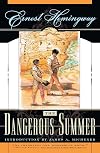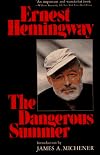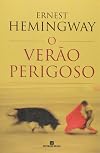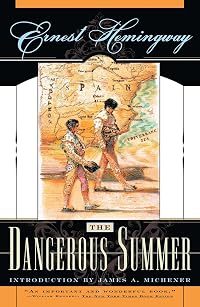
The Dangerous Summer
by Ernest Hemingway 
On This Page
Description
A firsthand chronicle of a brutal season of bullfights. In this vivid account, Hemingway captures the exhausting pace and pressure of the season, the camaraderie and pride of the matadors, and the mortal drama as in fight after fight the rival matadors try to outdo each other with ever more daring performances.Tags
Recommendations












Member Reviews
A Mindenható egy nap kedveskedni akart a jó öreg Ernestnek, aki - minden köztük fennálló ideológiai nézeteltéresen túl - szeretett írója volt. Elhatározta, hogy kitalál egy pont neki való sportot. Egy olyan sportot, ami egyszerre elegáns és kegyetlen, veszélyes és giccses, amiben az ember órákon keresztül bámulhat vicces-csicsás gúnyákban táncikáló karcsú férfiakat, miközben az egész mégis baromi maszkulinnak hat. Így aztán az Úr megteremté: a bikaviadalt. (Ráadásul ez a sport kellően egzotikus is, magyarán: a nem-spanyolok zöme maximum annyira érti a szabályokat, hogy meg tudja különböztetni a matadort a bikától. Úgyhogy Hemingway igen könnyen, különösebb konkurenciaharc nélkül show more szakértői pozícióba emelkedhet - és a Papa szeret szakértőnek látszani.)
Ezt a könyvet én a bikaviadal ellenére szerettem. Persze átjött, hogy Hemingway nagyon érti a műfajt, de nagytestű állatok önveszélyes összevagdosása (nem, nem a berúgva böllérkedésről beszélek) számomra akkor sem tud szimpatikus elfoglaltság lenni. De azt meg kell adni, mindez olyan terepet ad írónknak, ahol otthon érzi magát. Ahol kikerekíthet egy mítoszt: a kor két legzseniálisabb matadorának személyes vetélkedését, akik pontosan tudják, hogy rivalizálásuk egy ponton el fog jutni oda, amikor valamelyikük figyelme egy percre ellankad - és sitty-sutty szarvára tűzi őket a bika. Ez a párbaj, ez az igazi hemingwayi férfiasságpróba az, ami lüktető feszültséggel tölti meg a kötetet.
És azt se feledjük, hogy a könyv egyben egy remek spanyol útirajz is, amiben a matador sleppje (élén Hemingway-jel) arénától arénáig utazik, hol Burgosban, hol Zaragozában, hol Madridban tűnnek fel, esznek, isznak, élnek, mindezt pedig a Papa jellegzetesen jelzőtlen, szűkszavúságában plasztikus tolmácsolásában élvezhetjük. Az embernek kedve lenne velük tartani - no persze a bikaviadalok idején inkább nézne valami múzeumot vagy vadasparkot, már csak a bika iránti tiszteletből is.
Ui.: Hemingway utolsó műve, ilyen formában életében meg sem jelent. Talán ezért is éreztem olvasásakor nyomatékosabban, hogy a hemingwayi vitalitás mögött azért jó adag mániás depresszió húzódik meg. Amikor például a hatvanadik születésnapján azzal szórakozik, hogy a barátja szájában lévő cigiről lövi le a parazsat, azt nehéz másnak, mint túlkompenzációnak értelmezni. show less
Ezt a könyvet én a bikaviadal ellenére szerettem. Persze átjött, hogy Hemingway nagyon érti a műfajt, de nagytestű állatok önveszélyes összevagdosása (nem, nem a berúgva böllérkedésről beszélek) számomra akkor sem tud szimpatikus elfoglaltság lenni. De azt meg kell adni, mindez olyan terepet ad írónknak, ahol otthon érzi magát. Ahol kikerekíthet egy mítoszt: a kor két legzseniálisabb matadorának személyes vetélkedését, akik pontosan tudják, hogy rivalizálásuk egy ponton el fog jutni oda, amikor valamelyikük figyelme egy percre ellankad - és sitty-sutty szarvára tűzi őket a bika. Ez a párbaj, ez az igazi hemingwayi férfiasságpróba az, ami lüktető feszültséggel tölti meg a kötetet.
És azt se feledjük, hogy a könyv egyben egy remek spanyol útirajz is, amiben a matador sleppje (élén Hemingway-jel) arénától arénáig utazik, hol Burgosban, hol Zaragozában, hol Madridban tűnnek fel, esznek, isznak, élnek, mindezt pedig a Papa jellegzetesen jelzőtlen, szűkszavúságában plasztikus tolmácsolásában élvezhetjük. Az embernek kedve lenne velük tartani - no persze a bikaviadalok idején inkább nézne valami múzeumot vagy vadasparkot, már csak a bika iránti tiszteletből is.
Ui.: Hemingway utolsó műve, ilyen formában életében meg sem jelent. Talán ezért is éreztem olvasásakor nyomatékosabban, hogy a hemingwayi vitalitás mögött azért jó adag mániás depresszió húzódik meg. Amikor például a hatvanadik születésnapján azzal szórakozik, hogy a barátja szájában lévő cigiről lövi le a parazsat, azt nehéz másnak, mint túlkompenzációnak értelmezni. show less
A surprisingly strong piece of writing. I say 'surprisingly' even though the author is one of my favourites because it is one of his most obscure (it is out of print and I had to seek out an old 1985 edition online), one of his last (when Hemingway thought he was 'losing his touch'), and it concerns bullfighting.
Hemingway's writing on bullfighting often strikes you as redundant at first, particularly in the modern world, but whenever you read it you are fascinated by his take on it. He wrote about it in The Sun Also Rises (which brought awareness of the running of the bulls in Pamplona to a wider audience) and in Death in the Afternoon, his dedicated bullfighting treatise, which was a surprisingly rewarding read that challenged my show more prejudices about the convention. What more could he add with the obscure Dangerous Summer? Well, remarkably – given our natural aversion to bloodsports – this book actually made me like the matadors.
It follows Hemingway on his travels through Spain as he witnesses the rivalry between two matadors, Antonio Ordóñez and Luis Miguel Dominguín. Hemingway is a close personal friend of Antonio (and also familiar with Miguel), so he is often in the room where things are happening. The two have different styles, different personalities, though both are determined. Miguel is the seasoned veteran, out of retirement, still determined to show he is the best fighter. Antonio is the once-in-a-generation talent who can do things in the bull ring as a matter of course that other matadors would not even contemplate. (Hemingway writes such moves with a mix of admiration, astonishment and a sense of the ethereal.) Oh, and they are brothers-in-law. Theirs is not a mean, venomous rivalry and all the better for it, but both are pushing each other to the limit, and the bulls' horns come ever closer… This is the 'dangerous summer' of 1959 and Hemingway chronicles it beautifully.
It is also a good piece of travel writing, with Hemingway rediscovering his love of Spain (which he has not visited since the Civil War) at the same time as renewing his love of bullfighting. His writing doesn't always seem as impressive as Hemingway usually is, but then you realize you are engrossed in reading about something which previously you did not care about, and the whole thing is very clean and lucid and puts you in the ring and in the towns of Spain.
Where his previous writing convinced you of the worthiness of bullfighting – it is more a stage performance than a 'sport', with the theme of the play being death and the bull as the unwitting actor – whilst still allowing you to hold on to your moral revulsion, Hemingway here captures the magic of it; the transcendent, 'in-the-zone' moments of effortful beauty that you find in any good sport and which manifest themselves in the best sportsmen. And yet at the same time it is not a sport (Hemingway and Antonio talk between themselves of matadors as artists 'writing' in the bull ring). It is a fascinatingly complex – and perhaps contradictory – endeavour, and not only that but one which excites a lot of emotion both for and against. Hemingway does brilliantly to write about it so cleanly. show less
Hemingway's writing on bullfighting often strikes you as redundant at first, particularly in the modern world, but whenever you read it you are fascinated by his take on it. He wrote about it in The Sun Also Rises (which brought awareness of the running of the bulls in Pamplona to a wider audience) and in Death in the Afternoon, his dedicated bullfighting treatise, which was a surprisingly rewarding read that challenged my show more prejudices about the convention. What more could he add with the obscure Dangerous Summer? Well, remarkably – given our natural aversion to bloodsports – this book actually made me like the matadors.
It follows Hemingway on his travels through Spain as he witnesses the rivalry between two matadors, Antonio Ordóñez and Luis Miguel Dominguín. Hemingway is a close personal friend of Antonio (and also familiar with Miguel), so he is often in the room where things are happening. The two have different styles, different personalities, though both are determined. Miguel is the seasoned veteran, out of retirement, still determined to show he is the best fighter. Antonio is the once-in-a-generation talent who can do things in the bull ring as a matter of course that other matadors would not even contemplate. (Hemingway writes such moves with a mix of admiration, astonishment and a sense of the ethereal.) Oh, and they are brothers-in-law. Theirs is not a mean, venomous rivalry and all the better for it, but both are pushing each other to the limit, and the bulls' horns come ever closer… This is the 'dangerous summer' of 1959 and Hemingway chronicles it beautifully.
It is also a good piece of travel writing, with Hemingway rediscovering his love of Spain (which he has not visited since the Civil War) at the same time as renewing his love of bullfighting. His writing doesn't always seem as impressive as Hemingway usually is, but then you realize you are engrossed in reading about something which previously you did not care about, and the whole thing is very clean and lucid and puts you in the ring and in the towns of Spain.
Where his previous writing convinced you of the worthiness of bullfighting – it is more a stage performance than a 'sport', with the theme of the play being death and the bull as the unwitting actor – whilst still allowing you to hold on to your moral revulsion, Hemingway here captures the magic of it; the transcendent, 'in-the-zone' moments of effortful beauty that you find in any good sport and which manifest themselves in the best sportsmen. And yet at the same time it is not a sport (Hemingway and Antonio talk between themselves of matadors as artists 'writing' in the bull ring). It is a fascinatingly complex – and perhaps contradictory – endeavour, and not only that but one which excites a lot of emotion both for and against. Hemingway does brilliantly to write about it so cleanly. show less
Although not as good as some of his other works, Hemingway still delivers a compact and interesting account of the rivalry between Luis Miguel Dominguín and Antonio Ordóñez. Although the subject matter is ethically questionable (or at least in my opinion) he still captures something concrete about the sport of bullfighting and makes it count. Hemingway pulls us along the journey with terse prose that reminds us why he was a great writer. A worthy addition to Hemingway's oeuvre of work.
The dangerous summer by Hemingway_ Ernest
Spain and the bull fights where he was commissioned to write an article but so much more got in his way...
A matador and his brother in law who returns to the bullfights after retiring where they pit one another and try to do more serious hand to hand fighting so the crowds will like them more...
Includes glossary of bull fighting terms. Described in detail all the events behind the scenes you'd not see as a tourist.
Like understandings the procedures that precede the bull fight and during and after and what significance different parts of the bulls parts are cut after the fight.
I received this book from National Library Service for my BARD (Braille Audio Reading Device).
Spain and the bull fights where he was commissioned to write an article but so much more got in his way...
A matador and his brother in law who returns to the bullfights after retiring where they pit one another and try to do more serious hand to hand fighting so the crowds will like them more...
Includes glossary of bull fighting terms. Described in detail all the events behind the scenes you'd not see as a tourist.
Like understandings the procedures that precede the bull fight and during and after and what significance different parts of the bulls parts are cut after the fight.
I received this book from National Library Service for my BARD (Braille Audio Reading Device).
Hemmingway's account of one summer following two of the most daring and famous bullfighters in Spain. Interesting but more of a documentary and not quite as appealing if you don't get into bullfighting.
Ernest Hemingway's acclaimed book that retales the legendary story between the two respected bullfighters Antonio Ordonez and Luis Miguel Dominiguin. This work includes an insightful introduction by the Pulitzer Prize winning novelist James A. Michener.
The Dangerous Summer is a 1960 book written by Ernest Hemingway. In it, Hemingway describes the real-life bullfighting rivalry that took place the year before between legendary bullfighters Luis Miguel Dominguín the second and his brother in law Antonio Ordóñez. The two bullfighters wanted to prove who was better by each trying to kill more bulls than the other during 1959.
Because of his illnesses, Ernest Hemingway was not able to get his novel to the publishers. Therefore, he had his wife, Mary Welsh Hemingway, summon his friend, LIFE Magazine Bureau Head Will Lang Jr., to leave Paris and come to Spain. Hemingway persuaded Will Lang Jr. to let him print the manuscript, along with a picture layout before it came out in hardcover. show more Although not a word of it was on paper, Ernest agreed to the proposal. The first part of the story appeared in LIFE Magazine on September 5, 1960. The other installments were printed in the following issues of LIFE.
The title is perhaps foreshadowed in a phrase to be found in Hemingway's short polemical article"Who Murdered the Vets?: A First-Hand Report on the Florida Hurricane"(New Masses, 17 September 1935), where reference is made to the storm-damaged Florida Keys as "... these islands where there is no autumn but only a more dangerous summer ...". show less
Because of his illnesses, Ernest Hemingway was not able to get his novel to the publishers. Therefore, he had his wife, Mary Welsh Hemingway, summon his friend, LIFE Magazine Bureau Head Will Lang Jr., to leave Paris and come to Spain. Hemingway persuaded Will Lang Jr. to let him print the manuscript, along with a picture layout before it came out in hardcover. show more Although not a word of it was on paper, Ernest agreed to the proposal. The first part of the story appeared in LIFE Magazine on September 5, 1960. The other installments were printed in the following issues of LIFE.
The title is perhaps foreshadowed in a phrase to be found in Hemingway's short polemical article"Who Murdered the Vets?: A First-Hand Report on the Florida Hurricane"(New Masses, 17 September 1935), where reference is made to the storm-damaged Florida Keys as "... these islands where there is no autumn but only a more dangerous summer ...". show less
Members
- Recently Added By
Published Reviews
"Pietsch has done a wonderful editing job. Hemingway was very cuttable, and the book is indeed wonderful . . . "
added by GYKM
Author Information

664+ Works 174,196 Members
Ernest Miller Hemingway was born in the family home in Oak Park, Ill., on July 21, 1899. In high school, Hemingway enjoyed working on The Trapeze, his school newspaper, where he wrote his first articles. Upon graduation in the spring of 1917, Hemingway took a job as a cub reporter for the Kansas City Star. After a short stint in the U.S. Army as a show more volunteer Red Cross ambulance driver in Italy, Hemingway moved to Paris, and it was here that Hemingway began his well-documented career as a novelist. Hemingway's first collection of short stories and vignettes, entitled In Our Time, was published in 1925. His first major novel, The Sun Also Rises, the story of American and English expatriates in Paris and on excursion to Pamplona, immediately established him as one of the great prose stylists and preeminent writers of his time. In this book, Hemingway quotes Gertrude Stein, "You are all a lost generation," thereby labeling himself and other expatriate writers, including F. Scott Fitzgerald, T.S. Eliot, and Ford Madox Ford. Other novels written by Hemingway include: A Farewell To Arms, the story, based in part on Hemingway's life, of an American ambulance driver on the Italian front and his passion for a beautiful English nurse; For Whom the Bell Tolls, the story of an American who fought, loved, and died with the guerrillas in the mountains of Spain; and To Have and Have Not, about an honest man forced into running contraband between Cuba and Key West. Non-fiction includes Green Hills of Africa, Hemingway's lyrical journal of a month on safari in East Africa; and A Moveable Feast, his recollections of Paris in the Roaring 20s. In 1954, Hemingway won the Nobel Prize in Literature for his novella, The Old Man and the Sea. A year after being hospitalized for uncontrolled high blood pressure, liver disease, diabetes, and depression, Hemingway committed suicide on July 2, 1961, in Ketchum, Idaho. (Bowker Author Biography) show less
Ernest Hemingway has a Legacy Library. Legacy libraries are the personal libraries of famous readers, entered by LibraryThing members from the Legacy Libraries group.
Some Editions
Awards and Honors
Distinctions
Series
Belongs to Publisher Series
Common Knowledge
- Canonical title
- The Dangerous Summer
- Original title
- The Dangerous Summer
- Original publication date
- 1985
- Important places
- Spain
- First words*
- Come fu strano ritornare in Spagna. Non m'ero mai aspettato di poter ritornare nel paese che amavo più di ogni altro al mondo, a parte il mio, e non avevo intenzione di tornarvi finchè l'ultimo dei miei amici si fosse trova... (show all)to in galera.
- Last words*
- (Click to show. Warning: May contain spoilers.)"Arrivederci a Madrid" dissi io. "Forse, se ce ne andiamo, se ne andrà anche qualcuno di loro".
"Siamo tutti così belli, insieme, nei rotocalchi" disse lui. "Ci vediamo alla Ruber". La Ruber era la clinica. "Non ho disdetto la camera" disse lui. - Original language*
- Anglais (Etats-Unis) (Etats-Unis)
*Some information comes from Common Knowledge in other languages. Click "Edit" for more information.
Classifications
- Genres
- Fiction and Literature, Biography & Memoir
- DDC/MDS
- 818.5203 — Literature & rhetoric American literature in English American miscellaneous writings in English 20th Century 1900-1945 Diaries
- LCC
- PS3515 .E37 .Z464 — Language and Literature American literature American literature Individual authors 1900-1960
- BISAC
Statistics
- Members
- 786
- Popularity
- 35,553
- Reviews
- 8
- Rating
- (3.50)
- Languages
- 14 — Czech, Danish, Dutch, English, Finnish, French, German, Hungarian, Italian, Portuguese, Russian, Spanish, Swedish, Turkish
- Media
- Paper, Ebook
- ISBNs
- 47
- ASINs
- 20