On This Page
Description
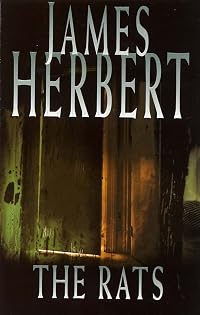
It was only when the bones of the first devoured victims were discovered that the true nature and power of these swarming black creatures with their razor sharp teeth and the taste for human blood began to be realised by a panic-stricken city. For millions of years man and rats had been natural enemies. But now for the first time - suddenly, shockingly, horribly - the balance of power had shifted ...'The effectiveness of the gruesome set pieces and brilliant finale are all its own' Sunday TimesTags
Recommendations




















Member Recommendations

'Nids by Ray Garton
by Scottneumann

Member Reviews
It's rare to read a horror story and side with the 'monsters', but I am now 100% officially #teamrat. The men in this book, including the author insert 'hero' (I am surprised that Herbert wasn't in fact a teacher before he started writing), are skeevy, sexist pigs, and the women are ranked on how well they can look after the men. I know this was written in the 1970s - the political asides are far from subtle ('Heaven knows, the dockers don't need much excuse to stay away from work') - but I nearly threw up in my mouth when art teacher Mr Harris watches two fourteen year old girls walk past and says, 'Anyway, the crumpet's good.' There are also samples of 'casual' racism and homophobia thrown in for good measure. Hey ho!
The horror show more element - radioactive rats - is mostly gore, with the mutant vermin chewing faces off and eating entire corpses down to the skeleton. But each little vignette of terror begins with an obnoxious human character, like the teenager copping a feel in the cinema ('My first proper good-looking bird! After all those fat ones, skinny ones, ones with big noses, ones with big teeth - at last a good looking one!'), leaving the reader to root for the rats. I found the 'love scenes' more repulsive, to be honest - there's a weird chapter where Harris and his girlfriend invite themselves to her aunt's house for a weekend away, and aunt is all but hopping into bed with them the morning after!
A snapshot of the era - clearly it's the government's fault that the radioactive rats have taken over - and very obviously the author's debut novel, but I could have lived without this King-lite novella. Especially when the 'solution' to the infestation was to throw out puppies infected with a virus as live bait, while Harris was right there being an obnoxious 'everyman' mansplainer, telling the experts what to do. Throw him and his wandering hands to the rats (rattus over twattus, if you will!) show less
The horror show more element - radioactive rats - is mostly gore, with the mutant vermin chewing faces off and eating entire corpses down to the skeleton. But each little vignette of terror begins with an obnoxious human character, like the teenager copping a feel in the cinema ('My first proper good-looking bird! After all those fat ones, skinny ones, ones with big noses, ones with big teeth - at last a good looking one!'), leaving the reader to root for the rats. I found the 'love scenes' more repulsive, to be honest - there's a weird chapter where Harris and his girlfriend invite themselves to her aunt's house for a weekend away, and aunt is all but hopping into bed with them the morning after!
A snapshot of the era - clearly it's the government's fault that the radioactive rats have taken over - and very obviously the author's debut novel, but I could have lived without this King-lite novella. Especially when the 'solution' to the infestation was to throw out puppies infected with a virus as live bait, while Harris was right there being an obnoxious 'everyman' mansplainer, telling the experts what to do. Throw him and his wandering hands to the rats (rattus over twattus, if you will!) show less
The Rats
⭐️⭐️⭐️⭐️ (reread, with caution)
This was a reread for me, and it turned out to be a very different experience than my first pass. The Rats still works—often brilliantly—but on rereading, its weaknesses stand out far more sharply. What emerged most clearly this time is that the novel feels like two books uneasily sharing the same pages: the book of rats, and the book of people.
The book of rats is excellent. Herbert is at his strongest when he focuses on constrained spaces, failed systems, and inevitability. The best scenes are grounded, brutal, and frightening precisely because they respect physical limits: trains stalled in tunnels, blocked exits, fire, darkness, disease. The rats work not as monsters to be show more fought, but as an indifferent force that turns ordinary infrastructure into traps. These sections remain genuinely effective and are the reason the book still earns a high rating from me.
The book of people, however, is far less successful—and on reread, actively frustrating. Herbert increasingly bends the world, the institutions, and even his own established rules to elevate Harris, an art teacher who is treated as a kind of chosen figure. Harris rarely seems to work, shows little sustained concern for his own students, and yet is repeatedly positioned as morally correct, strategically insightful, and eventually indispensable at the highest levels of response. The novel keeps insisting on his importance, but never convincingly earns it.
As the story progresses, this favoritism becomes structural. Rules established early are quietly relaxed so Harris can remain physically engaged in a climactic confrontation. Institutions suddenly accelerate, science delivers miraculous overnight solutions, and logistics that were previously treated as overwhelming are hand-waved aside. The world, and even the book’s own internal logic, has to contort to keep Harris central.
This problem extends beyond Harris to the broader handling of people. Herbert frequently pauses momentum to insert late-stage backstory for officials or disgraced experts, asking the reader to care long after narrative investment has passed. His portrayal of women often defaults to dated shorthand—domestic labor, sexual moral accounting, cosmetic self-monitoring—that adds little and stands out more starkly on rereading.
None of this negates the novel’s impact. On a first read, the speed and set pieces can easily carry you past these issues. But on reread, especially with sharper critical tools, the seams show. The book of rats remains disciplined, frightening, and conceptually strong. The book of people feels indulgent, uneven, and ultimately undermining.
For that reason, I still rate The Rats highly—but I’d call it a reread with caution. It’s a novel whose strengths are real and memorable, but whose weaknesses become increasingly visible once the initial momentum fades. When Herbert trusts inevitability, constraint, and indifference, the book is superb. When he reaches for chosen protagonists and miraculous fixes, it falters. show less
⭐️⭐️⭐️⭐️ (reread, with caution)
This was a reread for me, and it turned out to be a very different experience than my first pass. The Rats still works—often brilliantly—but on rereading, its weaknesses stand out far more sharply. What emerged most clearly this time is that the novel feels like two books uneasily sharing the same pages: the book of rats, and the book of people.
The book of rats is excellent. Herbert is at his strongest when he focuses on constrained spaces, failed systems, and inevitability. The best scenes are grounded, brutal, and frightening precisely because they respect physical limits: trains stalled in tunnels, blocked exits, fire, darkness, disease. The rats work not as monsters to be show more fought, but as an indifferent force that turns ordinary infrastructure into traps. These sections remain genuinely effective and are the reason the book still earns a high rating from me.
The book of people, however, is far less successful—and on reread, actively frustrating. Herbert increasingly bends the world, the institutions, and even his own established rules to elevate Harris, an art teacher who is treated as a kind of chosen figure. Harris rarely seems to work, shows little sustained concern for his own students, and yet is repeatedly positioned as morally correct, strategically insightful, and eventually indispensable at the highest levels of response. The novel keeps insisting on his importance, but never convincingly earns it.
As the story progresses, this favoritism becomes structural. Rules established early are quietly relaxed so Harris can remain physically engaged in a climactic confrontation. Institutions suddenly accelerate, science delivers miraculous overnight solutions, and logistics that were previously treated as overwhelming are hand-waved aside. The world, and even the book’s own internal logic, has to contort to keep Harris central.
This problem extends beyond Harris to the broader handling of people. Herbert frequently pauses momentum to insert late-stage backstory for officials or disgraced experts, asking the reader to care long after narrative investment has passed. His portrayal of women often defaults to dated shorthand—domestic labor, sexual moral accounting, cosmetic self-monitoring—that adds little and stands out more starkly on rereading.
None of this negates the novel’s impact. On a first read, the speed and set pieces can easily carry you past these issues. But on reread, especially with sharper critical tools, the seams show. The book of rats remains disciplined, frightening, and conceptually strong. The book of people feels indulgent, uneven, and ultimately undermining.
For that reason, I still rate The Rats highly—but I’d call it a reread with caution. It’s a novel whose strengths are real and memorable, but whose weaknesses become increasingly visible once the initial momentum fades. When Herbert trusts inevitability, constraint, and indifference, the book is superb. When he reaches for chosen protagonists and miraculous fixes, it falters. show less
"They don't scurry when something bigger comes their way" - Rats by Pearl Jam
Though most of the lyrics don't apply to this story, that song was constantly in my head while I read this book! A gruesome tale of rats attacking and killing residents of England. Extremely violent and graphic! And the chapter with the baby... still makes me shudder...
I really enjoyed the first chapter and the way the author set things up! It begins with a love story between two men, that quickly disintegrates and finds the jilted lover becoming the first victim of the rats. It's such a strange 7 page journey that began with me scratching my head and ended with me applauding the quick up/down fate of the character. Quirky and enjoyable!
But, this is definitely show more not a read for the weak of stomach, or faint of heart! What the rats do to the people, and animals, is very detailed and fairly nasty to read. And lots of the chapters read like short stories, with different encounters between people and rats. Usually at the people's expense. Yeesh.
I definitely liked this story, and the ending really made me want to read the next one! With this book, and "The Fog", I think I'm now a James Herbert fan! show less
Though most of the lyrics don't apply to this story, that song was constantly in my head while I read this book! A gruesome tale of rats attacking and killing residents of England. Extremely violent and graphic! And the chapter with the baby... still makes me shudder...
I really enjoyed the first chapter and the way the author set things up! It begins with a love story between two men, that quickly disintegrates and finds the jilted lover becoming the first victim of the rats. It's such a strange 7 page journey that began with me scratching my head and ended with me applauding the quick up/down fate of the character. Quirky and enjoyable!
But, this is definitely show more not a read for the weak of stomach, or faint of heart! What the rats do to the people, and animals, is very detailed and fairly nasty to read. And lots of the chapters read like short stories, with different encounters between people and rats. Usually at the people's expense. Yeesh.
I definitely liked this story, and the ending really made me want to read the next one! With this book, and "The Fog", I think I'm now a James Herbert fan! show less
My rating is based upon the general effect this book had on me as a child (I shouldn't really have read it so young) and upon my subsequent reading habits, and not upon the book's literary merits, assuming it has any.
Summer, 1974 (possibly 1975): I went to the Botanic Gardens to see if any of my mates were there, and they weren't. So, I want to the café to get an ice cream, but being a 10-year old bookworm decided to look at the novels in the rotary racks they had just inside the door. I would have been looking for some science-fiction, but what I found was The Rats!
I'd never read a "proper" horror story before, so why I picked this, I'm not sure. Could I have seen either of the "rat-horror" films Willard or Ben by this time? I'm not show more sure they would have got to TV that quickly. Maybe I'd seen a review of one of them in a horror movie magazine (House of Hammer, maybe?) that one of my friends used to get from his older brother? Whatever the impetus, I bought Herbert's book.
I knew that my dad wouldn't have allowed me to read a book of this type, so I resolved to read it all in one go before going home from the park. I found myself a secluded spot on the disused railway embankment just outside the park fence and settled down.
I think I was fairly well enthralled by the horror elements of the story, but most vividly I remember being appalled by the gratuitous sexual content. Being a very naïve pre-teen I was rather shocked, but steadfastly read through to the end of the book. Well, clearly, my instinct not to take it home had been correct, and I definitely did not want to keep it so, for the first and last time, I threw away a book (I've given them away and sold them, but have never just thrown one away): responsibly, of course, using a litter bin. I was staunchly anti-littering thanks to the Keep Britain Tidy campaign
And so this is why I've never read another "proper" horror book: No more Herbert; no Stephen King (actually, maybe one Richard Laymon, but I can't remember which, so it obviously didn't impress), etc. Since then, it's been Shelley, Stoker, Lovecraft, Hodgson and their ilk for me.
The Rats was certainly a formative, if not to say transformative, book for me, but probably not in the way the author might have wished. show less
Summer, 1974 (possibly 1975): I went to the Botanic Gardens to see if any of my mates were there, and they weren't. So, I want to the café to get an ice cream, but being a 10-year old bookworm decided to look at the novels in the rotary racks they had just inside the door. I would have been looking for some science-fiction, but what I found was The Rats!
I'd never read a "proper" horror story before, so why I picked this, I'm not sure. Could I have seen either of the "rat-horror" films Willard or Ben by this time? I'm not show more sure they would have got to TV that quickly. Maybe I'd seen a review of one of them in a horror movie magazine (House of Hammer, maybe?) that one of my friends used to get from his older brother? Whatever the impetus, I bought Herbert's book.
I knew that my dad wouldn't have allowed me to read a book of this type, so I resolved to read it all in one go before going home from the park. I found myself a secluded spot on the disused railway embankment just outside the park fence and settled down.
I think I was fairly well enthralled by the horror elements of the story, but most vividly I remember being appalled by the gratuitous sexual content. Being a very naïve pre-teen I was rather shocked, but steadfastly read through to the end of the book. Well, clearly, my instinct not to take it home had been correct, and I definitely did not want to keep it so, for the first and last time, I threw away a book (I've given them away and sold them, but have never just thrown one away): responsibly, of course, using a litter bin. I was staunchly anti-littering thanks to the Keep Britain Tidy campaign
And so this is why I've never read another "proper" horror book: No more Herbert; no Stephen King (actually, maybe one Richard Laymon, but I can't remember which, so it obviously didn't impress), etc. Since then, it's been Shelley, Stoker, Lovecraft, Hodgson and their ilk for me.
The Rats was certainly a formative, if not to say transformative, book for me, but probably not in the way the author might have wished. show less
In an early scene, a gay salesman is drinking himself into a stupor over his lost gay lover. His heartache is only alleviated when his flesh is ripped from his body by a ravenous horde of bloodthirsty rats! In lesser hands this character and this scene might have come across as absurdly cliched, but Herbert depicts the harrowing events in beautifully nuanced prose:
"The rats had had their fill of his body, but were still hungry. So they searched. Search for more food of the same kind.
They had tasted their first human blood." (p. 15)
Note the MASTERFUL FORESHADOWING!! And true to the promise of those first sublime pages, the book only gets BETTER AND BETTER!
"The rats had had their fill of his body, but were still hungry. So they searched. Search for more food of the same kind.
They had tasted their first human blood." (p. 15)
Note the MASTERFUL FORESHADOWING!! And true to the promise of those first sublime pages, the book only gets BETTER AND BETTER!
"Harris would never forget the horror he felt under the gaze of the three pairs of sharp, wicked-looking eyes. It wasn't just their size, or natural repulsion of vermin that numbed him. It was because they didn't run, or try to hide. There was no sign of panic. Just three still bodies, malevolently watching the two men, as though deciding whether to swim across to them or go on their way."
There's something about iconic 70s horror paperbacks that I just can't resist. I had a really good experience with Bernard Taylor's [The Godsend] when I read it last autumn, and I've heard people laughing nostalgically over both James Herbert's [The Rats] and Shaun Hutson's [Slugs] (which I assume is in a similar vein) when we've had them in the shop show more before. So when I saw this, complete with dreadful 70s cover, stacked on our office shelves, I leapt on it and started reading it on the spot. HOW COULD I NOT?! LOOK AT THAT FREAKY FACE! Like a nice rat from the front of a pet care book crossed with a rabid wolf. I LOVE IT. The cover, not the rat, obviously. I DIGRESS.
So, the book. It was so cheesy, it was great. I mean, don't get me wrong, I quite like pet rats. We have rats in our walls sometimes, just regular brown country rats. But Herbert's rats are enormous mutant London black rats, which is totally different. There is no subtle psychological terror here beyond, y'know, our natural aversion to disease-ridden vermin. There's no sneaking up on people, no dastardly plotting and growing suspense. It's pretty much just a series of "ZOMG a giant rat!" END OF THE LINE FOR YOU, MY FRIEND. "I shall just pop out and leave this door open for a moment." AND NOW YOUR CHILD SLASH LOVEABLE FAMILY PET SHALL DIE. "I'll wander down into this deserted underground station to wait for the last train home." THERE'S A DIFFERENT LAST TRAIN ON THE CARDS FOR YOU, DUDE. You kinda want to scream, "Don't you know you're in a book about killer rats? WHAT ARE YOU DOING?!" Like the book version of a bad horror film. Someone aaaaalways goes off by themselves, someone aaaaaalways tries to play the hero. CUE RAPID AND BLOODY DEATH. Marvellous stuff.
Basic summary? There are giant rats in London. They start attacking people and animals, reducing them to a few tatters of clothing and a scattering of bones in minutes and developing quite a taste for human flesh. The attacks get larger and more public until they start to be described as 'massacres' and a state of emergency is declared. The city begins to shut down, while those mutant rats just keep on multiplyin'. By the end, action is taken to find out where the monsters came from and save London from this atrocity. BUT ARE THEY ALL DEAD? Course they're not. Given the fact that there are two sequels, OBVIOUSLY there's going to be a kind of "And then his hand twitched..." moment at the end. Y'know, like in The Terminator.
Yes, it's cheesy, yes, it's predictable, but I loved it. I raced through it in about a day and a half - a miracle, given my sloth-like reading speed this year - and happened to stumble across the second book on the office shelves just before I finished the first. I don't normally read series back to back, preferring to break up my reading with other stuff, but I couldn't resist! Next up: A good shop-shelf hunt for the final book, Domain. I can't WAIT to find out where this series is going to end up! show less
There's something about iconic 70s horror paperbacks that I just can't resist. I had a really good experience with Bernard Taylor's [The Godsend] when I read it last autumn, and I've heard people laughing nostalgically over both James Herbert's [The Rats] and Shaun Hutson's [Slugs] (which I assume is in a similar vein) when we've had them in the shop show more before. So when I saw this, complete with dreadful 70s cover, stacked on our office shelves, I leapt on it and started reading it on the spot. HOW COULD I NOT?! LOOK AT THAT FREAKY FACE! Like a nice rat from the front of a pet care book crossed with a rabid wolf. I LOVE IT. The cover, not the rat, obviously. I DIGRESS.
So, the book. It was so cheesy, it was great. I mean, don't get me wrong, I quite like pet rats. We have rats in our walls sometimes, just regular brown country rats. But Herbert's rats are enormous mutant London black rats, which is totally different. There is no subtle psychological terror here beyond, y'know, our natural aversion to disease-ridden vermin. There's no sneaking up on people, no dastardly plotting and growing suspense. It's pretty much just a series of "ZOMG a giant rat!" END OF THE LINE FOR YOU, MY FRIEND. "I shall just pop out and leave this door open for a moment." AND NOW YOUR CHILD SLASH LOVEABLE FAMILY PET SHALL DIE. "I'll wander down into this deserted underground station to wait for the last train home." THERE'S A DIFFERENT LAST TRAIN ON THE CARDS FOR YOU, DUDE. You kinda want to scream, "Don't you know you're in a book about killer rats? WHAT ARE YOU DOING?!" Like the book version of a bad horror film. Someone aaaaalways goes off by themselves, someone aaaaaalways tries to play the hero. CUE RAPID AND BLOODY DEATH. Marvellous stuff.
Basic summary? There are giant rats in London. They start attacking people and animals, reducing them to a few tatters of clothing and a scattering of bones in minutes and developing quite a taste for human flesh. The attacks get larger and more public until they start to be described as 'massacres' and a state of emergency is declared. The city begins to shut down, while those mutant rats just keep on multiplyin'. By the end, action is taken to find out where the monsters came from and save London from this atrocity. BUT ARE THEY ALL DEAD? Course they're not. Given the fact that there are two sequels, OBVIOUSLY there's going to be a kind of "And then his hand twitched..." moment at the end. Y'know, like in The Terminator.
Yes, it's cheesy, yes, it's predictable, but I loved it. I raced through it in about a day and a half - a miracle, given my sloth-like reading speed this year - and happened to stumble across the second book on the office shelves just before I finished the first. I don't normally read series back to back, preferring to break up my reading with other stuff, but I couldn't resist! Next up: A good shop-shelf hunt for the final book, Domain. I can't WAIT to find out where this series is going to end up! show less
Reasonably counted as a 'modern' (1974) horror classic, 'The Rats' is, in fact, flawed as literature. It is a first novel. Herbert, then an advertising copywriter, writes well but (as widely noted by other critics) mars his tale with stereotypical scene-setting characterisations that jar.
Having said that, its merits go beyond its widely accepted role as apparent initiator of a sub-genre of horror in which nature rebels against humanity and a portion of it becomes an unmanageable predator against humanity itself - in this case, rats.
In fact, the idea is not quite as new as it seems. Machen's 'The Terror' (1917) has animals horrifyingly turning against humans in a reflection of humanity's own slaughter of itself during the First World show more War. John Wyndham gave us triffids and other similar more fantastic upsurges in the 1950s.
Nevertheless, although Herbert 'spawned' many imitators in which slugs, frogs, moths, ants, crabs and so forth wreaked bloody mayhem against our species, his 'The Rats' stands up well in first place on two grounds - the use of location and the set-pieces in which we see real terror unfold.
The location is the contemporary East End (1970s). Herbert does not hide a lightly held 'political' message about the horror arising not merely from a weak mad scientist trope of nuclear-linked experimentation but from the ability of the horror to spread because of squalor and deprivation.
His hero is (of all things and rather implausibly) a school teacher. The authorities (other than front-line workers) are somewhat bungling and complacent. We have, consciously or unconsciously, a traditional 'Labour' sense of the respectable working class being both victim and resource.
I write 'respectable' working class because early victims are mostly people who have sunk to the bottom of society. Their deaths should have been taken as harbingers of what is to come. These people were weak but also abandoned. The last is not forgivable because valuable time was lost.
Herbert is aspirational - working class but requiring that, assisted by society and the State, education and hard work be part of the mix. This was 'socialism' as the British understood it before that same education ideologised it from that very decade into today's utopian Zoomer nonsense.
So, the rats are created by something like a secret arising out of the Secret State, and become a threat to humanity because the not-so-secret public part of that State is complacent, failing at its task of creating the good society. Actions when they come are too little, too late.
Only our hero (no doubt Herbert's subconscious alter ego) gets it. He takes charge often enough to at least create the illusion of a victory over the rats. He shoots around London like an action hero in ways that would be ridiculous if the book was not such an exciting read regardless.
And this is where it gets to be very good. It may be comic book in conception but the set pieces - notably a titanic battle between rats and humans in a secondary school where no child dies but others do - are powerfully realistic and horrific. Herbert spares us no gruesome detail.
He starts as he means to go on, not only with individual deaths but making one of the early ones the slaughter by rats of a small child and a dog when an unsuspecting mother leaves the child 'for only a moment' - a judgemental implication hiding in there somewhere! A boundary of horror is crossed.
In another set piece of awesome horrific power, rats take out three people at an underground station and then undertake a brutal mass attack on an underground train. Three people attempt to flee caught between the rats and a fire started underground on a stalled train.
The book is also unremitting in its bloody description of what two foot long rats as big as dogs can do to a human being when operating in large packs. Another set piece has derelicts on wasteland ripped apart in ways that leave nothing to the imagination.
Some areas are only partially developed but this works to help the imagination feel the greater horror - the fact that a single bite from a rat leads to a horrible death, the question of the hive intelligence of the rats, the curious ability of a few humans to walk through them unscathed as if not noticed.
Ideas undeveloped or not developed fully, as well as the expected inconclusive but ominous ending, suggests the inevitability of eventual sequels. The work sold well enough to permit two more 'rat' tales in 1979 and 1984 and a graphic novel in 1993. It was also praised helpfully by Stephen King. show less
Having said that, its merits go beyond its widely accepted role as apparent initiator of a sub-genre of horror in which nature rebels against humanity and a portion of it becomes an unmanageable predator against humanity itself - in this case, rats.
In fact, the idea is not quite as new as it seems. Machen's 'The Terror' (1917) has animals horrifyingly turning against humans in a reflection of humanity's own slaughter of itself during the First World show more War. John Wyndham gave us triffids and other similar more fantastic upsurges in the 1950s.
Nevertheless, although Herbert 'spawned' many imitators in which slugs, frogs, moths, ants, crabs and so forth wreaked bloody mayhem against our species, his 'The Rats' stands up well in first place on two grounds - the use of location and the set-pieces in which we see real terror unfold.
The location is the contemporary East End (1970s). Herbert does not hide a lightly held 'political' message about the horror arising not merely from a weak mad scientist trope of nuclear-linked experimentation but from the ability of the horror to spread because of squalor and deprivation.
His hero is (of all things and rather implausibly) a school teacher. The authorities (other than front-line workers) are somewhat bungling and complacent. We have, consciously or unconsciously, a traditional 'Labour' sense of the respectable working class being both victim and resource.
I write 'respectable' working class because early victims are mostly people who have sunk to the bottom of society. Their deaths should have been taken as harbingers of what is to come. These people were weak but also abandoned. The last is not forgivable because valuable time was lost.
Herbert is aspirational - working class but requiring that, assisted by society and the State, education and hard work be part of the mix. This was 'socialism' as the British understood it before that same education ideologised it from that very decade into today's utopian Zoomer nonsense.
So, the rats are created by something like a secret arising out of the Secret State, and become a threat to humanity because the not-so-secret public part of that State is complacent, failing at its task of creating the good society. Actions when they come are too little, too late.
Only our hero (no doubt Herbert's subconscious alter ego) gets it. He takes charge often enough to at least create the illusion of a victory over the rats. He shoots around London like an action hero in ways that would be ridiculous if the book was not such an exciting read regardless.
And this is where it gets to be very good. It may be comic book in conception but the set pieces - notably a titanic battle between rats and humans in a secondary school where no child dies but others do - are powerfully realistic and horrific. Herbert spares us no gruesome detail.
He starts as he means to go on, not only with individual deaths but making one of the early ones the slaughter by rats of a small child and a dog when an unsuspecting mother leaves the child 'for only a moment' - a judgemental implication hiding in there somewhere! A boundary of horror is crossed.
In another set piece of awesome horrific power, rats take out three people at an underground station and then undertake a brutal mass attack on an underground train. Three people attempt to flee caught between the rats and a fire started underground on a stalled train.
The book is also unremitting in its bloody description of what two foot long rats as big as dogs can do to a human being when operating in large packs. Another set piece has derelicts on wasteland ripped apart in ways that leave nothing to the imagination.
Some areas are only partially developed but this works to help the imagination feel the greater horror - the fact that a single bite from a rat leads to a horrible death, the question of the hive intelligence of the rats, the curious ability of a few humans to walk through them unscathed as if not noticed.
Ideas undeveloped or not developed fully, as well as the expected inconclusive but ominous ending, suggests the inevitability of eventual sequels. The work sold well enough to permit two more 'rat' tales in 1979 and 1984 and a graphic novel in 1993. It was also praised helpfully by Stephen King. show less
Members
- Recently Added By
Lists

Best Horror Books
281 works; 85 members

To Read - Horror
137 works; 14 members

Books to Reread Someday
53 works; 7 members

BingoDOG - Animals in Adult Fiction
78 works; 20 members
1970s Horror
28 works; 8 members

Books Read in 2020
4,379 works; 124 members

Books featured on I Don't Even Own a Television
167 works; 3 members

Paperbacks from Hell
382 works; 9 members

To Read (Prospector)
86 works; 1 member

BlackDog's Complete Paperbacks From Hell List
639 works; 3 members

Horror: Creature Features
70 works; 9 members
Author Information

41+ Works 15,093 Members
Horror writer James Herbert was born in London, England on April 8, 1943. Before becoming a full-time writer, he worked as a singer and an art director for an advertising agency. His novels have sold more than forty-two million copies worldwide and have been translated into thirty-three languages, including Russian and Chinese. His stories are show more simple, yet compelling and usually have a young, jaded man as the hero. Besides writing his novels, he also designs the book covers and handles the publicity. He currently lives in London, England with his wife and children. (Bowker Author Biography) show less
Some Editions
Series

Belongs to Publisher Series
Work Relationships
Common Knowledge
- Canonical title
- The Rats
- Original title
- The Rats
- Original publication date
- 1974
- Important places
- London, England, UK
- Related movies
- Deadly Eyes (1982 | IMDb)
- First words
- The old house had been empty for more than a year.
- Last words
- (Click to show. Warning: May contain spoilers.)Patiently, they waited for the people to return.
- Original language*
- English UK
- Disambiguation notice
- This work is only for the book Rats by James Herbert. Please do not combine with the short stories of the same title by M.R. James or Brett James.
*Some information comes from Common Knowledge in other languages. Click "Edit" for more information.
Classifications
Statistics
- Members
- 1,203
- Popularity
- 20,764
- Reviews
- 38
- Rating
- (3.61)
- Languages
- 10 — Czech, Dutch, English, Finnish, French, German, Polish, Russian, Spanish, Swedish
- Media
- Paper, Audiobook, Ebook
- ISBNs
- 51
- ASINs
- 21