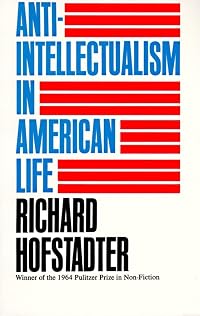
Anti-Intellectualism in American Life
by Richard Hofstadter
On This Page
Description
This book throws light on many features of the American character. Its concern is not merely to portray the scorners of intellect in American life, but to say something about what the intellectual is, and can be, as a force in a democratic society.Tags
Recommendations

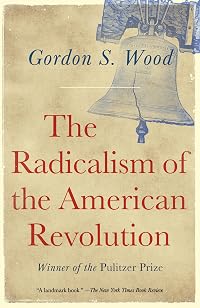
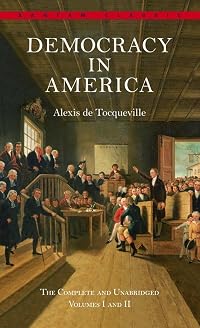
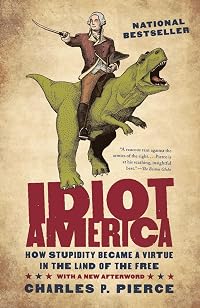
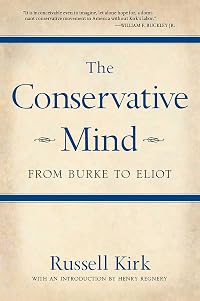












Member Recommendations
Member Reviews
The title of this awarded book from the 1960s immediately stood out to me in light of recent political events, and it did not disappoint. From its earliest days, a distinct class of intellectuals has sought a strong role in American society. Puritan divines, for all their shortcomings, set in motion an intellectual movement that continues to this day, especially throughout New England. America’s national founding generation also consisted of intellectually informed men to orient the country towards higher ideals.
Yet after that generation passed, the highbrow John Quincy Adams lost the presidency to folksy Andrew Jackson in a peaceful revolution. Ever since Jacksonian democracy found its place, American politics have never been the show more same. Populism replaced dispassionate discourse as the prime driver of elections and decision-making. Most viewed intellectualism and high culture not as avenues for effective leadership but as a weird subculture that they do not want to associate with. This attitude maintained itself throughout the Gilded Age.
Teddy Roosevelt’s reforms of the early twentieth century similarly gave way to subsequent crassness. To counter the Great Depression and win World War II, FDR relied upon a “brain trust” and military intelligence to guide his steps. The need for national experts was clearly seen. To the author, that need became swept aside in the 1950s but returned in JFK’s Camelot era, around the time of this book’s publishing. Eras after this book have seen an ebb and flow of intellectual culture, but today, the nerdiness required for technology, at least, will likely remain.
Richard Hofstadter does an excellent job of capturing this history. Indeed, I can’t find many recent findings to update his historical analysis, which comprise the first two-thirds of this book. He then enters into a section on education. This digression is clearly based on controversies of his time, 60 years ago. Pros and cons of John Dewey’s views play a prominent role. The field of education has since moved onto new challenges, but the spirit of many battles remain. Similarly, his concluding view of the trajectory of American culture is likewise dated, but many of the figures stand out as still noteworthy decades later.
Reading contemporary newspapers’ political pages can make readers feel like they’re alone in valuing the mind’s appreciation for cultural idealism. This book reminds us that many Americans before us experienced similar tensions between their ideals and their fellow citizens. Today’s clashes remain important, but they are not totally new, as Hofstadter’s noteworthy critique shows us. It doesn’t signal a surefire way to avoid these controversies, unfortunately, but it does provide solace that those of us who enjoy a life of the mind have never been alone. show less
Yet after that generation passed, the highbrow John Quincy Adams lost the presidency to folksy Andrew Jackson in a peaceful revolution. Ever since Jacksonian democracy found its place, American politics have never been the show more same. Populism replaced dispassionate discourse as the prime driver of elections and decision-making. Most viewed intellectualism and high culture not as avenues for effective leadership but as a weird subculture that they do not want to associate with. This attitude maintained itself throughout the Gilded Age.
Teddy Roosevelt’s reforms of the early twentieth century similarly gave way to subsequent crassness. To counter the Great Depression and win World War II, FDR relied upon a “brain trust” and military intelligence to guide his steps. The need for national experts was clearly seen. To the author, that need became swept aside in the 1950s but returned in JFK’s Camelot era, around the time of this book’s publishing. Eras after this book have seen an ebb and flow of intellectual culture, but today, the nerdiness required for technology, at least, will likely remain.
Richard Hofstadter does an excellent job of capturing this history. Indeed, I can’t find many recent findings to update his historical analysis, which comprise the first two-thirds of this book. He then enters into a section on education. This digression is clearly based on controversies of his time, 60 years ago. Pros and cons of John Dewey’s views play a prominent role. The field of education has since moved onto new challenges, but the spirit of many battles remain. Similarly, his concluding view of the trajectory of American culture is likewise dated, but many of the figures stand out as still noteworthy decades later.
Reading contemporary newspapers’ political pages can make readers feel like they’re alone in valuing the mind’s appreciation for cultural idealism. This book reminds us that many Americans before us experienced similar tensions between their ideals and their fellow citizens. Today’s clashes remain important, but they are not totally new, as Hofstadter’s noteworthy critique shows us. It doesn’t signal a surefire way to avoid these controversies, unfortunately, but it does provide solace that those of us who enjoy a life of the mind have never been alone. show less
After 50 years, Richard Hofstadter’s analysis of anti-intellectualism in America is not just a historical curiosity; it’s a vital work that continues to inform modern thought and policy. When we see attacks on the liberal arts, on the purpose of the university, on science, on history courses in high school that do not function as mere patriotic indoctrination, when we idealize Bill Gates the college dropout, we see that tendency in full flower today. Though Hofstadter’s history stops in the early 1960s—at a culturally critical break point—if we want to understand the roots of modern Know-Nothingism, we could do far, far worse than to revisit this book. It is a book we should know, and not only know of. It is not a light read, show more but Hofstadter maintains a clear tone. He does not dumb down or make concessions, but neither does he stoop to pedantic jargon or pretentious pseudo-academic language.
That said, the book is 50 years old, and as such, it’s worth assessing it critically in light of the intervening decades. To do so is not to devalue it, but to enable it to inform our current perspectives. The most striking note is that this is almost entirely the history of the white male. This is almost inevitable to some degree, given the scope, though the debates between W.E.B. DuBois and Booker T. Washington, as an example, also exist within the same tradition. One particularly curious limitation is that it’s the history—and in the religion section, explicitly so–of the Christian white male. The word “Jew” is not mentioned, even when discussing opposition to Louis Brandeis. The Founding Fathers are discussed with a degree of adulation that would not be seen in a comparably liberal text today; the dismissal of accusations against Jefferson is striking, given what we now know to be true. The link between the feminization of the US teaching profession and its lack of prestige or respect is well noted and continues to be, but would probably have been expressed differently today.
The section on education raises the most questions for me. It is in this sector that the tensions between democracy and elitism, as Hofstadter defines them, are most pronounced in contemporary America. The primary weakness of the book, such as it is, is that it takes the benefits of the democratic tendency to be well taught and therefore self evident, and so the benefits of the elite are those that are highlighted. Although both conservative suspicion of intellect and what he sees as the progressive bigotry of low expectations—attacking the viewpoint prevalent in the early 20th century that a large proportion of children were not educable—he does not fully explore the need for a more democratic, less tiered system in the US, despite acknowledging the barriers of poverty and racial prejudice. At the same time, examining the system today, I can imagine Hofstadter railing against it and continuing his dual pronged attack: while we talk now of rigor and high expectations, we continue to prioritize intelligence over intellect, on both sides of the political spectrum. At the time of writing, the US was moving into a “mass preparatory” age, and we have yet to learn how to do it well.
Despite its age, however, far too much of the book feels immediate and fresh when read today. Adlai Stevenson is nothing more than a figure in a textbook to me, but the parallels came fast and thick: contemporary evangelical Christianity would have flowed easily from the discussions on early American religion; our continued belief that success in business, being a practical matter, is more preparation for public office than theoretical knowledge acquired as a specialist; our lack of support for science and art that we do not deem to be practical. Much has changed since 1964, but the tendencies Hofstadter describes so well have not. show less
That said, the book is 50 years old, and as such, it’s worth assessing it critically in light of the intervening decades. To do so is not to devalue it, but to enable it to inform our current perspectives. The most striking note is that this is almost entirely the history of the white male. This is almost inevitable to some degree, given the scope, though the debates between W.E.B. DuBois and Booker T. Washington, as an example, also exist within the same tradition. One particularly curious limitation is that it’s the history—and in the religion section, explicitly so–of the Christian white male. The word “Jew” is not mentioned, even when discussing opposition to Louis Brandeis. The Founding Fathers are discussed with a degree of adulation that would not be seen in a comparably liberal text today; the dismissal of accusations against Jefferson is striking, given what we now know to be true. The link between the feminization of the US teaching profession and its lack of prestige or respect is well noted and continues to be, but would probably have been expressed differently today.
The section on education raises the most questions for me. It is in this sector that the tensions between democracy and elitism, as Hofstadter defines them, are most pronounced in contemporary America. The primary weakness of the book, such as it is, is that it takes the benefits of the democratic tendency to be well taught and therefore self evident, and so the benefits of the elite are those that are highlighted. Although both conservative suspicion of intellect and what he sees as the progressive bigotry of low expectations—attacking the viewpoint prevalent in the early 20th century that a large proportion of children were not educable—he does not fully explore the need for a more democratic, less tiered system in the US, despite acknowledging the barriers of poverty and racial prejudice. At the same time, examining the system today, I can imagine Hofstadter railing against it and continuing his dual pronged attack: while we talk now of rigor and high expectations, we continue to prioritize intelligence over intellect, on both sides of the political spectrum. At the time of writing, the US was moving into a “mass preparatory” age, and we have yet to learn how to do it well.
Despite its age, however, far too much of the book feels immediate and fresh when read today. Adlai Stevenson is nothing more than a figure in a textbook to me, but the parallels came fast and thick: contemporary evangelical Christianity would have flowed easily from the discussions on early American religion; our continued belief that success in business, being a practical matter, is more preparation for public office than theoretical knowledge acquired as a specialist; our lack of support for science and art that we do not deem to be practical. Much has changed since 1964, but the tendencies Hofstadter describes so well have not. show less
Having lived through the last 4 years of the Trump presidency, I can't help but wonder what the hell had happened to the United States. According to the polls, half the country blindly supported him, regardless of what he said or did, regardless of any institutional norms he managed to destroy. His speeches (or, really, rambling rants stinking with the filth of racism, sexism, jingoism...) managed to make no difference in his followers' undying loyalty. Coming from 8 years prior with an intellectual president, Barack Obama, it was a complete 180 in the direction many thought the country would head to. If you were paying attention, then you were trying to search for answers as to why an anti-intellectual imbecile was voted to the highest show more office in the land.
My personal search brought me to Richard Hofstadter and to this very well researched work. He tackles the underlying theme of anti-intellectualism that has been prevalent in four major pillars of American society: the religious, political, educational and business institutions. He offers a broad look of history, jumping in between pre-Revolutionary times until the mid 20th century. Within all of these, it seems that practicality was deemed more important than being educated in a classroom. Here are some examples I remember:
1. In religion, it was said that the one true book anyone ever needed to read was the Bible, and to dive into other works was foolish and unnecessary. A learned preacher was looked at with suspicion, and his sermons were thought of as being too intellectual for the simple man to follow, too difficult to understand. As one group of evangelical workers had put it: "It is more difficult to labour with educated men, with cultivated minds and moreover predisposed to skepticism, than with the uneducated."
2. Politics suffered from the same accusations. A man who tilled the land and worked with his hands knew more about how to run a government, how to speak to the layman; the "egghead" with his face shoved in books couldn't possibly understand any of this.
3. Colleges were looked at with dubiety as well. It was believed that only the rich and educated could send their kids there; the son of the farmer had no chance of being accepted. Not to mention that taxes had to be paid to support these institutions of higher learning, and that didn't jive well with the common people.
4. Practicality and business went hand in hand in the early 18th century. As industrialism began to grow, it became apparent that the need of college-educated men was needed to tackle the increasingly complicated workings of a growing economy, and international commerce was beginning to become a thing. Regardless, intellectualism was still being attacked.
In our current times, anti-intellectualism is still alive and well. In media, the scientist is still portrayed as a wily-eyed, wild-haired maniac who's esoteric dialogues only aim to confuse. The educated were looked at as effeminate -- real men worked with their hands and were not leisurely lounging around with their heads clouded in reverie. How many movies depict the 'nerd' being bullied around by the athlete? Whenever the 'nerd' speaks about the wonders of the universe or the complexity of biology, what to make of the looks of disgust and the eye-rolls they are given?
If you are wondering how we in America got here, this would be a great place to begin. show less
My personal search brought me to Richard Hofstadter and to this very well researched work. He tackles the underlying theme of anti-intellectualism that has been prevalent in four major pillars of American society: the religious, political, educational and business institutions. He offers a broad look of history, jumping in between pre-Revolutionary times until the mid 20th century. Within all of these, it seems that practicality was deemed more important than being educated in a classroom. Here are some examples I remember:
1. In religion, it was said that the one true book anyone ever needed to read was the Bible, and to dive into other works was foolish and unnecessary. A learned preacher was looked at with suspicion, and his sermons were thought of as being too intellectual for the simple man to follow, too difficult to understand. As one group of evangelical workers had put it: "It is more difficult to labour with educated men, with cultivated minds and moreover predisposed to skepticism, than with the uneducated."
2. Politics suffered from the same accusations. A man who tilled the land and worked with his hands knew more about how to run a government, how to speak to the layman; the "egghead" with his face shoved in books couldn't possibly understand any of this.
3. Colleges were looked at with dubiety as well. It was believed that only the rich and educated could send their kids there; the son of the farmer had no chance of being accepted. Not to mention that taxes had to be paid to support these institutions of higher learning, and that didn't jive well with the common people.
4. Practicality and business went hand in hand in the early 18th century. As industrialism began to grow, it became apparent that the need of college-educated men was needed to tackle the increasingly complicated workings of a growing economy, and international commerce was beginning to become a thing. Regardless, intellectualism was still being attacked.
In our current times, anti-intellectualism is still alive and well. In media, the scientist is still portrayed as a wily-eyed, wild-haired maniac who's esoteric dialogues only aim to confuse. The educated were looked at as effeminate -- real men worked with their hands and were not leisurely lounging around with their heads clouded in reverie. How many movies depict the 'nerd' being bullied around by the athlete? Whenever the 'nerd' speaks about the wonders of the universe or the complexity of biology, what to make of the looks of disgust and the eye-rolls they are given?
If you are wondering how we in America got here, this would be a great place to begin. show less
A classic work on the dismissal of intellectual practices in America, differentiated from similar (but less prominent) movements in other parts of the world. The work was written during the Kennedy administration, when intellectualism was slightly in the ascendancy, so his viewpoint about the people who would not take over the world could have seemed valid at that time...there had been several periods where intellectuals were, if not truly valued, at least seen as useful. Since that time, however, it has all been a downhill slide, and the book could easily be written today without too much amendment (just cut and paste some of the chapters on the early 20th century into the early 21st century, update the names, and voila!). It is a show more vital corrective for anyone who thinks that the current period is somehow unique in American history and just arose out of the blue or even recently. It is the culmination of a thread of anti-intellectualism that has been present in the country since the beginning - before the founders, even. The main complaints are with the length - there is a lot of redundancy that could be shaved out, and that would make it a slightly easier read for people who do not read 400+ page books but could benefit from reading this one. The main other complaint is that books written during this period share a common fallacy - the idea that people were men, and that there were only a few women scattered through history who made contributions. Even in 1963, this was a bit outdated of a worldview, and it grates. Otherwise, a well written, well researched, and important work. show less
I couldn't finish this the first time I tried. Just wasn’t in the mood at the time. I thought it would be kind of interesting reading on whacked out stuff like the Know-Nothings, the KKK, nativism, the Birchers, and so on, but it turns out it’s mostly about the influence of Evangelicals on our politics and culture throughout American history. And I thought I wanted to know more about that too, but it turned out to be pretty boring in practice, so I dropped it, for now. I’ll finish eventually, because it feels like stuff I ought to know, in the light of current events.
I ended up finishing this up a couple of years later. It was mostly good, but what he groups under anti-intellectualism gets a little too broad for my liking. I mean, show more that's the thesis and what the book is setting out to do, and most of it probably does count as anti-intellectual under a strict definition of the term, but it sort of rankled to see any form of populism or attempts at democratic participation in institutions getting lumped in with Bircher loons. I'm pretty sure he doesn't entirely mean to make those equivalencies, but it's sort of a problem with the project. When you start to make progressive and non-canon education look like it's somewhere on a continuum with Bircher wingnuttiness, something has gone wrong, category-wise. All that might fall under the rubrik of "anti-intellectual," but that's putting forward an awfully narrow and conservative idea of what "intellectual" is. Plenty of credible intellectuals were for the educational ideas and some of the other demo-populist social trends he covers, whereas you can't find many if any who were for the loonier stuff.
I dunno, maybe I just had the wrong idea about what this book was setting out to do to begin with, as, like I said above, I thought it was going to focus much more on the really nasty nativist, racist, patriarchal, etc strands of American anti-intellectualism than it did. show less
I ended up finishing this up a couple of years later. It was mostly good, but what he groups under anti-intellectualism gets a little too broad for my liking. I mean, show more that's the thesis and what the book is setting out to do, and most of it probably does count as anti-intellectual under a strict definition of the term, but it sort of rankled to see any form of populism or attempts at democratic participation in institutions getting lumped in with Bircher loons. I'm pretty sure he doesn't entirely mean to make those equivalencies, but it's sort of a problem with the project. When you start to make progressive and non-canon education look like it's somewhere on a continuum with Bircher wingnuttiness, something has gone wrong, category-wise. All that might fall under the rubrik of "anti-intellectual," but that's putting forward an awfully narrow and conservative idea of what "intellectual" is. Plenty of credible intellectuals were for the educational ideas and some of the other demo-populist social trends he covers, whereas you can't find many if any who were for the loonier stuff.
I dunno, maybe I just had the wrong idea about what this book was setting out to do to begin with, as, like I said above, I thought it was going to focus much more on the really nasty nativist, racist, patriarchal, etc strands of American anti-intellectualism than it did. show less
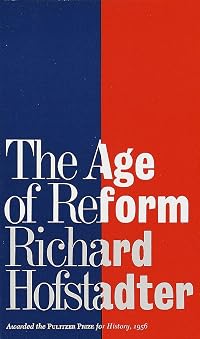
Classic by Pulitzer Prize winning author, actually a better book than the prize winner Age of Reform. Hofstadter discusses the tendency of American's to ignore science and education, and to marginalize it's intellectuals for lacking cultural ideal. Very thoughtful read, and a must have in the American History library.
An extremely thoughtful historical consideration of the role that intellectuals and anti-intellectualism have played in American life. Written in the early '60s, so there's a great deal more to consider-- but this is an invaluable study.
Members
- Recently Added By
Lists

Refuse, Resist, Rebel
38 works; 3 members

Recommended Election Year Reads
9 works; 1 member

Review 2
36 works; 1 member
Author Information

53+ Works 6,907 Members
DeWitt Clinton Professor of History at Columbia University from 1959 until the time of his death, Richard Hofstadter was one of the most influential historians in post--World War II America. His political, social, and intellectual histories raised serious questions about assumptions that had long been taken for granted and cast the American show more experience in an interesting new light. His 1948 work, The American Political Tradition, is an enduring classic study in political history. His 1955 work, The Age of Reform, which still commands respect among both historians and general readers, won him that year's Pulitzer Prize. A measure of Hofstadter's standing in literary and scholarly circles is the honors he received in 1964 for Anti-Intellectualism in American Life (1963)---Pulitzer Prize for general nonfiction, the Ralph Waldo Emerson Prize of Phi Beta Kappa, and the Sidney Hillman Prize Award. Hofstadter's greatest talent, however, may have been his ability to order complex events and issues and to synthesize from them a rational, constructively critical perspective on American history. (Bowker Author Biography) show less
Awards and Honors
Awards
Distinctions
Series
Belongs to Publisher Series
Vintage Books (V-317)
Common Knowledge
Classifications
Statistics
- Members
- 1,614
- Popularity
- 14,028
- Reviews
- 17
- Rating
- (4.11)
- Languages
- English
- Media
- Paper, Audiobook, Ebook
- ISBNs
- 9
- ASINs
- 18