Thirty Seconds over Tokyo
by Ted W. Lawson
On This Page
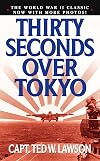
Description
From the Publisher: Ted W. Lawson's classic Thirty Seconds Over Tokyo appears in an enhanced reprint edition for the sixtieth anniversary of the legendary Doolittle Raid on Japan. "One of the worst feelings about that time," Ted W. Lawson writes, "was that there was no tangible enemy. It was like being slugged with a single punch in a dark room, and having no way of knowing where to slug back." He added, "And, too, there was a helpless, filled-up, want-to-do-something feeling that [the show more Japanese] weren't coming -- that we'd have to go all the way over there to punch back and get even." Which is what "the Tokyo Raiders" did. Lawson gives a vivid eyewitness account of the unorthodox assignment that eighty-five intrepid volunteer airmen under the command of celebrated flier James H. Doolittle executed in April 1942. The plan called for sixteen B-25 twin-engine medium bombers of the Army Air Forces to take off from the aircraft carrier Hornet, bomb industrial targets in Japan, and land at airfields in China. While the raid came off flawlessly, completely surprising the enemy, bad weather, darkness, and a shortage of fuel caused by an early departure took a heavy toll on the raiders. For many, the escape from China proved a greater ordeal. This anniversary edition features a foreword by noted aviation writer Peter B. Mersky and an introduction by Mrs. Ellen R. Lawson, Ted Lawson's widow, as well as twice as many photographs as the original book, several published here for the first time. show lessTags
Recommendations














Member Recommendations

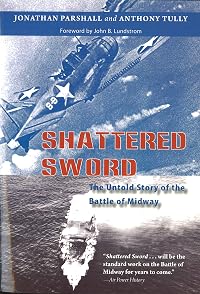
Cecrow Serves well as a sequel. Describes how Doolittle precipitated the Japanese attack on Midway, and its result.
Member Reviews
Thirty Seconds Over Tokyo is more than a war memoir—it’s a testament to courage and commitment that has shaped my own perspective on life. I’ve been drawn to WWII history since high school, especially the story of the naval war in the Pacific, where the Doolittle Raid stands as one of the most daring moments in airpower history. This raid, launched from the USS Hornet, was a bold strike into the heart of Japan, carried out by men who knew they might have to ditch in the ocean or crash-land in China. Few expected to make it back.
Years later, I attended the Air Force Academy, where the legacy of the Doolittle Raiders held a place of honor. In Arnold Hall, the cadet recreation center named for General "Hap" Arnold—the very chief of show more the Air Corps who ordered the raid—stood a set of silver goblets, one for each of the Raiders, alongside a vintage bottle of cognac. The Raiders had made a pact to drink from that bottle only when two of them were left. I even had the privilege of meeting Colonel Richard “Dick” Cole, the last surviving Raider, at an Academy event—a living symbol of the courage I had read about.
The book itself has an origin story, too: I found a first edition at a Goodwill in Payson, Arizona, for just fifty cents. It’s easily the best fifty cents I’ve ever spent. From the moment I opened it, I couldn’t put it down. Lawson’s account is gripping, heroic, and at times, heartbreaking. There’s something raw and indescribable in his storytelling—a sense of resolve and duty that lingers long after the last page.
Thirty Seconds Over Tokyo captures more than the physical bravery of men who launched into the unknown with only the faintest hope of returning. It’s about a deeper courage—the resolve of ordinary people choosing to risk everything for a cause they believed in. They fought to defend freedom against unimaginable odds simply because it was the right thing to do.
Reading this book has left an imprint on me. It’s a reminder of my own commitment to “do the right thing,” despite the obstacles. In a way, it’s become a standard I hold myself to—a model of the courage and integrity I aspire to. The Doolittle Raiders exemplify a spirit that isn’t about victory alone; it’s about the willingness to sacrifice, to make hard choices, and to persist in the face of the impossible.
In today’s world, the courage of the Doolittle Raiders stands as a powerful reminder of values that endure—integrity, service, excellence. As our culture faces new challenges, it’s worth remembering the example they set: to act with honor and resolve, no matter the odds. For anyone seeking inspiration, a renewed sense of duty, or a window into a generation that embodied true grit, this book is essential reading. show less
Years later, I attended the Air Force Academy, where the legacy of the Doolittle Raiders held a place of honor. In Arnold Hall, the cadet recreation center named for General "Hap" Arnold—the very chief of show more the Air Corps who ordered the raid—stood a set of silver goblets, one for each of the Raiders, alongside a vintage bottle of cognac. The Raiders had made a pact to drink from that bottle only when two of them were left. I even had the privilege of meeting Colonel Richard “Dick” Cole, the last surviving Raider, at an Academy event—a living symbol of the courage I had read about.
The book itself has an origin story, too: I found a first edition at a Goodwill in Payson, Arizona, for just fifty cents. It’s easily the best fifty cents I’ve ever spent. From the moment I opened it, I couldn’t put it down. Lawson’s account is gripping, heroic, and at times, heartbreaking. There’s something raw and indescribable in his storytelling—a sense of resolve and duty that lingers long after the last page.
Thirty Seconds Over Tokyo captures more than the physical bravery of men who launched into the unknown with only the faintest hope of returning. It’s about a deeper courage—the resolve of ordinary people choosing to risk everything for a cause they believed in. They fought to defend freedom against unimaginable odds simply because it was the right thing to do.
Reading this book has left an imprint on me. It’s a reminder of my own commitment to “do the right thing,” despite the obstacles. In a way, it’s become a standard I hold myself to—a model of the courage and integrity I aspire to. The Doolittle Raiders exemplify a spirit that isn’t about victory alone; it’s about the willingness to sacrifice, to make hard choices, and to persist in the face of the impossible.
In today’s world, the courage of the Doolittle Raiders stands as a powerful reminder of values that endure—integrity, service, excellence. As our culture faces new challenges, it’s worth remembering the example they set: to act with honor and resolve, no matter the odds. For anyone seeking inspiration, a renewed sense of duty, or a window into a generation that embodied true grit, this book is essential reading. show less
Captain Ted Lawson was a young man anxious to deliver, under pressure to perform in a high stress situation. You can't really blame him for mission errors like the flaps error on take-off, flying dangerously close to the water after the bombing when it might not have been so necessary, or attempting to set down on a beach . It took guts to do that mission at all, and to do it as successfully as his crew and their fellow bomber crews managed is a testament to their generation and the service they provided to we who followed. More than half of this book is about what happens after the raid and gives some good insight into the Chinese experience of World War II.
Ted wrote this book shortly after the events, which enabled him to remember a show more lot of the details. It's also an interesting artifact of its time: the smattering of 1940s lingo, and the wartime hatred of the enemy in statements like when he hopes for a "series of future raids which, I pray, will blow Japan off the map of the world." He gives several reasons for his hatred. I was hoping for an anniversary afterword that might share his perspective years or decades later, to see what if anything changed about his opinion of his performance and the Japanese. No such luck, although there's a good 2002 introduction by his wife that's worth re-reading after you're done (in recent enough editions.)
Extra kudos for immortalizing Johnny Beep-Beep, my kind of driver. For other recommendations I'd point to "Midway: The Battle that Doomed Japan". It could serve well as a sequel to this book, since it is similarly a record of events by somone (a Japanese navy man) who was present, and describes how the Doolittle Raid precipitated the too-hasty Japanese attack on Midway that wasn't necessarily their wisest strategic course of action. show less
Ted wrote this book shortly after the events, which enabled him to remember a show more lot of the details. It's also an interesting artifact of its time: the smattering of 1940s lingo, and the wartime hatred of the enemy in statements like when he hopes for a "series of future raids which, I pray, will blow Japan off the map of the world." He gives several reasons for his hatred. I was hoping for an anniversary afterword that might share his perspective years or decades later, to see what if anything changed about his opinion of his performance and the Japanese. No such luck, although there's a good 2002 introduction by his wife that's worth re-reading after you're done (in recent enough editions.)
Extra kudos for immortalizing Johnny Beep-Beep, my kind of driver. For other recommendations I'd point to "Midway: The Battle that Doomed Japan". It could serve well as a sequel to this book, since it is similarly a record of events by somone (a Japanese navy man) who was present, and describes how the Doolittle Raid precipitated the too-hasty Japanese attack on Midway that wasn't necessarily their wisest strategic course of action. show less
Thirty Seconds Over Tokyo is a tightly focused yarn about Ted Lawson's participation in the Doolittle Raid. In the darkest days of 1942, with fascism on the march everywhere, a handful of pilots flying B-25s from the USS Hornet made a bee-sting raid on Japan. The raid had negligible material impact, but was an import moral boost.
Lawson's memoir moves swiftly through pilot training, to the raid itself, and then the meat of the book, the long journey home. Severely wounded while ditching his bomber, Lawson's leg was amputated in China, and he was carried to safety on vehicles ranging from stretchers to trucks.
This book was written for a popular audience, and published in the middle of the war. So it's limited in scope, but it's fun and show more its quick. show less
Lawson's memoir moves swiftly through pilot training, to the raid itself, and then the meat of the book, the long journey home. Severely wounded while ditching his bomber, Lawson's leg was amputated in China, and he was carried to safety on vehicles ranging from stretchers to trucks.
This book was written for a popular audience, and published in the middle of the war. So it's limited in scope, but it's fun and show more its quick. show less
A very personal story, told in plain language. The importance of the Doolittle Raid on the American psyche was incalculable, despite only moderate damage by the raiders. The notion of putting twin engine bombers on the postage stamp deck of a carrier was genius. That this pilot and his crew got through China to safety without speaking a word of Chinese defies belief, they did not even know how to say the name of the city they were trying to reach. Along the way the author has his leg amputated, without benefit of a full course of anesthesia. There are more complete accounts of the raid as a whole, but this is still my favorite.
Pearl Harbor and the attacks on other American bases throughout the Pacific were an enormously demoralizing shock for the American public. So, the daring raid on the Japanese mainland less than 6 months later came as a complete surprise - to both Japan and America. If you've seen the movie Pearl Harbor, you might remember the raid the movie ends with. It's a bit dramatized, but not so far off. But what it doesn't convey is the huge impact such a small raid had on the war. The Japanese went from "fearless to fearful," their sense of isolated security and racial superiority suddenly threatened, and Americans realized they were still in the fight.
This is the account of one of the pilots of those bombers, Capt. Ted Lawson, that implausibly show more took off from aircraft carriers. They had to take off much further from Japan than planned due to their sighting by a small monitoring ship (which was sunk) and didn't have enough fuel to fly to safe bases within China. The planes nonetheless completed their bombing missions - a pin prick, really - then made their way the best they could to the coast of China. Most planes crash landed and Lawson and his crew were severely injured (Lawson's leg had to be amputated). Spread out along the coast, only a few were captured by the Japanese but most managed, with a great deal of hardship and the self-sacrificing help of the oppressed Chinese, to escape and return to America.
Written by Capt. Lawson, I found it much better written than I had expected and it caused me to cringe numerous times as I read what the crew went through in their ordeal. First-hand accounts are valuable, but can be limited in scope and even self-serving, but his account is very well done. It's a short and easy read that gives the reader an insight into what went into such a daring raid. (For a great assessment of just how important the "Doolittle Raid" was, see [b:The Aviators: Eddie Rickenbacker, Jimmy Doolittle, Charles Lindbergh, and the Epic Age of Flight|17345262|The Aviators Eddie Rickenbacker, Jimmy Doolittle, Charles Lindbergh, and the Epic Age of Flight|Winston Groom|https://d.gr-assets.com/books/1360646300s/17345262.jpg|24084458] by Winston Groom.) show less
This is the account of one of the pilots of those bombers, Capt. Ted Lawson, that implausibly show more took off from aircraft carriers. They had to take off much further from Japan than planned due to their sighting by a small monitoring ship (which was sunk) and didn't have enough fuel to fly to safe bases within China. The planes nonetheless completed their bombing missions - a pin prick, really - then made their way the best they could to the coast of China. Most planes crash landed and Lawson and his crew were severely injured (Lawson's leg had to be amputated). Spread out along the coast, only a few were captured by the Japanese but most managed, with a great deal of hardship and the self-sacrificing help of the oppressed Chinese, to escape and return to America.
Written by Capt. Lawson, I found it much better written than I had expected and it caused me to cringe numerous times as I read what the crew went through in their ordeal. First-hand accounts are valuable, but can be limited in scope and even self-serving, but his account is very well done. It's a short and easy read that gives the reader an insight into what went into such a daring raid. (For a great assessment of just how important the "Doolittle Raid" was, see [b:The Aviators: Eddie Rickenbacker, Jimmy Doolittle, Charles Lindbergh, and the Epic Age of Flight|17345262|The Aviators Eddie Rickenbacker, Jimmy Doolittle, Charles Lindbergh, and the Epic Age of Flight|Winston Groom|https://d.gr-assets.com/books/1360646300s/17345262.jpg|24084458] by Winston Groom.) show less
A taut and compelling account of the author's part in the first bombing raid over Tokyo after Pearl Harbor. The writing is simple and straightforward, without embellishment, perfectly suited for displaying the casual and unselfconscious heroism of the men involved in the raids. The mission was to secretly approach the coast of Japan and take off from a convoy of aircraft carriers, drop their bombs over targets in Tokyo, and land in China. As it happened, an encounter with a Japanese ship forced them to depart from several hundred miles further out, greatly reducing their chances of landing safely after the bombing. Most of the planes were forced to crash-land, including the author's, and he suffered a leg wound that later forced an show more in-field amputation. Throughout the book there is never a hint of railing at the fates, simply a quiet conviction that this was a job they had to do. The same attitude pervades other WWII accounts I have read, and reinforces my agreement with Tom Brokaw that this was truly the "greatest generation". Illustrated with photographs. show less
This first-hand account of the Doolittle Raid - the secret preparations, the war itself and the almost unbelievable adventures of the airmen in the weeks that followed - is one of the greatest stories of American bravery and ingenuity that has ever been written. Ted Lawson piloted one of the planes that roared over Tokyo. In the subsequent crack-up on the Chinese coast, he sustained injuries that ultimately cost him a leg. The story of his rescue, told simply and directly, makes thrilling and moving reading, serving again to remind us all of the great acts of sacrifice and heroism performed by members of our armed forces during World War II.
Members
- Recently Added By
Lists

Top Five Books of 2015
811 works; 241 members

Book Titles Mentioned In Newberry Medal And Honor Books
884 works; 3 members

THE WAR ROOM
813 works; 24 members
Author Information

7+ Works 1,059 Members
Ted W. Lawson (1917-1992) was a native of California. He joined the Army Air Corps while working for Douglas Aircraft Company in Santa Monica and received his wings in November 1940. After the attack on Pearl Harbor, he volunteered for a secret mission that evolved into the raid on Tokyo in April 1942. Random House published his account of the show more raid, Thirty Seconds Over Tokyo, in 1943. Lawson subsequently served as technical advisor to MGM during the making of the popular wartime movie based on his book. After retiring from military service in 1945, he reentered private industry and worked on several projects that involved aircraft and space programs show less
All Editions
Awards and Honors
Distinctions
Series
Belongs to Publisher Series
Landmark Books (35)
Common Knowledge
- Canonical title
- Thirty Seconds over Tokyo
- Original publication date
- 1943
- People/Characters
- James H. Doolittle
- Important places
- Tokyo, Japan; Kobe, Japan; Nagoya, Japan; Yokohama, Japan
- Important events
- Doolittle Raid
- Related movies
- Thirty Seconds Over Tokyo (1944 | IMDb)
- Dedication
- Dedicated to Lieutenants Bill Farrow, Dean Hallmark, George Barr, Bob Hie Bob Meder, Chase Nielson, Sergeants Harold Spatz, William Dieter, and Corporals Donald Fitzmaurice and Jacob Deshazer. They didn't get back. God he... (show all)lp them.
- First words
- I helped bomb Tokyo on the Doolittle raid of April 18, 1942.
- Last words
- (Click to show. Warning: May contain spoilers.)P.S. An expected Japanese occupation of this place has delayed this letter, but I trust it gets out all right.
- Original language
- English
- Disambiguation notice
- The Landmark series book is significantly different than the original version and is abridged. Also the narrative is in a different order. Please do not combine! Thank you.
Classifications
Statistics
- Members
- 987
- Popularity
- 26,719
- Reviews
- 16
- Rating
- (4.04)
- Languages
- English, French, Italian, Norwegian (Bokmål)
- Media
- Paper, Audiobook, Ebook
- ISBNs
- 12
- ASINs
- 45