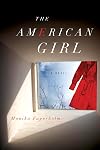
The American Girl
by Monika Fagerholm
On This Page
Description
In 1969, a young girl makes a trip from Coney Island to the swampy coastland on the rural outskirts of Helsinki, Finland. There, her death will immediately become part of local mythology, furnishing boys and girls with fodder for endless romantic imaginings. Everyone who lives near the swamp dreams about Eddie de Wire, the lost American girl. . . . For both Sandra and Doris, two lonely, dreaming girls abandoned in different ways by their parents, this myth will propel them into their show more coming-of-age through mischievous role-playing games of love and death, in search of hidden secrets, the mysteries of the swamp, and the truth behind Eddie's death. The girls construct their own world, their own language, and their own rules. But playing adult games has adult consequences, and what begins as two girls just striking matches leads to an inferno that threatens to consume them and tear their friendship apart.Crime mystery and gothic saga, social study and chronicle of the late sixties and early seventies, a portrait of the psyche of young girls on the cusp of sexual awakening, The American Girl is a bewitching glimpse of the human capacity for survival and for self-inflicted wounds. Fagerholm is a modern-day heir to the William Faulkner heritage of family tragedy, with a highly musical and literary prose style that is rich with wit and literary allusions. The American Girl will teach you the meaning of trust as you give yourself entirely to the original storytelling style of Monika Fagerholm.
From the Trade Paperback edition.
. show less
Tags
Recommendations























Member Reviews
The American Girl, set in the mid-seventies, is the coming of age story of Doris and Sandra, two girls growing up in the District, a rural, marshy area outside of a city. The story begins a decade or so earlier, when a recent addition to the District's inhabitants -- the titular American girl -- drowned in the marsh; her boyfriend, a local boy, committed suicide the same day. What really happened back then has never come to light; clearly some members of the close and self-contained rural community are keeping secrets. By the time Doris and Sandra take an interest in the mystery, the case has become a part of the local mythology for locals and newcomers alike, a mystery ripe for the solving, yet safeguarded from outside (or inside) show more involvement. It is through elaborate games of make-belief and an intensely close friendship with each other that the girls engage with a long-kept mystery that has been influencing their world and everyone in it.
First, the good parts.
It took me about half of the book before managed to appreciate Fagerholm's style. She encodes her story as a stream of consciousness, royally salted with unfinished phrases, repetitions ("so to speak", "in other words", "this is how it was"); it meanders in the way of someone who is working their way towards a point but has to introduce several side-issues along the way. And because much of the story is presented as characters' ruminations and memories, this style is -- in theory -- eminently fitting to the narration.
Similarly meandering is this book on the level of the plot: the approach is cyclical rather than chronological, with scenes being endlessly revisited much in the way that uncomfortable or unresolved memories might be. But each time an event rolls around again, the reader has been presented with more context to place this scene in. For every scene, event or realization, the author establishes links with numerous others: all events are connected -- causally, emotionally, via the repetition of phrases, or through characters seeing resemblances. Everything becomes part of an all-encompassing whole, the American girl's death sticking out as unexplored white on a world map.
But, and here comes the but, all of it -- the halting style, the achronological narrative, the interconnected network of meaning coming at readers -- goes to such an extent that nothing stands out from its surroundings any more. And it was at that point that the book lost me: the conceit may be interesting, but it failed to grip me.
Another consequence of the memory approach to narration is that all characters' voices end up feeling the same: a confused and abused eight-year-old, an immigrated young American, a disillusioned stripper, teenage girls coming of age -- they all sound exactly like each other, and like the narrator. Perhaps that was the point, but I couldn't help but feel that all the effort put into creating a unique style had overshot its goal and was now driving the book into tedium. When every event and dialogue in the book is pregnant with the same level of relevance and importance, and narrated in the same voice, the effect is one of oversaturation. Fagerholm comes off as trying too hard to prove too much. There is a word for that, but I don't like using it, so I'm not yet going to say it.
In addition, the truth behind the mysteries turns out to be not that earth-shattering, the games set up for dealing with growing up and keeping secrets not that engaging. And so, for me, much of the book's cyclical nature comes down to empty gesturing standing in for substance. And again, there is a word for that, but I’m not going to use it quite yet.
And finally, one part of the ending in particular, where all threads come together and the secrets are finally laid bare, annoyed me to no end: while not at all of the “And it was all just a dream” kind, that part of the dénouement is at least equally lazy and unnecessary. It felt like a twist for the sake of a twist, an underwhelming revelation presented as a copernican revolution of emotions. And there is a word for that.
So i think it's time for me to come out and say it: i found this book pretentious. And I mean that in the sense of it thinking it is cleverer than it really is, that it imbues the events that happen in it with an unwarranted importance and then takes itself way too seriously for it. Like Doris and Sandra, The American Girl is unable to contextualize its struggles. I do realize that the book is told from the perspective of young teens from dysfunctional families who indeed cannot see past their own problems, but that does not excuse the sameness of voice, the gratuitous significance given to every dialogue and revelation, and the underwhelming conclusion. Fagerholm has simply taken the conceit too far.
And after 500 pages of excessively self-important ruminating on an overblown mystery and a disappointing reveal, it almost feels like an insult when the book ends with a "to be continued." The sequel, I gather, deals with someone's daughter a few decades down the line trying to figure out the same mystery, as well as her family's role in the mystery and the ensuing influence it has had on the District -- all of which was explored in this book. I don't care if the sequel will reveal that the resolution presented here should be ponderously recontextualized, or if it throws the heavy light of a new perspective on the American girl's death and the involvement of all the families in the District; I've not the least inclination to go through the same experience again (and again and again). show less
First, the good parts.
It took me about half of the book before managed to appreciate Fagerholm's style. She encodes her story as a stream of consciousness, royally salted with unfinished phrases, repetitions ("so to speak", "in other words", "this is how it was"); it meanders in the way of someone who is working their way towards a point but has to introduce several side-issues along the way. And because much of the story is presented as characters' ruminations and memories, this style is -- in theory -- eminently fitting to the narration.
Similarly meandering is this book on the level of the plot: the approach is cyclical rather than chronological, with scenes being endlessly revisited much in the way that uncomfortable or unresolved memories might be. But each time an event rolls around again, the reader has been presented with more context to place this scene in. For every scene, event or realization, the author establishes links with numerous others: all events are connected -- causally, emotionally, via the repetition of phrases, or through characters seeing resemblances. Everything becomes part of an all-encompassing whole, the American girl's death sticking out as unexplored white on a world map.
But, and here comes the but, all of it -- the halting style, the achronological narrative, the interconnected network of meaning coming at readers -- goes to such an extent that nothing stands out from its surroundings any more. And it was at that point that the book lost me: the conceit may be interesting, but it failed to grip me.
Another consequence of the memory approach to narration is that all characters' voices end up feeling the same: a confused and abused eight-year-old, an immigrated young American, a disillusioned stripper, teenage girls coming of age -- they all sound exactly like each other, and like the narrator. Perhaps that was the point, but I couldn't help but feel that all the effort put into creating a unique style had overshot its goal and was now driving the book into tedium. When every event and dialogue in the book is pregnant with the same level of relevance and importance, and narrated in the same voice, the effect is one of oversaturation. Fagerholm comes off as trying too hard to prove too much. There is a word for that, but I don't like using it, so I'm not yet going to say it.
In addition, the truth behind the mysteries turns out to be not that earth-shattering, the games set up for dealing with growing up and keeping secrets not that engaging. And so, for me, much of the book's cyclical nature comes down to empty gesturing standing in for substance. And again, there is a word for that, but I’m not going to use it quite yet.
And finally, one part of the ending in particular, where all threads come together and the secrets are finally laid bare, annoyed me to no end: while not at all of the “And it was all just a dream” kind, that part of the dénouement is at least equally lazy and unnecessary. It felt like a twist for the sake of a twist, an underwhelming revelation presented as a copernican revolution of emotions. And there is a word for that.
So i think it's time for me to come out and say it: i found this book pretentious. And I mean that in the sense of it thinking it is cleverer than it really is, that it imbues the events that happen in it with an unwarranted importance and then takes itself way too seriously for it. Like Doris and Sandra, The American Girl is unable to contextualize its struggles. I do realize that the book is told from the perspective of young teens from dysfunctional families who indeed cannot see past their own problems, but that does not excuse the sameness of voice, the gratuitous significance given to every dialogue and revelation, and the underwhelming conclusion. Fagerholm has simply taken the conceit too far.
And after 500 pages of excessively self-important ruminating on an overblown mystery and a disappointing reveal, it almost feels like an insult when the book ends with a "to be continued." The sequel, I gather, deals with someone's daughter a few decades down the line trying to figure out the same mystery, as well as her family's role in the mystery and the ensuing influence it has had on the District -- all of which was explored in this book. I don't care if the sequel will reveal that the resolution presented here should be ponderously recontextualized, or if it throws the heavy light of a new perspective on the American girl's death and the involvement of all the families in the District; I've not the least inclination to go through the same experience again (and again and again). show less
This is a difficult review for me to write, in part because I’m still not quite sure how I feel about this weirdly fascinating, slippery trip of a novel. Reading it was sort of like falling down the rabbit hole. The preface to the novel does prepare the reader to expect to be confused, and that’s probably a good thing. I don’t know if I would have stuck with this if I didn’t realize that it was meant to be somewhat maddening.
The novel, on the surface, centers around the mysterious death of the titular Eddie de Wire, an American who has come to stay with a relative in “The District,” a place surrounded by ocean and marshlands and a heavy aura of dark mystery about it. There are some fairly odd characters in the novel in some show more fairly weird situations. Two of the main characters, Doris and Sandra, live in a teenage fantasy world in which they make up stories about what really happened to Eddie. In real life both are from dysfunctional families, and their stories are something of a survival mechanism. The line between fantasy and reality often blurs in this novel, usually with drastic consequences.
You never know whether you can quite trust the narrator or the characters of this novel; you can never quite be sure what’s real and what’s made-up. It’s quite a mind game, but something about it kept me reading. The atmosphere was so gothic and strange as to be quite compelling, and I found that even when I wanted to give up on all of it, I just couldn’t walk away without seeing it all the way through to the end.
What was off-putting about the novel, and what made me want to give up at times, was the awkwardness of the language. Perhaps this is an editing or translation issue that will be corrected with the final copy (I read an advanced reading edition). Some phrases were repeated ad nauseum—such as “in other words,” or “so to speak,” which sometimes recurred several times in a single paragraph. It was jarring and detracted from the story. The frequent back and forth in time can also be confusing—but this contributed to the overall sense of uncertainty that characterized the novel. This novel has its flaws and it’s certainly not for everyone, but for those drawn to weird gothic elements and spooky settings, this one might keep you hanging on til the end. show less
The novel, on the surface, centers around the mysterious death of the titular Eddie de Wire, an American who has come to stay with a relative in “The District,” a place surrounded by ocean and marshlands and a heavy aura of dark mystery about it. There are some fairly odd characters in the novel in some show more fairly weird situations. Two of the main characters, Doris and Sandra, live in a teenage fantasy world in which they make up stories about what really happened to Eddie. In real life both are from dysfunctional families, and their stories are something of a survival mechanism. The line between fantasy and reality often blurs in this novel, usually with drastic consequences.
You never know whether you can quite trust the narrator or the characters of this novel; you can never quite be sure what’s real and what’s made-up. It’s quite a mind game, but something about it kept me reading. The atmosphere was so gothic and strange as to be quite compelling, and I found that even when I wanted to give up on all of it, I just couldn’t walk away without seeing it all the way through to the end.
What was off-putting about the novel, and what made me want to give up at times, was the awkwardness of the language. Perhaps this is an editing or translation issue that will be corrected with the final copy (I read an advanced reading edition). Some phrases were repeated ad nauseum—such as “in other words,” or “so to speak,” which sometimes recurred several times in a single paragraph. It was jarring and detracted from the story. The frequent back and forth in time can also be confusing—but this contributed to the overall sense of uncertainty that characterized the novel. This novel has its flaws and it’s certainly not for everyone, but for those drawn to weird gothic elements and spooky settings, this one might keep you hanging on til the end. show less
Before writing this review, I did something I’ve never done before. I read other reviews of the book. Not because I wanted to get an idea of what to say in my review…but because this book left me so confused that I was hoping for some insight as to what happened. Even who I had been reading about, for that matter.
I’m not a reader who requires closure, or an ending all tied up with a pretty bow. Give me an unreliable narrator and I’m good. Most of the time. I love guessing, and not knowing EXACTLY what happened. But I have to have some idea that SOMETHING happened.
The other reviews that I read didn’t give me any big clues, but they did confirm something I suspected…that something was lost in the translation. Some of the show more confusion in the narrative and certainly some of the repetitive phrases (“so to speak”) must come from the translation that was done.
That said, “The American Girl” is not for the faint of heart. The character names, actions, realities are more than a bit ambiguous. Much of the work is left for the reader to do as s/he experiences life in “The District”. The author has a neat trick of turning the lens as well as turning the hands of the clock either backwards or forwards so that without breaking stride, the reader learns what another character felt or did in conjunction with an event. Which can be illuminating…or confusing.
I think this is a story about human emotion, at its core. There is a mystery surrounding the American girl that came to The District years ago…but that may be just the center point around which all the other characters lives pivot. It’s about the feelings involved in trying to find one’s way in the world, especially when one is emotionally damaged.
In growing up, in discovering sexuality and maintaining relationships with others.
“Because what did this mean now? Was this the step into adulthood? The moment when everything changed at once and became something else? The moment when the story about Doris and Sandra took another road? But in that case, then which one? Was it the road toward the definite and limited, which also had a name? That which was not so open to all possibilities like the winding road they were now on?”
There are some amazing insights into this book, complex thoughts summed up in such a simple way that they strike right to the heart of the matter. One is repeated throughout the book and stayed with me after finishing it:
“Belonged to the kind of hard things in the soul from which stories cannot be woven.”
I just wish I understood more about what happened in “The American Girl”. I know there are so many things I missed…and not for lack of description or detail. I can’t believe it’s all a function of the translation. And I know part of it must be me…but…
I don’t know what was truth in this book. I do think the author got so far into the characters minds to make us understand that there is no one truth, and that even to a person who experienced an event, there is no one version as to what happened. Too much is colored by what happened before…and as time passes, gets colored even further by what happens later. Too much is interpreted in different ways by who we are. And that, I suppose, is the message in this book.
“But there are also storytellers, a special kind of mythomaniac who can serve versions of, above all, their own life stories, stories completely unlike each other, all just as false. And yet not lie.” show less
I’m not a reader who requires closure, or an ending all tied up with a pretty bow. Give me an unreliable narrator and I’m good. Most of the time. I love guessing, and not knowing EXACTLY what happened. But I have to have some idea that SOMETHING happened.
The other reviews that I read didn’t give me any big clues, but they did confirm something I suspected…that something was lost in the translation. Some of the show more confusion in the narrative and certainly some of the repetitive phrases (“so to speak”) must come from the translation that was done.
That said, “The American Girl” is not for the faint of heart. The character names, actions, realities are more than a bit ambiguous. Much of the work is left for the reader to do as s/he experiences life in “The District”. The author has a neat trick of turning the lens as well as turning the hands of the clock either backwards or forwards so that without breaking stride, the reader learns what another character felt or did in conjunction with an event. Which can be illuminating…or confusing.
I think this is a story about human emotion, at its core. There is a mystery surrounding the American girl that came to The District years ago…but that may be just the center point around which all the other characters lives pivot. It’s about the feelings involved in trying to find one’s way in the world, especially when one is emotionally damaged.
In growing up, in discovering sexuality and maintaining relationships with others.
“Because what did this mean now? Was this the step into adulthood? The moment when everything changed at once and became something else? The moment when the story about Doris and Sandra took another road? But in that case, then which one? Was it the road toward the definite and limited, which also had a name? That which was not so open to all possibilities like the winding road they were now on?”
There are some amazing insights into this book, complex thoughts summed up in such a simple way that they strike right to the heart of the matter. One is repeated throughout the book and stayed with me after finishing it:
“Belonged to the kind of hard things in the soul from which stories cannot be woven.”
I just wish I understood more about what happened in “The American Girl”. I know there are so many things I missed…and not for lack of description or detail. I can’t believe it’s all a function of the translation. And I know part of it must be me…but…
I don’t know what was truth in this book. I do think the author got so far into the characters minds to make us understand that there is no one truth, and that even to a person who experienced an event, there is no one version as to what happened. Too much is colored by what happened before…and as time passes, gets colored even further by what happens later. Too much is interpreted in different ways by who we are. And that, I suppose, is the message in this book.
“But there are also storytellers, a special kind of mythomaniac who can serve versions of, above all, their own life stories, stories completely unlike each other, all just as false. And yet not lie.” show less
Personally, I found The American Girl, by Monika Fagerholm, to be an absolutely brilliant and mesmerizing work of contemporary literature. But be forewarned: this book is definitely not for everyone! With this review, I strive to reach out and communicate only with that small percentage of readers who would be sorely disappointed if they missed discovering this author and this work. At best, Fagerholm is capable of showing us a whole new way to use language in the service of literature. That is the strength of this book, and if that statement stirs your interest, then this book may be for you.
Although the true gift of this book is the author's inventive use of language, I must agree with a number of reviews that this American show more translation is flawed. In particular, the lyrics to popular American songs from the 60s and 70s play an important role in the book, but the translator translated the Swedish lyrics into English rather than doing the research necessary to discover the original English versions. As a result, much of the musical magic of those lyrics used within the contex of the story is abrasively lost on the American ear. If I were Monika Fagerholm, I'd sue the translator over these significant errors! But despite this specific type of error, the originality of Monika Fagerholm's prose style does shine through in this translation—one might only guess if this work would have been even better with another translator.
So what is this book about? Actually, it is best if you know very little about the plot. It might be easy to spoil the story with too much information...so beware of reviews that reveal too much about the storyline. All that I will say is that this is a dark, moody, twisted tale with potent mythical overtones. The reader is always kept off-balance and reality is a constant shifting, morphing, changing uncertainty. This book is about fantasy and game-playing, betrayal and loneliness, abuse and dysfunctional parenting, delusion and reality. It is a rich, subtle, nuanced gothic mystery. The prose has a unique architecture that compliments the mood and texture of the plot. One foreign reviewer has called this work a mixture of David Lynch and Joyce Carol Oates...and I believe that is a very apt description. I'd also add that although there is absolutely no comparison between the writing styles of these authors, I found the same type of breathtaking originality in the prose of The God of Small Things by Arundhati Roy and The Bone People by Keri Hulme. Both of those authors were awarded the prestigious Booker Prizes for those works. This work by Monika Fagerholm has won a series of prestigious Swedish literary prizes and is getting rave professional reviews in its many translations throughout Europe.
As I read this work, it literally pulled me inside, time disappeared, and the real world faded—I found myself transported to another linguistic reality. When I got to the end, I was wholly satisfied because the mysteries had been resolved, but what pleased me the most, were the words: "to be continued." It is obvious that the stories resolved in the first book are complete and will not be revisited in the second volume, but the dark, moody, twisted tales with potent mythical overtones will go on in another time period with other characters and perhaps some of the characters from the first book changed by time. When I completed the book, I felt just like I did twenty years ago at the end of one of David Lynch's Twin Peaks television episodes: I could hardly wait for the next one!
If what I've said in this review appeals to you, then please give this book a chance and you may be pleasantly rewarded. If it doesn't, then this book is definitely not for you. Personally, I can hardly wait for the second volume, The Glitter Scene, to be available in English. show less
Although the true gift of this book is the author's inventive use of language, I must agree with a number of reviews that this American show more translation is flawed. In particular, the lyrics to popular American songs from the 60s and 70s play an important role in the book, but the translator translated the Swedish lyrics into English rather than doing the research necessary to discover the original English versions. As a result, much of the musical magic of those lyrics used within the contex of the story is abrasively lost on the American ear. If I were Monika Fagerholm, I'd sue the translator over these significant errors! But despite this specific type of error, the originality of Monika Fagerholm's prose style does shine through in this translation—one might only guess if this work would have been even better with another translator.
So what is this book about? Actually, it is best if you know very little about the plot. It might be easy to spoil the story with too much information...so beware of reviews that reveal too much about the storyline. All that I will say is that this is a dark, moody, twisted tale with potent mythical overtones. The reader is always kept off-balance and reality is a constant shifting, morphing, changing uncertainty. This book is about fantasy and game-playing, betrayal and loneliness, abuse and dysfunctional parenting, delusion and reality. It is a rich, subtle, nuanced gothic mystery. The prose has a unique architecture that compliments the mood and texture of the plot. One foreign reviewer has called this work a mixture of David Lynch and Joyce Carol Oates...and I believe that is a very apt description. I'd also add that although there is absolutely no comparison between the writing styles of these authors, I found the same type of breathtaking originality in the prose of The God of Small Things by Arundhati Roy and The Bone People by Keri Hulme. Both of those authors were awarded the prestigious Booker Prizes for those works. This work by Monika Fagerholm has won a series of prestigious Swedish literary prizes and is getting rave professional reviews in its many translations throughout Europe.
As I read this work, it literally pulled me inside, time disappeared, and the real world faded—I found myself transported to another linguistic reality. When I got to the end, I was wholly satisfied because the mysteries had been resolved, but what pleased me the most, were the words: "to be continued." It is obvious that the stories resolved in the first book are complete and will not be revisited in the second volume, but the dark, moody, twisted tales with potent mythical overtones will go on in another time period with other characters and perhaps some of the characters from the first book changed by time. When I completed the book, I felt just like I did twenty years ago at the end of one of David Lynch's Twin Peaks television episodes: I could hardly wait for the next one!
If what I've said in this review appeals to you, then please give this book a chance and you may be pleasantly rewarded. If it doesn't, then this book is definitely not for you. Personally, I can hardly wait for the second volume, The Glitter Scene, to be available in English. show less
The American Girl is an unusual mystery story that is presented in overlapping cycles. Monika Fagerholm describes the characters’ perceptions and thoughts by cycling past, present, and future scenes, always moving toward solving an apparent murder. There is a mixture of reality, premonition, fantasy, and tragedy in the novel.
The coming of age of a main character, Sandra, provides a framework for understanding the mystery that is constructed mostly from her exaggerated inner life. In an interesting stream of consciousness style, readers are taken backward and forward in time. They gradually tease apart fact and illusion realizing the truth about the murder in the latter part of the book. The end of the novel sets the stage for the show more second novel in the series, The Glitter Scene.
I enjoyed the novel and look forward to reading the next book. The style and insightful themes remind me of Sigrid Undset’s novel, Jenny. A common theme to both writers is, for all of us, the world opens itself for a short moment then closes again. Some readers may become impatient with the cycling of the timeline that leads to repetition as the plot expands. But, each repetition adds something new to the solving of the mystery. show less
The coming of age of a main character, Sandra, provides a framework for understanding the mystery that is constructed mostly from her exaggerated inner life. In an interesting stream of consciousness style, readers are taken backward and forward in time. They gradually tease apart fact and illusion realizing the truth about the murder in the latter part of the book. The end of the novel sets the stage for the show more second novel in the series, The Glitter Scene.
I enjoyed the novel and look forward to reading the next book. The style and insightful themes remind me of Sigrid Undset’s novel, Jenny. A common theme to both writers is, for all of us, the world opens itself for a short moment then closes again. Some readers may become impatient with the cycling of the timeline that leads to repetition as the plot expands. But, each repetition adds something new to the solving of the mystery. show less
For the first 100 pages the book was nearly impossible to read. But after that it became one of the few best books I've read for the last few years. The emotional variety is unbelievable. It also displays incredibly well how deeply people can burrow into conjectures and illusions and how tragic the consequences of silence can be.
A bit confusing at times, but in a good way that keeps the story's mystery/ies alive, and that respects the reader's ability to infer and imagine on his/her own.
Members
- Recently Added By
Author Information

14+ Works 745 Members
Some Editions
Awards and Honors
Awards
Notable Lists
Common Knowledge
- Canonical title
- The American Girl
- Original title
- Den amerikanska flickan
- Original publication date
- 2005
- People/Characters
- Doris Flinkenberg; Sandra Warn; Miss Andrews; Kenny de Wire; Rita; Solveig (show all 13); the Islander; Lorelei Lindberg; Eddie de Wire; Micke Friberg; Bencku; Björn; Inget Herrman
- Important places
- Helsinki, Finland
- Epigraph
- Nobody knew my rose of the world but me
Tennessee Williams - First words
- This is where the music begins.
- Quotations
- But still, though you did not hear what the girls were saying to each other there where they were in their private shade off to the side in the garden, did you not discover, just by looking at them and their facial expres... (show all)sions, something muffled and alarming so to speak, something nevertheless a bit terrifying in the middle of all the light, summer, and fun? Something at least a bit ominous, which cast somewhat longer shadows in the bright day than what was normal.
- Last words
- (Click to show. Warning: May contain spoilers.)Then Johanna and Glitter walk out into the Winter Garden.
Classifications
- Genres
- Fiction and Literature, General Fiction, Mystery
- DDC/MDS
- 839.73 — Literature & rhetoric German & related literatures Other Germanic literatures Swedish literature Swedish fiction
- LCC
- PT9876.16 .A4514 .A85 — Language and Literature German, Dutch and Scandinavian literatures Swedish literature Individual authors or works 1961-2000
- BISAC
Statistics
- Members
- 335
- Popularity
- 95,924
- Reviews
- 10
- Rating
- (3.72)
- Languages
- 12 — Danish, Dutch, English, Finnish, French, German, Hungarian, Lithuanian, Norwegian (Bokmål), Norwegian, Russian, Swedish
- Media
- Paper, Audiobook, Ebook
- ISBNs
- 23
- ASINs
- 4