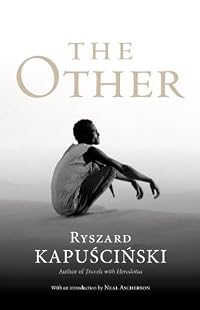
The Other
by Ryszard Kapuściński
On This Page
Description
Ryszard Kapuscinski witnessed and reported on major wars, coups and revolutions as they happened throughout the developing world and global South. In this distillation of his reflections on a lifetime of travel, he takes a fresh look at the Western idea of the Other: the non-European or non-American. Looking at this concept through the lens of his own encounters in Africa, Asia and Latin America, and considering its formative significance for his own work, Kapuscinski traces how the West has show more understood the Other from classical times to colonialism, from the age of enlightenment to the postmodern global village. He observes how today we continue to treat the non-European as an alien and a threat, an object of study that has not yet become a partner in sharing responsibility for the fate of the world. In our globalized but increasingly polarized post-9/11 age, Kapuscinski shows how the Other remains one of the most compelling ideas of our times. -- Publisher description. show lessTags
Recommendations





























Member Reviews
A series of lectures and essays on the topic of The Other by a Polish journalist and foreign correspondent.
The Other are those living in other lands and cultures, we know of them but don't really understand them, don't know what it means to be them or how the world looks through their eyes. They are often of another race, another skin colour, another religion.
Human civilisations can react in one of three ways to encounters with the Other: fence themselves off and build walls to keep the Other out; go to war to dominate and humiliate the Other; or open dialogue and trade to learn from the Other. The author promotes the latter course but history is littered with examples of walls and barriers, wars, colonialism and apartheid. [p.73, show more p.81]
"We treat the Other above all as a stranger, as the representative of a separate species, but the most crucial point is that we treat him as a threat" [p.58]. This feeds nationalism, racism and xenophobia when the Other appears in our midst, and in response the Other forms a ghetto of his own.
The modern era of communication provides new challenges. The Global Village is a misnomer because "the essence of a village depends upon the fact that its inhabitants know each other well, commune with each other and share a common fate. Meanwhile nothing of the kind can be said of society on our planet, which is more like the anonymous crowd at a major airport, a crowd of people rushing along in haste, mutually indifferent and ignorant." [p.75]
In the end, we have to communicate with the Other in order to truly understand ourselves, to see ourselves reflected from the Other's perspective, and to gain an appreciation of ourselves as a self contained being, separate from another. "I know that I am, because I know another is" [p.68].
Interesting stuff. show less
The Other are those living in other lands and cultures, we know of them but don't really understand them, don't know what it means to be them or how the world looks through their eyes. They are often of another race, another skin colour, another religion.
Human civilisations can react in one of three ways to encounters with the Other: fence themselves off and build walls to keep the Other out; go to war to dominate and humiliate the Other; or open dialogue and trade to learn from the Other. The author promotes the latter course but history is littered with examples of walls and barriers, wars, colonialism and apartheid. [p.73, show more p.81]
"We treat the Other above all as a stranger, as the representative of a separate species, but the most crucial point is that we treat him as a threat" [p.58]. This feeds nationalism, racism and xenophobia when the Other appears in our midst, and in response the Other forms a ghetto of his own.
The modern era of communication provides new challenges. The Global Village is a misnomer because "the essence of a village depends upon the fact that its inhabitants know each other well, commune with each other and share a common fate. Meanwhile nothing of the kind can be said of society on our planet, which is more like the anonymous crowd at a major airport, a crowd of people rushing along in haste, mutually indifferent and ignorant." [p.75]
In the end, we have to communicate with the Other in order to truly understand ourselves, to see ourselves reflected from the Other's perspective, and to gain an appreciation of ourselves as a self contained being, separate from another. "I know that I am, because I know another is" [p.68].
Interesting stuff. show less
Definitely food for thought. It's good to be reminded of how we perceive and treat "the other". Despite the topic's profound themes, this is a light read - highly engaging and absorbing.
Il testo è breve, ma assai pregnante di riflessioni che trattano della filosofia del dialogo, di antropologia, di rispetto dell'altro-da-sè. Non in vetta ai miei interessi, ma senz'altro illuminante, con continui rimandi a pensatori e intellettuali di varie nazionalità (a me del tutto sconosciuti) .
A more recent philosophy book I've read over time, with some but not very much understanding.
Un regard nouveau sur le concept de l'Autre en occident, sur la manière dont l'homme occidental a abordé le reste du monde. L'auteur montre à quel point l'idée de l'Autre demeure un défi permanent pour l'esprit humain.
Une belle source de réflexion sur ce thème qui m'est cher.
Une belle source de réflexion sur ce thème qui m'est cher.
Oct 11, 2015French
> Babelio : https://www.babelio.com/livres/Kapuscinski-Cet-Autre/160404
> Voir un extrait : https://books.google.fr/books?id=ltQsu3EkBQ0C&hl=fr&printsec=frontcover&...
> Bibliographie : https://www.librarything.fr/catalog.php?collection=728459&view=Joop-le-philo...
> CET AUTRE. — L’Autre est un défi permanent : l’homme et la culture se construisent à son contact. Ce qui différencie l’Autre, c’est sa race, sa nationalité, sa religion. Voyez ce qui s’est passé en Suisse à propos des minarets. Les Suisses sont-ils racistes? L’explosion du nombre de musulmans chez eux a créé le sentiment d’un envahissement; l’absence de réciprocité dans les pays musulmans les agace; leurs élites politiques et intellectuelles ne show more sont plus en phase avec l’opinion publique. La fièvre migratoire étant devenue planétaire, le Québec sera confronté aux mêmes problèmes. Pour réfléchir à tout ça, ce livre. Dont la lecture est apaisante : l’homme est un être qui parle, disait Levinas, d’où l’importance du dialogue et de la proximité.
—Le soleil, 13 décembre 2009
> Ryszard Kapuscinski, journaliste polonais au long cours, décédé en 2007 à l’âge de 75 ans, véritable « sorcier du reportage » (dixit John Le Carré), a été correspondant pendant une trentaine d’années pour l’agence de presse officielle polonaise (PAP) en Asie, au Moyen-Orient, en Amérique latine et en Afrique. Un parcours exemplaire de globe-trotter qui l’a amené à réfléchir au caractère multiculturel du monde et à la construction de l’identité, loin de considérations ethnocentriques. Son regard de Polonais, issu d’une culture minoritaire au sein d’une Europe qui s’est longtemps voulue hégémonique, n’y est sans doute pas pour rien. Cet Autre (Plon) réunit les textes de quatre conférences prononcées entre 1990 et 2004 par l’auteur d’Ébène, qui y rembourse notamment ses dettes envers la pensée du philosophe Emmanuel Levinas. S’ouvrir à l’Autre, pour lui, est un défi permanent, et « seule la bienveillance à son égard est susceptible de faire vibrer en lui la corde de l’humanité ». Une synthèse claire et vivante de la réflexion derrière les « reportages littéraires ».
—Le devoir, 16 janvier 2010
> Le monde selon Ryszard Kapuściński, par Olga Stanisławska, le 28 décembre 2015. … ; (en ligne),
URL : https://laviedesidees.fr/Le-monde-selon-Ryszard-Kapuscinski.html
> BIBLIOGRAPHIE (Voir liste complète ici.) show less
> Voir un extrait : https://books.google.fr/books?id=ltQsu3EkBQ0C&hl=fr&printsec=frontcover&...
> Bibliographie : https://www.librarything.fr/catalog.php?collection=728459&view=Joop-le-philo...
> CET AUTRE. — L’Autre est un défi permanent : l’homme et la culture se construisent à son contact. Ce qui différencie l’Autre, c’est sa race, sa nationalité, sa religion. Voyez ce qui s’est passé en Suisse à propos des minarets. Les Suisses sont-ils racistes? L’explosion du nombre de musulmans chez eux a créé le sentiment d’un envahissement; l’absence de réciprocité dans les pays musulmans les agace; leurs élites politiques et intellectuelles ne show more sont plus en phase avec l’opinion publique. La fièvre migratoire étant devenue planétaire, le Québec sera confronté aux mêmes problèmes. Pour réfléchir à tout ça, ce livre. Dont la lecture est apaisante : l’homme est un être qui parle, disait Levinas, d’où l’importance du dialogue et de la proximité.
—Le soleil, 13 décembre 2009
> Ryszard Kapuscinski, journaliste polonais au long cours, décédé en 2007 à l’âge de 75 ans, véritable « sorcier du reportage » (dixit John Le Carré), a été correspondant pendant une trentaine d’années pour l’agence de presse officielle polonaise (PAP) en Asie, au Moyen-Orient, en Amérique latine et en Afrique. Un parcours exemplaire de globe-trotter qui l’a amené à réfléchir au caractère multiculturel du monde et à la construction de l’identité, loin de considérations ethnocentriques. Son regard de Polonais, issu d’une culture minoritaire au sein d’une Europe qui s’est longtemps voulue hégémonique, n’y est sans doute pas pour rien. Cet Autre (Plon) réunit les textes de quatre conférences prononcées entre 1990 et 2004 par l’auteur d’Ébène, qui y rembourse notamment ses dettes envers la pensée du philosophe Emmanuel Levinas. S’ouvrir à l’Autre, pour lui, est un défi permanent, et « seule la bienveillance à son égard est susceptible de faire vibrer en lui la corde de l’humanité ». Une synthèse claire et vivante de la réflexion derrière les « reportages littéraires ».
—Le devoir, 16 janvier 2010
> Le monde selon Ryszard Kapuściński, par Olga Stanisławska, le 28 décembre 2015. … ; (en ligne),
URL : https://laviedesidees.fr/Le-monde-selon-Ryszard-Kapuscinski.html
> BIBLIOGRAPHIE (Voir liste complète ici.) show less
Nov 26, 2018 (Edited)French
Ratings
Members
- Recently Added By
Lists

Really Good Narrative Non-Fiction
65 works; 24 members
Author Information

86+ Works 10,431 Members
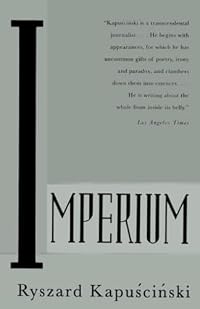
Ryszard Kapuscinski was born in Pinsk, a city now in Belarus on March 4, 1932. He received a master's degree in history from the University of Warsaw. He worked for the Communist journal Sztandar Mlodych, The Flag of Youth. He wrote an article describing the misery and despair of steel workers at a new steel plant outside of Krakow that the party show more bosses had extolled as a showpiece of proletarian culture. He was fired and forced into hiding. Later his findings were confirmed by a blue-ribbon task force and he was awarded Poland's Golden Cross of Merit. In 1962, PAP, the Polish news agency, appointed him its only correspondent in the third world. His articles about third world conflicts eventually appeared in a series of books including The Emperor: Downfall of an Autocrat, about the lapsed life of Haile Selassie's imperial court; The Soccer War, which dealt with Latin American conflicts; Another Day of Life, about Angola's civil war; Shah of Shahs, about the rise and fall of Iran's last monarch; and Imperium, an account of his travels through Russia and its neighbors after the collapse of the Soviet Union. He also wrote for The New Yorker, The New York Times Magazine, and Granta. In 1981, the government of General Wojciech Jaruzelski stripped him of his journalistic credentials after he committed himself to the Solidarity trade union movement. He then began working with underground publishers, contributing poems, and supporting the dissident culture. He died January 23, 2007 at the age of 74. (Bowker Author Biography) show less
Some Editions
Series
Belongs to Publisher Series
Common Knowledge
- Canonical title
- The Other
- Original title
- Ten inny
- Original publication date
- 2006
- People/Characters
- Ryszard Kapuściński
- First words
- "The term 'Other' or 'Others' can be understood in all sorts of ways and used in various meanings and contexts, to distinguish gener, for example, or generation, or nationality, or religion and so on."
- Last words
- (Click to show. Warning: May contain spoilers.)"Will we jointly wish to refer to what -- as Conrad puts it -- 'speaks to our capacity for delight and wonder, to the sense of mystery surrounding our lives; to our sense of pity, and beauty, and pain; to the latent feeling of fellowship with all creation -- and to the subtle but invincible conviction of solidarity that knits together the loneliness of innumerable hearts: to the solidarity in dreams, in joy, in sorrow, in aspirations, in illusions, in hope, in fear, which binds men to each other, which binds together all humanity -- the dead to the living and the living to the unborn'?"
- Original language
- Polish
- Disambiguation notice*
- Conférences de Vienne (I, II, III), Institut für die Wissenschaften vom Menschen, Vienne, 1-3 décembre 2004
Mon Autre, Colloque international des écrivains, Graz, 12 octobre 1990
L'Autre dans le village ... (show all)global, inauguration de l'année universitaire, École supérieure européenne Józef Tischner, Cracovie, 30 septembre 2003
Rencontre avec l'Autre - défi du XXIe siècle, nomination docteur honoris causa, université Jagielloński, Cracovie, 1er octobre 2004
*Some information comes from Common Knowledge in other languages. Click "Edit" for more information.
Classifications
- Genres
- Nonfiction, General Nonfiction
- DDC/MDS
- 909.09821 — History & geography History World history Other Geographic Classifications Other Classifications Ocean And Sea Basins The West; the Atlantic region
- LCC
- CB251 .K334 — Auxiliary Sciences of History History of Civilization History of Civilization Civilization and race
- BISAC
Statistics
- Members
- 311
- Popularity
- 102,210
- Reviews
- 6
- Rating
- (3.75)
- Languages
- 8 — Dutch, English, French, German, Italian, Polish, Portuguese, Spanish
- Media
- Paper, Ebook
- ISBNs
- 19
- ASINs
- 7