On This Page
Description
This English-language translation of the autobiography of Gabriela Brimmer (1947-2000) tells an amazing story in three voices. Gaby, who had cerebral palsy, communicated largely by typing with her left foot on an electric typewriter, and also by using that foot to point at letters and numbers on an "alphabet board" at the base of her wheelchair. She gained admission to Mexico City public schools, attended the prestigious National Autonomous University of Mexico, and became a key figure in show more launching Mexico's disability rights movement. Brimmer was raised by her parents, Austrian Jews who fled the Nazis in the late 1930s, and a devoted Mexican caregiver, Florencia Morales Sanchez. Renowned writer Elena Poniatowska structured this text by alternating Gaby's voice with those of her mother, Sari, and Florencia. Memorable not just as the memoir of an extraordinary woman, but as a unique and imaginative form of autobiographical writing, the volume opens with a foreword by Judith E. Heumann and Jorge Pineda, and features a new introduction by Lauri Umansky and afterword by Avital Bloch providing additional context about Gaby's life and writing, as well as disability, women's, and Jewish/Mexican history. show lessTags
Recommendations



















Member Recommendations
Member Reviews
It takes a while to get into this narrative, not because of the subject matter, but because of its lengthy foreword. First comes the introduction to the English language edition. That is followed by the translator’s note and then by the author’s introduction.
Through the voices of Gabriela Brimmer, her mother Sarah Brimmer, and her caregiver Florencia Morales Sanchez, the life story of the Mexican writer and disability rights activist crippled at birth by cerebral palsy is revealed. With largely unintelligible speech and only her left foot under her own control, Gaby sends out messages of prose and poetry, using the great toe of her left foot along with an alphabet board or a typewriter to spell out her thoughts.
No need to feel pity show more for this woman of strong mind and spirit. She makes it known that a person with cerebral palsy is a complete person who simply does not have full motor or communicative ability. Gaby indicates the need to befriend such a person instead of allowing fear to cause fleeing a possible relationship. She wants others to discover the creative ability and mental alertness which often abides in a disabled body.
Gaby herself fought for the chance to attend school and to try living away from her mother. She valued education and became thoroughly indoctrinated in students’ rights during the turbulent 1960’s. Despite never marrying, she was determined to become a mother and did so through adoption.
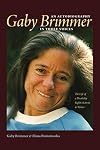
The picture on the cover of the book presents a woman with a mischievous expression. That Gaby is no longer alive is the sad part of this book. Hopefully, though, her story will provide readers with new insight into disabilities leading to more support for disabled people's rights. I wasn't as affected by Gaby's poetry as I was by the honesty in her prose and her determination to live a meaningful life. I felt that her book has the strength to empower others into also fighting for rights for disabled individuals. For that alone, the book is a worthwhile read.
There is an afterword which explains Gaby’s lifetime accomplishments. In all, I found her story very inspiring. show less
Through the voices of Gabriela Brimmer, her mother Sarah Brimmer, and her caregiver Florencia Morales Sanchez, the life story of the Mexican writer and disability rights activist crippled at birth by cerebral palsy is revealed. With largely unintelligible speech and only her left foot under her own control, Gaby sends out messages of prose and poetry, using the great toe of her left foot along with an alphabet board or a typewriter to spell out her thoughts.
No need to feel pity show more for this woman of strong mind and spirit. She makes it known that a person with cerebral palsy is a complete person who simply does not have full motor or communicative ability. Gaby indicates the need to befriend such a person instead of allowing fear to cause fleeing a possible relationship. She wants others to discover the creative ability and mental alertness which often abides in a disabled body.
Gaby herself fought for the chance to attend school and to try living away from her mother. She valued education and became thoroughly indoctrinated in students’ rights during the turbulent 1960’s. Despite never marrying, she was determined to become a mother and did so through adoption.
The picture on the cover of the book presents a woman with a mischievous expression. That Gaby is no longer alive is the sad part of this book. Hopefully, though, her story will provide readers with new insight into disabilities leading to more support for disabled people's rights. I wasn't as affected by Gaby's poetry as I was by the honesty in her prose and her determination to live a meaningful life. I felt that her book has the strength to empower others into also fighting for rights for disabled individuals. For that alone, the book is a worthwhile read.
There is an afterword which explains Gaby’s lifetime accomplishments. In all, I found her story very inspiring. show less
 This review was written for LibraryThing Early Reviewers.
Can there be spoilers? This is certainly an interesting book. There is a lot of documentation: several introductions and a footnote-filled afterword. In between is autobiographical fragments by Gaby Brimmer, and her mother, and her caregiver. The introduction(s) point out that Poniatowska added herself to the story (not as a character but her style & viewpoint.) Gaby had cerebral palsy & pretty much just used her left foot, and she wrote a lot, and she helped start the Disability Rights movement in Mexico. It isn't clear if she could have had more physical ability if she had focused on that instead of studying, and it also isn't clear how different things would have been for her if she had been in the US. But she writes clearly & show more honestly about her life, and things like sex and desire and other people; and it is definitely worth reading. What is a little weird is the personal interplay among the 3 women. I sort of wandered between total sympathy for Gaby & feeling like she was spoiled & overindulged -- but how can that be? She seems to have had complete attention from her caregiver until she adopted a baby who the caregiver then took care of. Gaby is pretty blunt about criticizing the caregiver for how she acted when she took Gaby to school; and she is really blunt in criticizing her mother & her mother just seems to agree with the criticisms. It is a weird dynamic. show less
This review was written for LibraryThing Early Reviewers.I received my copy of Gaby Brimmer: An Autobiography in Three Voices through LibraryThing’s Early Reviewer’s program.
This book was originally published in Mexico in 1979. This edition marks its translation into Enblish and publication in the US.
Gaby Brimmer was born in the late 1940’s in Mexico—a time and a place where her Cerebral Palsy was little understood and the feebleness of her body was often mistaken as feebleness of mind, too. Gaby Brimmer may have been locked into a body with very little function, but her mind was active and far reaching.
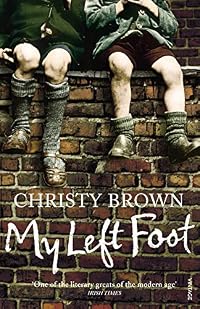
Much like Christy Brown’s condition in his autobiography, My Left Foot, Ms Brimmer also had only the use of her left foot. She learned to communicate first by using her foot on a show more letter board and then by electric typewriter. She admired her father’s philosophical bent, and spent hours in thought and in writing about her condition, her individual potential and those urges she shared with all humans. The poetry in this volume is very thought provoking and was beautifully translated into English by the book’s translator, Trudy Balch.
This book offers a unique form for an autobiography as it records both Gaby’s own thoughts and poetry and also thoughts by her mother, and her lifelong nurse. No punches are pulled in Gaby’s thoughts as she records her frustrations with both friends and caretakers. While her mother is sometimes able to take time off from her care of Gaby and visit friends or Gaby’s brother in Germany, no such option is available to Gaby. Nor does it seem to be available to Gaby’s full time nurse Florencio, whose dedication to Gaby stands alongside Anne Sullivan’s to Helen Keller.
The book follows Gaby through her schooling, her young adulthood and the beginning of her journey as a mother to the little girl she adopted. While Gaby Brimmer is noted for championing the rights of the disabled in Mexico, most of this occurred after this book’s original publication in 1979. It was the publication of this book that gave Ms Brimmer the platform and springboard she needed to become a voice for the disabled rights movement. Unfortunately, this later work is condensed into a few pages of an afterword leaving us with only a bare skeleton of her accomplishments. I would have appreciated more.
I would also have appreciated more explanation of Mexico’s political system and the turmoil in 1968 which defined not only how Gaby viewed Mexican politics, but, according to the book, the way her whole generation viewed them. While there are many reference footnotes, most are not of the explanatory type which would have helped those like myself who do not have a large knowledge of Mexico’s history.
Overall though, I found it an inspiring story of Gaby Brimmer’s courage and was touched by her words and her poetry. show less
This book was originally published in Mexico in 1979. This edition marks its translation into Enblish and publication in the US.
Gaby Brimmer was born in the late 1940’s in Mexico—a time and a place where her Cerebral Palsy was little understood and the feebleness of her body was often mistaken as feebleness of mind, too. Gaby Brimmer may have been locked into a body with very little function, but her mind was active and far reaching.
Much like Christy Brown’s condition in his autobiography, My Left Foot, Ms Brimmer also had only the use of her left foot. She learned to communicate first by using her foot on a show more letter board and then by electric typewriter. She admired her father’s philosophical bent, and spent hours in thought and in writing about her condition, her individual potential and those urges she shared with all humans. The poetry in this volume is very thought provoking and was beautifully translated into English by the book’s translator, Trudy Balch.
This book offers a unique form for an autobiography as it records both Gaby’s own thoughts and poetry and also thoughts by her mother, and her lifelong nurse. No punches are pulled in Gaby’s thoughts as she records her frustrations with both friends and caretakers. While her mother is sometimes able to take time off from her care of Gaby and visit friends or Gaby’s brother in Germany, no such option is available to Gaby. Nor does it seem to be available to Gaby’s full time nurse Florencio, whose dedication to Gaby stands alongside Anne Sullivan’s to Helen Keller.
The book follows Gaby through her schooling, her young adulthood and the beginning of her journey as a mother to the little girl she adopted. While Gaby Brimmer is noted for championing the rights of the disabled in Mexico, most of this occurred after this book’s original publication in 1979. It was the publication of this book that gave Ms Brimmer the platform and springboard she needed to become a voice for the disabled rights movement. Unfortunately, this later work is condensed into a few pages of an afterword leaving us with only a bare skeleton of her accomplishments. I would have appreciated more.
I would also have appreciated more explanation of Mexico’s political system and the turmoil in 1968 which defined not only how Gaby viewed Mexican politics, but, according to the book, the way her whole generation viewed them. While there are many reference footnotes, most are not of the explanatory type which would have helped those like myself who do not have a large knowledge of Mexico’s history.
Overall though, I found it an inspiring story of Gaby Brimmer’s courage and was touched by her words and her poetry. show less
This review was written for LibraryThing Early Reviewers.Gaby Brimmer ‘s autobiography was not a typical, run of the mill self promoting story of achievements. Ms. Brimmer was born with cerebral palsy, and the story of her life not only shows strength, but human resolve, and her tale was one that I can say I was proud to have I read. Although I was not keen on reading the foreword, introduction, and translator’s notes, the bulk of the text was fun and interesting. It was nice to read an autobiography from not one but three different perspectives, as per Ms. Brimmer’s illness allowed for such input, but the story became more wholesome to read with the additional contributions. A choice read for those who have had family members with disabilities, and even better for those who have never show more had the privilege of knowing such an amazing caste of people.
Kristin Chapman show less
Kristin Chapman show less
This review was written for LibraryThing Early Reviewers.The overused word "inspirational" has to come into play here. This Mexican woman was damaged by the Rh factor incompatibility of her parents. Her mobility was almost non-existent. She wrote with her left foot big toe and a typewriter. She insisted on continuing her education against much opposition. She became a leading advocate for the the rights of the disabled and for women. I am a longtime admirer of the work of Elena Poniatowska, who met and became a friend of Ms. Brimmer, and her contribution to the story gives it an extra dimension.
But the person who really stands out is the "servant" who became her lifelong companion and caregiver. This woman gave up all claim on a life of her own and her own children and family, and deserves show more much of the credit for accomplishments that otherwise would have been impossible. show less
But the person who really stands out is the "servant" who became her lifelong companion and caregiver. This woman gave up all claim on a life of her own and her own children and family, and deserves show more much of the credit for accomplishments that otherwise would have been impossible. show less
This review was written for LibraryThing Early Reviewers.Also still in the process of reading this one! It's definitely interesting, and worthwhile to read. My granddaughter has an extremely severe form of brain damage that can be compared to cerebral palsy, unfortunately hers is so severe that she cannot do anything or interact with anyone, even in as limited a way as Gaby managed. I am glad to know that Gaby was able to express so much of herself, given how constrained her physical abilities were. It is both inspiring and frightening to know that she had so much inside her that she could only express with her typewriter and toes. I say frightening because if she had not found that ability or had access to that ability to write using her foot, she would have been trapped, though I suppose show more with her drive, she probably would have found some other way. It makes me wonder just what if anything is happening in my granddaughter's mind.
I will say that I am not a fan of Gaby having been allowed to adopt, and I found myself muttering under my breath as I read that part that just because a person wants something does not mean that person should have it, and that especiall goes for having responsibility for a child. I also have to say that that's the point at which I am currently stopped in my reading process of this book. I am just a little annoyed about that part, and need some time before I get back to reading. show less
I will say that I am not a fan of Gaby having been allowed to adopt, and I found myself muttering under my breath as I read that part that just because a person wants something does not mean that person should have it, and that especiall goes for having responsibility for a child. I also have to say that that's the point at which I am currently stopped in my reading process of this book. I am just a little annoyed about that part, and need some time before I get back to reading. show less
This review was written for LibraryThing Early Reviewers.Gabriela (Gaby) Brimmer was born in 1947 in Mexico. Soon after birth it was discovered that she had cerebral palsy caused by her mother’s rH blood incompatibility. This was some years before routine blood testing of pregnant women was performed for the rH factor. Because of her cerebral palsy, Gaby’s ability to move around was primarily accomplished by wheelchair although she was able to walk short distances with her legs in braces. Besides mobility, communication with others was also challenging. She communicated mostly by typewriter, typing with the big toe of her left foot. Despite these limitations she fought to be allowed to be participate in a public education and for the ability to integrate into the world around her.
This show more autobiography was originally written in Spanish as ‘Gaby Brimmer’,and published in 1979 by Editorial Grijalba. This edition, translated by Trudy Balch, has an introduction and afterward by various people giving a general overview of what Gaby accomplished in her life, including the time after the book was originally published until her death in 2000.
The book’s main section is written in the voices of Gaby, her mother, Sari, and her caregiver, or 'other mother', Florencia. The writing is structured in short segments, Gaby’s reflections on what is happening in her life, with the other two women contributing their view of what was going on with Gaby and how they felt about it. This made for an interesting way of writing an autobiography but since Gaby's interaction with the world was quite dependent on their help, it makes some sense that they would have a voice in her autobiography as well. It’s almost arranged as though the three of them are facets of a single person with differing opinions and viewpoints on the subject, but they work together so well, so intimately that they all add to the understanding of who Gaby is. Gaby intersperses her prose with very personal poetry which directly ties in with her prose. Elena Poniatowska is listed as co-author of the book and she did write an introductory chapter. But from the introduction, it seems that her role was editor, smoothing and connecting the voices of the three women and keeping it focused on Gaby’s life story.
Part I of the book is about her early life and is written in a fairly dispassionate voice, probably because it was written as an adult about her younger years. It was also, at least in the beginning, mostly about her personal struggles and her fight to be given an education. I found it to be less compelling than Part II when she starts to really express her feelings about people and her passion for what will become the cause she focuses her life's work on: disability rights. From the time she starts talking about others such as her friend Fernando Simmerman who had cerebral palsy, Luis del Toro who was arrested and imprisoned during the 1968 student protests, and Quique with epilepsy whom she falls in love with, Gaby's story became less introspective and more the voice of an outwardly focused woman she becomes. Eventually she adopts a daughter whom she raises with the help of Florencia, Sari, and others.
My feelings about this book are a little mixed. I received an education about people with profound disabilities and what they go through to fight for their right to a full life. I heard the voice of someone who was profoundly disabled and I learned a lot about what it might emotionally, psychologically feel like to experience it. I found her story to be compelling and think she was a intelligent gutsy woman, a person with a tremendous ability and desire to fight for a full life. I found the book's language to be less dynamic than the story of her life. I don't know if that was because it was written first in another language, or because of the translation, or it was simply that I wanted to hear a more active voice. As I write this I realize that she really was forced to be somewhat passive, more introspective than someone who could more easily 'take action'.
Toward the middle of the book I stopped reading her poetry and read only the prose. One's taste in poetry is very personal and hers did not speak to me. I did find some of her poetry in Spanish online and liked it better, perhaps it's just better in Spanish.
This book was a real education for me and I would recommend it. It brought up many discussions about what disability means and what it might feel like to experience a life like hers. show less
This show more autobiography was originally written in Spanish as ‘Gaby Brimmer’,and published in 1979 by Editorial Grijalba. This edition, translated by Trudy Balch, has an introduction and afterward by various people giving a general overview of what Gaby accomplished in her life, including the time after the book was originally published until her death in 2000.
The book’s main section is written in the voices of Gaby, her mother, Sari, and her caregiver, or 'other mother', Florencia. The writing is structured in short segments, Gaby’s reflections on what is happening in her life, with the other two women contributing their view of what was going on with Gaby and how they felt about it. This made for an interesting way of writing an autobiography but since Gaby's interaction with the world was quite dependent on their help, it makes some sense that they would have a voice in her autobiography as well. It’s almost arranged as though the three of them are facets of a single person with differing opinions and viewpoints on the subject, but they work together so well, so intimately that they all add to the understanding of who Gaby is. Gaby intersperses her prose with very personal poetry which directly ties in with her prose. Elena Poniatowska is listed as co-author of the book and she did write an introductory chapter. But from the introduction, it seems that her role was editor, smoothing and connecting the voices of the three women and keeping it focused on Gaby’s life story.
Part I of the book is about her early life and is written in a fairly dispassionate voice, probably because it was written as an adult about her younger years. It was also, at least in the beginning, mostly about her personal struggles and her fight to be given an education. I found it to be less compelling than Part II when she starts to really express her feelings about people and her passion for what will become the cause she focuses her life's work on: disability rights. From the time she starts talking about others such as her friend Fernando Simmerman who had cerebral palsy, Luis del Toro who was arrested and imprisoned during the 1968 student protests, and Quique with epilepsy whom she falls in love with, Gaby's story became less introspective and more the voice of an outwardly focused woman she becomes. Eventually she adopts a daughter whom she raises with the help of Florencia, Sari, and others.
My feelings about this book are a little mixed. I received an education about people with profound disabilities and what they go through to fight for their right to a full life. I heard the voice of someone who was profoundly disabled and I learned a lot about what it might emotionally, psychologically feel like to experience it. I found her story to be compelling and think she was a intelligent gutsy woman, a person with a tremendous ability and desire to fight for a full life. I found the book's language to be less dynamic than the story of her life. I don't know if that was because it was written first in another language, or because of the translation, or it was simply that I wanted to hear a more active voice. As I write this I realize that she really was forced to be somewhat passive, more introspective than someone who could more easily 'take action'.
Toward the middle of the book I stopped reading her poetry and read only the prose. One's taste in poetry is very personal and hers did not speak to me. I did find some of her poetry in Spanish online and liked it better, perhaps it's just better in Spanish.
This book was a real education for me and I would recommend it. It brought up many discussions about what disability means and what it might feel like to experience a life like hers. show less
This review was written for LibraryThing Early Reviewers.Members
- Recently Added By
Lists

Best Autobiographies and Memoirs
370 works; 67 members
Author Information
1 Work 28 Members

95+ Works 2,274 Members
Elena Poniatowska is the author of more than forty works, including the classic Massacre in Mexico and the novels Dear Diego and Tinisima (FSG, 1996). She lives in Mexico City. (Bowker Author Biography)
Series

Common Knowledge
- Canonical title
- Gaby Brimmer: An Autobiography in Three Voices
- People/Characters
- Gabriela Brimmer; Sara Brimmer; Florencia Morales Sanchez
- First words
- There's a person sitting across from me.
- Last words
- (Click to show. Warning: May contain spoilers.)"I hope you keep being rebellious, as you were on earth."
- Blurbers
- Stavans, Ilan; Foster, David William
Classifications
- Genres
- Biography & Memoir, Nonfiction
- DDC/MDS
- 362.19683600922 — Society, government, & culture Social problems and social services Social Welfare People with physical illnesses Services to people with specific conditions Diseases Diseases of nervous system and mental disorders Other organic diseases of central nervous system
- LCC
- RC388 .B67 — Medicine Internal medicine Internal medicine Neurosciences. Biological psychiatry. Neuropsychiatry Neurology. Diseases of the nervous system
- BISAC
Statistics
- Members
- 28
- Popularity
- 978,229
- Reviews
- 7
- Rating
- (3.90)
- Languages
- English, Spanish
- Media
- Paper
- ISBNs
- 3