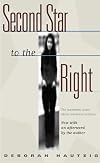
Second Star to the Right
by Deborah Hautzig
On This Page
Description
As 14-year-old Leslie begins to shed the weight she feels makes her imperfect, she finds it increasingly difficult to reach out for the psychological help she knows she needs.Tags
Recommendations






















Member Recommendations




Member Reviews
Plot: Leslie Hiller seems to have it all: she's smart, has a loving family and a great best friend Cavett. Everything seems to be perfect, but Leslie develops a bit of an obsession with losing weight that goes too far. She wants to be happy, so she loses a little bit of weight and then she continues on to self starvation until she is dangerously underweight. Anorexia has taken over her entire life and it looks like Leslie is heading towards death instead of happiness.
Evaluation: This novel really delves into the mind of an individual with anorexia. In an afterword by the author, she admits that the novel is partly based on her experience as a person who suffered from anorexia. Leslie equates her happiness with losing weight, which leads show more her to eating only 3 curds of cottage cheese a day and there's no lunch or dinner. In her mind, 76 pounds is not thin enough and she constantly berets herself if she eats more than the dictator in her head has prescribed.
Leslie has many issues with her mother. Her mother was a holocaust survivor, but I don't think the novel gets into why Leslie feels so much guilt about her mom's past. It appears that she's afraid of losing her mother or losing her mother's affection. It's difficult to understand her emotions, but maybe that's the point of the novel: no one can really understand the depths of the disease.
Dr. Wilcox helps Leslie confront many hidden emotions. She also forms relationships with other girls that are in the hospital with her that have eating disorders. Nikki, Carrie, Jessica and Leslie all feel confined in this hospital, which helps them bond. They're not allowed any mail and can only make one phone call a week. They are lonely and feel that the hospital staff thinks they're just wasting cot space. It is through her friendships and treatment that Leslie begins some of the healing process. show less
Evaluation: This novel really delves into the mind of an individual with anorexia. In an afterword by the author, she admits that the novel is partly based on her experience as a person who suffered from anorexia. Leslie equates her happiness with losing weight, which leads show more her to eating only 3 curds of cottage cheese a day and there's no lunch or dinner. In her mind, 76 pounds is not thin enough and she constantly berets herself if she eats more than the dictator in her head has prescribed.
Leslie has many issues with her mother. Her mother was a holocaust survivor, but I don't think the novel gets into why Leslie feels so much guilt about her mom's past. It appears that she's afraid of losing her mother or losing her mother's affection. It's difficult to understand her emotions, but maybe that's the point of the novel: no one can really understand the depths of the disease.
Dr. Wilcox helps Leslie confront many hidden emotions. She also forms relationships with other girls that are in the hospital with her that have eating disorders. Nikki, Carrie, Jessica and Leslie all feel confined in this hospital, which helps them bond. They're not allowed any mail and can only make one phone call a week. They are lonely and feel that the hospital staff thinks they're just wasting cot space. It is through her friendships and treatment that Leslie begins some of the healing process. show less
On the face of it, Leslie is a normal, healthy, well-adjusted fourteen-year-old girl. She goes to a good school, has a great friend in Cavett, and a mother who loves her to the moon and back. She should be happy, yet she’s not. She would be, she thinks, if only she were thinner. But “thinking thin” becomes a dangerous obsession and Leslie’s weight drops to five stone, threatening to destroy her and the whole fabric of her family life. Only by realizing that this condition is an illness – and one that has its roots in a deep problem – can Leslie hope to survive. From Amazon UK
This is such a brilliant, heart breaking but wonderful novel! I have no idea how I can possibly do this book justice with this review.
The book starts show more off a little slow. Leslie has started a new school, she makes a friend, and we see she has some issues with her mother. The issues run all the way through, but I must admit that I don't fully understand what her problems with her mother are. Sometimes she seems to love her desperately, and other times she wants to shout at her mother, but I can't see myself what her mum has done wrong, even though the novel is in first person. This may just be me, maybe it would be clearer to others. But the issues that she has she goes through in her internal monologue, and it's just heart breaking to see her chop and change so quickly from desperately loving her mother, to blaming her with such fury.
It's also heart breaking to read about Leslie developing anorexia. It starts with stomach flu. She loses a few pounds, and her jeans aren't as tight, so she decides to go on a "diet" - that involves eating hardly anything. Everyone compliments her as she loses weight, so she loses more and more. Though she doesn't know it at the time, the anorexia is the little dictator in her head, berating her over how greedy she is, telling her she's fat, but she's strong, and she can go without. The little dictator is merciless.
It gets to the point where how much food she's not eating, how much she weighs is all Leslie thinks about - until she can't make it to the bus stop to get to school because she is just so weak and tired. Reading it all made me feel so empty, like I was the one who hadn't eaten. I can't explain it, but I was just so effected by this story. She ended up wanting help, but it seemed like she didn't know exactly what help she wanted. When hospitalised, she wouldn't eat right and had no desire to put on weight, but she was desperate to be helped. It was just so hard to read. And every time I read Leslie saying "I'll know when I'm thin enough because I'll be happy", it was just so upsetting.
What also made this book extremely powerful was the fact that it was semi-autobiographical. Deborah Hautzig was suffering from anorexia, not yet cured, when this book was originally released. She was experiencing it as she wrote it. It's just so, so sad. This is the one book I have read for this month where there is no resolution. Does Leslie get better? We don't know. But she's getting help - and that's the point where Hautzig was at when she wrote the book.
This is a brilliantly powerful and poignant book that just took my breath away. It's just brilliant, and one I think everyone should read.
From Once Upon a Bookcase - YA book blog. show less
This is such a brilliant, heart breaking but wonderful novel! I have no idea how I can possibly do this book justice with this review.
The book starts show more off a little slow. Leslie has started a new school, she makes a friend, and we see she has some issues with her mother. The issues run all the way through, but I must admit that I don't fully understand what her problems with her mother are. Sometimes she seems to love her desperately, and other times she wants to shout at her mother, but I can't see myself what her mum has done wrong, even though the novel is in first person. This may just be me, maybe it would be clearer to others. But the issues that she has she goes through in her internal monologue, and it's just heart breaking to see her chop and change so quickly from desperately loving her mother, to blaming her with such fury.
It's also heart breaking to read about Leslie developing anorexia. It starts with stomach flu. She loses a few pounds, and her jeans aren't as tight, so she decides to go on a "diet" - that involves eating hardly anything. Everyone compliments her as she loses weight, so she loses more and more. Though she doesn't know it at the time, the anorexia is the little dictator in her head, berating her over how greedy she is, telling her she's fat, but she's strong, and she can go without. The little dictator is merciless.
It gets to the point where how much food she's not eating, how much she weighs is all Leslie thinks about - until she can't make it to the bus stop to get to school because she is just so weak and tired. Reading it all made me feel so empty, like I was the one who hadn't eaten. I can't explain it, but I was just so effected by this story. She ended up wanting help, but it seemed like she didn't know exactly what help she wanted. When hospitalised, she wouldn't eat right and had no desire to put on weight, but she was desperate to be helped. It was just so hard to read. And every time I read Leslie saying "I'll know when I'm thin enough because I'll be happy", it was just so upsetting.
What also made this book extremely powerful was the fact that it was semi-autobiographical. Deborah Hautzig was suffering from anorexia, not yet cured, when this book was originally released. She was experiencing it as she wrote it. It's just so, so sad. This is the one book I have read for this month where there is no resolution. Does Leslie get better? We don't know. But she's getting help - and that's the point where Hautzig was at when she wrote the book.
This is a brilliantly powerful and poignant book that just took my breath away. It's just brilliant, and one I think everyone should read.
From Once Upon a Bookcase - YA book blog. show less
This is pretty dated now -- the perception and treatment of anorexia have changed a great deal in the 25+ years since this novel was written. But it's still an enjoyable read.
For some reason, this book was different then all the eating-disorder related books I read when I was a teenager. I have never been able to figure out if it was because of Leslie, the main character, or something about the way that it was written, but somehow this book "motivated" me to stay anorexic. It's a well-written book, but I have horrible memories of it. For someone going through anorexia, maybe it might hit too close to home to be of much help.
Second Star To The Right By: Deborah Hautzig... This book kind of upset me because she is a skinny teenager that has an amazing life and an amazing family that loves her for who she is. It all started when her and Cavett went to a Halloween party and she didn't really know anyone so she was not having as much fun as Cavett was having, but towards the middle of the dance a bot came up to her and asked her to dance. They got along pretty well and she had a blast after that, but her and Cavett had to leave to catch the bus to get home. When Leslie got home she looked at her self in the mirror and thought she didn't deserve to be with a boy an that she was to fat. When she got to her end point and the doctor said to stop losing weight show more because for her age and body she is to skinny, but with her losing to much weight her mind was not thinking right so she decided that she wanted to lose under 99 pounds. Her family started to get worried about her and wanted her to stop losing weight. They got to the point where they were bribing her with food so that she would eat. I think you should read this book if you like anorexia nervosa type of books this is the book to read. show less
Very eh. I liked this book better than "The Best Little Girl in the World", though. Quick read; I read it today while I was hiding in the back of the library, skipping AP Biology.
3010797
Members
- Recently Added By
Lists

Anorexia -- children's/young adult fiction
20 works; 2 members

A Novel Cure
742 works; 23 members
Author Information

51 Works 6,056 Members
Awards and Honors
Common Knowledge
- Original publication date
- 1981
- Dedication
- To Margolee
- First words
- It's hard to know where to begin telling you about this.
- Last words
- (Click to show. Warning: May contain spoilers.)And if anyone asked me, right this second, whether I'd go to the right or the left, I'd say - to the right. And straight on till morning.
- Blurbers
- Blume, Judy
Classifications
- Genres
- Fiction and Literature, Teen, Young Adult
- DDC/MDS
- 813.54 — Literature & rhetoric American literature in English American fiction in English 1900-1999 1945-1999
- LCC
- PZ7 .H2888 .S — Language and Literature Fiction and juvenile belles lettres Fiction and juvenile belles lettres Juvenile belles lettres
- BISAC
Statistics
- Members
- 315
- Popularity
- 101,379
- Reviews
- 8
- Rating
- (3.36)
- Languages
- English, French, Spanish, Swedish
- Media
- Paper
- ISBNs
- 16