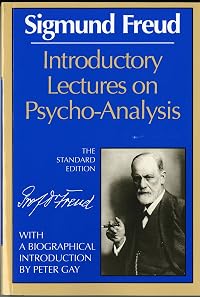
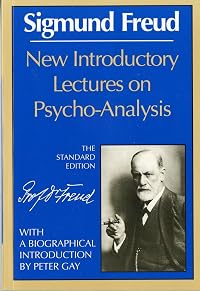
Introductory Lectures on Psychoanalysis
by Sigmund Freud
On This Page
Description
Though it has now fallen out of favor among many practitioners and scholars, Freud's concept of psychoanalysis—an approach that focuses primarily on adverse events in early childhood and irrational drives that are overcome via extended talk therapy—was and continues to be enormously influential, not only in the realm of psychology, but also in the larger culture. This volume offers a comprehensive overview of psychoanalysis from the point of view of the field's creator..
Tags
Recommendations




















Member Reviews
This book of around 500 pages consists of the transcripts of a series of 28 lectures on Psychoanalysis first delivered by Freud nearly a hundred years ago. His style is conversational, playful even, and puts the reader immediately at ease. He describes the hypotheses on which the theory of Psychoanalysis is based, amongst which is probably the most important discovery in psychology, the unconscious.
Though Psychoanalysis was developed as a means to treat neurosis, he explains that there is no single distinction between a neurotic patient and a healthy individual, it is a matter of continuous gradation between the two. The dreams and waking behaviour of each can be analysed therefore using the same method, and reveal the contents of the show more unconscious. Freud reasons that as the unconscious is the part of the mind not available to direct examination, the only way to study its contents is through the analysis of behaviour and thoughts for which we cannot provide a conscious motive. In the case of normal people these indicators of the contents of the unconscious include our dreams, and seemingly accidental occurrances such as forgetting certain things, slips of the tongue, and a few other things which are collectively known as parapraxes. In neurotic patients, these behaviours can also be analysed in the same way, in addition to the neurotic symptoms such as compulsions, irrational fears, anxieties etcetera for which they are being treated.
The symptoms, he explains, are caused by experiences or thoughts buried in the unconscious, which push through to the conscious and cause behaviours, thoughts, and compulsions, over which the patient has no control. By bringing these unconscious motives to light, into the consciousness, they lose their power and the symptoms dissipate. A large part of Psychoanalytic theory concerns the libido, and the nature of sexuality, which Freud reasons to be involved in virtually all of the neuroses. Jung, in his books, contends that the contents of the unconscious that cause neuroses extend beyond the sexual, and in this his theory of the Archetypes of the Unconscious is important, but after reading Freud I believe that the two theories are not necessarily mutually exclusive as they don't agree on what certain terms mean.
However these things are to be understood, it is clear that Freud was the most important contributor to the understanding of the mind in the last century, whether or not he was wrong about details. For this reason these lectures are essential reading for anyone who would pretend to an education. I was initially sceptical about Freud, from what I had heard about his theories secondhand, but it is not rational to dismiss him without a reading of his works. Rational Freud certainly is, and like all big thinkers, his ideas are not without controversy. show less
Though Psychoanalysis was developed as a means to treat neurosis, he explains that there is no single distinction between a neurotic patient and a healthy individual, it is a matter of continuous gradation between the two. The dreams and waking behaviour of each can be analysed therefore using the same method, and reveal the contents of the show more unconscious. Freud reasons that as the unconscious is the part of the mind not available to direct examination, the only way to study its contents is through the analysis of behaviour and thoughts for which we cannot provide a conscious motive. In the case of normal people these indicators of the contents of the unconscious include our dreams, and seemingly accidental occurrances such as forgetting certain things, slips of the tongue, and a few other things which are collectively known as parapraxes. In neurotic patients, these behaviours can also be analysed in the same way, in addition to the neurotic symptoms such as compulsions, irrational fears, anxieties etcetera for which they are being treated.
The symptoms, he explains, are caused by experiences or thoughts buried in the unconscious, which push through to the conscious and cause behaviours, thoughts, and compulsions, over which the patient has no control. By bringing these unconscious motives to light, into the consciousness, they lose their power and the symptoms dissipate. A large part of Psychoanalytic theory concerns the libido, and the nature of sexuality, which Freud reasons to be involved in virtually all of the neuroses. Jung, in his books, contends that the contents of the unconscious that cause neuroses extend beyond the sexual, and in this his theory of the Archetypes of the Unconscious is important, but after reading Freud I believe that the two theories are not necessarily mutually exclusive as they don't agree on what certain terms mean.
However these things are to be understood, it is clear that Freud was the most important contributor to the understanding of the mind in the last century, whether or not he was wrong about details. For this reason these lectures are essential reading for anyone who would pretend to an education. I was initially sceptical about Freud, from what I had heard about his theories secondhand, but it is not rational to dismiss him without a reading of his works. Rational Freud certainly is, and like all big thinkers, his ideas are not without controversy. show less
A solid Freud totem based on a series of lectures that were, seemingly, transcribed. This is pure Freud and the introduction really puts what you are reading in context. It is about the ideas, the endless flow of discovery about the inception of his field, that distinguishes and highlights Freud's work. Whether or not it was truthful is besides the point, what remains is still strong enough to stand on, point the way, guide, and surprise the reader.
4 stars- well earned!
4 stars- well earned!
Wow, such a fascinating text. It read like a detective story with a lot of uncovering of mysteries. Every lecture brought out into light a new aspect of the crime and in the end it was all tied together into a coherent believable system of understanding the dynamics of the psyche.
I haven't yet read any criticism of Freud so what i have at this point is just my amazement and excitement with the models he proposes. He shone a bright light on my understanding of dreams, neurotic symptoms and generally the condition of mental suffering. I am very greatful for that and i want to know more.
This book also provides a glimpse into the history of psychoanalysis, namely the problems that Freud and early psychoanalysts had to encounter while show more developing theory and practice, ironing out the details and then dealing with the protesting reactions of the public. They faced a lot of hate and it was interesting to read how they dealt with it and how they felt about it. show less
I haven't yet read any criticism of Freud so what i have at this point is just my amazement and excitement with the models he proposes. He shone a bright light on my understanding of dreams, neurotic symptoms and generally the condition of mental suffering. I am very greatful for that and i want to know more.
This book also provides a glimpse into the history of psychoanalysis, namely the problems that Freud and early psychoanalysts had to encounter while show more developing theory and practice, ironing out the details and then dealing with the protesting reactions of the public. They faced a lot of hate and it was interesting to read how they dealt with it and how they felt about it. show less
In 1916, some twenty years after coining the word psychoanalysis, Freud began a series of lectures entitled Introductory Lectures on Psychoanalysis. In it he describes his theories and techniques directed towards discovering and finding solutions to the mental problems observed in patients.
During the course of the twenty-eight extremely accessible essays, we discover that he came by the idea that there could be unconscious desires from the practice of hypnosis, in which wish suggestions are rooted in the brain and some time after the patient has awakened actuates upon those suggestions without knowing why.
The book is divided into three sections pertaining to parapraxes, dreams and a general theory of the neuroses. Although mutually show more related, we find that Freud's discourse throughout follows a similar pattern: hypotheses, research and discovery, and one may wonder whether the research inspired the hypotheses, or if the presuppositions needed to begin questioning and researching led to his very particular and revolutionary brand of ideas.
This is the best place to start if you have never read Freud. He explains the "freudian slip" and other concepts which have become part of our cultural heritage. show less
During the course of the twenty-eight extremely accessible essays, we discover that he came by the idea that there could be unconscious desires from the practice of hypnosis, in which wish suggestions are rooted in the brain and some time after the patient has awakened actuates upon those suggestions without knowing why.
The book is divided into three sections pertaining to parapraxes, dreams and a general theory of the neuroses. Although mutually show more related, we find that Freud's discourse throughout follows a similar pattern: hypotheses, research and discovery, and one may wonder whether the research inspired the hypotheses, or if the presuppositions needed to begin questioning and researching led to his very particular and revolutionary brand of ideas.
This is the best place to start if you have never read Freud. He explains the "freudian slip" and other concepts which have become part of our cultural heritage. show less
This book is collection of lectures held by Sigmund Freud in front of all those interested in psychoanalysis - doctors and laymen alike.
Book is divided into three sections - omissions, dreams and their interpretation (hardest but without doubt the most important part of the book) and finally neurosis and general overview of [psychoanalysis] practice.
What I like about Freud's writing is that he does not go around "beating the bush" but goes straight to the point. This book is just an overview of foundation of psychoanalysis, its main fields of interests and short overview of problems encountered during the practice (of which practice itself is [and especially in those days was] the greatest issue itself).
Highly recommended.
Book is divided into three sections - omissions, dreams and their interpretation (hardest but without doubt the most important part of the book) and finally neurosis and general overview of [psychoanalysis] practice.
What I like about Freud's writing is that he does not go around "beating the bush" but goes straight to the point. This book is just an overview of foundation of psychoanalysis, its main fields of interests and short overview of problems encountered during the practice (of which practice itself is [and especially in those days was] the greatest issue itself).
Highly recommended.
Året er 1927 og 27 forelesninger presenteres her som en introduksjon til psykoanalysen av Sigmund Freud sjøl. Han starter med de såkalte feilreaksjoner og går gjennom disse ganske detaljert og eksemplifisert og jevnfører med filologien og viser behovet for språk-kunnskap i tyding og fortolking av utsagn.
Psychoanalysis is weird and complicated to understand and you need to have a lot of knowledge of the contemporary scientific community. But you also need to read the Father och Psychoanalyis own thoughts presented in his own words.
Not a book I would voluntarily read again though!
Not a book I would voluntarily read again though!
Members
- Recently Added By
Lists

Freud Reading List
7 works; 1 member

Psicología - Clásicos
165 works; 2 members

Trinity College Booklist (1951): Class Two, Social and Psychological Scienc
60 works; 3 members

The Great Courses: The Great Ideas of Psychology
61 works; 1 member

Books Read in College
80 works; 5 members

How to Read a Book's Recommended Reading List
309 works; 10 members

My List
302 works; 1 member

Authors mentioned in The World of Yesterday
68 works; 1 member
Author Information

1,416+ Works 51,601 Members
Sigmund Freud was the founder of psychoanalysis, simultaneously a theory of personality, a therapy, and an intellectual movement. He was born into a middle-class Jewish family in Freiburg, Moravia, now part of Czechoslovakia, but then a city in the Austro-Hungarian Empire. At the age of 4, he moved to Vienna, where he spent nearly his entire life. show more In 1873 he entered the medical school at the University of Vienna and spent the following eight years pursuing a wide range of studies, including philosophy, in addition to the medical curriculum. After graduating, he worked in several clinics and went to Paris to study under Jean-Martin Charcot, a neurologist who used hypnosis to treat the symptoms of hysteria. When Freud returned to Vienna and set up practice as a clinical neurologist, he found orthodox therapies for nervous disorders ineffective for most of his patients, so he began to use a modified version of the hypnosis he had learned under Charcot. Gradually, however, he discovered that it was not necessary to put patients into a deep trance; rather, he would merely encourage them to talk freely, saying whatever came to mind without self-censorship, in order to bring unconscious material to the surface, where it could be analyzed. He found that this method of free association very often evoked memories of traumatic events in childhood, usually having to do with sex. This discovery led him, at first, to assume that most of his patients had actually been seduced as children by adult relatives and that this was the cause of their neuroses; later, however, he changed his mind and concluded that his patients' memories of childhood seduction were fantasies born of their childhood sexual desires for adults. (This reversal is a matter of some controversy today.) Out of this clinical material he constructed a theory of psychosexual development through oral, anal, phallic and genital stages. Freud considered his patients' dreams and his own to be "the royal road to the unconscious." In The Interpretation of Dreams (1900), perhaps his most brilliant book, he theorized that dreams are heavily disguised expressions of deep-seated wishes and fears and can give great insight into personality. These investigations led him to his theory of a three-part structure of personality: the id (unconscious biological drives, especially for sex), the superego (the conscience, guided by moral principles), and the ego (the mediator between the id and superego, guided by reality). Freud's last years were plagued by severe illness and the rise of Nazism, which regarded psychoanalysis as a "Jewish pollution." Through the intervention of the British and U.S. governments, he was allowed to emigrate in 1938 to England, where he died 15 months later, widely honored for his original thinking. His theories have had a profound impact on psychology, anthropology, art, and literature, as well as on the thinking of millions of ordinary people about their own lives. Freud's daughter Anna Freud was the founder of the Hampstead Child Therapy Clinic in London, where her specialty was applying psychoanalysis to children. Her major work was The Ego and the Mechanisms of Defense (1936). (Bowker Author Biography) show less
Some Editions
Awards and Honors
Series
Belongs to Publisher Series
Work Relationships
Is contained in
Is abridged in
Has as a student's study guide
Common Knowledge
- Canonical title*
- A lélekelemzés legújabb eredményei
- Original title
- Vorlesungen zur Einfuhrung in die Psychoanalyse (1915-17) (1915-17); Neue Folge der Vorlesungen zur Einführung in die Psychoanalyse; Newe Folge der Vorlesungen zur Einführung in die Psychoanalyse (1932) (1932)
- Original publication date
- 1917; 1943
- Original language*
- deutch
*Some information comes from Common Knowledge in other languages. Click "Edit" for more information.
Classifications
- Genres
- Nonfiction, General Nonfiction, Philosophy
- DDC/MDS
- 150.1952 — Philosophy & psychology Psychology Emotions, Relationships, & Family Theory And Instruction Systems, schools, viewpoints Psychoanalytic systems Freudian system
- LCC
- BF173 .F7 — Philosophy, Psychology and Religion Psychology Psychology Psychoanalysis
- BISAC
Statistics
- Members
- 2,327
- Popularity
- 8,506
- Reviews
- 20
- Rating
- (3.67)
- Languages
- 21 — Chinese, Danish, Dutch, English, Finnish, French, German, Greek, Hebrew, Hungarian, Italian, Latvian, Lithuanian, Norwegian (Bokmål), Polish, Russian, Serbian, Spanish, Swedish, Ukrainian, Yiddish
- Media
- Paper, Audiobook, Ebook
- ISBNs
- 155
- UPCs
- 1
- ASINs
- 95