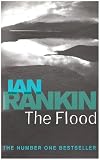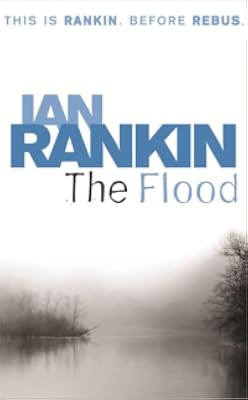
The Flood
by Ian Rankin
On This Page
Description
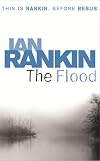
In 1986, a small Scottish publishing firm released a first novel by a talented young writer. Only a few hundred copies were printed but it was a literary milestone nonetheless. The book was THE FLOOD. The author was Ian Rankin... Mary Miller had always been an outcast. As a young girl she had fallen into the hot burn - a torrent of warm chemical run-off from the local coal mine. Fished out white-haired and half-dead, sympathy for her quickly faded when the young man who pushed her in died in show more a mining accident just two days later. From then on she was regarded with a mixture of suspicion and fascination by her God-fearing community. Now, years later she is hardly less alone. She is the mother of a bastard son, Sandy, and caught up in a faltering affair with a local teacher. Sandy, meanwhile, has fallen in love with a strange homeless girl. The search for happiness isn't easy. Both mother and son must face a dark secret from their past, in the growing knowledge that their small dramas are being played out against a much larger canvas, glimpsed only in symbols and flickering images - of decay and regrowth, of fire and water - of the flood. THE FLOOD is both a coming-of-age novel and an amazing portrait of a time and place. Proto-Rankin as it is, it's dark, atmospheric and powerful - a remarkable debut from a remarkable author. show lessTags
Recommendations








Member Reviews
With echoes of Cormac McCarthy’s THE ROAD and Golding’s LORD OF THE FLIES mixed with just a hint of a Michael Bay blockbuster thrown in to keep the story moving, THE FLOOD by Davis Sachs is a gripping disaster story that leaves a profound impact on the reader.
THE FLOOD marries an intelligent literary sensibility with taut storytelling. It introduces a variety of unique characters, all well-drawn and interesting, and places them on a derelict cruise ship, cut off from whatever is left of society after a tsunami of biblical proportions wipes out the entire east coast of the United States. Parallels to the flood mythology shared by all ancient cultures are not lost on Sachs who wisely places a professor aboard the Festival of the show more Winds cruise ship, giving him an able lens through which to place his narrative in a wider philosophical and historical context. A welcome and necessary grounding in what might otherwise be nothing more than a story about carnage.
Rather, this is a book about ideas dressed up as a thriller. Yes, the story grimly embraces the darkest parts of the human experience. Murder, mayhem, savagery and barbarism—all are present here, along with some visceral thrills and brilliant set pieces. However, these are all tableaus; Sachs deploys them with great skill, but the heart of this story is an exploration of the darkest parts of the human experience in a way that manages to transcend almost everything else in the genre, excepting the aforementioned McCarthy. Sachs paints with stark lines and a monochrome pallet of human suffering, but his strokes are deft and true. There’s a heart in this disaster story. Love as well. Not the sloppy Hollywood variety, but the real, meaningful, moving sort.
I read once that authors don’t often write of the intensity of parental love because it scares them. Also because it scares their readers. THE ROAD and THE FLOOD are two novels that tread these dangerous waters and manage to keep their heads afloat. Parts of THE FLOOD are painful to read; doubly so if one happens to be a parent of a young child. However, the narrative thread that prevents THE FLOOD from becoming merely another grim tale of death and dying is that of the extreme, imperfect, and achingly beautiful love of a single man for a single boy. It’s gripping stuff, if you can handle it. THE FLOOD isn’t a book to be taken lightly. It is, however, eminently readable. The prose sings. The dialog has the natural move and flow of real conversion.
Don’t come to THE FLOOD to have your regard for the human race restored. Do come with the expectation that you will be asked to look at yourself and society at large with a critical eye. To ask yourself just how far are you really from straying off the civilized path. How close are you to the great precipice, internal or external? In a society overwhelmed with zombie story clones that address these same questions with all the subtlety of a chainsaw, Sachs has managed to provide a deft, meaningful exploration worthy of a careful reading.
A hearty 5 out of 5 stars.
Disclaimer: I received a copy of THE FLOOD in exchange for this review. I received no other form of compensation. show less
THE FLOOD marries an intelligent literary sensibility with taut storytelling. It introduces a variety of unique characters, all well-drawn and interesting, and places them on a derelict cruise ship, cut off from whatever is left of society after a tsunami of biblical proportions wipes out the entire east coast of the United States. Parallels to the flood mythology shared by all ancient cultures are not lost on Sachs who wisely places a professor aboard the Festival of the show more Winds cruise ship, giving him an able lens through which to place his narrative in a wider philosophical and historical context. A welcome and necessary grounding in what might otherwise be nothing more than a story about carnage.
Rather, this is a book about ideas dressed up as a thriller. Yes, the story grimly embraces the darkest parts of the human experience. Murder, mayhem, savagery and barbarism—all are present here, along with some visceral thrills and brilliant set pieces. However, these are all tableaus; Sachs deploys them with great skill, but the heart of this story is an exploration of the darkest parts of the human experience in a way that manages to transcend almost everything else in the genre, excepting the aforementioned McCarthy. Sachs paints with stark lines and a monochrome pallet of human suffering, but his strokes are deft and true. There’s a heart in this disaster story. Love as well. Not the sloppy Hollywood variety, but the real, meaningful, moving sort.
I read once that authors don’t often write of the intensity of parental love because it scares them. Also because it scares their readers. THE ROAD and THE FLOOD are two novels that tread these dangerous waters and manage to keep their heads afloat. Parts of THE FLOOD are painful to read; doubly so if one happens to be a parent of a young child. However, the narrative thread that prevents THE FLOOD from becoming merely another grim tale of death and dying is that of the extreme, imperfect, and achingly beautiful love of a single man for a single boy. It’s gripping stuff, if you can handle it. THE FLOOD isn’t a book to be taken lightly. It is, however, eminently readable. The prose sings. The dialog has the natural move and flow of real conversion.
Don’t come to THE FLOOD to have your regard for the human race restored. Do come with the expectation that you will be asked to look at yourself and society at large with a critical eye. To ask yourself just how far are you really from straying off the civilized path. How close are you to the great precipice, internal or external? In a society overwhelmed with zombie story clones that address these same questions with all the subtlety of a chainsaw, Sachs has managed to provide a deft, meaningful exploration worthy of a careful reading.
A hearty 5 out of 5 stars.
Disclaimer: I received a copy of THE FLOOD in exchange for this review. I received no other form of compensation. show less
It is ironic that this should be amongst the last of Ian Rankin's current body of work, that I should read: this is like a key - it opens the door to Rankin World; a strange place where hope and despair rub along in an odd kind of equanimity.
Unlike most of Rankin's work, this, his first novel, is not a crime story. It is the tale of a dying pit town and the decaying lives of the people trapped therein.
The author's skill is never to let this turn mawkish. There is always just a glint of hope and, at the end, this appears not to have been unrealistic - but perhaps they are!
Unlike most of Rankin's work, this, his first novel, is not a crime story. It is the tale of a dying pit town and the decaying lives of the people trapped therein.
The author's skill is never to let this turn mawkish. There is always just a glint of hope and, at the end, this appears not to have been unrealistic - but perhaps they are!
I love reading first novels. They are usually the ones the author has toiled on for years, honed, sent out with the biggest chunk of the Writer's heart. Ian Rankin's first novel "the Flood" is well worth a read. In this reprinting, issued after the author's phenomenal success as a mystery writer, you can see the bones of the confident author to come.
It's a story of prejudice and secrets and moods and not truly a mystery (but whoever said mystery writers can only write mysteries?), but more a tale of the evils men and women do in a small town. It starts off slowly, but I couldn't put it down right away and I got sucked in more and more as I read. Rankin's world is dark, with little redemption. Characters survive.
But it's all completely show more lovely and will stay with me a long time, destined for my collection of first novels. Read it. It will give you a view of how it all began. show less
It's a story of prejudice and secrets and moods and not truly a mystery (but whoever said mystery writers can only write mysteries?), but more a tale of the evils men and women do in a small town. It starts off slowly, but I couldn't put it down right away and I got sucked in more and more as I read. Rankin's world is dark, with little redemption. Characters survive.
But it's all completely show more lovely and will stay with me a long time, destined for my collection of first novels. Read it. It will give you a view of how it all began. show less
My second Ian Rankin, I read one of the Rebus books years ago (in fact I have the complete set in the U.K. waiting to be read). This is not a Rebus book, but one of his earlier works.
Mary is left with a permanent reminder of being pushed into the hot burn, her hair went silver over night. Despite being the victim of a bully's attack, sympathy turns to suspicion when the boy dies in the mines later. Mary is tarred with the same brush as her mother, coming from a line of traditional healers, they are thought to be witches. In a small mining town, Carsden, which is slowly decaying, people hold on to prejudice. Mary falls pregnant as a teenager, father unknown, though believed to be her brother, adding fuel to gossip's fire.
The action show more then jumps forward, with her son Sandy aged 15. Sandy, a gifted writer, has a few friends, but is becoming more and more drawn to other outsiders, Robert and Rian from the local gypsy camp. The unspoken past is driving a wedge between mother and son. With such darkness right from the start, a darkness that is all too realistic, you can't help but despair of a dark ending.
Carsden is like many depressed Fife towns, no work, no prospects, the young folk leaving as soon as they can for the cities, Rankin captures the time and feeling perfectly. Mary and Sandy have to deal with local prejudice, as the new minister says, Mary "had been the perfect brunt". Fife has a long tradition of burning witches, I remember that from going to school in St. Andrews where witches were thrown into the sea, if they sank they were innocence, but if they floated, they were hauled back up and burnt at the stake.
I don't often get to read books set in the area around where I went to school, especially not one which shows this side of Fife life. Small town superstition mixed with the harsh reality of unemployment, Rankin brings many elements together which make up this gripping read. show less
Mary is left with a permanent reminder of being pushed into the hot burn, her hair went silver over night. Despite being the victim of a bully's attack, sympathy turns to suspicion when the boy dies in the mines later. Mary is tarred with the same brush as her mother, coming from a line of traditional healers, they are thought to be witches. In a small mining town, Carsden, which is slowly decaying, people hold on to prejudice. Mary falls pregnant as a teenager, father unknown, though believed to be her brother, adding fuel to gossip's fire.
The action show more then jumps forward, with her son Sandy aged 15. Sandy, a gifted writer, has a few friends, but is becoming more and more drawn to other outsiders, Robert and Rian from the local gypsy camp. The unspoken past is driving a wedge between mother and son. With such darkness right from the start, a darkness that is all too realistic, you can't help but despair of a dark ending.
Carsden is like many depressed Fife towns, no work, no prospects, the young folk leaving as soon as they can for the cities, Rankin captures the time and feeling perfectly. Mary and Sandy have to deal with local prejudice, as the new minister says, Mary "had been the perfect brunt". Fife has a long tradition of burning witches, I remember that from going to school in St. Andrews where witches were thrown into the sea, if they sank they were innocence, but if they floated, they were hauled back up and burnt at the stake.
I don't often get to read books set in the area around where I went to school, especially not one which shows this side of Fife life. Small town superstition mixed with the harsh reality of unemployment, Rankin brings many elements together which make up this gripping read. show less
Ian Rankin published this book when he was 26 and still a graduate student at the University of Edinburgh. It only sold a few hundred copies at the time but it confirmed him as an author and he soon published his first Rebus mystery. This book is a reissue of the original so it's not a valuable first edition but it is very interesting to me as a long time fan of Ian Rankin's. I recently saw him at McNally Robinson Booksellers answering questions and telling stories. He is a great raconteur as well as a great writer.
This book is set in a small former mining town in Fife. Mary Miller had a traumatic experience when she was young when she fell into the "hot burn", a runoff of chemicals and water from the mine. She woke up the next day with show more her hair turned completely white. (This is one example of Rankin's immaturity as a writer; hair cannot turn white overnight and a more seasoned writer would have checked before putting that in a book.) From that time on the local people thought Mary was a witch especially when one of the boys responsible for her fall into the burn died in the mine as the result of a fireball. When Mary was only 15 she became pregnant and gave birth to a son called Sandy. Rumours abound as to who was the father of the boy but Mary never tells. The main action of this book takes place when Sandy is fifteen. He falls in love with a gypsy girl who strings him along with stories about how horrible her brother and her aunt are to her. Mary is also dating, the first time since she became pregnant. Her boyfriend is a teacher at her son's school. The two struggle through the ups and downs of relationships while the villagers gossip about both of them.
As Rankin admits in his introduction to the book, the fictional town was heavily drawn from his own home town. He doesn't say if any of Sandy's experiences are based on his own but there does seem to be quite a bit of detail that only a teenage boy could experience.
In the final analysis this is not the best example of Rankin's writing craft but it is certainly better than a lot of first works. show less
This book is set in a small former mining town in Fife. Mary Miller had a traumatic experience when she was young when she fell into the "hot burn", a runoff of chemicals and water from the mine. She woke up the next day with show more her hair turned completely white. (This is one example of Rankin's immaturity as a writer; hair cannot turn white overnight and a more seasoned writer would have checked before putting that in a book.) From that time on the local people thought Mary was a witch especially when one of the boys responsible for her fall into the burn died in the mine as the result of a fireball. When Mary was only 15 she became pregnant and gave birth to a son called Sandy. Rumours abound as to who was the father of the boy but Mary never tells. The main action of this book takes place when Sandy is fifteen. He falls in love with a gypsy girl who strings him along with stories about how horrible her brother and her aunt are to her. Mary is also dating, the first time since she became pregnant. Her boyfriend is a teacher at her son's school. The two struggle through the ups and downs of relationships while the villagers gossip about both of them.
As Rankin admits in his introduction to the book, the fictional town was heavily drawn from his own home town. He doesn't say if any of Sandy's experiences are based on his own but there does seem to be quite a bit of detail that only a teenage boy could experience.
In the final analysis this is not the best example of Rankin's writing craft but it is certainly better than a lot of first works. show less
I can't fault any part of the writing in this book. The characters are haunting, the writing beautiful, but it's a rather strange story. Strange how? I'm not sure I can explain it. The only reason I didn't give a full five stars is because the ending was kind of disappointing for me. I like a full resolution in a novel-length story. Shorts or flash fiction, I don't mind a bit of ambiguity, but I like more of a payoff for reading more than 100 pages. This felt...not quite over. Perhaps that was his intention. As a reader, it fell flat for me.
However, I'm eager to read another book by Rankin. As I said, the writing is beautiful. I fell into the style and voice almost immediately. It was like wrapping up in a favorite old blanket or show more sinking your feet into a perfectly worn-in pair of shoes. I haven't felt that immediate comfort with an author's writing in a long time.
Do I recommend this book? Yes and no. I'm betting if you start with a later novel, you'll be blown away. This is one of his first published works if what I've read is correct.
Anyway, I have another waiting for me right now, so I'll just dive in again. show less
However, I'm eager to read another book by Rankin. As I said, the writing is beautiful. I fell into the style and voice almost immediately. It was like wrapping up in a favorite old blanket or show more sinking your feet into a perfectly worn-in pair of shoes. I haven't felt that immediate comfort with an author's writing in a long time.
Do I recommend this book? Yes and no. I'm betting if you start with a later novel, you'll be blown away. This is one of his first published works if what I've read is correct.
Anyway, I have another waiting for me right now, so I'll just dive in again. show less
Ian Rankin's first published novel, written in 1986, well before he became famous with his Inspector Rebus crime novels. This is not a great book, and the start, in particular, is weak. I wonder, if I had been the editor, whether I would have chosen to publish, and thus help launch his career?? The ending is strong, and starts to show the promise of a great writer. Worth reading, but more as a curiosity than as great fiction. Read August 2009.
Members
- Recently Added By
Lists

Books Read in 2016
4,666 works; 197 members

Witchy Fiction
253 works; 126 members
Author Information

160+ Works 63,885 Members
Ian Rankin lives in Edinburgh, Scotland, with his wife and their two sons.
Series
Belongs to Publisher Series
Common Knowledge
- Canonical title
- The Flood
- Original title
- The Flood
- Original publication date
- 1986
- People/Characters
- Mary Miller; Sandy Miller; Matty Duncan; Jock McLeod; Tom Miller; George Patterson (show all 9); Rian; Andy Wallace; Iain J. M. Darroch
- Important places
- Fife, Scotland, UK
- Epigraph
- Many waters cannot quench love,
neither can the floods drown it.
- Song of Songs
All one's inventions are true.
- Flaubert - Dedication
- For my father and mother
- First words
- When Mary Miller was ten years old and not yet a witch, and Carsden was still a thriving mining village, she would watch her brother Tom playing football in the park with his friends.
- Last words
- (Click to show. Warning: May contain spoilers.)She did not understand what was happening, not exactly, but she saw Sandy's bright teeth gritted in determination, and she knew that whatever he was thinking, it had to do with endurance and even perhaps, just perhaps, a kind of resurrection.
Classifications
Statistics
- Members
- 694
- Popularity
- 41,313
- Reviews
- 18
- Rating
- (3.12)
- Languages
- English, German, Polish
- Media
- Paper, Audiobook, Ebook
- ISBNs
- 25
- ASINs
- 9