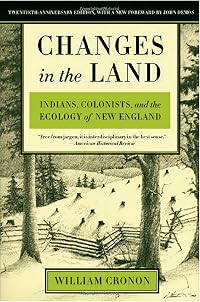
Changes in the Land: Indians, Colonists, and the Ecology of New England
by William Cronon
On This Page
Description
In this landmark work of environmental history, William Cronon offers an original and profound explanation of the effects European colonists' sense of property and their pursuit of capitalism had upon the ecosystems of New England. Reissued here with an updated afterword by the author and a new preface by the distinguished colonialist John Demos, Changes in the Land provides a brilliant interdisciplinary interpretation of how land and people influence one another. With its chilling closing show more line, "The people of plenty were a people of waste," Cronon's enduring and thought-provoking book is ethno-ecological history at its best. show lessTags
Recommendations






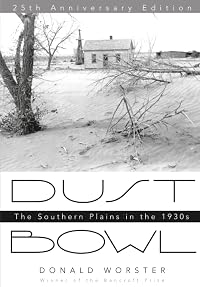

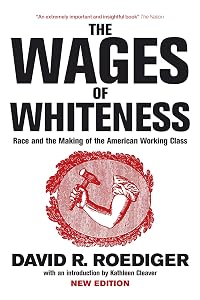
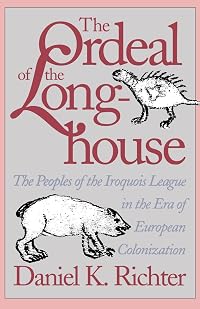
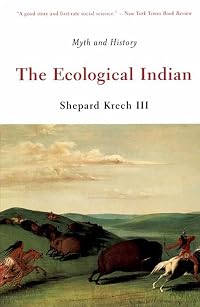
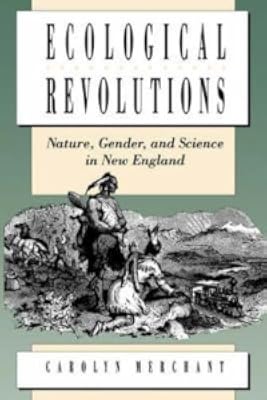

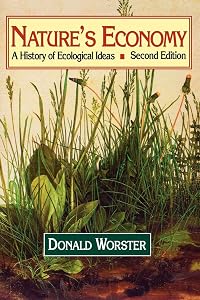
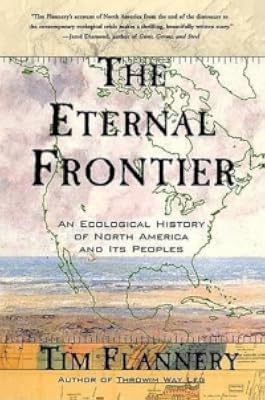











Member Recommendations

M_Clark Cronon describes how the Indians of New England used fire. Pyne tells a broader story about how fire was used worldwide.
Member Reviews
This is one of the most fascinating and thought-provoking books I have read so far this year. Cronon's book is one of the pioneering works of ecological history. By looking at the causes of the ecological changes after European settlers arrive in New England, Cronon provides new insights into colonial history. By explaining how the landscape changed over time, the book opens your eyes to looking at the American landscape in a very different way.
This is a reissue of the book with an excellent introduction by Demos and a nice concluding essay by Cronon explaining how he came to write this book.
This is a reissue of the book with an excellent introduction by Demos and a nice concluding essay by Cronon explaining how he came to write this book.
Masterwork of its genre. I heard of William Cronon after reading Charles C. Mann's 1491, where he extensively cites Cronon. In his book, Mann takes a broader, more journalistic point of view to make his point that much of what people believed about the "New World" pre- European colonization was either wrong or more complicated than it seemed. Cronon, on the other had, has the luxury of addressing a more specialized audience. He breaks down how the first wave of English colonists in New England set off a massive environmental revolution that I would characterize as a kind of catastrophe. It's been politically correct for the last decade or so to cast the English colonists as genocidal imperialists; like Mann in his book, Cronon show more complicates that perception while somehow revealing that the destruction wrought by colonists was worse than even their wokest critics could imagine. Extractive mentalities and poor farming practices caused massive deforestation, extirpation of species, and the destruction of the watershed due to erosion and silting in. While some of what the colonists did was due to greed and racism towards the Native peoples, as is usual throughout history, ignorance and market forces played a much greater role than any kind of villainous intentions.
Possibly the greatest virtue of Cronon's book, like 1491, is the way it challenges the myths of ecological and social history that so many Americans still believe. The continent that the colonists "discovered" was far from pristine, untouched wilderness - rather, Native peoples had been heavily managing the land for time immemorial, mostly living in equilibrium with the natural resources that sustained them. This undermines our romantic notions about what nature was, and by extension, what nature is. Cronon starts his book with a poignant example of Thoreau's jeremiad on the New England wilderness. Writing in the 19th century, Thoreau bemoaned the loss of natural beauty that might have been seen by his ancestors. Today, we look at the time Thoreau inhabited as idyllic. A key part of Cronon's argument is that man has always played a much greater role in his environment than is typically understood. By extension, those of us living today must do away with romantic notions about nature and admit that nothing lives or thrives on this planet without the implicit or explicit permission of man. In order to create a society more in balance with the constraints of nature, we have to take an active role in managing the environment. These days, anthropogenic climate change is an existential threat to humanity. Following Cronon's logic would suggest that human greed and ignorance created the problem, and a proactive kind of human ingenuity is needed to restore balance. show less
Possibly the greatest virtue of Cronon's book, like 1491, is the way it challenges the myths of ecological and social history that so many Americans still believe. The continent that the colonists "discovered" was far from pristine, untouched wilderness - rather, Native peoples had been heavily managing the land for time immemorial, mostly living in equilibrium with the natural resources that sustained them. This undermines our romantic notions about what nature was, and by extension, what nature is. Cronon starts his book with a poignant example of Thoreau's jeremiad on the New England wilderness. Writing in the 19th century, Thoreau bemoaned the loss of natural beauty that might have been seen by his ancestors. Today, we look at the time Thoreau inhabited as idyllic. A key part of Cronon's argument is that man has always played a much greater role in his environment than is typically understood. By extension, those of us living today must do away with romantic notions about nature and admit that nothing lives or thrives on this planet without the implicit or explicit permission of man. In order to create a society more in balance with the constraints of nature, we have to take an active role in managing the environment. These days, anthropogenic climate change is an existential threat to humanity. Following Cronon's logic would suggest that human greed and ignorance created the problem, and a proactive kind of human ingenuity is needed to restore balance. show less
William Cronon's book was a seminal effort in 1983 that established a new way of thinking about history. It has stood the test of time. The book describes the modes and manner of the ecological impacts that English settlers had on the New England landscape in the colonial era. Some impacts were intentional, others not so much. For example, by the time first permanent settlements were established beginning at Plymouth in 1620, many Indian villages had already been devastated by European diseases (Europeans, especially fishermen had been frequenting the New England fisheries for decades).
The English settlers brought the English methods of farming, new concepts of property, and a market economy that overwhelmed the tribes and transformed show more the landscape. Forests were cleared, beaver were over-hunted, fences erected, new and domesticated animals and plants were introduced.
An added bonus in this 20th anniversary edition is a delightful afterword by the author reflecting on the book and how it came to be only through repeated serendipity. An added bonus for Wisconsin readers are his reflections on growing up in Madison as the son of a UW history professor and how those experiences shaped his professional life.
Cronon sagely instructs us to asks 'how so Alien a Then could have become so familiar a Now'. Changes in the Land also wrought changes in the way we think. show less
The English settlers brought the English methods of farming, new concepts of property, and a market economy that overwhelmed the tribes and transformed show more the landscape. Forests were cleared, beaver were over-hunted, fences erected, new and domesticated animals and plants were introduced.
An added bonus in this 20th anniversary edition is a delightful afterword by the author reflecting on the book and how it came to be only through repeated serendipity. An added bonus for Wisconsin readers are his reflections on growing up in Madison as the son of a UW history professor and how those experiences shaped his professional life.
Cronon sagely instructs us to asks 'how so Alien a Then could have become so familiar a Now'. Changes in the Land also wrought changes in the way we think. show less
William Cronon's Changes in the Land: Indians, Colonists, and the Ecology of New England is a brief, coherent and well-written look at the drastic changes wrought in the ecology of what is now the northeastern United States during the first century or so of European settlement. By examining the pre-contact use patterns of Indian tribes, Cronon is able to make useful conclusions about how those patterns changed over time and the impact those changes had on the ecological balance of the region.
From agricultural techniques to the dynamics of the fur trade to the rising demand for lumber (for starters), Cronon offers a remarkably thorough survey for such a brief book (just 170 pages). His style is concise and clear: "eminently readable" in show more the good sense of that phrase, not the pejorative. I found his juxtaposition of Indian and colonial concepts of property rights quite well done, and the discussion of colonial firewood consumption was staggering (one estimate puts it at one acre of forest per year per household!, some 260 million cords between 1630 and 1800).
Aside from the text, I will take the opportunity to rave about Cronon's citations, which are both extensive and useful. His bibliographic essay is notable for its broad scope (although I wish he'd taken the opportunity of the twentieth-anniversary edition to add some of the more recent scholarship that's appeared since Changes in the Land first appeared).
An important book, well deserving of the many praises which have been sung of it in the past and will continue to be sung of it in the future.
http://philobiblos.blogspot.com/2007/01/book-review-changes-in-land.html show less
From agricultural techniques to the dynamics of the fur trade to the rising demand for lumber (for starters), Cronon offers a remarkably thorough survey for such a brief book (just 170 pages). His style is concise and clear: "eminently readable" in show more the good sense of that phrase, not the pejorative. I found his juxtaposition of Indian and colonial concepts of property rights quite well done, and the discussion of colonial firewood consumption was staggering (one estimate puts it at one acre of forest per year per household!, some 260 million cords between 1630 and 1800).
Aside from the text, I will take the opportunity to rave about Cronon's citations, which are both extensive and useful. His bibliographic essay is notable for its broad scope (although I wish he'd taken the opportunity of the twentieth-anniversary edition to add some of the more recent scholarship that's appeared since Changes in the Land first appeared).
An important book, well deserving of the many praises which have been sung of it in the past and will continue to be sung of it in the future.
http://philobiblos.blogspot.com/2007/01/book-review-changes-in-land.html show less
This is the first Environmental History book many students read. Partly because it’s one of the books that helped establish the field; partly because it covers a time period at the beginning of traditional American History courses (my own course includes two units before North American colonization, but lots of people still start there). Cronon begins with an introduction called “The View from Walden,” that not only acknowledges some of the changes Henry David Thoreau saw in his neighborhood, but explodes the idea that these changes represent some “fall” from a pristine, ahistorical initial state. The landscape is always changing, and was changed by the Indians before white people arrived. Cronon states: “There has been no show more timeless wilderness in a state of perfect changelessness, no climax forest in permanent stasis.” (11) Cronon criticizes first-generation ecologists for assuming that all systems tend toward a stable equilibrium, and also for assuming “humanity was somehow outside the ideal climax community.” (10) This may be unfair to ecologists, who recognized their error and developed more complicated systems theories, but it’s an instructive metaphor for historians.
Cronon’s economic argument centers on the idea that European visitors’ and colonists’ response to New England was colored by their cultural baggage (valuation of the abundance they discovered was influenced by scarcity back home, as in the case of timber and firewood), and on the assertion that the colonists were part of a transatlantic capitalist market and drew the Indians into it as well (in his afterword, written on the twentieth anniversary of publication, Cronon seems to regret the slightly oversimplified depiction of “capitalism”). The pre-colonial landscape he describes is quite different from the trackless wilderness I’d always imagined, and Cronon’s detailed descriptions of the difference is one of the most attractive features of the book. Along the way, I picked up a lot of interesting details: for example, that the colonists were generally healthier and longer-lived than the people they left behind, since they were no longer exposed to the European disease environment (24). Of course, the diseases the colonists brought with them killed 90-100% of the Indians in many affected villages. But the Puritan settlers saw this as a sign of their God’s providence. (90)
Cronon observes that “Many European visitors were struck by what seemed to them the poverty of Indians who lived in the midst of a landscape endowed so astonishingly with abundance.” (33) He argues this is a misunderstanding of the Indian approach to life and land use. In a passage that reminds me a lot of Colin Tudge’s argument about agriculturalists and hunter-gatherers in Neanderthals, Bandits and Farmers, Cronon says that not only did the Indians have a noncommercial value-system that led them to shun accumulation, but they were actually managing their environment in sophisticated ways that the colonists completely failed to recognize. Burning the forest understory created “edge” environments preferred by game animals. Gardening in “tangles” of maize, beans, and squash maximized crop yields, reduced erosion, and increased soil fertility (relative to the colonists’ monoculture). (43, 51)
Cronon’s point is that the Indians had a more stable, sustainable approach to their environment than did the colonists. He frequently accuses the colonists of “mining” the soil, but the fact that their society treated land as a commodity doesn’t necessarily mean that individual farmers deliberately set out to put short-term gains before sustainability. Cronon may be leaning too heavily on Frederick Jackson Turner when he assumes the colonists all simply planned on moving west when they’d exhausted their farms.
The Indian approach clearly required mobility, which made it incompatible with settled European agricultural culture. In another passage that Tudge echoes in his 1998 book, Cronon contrasts the Indians’ seasonal migrations with the colonists’ construction of fences – even their pastoralism was sedentary! Cronon admits that Indian “conservation…was less the result of an enlightened ecological sensibility than of the Indians’ limited social definition of ‘need.’” (98) He invokes Leibig’s Law to explain low Indian population densities (“biological populations are limited not by the total annual resources available to them but by the minimum amount that can be found at the scarcest time of year” 41), but doesn’t elaborate on the mechanism of population control (was it by restricting fertility, or by the starving of the weak?). Clearly, though, the Indians are the “good guys” in Cronon’s account. (I don’t disagree, I’m just pointing it out)
The second half of the book continues these arguments but doesn’t extend them much. Cronon throws in several interesting items for me, though. Springfield, begun by William Pynchon in 1636, was the latest in a string of “fur posts” on the Connecticut River. (99) English colonists who had been restricted by the Game Laws in their home country, overhunted to the point that “Hunting with us,” said Timothy Dwight, “exists chiefly in the tales of other times.” (101) A typical New England household consumed thirty to forty cords of firewood a year.” (120) “Roads…were typically between 99 and 165 feet wide…since they facilitated moving large herds to market.” (140) And Narragansett sachem Miantonomo made a speech in 1642 that complained about ecological degradation and warned “we shall all be starved” (162), so the colonists assassinated him in 1643. Overall, Changes in the Land is a very good read. Cronon makes a strong case for and environmental understanding of early America, and the book helped establish the field of Environmental History in the US. show less
Cronon’s economic argument centers on the idea that European visitors’ and colonists’ response to New England was colored by their cultural baggage (valuation of the abundance they discovered was influenced by scarcity back home, as in the case of timber and firewood), and on the assertion that the colonists were part of a transatlantic capitalist market and drew the Indians into it as well (in his afterword, written on the twentieth anniversary of publication, Cronon seems to regret the slightly oversimplified depiction of “capitalism”). The pre-colonial landscape he describes is quite different from the trackless wilderness I’d always imagined, and Cronon’s detailed descriptions of the difference is one of the most attractive features of the book. Along the way, I picked up a lot of interesting details: for example, that the colonists were generally healthier and longer-lived than the people they left behind, since they were no longer exposed to the European disease environment (24). Of course, the diseases the colonists brought with them killed 90-100% of the Indians in many affected villages. But the Puritan settlers saw this as a sign of their God’s providence. (90)
Cronon observes that “Many European visitors were struck by what seemed to them the poverty of Indians who lived in the midst of a landscape endowed so astonishingly with abundance.” (33) He argues this is a misunderstanding of the Indian approach to life and land use. In a passage that reminds me a lot of Colin Tudge’s argument about agriculturalists and hunter-gatherers in Neanderthals, Bandits and Farmers, Cronon says that not only did the Indians have a noncommercial value-system that led them to shun accumulation, but they were actually managing their environment in sophisticated ways that the colonists completely failed to recognize. Burning the forest understory created “edge” environments preferred by game animals. Gardening in “tangles” of maize, beans, and squash maximized crop yields, reduced erosion, and increased soil fertility (relative to the colonists’ monoculture). (43, 51)
Cronon’s point is that the Indians had a more stable, sustainable approach to their environment than did the colonists. He frequently accuses the colonists of “mining” the soil, but the fact that their society treated land as a commodity doesn’t necessarily mean that individual farmers deliberately set out to put short-term gains before sustainability. Cronon may be leaning too heavily on Frederick Jackson Turner when he assumes the colonists all simply planned on moving west when they’d exhausted their farms.
The Indian approach clearly required mobility, which made it incompatible with settled European agricultural culture. In another passage that Tudge echoes in his 1998 book, Cronon contrasts the Indians’ seasonal migrations with the colonists’ construction of fences – even their pastoralism was sedentary! Cronon admits that Indian “conservation…was less the result of an enlightened ecological sensibility than of the Indians’ limited social definition of ‘need.’” (98) He invokes Leibig’s Law to explain low Indian population densities (“biological populations are limited not by the total annual resources available to them but by the minimum amount that can be found at the scarcest time of year” 41), but doesn’t elaborate on the mechanism of population control (was it by restricting fertility, or by the starving of the weak?). Clearly, though, the Indians are the “good guys” in Cronon’s account. (I don’t disagree, I’m just pointing it out)
The second half of the book continues these arguments but doesn’t extend them much. Cronon throws in several interesting items for me, though. Springfield, begun by William Pynchon in 1636, was the latest in a string of “fur posts” on the Connecticut River. (99) English colonists who had been restricted by the Game Laws in their home country, overhunted to the point that “Hunting with us,” said Timothy Dwight, “exists chiefly in the tales of other times.” (101) A typical New England household consumed thirty to forty cords of firewood a year.” (120) “Roads…were typically between 99 and 165 feet wide…since they facilitated moving large herds to market.” (140) And Narragansett sachem Miantonomo made a speech in 1642 that complained about ecological degradation and warned “we shall all be starved” (162), so the colonists assassinated him in 1643. Overall, Changes in the Land is a very good read. Cronon makes a strong case for and environmental understanding of early America, and the book helped establish the field of Environmental History in the US. show less
William Cronon is a genius, particularly how he frames the conflict between Indians and Colonists as a conflict between different systems of property ownership and to see how this intersected with the ecological processes and landscape of the region. In Cronon's analysis, although we still see how the English, with their newfound love for the commodity and the market, are still blameworthy, they were not the only ones involved in the scope of these changes as even beavers and bees took part in the creation of new lands and new markets.
Changes in the Land is a well-done synthesis of scholarship relating to the ecology, economics, history and anthropology of English colonists and Indians in the northeastern US. The main thesis is familiar - Indian land usage patterns were very different from colonists' - but some of the insights from other disciplines are fascinating. For instance, clearing land for agriculture probably made winter colder and summer hotter, snow cover less likely and flooding more likely.
Cronon is an excellent writer; he gives you a sense of what kind of source material he's working with without devolving into a footnote-fest. This book is broken up into thematic chapters, so it's easier if you know some of the characters (William Bradford) and dates show more (King Philip's War) beforehand, because they will reappear in each chapter in a different context. The non-chronological order works well, even if at times I wished I had some maps and timelines to keep it all sorted out.
Having grown up in New England, it's funny to contrast this book with the dominant myth of the thrifty Puritan. I'm sure I remember learning in elementary school about how colonial wives made their own bread in fire-powered stoves, but I sure didn't learn they were burning more than an acre of forest every year to do it! show less
Cronon is an excellent writer; he gives you a sense of what kind of source material he's working with without devolving into a footnote-fest. This book is broken up into thematic chapters, so it's easier if you know some of the characters (William Bradford) and dates show more (King Philip's War) beforehand, because they will reappear in each chapter in a different context. The non-chronological order works well, even if at times I wished I had some maps and timelines to keep it all sorted out.
Having grown up in New England, it's funny to contrast this book with the dominant myth of the thrifty Puritan. I'm sure I remember learning in elementary school about how colonial wives made their own bread in fire-powered stoves, but I sure didn't learn they were burning more than an acre of forest every year to do it! show less
Members
- Recently Added By
Lists

Recommended Nature Writing
346 works; 180 members

Ten books that most shaped your view of history
91 works; 12 members

New England Foodways: An Annotated Bibliography
11 works; 1 member

Environmental History
46 works; 8 members

r/AskHistorians' Recommended Books
1,068 works; 18 members

Books in the Bibliography of Contested Continent by Peter Mancall
495 works; 1 member
Author Information

9+ Works 3,279 Members
William Cronon is Frederick Jackson Turner Professor of History, Geography, and Environmental Studies at the University of Wisconsin-Madison.
Some Editions
Awards and Honors
Awards
Common Knowledge
- Canonical title
- Changes in the Land: Indians, Colonists, and the Ecology of New England
- Original publication date
- 1983
- Important places
- USA; New England, USA
- Dedication
- For Nan
- First words
- I have tried in this book to write an ecological history of colonial New England.
- Blurbers
- Lamar, Howard R.; Miller, Jim; Kupperman, Karen
- Original language
- English
Classifications
- Genres
- Science & Nature, History, Nonfiction, General Nonfiction, Anthropology
- DDC/MDS
- 974.02 — History & geography History of North America Northeastern United States (New England and Middle Atlantic states)
- LCC
- GF504 .N45 .C76 — Geography, Anthropology and Recreation Human ecology. Anthropogeography Human ecology. Anthropogeography By region or country
- BISAC
Statistics
- Members
- 1,577
- Popularity
- 14,454
- Reviews
- 14
- Rating
- (4.20)
- Languages
- English
- Media
- Paper, Audiobook, Ebook
- ISBNs
- 7
- ASINs
- 9