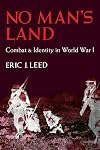
No Man's Land: Combat and Identity in World War 1
by Eric J. Leed
On This Page
Description
Based on the firsthand accounts of German, French, British, and American front-line soldiers, No Man's Land examines how the first modern, industrialized war transformed the character of the men who participated in it. Ancient myths about war eroded in the trenches, where the relentless monotony and impotence of the solder's life was interrupted only by unpredictable moments of annihilation. Professor Leed looks at how the traumatic experience of combat itself and the wholesale shattering of show more the conventions and ethical codes of normal social life turned ordinary civilians into 'liminal men', men living beyond the limits of the accepted and the expected. He uses the concept of liminality to illuminate the central features of the war experience: the separation from 'home': the experience of pollution, death, comradeship, and 'the uncanny': and the ambivalence of returning veterans about civilian society. In a final chapter Professor Leed assesses the long-term political impact of the front experience. He finds that the end of hostilities did not mean the end of the war experience as much as the beginning of a process by which that experience was framed, institutionalized, celebrated and relived in political action as well as in fiction. show lessTags
Recommendations









Member Reviews
Fra il 1914 e il 1918 la grande guerra produsse mutamenti profondi: sul piano politico, economico, sociale, culturale, come pure sul piano più privato delle coscienze individuali. La sensibilità e il mondo interno di coloro che all'esperienza bellica parteciparono direttamente vennero scardinati: costretto per la prima volta dal predominio della tecnologia a una guerra prolungata e statica, chiuso nelle trincee, il soldato vede frantumarsi la propria identità in una disgregazione destinata ad avere pesanti ripercussioni nel dopoguerra. All'interno della propria personalità egli vede scavarsi un vuoto, una sorta - appunto - di 'terra di nessuno' psicologica. Le lunghe ore trascorse in trincea alimentano nevrosi, claustrofobie, show more fantasie di volo che ridanno forza al mito di Icaro: l'aviatore diviene colui che può dominare il teatro di guerra, facendosene spettatore privilegiato. Attraverso gli apporti di antropologia, sociologia e psicologia, e le testimonianze dei combattenti, Leed rilegge in modo originale e innovativo I''evento guerra', visto in termini non più solo di storia politica o militare, ma di immaginario, emozioni, memoria. show less
May 20, 2006Italian
Ratings
Members
- Recently Added By
Lists

Books Cited in Wasteland by W. Scott Poole
120 works; 1 member
Author Information
5 Works 131 Members
Common Knowledge
- Original publication date
- 1979
- Important events
- World War I
- Dedication
- In memory of my mother, ALICE A. LEED 1908-1972
- First words
- There is much that this book is not and cannot claim to be. (Preface)
It would be difficult to find any war in which participants did not claim that the actualities of combat had in some way altered their character. (Chapter 1) - Last words
- (Click to show. Warning: May contain spoilers.)No ceremonial conclusion to the war could restore the continuities it has ended, or recreate those "fictions" that had been left behind in the labyrinth of trenches.
Classifications
Statistics
- Members
- 41
- Popularity
- 715,809
- Reviews
- 1
- Rating
- (4.43)
- Languages
- English, Italian
- Media
- Paper
- ISBNs
- 7