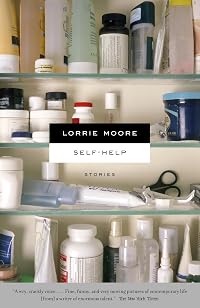
Self-Help
by Lorrie Moore
On This Page
Description
In these tales of loss and pleasure, lovers and family, a woman learns to conduct an affair, a child of divorce dances with her mother, and a woman with a terminal illness contemplates her exit. Filled with the sharp humor, emotional acuity, and joyful language Moore has become famous for, these nine glittering tales marked the introduction of an extravagantly gifted writer.Tags
Recommendations



Member Recommendations
Member Reviews
I read this around the time it came out, I was in my 20's and I liked it quite a bit. I realize now that I was not at a point in my life where I was really ready for this. I hadn't seen the end of enough things to be ready for this book, which is very much a book about endings (or at least monumental transitions.) I am not a fan of the self-help genre, so I love what Moore does here in approaching many of the types of relationships and skills/abilities gaps covered in those books and showing us that things can't be fixed, that the very idea of a one-size-fits-all solution requires that we strip away everything but the problem, ignore everything the people have the problem cam in with and ignore all the non-problematic elements at play. show more In self-help there are no intersectional issues or psychological comorbidities, just people those books tell you should behave in a certain way and then you will get the desired result. But in life everyone comes in with a pile of preexisting experiences that make it implausible to expect they will act in one specific way to a situation. Self-help guides work if everyone involved is a replicant. These stories are so rich and complicated and heartbreaking and funny and very very human. They are so good!
I started reading this a few months back at the urging of my wise and well-read GR friend Robin. I was reading a story here and there, but after the book came up in conversation a few days ago I read the last three stories in rapid succession, and that totally worked for me. Just this past Saturday I told a friend of mine that I generally had no interest in reading about characters' whining about their relationships with their mothers, and I stand by that, but the issue is the whining, not the relationships with mothers angle. Moore gets this right all the way through. This was a necessary and treasured reread for me. show less
I started reading this a few months back at the urging of my wise and well-read GR friend Robin. I was reading a story here and there, but after the book came up in conversation a few days ago I read the last three stories in rapid succession, and that totally worked for me. Just this past Saturday I told a friend of mine that I generally had no interest in reading about characters' whining about their relationships with their mothers, and I stand by that, but the issue is the whining, not the relationships with mothers angle. Moore gets this right all the way through. This was a necessary and treasured reread for me. show less
Playfully clever and self-absorbed, these are the surprisingly favourable and positive traits of the book itself as well as the self-destructive protagonists of its short stories about troubled relationships. The creativity injected into each plot and its style refreshes what would have been the tedium of the same theme in every story whereas the prose is jaunty - a bit confronting with its staccato phrasing - and modern, despite actually being published thirty-two years ago. Recommended to anyone else who also enjoys: women in depressive situations/relationships as a consequence of their own bad decisions, with no real growth or redemption if they ever miraculously extricate themselves (because as humans, we are truly doomed to repeat show more our mistakes), told in that specific offbeat comical humour of the over-educated under-employed. show less
Lorrie Moore’s first collection of short stories, originally published in 1985, displays all the wit, anxious punning, and well-earned despair for which she is now well known. Many of the stories are written in the imperative, instructional, second-person, which lends them a curious urgent listlessness. The first in the collection, “How to Be an Other Woman,” is almost breathtaking with its Mavis Gallant-like heroine slowly disintegrating in a claustrophobic New York. It would be hard for any collection of eight further stories to equal such a fine beginning, but Moore comes close with “The Kid’s Guide to Divorce” or “How to Talk to Your Mother (Notes)”. For sheer worrying fun, turn to “How to Become a Writer.” It is show more a cautionary tale of compulsion and (almost) unrelenting discouragement. Still, for some, I suppose writing is the only self-help they can muster; perhaps it ought to have been recommended to some of the other sad heroines of these studies.
Collectively Moore’s stories present a world of uncertain relations, personal and interpersonal decay, a fractious superficiality, cold inconsistent men and tentatively demanding women. Action is muted. As though no conceivable action could rescue certainty from such an indifferent universe. Which perhaps is only to say that Moore appears to have tapped into the very spirit of the late ‘70s and early ‘80s. And then there is the verbal playing which, when all else fails, at least offers a bit of a laugh, even if it sounds hollow before it fades away.
Always worth reading. show less
Collectively Moore’s stories present a world of uncertain relations, personal and interpersonal decay, a fractious superficiality, cold inconsistent men and tentatively demanding women. Action is muted. As though no conceivable action could rescue certainty from such an indifferent universe. Which perhaps is only to say that Moore appears to have tapped into the very spirit of the late ‘70s and early ‘80s. And then there is the verbal playing which, when all else fails, at least offers a bit of a laugh, even if it sounds hollow before it fades away.
Always worth reading. show less
This slender volume of stories depicts troubled relationships in varying states of decay with a sure and smooth hand. Moore is able to create a wide range of voices; it is only on finishing the book that you realize how different all her narrators were. Many of the stories feature women in bad relationships, but Moore never seems to be repeating herself.
Probably the most notable technique in this book is the author's frequent use of the second person narrator. She describes as 'you' have an affair, stay in a relationship you're not committed to, remember your mother, suspect your partner of adultery and try to become a writer. Her choice of narrative voice nicely syncs up with the book's title and is also ironic since many of the show more second person stories describe the self-destructive things you do, instead of providing advice. It also gives the reader a sense of how some of the events described happen without you consciously desiring it and wondering how you ever got to that point. For example, the first story "How to Be an Other Woman" describes as "you" conduct an affair. Here, the second person narrator never meant to get so deeply involved in the situation and wonders how she could possibly have put herself in such a demeaning position. The narrative voice implicates the reader in the relationship, and you find yourself swept along in the developments, hoping that 'you' finally end it. The opposite situation is in the story "How": here, you're the one who's not into the relationship, but inertia, pity and ambivalence keep you from ending it.
Those two were my favorites, for the narrative style, the humor and also the little details that Moore adds. In the first story, Moore describes your underemployment:
"Unfortunately, you have lost the respect of all but one of your coworkers and many of your superiors as well, who are working in order to send their daughters to universities so they won't have to be secretaries, and who, therefore, hold you in contempt for having a degree and being a failure anyway. It is like having a degree in failure."
And some great lines:
"When you were six you thought mistress meant to put your shoes on the wrong feet. Now you are older and know it can mean many things, but essentially it means to put your shoes on the wrong feet."
"Wonder about mistress courses, certification, resumes. Perhaps you are not really qualified."
"What is Seized" is narrated in the first person and movingly describes the narrator's mother's discontent in her marriage to a cold man.
"The Kid's Guide to Divorce" is a short tale, with a bittersweet end.
"Go Like This" is in the first person again, and a complete change from the previous stories with young, unsure narrators. The woman in this story is coldly, rationally, preparing her own suicide, but finds that she can't keep the emotions at bay.
"How to Talk to your Mother (Notes)" was, in my opinion, the weakest story. It moves backwards in time, but never answers some of the questions that you learn about initially. Also, it was lacking the telling details that characterize the other pieces.
"Amahl and the Night Visitors: A Guide to the Tenor of Love" is again in the second person and about cheating. This time, you wonder if your lover is having an affair.
"How to Become a Writer" is pretty funny and makes you wonder how much Moore based on her own experiences. You make a lot of hilarious, but poorly informed, writing choices, such as an update of Moby Dick featuring "a menopausal suburban husband named Richard, who because he is so depressed all the time is called 'Mopey Dick'".
The last story, "To Fill" is about a seemingly average wife and mother who descends into madness. The story has a near apocalyptic tone, which in some ways reminded me of the great "The Day of the Locust". show less
Probably the most notable technique in this book is the author's frequent use of the second person narrator. She describes as 'you' have an affair, stay in a relationship you're not committed to, remember your mother, suspect your partner of adultery and try to become a writer. Her choice of narrative voice nicely syncs up with the book's title and is also ironic since many of the show more second person stories describe the self-destructive things you do, instead of providing advice. It also gives the reader a sense of how some of the events described happen without you consciously desiring it and wondering how you ever got to that point. For example, the first story "How to Be an Other Woman" describes as "you" conduct an affair. Here, the second person narrator never meant to get so deeply involved in the situation and wonders how she could possibly have put herself in such a demeaning position. The narrative voice implicates the reader in the relationship, and you find yourself swept along in the developments, hoping that 'you' finally end it. The opposite situation is in the story "How": here, you're the one who's not into the relationship, but inertia, pity and ambivalence keep you from ending it.
Those two were my favorites, for the narrative style, the humor and also the little details that Moore adds. In the first story, Moore describes your underemployment:
"Unfortunately, you have lost the respect of all but one of your coworkers and many of your superiors as well, who are working in order to send their daughters to universities so they won't have to be secretaries, and who, therefore, hold you in contempt for having a degree and being a failure anyway. It is like having a degree in failure."
And some great lines:
"When you were six you thought mistress meant to put your shoes on the wrong feet. Now you are older and know it can mean many things, but essentially it means to put your shoes on the wrong feet."
"Wonder about mistress courses, certification, resumes. Perhaps you are not really qualified."
"What is Seized" is narrated in the first person and movingly describes the narrator's mother's discontent in her marriage to a cold man.
"The Kid's Guide to Divorce" is a short tale, with a bittersweet end.
"Go Like This" is in the first person again, and a complete change from the previous stories with young, unsure narrators. The woman in this story is coldly, rationally, preparing her own suicide, but finds that she can't keep the emotions at bay.
"How to Talk to your Mother (Notes)" was, in my opinion, the weakest story. It moves backwards in time, but never answers some of the questions that you learn about initially. Also, it was lacking the telling details that characterize the other pieces.
"Amahl and the Night Visitors: A Guide to the Tenor of Love" is again in the second person and about cheating. This time, you wonder if your lover is having an affair.
"How to Become a Writer" is pretty funny and makes you wonder how much Moore based on her own experiences. You make a lot of hilarious, but poorly informed, writing choices, such as an update of Moby Dick featuring "a menopausal suburban husband named Richard, who because he is so depressed all the time is called 'Mopey Dick'".
The last story, "To Fill" is about a seemingly average wife and mother who descends into madness. The story has a near apocalyptic tone, which in some ways reminded me of the great "The Day of the Locust". show less
Not a fan. I think "How to be unhappy," would have been a better title. I can identify with some characters and situations, but most of the protagonists strike me as soft, deliberately helpless wanderers who can't muster the agency to escape their unpleasant circumstances.
They are people who are nice to worst people in their lives and only show their teeth for the kindly or defenseless. They spend a great deal of time thinking about themselves with very little real insight on their lives.
Esquire put this on their list of 75 books every man should read. Their list sucks.
They are people who are nice to worst people in their lives and only show their teeth for the kindly or defenseless. They spend a great deal of time thinking about themselves with very little real insight on their lives.
Esquire put this on their list of 75 books every man should read. Their list sucks.
Self-Help was published 28 years ago, yet all of the blurbs on the cover of this recent edition praise the author, never the book. This can't be a good sign. These are early Moore stories and it shows. The central characters are mostly the same: clever-ish, self-absorbed, and leading messy, messy lives. Many of the stories are written in a truncated imperative (Tuck it in your pocket - Wonder who you are - Leave him with a sink full of dirty dishes). This wears thin.
My take: Pass on these early stories - Try the later Moore - Read Birds of America.
My take: Pass on these early stories - Try the later Moore - Read Birds of America.
[Being] a mistress.
It is like having a book out from the library.
It is like constantly having a book out from the library
Limits of the pun.
As though all juvenilia from the 1980's is trying at not trying at being Raymond Carver, a response to his presence or absence as if one were to contemplate America without Reagan. Though written with skill such that it remains amusing even at its most obnoxious.
[What does a systems analyst do.] Oh … they get married a lot. They’re usually always married.
He seems to be investing something in all of this (bankers)
and suddenly I woke up with a jerk
parasites, pair of sights, parricides
Members
- Recently Added By
Published Reviews
ThingScore 75
Like her characters, Miss Moore possesses a wry, crackly voice, an askew sense of humor and a certain reticence about emotions - qualities that lend her fiction a dry, almost alkaline flavor.
added by Shortride
Author Information

33+ Works 13,152 Members
Lorrie Moore was born Marie Lorena Moore on January 13, 1957 in Glen Falls, New York. She was nicknamed Lorrie by her parents. She attended St. Lawrence University and won Seventeen magazine's fiction contest. After graduation, she moved to Manhattan and worked as a paralegal for two years. In 1980 she enrolled in Cornell University's M.F.A. show more program. After graduation from Cornell she was encouraged by a teacher to contact an agent who sold her collection, Self-Help, which was composed of stories from her master's thesis. Lorrie Moore writes about failing relationships and terminal illness. She is the Delmore Schwartz Professor in the Humanities at the University of Wisconsin-Madison where she teaches creative writing. She has also taught at Cornell University. She has written a children's book entitled The Forgotten Helper. She won the 1998 O. Henry Award for her short story People Like That They Are the Only People Here. In 1999 she was given the Irish Times International Fiction Prize for Birds of America. She was elected to the American Academy of Arts and Letters in 2006 and in 2010 her novel A Gate at the stairs was a finalist for the Pen/Faulkner Award for fiction. (Bowker Author Biography) show less
Some Editions
Series
Belongs to Publisher Series
Work Relationships
Contains
Common Knowledge
- Canonical title
- Self-Help
- Original title
- Self-help
- Original publication date
- 1985
- First words
- Meet in expensive beige raincoats, on a pea-soupy night.
- Last words
- (Click to show. Warning: May contain spoilers.)Mom, are you my friend? he asks, barely audible, his face pale and homeless. I nod yes. Are you my mother? I nod again, smiling, and he thinks about this, then approaches me, reaches and climbs up into my lap, curls into my brasts, clutching my gown, bursts into tears, his face crumpling against me. I want to go to the circus and see the horse people, he cries, wet and red, and I hold him close, warm, in my arms, in this room, and tell him we will go.
Classifications
Statistics
- Members
- 1,346
- Popularity
- 17,848
- Reviews
- 25
- Rating
- (3.98)
- Languages
- 7 — Dutch, English, French, German, Italian, Portuguese, Spanish
- Media
- Paper, Audiobook, Ebook
- ISBNs
- 24
- ASINs
- 8