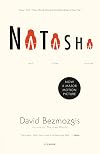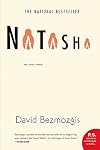
Natasha
by David Bezmozgis
On This Page
Description
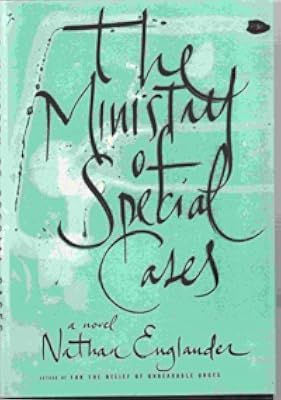
Few readers had heard of David Bezmozgis before last May, when Harper's, Zoetrope, and The New Yorker all printed stories from his forthcoming collection. In the space of a few weeks, these magazines introduced America to the Bermans--Bella and Roman and their son, Mark--Russian Jews who have fled the Riga of Brezhnev for Toronto, the city of their dreams.Told through Mark's eyes, and spanning the last twenty-three years, Natasha brings the Bermans and the Russian-Jewish enclaves of Toronto show more to life in stories full of big, desperate, utterly believable consequence. In "Tapka" six-year-old Mark's first experiments in English bring ruin and near tragedy to the neighbors upstairs. In "Roman Berman, Massage Therapist," Roman and Bella stake all their hopes for Roman's business on their first, humiliating dinner in a North American home. Later, in the title story, a stark, funny anatomy of first love, we witness Mark's sexual awakening at the hands of his fourteen-year-old cousin, a new immigrant from the New Russia. In "Minyan," Mark and his grandfather watch as the death of a tough old Odessan cabdriver sets off a religious controversy among the poor residents of a Jewish old-folks' home.The stories in Natasha capture the immigrant experience with a serious wit as compelling as the work of Jhumpa Lahiri, Nathan Englander, or Adam Haslett. At the same time, their evocation of boyhood and youth, and the battle for selfhood in a passionately loving Jewish family, recalls the first published stories of Bernard Malamud, Harold Brodkey, Leonard Michaels, and Philip Roth. show lessTags
Recommendations


















Member Reviews
This is a slim volume of lovely, loosely interconnected short stories about a Jewish immigrants in Toronto in the latter part of the 20th century, seen through the eyes of the family's only son, Mark, who grows from a young boy to a young adult over the course of the stories. The Berman family has moved from Russia to Toronto during the Glasnost period that saw a new wave of Russian Jews fleeing from the old world to the new. The early stories deal with the transition from one culture to the other, while the later ones deal largely but subtly with issues of identity and loss. My two favorite stories were "The Second Strongest Man," which portray, through young Mark's eyes, some stark differences between the family's old existence and show more their new one, and "Minyan," the volume's final story, which is deals in very human terms the gradual fading of the old world Jewish culture as the generation that had brought that culture to new shores dies out. "The Second Strongest Man," by the way, is the only one of these stories that I recognized as having read before, in some anthology or other somewhere along the line.
Here, from "Minyan," is a sample of Bezmozgis' perfect-pitch writing:
"After the rabbi spoke he asked if there was anyone who wanted to say anything more about Itzik. Herschel, who sat between me and my grandfather, wiped his eyes and looked over at Itzik's son. Itzik's son did not look up from the floor. Nobody moved and the rabbi shifted nervously beside Itzik's coffin. He looked around the room and asked again if there wasn't someone who had a few words to say about Itzik's life. If someone had something to say and sat in silence, they would regret it. Such a time is not the time for shyness. Itzik's spirit was in the room. To speak a kind word about the man would be a mitzvah. Finally, using my knee for support, Hershel raised himself from the pew and slowly made his way to the front of the chapel. Each of Herschel's steps punctuated silence. His worn tweed jacket and crooked back delivered a eulogy before he reached the coffin. His posture was unspeakable grief. What could he say that could compare with the eulogy of his wretched back?" show less
Here, from "Minyan," is a sample of Bezmozgis' perfect-pitch writing:
"After the rabbi spoke he asked if there was anyone who wanted to say anything more about Itzik. Herschel, who sat between me and my grandfather, wiped his eyes and looked over at Itzik's son. Itzik's son did not look up from the floor. Nobody moved and the rabbi shifted nervously beside Itzik's coffin. He looked around the room and asked again if there wasn't someone who had a few words to say about Itzik's life. If someone had something to say and sat in silence, they would regret it. Such a time is not the time for shyness. Itzik's spirit was in the room. To speak a kind word about the man would be a mitzvah. Finally, using my knee for support, Hershel raised himself from the pew and slowly made his way to the front of the chapel. Each of Herschel's steps punctuated silence. His worn tweed jacket and crooked back delivered a eulogy before he reached the coffin. His posture was unspeakable grief. What could he say that could compare with the eulogy of his wretched back?" show less
Roman Berman, his wife and their son emigrate from Latvia to Toronto in 1980 with "no English, no money, no job and only a murky conception of what the future held." In the course of the seven stories that comprise David Bezmozgis's debut collection, Natasha, we'll witness the Bermans slowly, painfully assimilate into North American culture, mainly through the eyes of the son, Mark.
He's six years old in the first story, "Tapka," in which he and a cousin are put in charge of dog-sitting a Russian neighbor's beloved Lhasa-apo. Things do not go well—the dog runs into traffic—and the story concludes with a hard, crunchy epiphany (which seems a bit deep for a six-year-old mind): "There is reality and then there is truth."
There's plenty show more of both in Bezmozgis's fiction, too. So much truth, in fact, that the collection reads like thinly-veiled autobiography. Like Mark, Bezmozgis was born in Latvia and moved to Toronto when he was six. He writes with authority about dislocation and assimilation.
In "The Second Strongest Man," we watch patriarch Roman, "a struggling massage therapist and schlepper of chocolate bars," get a temporary job as a judge for an international weightlifting championship. Two of the competitors are old friends, but when he goes to meet them at their hotel, he bumps into a KGB agent, also an old acquaintance, who is there to make sure the athletes get back on the plane to Russia. The scene is nicely balanced between tension and compassion:
The agent was surprised to see my father
—Roman Abramovich, you're here? I didn't see you on the plane.
My father explained that he hadn't taken the plane. He lived here now. A sweep of my father's arm defined "here" broadly. The sweep included me. My jacket, sneakers, and Levi's were evidence. Roman Abramovich and his kid lived here. The KGB agent took an appreciative glance at me. He nodded his head.
—You're living well?
—I can't complain.
—It's a beautiful country. Clean cities. Big forests. Nice cars. I also hear you have good dentists.
Bezmozgis subtly captures the joy, frustration and fear of what it was like to be a Soviet refusenik in the 1980s.
The linked stories follow Mark into adulthood, but the best of the bunch is the titular story which finds the boy at the crossroads of his hormone-fueled teenage years. In "Natasha," 16-year-old Mark lives in the basement where he smokes hash, watches television, reads and masturbates. When his 14-year-old cousin Natasha arrives and he's given the job of keeping her occupied during the summer, he's surprised to find the tables turned on him when she casually removes her clothes and plops down in his beanbag chair.
She turned to me and said, very simply, as if it were as insignificant to her as it was significant to me: Do you want to? At sixteen, no expert but no virgin, I lived in a permanent state of want to.
With the experienced Natasha ("I've done it a hundred times") as his teacher, Mark soon learns that sex "could be as perfunctory as brushing your teeth." The story culminates with a string of sentences that tie the preceding 10,000 words together with something akin to a symphonic timpani-roll/cymbal-crash. After Natasha turns the tables on him yet again, a devastated but determined Mark returns to his house:
I saw my future clearly. I had it all planned out. And yet, standing in our backyard, drawn by a strange impulse, I crouched and peered through the window into my basement. I had never seen it from this perspective. I saw what Natasha must have seen every time she came to the house. In the full light of summer, I looked into darkness. It was the end of my subterranean life.
It's moments like this which lift Natasha and Other Stories beyond the ordinary and into the realm of heart-stopping art. Bezmozgis times his delivery with the precision of a watchmaker.
On the whole, there's nothing flashy about the stories; the sentences move forward with steady, unadorned purpose and the full effect of Bezmozgis's talent doesn't sink in until hours after you've stopped reading. Yet, there's something compelling and earnest that lies invisible at the heart of this family portrait. It's the faith that helps us overcome hardship and gives us hope that we can ascend from the dark basement of our lives. show less
He's six years old in the first story, "Tapka," in which he and a cousin are put in charge of dog-sitting a Russian neighbor's beloved Lhasa-apo. Things do not go well—the dog runs into traffic—and the story concludes with a hard, crunchy epiphany (which seems a bit deep for a six-year-old mind): "There is reality and then there is truth."
There's plenty show more of both in Bezmozgis's fiction, too. So much truth, in fact, that the collection reads like thinly-veiled autobiography. Like Mark, Bezmozgis was born in Latvia and moved to Toronto when he was six. He writes with authority about dislocation and assimilation.
In "The Second Strongest Man," we watch patriarch Roman, "a struggling massage therapist and schlepper of chocolate bars," get a temporary job as a judge for an international weightlifting championship. Two of the competitors are old friends, but when he goes to meet them at their hotel, he bumps into a KGB agent, also an old acquaintance, who is there to make sure the athletes get back on the plane to Russia. The scene is nicely balanced between tension and compassion:
The agent was surprised to see my father
—Roman Abramovich, you're here? I didn't see you on the plane.
My father explained that he hadn't taken the plane. He lived here now. A sweep of my father's arm defined "here" broadly. The sweep included me. My jacket, sneakers, and Levi's were evidence. Roman Abramovich and his kid lived here. The KGB agent took an appreciative glance at me. He nodded his head.
—You're living well?
—I can't complain.
—It's a beautiful country. Clean cities. Big forests. Nice cars. I also hear you have good dentists.
Bezmozgis subtly captures the joy, frustration and fear of what it was like to be a Soviet refusenik in the 1980s.
The linked stories follow Mark into adulthood, but the best of the bunch is the titular story which finds the boy at the crossroads of his hormone-fueled teenage years. In "Natasha," 16-year-old Mark lives in the basement where he smokes hash, watches television, reads and masturbates. When his 14-year-old cousin Natasha arrives and he's given the job of keeping her occupied during the summer, he's surprised to find the tables turned on him when she casually removes her clothes and plops down in his beanbag chair.
She turned to me and said, very simply, as if it were as insignificant to her as it was significant to me: Do you want to? At sixteen, no expert but no virgin, I lived in a permanent state of want to.
With the experienced Natasha ("I've done it a hundred times") as his teacher, Mark soon learns that sex "could be as perfunctory as brushing your teeth." The story culminates with a string of sentences that tie the preceding 10,000 words together with something akin to a symphonic timpani-roll/cymbal-crash. After Natasha turns the tables on him yet again, a devastated but determined Mark returns to his house:
I saw my future clearly. I had it all planned out. And yet, standing in our backyard, drawn by a strange impulse, I crouched and peered through the window into my basement. I had never seen it from this perspective. I saw what Natasha must have seen every time she came to the house. In the full light of summer, I looked into darkness. It was the end of my subterranean life.
It's moments like this which lift Natasha and Other Stories beyond the ordinary and into the realm of heart-stopping art. Bezmozgis times his delivery with the precision of a watchmaker.
On the whole, there's nothing flashy about the stories; the sentences move forward with steady, unadorned purpose and the full effect of Bezmozgis's talent doesn't sink in until hours after you've stopped reading. Yet, there's something compelling and earnest that lies invisible at the heart of this family portrait. It's the faith that helps us overcome hardship and gives us hope that we can ascend from the dark basement of our lives. show less
http://andalittlewine.blogspot.com/2012/06/natasha-and-other-stories-by-david.ht...
Natasha, and Other Stories by David Bezmozgis has traveled with me for a long a time. Published in 2004, I'm pretty sure I grabbed the small hardcover off the shelf the first time I saw it. I read it and forgot I'd read it, even listing it as one of the books I own but haven't read.
How could I forget?
Natasha has nearly everything I love: it is a novel in short story form, each story connected to the other but independent; it has a family newly arrived to a place where the possibilities are as limitless as they are unattainable; it has (for the first few stories) an articulate but believable child narrator.
Short stories are, perhaps, the most challenging show more form of fiction. The author has only a few hundred words (if that) to establish his characters and setting. Bezmozgis solves this challenge skillfully, weaving life's hard lessons into his stories.
My favorite story from the collection is probably "The Second Strongest Man." The narrator, Mark Berman, grew up around body-builders in the USSR because his father was one of the top trainers. His father's top recruit had been Sergei, a former soldier possessing preternatural gifts as a weightlifter. Faced with an impossible bet to life a car, a fellow soldier introduces: "Sergei, show Chaim what's impossible."
For many years after that, with help from Mark's father, Sergei is the strongest man in the world. Until years pass and he's not anymore, no matter how hard he has trained nor how badly he wants to be. What do we live for, once we outlive our dreams?
The stories of Natasha are uniformly stark, even bleak. Happiness is fleeting. Most decisions happen outside the text: Mark's parents decide to bring the family to Toronto; Mark has decided to become a journalist; grandmother has cancer. The progress, too, is a footnote. The moves from apartment to house, any success in school, these are all ancillary details.
What matters, what Bezmozgis focuses us on again and again, is the grind of life punctuated by genuine and reverberating mistakes. show less
Natasha, and Other Stories by David Bezmozgis has traveled with me for a long a time. Published in 2004, I'm pretty sure I grabbed the small hardcover off the shelf the first time I saw it. I read it and forgot I'd read it, even listing it as one of the books I own but haven't read.
How could I forget?
Natasha has nearly everything I love: it is a novel in short story form, each story connected to the other but independent; it has a family newly arrived to a place where the possibilities are as limitless as they are unattainable; it has (for the first few stories) an articulate but believable child narrator.
Short stories are, perhaps, the most challenging show more form of fiction. The author has only a few hundred words (if that) to establish his characters and setting. Bezmozgis solves this challenge skillfully, weaving life's hard lessons into his stories.
My favorite story from the collection is probably "The Second Strongest Man." The narrator, Mark Berman, grew up around body-builders in the USSR because his father was one of the top trainers. His father's top recruit had been Sergei, a former soldier possessing preternatural gifts as a weightlifter. Faced with an impossible bet to life a car, a fellow soldier introduces: "Sergei, show Chaim what's impossible."
For many years after that, with help from Mark's father, Sergei is the strongest man in the world. Until years pass and he's not anymore, no matter how hard he has trained nor how badly he wants to be. What do we live for, once we outlive our dreams?
The stories of Natasha are uniformly stark, even bleak. Happiness is fleeting. Most decisions happen outside the text: Mark's parents decide to bring the family to Toronto; Mark has decided to become a journalist; grandmother has cancer. The progress, too, is a footnote. The moves from apartment to house, any success in school, these are all ancillary details.
What matters, what Bezmozgis focuses us on again and again, is the grind of life punctuated by genuine and reverberating mistakes. show less
A collection of interlinked stories about the immigrant experience of Latvian Jews who come to Toronto in the 80s told from the point of view of the son who is six in the first story and an adult in his twenties in the last. The stories are told with wit and compassion, and are nicely unsentimental. Although they seem to be about the specific Russian Jewish Canadian immigrant experience, they are also universal in many ways in showing general immigrant experience, feelings about the past life in the former country, religious identity, coming of age. All characters are flawed and very human, and each story finishes with a little epiphany that contributes wisdom for the development of the narrator.
Highly recommended, especially if you show more enjoyed Short History of Tractors in Ukrainian by Lewycka. Bezmozgis has a flare for really telling details. show less
Highly recommended, especially if you show more enjoyed Short History of Tractors in Ukrainian by Lewycka. Bezmozgis has a flare for really telling details. show less
Ipad book that I liked the writing better than the content. Very good presentation of immigrant children easing way for parents. Did not care for so many of the negative interactions of the protagonist, but thought analogies and information regarding thinking of immigrants well written and valuable to know.
Natasha and Other Stories is comprised of seven short stories. I read "Tapka" and title story, "Natasha." The interesting thing about all seven stories is that they all center around one family, the Bermans. "Tapka" and "Natasha" center on Mark, the son.
"Tapka"
Six year old Mark Berman falls in love with Tapka, his neighbor's tiny white Lhasa-apso, at first sight. He cares for this animal so deeply he and his cousin are bestowed care taking duties of Tapka. Until tragedy strikes.Best line, "With no English, no money, no job, and only a murky conception of what the future held, he wasn't equipped to admire Tapka on the Italian Riviera" (p 5).
"Natasha"
Ten years later, sixteen year old Mark develops feelings for his fourteen year old show more cousin, Natasha. She is wise beyond her years; much wiser than Mark. She teaches him a thing or two about coming of age.
Best line, "She was calibrated somewhere between resignation and joy" (p 90). show less
"Tapka"
Six year old Mark Berman falls in love with Tapka, his neighbor's tiny white Lhasa-apso, at first sight. He cares for this animal so deeply he and his cousin are bestowed care taking duties of Tapka. Until tragedy strikes.Best line, "With no English, no money, no job, and only a murky conception of what the future held, he wasn't equipped to admire Tapka on the Italian Riviera" (p 5).
"Natasha"
Ten years later, sixteen year old Mark develops feelings for his fourteen year old show more cousin, Natasha. She is wise beyond her years; much wiser than Mark. She teaches him a thing or two about coming of age.
Best line, "She was calibrated somewhere between resignation and joy" (p 90). show less
I find reviewing linked stories a challenge. Generally, I don't read short stories at all (except for those by Alice Munro), but I am reading all the "Canada Reads" nominees. The stories are well written and, taken together, give us a portrayal of a Russian Jewish family who have immigrated to Toronto, largely through the eyes of their son, Mark, who is 6 years old in the first story an an adult by the final one. I must admit, I can't help but wonder if a novel would have given us much more insight into this family and those who came in touch with them.
Members
- Recently Added By
Published Reviews
Tapka lets them pet her endlessly, she can’t wait to go on walks, she retrieves her toy for them without fail, but none of this is enough. “Proof could only come in one form,” Mark tells us. “We had intuited an elemental truth: love needs no leash.” Thus Bezmozgis opens the door to loss and misery, and he leads us through it with painful realism.
added by paradoxosalpha
his collection a superb evocation of its time and place, and of people caught between two worlds. By the end it is also, simply, about the human condition.
added by lkernagh
Despite his brilliance, Bezmozgis suffers by the inevitable comparisons: he is too polite, too restrained, never sufficiently surprising..... But Bezmozgis's prose is unusually assured, and suggests the hype may not be entirely exaggerated.
added by lkernagh
Lists

Jewish Books
367 works; 24 members

Canada Reads Winners and Nominees
129 works; 9 members
Author Information

5+ Works 1,260 Members
Awards and Honors
Awards
Series
Belongs to Publisher Series
La intrusa (8)
Common Knowledge
- Canonical title
- Natasha
- Original publication date
- 2004
- Important places
- Ontario, Canada; Toronto, Ontario, Canada; Latvia
- Dedication*
- TO MY PARENTS
- First words*
- Goldfinch was flapping clotheslines, a tenement delirious with striving.
- Last words*
- (Click to show. Warning: May contain spoilers.)Without them we would never have a minyan.
*Some information comes from Common Knowledge in other languages. Click "Edit" for more information.
Classifications
Statistics
- Members
- 514
- Popularity
- 58,367
- Reviews
- 18
- Rating
- (3.79)
- Languages
- 8 — Catalan, Dutch, English, French, German, Italian, Spanish, Swedish
- Media
- Paper, Ebook
- ISBNs
- 22
- ASINs
- 4