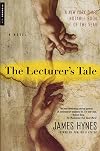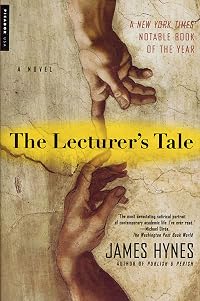
The Lecturer's Tale
by James Hynes
On This Page
Description
The author of Publish and Perish returns with a Faustian tale of the horrors of academe. Nelson Humbolt is a visiting adjunct English lecturer at prestigious Midwest University, until he is unceremoniously fired one autumn morning. Minutes after the axe falls, his right index finger is severed in a freak accident. Doctors manage to reattach the finger, but when the bandages come off, Nelson realizes that he has acquired a strange power--he can force his will onto others with a touch of his show more finger. And so he obtains an extension on the lease of his university-owned townhouse and picks up two sections of freshman composition, saving his career from utter ruin. But soon these victories seem inconsequential, and Nelson's finger burns for even greater glory. Now the Midas of academia wonders if he can attain what every struggling assistant professor and visiting lecturer covets--tenure.A pitch-perfect blend of satire and horror, The Lecturer's Tale paints a gruesomely clever portrait of life in academia. show lessTags
Recommendations






Member Recommendations
Member Reviews
James Hynes's THE LECTURER'S TALE (2000) is a very strange book indeed. What to call it? A Gothic-tinged novel of academia perhaps. Because it is such a phantasmagorical stew of odd characters, plot twists and, finally, horror (a touch of Dante's INFERNO even). I'm not sure there is any way to accurately categorize it. Think, say, the academic novels of John Barth, i.e. THE END OF THE ROAD or GILES GOAT BOY. Then throw in some of Gore Vidal's MYRA BRECKENRIDGE, and maybe some generous helpings of Chaucer and Shakespeare, and bits and pieces of so many other 'old white male' authors of the traditional canon. Then mix into the stew lots of today's political correctness about gender and equality, a mythical sort of Midas touch, as well as show more some kinky sex and none-too-subtle nods to THE STEPFORD WIVES and the porn classic, THE STORY OF O. Then give it a central character named Nelson Humboldt. Yeah, me too. Saul Bellow's HUMBOLDT'S GIFT, another academic novel, if a bit - actually a LOT - more traditional. And it fits.
The book runs close to 400 pages, and it takes a good 100-plus pages just to introduce all of the cast and try to get them straight. But ultimately it is worth the investment of the time it all takes. Because once it gets going, the story barrels along at a breakneck pace that keeps you turning pages and reading faster and faster. Yeah, it's pretty damn good.
I picked this book up at a library sale a few months ago in Big Rapids, the town where author James Hynes grew up, the son of a Sociology professor at Ferris State University. (I had a couple classes from Glen Hynes back in 1966-67.) In fact the book is dedicated to his father, "my first and best teacher." James Hynes attended university at Michigan and Iowa and has bounced around between various college teaching jobs, so he knows about office politics, departmental intrigues and gossip, and he uses that knowledge in an alternately horrific and hilarious manner here in THE LECTURER'S TALE, giving the reader an inside look at the lowly world of adjunct professors and composition teachers, the pressures to publish AND teach, as well as the hallowed hierarchy of department heads and their trusted Sancho Panzas. And what a department chairman Hynes gives us in Anthony Pescecane, who conducts himself like the 'shark' his name indicates, and like a mafia don who professes to value 'street cred' over scholarship.
And then there's our 'hero' - or maybe antihero - Nelson Humboldt, who progresses from untenured lecturer steadily up through the ranks after suffering a freak accident that leaves him with a strange power to get people to do what he wants. And power corrupts, of course. So ...
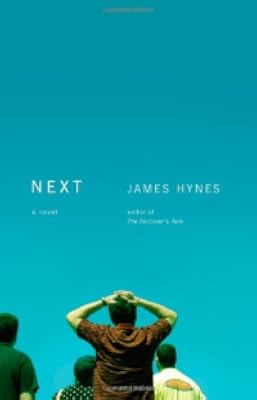
I've read only one other James Hynes book, NEXT (2010), also a novel of publishing and academia as well as some of the horror of 9/11 mixed in. It was not quite as ambitious and complex as this one, but a very good read. This one got off to a rather ponderous start, but, as I've already said, it gets better and better, so hang in there. Very highly recommended.
- Tim Bazzett, author of the memoir, BOOKLOVER show less
The book runs close to 400 pages, and it takes a good 100-plus pages just to introduce all of the cast and try to get them straight. But ultimately it is worth the investment of the time it all takes. Because once it gets going, the story barrels along at a breakneck pace that keeps you turning pages and reading faster and faster. Yeah, it's pretty damn good.
I picked this book up at a library sale a few months ago in Big Rapids, the town where author James Hynes grew up, the son of a Sociology professor at Ferris State University. (I had a couple classes from Glen Hynes back in 1966-67.) In fact the book is dedicated to his father, "my first and best teacher." James Hynes attended university at Michigan and Iowa and has bounced around between various college teaching jobs, so he knows about office politics, departmental intrigues and gossip, and he uses that knowledge in an alternately horrific and hilarious manner here in THE LECTURER'S TALE, giving the reader an inside look at the lowly world of adjunct professors and composition teachers, the pressures to publish AND teach, as well as the hallowed hierarchy of department heads and their trusted Sancho Panzas. And what a department chairman Hynes gives us in Anthony Pescecane, who conducts himself like the 'shark' his name indicates, and like a mafia don who professes to value 'street cred' over scholarship.
And then there's our 'hero' - or maybe antihero - Nelson Humboldt, who progresses from untenured lecturer steadily up through the ranks after suffering a freak accident that leaves him with a strange power to get people to do what he wants. And power corrupts, of course. So ...
I've read only one other James Hynes book, NEXT (2010), also a novel of publishing and academia as well as some of the horror of 9/11 mixed in. It was not quite as ambitious and complex as this one, but a very good read. This one got off to a rather ponderous start, but, as I've already said, it gets better and better, so hang in there. Very highly recommended.
- Tim Bazzett, author of the memoir, BOOKLOVER show less
Essentially, this is a horror story, but it is sometimes difficult to tell what the source of the horror is. Is it the strange, sometimes otherwordly characters and the extraordinary powers some possess, such as the main character – a lowly, untenured lecturer on the fast track to career oblivion who, after a horrible accident in which his finger is severed and then reattached, suddenly gains the power to bend others to his will just by touching them? Or is it the sorry state of academia – particularly literature departments – run rampant with faddish theorists and a love affair with popular culture, having forsaken the classics of the canon? Here, it’s both. Because while this novel functions nicely as a juicy little horror show more story, it is also a piercing satire of modern university life, and it must be read as such to be thoroughly enjoyed. But a warning: This book may be just the thing to convince you not to pursue that Ph.D. after all. show less
This very readable satire concerns the plight of Nelson Humbolt, a failed English professor. Hanging on as a lecturer teaching composition classes at a major research institution, he can barely support his family—and then is fired from even that menial job. That same day, his finger is severed in a freak accident involving a mysterious individual with a blank silver oval for a face. Soon, he realizes that he can make people do whatever he wants just by touching them, an ability that does wonders for him professionally but his unintended consequences at home. Since he can touch only one person at a time, and since his power seems only to force them to do things they are capable of, his power is hardly omnipotence as he navigates the show more minefield of a modern English department, complete with superstar caricatures.
The novel takes a turn for bewildering surrealism during its climax in the library clock tower. The sudden intense focus on gender seemed out of place with Nelson’s story. The final resolution, however, was satisfying and more in keeping. Expertise in literary theory is not necessary to read the novel, although a little familiarity is helpful. As someone who dropped out of graduate school in literature because it sucked all the fun out of reading, I appreciated Nelson’s dilemma—he went into literature because he loved it, only to find it completely devalued by literary theory. show less
The novel takes a turn for bewildering surrealism during its climax in the library clock tower. The sudden intense focus on gender seemed out of place with Nelson’s story. The final resolution, however, was satisfying and more in keeping. Expertise in literary theory is not necessary to read the novel, although a little familiarity is helpful. As someone who dropped out of graduate school in literature because it sucked all the fun out of reading, I appreciated Nelson’s dilemma—he went into literature because he loved it, only to find it completely devalued by literary theory. show less
An interesting read though I have to say I was completely thrown by how the story ends due to it's sexuality based paranormal/Gothic direction. That said, the mystical thing with the finger might have been the clue, but I honestly did not expect the outcome stated. The characters are interesting though and quite diverse and with some changes it might even have legs for adaptation to screen.
The Lecturer's Tale has some very funny moments, and a lot of enjoyable academic in-jokes (such as the professor who names his triplets Roland, Michel, and Jacques). However, the overall plot and attempt at magical realism are disappointing. The superficiality with which most of the book is treated undermines the effect of the alleged supernatural undercurrents, as well as the unbelievable climax of action.
It's an entertaining read, though, if you skip around for the funny parts.
It's an entertaining read, though, if you skip around for the funny parts.
Faantastic, original, fabulous writing, many references to literature,great characters.
Members
- Recently Added By
Lists

The Guardian's 1000 Novels Everyone Must Read
1,005 works; 552 members

Best Campus Novels
99 works; 18 members
Best Satire
188 works; 28 members

Dark Academia Novels
59 works; 11 members

Books Read in 2003
261 works; 7 members

Speculative Fiction: Slipstream Literature
166 works; 16 members
Author Information

10+ Works 2,019 Members
Writer James Hynes loves cats and has worked them into several of his publications, including his collection of three novellas entitled Publish and Perish: Three Tales of Tenure and Terror. A combination of horror story and academic satire, Publish and Perish was the result of Hynes yearning to create horror stories in the vein of Edgar Allen Poe show more and M.R. James. Hynes first gained national attention in 1990 with the publication of The Wild Colonial Boy. In addition, his essays on television criticism have appeared in Mother Jones and Utne Reader. (Bowker Author Biography) show less
Awards and Honors
Notable Lists
Common Knowledge
- Canonical title
- The Lecturer's Tale
- Original publication date
- 2001
- People/Characters
- Professor Nelson Humboldt
- Important places
- Midwest, USA
- Epigraph
- Ah, but a man's reach should exceed his grasp.
Or what's a heaven for?
-Robert Browning, "Andrea del Sarto" - First words
- Crossing the Quad on a Halloween Friday, as the clock in the tower tolled thirteen, under a windy, dramatic sky.
- Original language
- English US
- Canonical DDC/MDS
- 813.54
- Canonical LCC
- PS3558.Y55
Classifications
Statistics
- Members
- 524
- Popularity
- 57,437
- Reviews
- 7
- Rating
- (3.50)
- Languages
- English
- Media
- Paper, Ebook
- ISBNs
- 3
- ASINs
- 4