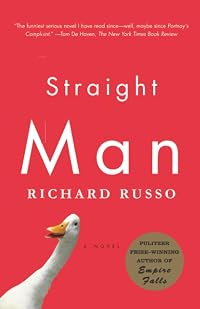
Straight Man
by Richard Russo
On This Page
Description
In the course of one week, Henry Devereaux, Jr., a once-promising novelist and now the middle-aged chairman of a university English department in hilarious disarray, faces an angry colleague, a curvaceous adjunct trying to seduce him, and a goose on local television--all while coming to terms with his philandering father, the dereliction of his youthful promise, and the ominous failure of certain vital body functions.Tags
Recommendations
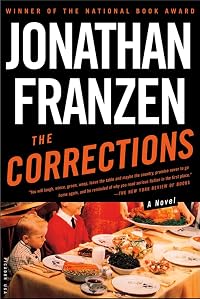
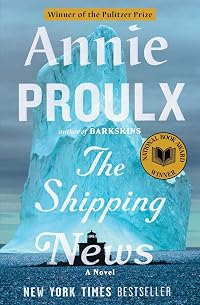
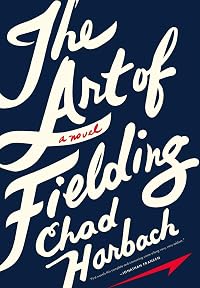
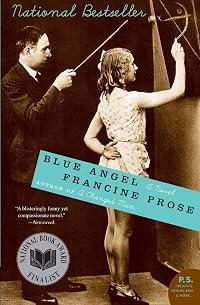
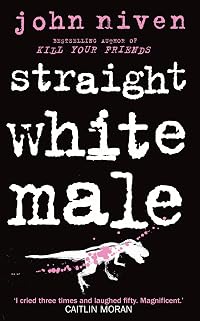

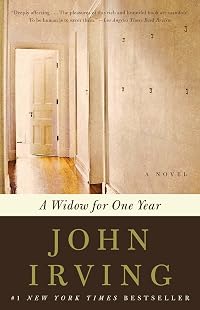
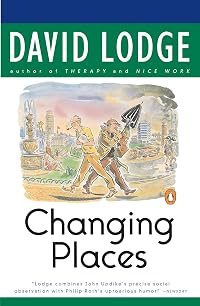
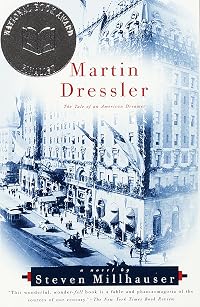
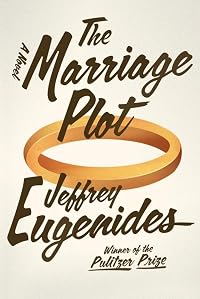

Member Recommendations
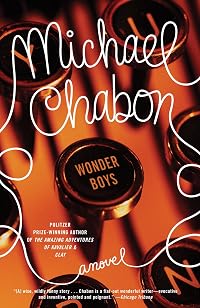
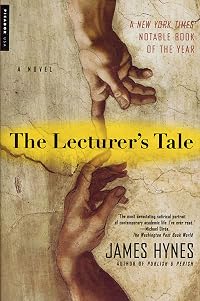
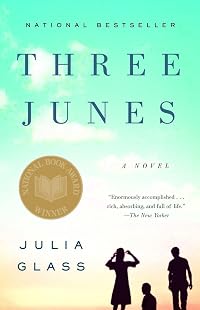
browner56 Very funny treatments of academic life from different sides of the Atlantic Ocean
51
Moo by Jane Smiley
wademlee Academic satire, humorous & outrageous. Those in Academe will recognize themselves or their colleagues.
20
goose114 Another story of academia with a witty sense of humor.
20
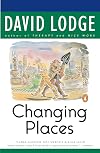
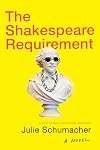
achedglin Both books have beleaguered professors and serve as academic satire. They share a well-crafted style and real understanding of character and their capacity for human foibles.
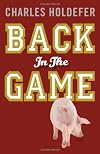
hairball Straight Man is what Back in the Game should be.
Member Reviews
[Reprinted from the Chicago Center for Literature and Photography (cclapcenter.com). I am the original author of this essay, as well as the owner of CCLaP; it is not being reprinted illegally.]
I was all excited when I first stumbled across this in the "New Additions" section of the Chicago Public Library's ebook collection, because I thought I had randomly come across Pulitzer winner Richard Russo's newest title just minutes after it had been announced at the website, and therefore was going to get to check it out before anybody else; but in fact, although it was new to their collection, the book itself is from 1997, and in fact is one of the more well-loved ones of his entire career. A gentle character-based comedy about life among show more academes in a small college town, like Michael Chabon's Wonder Boys and Jane Smiley's Moo it takes the self-reflective topic of writing professors on a closed campus (usually a no-no in writing guides for beginners) and embraces it for all it's worth, really delving into the quirky little details that come specifically with academic life, but spicing it up with enough interesting plot developments to make it much more than the usual piece of circle-jerking masturbation than the "writing professor writing about writing professors" subgenre usually produces. And of course, in this case things are helped immensely as well by the main character being such a fascinatingly complex and charming curmudgeon, an aging fiction professor who has long ago accepted his fate at the third-tier podunk college where they all gossip and backbite, and who in his very mild way has decided to rage against the machine which is campus pettiness, combining a world-weary attitude with occasional bursts of M*A*S*H-style outrageous actions, including his habit of playing the Motley Fool whenever in front of the local media just to stir up more crap for his overlords on the school's board of directors. I usually have a low tolerance for this kind of metafictional material, but again like Wonder Boys and Moo this is a rare exception, expressly because Russo takes the time and energy to put together a wonderfully entertaining, sometimes legitimately thrilling story to take place in this environment, instead of the usual endless whiny screeds about middle-aged men having affairs with their 19-year-old students. It comes hugely recommended, and makes me even more excited than I was to finally tackle his Pulitzer-winning Empire Falls for the CCLaP 100 later this year. show less
I was all excited when I first stumbled across this in the "New Additions" section of the Chicago Public Library's ebook collection, because I thought I had randomly come across Pulitzer winner Richard Russo's newest title just minutes after it had been announced at the website, and therefore was going to get to check it out before anybody else; but in fact, although it was new to their collection, the book itself is from 1997, and in fact is one of the more well-loved ones of his entire career. A gentle character-based comedy about life among show more academes in a small college town, like Michael Chabon's Wonder Boys and Jane Smiley's Moo it takes the self-reflective topic of writing professors on a closed campus (usually a no-no in writing guides for beginners) and embraces it for all it's worth, really delving into the quirky little details that come specifically with academic life, but spicing it up with enough interesting plot developments to make it much more than the usual piece of circle-jerking masturbation than the "writing professor writing about writing professors" subgenre usually produces. And of course, in this case things are helped immensely as well by the main character being such a fascinatingly complex and charming curmudgeon, an aging fiction professor who has long ago accepted his fate at the third-tier podunk college where they all gossip and backbite, and who in his very mild way has decided to rage against the machine which is campus pettiness, combining a world-weary attitude with occasional bursts of M*A*S*H-style outrageous actions, including his habit of playing the Motley Fool whenever in front of the local media just to stir up more crap for his overlords on the school's board of directors. I usually have a low tolerance for this kind of metafictional material, but again like Wonder Boys and Moo this is a rare exception, expressly because Russo takes the time and energy to put together a wonderfully entertaining, sometimes legitimately thrilling story to take place in this environment, instead of the usual endless whiny screeds about middle-aged men having affairs with their 19-year-old students. It comes hugely recommended, and makes me even more excited than I was to finally tackle his Pulitzer-winning Empire Falls for the CCLaP 100 later this year. show less
Loved, loved, loved this book. The main character, Hank Devereaux is just a mess, but a likable one. On his academic campus, Hank is the rebel without a cause. He delights in being unpredictible and stirring things up to often hilarious results. However, there's also substance to the novel as Hank, who is nearing his 50th birthday, is coming to terms with the passing of youth and with his own mortality. This situation and the insight granted the reader by Hank's first person narrative makes the character believable and we find that Hank's often outrageous behavior may be his only coping mechanism in accepting what his life has become versus what he thought it would be.
To summarize: It a beautifully written gem of a book, and it's well worth reading, especially if you can give the author a little wiggle room at the end and be open to the soft ending.
Richard Russo is the writer that I've read the most since joining Goodreads.(With the exception of Jim Butcher (who's in a different class since he writes serialized pulp)), In the last four years, I've read That Old Cape Magic (so-so), Empire Falls (big, smart, and full of heart), and now, Straight Man.
One thing that really interests me about Russo's works are the recurring themes: parents who are academics, marital infidelity (always with the main character's parents), real estate and houses, and the general sense of people (especially main characters) show more being stuck in their lives. Russo's protagonists tend to be passive and are often surrounded by more virile men who get laid more often and who talk a lot more smack. Russo revisits all off these in Straight Man which is (roughly) about a well-meaning troublemaker of a college professor, William Henry "Hank" Devereux, whose life (career, family ties, long term friendships) bristles, then explodes one fine spring. The whole thing spins into a smartly comic midlife crisis including such elements as the return of his philandering father who feels immense guilt about his critical approach to Charles Dickens, the world's most dysfunctional English Department (and that's saying something), donkey basketball (don't ask), and mortal threats to a passive-aggressive goose. Oh, and hysterical prostate condition. (again, don't ask)
Straight Man is beautifully written and offers a lot of insight into the human condition (especially in an academic context). As a part time teacher myself, I felt like Russo really captures the sense of cultural loss (although I think he's a bit too cynical at times) as colleges comes to value higher education less and less, instead focusing on a model that focuses more on remedial ed. for those who were failed by their high schools / parents and build-your-career programs. That's not to say that remedial ed. And career aren't important. They are precisely important because that's what we need to get by, but you can tell that something's missing which is that there was a time when there an intrinsic value is just being learned.
If there's one small flaw in Straight Man, it's the ending (and that's why I give it four stars instead of five). For a book with a beginning and middle that crackle with the energy of a complicated web of plot, the ending is a "soft fade" of sorts. (In this aspect, it reminds me of the ending of No Country for Old Men, although NCFOM's ending was far worse). In the conclusion of Straight Man, the ends of lot of the big plot points are merely summarized. The stories don't end as much as they drift into ambiguous moments that contain meaning. This isn't bad, but I feel like it would have been better to end with a pie fight or something. Or possibly an armed invasion. Or an invading force armed only with pies and maybe some angry geese thrown in.
In the end Hank, our main man, is strangely unchanged (although his bladder condition improves- don't ask). If he proves anything, it's that he is his own man. And maybe that's what the book is about. Actually, the best thing about the ambiguous ending(s) is that has achieved the desired effect of making me think about life- particularly in context of Hank's midlife crisis- and wonder what it's all about. show less
Richard Russo is the writer that I've read the most since joining Goodreads.(With the exception of Jim Butcher (who's in a different class since he writes serialized pulp)), In the last four years, I've read That Old Cape Magic (so-so), Empire Falls (big, smart, and full of heart), and now, Straight Man.
One thing that really interests me about Russo's works are the recurring themes: parents who are academics, marital infidelity (always with the main character's parents), real estate and houses, and the general sense of people (especially main characters) show more being stuck in their lives. Russo's protagonists tend to be passive and are often surrounded by more virile men who get laid more often and who talk a lot more smack. Russo revisits all off these in Straight Man which is (roughly) about a well-meaning troublemaker of a college professor, William Henry "Hank" Devereux, whose life (career, family ties, long term friendships) bristles, then explodes one fine spring. The whole thing spins into a smartly comic midlife crisis including such elements as the return of his philandering father who feels immense guilt about his critical approach to Charles Dickens, the world's most dysfunctional English Department (and that's saying something), donkey basketball (don't ask), and mortal threats to a passive-aggressive goose. Oh, and hysterical prostate condition. (again, don't ask)
Straight Man is beautifully written and offers a lot of insight into the human condition (especially in an academic context). As a part time teacher myself, I felt like Russo really captures the sense of cultural loss (although I think he's a bit too cynical at times) as colleges comes to value higher education less and less, instead focusing on a model that focuses more on remedial ed. for those who were failed by their high schools / parents and build-your-career programs. That's not to say that remedial ed. And career aren't important. They are precisely important because that's what we need to get by, but you can tell that something's missing which is that there was a time when there an intrinsic value is just being learned.
If there's one small flaw in Straight Man, it's the ending (and that's why I give it four stars instead of five). For a book with a beginning and middle that crackle with the energy of a complicated web of plot, the ending is a "soft fade" of sorts. (In this aspect, it reminds me of the ending of No Country for Old Men, although NCFOM's ending was far worse). In the conclusion of Straight Man, the ends of lot of the big plot points are merely summarized. The stories don't end as much as they drift into ambiguous moments that contain meaning. This isn't bad, but I feel like it would have been better to end with a pie fight or something. Or possibly an armed invasion. Or an invading force armed only with pies and maybe some angry geese thrown in.
In the end Hank, our main man, is strangely unchanged (although his bladder condition improves- don't ask). If he proves anything, it's that he is his own man. And maybe that's what the book is about. Actually, the best thing about the ambiguous ending(s) is that has achieved the desired effect of making me think about life- particularly in context of Hank's midlife crisis- and wonder what it's all about. show less
There is a great scene at the end of Straight Man that really epitomizes a big part of what the novel is all about. A large group of professors at a going away party for one of their colleagues has crowded into a small room and shut the door. Since the door swings inward, however, when it is time leave all of the professors rush forward at once, making it impossible to open the door and escape. As Hank Devereaux, the main character in this wonderful satire of modern campus life, explains:
Clearly, the only solution was for all of us to take one step backward so that the door could be pulled open. By this point a group of plumbers, a group of bricklayers, a group of hookers, a group of chimpanzees would have figured this out. But the show more room contained, unfortunately, a group of academics, and we couldn’t quite believe what had happened to us.
Believe it or not, this actually represents a happy (or at least a fitting) ending, given all of the seriocomic events that have preceded it. The story centers on Hank, the acting chairman of an extremely dysfunctional English Department at a mediocre state university that is undergoing deep budget cuts. To make matters worse, Hank is in the throes of a mid-life crisis that has its roots in his strained (to say the least) relationship with his mother and father. Hank’s issues manifest themselves in both mental and physical forms and lead to several truly hilarious passages, including ones where he threatens on camera to kill a duck a day until the budget problems are resolved or crawls into the ceiling above his office to avoid his colleagues and ends up spying on a faculty meeting.
In the hands of a writer less talented than Russo, all of this could feel contrived or even fall flat altogether. Straight Man, though, is a dead-on treatment of the pure folly that often underlies the politics and relationships—both personal and professional—at a large university. But as humorous as the book is—and it is really, really funny—the author manages to deliver serious messages on themes such as aging, loyalty to both family and professional colleagues, confronting one’s past, and suicide. As someone who has worked in higher education for more than thirty years, I make it a point to read as many campus novels as possible. Without question, this one has to be placed near the top of that list. show less
Clearly, the only solution was for all of us to take one step backward so that the door could be pulled open. By this point a group of plumbers, a group of bricklayers, a group of hookers, a group of chimpanzees would have figured this out. But the show more room contained, unfortunately, a group of academics, and we couldn’t quite believe what had happened to us.
Believe it or not, this actually represents a happy (or at least a fitting) ending, given all of the seriocomic events that have preceded it. The story centers on Hank, the acting chairman of an extremely dysfunctional English Department at a mediocre state university that is undergoing deep budget cuts. To make matters worse, Hank is in the throes of a mid-life crisis that has its roots in his strained (to say the least) relationship with his mother and father. Hank’s issues manifest themselves in both mental and physical forms and lead to several truly hilarious passages, including ones where he threatens on camera to kill a duck a day until the budget problems are resolved or crawls into the ceiling above his office to avoid his colleagues and ends up spying on a faculty meeting.
In the hands of a writer less talented than Russo, all of this could feel contrived or even fall flat altogether. Straight Man, though, is a dead-on treatment of the pure folly that often underlies the politics and relationships—both personal and professional—at a large university. But as humorous as the book is—and it is really, really funny—the author manages to deliver serious messages on themes such as aging, loyalty to both family and professional colleagues, confronting one’s past, and suicide. As someone who has worked in higher education for more than thirty years, I make it a point to read as many campus novels as possible. Without question, this one has to be placed near the top of that list. show less
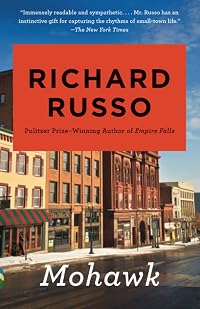
I'm really not a fan of Richard Russo, but this book was different -- a campus comedy -- and it struck my fancy. It is a funny and involving novel from the author of Mohawk and Nobody's Fool. With writing teacher Hank Devereaux Richard Russo has created an English professor who is truly fun to read about. Devereaux has written one novel (Off the Road) and has settled into an embattled stint as department head at an academic sinkhole where he finds it prudent to simply tread water and go with the flow. Hank tries to keep his wits about him by adopting the philosophical principle known as Occam's Razor (that the simplest explanation of a phenomenon or problem is usually the correct one), but his life keeps getting in the way. He is show more surrounded by stereotypical characters who unexpectedly are full of colorful life. And, in addition to possible prostate cancer, Hank is assailed by even more undignified woes: His nose is bloodied by a poet's notebook, and he's suspected (with good reason) of murdering a goose--and of even worse things--by a hilarious, vividly rendered cadre of fellow academics, townspeople, and students, each of whom is sharply individualized. Plot is only secondary in a Russo novel. This one seduces and charms with its voice (i.e., Hank Devereaux's): Laconic, deadpan, disarmingly modest and self-effacing, it's the perfect vehicle for one of Russo's irresistible revelations of the agreeable craziness of everyday life. I did not want the story to end because of the way Russo mixes all of the characters together. It was a book that made me happy that I spent some time along with him for the ride. show less
An outstanding academic satire about a professor at a remote Pennsylvania state school where getting tenure "was a little like being proclaimed the winner of a shit-eating contest".
If measured by the number of laugh-out-loud moments it provides, this is quite possibly the funniest book I have ever read. No one who has spent (done?) time in academia should miss it, and even those outside the ivy-covered walls will appreciate Russo's hapless characters and deliriously absurd situations.
Members
- Recently Added By
Published Reviews
ThingScore 100
The narrator of Richard Russo's hilarious fourth novel is a man
whom nearly everyone finds exasperating. It is not hard to see
why. William Henry Devereaux Jr. can never swallow a quip or a
saucy comeback, nor does he try to. Stick a wisenheimer like him in
a dour, paranoid college English department (has there ever been
another kind?) and comedy can practically be guaranteed. But
Russo, the author show more of the novels ''Mohawk,'' ''The Risk Pool'' and
''Nobody's Fool,'' is interested in more than generating laughter, and ''Straight Man'' strikes me
as the funniest serious novel I have read since -- well, maybe since ''Portnoy's Complaint.''
Comfortably, if complacently, married, and the father of two grown daughters, Hank
Devereaux is a midcareer academic a month shy of his 50th birthday. Like most of his tenured
colleagues, he is amazed still to be ensconced at West Central Pennsylvania University, a
third-rate state school. ''We have believed, all of us, like Scuffy the Tugboat,'' he says, ''that
we were made for better things.'' But while committee work, departmental politics, annual
budget cuts, puny raises and ''the increasingly militant ignorance'' of students have soured and
embittered his fellow academics, Hank refuses to sing the professorial blues, to participate in
feuds, to bed any students or to curry favor with Dickie Pope, the oily and malignant campus
executive officer.
It does seem possible, though, even likely, that being stuck for so long (two decades and
counting) in the stale and dreary town of Railton has made him reckless and a little bit crazy.
After all, here is a man -- the interim department chairman, no less -- who will gleefully tease
the touchy and extravagantly perfumed faculty poet, then find it entertaining when she hauls
off and slams him in the face with a fat notebook, bloodying his nose and hooking his left
nostril with the barbed end of the spiral ring. ''People who know me,'' he says, ''refuse to take
me seriously.''
Which is just how he wants it.
Which is not to suggest that Hank Devereaux does not have his devils. His chief devil happens
to be his own father, a philandering ''academic opportunist'' whose books of trendy literary
criticism guaranteed him a career of cushy appointments at the best universities. All intellect
and no heart, the famous scholar abandoned his wife and young son for the pursuit of
academic laurels and the smiles of pretty female graduate students. ''I have inherited from my
father most of what I had hoped to avoid,'' Hank muses in one of his many endearing
moments of self-deprecation. ''When all is said and done, I'm an English professor, like my
father. The most striking difference between him and me is that he's been a successful one.''
At the age of 29, Hank published a novel called ''Off the Road.'' It was respectfully received,
but quickly remaindered. He has never started a second one. These days, when he writes at
all, he writes satirical columns about university life for the local newspaper.
As in Russo's earlier novels, there is a lot of ambling and driving around, and frequent stops
along the way. Plot is a minor consideration. Things happen, of course: in a concentrated
period of time, less than a week, Hank's ailing father shows up in Railton, and his younger
daughter's rocky marriage abruptly ends; Hank is arrested, hospitalized, charged with
dereliction of duty and romantically pursued by a colleague's daughter. The novel's greatest
pleasures derive not from any blazing impatience to see what happens next, but from pitchperfect
dialogue, persuasive characterization and a rich progression of scenes, most of them
crackling with an impudent, screwball energy reminiscent of Howard Hawks's movies. (In its
most inspired set piece, Hank -- wearing a fake nose and glasses -- appears on local television
facetiously threatening to kill a duck a day until he gets a department budget. ''This is a
nonnegotiable demand,'' he snarls. ''I want the money on my desk in unmarked bills by
Monday morning.'')
Hank's perambulations and cumulative misadventures in his town-and-gown world, like that
famous Irishman's around Dublin, are fateful ones. Always infusing the comedy are sadness
and smothered panic. ''I appear to be a man in trouble,'' Hank finally admits to himself while
hunkered in a filthy ceiling crawl space, about to eavesdrop on his convened department
mates. It occurs to him that perhaps all of his anarchic Robin Williams-type role playing
might actually be a deep-rooted ploy to self-destruct.
Russo is a traditionalist when it comes to conclusions. His meandering stories inevitably bring
their major players to a new place, or at least to a new vantage on things. Before ''Straight
Man'' ends, in an epilogue that jumps us from April to August, Hank Devereaux has run an
emotional gantlet, and he has been changed by the experience, though not, of course, changed
utterly. He has made a tolerable peace with himself and his predicaments. For Richard Russo's
small-town Americans, contentment is always understood as a temporary state, just as
exuberant high spirits are recognized as a thin, but useful, disguise for sorrow. show less
whom nearly everyone finds exasperating. It is not hard to see
why. William Henry Devereaux Jr. can never swallow a quip or a
saucy comeback, nor does he try to. Stick a wisenheimer like him in
a dour, paranoid college English department (has there ever been
another kind?) and comedy can practically be guaranteed. But
Russo, the author show more of the novels ''Mohawk,'' ''The Risk Pool'' and
''Nobody's Fool,'' is interested in more than generating laughter, and ''Straight Man'' strikes me
as the funniest serious novel I have read since -- well, maybe since ''Portnoy's Complaint.''
Comfortably, if complacently, married, and the father of two grown daughters, Hank
Devereaux is a midcareer academic a month shy of his 50th birthday. Like most of his tenured
colleagues, he is amazed still to be ensconced at West Central Pennsylvania University, a
third-rate state school. ''We have believed, all of us, like Scuffy the Tugboat,'' he says, ''that
we were made for better things.'' But while committee work, departmental politics, annual
budget cuts, puny raises and ''the increasingly militant ignorance'' of students have soured and
embittered his fellow academics, Hank refuses to sing the professorial blues, to participate in
feuds, to bed any students or to curry favor with Dickie Pope, the oily and malignant campus
executive officer.
It does seem possible, though, even likely, that being stuck for so long (two decades and
counting) in the stale and dreary town of Railton has made him reckless and a little bit crazy.
After all, here is a man -- the interim department chairman, no less -- who will gleefully tease
the touchy and extravagantly perfumed faculty poet, then find it entertaining when she hauls
off and slams him in the face with a fat notebook, bloodying his nose and hooking his left
nostril with the barbed end of the spiral ring. ''People who know me,'' he says, ''refuse to take
me seriously.''
Which is just how he wants it.
Which is not to suggest that Hank Devereaux does not have his devils. His chief devil happens
to be his own father, a philandering ''academic opportunist'' whose books of trendy literary
criticism guaranteed him a career of cushy appointments at the best universities. All intellect
and no heart, the famous scholar abandoned his wife and young son for the pursuit of
academic laurels and the smiles of pretty female graduate students. ''I have inherited from my
father most of what I had hoped to avoid,'' Hank muses in one of his many endearing
moments of self-deprecation. ''When all is said and done, I'm an English professor, like my
father. The most striking difference between him and me is that he's been a successful one.''
At the age of 29, Hank published a novel called ''Off the Road.'' It was respectfully received,
but quickly remaindered. He has never started a second one. These days, when he writes at
all, he writes satirical columns about university life for the local newspaper.
As in Russo's earlier novels, there is a lot of ambling and driving around, and frequent stops
along the way. Plot is a minor consideration. Things happen, of course: in a concentrated
period of time, less than a week, Hank's ailing father shows up in Railton, and his younger
daughter's rocky marriage abruptly ends; Hank is arrested, hospitalized, charged with
dereliction of duty and romantically pursued by a colleague's daughter. The novel's greatest
pleasures derive not from any blazing impatience to see what happens next, but from pitchperfect
dialogue, persuasive characterization and a rich progression of scenes, most of them
crackling with an impudent, screwball energy reminiscent of Howard Hawks's movies. (In its
most inspired set piece, Hank -- wearing a fake nose and glasses -- appears on local television
facetiously threatening to kill a duck a day until he gets a department budget. ''This is a
nonnegotiable demand,'' he snarls. ''I want the money on my desk in unmarked bills by
Monday morning.'')
Hank's perambulations and cumulative misadventures in his town-and-gown world, like that
famous Irishman's around Dublin, are fateful ones. Always infusing the comedy are sadness
and smothered panic. ''I appear to be a man in trouble,'' Hank finally admits to himself while
hunkered in a filthy ceiling crawl space, about to eavesdrop on his convened department
mates. It occurs to him that perhaps all of his anarchic Robin Williams-type role playing
might actually be a deep-rooted ploy to self-destruct.
Russo is a traditionalist when it comes to conclusions. His meandering stories inevitably bring
their major players to a new place, or at least to a new vantage on things. Before ''Straight
Man'' ends, in an epilogue that jumps us from April to August, Hank Devereaux has run an
emotional gantlet, and he has been changed by the experience, though not, of course, changed
utterly. He has made a tolerable peace with himself and his predicaments. For Richard Russo's
small-town Americans, contentment is always understood as a temporary state, just as
exuberant high spirits are recognized as a thin, but useful, disguise for sorrow. show less
added by browner56
Lists

Favourite Books
1,819 works; 316 members

Best Campus Novels
99 works; 18 members

Best Laugh Out Loud Books
143 works; 49 members

Books Read in 2023
5,547 works; 145 members

Academia in Fiction
158 works; 23 members

Books Read in 2007
326 works; 8 members
Books Set in Small Towns and Villages
278 works; 16 members

American Lit for Eng 11 Research Project
368 works; 6 members

A Novel Cure
742 works; 23 members

TBR - Older Books
92 works; 1 member

Library List - Pulitzer Adjacent
40 works; 1 member

Library List 4.5
25 works; 1 member
Author Information

36+ Works 29,037 Members
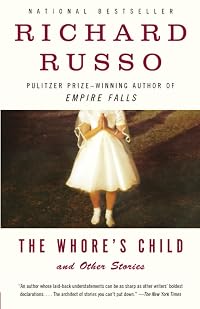
Richard Russo was born in Johnstown, New York on July 15, 1949. He received a Bachelor's degree, a Master of Fine Arts degree, and a Doctor of Philosophy degree from the University of Arizona. He taught at numerous colleges including Southern Illinois University Carbondale and Colby College. He has written numerous books including Mokawk, The Risk show more Pool, Straight Man, Bridge of Sighs, and That Old Cape Magic, as well as a short story collection, The Whore's Child. His novel Empire Falls won the 2002 Pulitzer Prize for Fiction and Nobody's Fool was made into a movie starring Paul Newman, Bruce Willis and Melanie Griffith. His memoir was entitled Elsewhere. He also co-wrote the 1998 film Twilight with director Robert Benton and the teleplay for the HBO adaptation of Empire Falls. (Bowker Author Biography) Richard Russo lives in coastal Maine with his wife & two daughters. (Publisher Fact Sheets) show less
Some Editions
Awards and Honors
Awards
Distinctions
Notable Lists
Common Knowledge
- Canonical title
- Straight Man
- Original title
- Straight Man
- Original publication date
- 1997
- People/Characters
- William Henry Devereaux, Jr.; Lily Devereaux; Tony Coniglia; Jacob Rose; William Henry Devereaux, Sr.; Dickie Pope (show all 13); Teddy Barnes; Paul Rourke; Billy Quigley; Gracie DuBois; Phineas "Finny" Coomb; Campbell "Orshee" Wheeler; Charles Purdy
- Important places
- Railton, Pennsylvania, USA; West Central State University; Allegheny Estates
- Related movies
- Lucky Hank (2023 | IMDb)
- Dedication
- For Nat and Judith
- First words
- Truth be told, I'm not an easy man.
- Last words
- (Click to show. Warning: May contain spoilers.)But the room contained, unfortunately, a group of academics, and we couldn't quite believe what had happened to us.
- Original language
- English
Classifications
Statistics
- Members
- 3,725
- Popularity
- 4,302
- Reviews
- 98
- Rating
- (4.04)
- Languages
- 8 — Danish, Dutch, English, French, German, Russian, Slovenian, Turkish
- Media
- Paper, Audiobook, Ebook
- ISBNs
- 26
- ASINs
- 8