
Jane Smiley
Author of A Thousand Acres
About the Author
Jane Smiley was born in Los Angeles, California on September 26, 1949. She received a B. A. from Vassar College in 1971 and an M.F.A. and a Ph.D from the University of Iowa. From 1981 to 1996, she taught undergraduate and graduate creative writing workshops at Iowa State University. Her books show more include The Age of Grief, The Greenlanders, Moo, Horse Heaven, Ordinary Love and Good Will, Some Luck, and Early Warning. In 1985, she won an O. Henry Award for her short story Lily, which was published in The Atlantic Monthly. A Thousand Acres received both the National Book Critics Circle Award and the Pulitzer Prize. (Bowker Author Biography) show less
Series
Works by Jane Smiley
A Year at the Races: Reflections on Horses, Humans, Love, Money, and Luck (2004) 221 copies, 4 reviews
The Man Who Invented the Computer: The Biography of John Atanasoff, Digital Pioneer (2010) 198 copies, 7 reviews
Great American Short Stories [Barnes & Noble Signature Editions] (2013) — Introduction; Editor — 191 copies
The Questions That Matter Most: Reading, Writing, and the Exercise of Freedom (2023) 39 copies, 3 reviews
Associated Works
Journey to the Centre of the Earth (1867) — Introduction, some editions — 17,623 copies, 264 reviews
Adventures of Huckleberry Finn [Norton Critical Edition, 1st ed.] (1884) — Contributor — 2,187 copies, 10 reviews
The Story and Its Writer: An Introduction to Short Fiction (1976) — Contributor — 1,216 copies, 3 reviews
Writers on Writing: Collected Essays from the New York Times (2001) — Contributor — 480 copies, 5 reviews
You've Got to Read This: Contemporary American Writers Introduce Stories that Held Them in Awe (1994) — Introduction — 414 copies, 3 reviews
Poison Penmanship: The Gentle Art of Muckraking (1979) — Preface, some editions — 376 copies, 3 reviews
Why We Write: 20 Acclaimed Authors on How and Why They Do What They Do (2013) — Contributor — 209 copies, 10 reviews
Writers on Writing, 2: More Collected Essays from the New York Times (2003) — Introduction — 200 copies, 3 reviews
The Workshop: Seven Decades of the Iowa Writers Workshop - 43 Stories, Recollections, & Essays on Iowa's Place in Twentieth-Century American Literature (1999) — Contributor — 197 copies, 1 review
First Fiction: An Anthology of the First Published Stories by Famous Writers (1994) — Contributor; Introduction — 196 copies, 1 review
Light the Dark: Writers on Creativity, Inspiration, and the Artistic Process (2017) — Contributor — 165 copies, 5 reviews
Me, My Hair, and I: Twenty-seven Women Untangle an Obsession (2015) — Contributor — 151 copies, 35 reviews
Novel History: Historians and Novelists Confront America's Past and Each Other (2001) — Contributor — 139 copies, 1 review
Living with Shakespeare: Essays by Writers, Actors, and Directors (2013) — Contributor — 95 copies, 4 reviews
An Innocent Abroad: Life-Changing Trips from 35 Great Writers (2014) — Contributor — 87 copies, 4 reviews
Who's Writing This? Notations on the Authorial I, with Self-Portraits {not Antæus} (1995) — Contributor — 75 copies
Mentors, Muses & Monsters: 30 Writers on the People Who Changed Their Lives (2009) — Contributor — 71 copies, 2 reviews
Better Than Fiction 2: True Adventures from 30 Great Fiction Writers (2015) — Contributor — 34 copies
Horse Girls: Recovering, Aspiring, and Devoted Riders Redefine the Iconic Bond (2021) — Contributor — 32 copies, 2 reviews
The Artists' and Writers' Cookbook: A Collection of Stories with Recipes (2016) — Contributor — 19 copies
Antaeus No. 73/74, Spring 1994 - Who’s Writing This: Notations on the Authorial I {magazine} (1994) — Contributor — 5 copies
Tagged
Common Knowledge
- Canonical name
- Smiley, Jane
- Legal name
- Smiley, Jane Graves
- Birthdate
- 1949-09-26
- Gender
- female
- Education
- Vassar College (B.A.|1971)
University of Iowa (M.A.|1975|M.F.A.|1976)
University of Iowa (Ph.D|1978)
John Burroughs School - Occupations
- novelist
professor - Organizations
- University of California, Riverside
Iowa State University - Awards and honors
- American Academy of Arts and Letters Award (1997)
Fulbright scholarship
F. Scott Fitzgerald Award for Outstanding Achievement in American Fiction (2006)
American Academy of Arts and Letters (2001)
PEN USA Lifetime Achievement Award for Literature (2006)
Robert Kirsch Award (2023) - Agent
- Molly Friedrich (Aaron Priest Literary Agency)
- Nationality
- USA
- Birthplace
- Los Angeles, California, USA
- Places of residence
- Los Angeles, California, USA
Webster Groves, Missouri, USA
Iceland - Associated Place (for map)
- USA
Members
Discussions
What It’s Like to Have Your Book Banned in Banned Books (February 2024)
Jane Smiley: American Author Challenge in 75 Books Challenge for 2016 (April 2016)
June 2011 Read: Private Life in Missouri Readers (June 2011)
Reviews
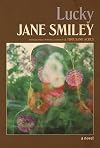
This deceptively simple novel about Jodie Rattler, a moderately successful singer-songwriter in the era of the three J's (Joni, Judy, Joan) of the '60s and 70s, is placid on the surface. A love song to home and family, Jodie is the daughter of a striving Broadway chorus girl from St. Louis who becomes pregnant by a married man and returns home with a two year old. Jodie's aunts, uncles, and cousins and their comfortable homes, neighborhoods, and relationships create a soft landing for them, show more though the mother is haunted by what she lost and by mental illness. Jodie's melodious voice is recognized in elementary school choir and her songwriting skills develop in college; she plays in bands and writes a few hit songs, and her favorite uncle parlays her generous royalty payments into enough wealth to buy her several homes and temporary residency in Europe. She meets Martin, with whom she is perfectly compatible, but whose upper-class British future expectations do not mesh well with Jodie's lack of ambition, and she leaves him, an act that will resonate through her life. She returns to St. Louis, takes care of her mother and aging family, goes out on the road for concerts and music festivals (including one memorable duet with Lyle Lovett), and teaches herself how to become part of a close group of local women. What should have ended in a gentle slide into advanced age shockingly becomes the opposite in a stunning epilogue. The novel, as everything Smiley has written, becomes part of the fabric of the reader's permanent memory. show less

There are two ways to look at this novel - as a King Lear reinterpretation set in 1979 Iowa or as a novel of rural Iowa. Both will be correct - and both will be incomplete. It is the masterful mix of the two that makes this novel what it is.
In the spring of 1979, the patriarch of the Cook family in Zebulon County, Iowa, decides to split his farm between his 3 daughters. The decision comes as a surprise -- he had been a farmer all his life and stepping away is not what anyone expected. show more Except that one of them, his youngest, does not show enough enthusiasm so is cut out and leaves for her lawyer career (it is 1979, invasion won't happen - the battles when they come will be in court). In case you had ever read King Lear, you already know where this one is going... or can go. Smiley does not change the main fabric of the play... but she shifts it.
The second family drama is also in full play - being born out of wedlock is not such a big deal anymore so the son is a draft-dodger instead.
Shakespeare gave us the "external viewer" viewpoint; Smiley gives the oldest daughter, Ginny, the speaker part. And that changes things - partially because now we may be dealing with unreliable narrator and partially because Goneril was never given a chance to explain herself. But that shift also means that we see the underside of the play - the good son is almost just a shadow because the 2 older sisters rarely have anything to do with him.
The novel follows the plot of the play faithfully... which initially worried me - because it almost sounded like a recipe for a predictable plotline. But instead it helped - if you knew what was coming, you were always looking into things thinking on how they tie into it; if you did not know (because you never read King Lear), some of the turns may come as a shock.
But when you remove the veneer of King Lear, you find another novel under it - the novel of the changing times of 1979 in rural America when the farmers were facing the changes in the world. Smiley writes this novel with as much mastery as she does the overlaying story - with all the nitty gritty details (get yourself access to wikipedia if you had not read about farming before -- a lot of the descriptions are extremely detailed but they are done by a farmer's daughter who is herself a farmer.
And as a third layer is the back story of Zebulon county and the Cook family - which is the story of the people that made Iowa and its neighboring states and how American farming came to be what it was.
There is a lot of personal heartbreak in this novel - on all 3 levels of the text and there are awful things that happen and that had happened. The evil sisters of the play turn into the victims here (how much they are and how much of it is the narrator is open to interpretation) and the formerly good characters appear to be either vindictive or just shadows. Old secrets also resurface - some of them so disturbing that it makes you wonder if another play's line about things being rotten should not apply here. The sexual tension of the play is also here - as it cannot not be - and unlike the bawdiness of Shakespeare, it is also explored a lot more carefully.
The end is expected - everything dies. Not literally this time (although enough people do die) - but a way of a life is dead nevertheless and the people still standing are different people.
It is a hard novel to read in some parts - some of them because of the farming narrative, some of them because of the pure awfulness of the past of some of the characters. And it is not a happy story - for anyone. But then... the dying of a way of life never is. show less
In the spring of 1979, the patriarch of the Cook family in Zebulon County, Iowa, decides to split his farm between his 3 daughters. The decision comes as a surprise -- he had been a farmer all his life and stepping away is not what anyone expected. show more Except that one of them, his youngest, does not show enough enthusiasm so is cut out and leaves for her lawyer career (it is 1979, invasion won't happen - the battles when they come will be in court). In case you had ever read King Lear, you already know where this one is going... or can go. Smiley does not change the main fabric of the play... but she shifts it.
The second family drama is also in full play - being born out of wedlock is not such a big deal anymore so the son is a draft-dodger instead.
Shakespeare gave us the "external viewer" viewpoint; Smiley gives the oldest daughter, Ginny, the speaker part. And that changes things - partially because now we may be dealing with unreliable narrator and partially because Goneril was never given a chance to explain herself. But that shift also means that we see the underside of the play - the good son is almost just a shadow because the 2 older sisters rarely have anything to do with him.
The novel follows the plot of the play faithfully... which initially worried me - because it almost sounded like a recipe for a predictable plotline. But instead it helped - if you knew what was coming, you were always looking into things thinking on how they tie into it; if you did not know (because you never read King Lear), some of the turns may come as a shock.
But when you remove the veneer of King Lear, you find another novel under it - the novel of the changing times of 1979 in rural America when the farmers were facing the changes in the world. Smiley writes this novel with as much mastery as she does the overlaying story - with all the nitty gritty details (get yourself access to wikipedia if you had not read about farming before -- a lot of the descriptions are extremely detailed but they are done by a farmer's daughter who is herself a farmer.
And as a third layer is the back story of Zebulon county and the Cook family - which is the story of the people that made Iowa and its neighboring states and how American farming came to be what it was.
There is a lot of personal heartbreak in this novel - on all 3 levels of the text and there are awful things that happen and that had happened. The evil sisters of the play turn into the victims here (how much they are and how much of it is the narrator is open to interpretation) and the formerly good characters appear to be either vindictive or just shadows. Old secrets also resurface - some of them so disturbing that it makes you wonder if another play's line about things being rotten should not apply here. The sexual tension of the play is also here - as it cannot not be - and unlike the bawdiness of Shakespeare, it is also explored a lot more carefully.
The end is expected - everything dies. Not literally this time (although enough people do die) - but a way of a life is dead nevertheless and the people still standing are different people.
It is a hard novel to read in some parts - some of them because of the farming narrative, some of them because of the pure awfulness of the past of some of the characters. And it is not a happy story - for anyone. But then... the dying of a way of life never is. show less

The story of three generations or so of Norse families in the slowly declining Greenland settlement in the late 14th and early 15th centuries. I say "story"... Truth is, it doesn't necessarily read very much like a novel. In some places we get dialog and insights into specific characters' points of view. In other places, it reads more like an overview of history, and in others more like we're among these people listening to news from the neighbors, and all of these different things just show more blend seamlessly into each other, page after page.
And there are a lot of pages. Nearly 600 of them, full of the ordinary and extraordinary details of people's lives, their disputes and loves and mistakes and changes of heart, their physical and mental illnesses, their hardships and hopes and tragedies and moments of pettiness and violence and beauty. It's compelling stuff, and through it all, these people, for all their differences from us, feel absolutely like real people.
This is not a fast-reading book. It's the kind of book that really only works, I think, if you just let it unspool at its own pace and take you along for its slow but immersive ride. And you know what? I think it did me an incredible favor with that. I feel like lately I've been feeling sort of stupidly stressed about my reading life. I'm not reading as many books as usual! I'm not making sufficient progress through my out-of-control TBR shelves! Whatever I'm reading, I'm constantly distracted by thinking about what I'm going to read next! Or, rather, I was. This book just sort of demanded I let all that go and just relax and enjoy the journey. Which, after all, is what pleasure reading is supposed to be about. And whaddaya know? It worked.
Rating: Slightly to my surprise, I'm giving this one 4.5/5. Sometimes, you just get the right book at the right time, and you have to show it some appreciation for that. Plus, the ending was so poignant that it's left me with unexpected emotions that still seem to be lingering after I've turned the last page and shut the covers. show less
And there are a lot of pages. Nearly 600 of them, full of the ordinary and extraordinary details of people's lives, their disputes and loves and mistakes and changes of heart, their physical and mental illnesses, their hardships and hopes and tragedies and moments of pettiness and violence and beauty. It's compelling stuff, and through it all, these people, for all their differences from us, feel absolutely like real people.
This is not a fast-reading book. It's the kind of book that really only works, I think, if you just let it unspool at its own pace and take you along for its slow but immersive ride. And you know what? I think it did me an incredible favor with that. I feel like lately I've been feeling sort of stupidly stressed about my reading life. I'm not reading as many books as usual! I'm not making sufficient progress through my out-of-control TBR shelves! Whatever I'm reading, I'm constantly distracted by thinking about what I'm going to read next! Or, rather, I was. This book just sort of demanded I let all that go and just relax and enjoy the journey. Which, after all, is what pleasure reading is supposed to be about. And whaddaya know? It worked.
Rating: Slightly to my surprise, I'm giving this one 4.5/5. Sometimes, you just get the right book at the right time, and you have to show it some appreciation for that. Plus, the ending was so poignant that it's left me with unexpected emotions that still seem to be lingering after I've turned the last page and shut the covers. show less
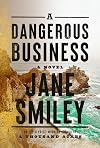
A Dangerous Business by Jane Smiley is a highly recommended historical mystery set in 1850s California.
"As Mrs. Parks says, 'Everyone knows that this is a dangerous business, but between you and me, being a woman is a dangerous business, and don’t let anyone tell you otherwise...' "
After Eliza Cargill Ripple’s husband is killed in a bar brawl in Monterey, California, she chooses to work in the well-run brothel of madam Mrs. Parks. Eliza is only 21, but she knows she does not want to go show more back to her parent's house in Kalamazoo. Work in a brothel provides financial security and allows her to stay in Monterey. Eliza also makes her first real friend, Jean MacPherson, who works in the same profession, but with women. After some working girls are missing and bodies are found outside of town, the two begin to work together investigating who could be targeting and murdering young women as law enforcement isn't interested..
Smiley, as expected, excels at providing descriptions of the setting during the specific time period and furnishing the historical details that bring the narrative to life in this incredibly well-written novel. Eliza's trade is described in a quaint manner, although perhaps too much for the page count, and interesting details about the time period are provided by her clients, many of them sailors. I also appreciate the literary references about novels during the time period included in the plot.
Eliza and Jean are portrayed as realistic and sympathetic characters within the historical time period. Smiley brings them both to life in the narrative as they work together trying to piece together clues and figure out which client could be guilty of the murders. Of course, there are also horses which are all described as unique.
My reticence concerning A Dangerous Business is three fold. The whole plot element involving seeing ghosts and ghosts being sighted almost constantly is suddenly dropped and nothing is done with it. The second is that, no matter how well-written, the pace of the novel is very slow. Finally, the actually denouement was a bit of a let down, as I was anticipating more, which is perhaps my failing, but there it is.
Disclosure: My review copy was courtesy of Knopf Doubleday via NetGalley.
http://www.shetreadssoftly.com/2022/11/a-dangerous-business.html show less
"As Mrs. Parks says, 'Everyone knows that this is a dangerous business, but between you and me, being a woman is a dangerous business, and don’t let anyone tell you otherwise...' "
After Eliza Cargill Ripple’s husband is killed in a bar brawl in Monterey, California, she chooses to work in the well-run brothel of madam Mrs. Parks. Eliza is only 21, but she knows she does not want to go show more back to her parent's house in Kalamazoo. Work in a brothel provides financial security and allows her to stay in Monterey. Eliza also makes her first real friend, Jean MacPherson, who works in the same profession, but with women. After some working girls are missing and bodies are found outside of town, the two begin to work together investigating who could be targeting and murdering young women as law enforcement isn't interested..
Smiley, as expected, excels at providing descriptions of the setting during the specific time period and furnishing the historical details that bring the narrative to life in this incredibly well-written novel. Eliza's trade is described in a quaint manner, although perhaps too much for the page count, and interesting details about the time period are provided by her clients, many of them sailors. I also appreciate the literary references about novels during the time period included in the plot.
Eliza and Jean are portrayed as realistic and sympathetic characters within the historical time period. Smiley brings them both to life in the narrative as they work together trying to piece together clues and figure out which client could be guilty of the murders. Of course, there are also horses which are all described as unique.
My reticence concerning A Dangerous Business is three fold. The whole plot element involving seeing ghosts and ghosts being sighted almost constantly is suddenly dropped and nothing is done with it. The second is that, no matter how well-written, the pace of the novel is very slow. Finally, the actually denouement was a bit of a let down, as I was anticipating more, which is perhaps my failing, but there it is.
Disclosure: My review copy was courtesy of Knopf Doubleday via NetGalley.
http://www.shetreadssoftly.com/2022/11/a-dangerous-business.html show less
Lists
Arctic novels (1)
Women's Stories (1)
Deathreads (1)
New York (1)
Family Drama (1)
Unread books (1)
Favourite Books (1)
Nineties (1)
Favourite Books (3)
Winter Books (1)
to get (1)
Best Satire (1)
Female Author (2)
1980s (2)
Five star books (2)
Women Writers (1)
Witch Hunts (1)
METAfiction (1)
Urban Fiction (1)
Tour of Iowa (1)
Murder Mysteries (1)
USA Road Trip (1)
1990s (1)
AP Lit (1)
100 New Classics (1)
Awards


You May Also Like


Associated Authors
Statistics
- Works
- 50
- Also by
- 47
- Members
- 25,555
- Popularity
- #819
- Rating
- 3.9
- Reviews
- 754
- ISBNs
- 600
- Languages
- 13
- Favorited
- 66


