
Ann Charters
Author of The Portable Beat Reader (Viking Portable Library)
About the Author
Series
Works by Ann Charters
The Story and Its Writer: An Introduction to Short Fiction (1976) — Editor — 1,216 copies, 3 reviews
A bibliography of works by Jack Kerouac (Jean Louis Lebris De Kerouac) 1939-1975 (The Phoenix bibliographies ; 4) (1975) — Author — 13 copies
Some Poems, Poets: Studies in American Underground Poetry since 1945 (1971) — Photographer — 7 copies
The Beats, Literary Bohemians in Postwar America (Dictionary of Literary Biography, Vol. 16) (1983) 6 copies
Melville in the Berkshires 1 copy
Associated Works
The Rolling Stone Book of the Beats: The Beat Generation and American Culture (1999) — Contributor — 181 copies, 2 reviews
Tagged
Common Knowledge
- Other names
- Danberg, Ann Ruth (birth name)
- Birthdate
- 1936-11-10
- Gender
- female
- Education
- University of California,Berkeley
Columbia University - Organizations
- University of Connecticut
International PEN - Awards and honors
- Phi Beta Kappa
- Relationships
- Charters, Samuel B. (husband)
- Nationality
- USA
- Birthplace
- Bridgeport, Connecticut, USA
- Associated Place (for map)
- Connecticut, USA
Members
Reviews
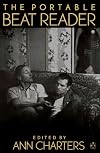
As an anthology, The Portable Beat Reader excellently showcases the 'best' work of 'The Beat Writers' of the 1950’s and later. Its contents include poems, short stories, and selections from lengthier works. The title of the book probably accurately describes its content.
I read the book as a part of required reading for a class in which I enrolled. Beat Writers have never resonated with me and I generally dislike their work. I took the class hoping that if I understood the work and the show more creators of it a little better, I might come to understand and like their works. Both the class, the professor, and this book thoroughly explained Beat Writing and its particular niche in literature. The teacher presented the writers, which he thinks highly of, as "ahead of their time."
Frankly, for me, their nichę is still the trash-can.
Now that I understand them, I dislike them even more than I had.
I do have more accurate insights into these writers and this is what I now understand about them.
1. They were a group of self-righteous and arrogant people blessed with natural talent but too lazy to do the work that would develop their talent into actual literary skill.
2. Instead of working on becoming serious writers, they chose to admire their own drivel and then fruitlessly justify it to people who actually understand what good writing is. They did succeed in self-delusion, however, and succeeded in finding publishers with poor judgment.
3. They regularly and vociferously bemoaned how misunderstood they were. This perception of their work shows that, in addition to being arrogant, they were delusional.
4. Some writers today even attempt this same kind of poor craftsmanship. Avoid them! Even poor writers are better than writers who believe themselves good in spite of the evidence.
What these writers needed rather than hapless publishers and foolish book-buyers was a qualified sophomore high school composition teacher, a different occupation that they'd actually be good at, a lesson in the difference between talent and vanity, and a good stout spanking. show less
I read the book as a part of required reading for a class in which I enrolled. Beat Writers have never resonated with me and I generally dislike their work. I took the class hoping that if I understood the work and the show more creators of it a little better, I might come to understand and like their works. Both the class, the professor, and this book thoroughly explained Beat Writing and its particular niche in literature. The teacher presented the writers, which he thinks highly of, as "ahead of their time."
Frankly, for me, their nichę is still the trash-can.
Now that I understand them, I dislike them even more than I had.
I do have more accurate insights into these writers and this is what I now understand about them.
1. They were a group of self-righteous and arrogant people blessed with natural talent but too lazy to do the work that would develop their talent into actual literary skill.
2. Instead of working on becoming serious writers, they chose to admire their own drivel and then fruitlessly justify it to people who actually understand what good writing is. They did succeed in self-delusion, however, and succeeded in finding publishers with poor judgment.
3. They regularly and vociferously bemoaned how misunderstood they were. This perception of their work shows that, in addition to being arrogant, they were delusional.
4. Some writers today even attempt this same kind of poor craftsmanship. Avoid them! Even poor writers are better than writers who believe themselves good in spite of the evidence.
What these writers needed rather than hapless publishers and foolish book-buyers was a qualified sophomore high school composition teacher, a different occupation that they'd actually be good at, a lesson in the difference between talent and vanity, and a good stout spanking. show less
A really nice sampling of “beat” literature! Sort of like a greatest hits compilation! Parts 1-3 were full of writings that I love, and that were wonderful to revisit! I especially enjoyed reading the "Joan Anderson" piece! Part 4 fell pretty flat for me, as did part 6 and the appendix. But Part 5 was my joy! The writings in it gave me the feeling of the people on the periphery of the Beats - the children, lovers, spouses, etc.! I really glorify and romanticize many of the Beat authors show more and literature, and this section grounded me a bit, showing some of the real consequences of that lifestyle and movement. Strong stuff. And strong book! show less
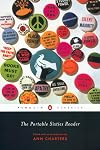
This book is filled from front to back in all 628 of its pages with hate, prejudice, despair, disgust, delusion, sickness, love, happiness, faith, civility, truth, and humanity; in short, it is a wonderful compendium of writings from (and sometimes about) the 1960s in America and the experience of that turbulent decade did to the American mass consciousness. I wasn't there for the 60s, but I think that this book does a very good job of capturing the spirit of times as best as it can be show more captured. The only objection I might raise is that Charters is rather biased in her selections; I would have liked to have heard equally from the apparently conservative majority of Americans who voted Nixon into office as much as from the radical Left who opposed him; I would have liked to have read something in support of the Vietnam War and against Civil Rights just as much as the many writings which argue vociferously from the opposite position. It would have made for a more balanced read, I believe. show less
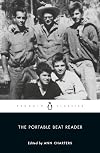
This is a good smorgasbord of beat lit. For people who want a good overview, you will find it here. As with any anthology there are some people whose inclusion is questionable, but that just gives more grist for the mill.
Lists
Awards

You May Also Like


Associated Authors
Statistics
- Works
- 37
- Also by
- 8
- Members
- 4,920
- Popularity
- #5,100
- Rating
- 3.6
- Reviews
- 23
- ISBNs
- 99
- Languages
- 3
- Favorited
- 2