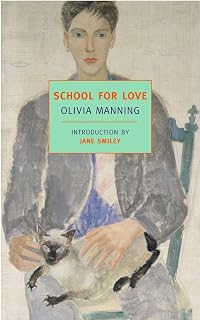
School for Love
by Olivia Manning
On This Page
Description
Jerusalem in 1945 is a city in flux: refugees from the war in Europe fill its streets and cafés, the British colonial mandate is coming to an end, and tensions are on the rise between the Arab and Jewish populations. Felix Latimer, a recently orphaned teenager, arrives in Jerusalem from Baghdad, biding time until he can secure passage to England. Adrift and deeply lonely, Felix has no choice but to room in a boardinghouse run by Miss Bohun, a relative he has never met. Miss Bohun is a holy show more terror, a cheerless miser who proclaims the ideals of a fundamentalist group known as the Ever-Readies--joy, charity, and love--even as she makes life a misery for her boarders. Then Mrs. Ellis, a fascinating young widow, moves into the house and disrupts its dreary routine for good.Olivia Manning's great subject is the lives of ordinary people caught up in history. Here, as in her panoramic depiction of World War II, The Balkan Trilogy, she offers a rich and psychologically nuanced story of life on the precipice, and she tells it with equal parts compassion, skepticism, and humor.
. show less
Tags
Recommendations

































Member Reviews
Despite the fact that a not inaccurate summary of this book would be “Various people move in and out of a boarding house run by a hypocritical, tightfisted old woman and come into conflict”, I found it to be a gripping read and finished it in less than a day. Felix Latimer is a sheltered teenager whose mother has recently died. He moves into the house of a semi-relative, Miss Bohun, who runs her establishment with an iron fist but thinks she is a selfless and charitable person. There are initial conflicts with a poor lodger, Mr. Jewel, and the former renters of the house, the Leznos, who have been exiled by Miss Bohun. A new lodger, Mrs. Ellis, moves in and Felix develops a crush on her. The setting is Jerusalem in 1945, near the show more end of the war, but the political situation is really just a backdrop to the conflicts between the residents of the house.
The book is also a coming-of-age narrative. Felix starts out as a naïve, trusting young man who badly misses his mother. Over the course of the novel, he comes under the influence of both Miss Bohun and Mrs. Ellis. He discovers the good and bad in both of them and reassesses the influence of his mother. Even his relationship with the cat Faro, probably the most productive, is not an entirely loving one. Early on the reader realizes Miss Bohun is a horrible, controlling hypocrite but Felix initially believes everything she says (she is always the one who is giving in any relationship) and provides her with support. He clearly wants a loving figure to replace his mother, but even he soon learns that Miss Bohun is an unpleasant person who cheats everyone but always talks about how good she is. Still, he can’t quite leave her house and swings back and forth over the question of whether she is well-meaning or truly wicked. Mrs. Ellis is the only lodger who effectively opposes Miss Bohun and Felix believes he’s in love with her, though it is just a teenage crush and admiration. Her cynicism and clear-eyed assessment of Miss Bohun attracts him and he eagerly comes under her influence. However, she’s pretty casual about taking him up and dropping him and her faults become apparent.
Miss Bohun is a character of almost Dickensian horribleness but she was fascinating at the same time. Part of the reason I read the book so quickly was that I wanted to know what else she would get up to. She does some pretty low things – stealing milk from a pregnant woman and using Faro to get to Felix – but the author never lets her become completely unsympathetic. In her dealings with the lodgers, she always ends up hated, but even though her own versions are clearly whitewashed for her benefit, the others are portrayed as quarrelsome also. Mr. Jewel refuses to leave even though it’s cruel for her to eject him. The Lesznos are very rude in general although one easily imagines the story from their side. Mrs. Ellis also lets lose some cruel insults. While Miss Bohun never seems to care for Felix in the way he would have liked, she was initially very welcoming and cheerful towards Mrs. Ellis and more than once said she hoped they would be friends and like a family. It’s obviously an act put on but one wonders how sincere she is. Is she just acting kind to get Mrs. Ellis to become dependent on her then turn on her as was possible with Mr. Jewel and the Lesznos? Or does she genuinely want a friend? The usual psychological explanation given for her cruelty is that she was an unwanted adopted child then never married, so it’s possible she really wanted to become close to Mrs. Ellis. Several people besides Felix (his judgments are not reliable) comment that she was probably good deep down, though they have a hard time seeing it. Her comments about her poverty usually seem exaggerated but the fear that she’ll be left all alone with no one to help her is accurate – she drives people away. The end suggests she’ll land on her feet as she always does. show less
The book is also a coming-of-age narrative. Felix starts out as a naïve, trusting young man who badly misses his mother. Over the course of the novel, he comes under the influence of both Miss Bohun and Mrs. Ellis. He discovers the good and bad in both of them and reassesses the influence of his mother. Even his relationship with the cat Faro, probably the most productive, is not an entirely loving one. Early on the reader realizes Miss Bohun is a horrible, controlling hypocrite but Felix initially believes everything she says (she is always the one who is giving in any relationship) and provides her with support. He clearly wants a loving figure to replace his mother, but even he soon learns that Miss Bohun is an unpleasant person who cheats everyone but always talks about how good she is. Still, he can’t quite leave her house and swings back and forth over the question of whether she is well-meaning or truly wicked. Mrs. Ellis is the only lodger who effectively opposes Miss Bohun and Felix believes he’s in love with her, though it is just a teenage crush and admiration. Her cynicism and clear-eyed assessment of Miss Bohun attracts him and he eagerly comes under her influence. However, she’s pretty casual about taking him up and dropping him and her faults become apparent.
Miss Bohun is a character of almost Dickensian horribleness but she was fascinating at the same time. Part of the reason I read the book so quickly was that I wanted to know what else she would get up to. She does some pretty low things – stealing milk from a pregnant woman and using Faro to get to Felix – but the author never lets her become completely unsympathetic. In her dealings with the lodgers, she always ends up hated, but even though her own versions are clearly whitewashed for her benefit, the others are portrayed as quarrelsome also. Mr. Jewel refuses to leave even though it’s cruel for her to eject him. The Lesznos are very rude in general although one easily imagines the story from their side. Mrs. Ellis also lets lose some cruel insults. While Miss Bohun never seems to care for Felix in the way he would have liked, she was initially very welcoming and cheerful towards Mrs. Ellis and more than once said she hoped they would be friends and like a family. It’s obviously an act put on but one wonders how sincere she is. Is she just acting kind to get Mrs. Ellis to become dependent on her then turn on her as was possible with Mr. Jewel and the Lesznos? Or does she genuinely want a friend? The usual psychological explanation given for her cruelty is that she was an unwanted adopted child then never married, so it’s possible she really wanted to become close to Mrs. Ellis. Several people besides Felix (his judgments are not reliable) comment that she was probably good deep down, though they have a hard time seeing it. Her comments about her poverty usually seem exaggerated but the fear that she’ll be left all alone with no one to help her is accurate – she drives people away. The end suggests she’ll land on her feet as she always does. show less
P.79
"The door into the courtyard lay open and Felix went to it, oddly apprehensive. The cage stood on the ground and the rats within it were darting about in terror, their fur on fire. Maria stood watching them with the kerosene can still in her hand. The smoke that arose filled the air with an acrid stench of burning fur.
Felix shouted at Maria: :what are you doing? How could you do it? Stop it. Stop it at once.'
She lifted a bewildered and simple face: 'good to kill them,' she said.
'But not like that. How beastly, how cruel! We must stop it.' He ran to the kitchen to get water, but Maria caught his arm. 'See, already dead. Very quick, this.'
It was true the rats had toppled over, dead or overcome by smoke. They lay motionless, letting show more the fire consume them."
Felix is a teenage orphan, sent to Jerusalem during WWII, with the death of his mother, from Baghdad. He stays with a penny-pinching, manipulative Foster aunt, who saves one bedroom in her pension for the Second Coming. This ridiculous woman character had me laughing out loud in some parts:
P.114
" 'And then, Miss Bohun gives the sermon.'
'Really! Does she preach a sermon at every meeting?'
'No. There are visiting preachers. There are "Ever - Ready's" in Beirut, in Cyprus, in Cairo... Sometimes they come here for the entertainments.'
'The entertainments?' breathed Mrs. Ellis.
'Oh!' Nikky made a gesture that exceeded all his others in the expression of the inexpressible. 'The entertainments! Last year there was a play which she wrote herself.'
'No!'
'Indeed, yes; and she played the chief part -- a man!'
'I don't believe it.'
'Yes. She fancies herself in male costume, you know. In all her plays there is a chief part, a man in an historical dress, and she is it!'
'Oh! And what was her play about?'
'Ask another person -- not me. It was very symbolical; full of ambiguities. Poetry today must be full of ambiguities.'
'But surely it wasn't written in poetry?'
'There, dear lady, you say it -- but Miss Bohun, she said it was poetry. And this play was about a mysterious stranger who visits the court of the king of Spain. Who is this stranger? Ah, Who knows! But the king of Spain -- our own Miss Bohun -- He knows. And see our Miss Bohun of the Black Velvet suit -- so!' Nikky indicated balloon sleeves, 'pearls -- so! A great cross here,' Nikky swung a hand in front of his chest. 'Magnificent! And the stranger -- that is old Mr. Buffy who has a beard -- has just a white robe and sandals. A small part. He comes -- and then he goes.'
'But where did the costumes come from?'
'The YMCA wardrobe. Pre - war. Very good. Oh, yes, very good! And every time the king of Spain spoke he marched to the footlight, threw out his chest, so! Threw out his hand, so! And shouted to the back...' Nikky raised his voice and again the cafe was startled. Felix pushed aside his lemonade so that he could prop his head up to laugh; tears ran down his cheeks. He had never dreamt Nikky could be so funny, but Nikky was going to be much funnier. Suddenly he rolled his eyes from Felix to Mrs. Ellis, and whispered:
'Then someone laughed. Hey!' He threw out a hand like a policeman stopping the traffic and imitated Miss Bohun's voice calling " 'Stop the play! Stop! Stop, at once! Now, who laughed?' No one replies. So! She shouts:
'Put the lights on!' and someone in the dark puts out the footlights. 'No, no, put on the lights! In the hall!' off goes all the lights on the stage -- on go the hall lights, off go the hall lights, on go the stage lights -- ' No, no, no. Put off the lights -- put on the lights -- put off the lights..."
Felix was convulsed: he leant weakly on his hands, sobbing and near hysteria. Mrs. Ellis had tears in her eyes, her cigarette burnt forgotten in her hand."
Despite being hilariously funny in places, this book is also extremely sad. It's a coming-of-age story, where Felix starts out as an innocent child, and ends up too wise to the wicked ways of the adults around him. show less
"The door into the courtyard lay open and Felix went to it, oddly apprehensive. The cage stood on the ground and the rats within it were darting about in terror, their fur on fire. Maria stood watching them with the kerosene can still in her hand. The smoke that arose filled the air with an acrid stench of burning fur.
Felix shouted at Maria: :what are you doing? How could you do it? Stop it. Stop it at once.'
She lifted a bewildered and simple face: 'good to kill them,' she said.
'But not like that. How beastly, how cruel! We must stop it.' He ran to the kitchen to get water, but Maria caught his arm. 'See, already dead. Very quick, this.'
It was true the rats had toppled over, dead or overcome by smoke. They lay motionless, letting show more the fire consume them."
Felix is a teenage orphan, sent to Jerusalem during WWII, with the death of his mother, from Baghdad. He stays with a penny-pinching, manipulative Foster aunt, who saves one bedroom in her pension for the Second Coming. This ridiculous woman character had me laughing out loud in some parts:
P.114
" 'And then, Miss Bohun gives the sermon.'
'Really! Does she preach a sermon at every meeting?'
'No. There are visiting preachers. There are "Ever - Ready's" in Beirut, in Cyprus, in Cairo... Sometimes they come here for the entertainments.'
'The entertainments?' breathed Mrs. Ellis.
'Oh!' Nikky made a gesture that exceeded all his others in the expression of the inexpressible. 'The entertainments! Last year there was a play which she wrote herself.'
'No!'
'Indeed, yes; and she played the chief part -- a man!'
'I don't believe it.'
'Yes. She fancies herself in male costume, you know. In all her plays there is a chief part, a man in an historical dress, and she is it!'
'Oh! And what was her play about?'
'Ask another person -- not me. It was very symbolical; full of ambiguities. Poetry today must be full of ambiguities.'
'But surely it wasn't written in poetry?'
'There, dear lady, you say it -- but Miss Bohun, she said it was poetry. And this play was about a mysterious stranger who visits the court of the king of Spain. Who is this stranger? Ah, Who knows! But the king of Spain -- our own Miss Bohun -- He knows. And see our Miss Bohun of the Black Velvet suit -- so!' Nikky indicated balloon sleeves, 'pearls -- so! A great cross here,' Nikky swung a hand in front of his chest. 'Magnificent! And the stranger -- that is old Mr. Buffy who has a beard -- has just a white robe and sandals. A small part. He comes -- and then he goes.'
'But where did the costumes come from?'
'The YMCA wardrobe. Pre - war. Very good. Oh, yes, very good! And every time the king of Spain spoke he marched to the footlight, threw out his chest, so! Threw out his hand, so! And shouted to the back...' Nikky raised his voice and again the cafe was startled. Felix pushed aside his lemonade so that he could prop his head up to laugh; tears ran down his cheeks. He had never dreamt Nikky could be so funny, but Nikky was going to be much funnier. Suddenly he rolled his eyes from Felix to Mrs. Ellis, and whispered:
'Then someone laughed. Hey!' He threw out a hand like a policeman stopping the traffic and imitated Miss Bohun's voice calling " 'Stop the play! Stop! Stop, at once! Now, who laughed?' No one replies. So! She shouts:
'Put the lights on!' and someone in the dark puts out the footlights. 'No, no, put on the lights! In the hall!' off goes all the lights on the stage -- on go the hall lights, off go the hall lights, on go the stage lights -- ' No, no, no. Put off the lights -- put on the lights -- put off the lights..."
Felix was convulsed: he leant weakly on his hands, sobbing and near hysteria. Mrs. Ellis had tears in her eyes, her cigarette burnt forgotten in her hand."
Despite being hilariously funny in places, this book is also extremely sad. It's a coming-of-age story, where Felix starts out as an innocent child, and ends up too wise to the wicked ways of the adults around him. show less
School for Love is a beautifully written coming of age novel, set in Jerusalem towards the end of World War Two. Felix Latimer is a boy (we’re never told exactly how old; I assumed fifteen or sixteen, although there were moments he seemed younger) who has recently lost his mother. Told in the third person, we see everything through Felix’s eyes. While hostilities continue, he is unable to return to England – where he’s not lived for several years anyway. Felix had been living in Baghdad with his mother, about a year before his mother’s death, Felix’s father was killed by Iraqi forces. Now Felix is alone, his loneliness and total bewilderment is touchingly portrayed by Olivia Manning, a boy who has had the rug pulled out from show more under him. As a last resort, it was arranged by friends of his mother’s, for Felix to go to a distant relative in Jerusalem. Miss Bohun an older adopted sister of his father and a woman his mother had never wanted Felix to visit. As Felix arrives in Jerusalem, there is snow on the ground, though he is assured it won’t last too long.
Miss Bohun turns out to be quite a character – one beautifully rendered by Manning, complex and endlessly infuriating, she feels like a character who must have been drawn from life. Felix arrives at the house Miss Bohun runs as a kind of inferior boarding house – friendless, grief-stricken, not knowing what to expect.
“Miss Bohun was so unlike his mother, and, for some reason, he felt sure that when she had raised her eyes and looked at him she had somehow expressed disappointment in him. Perhaps she had imagined he would be older, or younger, or better-looking, or a more unusual sort of boy. Anyway she retired now into her own thoughts, eyes hidden, and he gave his attention to the meal of grey, gritty bread and tasteless tea. Then he heard a slight movement beside him. He looked down and cried out involuntarily in delight. As the bars of the fire had grown red, a Siamese cat had come out towards the warmth. It looked a sad little cat, as lost as himself, and his heart seemed to swell with relief at the sight of something – something he could love.”
Miss Bohun is hardly a warm, welcoming presence – she is in constant conflict with Frau Leszno and her son Nikki who work and live in the house. Like the rest of the house, Felix’s room is cold and unwelcoming, while Miss Bohun keeps an empty front bedroom, spick and span for some mysterious purpose, while the old Mr Jewel lives in the attic. Later, when Mr Jewel has been removed to the hospital – a new tenant; Mrs Ellis is installed and Miss Bohun moves up to the attic. Mrs Ellis is a very young widow, Felix can’t help but be enchanted by her.
Living in her house, eating her food and relying upon her for the only home he has, Felix is often uncomfortable by Miss Bohun’s frankly monstrous behaviour. Compelled by his reliance on her to legitimise her treatment of others, Felix clearly needs to see it as completely normal. Miss Bohun is miserly, desperately deluded, she suspects everyone of cheating her, and sees herself as a long-suffering paragon of virtue. Having bullishly taken over the house from its previous occupant; Frau Leszno, the Polish refugee, has been reduced to the role of a servant living in tiny, servants’ rooms. Miss Bohun, appears to honestly believe, that she has done the poor woman a great service.
Miss Bohun keeps fierce hold of the household purse strings, making savings where she can (substituting deep fried aubergine for fish!) Always calculating ways of making her money stretch, she manages to prise almost all Felix’s monthly allowance out of him, refuses to buy from the black market and successfully plots to get Mr Jewel out of the attic so she can have it herself.
Much of Miss Bohun’s time is taken up with a religious group known as the ‘ever-readies’ – whose exact purpose she seems shy of explaining to Felix at first – yet in time we discover it is all to do with the second-coming.
In the midst of the chilly atmosphere of Miss Bohun’s house, Felix finds companionship in Mrs Ellis, who couldn’t be more different from Miss Bohun, and who opens his eyes to his relative’s true character. With her scarlet, pointed finger-nails, she frequents the cafes and bars in the city – and in following her around – Felix finds himself entering a world he doesn’t entirely understand. He is a child still, in so many ways, clinging to the memory of the life he led with his gentle mother.
“A bleak atmosphere, like that which preceded the going of Mr Jewel, haunted the meals, but now it was not Miss Bohun who controlled the discomfort. Mrs Ellis had shut herself off in a silence that seemed to put Miss Bohun completely at a loss, Once or twice, perhaps attempting to test the surface of this frost, Miss Bohun had repeated tentatively and unconvincingly, remarks like: ‘Well, here we are! Just a happy family!’ or ‘One day, Mrs Ellis, we really must have that cosy chat in my room,’ but Mrs Ellis made no sign that she had heard. When she did not come in to meals, Miss Bohun would sometimes say to Felix, meaningfully: ‘Mrs Ellis seems to be sulking about something. So childish of her. It spoils everything, we could be such a happy family.’”
Felix continues to visit old Mr Jewel in the hospital – though stops short of telling him about the attic. Taking lessons from Mr Posthorn, Felix’s life is spent entirely with adults. There are few pleasures – he loves to go to the cinema, but the money he gives Miss Bohun leaves him with practically no pocket money. Soon however, the war will end – and a passage arranged for him back to England.
This is a deeply touching novel, the portrayal of Felix, growing up yet not quite grown up enough – coming to terms with his loss, and all at sea with the world around him, is breath-taking. Most impressive, however, is the extraordinary depth of character. Olivia Manning’s portrait of Miss Bohun is brilliantly unforgettable. show less
Miss Bohun turns out to be quite a character – one beautifully rendered by Manning, complex and endlessly infuriating, she feels like a character who must have been drawn from life. Felix arrives at the house Miss Bohun runs as a kind of inferior boarding house – friendless, grief-stricken, not knowing what to expect.
“Miss Bohun was so unlike his mother, and, for some reason, he felt sure that when she had raised her eyes and looked at him she had somehow expressed disappointment in him. Perhaps she had imagined he would be older, or younger, or better-looking, or a more unusual sort of boy. Anyway she retired now into her own thoughts, eyes hidden, and he gave his attention to the meal of grey, gritty bread and tasteless tea. Then he heard a slight movement beside him. He looked down and cried out involuntarily in delight. As the bars of the fire had grown red, a Siamese cat had come out towards the warmth. It looked a sad little cat, as lost as himself, and his heart seemed to swell with relief at the sight of something – something he could love.”
Miss Bohun is hardly a warm, welcoming presence – she is in constant conflict with Frau Leszno and her son Nikki who work and live in the house. Like the rest of the house, Felix’s room is cold and unwelcoming, while Miss Bohun keeps an empty front bedroom, spick and span for some mysterious purpose, while the old Mr Jewel lives in the attic. Later, when Mr Jewel has been removed to the hospital – a new tenant; Mrs Ellis is installed and Miss Bohun moves up to the attic. Mrs Ellis is a very young widow, Felix can’t help but be enchanted by her.
Living in her house, eating her food and relying upon her for the only home he has, Felix is often uncomfortable by Miss Bohun’s frankly monstrous behaviour. Compelled by his reliance on her to legitimise her treatment of others, Felix clearly needs to see it as completely normal. Miss Bohun is miserly, desperately deluded, she suspects everyone of cheating her, and sees herself as a long-suffering paragon of virtue. Having bullishly taken over the house from its previous occupant; Frau Leszno, the Polish refugee, has been reduced to the role of a servant living in tiny, servants’ rooms. Miss Bohun, appears to honestly believe, that she has done the poor woman a great service.
Miss Bohun keeps fierce hold of the household purse strings, making savings where she can (substituting deep fried aubergine for fish!) Always calculating ways of making her money stretch, she manages to prise almost all Felix’s monthly allowance out of him, refuses to buy from the black market and successfully plots to get Mr Jewel out of the attic so she can have it herself.
Much of Miss Bohun’s time is taken up with a religious group known as the ‘ever-readies’ – whose exact purpose she seems shy of explaining to Felix at first – yet in time we discover it is all to do with the second-coming.
In the midst of the chilly atmosphere of Miss Bohun’s house, Felix finds companionship in Mrs Ellis, who couldn’t be more different from Miss Bohun, and who opens his eyes to his relative’s true character. With her scarlet, pointed finger-nails, she frequents the cafes and bars in the city – and in following her around – Felix finds himself entering a world he doesn’t entirely understand. He is a child still, in so many ways, clinging to the memory of the life he led with his gentle mother.
“A bleak atmosphere, like that which preceded the going of Mr Jewel, haunted the meals, but now it was not Miss Bohun who controlled the discomfort. Mrs Ellis had shut herself off in a silence that seemed to put Miss Bohun completely at a loss, Once or twice, perhaps attempting to test the surface of this frost, Miss Bohun had repeated tentatively and unconvincingly, remarks like: ‘Well, here we are! Just a happy family!’ or ‘One day, Mrs Ellis, we really must have that cosy chat in my room,’ but Mrs Ellis made no sign that she had heard. When she did not come in to meals, Miss Bohun would sometimes say to Felix, meaningfully: ‘Mrs Ellis seems to be sulking about something. So childish of her. It spoils everything, we could be such a happy family.’”
Felix continues to visit old Mr Jewel in the hospital – though stops short of telling him about the attic. Taking lessons from Mr Posthorn, Felix’s life is spent entirely with adults. There are few pleasures – he loves to go to the cinema, but the money he gives Miss Bohun leaves him with practically no pocket money. Soon however, the war will end – and a passage arranged for him back to England.
This is a deeply touching novel, the portrayal of Felix, growing up yet not quite grown up enough – coming to terms with his loss, and all at sea with the world around him, is breath-taking. Most impressive, however, is the extraordinary depth of character. Olivia Manning’s portrait of Miss Bohun is brilliantly unforgettable. show less
Yet another NYRB publication that I ended up loving. It's been sitting on my shelf for a couple of years because it just didn't sound that interesting, but it turned out to be just my kind of book.
The novel takes place in Jerusalem just after WWII. A young boy, Felix, arrives to live with Miss Bohun, a distant relative, after his mother dies of typhoid. His father had already died in the war. Miss Bohun is an elderly woman who is quite a piece of work. She's a member of the "Ever-Readies" a second-coming religious group but she is also one of the cheapest, stingiest people you'll ever meet - of course having excuses for every one of her penny-pinching ways. She runs a boarding house (charging Felix his "fair share") and rotating show more tenants according to how she can make the most money and feel best about herself for helping the unfortunate. Miss Bohun isn't all bad, though, which is what makes this such a lovely book. She definitely has some redeeming qualities (I think) or at least she's amusing to read about. The other boarders all have their own stories and Felix's interactions with them form the book. The city of Jerusalem and the various people who find their way there during and just after the war are also an important part of the story.
The best relationship in the book is Felix and the cat he befriends, Faro. This thread added a really nice touch to the book.
After reading this, I'm very interested in reading Manning's Balkan Trilogy which is I think her best known work. This was another great read to justify my constant NYRB purchases; they don't just look good on the shelf, they have almost all been great books to read as well! show less
The novel takes place in Jerusalem just after WWII. A young boy, Felix, arrives to live with Miss Bohun, a distant relative, after his mother dies of typhoid. His father had already died in the war. Miss Bohun is an elderly woman who is quite a piece of work. She's a member of the "Ever-Readies" a second-coming religious group but she is also one of the cheapest, stingiest people you'll ever meet - of course having excuses for every one of her penny-pinching ways. She runs a boarding house (charging Felix his "fair share") and rotating show more tenants according to how she can make the most money and feel best about herself for helping the unfortunate. Miss Bohun isn't all bad, though, which is what makes this such a lovely book. She definitely has some redeeming qualities (I think) or at least she's amusing to read about. The other boarders all have their own stories and Felix's interactions with them form the book. The city of Jerusalem and the various people who find their way there during and just after the war are also an important part of the story.
The best relationship in the book is Felix and the cat he befriends, Faro. This thread added a really nice touch to the book.
After reading this, I'm very interested in reading Manning's Balkan Trilogy which is I think her best known work. This was another great read to justify my constant NYRB purchases; they don't just look good on the shelf, they have almost all been great books to read as well! show less
Published in 1951 this novel tells the story of Felix an orphan from England who is sent out to a distant relative who has a house in Jerusalem. Felix a young adolescent arrives full of insecurities to live in a boarding house near the old town run by Miss Bohun. It is 1944 and Jerusalem was still under British mandate, but as the world war was coming to an end both Arab and Jewish communities were becoming apprehensive of what would happen next. Felix is largely unaware of the bigger picture as he grows up in the seclusion of Miss Bohun's establishment amongst other poor refugees.
Olivia Manning arrived in Jerusalem in 1943 and spent three years their with her husband, she worked as a press assistant with the Jerusalem Post and then show more with the British Council and so was well placed to write a novel about the experiences of refugees or itinerant workers. It was a period when house owners or managers expected to be able to employ servants and Miss Bohun's Misboon house had the Lezno family (jews escaped from Poland) living in and paying for their keep by working. Felix arrives in winter to a cold house and an unfriendly household. He worshipped his mother who had recently died and disruptions to his schooling had made him naive and lonely and the first part of the book describes his difficulties in adapting to this new and foreign household. His only friend is Faro: Miss Bohun's siamese cat. The cold winter gives way to spring and Felix's boredom is alleviated by the arrival of Mrs Ellis a young woman whose husband has been killed in the war. Felix's year of growing up sees him move from being a child who blushes at the mere presence of Miss Ellis to wanting to become her friend and even her protector.
Towards the end of the book when Felix has learned more about how adult people behave towards each other Miss Ellis tells him about a poem she remembers and when Felix asks her what it means she says:
"I suppose it means that life is a sort of school for love"
She might have added that it was also a school of hard knocks where experience is hard won. Felix is the pupil; he must come to terms with Miss Bohuns hostility towards her boarders which is a result of her penny-pinching and her manipulating of the rooms to let. Miss Bohun is also a religious leader of a sect known as the Ever Readies (they are ever ready for the second coming) and she prides herself on her good works and is occasionally kind towards others. Felix asks one of the other boarders if Miss Bohun is wicked and he replies:
"Don't use that silly word Felix, Of course I don't. She's absurd and tactless and a busybody, probably no worse. She belongs to a generation that seems to combine thinking the worst of everybody with trying to do the best for them. I expect she's awfully innocent."
Felix must also come to terms with Miss Ellis whose battles with Miss Bohun make Felix a sort of piggy-in-the-middle. He does not know who to trust or who to love, their mood changes leave him confused and he also has much to learn about the Lezno family.
The year in Jerusalem is a bildungsroman for Felix and Misboon house is a world within a world. Mannings description of the household is full of atmosphere and when the occupants venture outside she portrays their excursions into a more exotic world with a feel for its different environment. I found it a gentle story, but readers today may find it a little too optimistic. It is well written with excellent characters and observations, well worth reading and so 3.5 stars show less
Olivia Manning arrived in Jerusalem in 1943 and spent three years their with her husband, she worked as a press assistant with the Jerusalem Post and then show more with the British Council and so was well placed to write a novel about the experiences of refugees or itinerant workers. It was a period when house owners or managers expected to be able to employ servants and Miss Bohun's Misboon house had the Lezno family (jews escaped from Poland) living in and paying for their keep by working. Felix arrives in winter to a cold house and an unfriendly household. He worshipped his mother who had recently died and disruptions to his schooling had made him naive and lonely and the first part of the book describes his difficulties in adapting to this new and foreign household. His only friend is Faro: Miss Bohun's siamese cat. The cold winter gives way to spring and Felix's boredom is alleviated by the arrival of Mrs Ellis a young woman whose husband has been killed in the war. Felix's year of growing up sees him move from being a child who blushes at the mere presence of Miss Ellis to wanting to become her friend and even her protector.
Towards the end of the book when Felix has learned more about how adult people behave towards each other Miss Ellis tells him about a poem she remembers and when Felix asks her what it means she says:
"I suppose it means that life is a sort of school for love"
She might have added that it was also a school of hard knocks where experience is hard won. Felix is the pupil; he must come to terms with Miss Bohuns hostility towards her boarders which is a result of her penny-pinching and her manipulating of the rooms to let. Miss Bohun is also a religious leader of a sect known as the Ever Readies (they are ever ready for the second coming) and she prides herself on her good works and is occasionally kind towards others. Felix asks one of the other boarders if Miss Bohun is wicked and he replies:
"Don't use that silly word Felix, Of course I don't. She's absurd and tactless and a busybody, probably no worse. She belongs to a generation that seems to combine thinking the worst of everybody with trying to do the best for them. I expect she's awfully innocent."
Felix must also come to terms with Miss Ellis whose battles with Miss Bohun make Felix a sort of piggy-in-the-middle. He does not know who to trust or who to love, their mood changes leave him confused and he also has much to learn about the Lezno family.
The year in Jerusalem is a bildungsroman for Felix and Misboon house is a world within a world. Mannings description of the household is full of atmosphere and when the occupants venture outside she portrays their excursions into a more exotic world with a feel for its different environment. I found it a gentle story, but readers today may find it a little too optimistic. It is well written with excellent characters and observations, well worth reading and so 3.5 stars show less
Felix lost his father in the war, and his mother dies shortly afterwards of typhoid. He is sent from Iraq where they had been living to Jerusalem to stay with a distant elderly relative until he can be sent back to England. The relative, Miss Bohun, is involved with a religious fundamentalist group. She is extremely stingy, feeding Felix barely enough to keep him alive, while congratulating herself on not participating in the black market.
In fact the book could be read as a character study of Miss Bohun. She is constantly congratulating herself on how good and generous she is, the perfection of her character. We, the readers see through her, but Felix does not, and despite her mistreatment of him, thinks she is an admirable character. show more "He was always reflecting how honest she was, how good to people, how right in her judgement. It did not seem to him possible that she could be anything but right...."
Then, Miss Bohun takes in another boarder, a war widow, Mrs. Ellis. Felix soon transfers his loyalties to Mrs. Ellis, and through his experiences with her comes to see reality.
I mostly enjoyed this coming of age novel, set in an exotic location and somewhat distant past.
3 stars show less
In fact the book could be read as a character study of Miss Bohun. She is constantly congratulating herself on how good and generous she is, the perfection of her character. We, the readers see through her, but Felix does not, and despite her mistreatment of him, thinks she is an admirable character. show more "He was always reflecting how honest she was, how good to people, how right in her judgement. It did not seem to him possible that she could be anything but right...."
Then, Miss Bohun takes in another boarder, a war widow, Mrs. Ellis. Felix soon transfers his loyalties to Mrs. Ellis, and through his experiences with her comes to see reality.
I mostly enjoyed this coming of age novel, set in an exotic location and somewhat distant past.
3 stars show less
Olivia Manning never made it big. A workhorse of a writer she had 22 titles under her belt when she died in 1980. While she made a living as a writer, somehow, both critical and popular success eluded her. Now, most of her work is out of print. That she remains in print at all is due in large part to the television adaptation of her Balkan and Levant trilogies called Fortunes of War. Those six books make up one of the greatest epic stories of the 20th century.
Ms. Manning spent World War II with her husband, both civilians, first in Eastern Europe and then in Egypt and Palestine. Her stay in Jerusalem provides the impetus for her novel School for Love. Of course one should avoid looking for signs of the author in the novel, but Ms. show more Manning was well known for inserting the people she knew into her books, sometimes as a form of revenge, so it's difficult to avoid falling into the authorial trap.
Consider the profound events of Ms. Manning's time in Jerusalem. During those years, she became pregnant. Tragically, her child died in utero, but because of the laws and customs of the time she was forced to carry it until it reached full term some two months later. It's easy to see this experience working its way into the plot of School Of Love. Motherless children and childless women abound.
School of Love is about young Felix, a teenager, on his own after the death of his mother. Felix finds himself in the pension of a distant relation's sister-in-law, Miss Bohun. Miss Bohun is an eccentric character, an Englishwoman on her own in Jerusalem. Her primary interest in Felix is the money the British government will pay her for taking him in but she puts on a great show of genuine feeling. Felix is enchanted with her, at first. Alone in the world, he adopts Miss Bohun as a surrogate mother figure and adopts her cat Faro as his one friend.
The novel is set in the closing days of World War II, a time when British nationals abroad as well as refugees from all parts of Europe were finally getting an opportunity to return home. Many had been away for years, some of them simply caught unaware by the war. Jerusalem was a place full of people waiting their turn to leave. It's much like the opening scenes of Casablanca.
Olivia Manning. c. 1930's
Source. Wikipedia
As Felix begins to grow aware of just how miserly Miss Bohun really is, a new guest arrives-- Mrs. Ellis. Mrs. Ellis is much younger than Miss Bohun. She is also both newly widowed and pregnant. She does not settle in for dinners and evenings with Miss Bohun. Instead she goes out nightly to cafes where she meets with Jewish and Palestinian intellectuals. She takes Felix along, and he begins to fall in love with her a bit, though he clearly also sees her as a more suitable mother figure than Miss Bohun.
It's an odd love triangle. Miss Bohun wants affection from both Felix and Miss Ellis. Felix, who is moving on from Miss Bohun, seeks motherly affection from Miss Ellis while at the same time desires something more. He is 15, just at the stage for a full Oedipal complication. Miss Ellis is simply marking time with both. She enjoys Felix's company, but wants nothing more than that. He knows she will forget him two days after he is gone.
School for Love shines a light on wartime experience that we don't often see. What happens to the civilians who are left stranded by events? How do they find a way to get by, to get shelter, to get employment? What toll does years of waiting for a chance to return take on their lives? What happens to a boy who is forced to grow to manhood under these conditions?
One could argue that not much happens in Olivia Manning's book. While I think this is largely true, I think it produces two worthy results. One, it allows Ms. Manning's characters to get under the reader's skin. It's been years since I last read the Balkan or the Levant books, but I still feel like Harriet and Guy Pringle are old friends, people I haven't heard from in a while but should probably send a Christmas card to anyway. Two, in the end the readers see that things were happening all along, under the surface perhaps, but happening just the same. When events finally do reach a climax, it is one to remember.
By the end of School for Love it's clear that neither woman wants much to do with young Felix. He sees that even Faro, his cat, just keeps him company because he is the one feeding her. Felix discovers that matters in the end is not who loves you, but whom you love. show less
Ms. Manning spent World War II with her husband, both civilians, first in Eastern Europe and then in Egypt and Palestine. Her stay in Jerusalem provides the impetus for her novel School for Love. Of course one should avoid looking for signs of the author in the novel, but Ms. show more Manning was well known for inserting the people she knew into her books, sometimes as a form of revenge, so it's difficult to avoid falling into the authorial trap.
Consider the profound events of Ms. Manning's time in Jerusalem. During those years, she became pregnant. Tragically, her child died in utero, but because of the laws and customs of the time she was forced to carry it until it reached full term some two months later. It's easy to see this experience working its way into the plot of School Of Love. Motherless children and childless women abound.
School of Love is about young Felix, a teenager, on his own after the death of his mother. Felix finds himself in the pension of a distant relation's sister-in-law, Miss Bohun. Miss Bohun is an eccentric character, an Englishwoman on her own in Jerusalem. Her primary interest in Felix is the money the British government will pay her for taking him in but she puts on a great show of genuine feeling. Felix is enchanted with her, at first. Alone in the world, he adopts Miss Bohun as a surrogate mother figure and adopts her cat Faro as his one friend.
The novel is set in the closing days of World War II, a time when British nationals abroad as well as refugees from all parts of Europe were finally getting an opportunity to return home. Many had been away for years, some of them simply caught unaware by the war. Jerusalem was a place full of people waiting their turn to leave. It's much like the opening scenes of Casablanca.
Olivia Manning. c. 1930's
Source. Wikipedia
As Felix begins to grow aware of just how miserly Miss Bohun really is, a new guest arrives-- Mrs. Ellis. Mrs. Ellis is much younger than Miss Bohun. She is also both newly widowed and pregnant. She does not settle in for dinners and evenings with Miss Bohun. Instead she goes out nightly to cafes where she meets with Jewish and Palestinian intellectuals. She takes Felix along, and he begins to fall in love with her a bit, though he clearly also sees her as a more suitable mother figure than Miss Bohun.
It's an odd love triangle. Miss Bohun wants affection from both Felix and Miss Ellis. Felix, who is moving on from Miss Bohun, seeks motherly affection from Miss Ellis while at the same time desires something more. He is 15, just at the stage for a full Oedipal complication. Miss Ellis is simply marking time with both. She enjoys Felix's company, but wants nothing more than that. He knows she will forget him two days after he is gone.
School for Love shines a light on wartime experience that we don't often see. What happens to the civilians who are left stranded by events? How do they find a way to get by, to get shelter, to get employment? What toll does years of waiting for a chance to return take on their lives? What happens to a boy who is forced to grow to manhood under these conditions?
One could argue that not much happens in Olivia Manning's book. While I think this is largely true, I think it produces two worthy results. One, it allows Ms. Manning's characters to get under the reader's skin. It's been years since I last read the Balkan or the Levant books, but I still feel like Harriet and Guy Pringle are old friends, people I haven't heard from in a while but should probably send a Christmas card to anyway. Two, in the end the readers see that things were happening all along, under the surface perhaps, but happening just the same. When events finally do reach a climax, it is one to remember.
By the end of School for Love it's clear that neither woman wants much to do with young Felix. He sees that even Faro, his cat, just keeps him company because he is the one feeding her. Felix discovers that matters in the end is not who loves you, but whom you love. show less
Members
- Recently Added By
Lists

Boarding House and Hotel Fiction
73 works; 25 members

Books Read in 2017
4,249 works; 130 members
Author Information

27+ Works 3,697 Members
Some Editions
Series
Belongs to Publisher Series
Common Knowledge
- Canonical title
- School for Love
- Original publication date
- 1951
- Dedication
- To Robert Liddell
- First words
- When they reached the top of the hill from which the road snaked down in Seven Sisters' bend, the driver nodded to the opposite hill and said: 'El-telq.'
- Original language
- English
Classifications
Statistics
- Members
- 308
- Popularity
- 104,374
- Reviews
- 15
- Rating
- (3.86)
- Languages
- Dutch, English, German
- Media
- Paper, Audiobook, Ebook
- ISBNs
- 11
- ASINs
- 5