On This Page
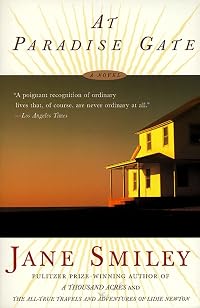
Description
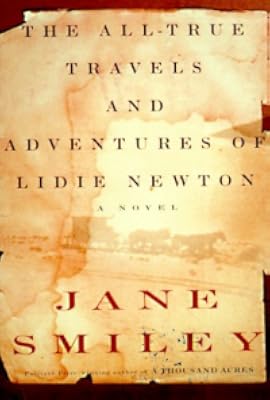
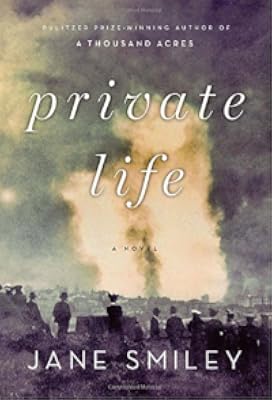
See the difference, read #1 bestselling author Jane Smiley in Large Print * About Large Print All Random House Large Print editions are published in a 16-point typeface Six years after her Pulitzer Prize-winning best-seller,A Thousand Acres,and three years after her witty, acclaimed, and best-selling novel of academe,Moo,Jane Smiley once again demonstrates her extraordinary range and brilliance. Her new novel, set in the 1850s, speaks to us in a splendidly quirky voice--the strong, wry, show more no-nonsense voice of Lidie Harkness of Quincy, Illinois, a young woman of courage, good sense, and good heart. It carries us into an America so violently torn apart by the question of slavery that it makes our current political battlegrounds seem a peaceable kingdom. Lidie is hard to scare. She is almost shockingly alive--a tall, plain girl who rides and shoots and speaks her mind, and whose straightforward ways paradoxically amount to a kind of glamour. We see her at twenty, making a good marriage--to Thomas Newton, a steady, sweet-tempered Yankee who passes through her hometown on a dangerous mission. He belongs to a group of rashly brave New England abolitionists who dedicate themselves to settling the Kansas Territory with like-minded folk to ensure its entering the Union as a Free State. Lidie packs up and goes with him. And the novel races alongside them into the Territory, into the maelstrom of "Bloody Kansas," where slaveholding Missourians constantly and viciously clash with Free Staters, where wandering youths kill you as soon as look at you--where Lidie becomes even more fervently abolitionist than her husband as the young couple again and again barely escape entrapment in webs of atrocity on both sides of the great question. And when, suddenly, cold-blooded murder invades her own intimate circle, Lidie doesn't falter. She cuts off her hair, disguises herself as a boy, and rides into Missouri in search of the killers--a woman in a fiercely male world, an abolitionist spy in slave territory. On the run, her life threatened, her wits sharpened, she takes on yet another identity--and, in the very midst of her masquerade, discovers herself. Lidie grows increasingly important to us as we follow her travels and adventures on the feverish eve of the War Between the States. With its crackling portrayal of a totally individual and wonderfully articulate woman, its storytelling drive, and its powerful recapturing of an almost forgotten part of the American story, this is Jane Smiley at her enthralling and enriching best. From the Trade Paperback edition. show lessTags
Recommendations























Member Recommendations

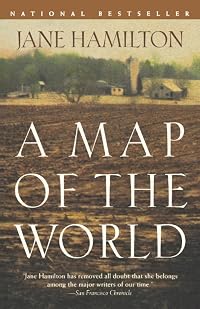
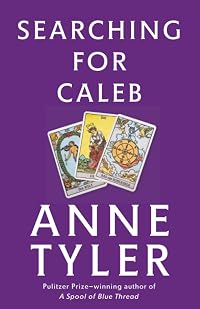
wandering_star Both these books focus on pioneer women, whose previous lives have done nothing to prepare them for the new difficulties and tasks which face them, and how they match up to their new life.
Member Reviews
Protagonist Lydia (Lidie) Newton delivers a first-hand fictional account of life in the mid-1850’s for an adventurous, unconventional, and smart woman. She is twenty years old, and her older sisters worry about their youngest sister, as they believe she will become a spinster due to her independent spirit, plain looks, and refusal to marry an older widower with many children (whose previous wives have died of disease or infections from childbirth). Thomas Newton, an abolitionist, comes through her hometown of Quincy, Illinois, on his way to Kansas Territory. He finds her appealing due to her ability to ride a horse, swim, and shoot a gun. They briefly court, marry, and travel by riverboat to Kansas Territory, where Kansas is on the show more verge of becoming a state, and hostilities are erupting between the “free-state” abolitionists and Missouri’s pro-slavery factions.
There are many layers hidden within what appears to be a straight-forward tale of American western expansion. Smiley has written this book in the style of a 19th-century novel, as if Lidie is relating her travels and adventures, including elaborate descriptions, asides to the reader, and hints of upcoming events. The characters are lively and believable. The group dynamics are particularly well-done, showing both individual idiosyncrasies and power dynamics. Lidie’s budding relationship with her reserved, intelligent husband is one of the highlights of the book. As she gets to know him, she comes to admire and respect him. Though he is not entirely cut out for life in the west (he’s not what we would call “handy”), he has a clear purpose in his desire to end slavery, and the reader can understand her feeling that she has stumbled upon a man of integrity. In this passage, we see the growth in their relationship:
“And suddenly Thomas was with me. Rolling over that stretch of prairie that we had rolled over in such a state of innocence only a few months before brought him to me. I remembered how I used to feel his presence as a kind of largeness pressing against me, and then I would look over, and he would just be sitting there, mild and alert, taking everything in and thinking about it. That was the distinctive thing about Thomas: he was always thinking about it. You didn't have that feeling with most people; rather, you had a feeling that nothing was going on with them at all.”
She does not start out as an abolitionist, and in fact many of her relatives are sympathetic to the slaveholders. The dramatic tension is provided through the inner conflicts of the main character. Initially, she is at best ambivalent on the issue initially, but over time, exposed to the fervent views of the abolitionist community, she embraces it whole-heartedly. Her travels also provide an opportunity to gain knowledge of the slaveholder and slave perspectives.
This is a moving historical story with an authentic feel and deeply drawn characters. By following Lidie through her travails, the reader becomes immersed in the societal, political, psychological, ethical, and economic conditions that led to the violent conflicts. It is a journey, where Lidie learns and grows through her experiences. She realizes that beliefs are important and acting on those beliefs can make a difference in the world. show less
There are many layers hidden within what appears to be a straight-forward tale of American western expansion. Smiley has written this book in the style of a 19th-century novel, as if Lidie is relating her travels and adventures, including elaborate descriptions, asides to the reader, and hints of upcoming events. The characters are lively and believable. The group dynamics are particularly well-done, showing both individual idiosyncrasies and power dynamics. Lidie’s budding relationship with her reserved, intelligent husband is one of the highlights of the book. As she gets to know him, she comes to admire and respect him. Though he is not entirely cut out for life in the west (he’s not what we would call “handy”), he has a clear purpose in his desire to end slavery, and the reader can understand her feeling that she has stumbled upon a man of integrity. In this passage, we see the growth in their relationship:
“And suddenly Thomas was with me. Rolling over that stretch of prairie that we had rolled over in such a state of innocence only a few months before brought him to me. I remembered how I used to feel his presence as a kind of largeness pressing against me, and then I would look over, and he would just be sitting there, mild and alert, taking everything in and thinking about it. That was the distinctive thing about Thomas: he was always thinking about it. You didn't have that feeling with most people; rather, you had a feeling that nothing was going on with them at all.”
She does not start out as an abolitionist, and in fact many of her relatives are sympathetic to the slaveholders. The dramatic tension is provided through the inner conflicts of the main character. Initially, she is at best ambivalent on the issue initially, but over time, exposed to the fervent views of the abolitionist community, she embraces it whole-heartedly. Her travels also provide an opportunity to gain knowledge of the slaveholder and slave perspectives.
This is a moving historical story with an authentic feel and deeply drawn characters. By following Lidie through her travails, the reader becomes immersed in the societal, political, psychological, ethical, and economic conditions that led to the violent conflicts. It is a journey, where Lidie learns and grows through her experiences. She realizes that beliefs are important and acting on those beliefs can make a difference in the world. show less
This was a disappointment. After 100 pages, I put it back on the shelf. The characters is "A Thousand Acres" lived and breathed. Lidie seems to be barely alive. She tells her life story in a bland, matter-of-fact style that is really quite boring (ironic, considering the bad press she received for saying the same of Huck Finn). At the back of my paperback edition, there is a "Conversation with Jane Smiley." The very first question speaks to why this novel is not a success.
Q: Explain the genesis of 'The All-True Travels and Adventures of Lidie Newton.'
A: I was in Washington, D.C. during a book tour when I heard that the federal building in Oklahoma had been bombed. I then called a friend of mine and told him that I wanted to write about show more the intersection of ideology and violence in American life. Without hesitation, he said, "Kansas, 1850."
Later, she makes the following statement: "I've always wanted whatever I concocted to go down easily, and whatever was in it that was informational or thematic or enlightening to slide down practically unnoticed by the reader."
So her motivations are to teach, to enlighten, to improve our minds, and to do so she wraps it up in a nice story to help it "go down easily." Unfortunately, the story here is not engaging, the characters lie dead on the page, we can not empathize with or see the world through Lidie's eyes, due to the emotionless writing. So the necessary sugar-coating is lacking, and what we're left with is a diatribe. And a boring one at that. I see no need, at this point, to try to convince people that slavery is bad. Pretty darn self-evident, I would think.
In "A Thousand Acres," Smiley's anger about child abuse and male stupidity comes across loud and clear, but we are swept along because we care about the characters, and what happens to them. By Chapter 7 of Lidie Newton's story, I had lost interest.
I close with this "Notice" from the opening pages of Huck Finn, by Mark Twain:
"PERSONS attempting to find a motive in this narrative will be prosecuted; persons attempting to find a moral in it will be banished; persons attempting to find a plot in it will be shot." show less
Q: Explain the genesis of 'The All-True Travels and Adventures of Lidie Newton.'
A: I was in Washington, D.C. during a book tour when I heard that the federal building in Oklahoma had been bombed. I then called a friend of mine and told him that I wanted to write about show more the intersection of ideology and violence in American life. Without hesitation, he said, "Kansas, 1850."
Later, she makes the following statement: "I've always wanted whatever I concocted to go down easily, and whatever was in it that was informational or thematic or enlightening to slide down practically unnoticed by the reader."
So her motivations are to teach, to enlighten, to improve our minds, and to do so she wraps it up in a nice story to help it "go down easily." Unfortunately, the story here is not engaging, the characters lie dead on the page, we can not empathize with or see the world through Lidie's eyes, due to the emotionless writing. So the necessary sugar-coating is lacking, and what we're left with is a diatribe. And a boring one at that. I see no need, at this point, to try to convince people that slavery is bad. Pretty darn self-evident, I would think.
In "A Thousand Acres," Smiley's anger about child abuse and male stupidity comes across loud and clear, but we are swept along because we care about the characters, and what happens to them. By Chapter 7 of Lidie Newton's story, I had lost interest.
I close with this "Notice" from the opening pages of Huck Finn, by Mark Twain:
"PERSONS attempting to find a motive in this narrative will be prosecuted; persons attempting to find a moral in it will be banished; persons attempting to find a plot in it will be shot." show less
I love books that give me a new perspective on history, compelling characters, and viewpoints that shift and show nuances throughout the story. Terrific. Appreciate the careful historical research that went into this (Kansas Territory just prior to the Civil War, with the race issue building) and that the story is told from the viewpoint of a character without a concrete point of view, who changes as she lives through events. A really good read -- I didn't want the book to end.
This follows Lidie through her marriage and travel to Kansas Territory and then to Missouri in search of three murderers. It takes place in antebellum American at a time when it was dangerous to voice one's opinions on the "goose question," i.e. slavery. Aside from the free-stater vs. Missourian animosity which often erupted in violence, it was a seriously dangerous place to live simply because of the elements and disease.
I have a bachelor's in history and studied this period in American history, however I never went this in depth into the troubles in Kansas Territory. It's very clear, reading this book, that Jane Smiley did a great deal of research for Lidie's story, which is something that always gains my respect for an author. Even show more better, the narrative doesn't get lost in the history: Lidie's adventures are completely relatable.
My book club enjoyed the book quite a bit, mostly for the historical aspect. Personally, I liked the book, but found the ending depressing. When I mentioned this to my boyfriend, he said, "With that subject matter I can easily imagine…" He's right, of course. It's not a period of history filled with sunshine and unicorns. Nevertheless, it's a very good book and I recommend it to anyone who digs historical novels. show less
I have a bachelor's in history and studied this period in American history, however I never went this in depth into the troubles in Kansas Territory. It's very clear, reading this book, that Jane Smiley did a great deal of research for Lidie's story, which is something that always gains my respect for an author. Even show more better, the narrative doesn't get lost in the history: Lidie's adventures are completely relatable.
My book club enjoyed the book quite a bit, mostly for the historical aspect. Personally, I liked the book, but found the ending depressing. When I mentioned this to my boyfriend, he said, "With that subject matter I can easily imagine…" He's right, of course. It's not a period of history filled with sunshine and unicorns. Nevertheless, it's a very good book and I recommend it to anyone who digs historical novels. show less
I was fascinated by this account of a spirited young women's trek through the events of the Border War period in Kansas and Missouri. Lidie escapes the oppressive oversight of her family by marrying a man who is heading out to the Kansas territory. Lidie is excited about her new life, especially since she becomes genuinely fond of her new husband, but when they arrive in Kansas they find hardship after hardship awaiting them. Still, Lidie enjoys the peaceful times on their homestead. But when when the border ruffians attack the settlers, Lidie finds herself heartbroken. Soon she begins an altogether different journey.
It took a while for me to get into this, but after the first 50 pages I got sucked it it was really fascinating. Being in show more the same geographic location added to my enjoyment of the story, the vivid scenes of life in Lawrence during the 1800's seemed so real. The early settlers to our state really went through a lot! Lidie is certainly a compelling character, I could not believe how much she endured and how she just kept going. It made for an enjoyable discussion at our book group. I would suggest this book to anyone who enjoys well though out historical fiction and/or fiction that explores how ideals affect the life of the individual. show less
It took a while for me to get into this, but after the first 50 pages I got sucked it it was really fascinating. Being in show more the same geographic location added to my enjoyment of the story, the vivid scenes of life in Lawrence during the 1800's seemed so real. The early settlers to our state really went through a lot! Lidie is certainly a compelling character, I could not believe how much she endured and how she just kept going. It made for an enjoyable discussion at our book group. I would suggest this book to anyone who enjoys well though out historical fiction and/or fiction that explores how ideals affect the life of the individual. show less
The shortcoming of the audio book: Lidie knows how to pronounce "pince-nez" but not "Derbyshire." Which I guess might fit the character and her times, though if you Americanize the pronunciation of the county wouldn't you Americanize that of the spectacles?
This was a fine entertainment. Some bits dragged more than is ideal, but in audio, that doesn't bother me as much as in print.
I enjoy Jane Smiley almost always. Age of Grief didn't work for me, but its format -- three novellas -- worked against it as much as the novellas' content (misery).
Is it perverse of me that Greenlanders and Moo rank ahead of A Thousand Acres? I'm not sure whether this would be third or fourth, but "fourth" isn't so bad considering she's one of my favorite show more authors. I've read six of her books (and of them, Age of Grief ranks about eleventh) and I next look forward to Horse Heaven, which she said in 13 Ways of Looking at the Novel was her own favorite to write.
A reviewer on Amazon said this was taught in U.S. history classes. That makes a lot of sense, because it's a great perspective on what is, for me, an obscure element in the lead-up to the Civil War. Missouri Compromise, okay, but after that the fate of Kansas and Missouri is a blank. show less
This was a fine entertainment. Some bits dragged more than is ideal, but in audio, that doesn't bother me as much as in print.
I enjoy Jane Smiley almost always. Age of Grief didn't work for me, but its format -- three novellas -- worked against it as much as the novellas' content (misery).
Is it perverse of me that Greenlanders and Moo rank ahead of A Thousand Acres? I'm not sure whether this would be third or fourth, but "fourth" isn't so bad considering she's one of my favorite show more authors. I've read six of her books (and of them, Age of Grief ranks about eleventh) and I next look forward to Horse Heaven, which she said in 13 Ways of Looking at the Novel was her own favorite to write.
A reviewer on Amazon said this was taught in U.S. history classes. That makes a lot of sense, because it's a great perspective on what is, for me, an obscure element in the lead-up to the Civil War. Missouri Compromise, okay, but after that the fate of Kansas and Missouri is a blank. show less
This book was especially interesting to me because I live in the region where it is set. This story depicts the conflicts before the civil war in the 'bleeding Kansas' era, and I found it fascinating. As soon as state was opened to settlers, abolitionists arrived there in large numbers in order to make it a free state but the pro slavery people had other ideas. The heroine, a free-stater, had to fear for her life. The places that I drive through came to life in this book. It gave me new insights into US history.
Members
- Recently Added By
Lists

Books Set in Missouri
29 works; 4 members

Books Set in Kansas
19 works; 7 members

Biggest Disappointments
606 works; 168 members

Books Read in 2010
631 works; 11 members

Favorite Book Titles
35 works; 1 member
Author Information

50+ Works 25,628 Members
Jane Smiley was born in Los Angeles, California on September 26, 1949. She received a B. A. from Vassar College in 1971 and an M.F.A. and a Ph.D from the University of Iowa. From 1981 to 1996, she taught undergraduate and graduate creative writing workshops at Iowa State University. Her books include The Age of Grief, The Greenlanders, Moo, Horse show more Heaven, Ordinary Love and Good Will, Some Luck, and Early Warning. In 1985, she won an O. Henry Award for her short story Lily, which was published in The Atlantic Monthly. A Thousand Acres received both the National Book Critics Circle Award and the Pulitzer Prize. (Bowker Author Biography) show less
Awards and Honors
Awards
Notable Lists
Series

Common Knowledge
- Canonical title
- The All-true Travels and Adventures of Lidie Newton
- Original publication date
- 1998
- Important places
- Kansas, USA; Kansas Territory, USA
- First words
- I have made up my mind to begin my account upon the first occasion when I truly knew where things stood with me, that is, that afternoon of the day my father, Arthur Harkness, was taken to the Quincy graveyard and buried with... (show all) my mother, Cora Mary Harkness, and his first wife, Ella Harkness.
- Last words
- (Click to show. Warning: May contain spoilers.)It was only then that we spoke of K. T., and then it was only to agree that whatever anyone else thought, after K. T., nothing, not Bull Run nor Gettysburg, certainly not the road at Harper's Ferry that some thought started it all, not the Emancipation nor the burning or Atlanta, not the killing of the President, nothing ever surprised either of us ever again.
Classifications
Statistics
- Members
- 1,443
- Popularity
- 16,370
- Reviews
- 25
- Rating
- (3.57)
- Languages
- 7 — Danish, Dutch, English, French, German, Spanish, Swedish
- Media
- Paper, Audiobook, Ebook
- ISBNs
- 29
- ASINs
- 12