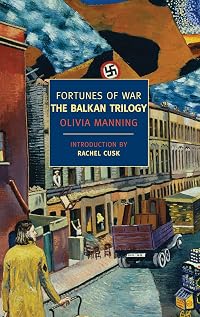
The Balkan Trilogy
by Olivia Manning
Fortunes of War (Collections and Selections — 1-3), The Balkan trilogy (Collections and Selections — 1-3)
On This Page
Description
The Balkan Trilogy is the story of a marriage and of a war, a vast, teeming, and complex masterpiece in which Olivia Manning brings the uncertainty and adventure of civilian existence under political and military siege to vibrant life. Manning's focus is not the battlefield but the café and kitchen, the bedroom and street, the fabric of the everyday world that has been irrevocably changed by war, yet remains unchanged.At the heart of the trilogy are newlyweds Guy and Harriet Pringle, who show more arrive in Bucharest--the so-called Paris of the East--in the fall of 1939, just weeks after the German invasion of Poland. Guy, an Englishman teaching at the university, is as wantonly gregarious as his wife is introverted, and Harriet is shocked to discover that she must share her adored husband with a wide circle of friends and acquaintances. Other surprises follow: Romania joins the Axis, and before long German soldiers overrun the capital. The Pringles flee south to Greece, part of a group of refugees made up of White Russians, journalists, con artists, and dignitaries. In Athens, however, the couple will face a new challenge of their own, as great in its way as the still-expanding theater of war.
. show less
Tags
Recommendations




























Member Recommendations
Member Reviews
The Great Fortune is the first book in Manning's Balkan Trilogy. Though the three books are now almost always bound and published together, I'm planning to take breaks between them, though I sort of wanted to just continue after finishing [The Great Fortune].
In this first installment, we are introduced to Guy and Harriet, a newly married couple that is still getting to know each other. They are expats from England, living in Romania (spelled Rumania in the book), and it is 1939, so WWII is in swing. It's told mainly from Harriet's point of view, and her feelings about her marriage are central to the book, and in my opinion, the most interesting part. She is also trying to understand how to fit in to Romanian culture and there are many show more amusing anecdotes about life in Romania, especially during this time of war.
I had a little bit of a slow start with this. There are a few side characters that I took a bit to warm to. I think some of the humor felt a little dated. But by about half way through, I felt fully invested. I have a couple of other books I really want to get through before continuing on with this series, but I may not take breaks between each book moving forward. We shall see! show less
In this first installment, we are introduced to Guy and Harriet, a newly married couple that is still getting to know each other. They are expats from England, living in Romania (spelled Rumania in the book), and it is 1939, so WWII is in swing. It's told mainly from Harriet's point of view, and her feelings about her marriage are central to the book, and in my opinion, the most interesting part. She is also trying to understand how to fit in to Romanian culture and there are many show more amusing anecdotes about life in Romania, especially during this time of war.
I had a little bit of a slow start with this. There are a few side characters that I took a bit to warm to. I think some of the humor felt a little dated. But by about half way through, I felt fully invested. I have a couple of other books I really want to get through before continuing on with this series, but I may not take breaks between each book moving forward. We shall see! show less
I picked up the mammoth The Balkan Trilogy expecting to read a book that revealed, comprehensively, the effects of the beginning of WWII on a group of expats, living in Rumania in 1939. What I got was a book about two wars, so well-written and character driven that those very characters are vibrantly occupying my mind days after completing the book.
The second war that Olivia Manning writes about is taking place between the protagonists Harriet and Guy Pringle. They’re young newlyweds as the story opens, early twenties, and quite naïve and Manning cleverly juxtaposes their lives and the advance of the Germans into Rumania. Guy is an English professor and lecturer at the university in Bucharest. And as they begin their married life in show more 1939, Germany has just invaded Poland, and Harriet is shocked to discover that she must share her outgoing husband with a wide range of personalities and it doesn’t take long before she begins to feel neglected. Harriet, you see, is a complete introvert. Why these two didn’t figure out their differences during their two-week romance before they got married is a question that will remain unanswered. Later in the book, Harriet muses,
”In Bucharest, where he continued his classes for Jewish studies in spite of Fascist demonstrations, he said: ‘They need me. They have no one else. I must give them moral support,’ yet he seemed unable to understand that, living as they did, she, too, needed ‘moral support’. As she met every crisis alone, it seemed to her she had been transported to a hostile world, then left to fend for herself.” (Page 765)
As far as sweeping epics go, this one is exceptionally well done. Manning builds suspense through Harriet’s eyes and that which affects her, affects you as a reader. As Guy got more and more involved, first with his production of Troilus and Cressida in Bucharest, and then with his socialist friends in Greece, she feels more and more isolated and, consequently, looks for companionship with other male friends. Meanwhile, the Germans march on.
The book is populated by profiteers, con artists, pompous intellectuals, hangers on, over-populated you might say, with those who want to save the world and don’t mind telling you how they will do it. And Manning pulls it all off beautifully but the solutions are often quite complex. Take for instance Prince Yakimov; oh, probably not a real prince but no point in arguing the point with him. Initially, I was disgusted and irritated by him. He doesn’t work and therefore has none of “the ready.” (reminding me initially of Harold Skimpole in Bleak House.) But he manages to get people to pay for his food, his drinks and, eventually his shelter when he takes advantage of Guy’s bigheartedness and moves into their flat in Bucharest, much to Harriet’s great irritation. But then Manning started to tweak his personality, imperceptibly, and little by little, somewhere along the way my feelings toward him changed, and I found that I was actually cheering him on. As I said, complex characters. And intricate plotting. And a husband I would have divorced early on. But that’s me. See for yourself. Highly recommended. show less
The second war that Olivia Manning writes about is taking place between the protagonists Harriet and Guy Pringle. They’re young newlyweds as the story opens, early twenties, and quite naïve and Manning cleverly juxtaposes their lives and the advance of the Germans into Rumania. Guy is an English professor and lecturer at the university in Bucharest. And as they begin their married life in show more 1939, Germany has just invaded Poland, and Harriet is shocked to discover that she must share her outgoing husband with a wide range of personalities and it doesn’t take long before she begins to feel neglected. Harriet, you see, is a complete introvert. Why these two didn’t figure out their differences during their two-week romance before they got married is a question that will remain unanswered. Later in the book, Harriet muses,
”In Bucharest, where he continued his classes for Jewish studies in spite of Fascist demonstrations, he said: ‘They need me. They have no one else. I must give them moral support,’ yet he seemed unable to understand that, living as they did, she, too, needed ‘moral support’. As she met every crisis alone, it seemed to her she had been transported to a hostile world, then left to fend for herself.” (Page 765)
As far as sweeping epics go, this one is exceptionally well done. Manning builds suspense through Harriet’s eyes and that which affects her, affects you as a reader. As Guy got more and more involved, first with his production of Troilus and Cressida in Bucharest, and then with his socialist friends in Greece, she feels more and more isolated and, consequently, looks for companionship with other male friends. Meanwhile, the Germans march on.
The book is populated by profiteers, con artists, pompous intellectuals, hangers on, over-populated you might say, with those who want to save the world and don’t mind telling you how they will do it. And Manning pulls it all off beautifully but the solutions are often quite complex. Take for instance Prince Yakimov; oh, probably not a real prince but no point in arguing the point with him. Initially, I was disgusted and irritated by him. He doesn’t work and therefore has none of “the ready.” (reminding me initially of Harold Skimpole in Bleak House.) But he manages to get people to pay for his food, his drinks and, eventually his shelter when he takes advantage of Guy’s bigheartedness and moves into their flat in Bucharest, much to Harriet’s great irritation. But then Manning started to tweak his personality, imperceptibly, and little by little, somewhere along the way my feelings toward him changed, and I found that I was actually cheering him on. As I said, complex characters. And intricate plotting. And a husband I would have divorced early on. But that’s me. See for yourself. Highly recommended. show less
Another keen observer of the human condition and esp humans in challenging circumstances (impending war and war) and foreign landscapes/cultures. While Manning provides a well painted landscape of the "Paris of the East", Bucharest, with its Brit ex-pats, British military and cultural organizations, and other assorted (mainly "upper crust") characters from various parts of Europe, she deftly also weaves in thought provoking observations about the late 1930s-early 1940s European world, its various political pts of view, the complexities of marriages in this society, and even elements of friendship, identity, even meaningful existence - and all of this against the backdrop (and it is the backdrop -not the focus) of the growing war between show more the Axis powers and the Allies. Her main narrator, a young, somewhat diffident English woman, Harriet, who has recently married Guy Pringle, an idealistic, gregarious professor of English language and literature, is the lens through which Manning achieves this scrutiny, and gradually draws us readers in. It reminds me so much of the better black & white classic films from this time-period, with many colorful characters, all mixing it up in foreign clubs/bars, circling each other as they respond to the swirling events of European capitals & their response to the growing reach of Nazi Germany (yeah, like Casablanca!) but without the overwrought emotions...well, not at first. Manning does allow Harriet her moments of despair, passion, tearful grief - but this is such a British mid-20th century novel, even the horrifying or potentially romantic (hint of sex) moments are couched in restrained prose. And what wonderfully varied prose it is- this authors knows how to provide a fully descriptive passage, or convey a wealth of insight through tense, realistic, clipped dialogue. Nevertheless, her observations about life, death, what sort of marriage emerges for a young couple, the idiosyncrasies of one's friends and acquaintances - all are explored while we barrel through the disintegrating peace for Romania, and then Greece- among other nations which succumb to the Axis threats, and eventually military advancement. The Balkan Trilogy ends with Guy and Harriet escaping Athens with one suitcase apiece, on a rusty commercial steamer with other British nationals, hurriedly rounded up and deported to safer territory: Cairo, Jerusalem, etc - I'm looking forward to the next trilogy to see how these two survive and build their lives together, in spite of being so (to Harriet's great chagrin and despondency) incredibly different in temperament, political & spiritual beliefs, and insights into various individuals they encounter. Not for the faint of heart: this trilogy is 924 pages long. Yep. It's a winter read book... show less
Coming back to this book many years after first reading I was not disappointed. The story of a newly married couple living in Romania, and later Greece, as war rages across Europe is totally compelling. Harriet and Guy Pringle are very different in temperament and their personal difficulties in the early years of marriage are set against the tense backdrop of a war that always seems to be close, but not yet quite on top of them. Olivia Manning had the twin gifts of being able to evoke a place brilliantly and to create memorable characters. Harriet, reserved, sharp-witted but vulnerable in her need for love is matched by Guy, gregarious, generous and gifted, but blind to her needs. We meet fellow exiles such as the comic, pathetic Prince show more Yakimov trailing around in his fur coat, the urbane consular official Dobson, Sophie the Romanian girl who wanted Guy to marry her, and many more.
Bucharest with it's cafe life, is initially glittering, but gradually loses lustre as the Germans move in and commandeer food and supplies. Once the action moves to Greece, the light and the sunshine, the beauty of the Acropolis are gradually undermined by similar shortages and near starvation as the Greeks lose their fight against the Germans.
Re-reading a book after a long gap is always interesting. Having been a champion of Harriet's when I first read it, I had more sympathy for Guy this time around. He is not always in the wrong and Harriet's impulses can be less generous than his. Another change for me is that I am now, like Guy and Harriet, an expatriate. Thankfully I do not live in a war zone but I empathise with the strangeness of life in a foreign country, coping with a language that is not one's own, having to make new friends. This book, so easy to read, is full of resonances, which make coming back to it as much of a pleasure as returning to a well loved classic.
I agree with some of the negative comments made about the follow up volumes forming "The Levant Trilogy." Again one has the strong, varied gallery of characters and the superb evocation of place, but some of the force is dissipated. Perhaps the splitting of the story between the Pringles and their friends and Simon Boulderstone's experiences is the cause. I am glad that I read both trilogies but for me, the first was the more profound experience. show less
Bucharest with it's cafe life, is initially glittering, but gradually loses lustre as the Germans move in and commandeer food and supplies. Once the action moves to Greece, the light and the sunshine, the beauty of the Acropolis are gradually undermined by similar shortages and near starvation as the Greeks lose their fight against the Germans.
Re-reading a book after a long gap is always interesting. Having been a champion of Harriet's when I first read it, I had more sympathy for Guy this time around. He is not always in the wrong and Harriet's impulses can be less generous than his. Another change for me is that I am now, like Guy and Harriet, an expatriate. Thankfully I do not live in a war zone but I empathise with the strangeness of life in a foreign country, coping with a language that is not one's own, having to make new friends. This book, so easy to read, is full of resonances, which make coming back to it as much of a pleasure as returning to a well loved classic.
I agree with some of the negative comments made about the follow up volumes forming "The Levant Trilogy." Again one has the strong, varied gallery of characters and the superb evocation of place, but some of the force is dissipated. Perhaps the splitting of the story between the Pringles and their friends and Simon Boulderstone's experiences is the cause. I am glad that I read both trilogies but for me, the first was the more profound experience. show less
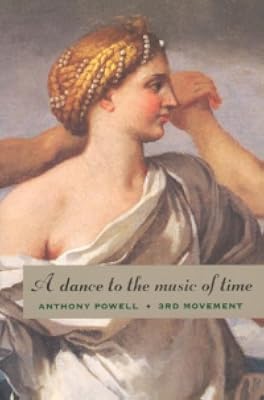
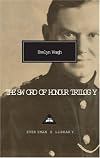
The Balkan Trilogy goes very well with Waugh's Sword of Honour trilogy and the war movement of Powell's A dance to the music of time as a view of World War II as seen by a middle-class, not very bellicose, British intellectual of liberal/conservative leanings. There's the same puzzled attempt to come to terms with what it means for a civilised person brought up in the liberal-humanist tradition suddenly to find themselves in the primitive state of war, the same sense of being on the outer periphery of big events that are happening somewhere else, even the same trilogy format and some of the same characters. Prince Yakimov could step into any Evelyn Waugh novel with no questions asked, and he would be just as much at home attending one show more of Anthony Powell's bohemian parties.
So what does Manning provide as added value to make us read this doorstop as well as the others? The background of the fall of Romania and Greece, for one thing. There aren't all that many first-hand accounts of this in English, and not even that many second-hand accounts (Captain Corelli's Mandolin is just about the only one I can think of). Manning was one of a handful of British people who remained in Romania after the outbreak of war, and seems to have been the only one to write a novel about it. This personal experience makes her account very interesting, but it also means that she has a tendency to forget that she's writing a novel and drift into memoir mode, leaving her characters stranded for a while.
The book should also be very interesting as an account of the war from a woman's perspective, but I found this aspect of it a little disappointing. Her central character, Harriet, is too narrow and limited to carry a novel of this length. Essentially, she is an automaton programmed to do three things: to observe political events inefficiently; to feel vaguely disappointed in her husband; and to form sentimental friendships that lead nowhere with animals and good-looking men. She does these three things repeatedly in all three parts of the trilogy, but she doesn't seem to develop at all between summer 1939 and Easter 1941. Even when she finds a job for a while, her duties seem to consist exclusively of lunch dates with a good-looking man. Harriet doesn't get very far in forming friendships with other women, and she only has very limited direct contact with people outside the "British community" in Bucharest and Athens. So, while it's a book that confirms that war and international politics are not to be seen as exclusively male territory in literature, apart from this it does about as much for the feminist cause as the film Brief Encounter.
Despite these limitations, the book is very agreeable to read. Manning's style is clear and fluid, there's a lot of striking visual description, and the characters, whilst repetitive, are often amusing. A very good novel, but less than I was hoping for, somehow. show less
So what does Manning provide as added value to make us read this doorstop as well as the others? The background of the fall of Romania and Greece, for one thing. There aren't all that many first-hand accounts of this in English, and not even that many second-hand accounts (Captain Corelli's Mandolin is just about the only one I can think of). Manning was one of a handful of British people who remained in Romania after the outbreak of war, and seems to have been the only one to write a novel about it. This personal experience makes her account very interesting, but it also means that she has a tendency to forget that she's writing a novel and drift into memoir mode, leaving her characters stranded for a while.
The book should also be very interesting as an account of the war from a woman's perspective, but I found this aspect of it a little disappointing. Her central character, Harriet, is too narrow and limited to carry a novel of this length. Essentially, she is an automaton programmed to do three things: to observe political events inefficiently; to feel vaguely disappointed in her husband; and to form sentimental friendships that lead nowhere with animals and good-looking men. She does these three things repeatedly in all three parts of the trilogy, but she doesn't seem to develop at all between summer 1939 and Easter 1941. Even when she finds a job for a while, her duties seem to consist exclusively of lunch dates with a good-looking man. Harriet doesn't get very far in forming friendships with other women, and she only has very limited direct contact with people outside the "British community" in Bucharest and Athens. So, while it's a book that confirms that war and international politics are not to be seen as exclusively male territory in literature, apart from this it does about as much for the feminist cause as the film Brief Encounter.
Despite these limitations, the book is very agreeable to read. Manning's style is clear and fluid, there's a lot of striking visual description, and the characters, whilst repetitive, are often amusing. A very good novel, but less than I was hoping for, somehow. show less
The Great Fortune
Yakimov, a naturalised British White Russian, and Guy and Harriet Pringle, as newly married English couple, arrive in Bucharest as the Second World War starts. Yakimov is escaping from a Poland being overrun by Nazi Germany and Guy Pringle is returning to teach English at the university with his new bride, Harriet. This is part of the history of the Second World War that I did not know.
The story is told alternatively by “poor Yaki” and Harriet. Both Yakimov and Guy have annoying personalities, representing extreme self-interest and selflessness, with Harriet observing matters as a more typically “bourgeois” viewpoint.
The book ends with the set piece of an amateur performance of Troilus and Cressida put on by the show more British, which helps Harriet understand Guy better and brings out a more likeable side of poor old Yaki, following his fall portrayed throughout most of the book. Overall I felt that this book fulfilled less than its potential and this is perhaps due to the lack of empathy that you feel for the main characters. show less
Yakimov, a naturalised British White Russian, and Guy and Harriet Pringle, as newly married English couple, arrive in Bucharest as the Second World War starts. Yakimov is escaping from a Poland being overrun by Nazi Germany and Guy Pringle is returning to teach English at the university with his new bride, Harriet. This is part of the history of the Second World War that I did not know.
The story is told alternatively by “poor Yaki” and Harriet. Both Yakimov and Guy have annoying personalities, representing extreme self-interest and selflessness, with Harriet observing matters as a more typically “bourgeois” viewpoint.
The book ends with the set piece of an amateur performance of Troilus and Cressida put on by the show more British, which helps Harriet understand Guy better and brings out a more likeable side of poor old Yaki, following his fall portrayed throughout most of the book. Overall I felt that this book fulfilled less than its potential and this is perhaps due to the lack of empathy that you feel for the main characters. show less
The Balkan Trilogy begins when Guy and Harriet Pringle are traveling the Orient Express to Bucharest where Guy is returning to his work teaching English literature at the university. He met and married Harriet in a whirlwind romance while on holiday in England and now they are beginning their life together. They have been married a week.
Guy works for a government cultural program affiliated with the university and is a popular, beloved teacher. Hitler is in power and is advancing on Poland.
The Balkan Trilogy is the first three novels of six that make up the Fortunes of War series by Olivia Manning. It is likely she planned a final trilogy, but died before than could happen. In The Great Fortune, the first of the three novels, the show more Pringles come to Bucharest, settle in and enjoy ex-pat life, their small income enough to make them privileged in the eyes of Romanians. The second in the trilogy, The Spoilt City, begins shortly after Germany has declared war on Britain and the ex-pats in Bucharest are losing influence and living in fear of impending invasion. The Nazis are present, but not technically in power. By the end, though, they have taken over and the Pringles must flee for Greece, Harriet going ahead with Guy left behind to follow. In the final book, Friends and Heroes, Guy and Harriet are reunited in Greece, with each other and with many of their friends from Bucharest, some of whom prove to be disloyal to their friendship. Not long after they arrive, Italy declares war on Greece, but it’s not until Germany advances, that again, at the end, they are forced to flee, this time to Egypt. The trilogy ends with them on a refugee boat entering Egyptian waters.
However, the events of the war are secondary to the story of their marriage and Harriet’s slow realization that Guy is at once too generous and too selfish. He is unfailingly generous and open-hearted with other people, but for Harriet, he sees her as himself and as he neglects himself, he neglects her. “She had supposed this large, comfortable man would defend her against the world, and had found that he was on the other side…The responsibilities of marriage, if he admitted they existed at all, were for him indistinguishable from all the other responsibilities to which he dedicated his time. Real or imaginary, he treated them much alike, but she suspected the imaginary responsibilities had the more dramatic appeal.”
Guy is a brilliant man who wastes his life. Harriet is only twenty-one and not nearly as educated as Guy, but she is perceptive. She sees things as they are and sees people as they are. She is not as open-hearted as Guy, but then perhaps Guy’s generosity is foolish naïveté. In Bucharest, out of pity he employs a couple of men who are unqualified for their post and abandon it the moment there is risk. In Greece, they have used their posting in Bucharest to get work they are even less-qualified for and prevent Guy from getting employment. That kind of duplicitous betrayal is clearly going to be Guy’s lot in life because even after that, he is forgiving of them in the end. Harriet, left on her own far too much, is lonely and in Greece even meets a man who loves her and whom she loves, but loyalty and convention are strong.
The trilogy also tells the story of Prince Yakimov, “Poor Yaki” an impoverished White Russian who scrounges a life, wearing his threadbare finery and the sable coat the Tsar gave his father. He has a remittance, quickly consumed, and relies on the kindness of friends and strangers. Guy takes him in to play a role in a play he is putting on and Yaki is a great success. His story is comic and tragic, he’s a raconteur whose too hungry and tired for the kind of conversation that he used to earn his keep. Sometimes he is shockingly stupid and awful, he is always self-obsessed, but oh, I could not help but care about him.
I loved The Balkan Trilogy, all nine hundred plus pages of it. The story was interesting in many ways, showing us a different side of the war. Perhaps because Romania and the Balkans fell to the Soviets after the war, popular culture has paid less attention to their war than the war of western Europe. The struggles of the Romanians, the flight of the Jews from Romania and Bulgaria and the British community in Greece are vividly described. It’s true brilliance though is in its deep understanding of people and how they are. Manning has a gift for writing people who are real. I probably should qualify that, so long as they are British, she has a gift for contextualizing people. The Greeks and the Romanians are more one-dimensional as people are when you don’t speak their language.
The story is also fascinating as we watch Harriet grow in understanding, not just of herself and Guy, but of the world around her. She gets stronger and she realizes Guy is not all that she once though him, but still he is a good man in her eyes, but her eyes are not starry any long, they are very clear. I am curious to see what happens next.
★★★★★
http://tonstantweaderreviews.wordpress.com/2017/02/14/9781590173312/ show less
Guy works for a government cultural program affiliated with the university and is a popular, beloved teacher. Hitler is in power and is advancing on Poland.
The Balkan Trilogy is the first three novels of six that make up the Fortunes of War series by Olivia Manning. It is likely she planned a final trilogy, but died before than could happen. In The Great Fortune, the first of the three novels, the show more Pringles come to Bucharest, settle in and enjoy ex-pat life, their small income enough to make them privileged in the eyes of Romanians. The second in the trilogy, The Spoilt City, begins shortly after Germany has declared war on Britain and the ex-pats in Bucharest are losing influence and living in fear of impending invasion. The Nazis are present, but not technically in power. By the end, though, they have taken over and the Pringles must flee for Greece, Harriet going ahead with Guy left behind to follow. In the final book, Friends and Heroes, Guy and Harriet are reunited in Greece, with each other and with many of their friends from Bucharest, some of whom prove to be disloyal to their friendship. Not long after they arrive, Italy declares war on Greece, but it’s not until Germany advances, that again, at the end, they are forced to flee, this time to Egypt. The trilogy ends with them on a refugee boat entering Egyptian waters.
However, the events of the war are secondary to the story of their marriage and Harriet’s slow realization that Guy is at once too generous and too selfish. He is unfailingly generous and open-hearted with other people, but for Harriet, he sees her as himself and as he neglects himself, he neglects her. “She had supposed this large, comfortable man would defend her against the world, and had found that he was on the other side…The responsibilities of marriage, if he admitted they existed at all, were for him indistinguishable from all the other responsibilities to which he dedicated his time. Real or imaginary, he treated them much alike, but she suspected the imaginary responsibilities had the more dramatic appeal.”
Guy is a brilliant man who wastes his life. Harriet is only twenty-one and not nearly as educated as Guy, but she is perceptive. She sees things as they are and sees people as they are. She is not as open-hearted as Guy, but then perhaps Guy’s generosity is foolish naïveté. In Bucharest, out of pity he employs a couple of men who are unqualified for their post and abandon it the moment there is risk. In Greece, they have used their posting in Bucharest to get work they are even less-qualified for and prevent Guy from getting employment. That kind of duplicitous betrayal is clearly going to be Guy’s lot in life because even after that, he is forgiving of them in the end. Harriet, left on her own far too much, is lonely and in Greece even meets a man who loves her and whom she loves, but loyalty and convention are strong.
The trilogy also tells the story of Prince Yakimov, “Poor Yaki” an impoverished White Russian who scrounges a life, wearing his threadbare finery and the sable coat the Tsar gave his father. He has a remittance, quickly consumed, and relies on the kindness of friends and strangers. Guy takes him in to play a role in a play he is putting on and Yaki is a great success. His story is comic and tragic, he’s a raconteur whose too hungry and tired for the kind of conversation that he used to earn his keep. Sometimes he is shockingly stupid and awful, he is always self-obsessed, but oh, I could not help but care about him.
I loved The Balkan Trilogy, all nine hundred plus pages of it. The story was interesting in many ways, showing us a different side of the war. Perhaps because Romania and the Balkans fell to the Soviets after the war, popular culture has paid less attention to their war than the war of western Europe. The struggles of the Romanians, the flight of the Jews from Romania and Bulgaria and the British community in Greece are vividly described. It’s true brilliance though is in its deep understanding of people and how they are. Manning has a gift for writing people who are real. I probably should qualify that, so long as they are British, she has a gift for contextualizing people. The Greeks and the Romanians are more one-dimensional as people are when you don’t speak their language.
The story is also fascinating as we watch Harriet grow in understanding, not just of herself and Guy, but of the world around her. She gets stronger and she realizes Guy is not all that she once though him, but still he is a good man in her eyes, but her eyes are not starry any long, they are very clear. I am curious to see what happens next.
★★★★★
http://tonstantweaderreviews.wordpress.com/2017/02/14/9781590173312/ show less
Members
- Recently Added By
Lists

Favorite Long Books
330 works; 41 members

Women in War
148 works; 30 members

Books About World War II
102 works; 27 members

Anthony Burgess 99 Post War Novels
99 works; 7 members

TML 200 Best Books 1950-1999
202 works; 10 members

War Literature
101 works; 18 members

Best books made into television
66 works; 4 members

My E-Book Collection - Opinions Welcome
92 works; 10 members

THE WAR ROOM
813 works; 24 members

Books about the Balkans
19 works; 2 members

The Modern Library (The Two Hundred Best Novels....
202 works; 1 member
Author Information

28+ Works 3,682 Members
Some Editions
Awards and Honors
Series

Fortunes of War
6 works (Collections and Selections — 1-3)

The Balkan trilogy
3 works (Collections and Selections — 1-3)
Belongs to Publisher Series
Work Relationships
Common Knowledge
- Canonical title
- The Balkan Trilogy
- Original publication date
- 1960
- People/Characters
- Harriet Pringle; Guy Pringle
- Important places
- Bucharest, Romania; Athens, Greece; Romania; Greece
- Important events
- World War II (1939 | 1945)
- Related movies
- Fortunes of War (1987 | TV miniseries | IMDb)
- First words
- SOMEWHERE NEAR VENICE, Guy began talking with a heavy, elderly man, a refugee from Germany on his way to Trieste.
- Quotations
- Pinkrose stared at it, his lizard mouth agape. ('The spoils city', chp.20)
- Original language
- English
Classifications
Statistics
- Members
- 1,274
- Popularity
- 19,165
- Reviews
- 33
- Rating
- (4.07)
- Languages
- English, Finnish, Swedish
- Media
- Paper, Ebook
- ISBNs
- 17
- UPCs
- 1
- ASINs
- 12