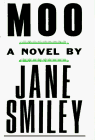
Moo
by Jane Smiley
On This Page
Description
A satire on university life, describing the rackets and the intellectual dishonesty that goes on. The setting is the U of Moo where research into the destruction of rain forests is tailored to suit the corporation funding the project. By the author of A Thousand Acres.Tags
Recommendations







Member Recommendations
wademlee Academic satire, humorous & outrageous. Those in Academe will recognize themselves or their colleagues.
30

Member Reviews
I first read this book when it was released back in the 1990s, and I remember thinking it was hilarious. Although I had little experience on a college campus at that time, having dropped out after a lackadaisical year to work my dream job in the only profession I was ever going to pursue (ha!), my time growing up in a rural community helped me recognize the humorous aspects of a secret project to see just how huge a hog can get if it is allowed unlimited food and no physical exertion. That the hog was named Earl Butz after President Nixon's embattled Secretary of Agriculture was even funnier.
Fast forward to 2017, and I'm re-reading [Moo] because I recommended it for our fledging book club at work. Given that I work at a large state show more university (although one that is not focused on agricultural sciences) I expected the satire to be even sharper than my original reading. And it was, but parts of it hit a little too close to the bone to be really funny — the mindless drive for private research grants where the size of a donor's bank account is more important than the content of their character, the endless promoting of administrators far beyond their capabilities, and especially the lack of support from the state government for its flagship of higher education — had me wincing more than guffawing.
Smiley attended the University of Iowa's famed Writers' Workshop, and she taught for a number of years at Iowa State University, the real Moo U., and her insider knowledge shows on every page. She knows just where to stick the knife to skewer the university archetypes where it hurts, and I don't think any department is left unscathed. If I have one criticism, it's the sheer size of this novel — its girth gives ole Earl Butz a run for his money. And in her eagerness to leave no campus corner unridiculed, she created an enormous cast of characters who were sometimes hard to keep straight, especially since I read the book over the course of a month. But overall, I thoroughly enjoyed this look at the absurdities of life in higher education, and impressed that it didn't really feel dated at all. show less
Fast forward to 2017, and I'm re-reading [Moo] because I recommended it for our fledging book club at work. Given that I work at a large state show more university (although one that is not focused on agricultural sciences) I expected the satire to be even sharper than my original reading. And it was, but parts of it hit a little too close to the bone to be really funny — the mindless drive for private research grants where the size of a donor's bank account is more important than the content of their character, the endless promoting of administrators far beyond their capabilities, and especially the lack of support from the state government for its flagship of higher education — had me wincing more than guffawing.
Smiley attended the University of Iowa's famed Writers' Workshop, and she taught for a number of years at Iowa State University, the real Moo U., and her insider knowledge shows on every page. She knows just where to stick the knife to skewer the university archetypes where it hurts, and I don't think any department is left unscathed. If I have one criticism, it's the sheer size of this novel — its girth gives ole Earl Butz a run for his money. And in her eagerness to leave no campus corner unridiculed, she created an enormous cast of characters who were sometimes hard to keep straight, especially since I read the book over the course of a month. But overall, I thoroughly enjoyed this look at the absurdities of life in higher education, and impressed that it didn't really feel dated at all. show less
I've read Jane Smiley before: I loved her Last Hundred Years trilogy, but I'd never heard of this one. I found it last August during a rare Goodwill visit and when I was looking for my next book with an orange cover, I landed on this one (with a mostly white cover, but that orange MOO combined with a pig hooked me).
This is a slog. There are a ridiculous number of characters (with similar names—Bob and Bo come to mind or Mary, Sherri, and Keri!); I really could have used an organizational chart to keep them all straight. Which is interesting because that is also how I felt 20 years ago on my very small college campus. I would imagine stepping foot on a campus of thousands would have overloaded my circuits much like this book did. BUT show more I GOT THROUGH IT. (I liked the inclusion of emails and newspaper articles, I could've used more of those interludes!)
It was surprising how much still applies to colleges today—the politics of funding higher education, the secretaries doing most of the work for the scattered academics (if they can even afford a secretary!), students floundering through their first year. Like a couple of these characters, I failed most of my classes my first semester and made a dramatic turnaround my second semester, I talked about transferring away to a school closer to home every year, but I avoided protests and pigs. This also brought up fond memories of the dining hall—so many options! A salad bar! Waffles whenever you wanted! And pies!
After I finished, I went looking for reviews from when it was published in 1995 and found a much more recent review from 2024 by Sean Carswell: "Every semester, I teach a research writing class at California State University. We focus around issues of higher education.... Then I teach Jane Smiley’s novel Moo. And every time I teach it, a catastrophe at the fictional Moo University aligns with a current problem in the CSU. The catastrophes change, but the underlying problem that catalyzes them remains the same."
I immediately thought of Moo University's protests about drilling in the Costa Rican cloud forest and then the governor threatening to make further cuts to the university budget except now it's the freakin' PRESIDENT OF THE UNITED STATES threatening to "defund" colleges and universities that don't fall in line with his demands. Or the billionaire interfering with a country's government to sow chaos so he could get what he wanted (Martin's desire for drilling is Musk's desire to steal our information and get out of investigations?).
Moo seems to prove that the more things change, the more they stay the same. show less
This is a slog. There are a ridiculous number of characters (with similar names—Bob and Bo come to mind or Mary, Sherri, and Keri!); I really could have used an organizational chart to keep them all straight. Which is interesting because that is also how I felt 20 years ago on my very small college campus. I would imagine stepping foot on a campus of thousands would have overloaded my circuits much like this book did. BUT show more I GOT THROUGH IT. (I liked the inclusion of emails and newspaper articles, I could've used more of those interludes!)
It was surprising how much still applies to colleges today—the politics of funding higher education, the secretaries doing most of the work for the scattered academics (if they can even afford a secretary!), students floundering through their first year. Like a couple of these characters, I failed most of my classes my first semester and made a dramatic turnaround my second semester, I talked about transferring away to a school closer to home every year, but I avoided protests and pigs. This also brought up fond memories of the dining hall—so many options! A salad bar! Waffles whenever you wanted! And pies!
After I finished, I went looking for reviews from when it was published in 1995 and found a much more recent review from 2024 by Sean Carswell: "Every semester, I teach a research writing class at California State University. We focus around issues of higher education.... Then I teach Jane Smiley’s novel Moo. And every time I teach it, a catastrophe at the fictional Moo University aligns with a current problem in the CSU. The catastrophes change, but the underlying problem that catalyzes them remains the same."
I immediately thought of Moo University's protests about drilling in the Costa Rican cloud forest and then the governor threatening to make further cuts to the university budget except now it's the freakin' PRESIDENT OF THE UNITED STATES threatening to "defund" colleges and universities that don't fall in line with his demands. Or the billionaire interfering with a country's government to sow chaos so he could get what he wanted (Martin's desire for drilling is Musk's desire to steal our information and get out of investigations?).
Moo seems to prove that the more things change, the more they stay the same. show less
Academic satire is admittedly one of my favorite genres, so it's easy to call this book well-plotted with occasional feats of humor brilliance. Smiley has a stand-up comic's feel for repetition, leaning on a few phrases that become funnier and funnier every time they appear (only, of course, by permission of the CIA, the FBI and the big ag companies). She also has fun with character names, including Bartle the secretary and the three roommates Keri, Sherri and Mary.
Moo has more of an edge on portraying the weird and circular feeling of racial/cultural isolation than other academic satires. Mary's journey through the last half of the book portrays perfectly both the poison of cruelty and indifference and a teenaged inability to get past show more current events and focus on long-term goals. Smiley's subject is The University, however, so each character demands only short-story-sized attention from the reader. Straight Man is much more personal, and therefore much more powerful. show less
Moo has more of an edge on portraying the weird and circular feeling of racial/cultural isolation than other academic satires. Mary's journey through the last half of the book portrays perfectly both the poison of cruelty and indifference and a teenaged inability to get past show more current events and focus on long-term goals. Smiley's subject is The University, however, so each character demands only short-story-sized attention from the reader. Straight Man is much more personal, and therefore much more powerful. show less
Everyone keeps telling me I should read Jane Smiley and they’re probably right. With biting humor, sharp satire, a wealth of fascinating characters, and even some touches of tender affection for people, place and environment, Moo is a slowly rising storm of a Midwestern University vs. the world, and vs. itself. Readers are guided into the heads of professors, administrators, students (successful and otherwise, plus those still trying to figure what constitutes success), lecturers, secretaries (who of course wield all the power), farmers and even a pig. Every character feels real. Every situation feels close enough to real to be recognizable. And the blend of sharp comedy and poignant observation is perfectly balanced.
Moo is a long show more novel, reminding me in places of The Masters by C. P. Snow (one of my favorites), and warning me, perhaps, that I’m missing some of the points by not being a Midwesterner. (I’m a Cambridge girl—hence loving The Masters I guess.) It’s easy to read the novel in single chapters, each nicely numbered and titled, so a perfect bedtime book. And the ending is oddly satisfying after all the machinations that came before.
Real people. Curious situations. And caustic humor. A long, slow, thoroughly enjoyable read.
Disclosure: I borrowed it from a friend and I enjoyed it. show less
Moo is a long show more novel, reminding me in places of The Masters by C. P. Snow (one of my favorites), and warning me, perhaps, that I’m missing some of the points by not being a Midwesterner. (I’m a Cambridge girl—hence loving The Masters I guess.) It’s easy to read the novel in single chapters, each nicely numbered and titled, so a perfect bedtime book. And the ending is oddly satisfying after all the machinations that came before.
Real people. Curious situations. And caustic humor. A long, slow, thoroughly enjoyable read.
Disclosure: I borrowed it from a friend and I enjoyed it. show less
Moo is an agriculture university somewhere in the midwest (my guess would be Iowa). Characters range from four in-coming freshmen girls to administrative bigwigs and everyone in between. Moo is a satire that is incredibly silly in places. Superficial relationships collide and somehow become meaningful. What makes the story so interesting is the drama, the scandals, and mischief the campus seems to promote. Everyone has a secret. Everyone has someone they would either like to kill or screw. The word everyone uses to describe Moo is "wicked" and it fits.
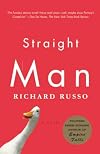
Wickedly funny academic satire on a par with Richard Russo's Straight Man and the works of David Lodge, but not without a heart. I have an especially soft spot for it in my own heart because when it was first published I was working at an independent bookstore in western Massachusetts and had a grand time producing a window display featuring this book (the process involved felt, a glue gun, a sawhorse, a lot of hay borrowed from a neighbor's rabbit hutch, and much amusement on the part of my family and co-workers). Like all Smiley's novels, this one draws you into a particular world and turns it inside-out for your edification and delight.
This has been sitting on my shelf since grad school when a professor recommended it. Being very familiar with the Ames Iowa of the 90s, and the University there where my grandpa was a professor, this setting is nostalgic and hilarious.
This really has an undercurrent of wink wink nudge nudge to anyone in academia. Very wry and funny. There are a lot of characters to keep track of which wasn't easy, but this delivers a great picture of satirical academic life.
This really has an undercurrent of wink wink nudge nudge to anyone in academia. Very wry and funny. There are a lot of characters to keep track of which wasn't easy, but this delivers a great picture of satirical academic life.
Members
- Recently Added By
Published Reviews
Jane Smiley's new novel is a sprawling and hilarious spoof of contemporary life set in a fictional Midwestern university, whose initials provide its nickname, MOO.
Sometimes "Moo" relies on university in-jokes, but mostly Smiley is dealing with human nature. After laughing at each character and enjoying the twists and turns of the plot, readers may also find themselves reflected in this large show more and forgiving mirror of modern life. show less
Sometimes "Moo" relies on university in-jokes, but mostly Smiley is dealing with human nature. After laughing at each character and enjoying the twists and turns of the plot, readers may also find themselves reflected in this large show more and forgiving mirror of modern life. show less
added by Ariane65
Lists

The Guardian's 1000 Novels Everyone Must Read
1,005 works; 549 members
Best Satire
188 works; 29 members

Best Campus Novels
99 works; 18 members

Books Set in Iowa
34 works; 8 members

Academia in Fiction
158 works; 23 members

Llibres que he llegit el 2012
28 works; 1 member

Books Read in 2010
631 works; 10 members

Adult Stories Involving Animals
76 works; 6 members
Author Information

51+ Works 25,534 Members
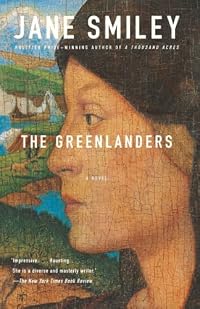
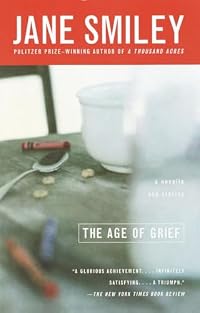
Jane Smiley was born in Los Angeles, California on September 26, 1949. She received a B. A. from Vassar College in 1971 and an M.F.A. and a Ph.D from the University of Iowa. From 1981 to 1996, she taught undergraduate and graduate creative writing workshops at Iowa State University. Her books include The Age of Grief, The Greenlanders, Moo, Horse show more Heaven, Ordinary Love and Good Will, Some Luck, and Early Warning. In 1985, she won an O. Henry Award for her short story Lily, which was published in The Atlantic Monthly. A Thousand Acres received both the National Book Critics Circle Award and the Pulitzer Prize. (Bowker Author Biography) show less
Awards and Honors
Awards
Distinctions
Common Knowledge
- Canonical title
- Moo
- Original publication date
- 1995
- People/Characters
- Chairman X; Bob Carlson; Earl Butz; Dr. Bo Jones; Lady X (Beth); Cecelia Sanchez (show all 35); Tim Monahan; Keri; Sherry; Mary Jackson; Diane Peterson; Dr. Margaret Bell; Dr. Helen Levy; Governor O.T. Early; Associate Vice President Elaine Dobbs-Jellinek; Gary Olson; Dr. Lionel Gift; Provost Ivar Harstad; Dean Nils Harstad; "Father" Helmich; Marly Helmich; Dr. Dean Jellinek; Mrs. Martha Lake; Lydia Henderson; Lyle Kartensen; Arlen Martin; Jack Parker; Joy Pfister; Loren Stroop; Alison Thomas; Mrs. Loraine Walker; Associate Vice President Bob Brown (“Just Plain Brown”); Dr. William Garcia; Dr. John Vernon Cates; Joe Miller
- Important places
- Midwest, USA; U of Moo
- Dedication
- For Phoebe, Lucy, and Axel James, with love
- First words
- From the outside it was clear that the building known generally as "Old Meats" had eased under the hegemony of the horticulture department.
- Quotations
- Men are competent in groups that mimic the playground, incompetent in groups that mimic the family.
- Last words
- (Click to show. Warning: May contain spoilers.)The breeze lifted Beth's hair, the eldest picked up Amy without any prompting, the two boys stopped fidgeting, fragrance from the blossoming apple trees rolled over him, and a very well cared for old Saab eased down the alley and past the couple, whose eyes were closed, and who, Garcia thought, seemed to be lost in an astonishing, and even legendary, kiss.
Classifications
Statistics
- Members
- 2,698
- Popularity
- 6,839
- Reviews
- 62
- Rating
- (3.51)
- Languages
- 6 — English, French, German, Norwegian, Polish, Spanish
- Media
- Paper, Audiobook, Ebook
- ISBNs
- 30
- UPCs
- 1
- ASINs
- 18