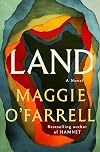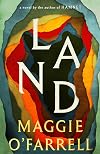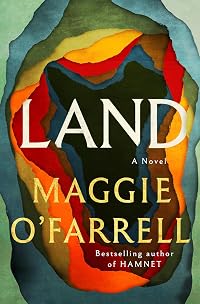
Land
by Maggie O'Farrell
On This Page
Description
"The award-winning, bestselling author of Hamnet and The Marriage Portrait returns with a soaring historical novel set in Ireland in the years before and after the Great Hunger"-- Provided by publisher.Tags
Recommendations








Member Reviews
In the mid-19th century, Ireland was decimated by the effects of colonial rule and an agricultural meltdown leading to the Great Hunger and millions of deaths and emigrations. Land opens with Tomás, a surveyor, employed by the British as part of a widespread effort to map the entire country. His young son, Liam, serves as his apprentice and Tomás hopes he will someday follow him in this trade. But Liam experiences something frightening on this journey and begins to resist his father’s pressure.
Maggie O’Farrell then reveals Tomás’ traumatic childhood during the Great Hunger, the psychological effects of survival, and the creation of a new generation including wife Phina, son Liam, daughters Enda and Rose, and another child on show more the way. Tomás, despite loving his children, is far from an ideal father and Phina is the glue holding the family together. The children grow up and follow their own paths, but their inability to support one another emotionally has long-lasting consequences.
O’Farrell’s talents are on full display here; I was captivated by this novel from the start. She has a way of connecting separate threads into a complete story through small details, and delivering the occasional gut punch that makes one yearn for a better life for each character. And yet, there’s hope in the midst of their trauma and O’Farrell brings the novel to a conclusion which is satisfying while still reflecting the complexity of this family and the times they lived in. Read this book – you will not be disappointed. show less
Maggie O’Farrell then reveals Tomás’ traumatic childhood during the Great Hunger, the psychological effects of survival, and the creation of a new generation including wife Phina, son Liam, daughters Enda and Rose, and another child on show more the way. Tomás, despite loving his children, is far from an ideal father and Phina is the glue holding the family together. The children grow up and follow their own paths, but their inability to support one another emotionally has long-lasting consequences.
O’Farrell’s talents are on full display here; I was captivated by this novel from the start. She has a way of connecting separate threads into a complete story through small details, and delivering the occasional gut punch that makes one yearn for a better life for each character. And yet, there’s hope in the midst of their trauma and O’Farrell brings the novel to a conclusion which is satisfying while still reflecting the complexity of this family and the times they lived in. Read this book – you will not be disappointed. show less
A story about a single family, yet mythic in scope. There is the horrific cruelty and resulting mass death of the Great Hunger, which echoes forward through the generation of the survivors and their children; the terrifying ease of losing track of people when they move, and the loss of family history; the fragility of human life to injury and accident. But also, there is the kindness of people, the loyalty of dogs, the magic of a hidden pool in a copse that grants what a wisher needs, rather than what they ask for. Woven through this family's story is another, older story, of another family a thousand years ago, on the same patch of land: a young woman and her dog, preserved in a bog, and a gold ring.
*Spoilers*
Parents Tomas and Phina show more found each other in the workhouse, each the only remaining member of their families after the rest had died in the Great Hunger. Tomas finds a job as a chainboy with the redcoats, helping them create maps and talk to the locals; he returns, as promised, for Phina, and arrives just in time to rescue her from being shipped to Australia. (Her father returned from North America for her, but they called her Frances at the workhouse, not Seraphina, and sent him away without her; crushing.)
Tomas makes a career out of surveying, but on one trip, with his ten-year-old eldest son Liam along, he discovers a hidden copse, and comes out of it a changed man. Without consulting Phina, he moves the whole family to the peninsula, and they live there for years. Tomas wants Liam to follow in his footsteps, though daughter Enda is better suited to it, but Liam becomes interested in the priesthood, studying with Father Joseph - the priest who attempted a traumatic exorcism on Tomas.
After Phina's sudden, early death (likely due to heart trouble as a result of childhood and adolescent malnutrition), the family begins to splinter: Liam to the Jesuits, Enda to Quebec (with Liam's papers). Tomas is injured and dies soon afterward, leaving only pretty, capable Rose and nonverbal, hardworking Eugene (and their loyal dog, Bran). After the local vicount's son assaults Rose and Eugene comes to her rescue, the widow woman tells them to flee to Enda; they get on a ship, but only Rose makes the crossing. Eugene leaps off the ship, swims back to land, and returns to the peninsula.
Upon receiving news of Tomas' death, Liam leaves the priesthood and returns to Dublin. He looks for his family at their home, only to find everyone gone, and the widow and Father Joseph dead. He marries and has two sons.
Quotes
It is Tomas's belief that it is always better to say too little than too much: many things are best left unsaid. (8)
It could exist on the map, or it could exist on the land...The choice, he saw, was his. His life's work was to map but he did not want to be the one to condemn this place. (Tomas, 59)
This house is a thing both ancient and disjointed, an entity of addition and subtraction, a palimpsest of stone and wood and caulk and mud. Its existence here, on the peninsula, is proof that everything was once something else: nothing goes away. (137)
He would like...to describe for them...the process of mapping, the complex labour and responsibility of it, its peculiar mix of science and storytelling, mathematics and artistry. (Liam, 212)
The music she plays is the land: it summons it; it conjures it here, to this street corner. It is enough to drive her mad. How can she be here and there, all at the same time. She is a person divided, split in two, a tree sundered by lightning. (Enda, 300)
Tomas was a man who believe only what was in front of him, what he could touch or see, the soil and the rock and so forth; he believed in pools imbued with ancient spirits, and where does the soul of such a person go? (Liam, 336)
Always, Liam carries within him the idea of what life might have been had his family stayed in the Lanes, who he might have been....It is a lost self, a ghost twin, that Liam. (373)
[Eugene's] way of thinking is one of curiosity paired with acceptance. (383) show less
*Spoilers*
Parents Tomas and Phina show more found each other in the workhouse, each the only remaining member of their families after the rest had died in the Great Hunger. Tomas finds a job as a chainboy with the redcoats, helping them create maps and talk to the locals; he returns, as promised, for Phina, and arrives just in time to rescue her from being shipped to Australia. (Her father returned from North America for her, but they called her Frances at the workhouse, not Seraphina, and sent him away without her; crushing.)
Tomas makes a career out of surveying, but on one trip, with his ten-year-old eldest son Liam along, he discovers a hidden copse, and comes out of it a changed man. Without consulting Phina, he moves the whole family to the peninsula, and they live there for years. Tomas wants Liam to follow in his footsteps, though daughter Enda is better suited to it, but Liam becomes interested in the priesthood, studying with Father Joseph - the priest who attempted a traumatic exorcism on Tomas.
After Phina's sudden, early death (likely due to heart trouble as a result of childhood and adolescent malnutrition), the family begins to splinter: Liam to the Jesuits, Enda to Quebec (with Liam's papers). Tomas is injured and dies soon afterward, leaving only pretty, capable Rose and nonverbal, hardworking Eugene (and their loyal dog, Bran). After the local vicount's son assaults Rose and Eugene comes to her rescue, the widow woman tells them to flee to Enda; they get on a ship, but only Rose makes the crossing. Eugene leaps off the ship, swims back to land, and returns to the peninsula.
Upon receiving news of Tomas' death, Liam leaves the priesthood and returns to Dublin. He looks for his family at their home, only to find everyone gone, and the widow and Father Joseph dead. He marries and has two sons.
Quotes
It is Tomas's belief that it is always better to say too little than too much: many things are best left unsaid. (8)
It could exist on the map, or it could exist on the land...The choice, he saw, was his. His life's work was to map but he did not want to be the one to condemn this place. (Tomas, 59)
This house is a thing both ancient and disjointed, an entity of addition and subtraction, a palimpsest of stone and wood and caulk and mud. Its existence here, on the peninsula, is proof that everything was once something else: nothing goes away. (137)
He would like...to describe for them...the process of mapping, the complex labour and responsibility of it, its peculiar mix of science and storytelling, mathematics and artistry. (Liam, 212)
The music she plays is the land: it summons it; it conjures it here, to this street corner. It is enough to drive her mad. How can she be here and there, all at the same time. She is a person divided, split in two, a tree sundered by lightning. (Enda, 300)
Tomas was a man who believe only what was in front of him, what he could touch or see, the soil and the rock and so forth; he believed in pools imbued with ancient spirits, and where does the soul of such a person go? (Liam, 336)
Always, Liam carries within him the idea of what life might have been had his family stayed in the Lanes, who he might have been....It is a lost self, a ghost twin, that Liam. (373)
[Eugene's] way of thinking is one of curiosity paired with acceptance. (383) show less
I loved this new novel by Maggie O'Farrell. It's a beautiful, meandering, epic story of an Irish family who has many troubles and hardships, struggles to remain together, and barely succeeds. The story begins with the father, Tomás and son, Liam, who are on an expedition in the mid/late 1800s with the Red Coats to map a windswept Irish peninsula jutting out into the Atlantic. They discover a small copse with a fresh spring that brings a whole new outlook and path to the family. O'Farrell moves quickly forwards and backwards in time, exploring the lives of the father and mother, Phina, and their parents' struggles during the Famine while keeping up with her present-day story. She also delves into deep time, exploring people who lived on show more the land centuries ago and how their lives have influenced the land itself.
It's such a beautiful mix of deep history and connections and a sort of typical struggling family epic. There's a thread of both magic/coincidence and brutal reality - there aren't necessarily happy endings, but there is hope and upward momentum at times. I teared up several times. I loved every minute of this rather long novel. I've read four of O'Farrell's novels now and loved them all, but this felt like the one she was meant to write. show less
It's such a beautiful mix of deep history and connections and a sort of typical struggling family epic. There's a thread of both magic/coincidence and brutal reality - there aren't necessarily happy endings, but there is hope and upward momentum at times. I teared up several times. I loved every minute of this rather long novel. I've read four of O'Farrell's novels now and loved them all, but this felt like the one she was meant to write. show less
O’Farrell’s latest novel is historical fiction and a family drama with a touch of magic realism.
It opens in IreLAND in 1865, about ten years after The Great Hunger. Tomás and his 10-year-old son Liam are working for the Ordnance Survey project to map the entire country. Tomás is determined that his maps will be a record of the The Great Famine, but he is sent off course by an encounter with magical waters in an unsettling copse on a western peninsula. Tomás emerges changed and his life and that of his family is never the same. The novel follows the lives of Tomás, his wife, and their four children: Enda, Liam, Rose, and Eugene.
Though most of the novel focuses on life post-famine, there are flashbacks to the potato famine. Both show more Tomás and his wife suffer devastating loss during the famine. There are also flashbacks to the past on the peninsula, millennia earlier, where we meet a girl named Brith and then the reader is given a brief history of the changes on the land until Tomás arrives with his family.
This is a multiple-perspective narrative. The perspective of each family member is presented at different times, even one in utero “the size of a pear,” but the novel also includes that of others: Bran, the family’s Irish wolfhound; Father Joseph, the local priest; Brith, a child living in an Iron Age ringfort; and even a skylark.
As always in O’Farrell’s novels, the characterization is outstanding. For instance, the four children emerge as distinct personalities. Enda is the restless one; music becomes her outlet. Liam, scarred by what happened to his father at the magical spring, turns to religion. For Rose, family is of tantamount importance. Eugene cannot speak but communes with the land.
And that land is very much a character. Land shapes people’s lives. Though it remains “indifferent to the bloody and fearsome shifts going on around it,” it remembers. Tomás tells the priest, “’the land was inhabited long before you and your kind ever arrived . . . You will never understand how the land remembers, how deep the roots grow, how fast the stream.’” Humans inhabit land for only a short time, but the land is permanent; it is not static because it changes as people shape it, but it remains even when humans leave it or die: “After these people will come someone else, and then someone else, and on and on it will go until the end of the world.” Eugene sees no delineation between past and present: “He lives much as his ancient forebears did: on and by the land, watching the weather, feeling one season blur into the next.” And the land remains part of the people who lived on it: Tomás desperately wants to find the valley where he lived as a child, “to find where he is from, to walk the soil where he began,” and Enda is on another continent yet “The music she plays is the land: it summons it; it conjures it here, to this street corner.”
Of course people try to shape the land too. They build on it and fence it in. They use its turf for heat. Tomás realizes that mapping the land makes it easier for people to exploit it. Tomás tells his son, “’To map is to assume power.’” He argues that “maps are acts of colonisation, enemy tools that must be destroyed.” Though he needs to make maps to provide for his family, he sees himself “as the lapdog of the redcoats, taking their money, helping them to tighten their hold on the land.” What Tomás wants to do is create “a map of how this land really is, of how it has always been, of what lies beneath whatever order or disorder others might impose upon it.”
Besides The Great Hunger and its enduring trauma on people and the land, the novel also examines colonization and the influence of the Catholic Church. Elements of folklore also make an appearance. For instance, there’s a spring that is said “to bestow what is needed, not necessarily what is wanted, which is not always the same thing.” Magic realism is not something I enjoy, but it’s handled with a light touch so the narrative never feels overwhelmed by it.
My husband and I spent almost a month touring Ireland in 2024 so this novel really resonated with me. We saw the Famine Memorial in Dublin and the memorial in the Doolough valley and they haunt me still, as will the scene the child Tomás witnessed with the earl’s pigs. The symbolism is perfect! We visited ring forts and I bought earrings “decorated with interlocking swirls.” And we heard tales of the fairy folk who inhabit underground mounds and serve as guardians of nature and ancient sites, tales I remembered as I read about Brith’s father’s people disappearing into the ground.
This is another Maggie O’Farrell masterpiece. It is emotional and thought-provoking, has memorable characters, a strong sense of place, and thematic depth, and is written in beautiful prose.
See my reviews of other Maggie O’Farrell novels:
After You’d Gone - https://schatjesshelves.blogspot.com/2020/08/review-of-after-youd-gone-by-maggie...
The Marriage Portrait - https://schatjesshelves.blogspot.com/2022/11/review-of-marriage-portrait-by-magg...
The Vanishing Act of Esme Lennox - https://schatjesshelves.blogspot.com/2019/08/review-of-vanishing-act-of-esme-len...
Instructions for a Heatwave - https://schatjesshelves.blogspot.com/2020/11/review-of-instructions-for-heatwave...
The Hand that First Held Mine - https://schatjesshelves.blogspot.com/2020/12/review-of-hand-that-first-held-mine...
Hamnet and Judith - https://schatjesshelves.blogspot.com/2020/07/review-of-hamnet-and-judith-by-magg...
Note: I received an eARC from the publisher via NetGalley.
Please check out my reader's blog (https://schatjesshelves.blogspot.com/). show less
It opens in IreLAND in 1865, about ten years after The Great Hunger. Tomás and his 10-year-old son Liam are working for the Ordnance Survey project to map the entire country. Tomás is determined that his maps will be a record of the The Great Famine, but he is sent off course by an encounter with magical waters in an unsettling copse on a western peninsula. Tomás emerges changed and his life and that of his family is never the same. The novel follows the lives of Tomás, his wife, and their four children: Enda, Liam, Rose, and Eugene.
Though most of the novel focuses on life post-famine, there are flashbacks to the potato famine. Both show more Tomás and his wife suffer devastating loss during the famine. There are also flashbacks to the past on the peninsula, millennia earlier, where we meet a girl named Brith and then the reader is given a brief history of the changes on the land until Tomás arrives with his family.
This is a multiple-perspective narrative. The perspective of each family member is presented at different times, even one in utero “the size of a pear,” but the novel also includes that of others: Bran, the family’s Irish wolfhound; Father Joseph, the local priest; Brith, a child living in an Iron Age ringfort; and even a skylark.
As always in O’Farrell’s novels, the characterization is outstanding. For instance, the four children emerge as distinct personalities. Enda is the restless one; music becomes her outlet. Liam, scarred by what happened to his father at the magical spring, turns to religion. For Rose, family is of tantamount importance. Eugene cannot speak but communes with the land.
And that land is very much a character. Land shapes people’s lives. Though it remains “indifferent to the bloody and fearsome shifts going on around it,” it remembers. Tomás tells the priest, “’the land was inhabited long before you and your kind ever arrived . . . You will never understand how the land remembers, how deep the roots grow, how fast the stream.’” Humans inhabit land for only a short time, but the land is permanent; it is not static because it changes as people shape it, but it remains even when humans leave it or die: “After these people will come someone else, and then someone else, and on and on it will go until the end of the world.” Eugene sees no delineation between past and present: “He lives much as his ancient forebears did: on and by the land, watching the weather, feeling one season blur into the next.” And the land remains part of the people who lived on it: Tomás desperately wants to find the valley where he lived as a child, “to find where he is from, to walk the soil where he began,” and Enda is on another continent yet “The music she plays is the land: it summons it; it conjures it here, to this street corner.”
Of course people try to shape the land too. They build on it and fence it in. They use its turf for heat. Tomás realizes that mapping the land makes it easier for people to exploit it. Tomás tells his son, “’To map is to assume power.’” He argues that “maps are acts of colonisation, enemy tools that must be destroyed.” Though he needs to make maps to provide for his family, he sees himself “as the lapdog of the redcoats, taking their money, helping them to tighten their hold on the land.” What Tomás wants to do is create “a map of how this land really is, of how it has always been, of what lies beneath whatever order or disorder others might impose upon it.”
Besides The Great Hunger and its enduring trauma on people and the land, the novel also examines colonization and the influence of the Catholic Church. Elements of folklore also make an appearance. For instance, there’s a spring that is said “to bestow what is needed, not necessarily what is wanted, which is not always the same thing.” Magic realism is not something I enjoy, but it’s handled with a light touch so the narrative never feels overwhelmed by it.
My husband and I spent almost a month touring Ireland in 2024 so this novel really resonated with me. We saw the Famine Memorial in Dublin and the memorial in the Doolough valley and they haunt me still, as will the scene the child Tomás witnessed with the earl’s pigs. The symbolism is perfect! We visited ring forts and I bought earrings “decorated with interlocking swirls.” And we heard tales of the fairy folk who inhabit underground mounds and serve as guardians of nature and ancient sites, tales I remembered as I read about Brith’s father’s people disappearing into the ground.
This is another Maggie O’Farrell masterpiece. It is emotional and thought-provoking, has memorable characters, a strong sense of place, and thematic depth, and is written in beautiful prose.
See my reviews of other Maggie O’Farrell novels:
After You’d Gone - https://schatjesshelves.blogspot.com/2020/08/review-of-after-youd-gone-by-maggie...
The Marriage Portrait - https://schatjesshelves.blogspot.com/2022/11/review-of-marriage-portrait-by-magg...
The Vanishing Act of Esme Lennox - https://schatjesshelves.blogspot.com/2019/08/review-of-vanishing-act-of-esme-len...
Instructions for a Heatwave - https://schatjesshelves.blogspot.com/2020/11/review-of-instructions-for-heatwave...
The Hand that First Held Mine - https://schatjesshelves.blogspot.com/2020/12/review-of-hand-that-first-held-mine...
Hamnet and Judith - https://schatjesshelves.blogspot.com/2020/07/review-of-hamnet-and-judith-by-magg...
Note: I received an eARC from the publisher via NetGalley.
Please check out my reader's blog (https://schatjesshelves.blogspot.com/). show less
Although you will soon see that this is a complex novel to describe, it is definitely another spectacular creation from the mind of Maggie O'Farrell, the author of the bestseller HAMNET. Awarded five stars on Goodreads.
On one level, LAND is historical fiction about the richness and complexities within one family. Here are six unique individuals in 19th century Western Ireland, working desperately hard but barely getting by in the years following The Great Hunger (1845-49):
• Tomas, the father, is away for long periods working as a land surveyor for the British military.
• Phina, his wife, manages both the children and running the small rented farm they call home.
• Edna, the eldest daughter, is a curious and bright child in a world show more that limits all girls to preparing for the roles of wife and mother.
• Liam, the older son, is expected to apprentice to his father, but has other ideas about his future.
• Rose, the beautiful younger daughter, must assume the role of family caretaker, without having been asked.
• Eugene - a young boy with innate perception and sensitivity but unable to speak.
Six people who represent a wide variety of the human experience. Each one of these remarkable people has a rich and unique inner life that we as readers have the privilege of exploring. Their dreams and disappointments, their secrets and deepest hungers made them feel as real to me as my own friends and family members. Despite their very human flaws, I came to love each one.
But aside from the insightful examination of personal longings, internal familial relationships, and life in small Irish villages, LAND also offers broader dimensions. It's about the centuries-old tension between wealthy and entitled British landowners and Irish peasants. About the powerful role the Catholic Church plays in Ireland. We see the lingering impact of famine on Irish society in the 1800s. And the immigrant fantasy of leaving troubles behind and starting over in the New World (the Western Hemisphere). And there is a strong environmental message about the inherent strength and permanence of land -- as an entity and asset that remains stable, barely impacted by the historical series of human settlements.
Like all O'Farrell's books, LAND is exceptionally well written. Her characters are fully fleshed out and her attention to detail and precision of word choice make people, places and situations come alive. There is such wonderful truth and irony in her depiction of colonization over the centuries that I stopped to read it aloud to my family. O’Farrell is a brilliant writer and this novel is remarkable. Don't miss it. show less
On one level, LAND is historical fiction about the richness and complexities within one family. Here are six unique individuals in 19th century Western Ireland, working desperately hard but barely getting by in the years following The Great Hunger (1845-49):
• Tomas, the father, is away for long periods working as a land surveyor for the British military.
• Phina, his wife, manages both the children and running the small rented farm they call home.
• Edna, the eldest daughter, is a curious and bright child in a world show more that limits all girls to preparing for the roles of wife and mother.
• Liam, the older son, is expected to apprentice to his father, but has other ideas about his future.
• Rose, the beautiful younger daughter, must assume the role of family caretaker, without having been asked.
• Eugene - a young boy with innate perception and sensitivity but unable to speak.
Six people who represent a wide variety of the human experience. Each one of these remarkable people has a rich and unique inner life that we as readers have the privilege of exploring. Their dreams and disappointments, their secrets and deepest hungers made them feel as real to me as my own friends and family members. Despite their very human flaws, I came to love each one.
But aside from the insightful examination of personal longings, internal familial relationships, and life in small Irish villages, LAND also offers broader dimensions. It's about the centuries-old tension between wealthy and entitled British landowners and Irish peasants. About the powerful role the Catholic Church plays in Ireland. We see the lingering impact of famine on Irish society in the 1800s. And the immigrant fantasy of leaving troubles behind and starting over in the New World (the Western Hemisphere). And there is a strong environmental message about the inherent strength and permanence of land -- as an entity and asset that remains stable, barely impacted by the historical series of human settlements.
Like all O'Farrell's books, LAND is exceptionally well written. Her characters are fully fleshed out and her attention to detail and precision of word choice make people, places and situations come alive. There is such wonderful truth and irony in her depiction of colonization over the centuries that I stopped to read it aloud to my family. O’Farrell is a brilliant writer and this novel is remarkable. Don't miss it. show less
I am not sure I would use the word 'disappointment' for this one, but after experiencing a nearly perfect book named Hamnet by the same author I had some seriously high expectations for Land. It's still a good book, it's just not a great or memorable one. I would borrow this one rather than buying it. I seriously doubt I will ever read this again, unless I am feeling too happy and want a bitter dose of the reality that was Ireland in the mid-1800s.
At 600+ pages, this book attempts to cover a lot of ground but some of it is only at a surface level. At the heart of the book are Tomas and Seraphina, both children who are orphaned during the famine of the 1860's in Ireland. They meet in a work house and Tomas is able to escape on a work release and is able to come back and rescue Seraphina from a perilous fate.
However, the author felt in necessary to include a segment at the beginning of the book about a pagan sacrifice of a young woman. Her burial site becomes a mystical place for Tomas and his family. Otherwise that thread of the story is dropped.
As an adult, Tomas is a surveyor who finds work through the British Army to support his family. He has little memory of the time before show more the famine, but carries guilt about the burial of his father and a longing to find that geographical place that was his natal home. None of this is communicated to Seraphina and their four children.
The last half of the book is deals with the lives of the four children. Their different natures and their struggles to become their own persons in and isolated environment where there is little emotion communicated. Though plenty of personal emotions of each character find their way onto the page through the author. At one point I read three pages describing how Liam (the eldest sone) felt about something and when reaching the end of that segment I knew how he felt but wasn't sure about what actually happened.
This family of six suffers a lot of loss, missed connections, and misunderstandings.
I have read and loved most of the author's previous works, but this one became a slog at the 400 page mark. show less
However, the author felt in necessary to include a segment at the beginning of the book about a pagan sacrifice of a young woman. Her burial site becomes a mystical place for Tomas and his family. Otherwise that thread of the story is dropped.
As an adult, Tomas is a surveyor who finds work through the British Army to support his family. He has little memory of the time before show more the famine, but carries guilt about the burial of his father and a longing to find that geographical place that was his natal home. None of this is communicated to Seraphina and their four children.
The last half of the book is deals with the lives of the four children. Their different natures and their struggles to become their own persons in and isolated environment where there is little emotion communicated. Though plenty of personal emotions of each character find their way onto the page through the author. At one point I read three pages describing how Liam (the eldest sone) felt about something and when reaching the end of that segment I knew how he felt but wasn't sure about what actually happened.
This family of six suffers a lot of loss, missed connections, and misunderstandings.
I have read and loved most of the author's previous works, but this one became a slog at the 400 page mark. show less
Members
- Recently Added By
Lists

Maybe This Year? Books to Look Forward To
412 works; 9 members

The LonesomeReader Book Club
36 works; 1 member

The Economist Books of 2026 So Far (June 2026)
25 works; 1 member

Books Read in 2026
1,962 works; 66 members

LoanStars | Adult List: June 2026
10 works; 1 member

Economist book reviews (July 2026-)
13 works; 1 member
Author Information

24+ Works 20,611 Members
Maggie O'Farrell is the author of several novels including After You'd Gone, My Lover's Lover, The Vanishing Act of Esme Lennox, Instructions for a Heatwave, and This Must Be the Place. She received a Somerset Maugham Award for The Distance Between Us and the 2010 Costa Novel Award for The Hand That First Held Mine. (Bowker Author Biography)
Some Editions
Awards and Honors
Distinctions
The Guardian Book of the Day (2026-06-01)
Notable Lists
Common Knowledge
- Canonical title
- Land
- Original title
- Land
- Original publication date
- 2026
- People/Characters*
- Tomás; Liam
- Important places*
- Ierland
- Epigraph
- seanchaí, m. (gs. - pl. aithe).
1. Lit.: custodian of tradition, historian.
2. Reciter of ancient lore; traditional story-teller.
Foclóir Gaeilge-Béarla/Irish-English Dictionary
Niall Ó. Dónaill... (show all), 1977 - Dedication*
- Voor mijn familie - van vroeger, nu en later
- First words
- His father was ever a man of few words.
- Original language*
- Engels UK
*Some information comes from Common Knowledge in other languages. Click "Edit" for more information.
Classifications
Statistics
- Members
- 453
- Popularity
- 67,518
- Reviews
- 9
- Rating
- (4.25)
- Languages
- Dutch, English
- Media
- Paper, Ebook
- ISBNs
- 5
- ASINs
- 1