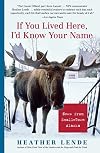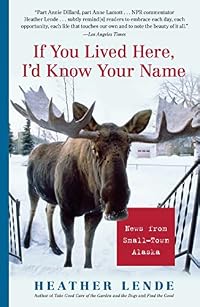
If You Lived Here, I'd Know Your Name: News from Small-Town Alaska
by Heather Lende
On This Page
Description
“Part Annie Dillard, part Anne Lamott, essayist and NPR commentator Heather Lende introduces readers to life in the town of Haines, Alaska . . . subtly reminding readers to embrace each day, each opportunity, each life that touches our own and to note the beauty of it all.” —The Los Angeles TimesTiny Haines, Alaska, is ninety miles north of Juneau, accessible mainly by water or air—and only when the weather is good. There's no traffic light and no mail delivery; people can vanish show more without a trace and funerals are a community affair. Heather Lende posts both the obituaries and the social column for her local newspaper. If anyone knows the going-on in this close-knit town—from births to weddings to funerals—she does.
Whether contemplating the mysterious death of eccentric Speedy Joe, who wore nothing but a red union suit and a hat he never took off, not even for a haircut; researching the details of a one-legged lady gold miner's adventurous life; worrying about her son's first goat-hunting expedition; observing the awe-inspiring Chilkat Bald Eagle Festival; or ice skating in the shadow of glacier-studded mountains, Lende's warmhearted style brings us inside her small-town life. We meet her husband, Chip, who owns the local lumber yard; their five children; and a colorful assortment of quirky friends and neighbors, including aging hippies, salty fishermen, native Tlingit Indians, and volunteer undertakers—as well as the moose, eagles, sea lions, and bears with whom they share this wild and perilous land.
Like Bailey White's tales of Southern life or Garrison Keillor's reports from the Midwest, NPR commentator Heather Lende's take on her offbeat Alaskan hometown celebrates life in a dangerous and breathtakingly beautiful place. show less
Tags
Recommendations





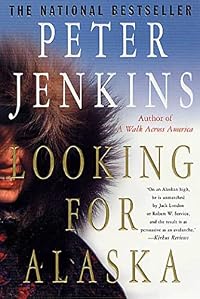

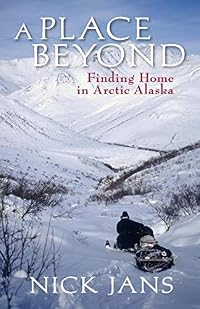
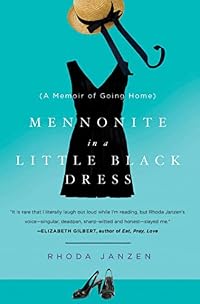
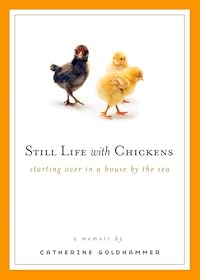




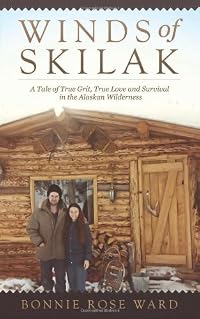


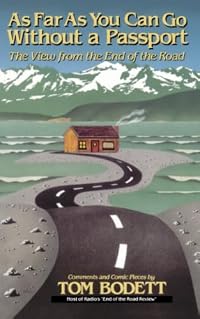
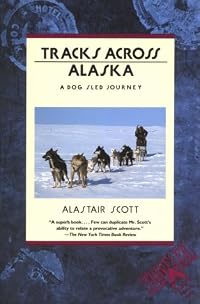
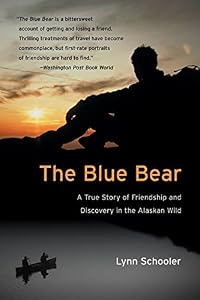
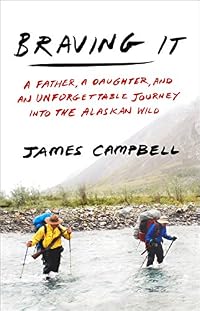
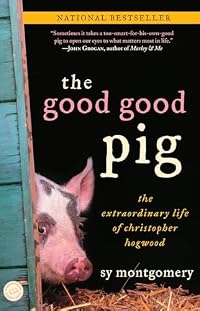

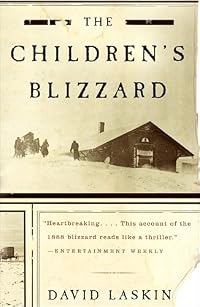
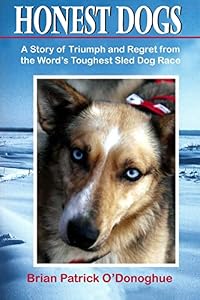
Member Recommendations
Member Reviews
Heather Lende provides glimpses of her life and acquaintances from living in Haines, Alaska, a small town on the inside passage best known as a stop for cruise ships. Access to medical care and other conveniences is limited. Death sometimes touches close to home more than one would like. Lende wrote obituaries for the newspaper and the "news" column. The book gives the reader a feel for the area, but it's more of a base hit than a home run.
This is a series of essays about life in small town Alaska. Of course, there are many stories of neighbors banding together to help each other out; spaghetti feeds, canning salmon, etc. It could be way too cutesy—but it isn’t. Lende is honest, and self-reflective. I was going to rate this 3 or 3 ½ stars, based on the writing, but in the end, I enjoyed reading the book so much I am moving it up to 4 stars.
I was intrigued by this description of a way of life so different than mine. I love the outdoors—but at heart I am a city girl. Haines is a town of 2400 in a remote location in the inner passage. Drop-dead gorgeous-- and with lots of perils. One of the most harrowing parts of the book is a description of a 5-6 hour drive to show more Whitehorse, through a snowstorm, with Lende’s son who had acute appendicitis. (They made it in the nick of time.)
From reading this book, life in Haines is super-dangerous. Maybe it’s because Lende is an obituary writer, but there is death after death, many of them deaths of young people engaged in outdoor pursuits. Yet Lende still allowed her own daughters to work in a fishing boat, because she wanted them to be a part of the place. I admire Lende for this, but I don’t understand it.
Another strong part of the book is her description of living in a small town, where everyone is like family, and you have to get along, despite strong differences of opinion. This is so different than my life—I live in an especially liberal part of Portland, Oregon, so seldom encounter any non-tree-huggers. In one chapter, Lende describes trying, unsuccessfully, to put together an anti-homophobia workshop after a bullying incident at the local high school. Lende was frustrated, but I was heartened by her brave attempts to engage her conservative neighbors in this fight. show less
I was intrigued by this description of a way of life so different than mine. I love the outdoors—but at heart I am a city girl. Haines is a town of 2400 in a remote location in the inner passage. Drop-dead gorgeous-- and with lots of perils. One of the most harrowing parts of the book is a description of a 5-6 hour drive to show more Whitehorse, through a snowstorm, with Lende’s son who had acute appendicitis. (They made it in the nick of time.)
From reading this book, life in Haines is super-dangerous. Maybe it’s because Lende is an obituary writer, but there is death after death, many of them deaths of young people engaged in outdoor pursuits. Yet Lende still allowed her own daughters to work in a fishing boat, because she wanted them to be a part of the place. I admire Lende for this, but I don’t understand it.
Another strong part of the book is her description of living in a small town, where everyone is like family, and you have to get along, despite strong differences of opinion. This is so different than my life—I live in an especially liberal part of Portland, Oregon, so seldom encounter any non-tree-huggers. In one chapter, Lende describes trying, unsuccessfully, to put together an anti-homophobia workshop after a bullying incident at the local high school. Lende was frustrated, but I was heartened by her brave attempts to engage her conservative neighbors in this fight. show less
Reading this book was like sipping from a big mug of hot chocolate. A bittersweet hot chocolate with marshmallows on top.
Because it is a heartwarming tale of life in small town Alaska. Yet because of Lende’s occupation as the weekly newspaper’s obituary writer, there’s a bittersweetness to it, as she tells us about those who have passed on. Some old, some young. Some sudden, others expected.
“Being an obituary writer means I think a lot about loss, but more about love. Writing the obituaries of so man people I’ve known makes me acutely aware of death, but in a good way, the way Emily Dickinson meant when she wrote, ‘That it will never come again / Is what makes life so sweet.’”
“…writing about the dead helps me show more celebrate the living – my neighbours, friends, husband, and five children – and this place, which some would say is on the edge of nowhere, but for me is the centre of everywhere.”
Of course this is also Lende’s story, of her family, her life, her neighbours and friends, and what it is like to live in Haines, population 2400.
Haines, Alaska sounds like a kind of magical, beautiful, isolated place, where seals party on the beach and moose nosh on the lawn. It is at the northern tip of the Inside Passage, miles from anywhere (800 from Anchorage, 90 from Juneau – 90 doesn’t sound that far, but waiting out the snow can take a while). And John Muir warned young people not to come to this part of Alaska, as they’d have to either stay or know that every other place they’d see for the rest of their lives would be a disappointment.
This is a town that comes together for its residents like the parents of a child with cancer of the optical nerve who needed help paying for treatments.
“There were environmentalists and developers, Catholics and hippies, newcomers and old-timers, Natives and whites. Everyone spent more than they had, and loved every minute of it.
Each chapter begins with a ‘Duly noted’ section, featuring snippets of life in Haines, like weddings and celebrations, fundraisers, parties, homecomings, or just the sighting of humpback whales. A fun way to begin and to perhaps include more of the town’s residents in the book. It makes the reader feel like a part of the town.
I’ve always wondered what it’s like to live in a small town. Most of my years have been spent in Singapore, a city-state (current population 5.3 million), so no small towns there. I spent a year in Brighton, UK, which has according to Wikipedia, a population of over 155,000. And the city I currently live in in the Bay Area has a population of over 200,000, apparently the 95th most densely populated city in the country. Definitely not a ‘everyone knows your name’ place. We previously lived in South San Francisco, population just over 63,000, which makes it the city with the smallest population I’ve lived in.
So I can hardly imagine what living in a town populated by 2,400 people is like. A place where doors are left unlocked. No hospital, no shopping mall, no movie theatre, no stoplights. The high school has just 93 students.
That smallness and somewhat isolated life mystifies me. But the wilderness, the gorgeous scenery, nature at your doorstep all are just enchanting.
Whether small town life puzzles or fascinates you, or perhaps you live it yourself everyday, If you lived here, I’d know your name is an enjoyable read, full of quirky characters and a great community.
http://olduvaireads.wordpress.com/2013/01/11/if-you-lived-here-id-know-your-name... show less
Because it is a heartwarming tale of life in small town Alaska. Yet because of Lende’s occupation as the weekly newspaper’s obituary writer, there’s a bittersweetness to it, as she tells us about those who have passed on. Some old, some young. Some sudden, others expected.
“Being an obituary writer means I think a lot about loss, but more about love. Writing the obituaries of so man people I’ve known makes me acutely aware of death, but in a good way, the way Emily Dickinson meant when she wrote, ‘That it will never come again / Is what makes life so sweet.’”
“…writing about the dead helps me show more celebrate the living – my neighbours, friends, husband, and five children – and this place, which some would say is on the edge of nowhere, but for me is the centre of everywhere.”
Of course this is also Lende’s story, of her family, her life, her neighbours and friends, and what it is like to live in Haines, population 2400.
Haines, Alaska sounds like a kind of magical, beautiful, isolated place, where seals party on the beach and moose nosh on the lawn. It is at the northern tip of the Inside Passage, miles from anywhere (800 from Anchorage, 90 from Juneau – 90 doesn’t sound that far, but waiting out the snow can take a while). And John Muir warned young people not to come to this part of Alaska, as they’d have to either stay or know that every other place they’d see for the rest of their lives would be a disappointment.
This is a town that comes together for its residents like the parents of a child with cancer of the optical nerve who needed help paying for treatments.
“There were environmentalists and developers, Catholics and hippies, newcomers and old-timers, Natives and whites. Everyone spent more than they had, and loved every minute of it.
Each chapter begins with a ‘Duly noted’ section, featuring snippets of life in Haines, like weddings and celebrations, fundraisers, parties, homecomings, or just the sighting of humpback whales. A fun way to begin and to perhaps include more of the town’s residents in the book. It makes the reader feel like a part of the town.
I’ve always wondered what it’s like to live in a small town. Most of my years have been spent in Singapore, a city-state (current population 5.3 million), so no small towns there. I spent a year in Brighton, UK, which has according to Wikipedia, a population of over 155,000. And the city I currently live in in the Bay Area has a population of over 200,000, apparently the 95th most densely populated city in the country. Definitely not a ‘everyone knows your name’ place. We previously lived in South San Francisco, population just over 63,000, which makes it the city with the smallest population I’ve lived in.
So I can hardly imagine what living in a town populated by 2,400 people is like. A place where doors are left unlocked. No hospital, no shopping mall, no movie theatre, no stoplights. The high school has just 93 students.
That smallness and somewhat isolated life mystifies me. But the wilderness, the gorgeous scenery, nature at your doorstep all are just enchanting.
Whether small town life puzzles or fascinates you, or perhaps you live it yourself everyday, If you lived here, I’d know your name is an enjoyable read, full of quirky characters and a great community.
http://olduvaireads.wordpress.com/2013/01/11/if-you-lived-here-id-know-your-name... show less
A fabulous collection of vignettes about life in small town Alaska. Lende is a well-known and well-liked columnist in Alaska. In her home town of Haines, she is also the local Obituary writer. This is her first book, and it faithfully captures the essence of living in this crazy beautiful dangerous place. It is full of the dichotomy of living in Alaska: frequent untimely deaths measured against abundant and glorious life. It takes a special breed to love living in Alaska, especially a remote town like Haines, and Lende introduces us to many of those folks. Honest and thoughtful, this is a book that is a meditation on life, death and a generous dose of love.
Best for: People about to visit or who have just visited rural Alaska; people who like short slice-of-life stories.
In a nutshell: Obituary writer and Haines resident shares stories of life in a rural Alaskan town.
Line that sticks with me: “Following an old Haines rule, we dressed for the weather, not the vehicle.” p 19
Why I chose it: Two weeks ago I was on a cruise in Southeast Alaska, and took an excursion through Haines. It was a gorgeous part of the country, and when I saw this book in a store at our next stop, I decided to pick it up.
Review: Author Heather Lende is a journalist for one of the two local papers in Haines, population 2,400. About 15% of the residents are Tlingit, and pretty much everyone participates in some form show more of hunting, subsistence fishing, or dramatic outdoor activity like snowshoe hiking.
As you might expect from this book, there is a lot of talk about how Haines is the best place on earth, and how the people who live there are a different type, but Ms. Lende is also honest in examining some of the downfalls and challenges of choosing such a life. If someone is seriously injured during a snowstorm, they might not be able to get evacuated out. Their closest level one trauma center is in Seattle. Because of the types of jobs one can find in town, there are deaths from fishing accidents, or small aircraft crashes.
Many — but not all — of the stories relate to a death, which makes sense, since Ms. Lende is an obituary writer. But some are just about other components of life, whether adopting a daughter from overseas, or working with a political opponent on a fundraiser for medical bills.
This book is well written, but there are some parts that I found questionable. The first is the chapter when Ms. Lende goes to adopt her daughter. She repeatedly uses the term G*psy instead of Roma to refer to her daughter’s birth family. Not cool.
There’s also a chapter about political disagreements that is meant to come across as teaching the reader a lesson about how you can still come together and have pleasant times with people you disagree with. Unfortunately, the disagreement she and this man in the story had was essentially over the humanity of members of the LGBTQ community, so I had a hard time with the ‘let’s all get along’ nature of brushing that very real issue under the rug.
I enjoyed reading this, but I wouldn’t really say I recommend it. show less
In a nutshell: Obituary writer and Haines resident shares stories of life in a rural Alaskan town.
Line that sticks with me: “Following an old Haines rule, we dressed for the weather, not the vehicle.” p 19
Why I chose it: Two weeks ago I was on a cruise in Southeast Alaska, and took an excursion through Haines. It was a gorgeous part of the country, and when I saw this book in a store at our next stop, I decided to pick it up.
Review: Author Heather Lende is a journalist for one of the two local papers in Haines, population 2,400. About 15% of the residents are Tlingit, and pretty much everyone participates in some form show more of hunting, subsistence fishing, or dramatic outdoor activity like snowshoe hiking.
As you might expect from this book, there is a lot of talk about how Haines is the best place on earth, and how the people who live there are a different type, but Ms. Lende is also honest in examining some of the downfalls and challenges of choosing such a life. If someone is seriously injured during a snowstorm, they might not be able to get evacuated out. Their closest level one trauma center is in Seattle. Because of the types of jobs one can find in town, there are deaths from fishing accidents, or small aircraft crashes.
Many — but not all — of the stories relate to a death, which makes sense, since Ms. Lende is an obituary writer. But some are just about other components of life, whether adopting a daughter from overseas, or working with a political opponent on a fundraiser for medical bills.
This book is well written, but there are some parts that I found questionable. The first is the chapter when Ms. Lende goes to adopt her daughter. She repeatedly uses the term G*psy instead of Roma to refer to her daughter’s birth family. Not cool.
There’s also a chapter about political disagreements that is meant to come across as teaching the reader a lesson about how you can still come together and have pleasant times with people you disagree with. Unfortunately, the disagreement she and this man in the story had was essentially over the humanity of members of the LGBTQ community, so I had a hard time with the ‘let’s all get along’ nature of brushing that very real issue under the rug.
I enjoyed reading this, but I wouldn’t really say I recommend it. show less
This work of non-fiction, is subtitled: “News from Small-Town Alaska.” Lende is an NPR commentator who lives in Haines, Alaska and also writes the obituaries for the local paper.
Each chapter begins with Duly Noted - snippets of news about the residents and happenings in Haines. These serve to set up a sort of theme or connecting idea for the stories that will follow in that chapter. Each chapter spotlights at least one of the residents of Haines who has died and how that person’s life contributed to the richness of Lende’s and other residents’ life in Haines.
You would think that a book focusing on obituaries would be morbid or dark. It isn’t. It’s a gentle read. Lende is not writing mere “death notices” – those show more ever-so-brief paid notices we find in the big-city classified section. She’s writing obituaries – crafted from the stories that friends, family, acquaintances, even near-strangers tell about the person who died and their memories of him/her.
In the process the reader learns a lot about life in Haines – fishing, hunting, bears, eagles, moose, hockey, skating in the moonlight, planting a garden, making the perfect egg salad sandwich, raising chickens, raising a family, and even politics.
It isn’t great literature, but it was the right read for a long holiday weekend spent in a small town in upper Wisconsin. show less
Each chapter begins with Duly Noted - snippets of news about the residents and happenings in Haines. These serve to set up a sort of theme or connecting idea for the stories that will follow in that chapter. Each chapter spotlights at least one of the residents of Haines who has died and how that person’s life contributed to the richness of Lende’s and other residents’ life in Haines.
You would think that a book focusing on obituaries would be morbid or dark. It isn’t. It’s a gentle read. Lende is not writing mere “death notices” – those show more ever-so-brief paid notices we find in the big-city classified section. She’s writing obituaries – crafted from the stories that friends, family, acquaintances, even near-strangers tell about the person who died and their memories of him/her.
In the process the reader learns a lot about life in Haines – fishing, hunting, bears, eagles, moose, hockey, skating in the moonlight, planting a garden, making the perfect egg salad sandwich, raising chickens, raising a family, and even politics.
It isn’t great literature, but it was the right read for a long holiday weekend spent in a small town in upper Wisconsin. show less
Heather Moore and her new husband, Chip, drove to Alaska for their honeymoon and stayed. They spent their first year in Anchorage and then Chip got a job offer in Haines in a sawmill. When the mill closed at about the same time as the local lumberyard/hardware store owner decided to retire they bought it and settled down. Heather took over a position on the local weekly newspaper as a replacement columnist for a column called “Duly Noted” which were short items about the local doings, i.e., who got married, social events and awards, travels and visitors of the locals, etc. In order to make extra money she also wrote the obits. The book in a collection of essays and pieces built around these obits, telling of peoples lives, how they show more related to other people and digressing to other ideas and events that are brought to mind. Between the essays are 3-4 short pieces from the Duly Noted column. It gave a really good representation of the town, its people and the life of a small Alaskan village, population 2400. You see Heather’s love for Alaska grow as well as her family of 4 birth children and 1 adopted daughter from Bulgaria. Nice memoir. show less
Members
- Recently Added By
Lists

Warm and Fuzzy Reads
6 works; 1 member

Carole's List
445 works; 13 members
Author Information

4 Works 1,220 Members
Heather Lende has contributed to NPR's Morning Edition, the New York Times, the Christian Science Monitor, and the Washington Post, as well as National Geographic Traveler and Country Living magazines. She is a columnist for Woman's Day magazine and also writes an online column for the Alaska Dispatch. Her Web site is www.heatherlende.com.
Awards and Honors
Awards
Common Knowledge
- Original publication date
- 2006
- People/Characters
- Heather Lende
- Important places
- Alaska, USA; Haines, Alaska, USA; USA
- Epigraph
- We bring our years to an end, as it were a tale that is told.
- - from Psalm 90 - Dedication
- For Chip
- First words
- I have lived in Haines, Alaska, all of my adult life but there are still times, especially winter evenings when the setting sun washes over the white mountaintops, the sky turns a deep blue, and the water is whipped into whit... (show all)ecaps by the north wind, that I can't believe my good fortune.
- Original language
- English
- Canonical DDC/MDS
- 979.82
- Canonical LCC
- F914.H34
Classifications
- Genres
- Nonfiction, Biography & Memoir, General Nonfiction, Travel
- DDC/MDS
- 979.82 — History & geography History of North America Great Basin and Pacific Slope region of United States Alaska
- LCC
- F914 .H34 — Local History of the United States, Canada and Latin America United States local history Alaska
- BISAC
Statistics
- Members
- 728
- Popularity
- 38,642
- Reviews
- 32
- Rating
- (3.59)
- Languages
- English
- Media
- Paper, Ebook
- ISBNs
- 3
- UPCs
- 2
- ASINs
- 3