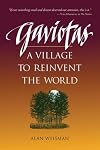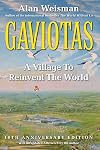
Gaviotas: A Village to Reinvent the World
by Alan Weisman
On This Page
Description
Los Llanos--the rain-leached, eastern savannas of war-ravaged Colombia--are among the most brutal environments on Earth and an unlikely setting for one of the most hopeful environmental stories ever told. Here, in the late 1960s, a young Colombian development worker named Paolo Lugari wondered if the nearly uninhabited, infertile llanos could be made livable for his country's growing population. He had no idea that nearly four decades later, his experiment would be one of the world's most show more celebrated examples of sustainable living: a permanent village called Gaviotas. In the absence of infrastructure, the first Gaviotans invented wind turbines to convert mild breezes into energy, hand pumps capable of tapping deep sources of water, and solar collectors efficient enough to heat and even sterilize drinking water under perennially cloudy llano skies. Over time, the Gaviotans' experimentation has even restored an ecosystem: in the shelter of two million Caribbean pines planted as a source of renewable commercial resin, a primordial rain forest that once covered the llanos is unexpectedly reestablishing itself. Colombian author Gabriel García Márquez has called Paolo Lugari "Inventor of the World." Lugari himself has said that Gaviotas is not a utopia: "Utopia literally means 'no place.' We call Gaviotas a topia, because it's real." Relive their story with this special 10th-anniversary edition of Gaviotas, complete with a new afterword by the author describing how Gaviotas has survived and progressed over the past decade. show lessTags
Recommendations












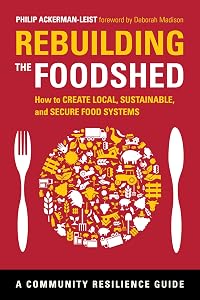
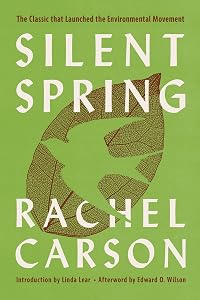
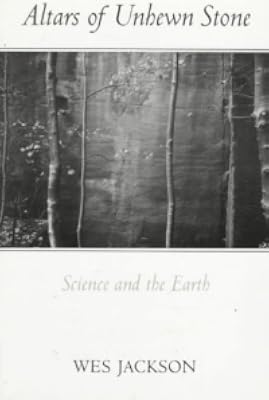
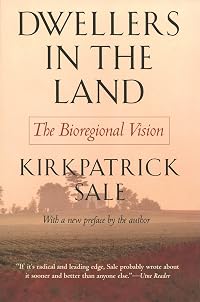





Member Recommendations
Member Reviews
Gaviotas is a village in Columbia, established in 1971 with the vision of establishing a self-sufficient community in the harshest environment in that country. The closing sentence (of the Acknowledgments) explains why I loved this book: "...the only job worth doing is making our dreams come true." That goal is what leads me to change jobs so often and to live rurally in relative simplicity. I loved reading about the ingenious solutions created by Gaviotas: the bicycle powered casava grinder, the seesaw water pumps, buldings designed to cool from the gentle variable breezes of the savanna. I praise Gaviotans for their humanitarian efforts.
One chapter near the beginning focuses on Columbia's political history--particularly relevant show more because of violence by guerillas and paramilitary is an ever-present factor in relationships outside of Gaviotas itself, and because of the support given by one president.
This book is only loosely linear. However as Pepe Gomez learned "Life is not just a linear experience" (p. 143) Each time a new person was brought into the story, there was some backtracking to cover that person's connections and role in the community's development.
I do wish Weisman had put more focus on HOW Gaviotas developed its unique governance system, where everyone has a say in decisions that affect them, and where are empowered to make positive changes. Also, there is little said about the lives of the women in the community--understandable, perhaps, for a documentary written by a man. We do hear of some women who were influential in the community, and we are also told of years when Gaviotas was primarily composed of bachelors and some wives in the beginning who left because they couldn't tolerate the situation. It isn't until sometime in the 1990's that the men of the community took over women's work for a day and realized that the kitchens lacked many conveniences and ergonomic improvements that had been implemented in the male work sphere (p.211).
I recommend this book to anyone who wonders how our world is ever going to make it thru the impending hard times.
2011 review
ETA responding to reader question:
The book didn't really enumerate where people were from. There seemed to be 2 types of people: The "engineers" who started it (mostly from wealthy educated families), and local Columbians (including Guahibo tribal members) who worked there. Both appeared to have a say in the governance & input in inventions/designs. Paolo Lugari, who was the main driving force, was born in Columbia with an Italian father. Sven Zethelius was born in Columbia to a Swedish ambassador father. Lugari invited all kinds of people out, seemingly based on their special creativity rather than their nationality, so it did also attract people from all over but not everyone enjoys the tropical climate. When the economy went bad, people who had ties elsewhere tended to leave. show less
One chapter near the beginning focuses on Columbia's political history--particularly relevant show more because of violence by guerillas and paramilitary is an ever-present factor in relationships outside of Gaviotas itself, and because of the support given by one president.
This book is only loosely linear. However as Pepe Gomez learned "Life is not just a linear experience" (p. 143) Each time a new person was brought into the story, there was some backtracking to cover that person's connections and role in the community's development.
I do wish Weisman had put more focus on HOW Gaviotas developed its unique governance system, where everyone has a say in decisions that affect them, and where are empowered to make positive changes. Also, there is little said about the lives of the women in the community--understandable, perhaps, for a documentary written by a man. We do hear of some women who were influential in the community, and we are also told of years when Gaviotas was primarily composed of bachelors and some wives in the beginning who left because they couldn't tolerate the situation. It isn't until sometime in the 1990's that the men of the community took over women's work for a day and realized that the kitchens lacked many conveniences and ergonomic improvements that had been implemented in the male work sphere (p.211).
I recommend this book to anyone who wonders how our world is ever going to make it thru the impending hard times.
2011 review
ETA responding to reader question:
The book didn't really enumerate where people were from. There seemed to be 2 types of people: The "engineers" who started it (mostly from wealthy educated families), and local Columbians (including Guahibo tribal members) who worked there. Both appeared to have a say in the governance & input in inventions/designs. Paolo Lugari, who was the main driving force, was born in Columbia with an Italian father. Sven Zethelius was born in Columbia to a Swedish ambassador father. Lugari invited all kinds of people out, seemingly based on their special creativity rather than their nationality, so it did also attract people from all over but not everyone enjoys the tropical climate. When the economy went bad, people who had ties elsewhere tended to leave. show less
This is the book mentioned by webfarmer in ref. to Red Trueque and the Tomas in Argentina & the movie The Take (about the takeovers by factory workers of abandoned factories -poor translation...)
Read. Interesting
This is the book mentioned by webfarmer in ref. to Red Trueque and the Tomas in Argentina & the movie The Take (about the takeovers by factory workers of abandoned factories -poor translation...)
I enjoyed this book very much.
Ratings
Members
- Recently Added By
Author Information

7+ Works 7,151 Members
Alan Weisman is the author of several books, including The World Without Us, an international bestseller translated into thirty-four languages, a finalist for the National Book Critics Circle Award, and winner of the Wenjin Book Prize of the National Library of China. His reports have appeared in Harper's the New York Times Magazine, the Los show more Angeles Times Magazine, The Atlantic Discover, Vanity Fair, Wilson Quarterly, Mother Jones, and Orion, on NPR, and in The Best American Science Writing. A senior producer for Homelands Productions, he lives in western Massachusetts. show less
Awards and Honors
Awards
Common Knowledge
- Original publication date
- 1998
- People/Characters
- Paolo Lugari; Jorge Zapp; Belisario Betancur
- Important places
- Gaviotas, Columbia
- Dedication
- for Beckie
- First words
- Years before Belisario Betancur became president of Columbia and proceeded to startle his fractured nation by risking a fledgling peace with Marxist insurgents who, at that time, ruled more territory than the government; befo... (show all)re he filled the halls of state with works and recitals by Columbia's greatest painters, musicians, and poets, and invited the public in to see and hear; before he had the wizards from Gaviotas outfit the presidential mansion with their artful devices that coaxed the sun's bountiful energy through Bogota's dour skies--long before all that, he heard a story that he never forgot.
- Quotations
- There's nothing more unstable than trying to cling to stability
In Gaviotas, we don't cut the grass so that the flowers may bloom, that birds may find food, and that soils may defend themselves against erosion. - Last words
- (Click to show. Warning: May contain spoilers.)Later that night, with the full moon overhead like a crown, Juanita Eslava would enter the forest and add her own soprano voice, serenading the young trees that Gaviotas was nurturing, and the angels would answer, blessing this place.
(Click to show. Warning: May contain spoilers.)(Afterward) May we all journey there, again and again, to bring its promise home and spread it far. - Publisher's editor
- Schley, Jim
- Blurbers
- Nabhan, Gary Paul; Bowden, Charles; Alvarez, Julia; Hawken, Paul; Lugari, Paolo
Classifications
- Genres
- Nonfiction, Science & Nature, General Nonfiction, Anthropology, Economics
- DDC/MDS
- 338.9861 — Society, government, & culture Economics Production Economic Development And Growth South America Colombia; Ecuador; Panama; Panama Canal
- LCC
- GE160 .C7 .W45 — Geography, Anthropology and Recreation Environmental Sciences Environmental sciences
- BISAC
Statistics
- Members
- 332
- Popularity
- 95,337
- Reviews
- 5
- Rating
- (3.88)
- Languages
- English, German, Spanish
- Media
- Paper, Ebook
- ISBNs
- 8
- ASINs
- 6