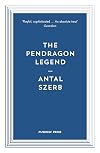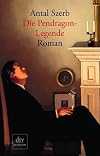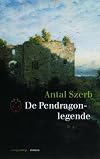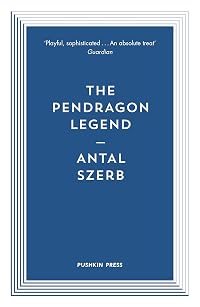
The Pendragon Legend
by Antal Szerb
On This Page
Description
At an end-of-the London season soiree, the young Hungarian scholar-dilettante Janos Batky is introduced to the Earl of Gwynedd, a reclusive eccentric who is the subject of strange rumours. Invited to the family seat, Pendragon Castle in North Wales, Batky receives a mysterious phone-call warning him not to go... Antal Szerb's first novel The Pendragon Legend (1934), set in Wales is a gently satirical blend of gothic and romantic genres, crossed with the murder mystery format to produce a show more fast-moving and often hilarious romp. But beneath the surface, the reader becomes aware of a steely intelligence probing moral, psychological and religious questions. show lessTags
Recommendations











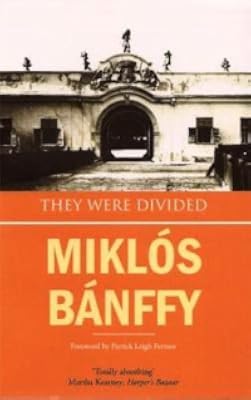
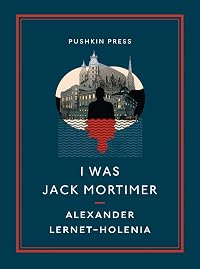
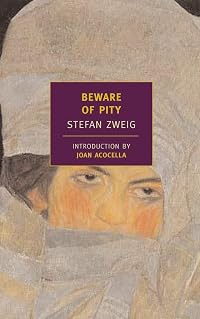


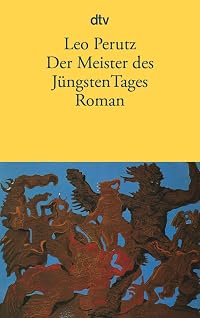






Member Recommendations

wandering_star Both these books are light, funny thrillers with amusingly eccentric casts.
Member Reviews
This novel was the slightly frivolous by-product of a year Szerb spent doing research in Britain for his work on literary history. It's a bizarre and very entertaining pastiche of half a dozen genres of popular literature, especially gothic novels, murder mysteries and John Buchan/Dornford Yates thrillers.
The narrator, János Bákty, is a Hungarian scholar, working on 17th century English mystics in the British Museum Reading Room and a little bit less wise in the ways of the world than he thinks he is, who accidentally gets an introduction to the reclusive Earl of Gwynedd, and is invited to come and have a look at some interesting books in the library at Pendragon Castle.
As is only right and proper, he gets an anonymous phone call show more warning him not to go, and shortly before setting off for Wales he meets a Suspiciously Friendly Stranger and a Femme Fatale who both happen to be heading that way as well. Evidently he has unwittingly got mixed up in something dangerous...
Things continue with strange occurrences in the middle of the night, ghostly horsemen, stolen manuscripts, secret passages, Rosicrucians, desperate dashes over the mountains in bad weather, a kidnapping, the narrator failing to spot glaringly obvious clues, sexual temptation, and in short just about everything you would want from an adventure story (apart from a proper car chase, perhaps).
There are Dornford-Yates-like levels of crass sexism, but it's transparently there as a joke at the narrator's expense: ... no woman has ever yet taken an interest in an intellectual matter for its own sake. Either she wants to woo the man by a display of attention, or she is seeking to improve her mind, which is even worse. ... But the instant I gauged her true intellectual merit something was released inside me, and I became aware again of how young she was, and how lovely. I can never feel much attraction to a woman whom I consider clever—it feels too much like courting a man. But once I had realised she was just another sweet little gosling, I began to woo her in earnest.
I particularly enjoyed the beefy German woman-of-action, Lene, an Oxford undergraduate who uses Emil und die Detektive as a practical guide to detective work, and has set herself the apparently impossible task of getting an effete upper-class Englishman to have sex with her. (Ultra-violence turns out to be the answer...)
There are all sorts of scholarly allusions and obscure jokes, as you would expect. I was a bit puzzled by the name of the village where Pendragon Castle is situated, Llanvygan. As there's no "v" in the Welsh alphabet, I was starting to suspect that it must be some kind of Hungarian counterpart to Llareggub. But Googling it turns up someone who speculates that it might be meant as an archaic spelling of "Llanfeugan", which would be the church of St Meugan, an early British saint of dubious authenticity sometimes said to have Arthurian connections. However, for the same money you could go further: Wikipedia suggests that variant spellings of Meugan include Mawgan and Machan. Could this be a jokey reference to Arthur Machen buried so deep that only a philologist could find it? Nothing I've learnt about Szerb could rule that sort of thing out...
Great fun, and it does make you think a bit about some of the conventions of sensational fiction. show less
The narrator, János Bákty, is a Hungarian scholar, working on 17th century English mystics in the British Museum Reading Room and a little bit less wise in the ways of the world than he thinks he is, who accidentally gets an introduction to the reclusive Earl of Gwynedd, and is invited to come and have a look at some interesting books in the library at Pendragon Castle.
As is only right and proper, he gets an anonymous phone call show more warning him not to go, and shortly before setting off for Wales he meets a Suspiciously Friendly Stranger and a Femme Fatale who both happen to be heading that way as well. Evidently he has unwittingly got mixed up in something dangerous...
Things continue with strange occurrences in the middle of the night, ghostly horsemen, stolen manuscripts, secret passages, Rosicrucians, desperate dashes over the mountains in bad weather, a kidnapping, the narrator failing to spot glaringly obvious clues, sexual temptation, and in short just about everything you would want from an adventure story (apart from a proper car chase, perhaps).
There are Dornford-Yates-like levels of crass sexism, but it's transparently there as a joke at the narrator's expense: ... no woman has ever yet taken an interest in an intellectual matter for its own sake. Either she wants to woo the man by a display of attention, or she is seeking to improve her mind, which is even worse. ... But the instant I gauged her true intellectual merit something was released inside me, and I became aware again of how young she was, and how lovely. I can never feel much attraction to a woman whom I consider clever—it feels too much like courting a man. But once I had realised she was just another sweet little gosling, I began to woo her in earnest.
I particularly enjoyed the beefy German woman-of-action, Lene, an Oxford undergraduate who uses Emil und die Detektive as a practical guide to detective work, and has set herself the apparently impossible task of getting an effete upper-class Englishman to have sex with her. (Ultra-violence turns out to be the answer...)
There are all sorts of scholarly allusions and obscure jokes, as you would expect. I was a bit puzzled by the name of the village where Pendragon Castle is situated, Llanvygan. As there's no "v" in the Welsh alphabet, I was starting to suspect that it must be some kind of Hungarian counterpart to Llareggub. But Googling it turns up someone who speculates that it might be meant as an archaic spelling of "Llanfeugan", which would be the church of St Meugan, an early British saint of dubious authenticity sometimes said to have Arthurian connections. However, for the same money you could go further: Wikipedia suggests that variant spellings of Meugan include Mawgan and Machan. Could this be a jokey reference to Arthur Machen buried so deep that only a philologist could find it? Nothing I've learnt about Szerb could rule that sort of thing out...
Great fun, and it does make you think a bit about some of the conventions of sensational fiction. show less
Whatever I had expected of this book, they did not come true at all because this book turned out to be the most unpredictable read of 2020 so far.
In a way, this book was a bit like going for a walk in the hills and suddenly being slapped across the head by a fish falling from the skies. And in a way, that also describes 2020 so far. So, it's been a timely read.
In all seriousness, Antal Szerb was having fun here in this collage of all the genres that I can only describe as a satire of all of the popular fiction that had been written up to the book's date of publication...and somehow preempting Scooby Doo, Indiana Jones, The Da Vinci Code, and I am sure some "rad" 70s fiction that I am glad I have not discovered, yet.
We get a scholarly show more MC, who ends up banding with a motley crew on the way to a Welsh castle, which may or may not be haunted, to visit an aristocrat, who may or may not also be an evil practitioner of the occult ... or a version of Dr. Frankenstein ... one can't be too sure.
We also have weird prophets, superstitious priests, potential human sacrifice, a whole lot of atmospheric fog that appears just at the most thrilling moments. We have Englishmen with upper lips so stiff that it takes a whole lot of questionable femininity to make them wobble, and we have an Earl's daughter, who spoils the usual script of a murder mystery that ends in falling for the crime-solving hero.
This was a romp. It was fun, but for crying out loud, don't ask me what I've just read.
"I was back in my historic bed (Queen Anne, I believe). With time, this room had come to seem like home. A not entirely restful home. Somewhere above my head the giant axolotls swam. A few yards from my window stood the balconyMaloney had fallen from. And there was the vivid memory of the night rider circling the house with his flaming torch. It was home to me, as a trench would be to a soldier. I pulled my head down under the blanket." show less
In a way, this book was a bit like going for a walk in the hills and suddenly being slapped across the head by a fish falling from the skies. And in a way, that also describes 2020 so far. So, it's been a timely read.
In all seriousness, Antal Szerb was having fun here in this collage of all the genres that I can only describe as a satire of all of the popular fiction that had been written up to the book's date of publication...and somehow preempting Scooby Doo, Indiana Jones, The Da Vinci Code, and I am sure some "rad" 70s fiction that I am glad I have not discovered, yet.
We get a scholarly show more MC, who ends up banding with a motley crew on the way to a Welsh castle, which may or may not be haunted, to visit an aristocrat, who may or may not also be an evil practitioner of the occult ... or a version of Dr. Frankenstein ... one can't be too sure.
We also have weird prophets, superstitious priests, potential human sacrifice, a whole lot of atmospheric fog that appears just at the most thrilling moments. We have Englishmen with upper lips so stiff that it takes a whole lot of questionable femininity to make them wobble, and we have an Earl's daughter, who spoils the usual script of a murder mystery that ends in falling for the crime-solving hero.
This was a romp. It was fun, but for crying out loud, don't ask me what I've just read.
"I was back in my historic bed (Queen Anne, I believe). With time, this room had come to seem like home. A not entirely restful home. Somewhere above my head the giant axolotls swam. A few yards from my window stood the balcony
Fantástico libro el escrito por el húngaro Antal Szerb. ‘La leyenda de los Pendragon (A Pendragon Legenda, 1934)’ es una historia que transcurre sin freno; está escrita de tal modo que prácticamente te la leerías de una sentada. Nuestro protagonista y narrador es el joven filólogo húngaro János Bátky, que durante una fiesta de sociedad a la que es invitado entra en contacto con el conde de Gwynedd. Este le invita a visitar su castillo, el legendario Llanvygan, a estudiar a sus ancestros, los Pendragon. Y es aquí donde empieza el locurón, con herencias, intentos de asesinato, esoterismo, rosacruces, ladrones, mujeres fatales, experimentos con anfibios, y lo mejor, unos secundarios maravillosos, así como el sentido del show more humor del autor. show less
What a delight this book was - so much so that as soon as I finished it, I wanted to start at the beginning again. János Bátky is a young Doctor of Philosophy who specialises "in useless information, with a particular interest in things a normal person would never consider important", with an emphasis on the English mystics of the seventeenth century. He assists "elderly Englishmen in the pursuit of their intellectual whims". So while attending Lady Malmsbury-Croft's soirée, where he meets Owen Pendragon, Earl of Gwynedd, it seems natural that a shared interest in this esoteric subject would result in an invitation to Llanyvgan Castle. Anything but natural, gentle reader, anything but.
So begins a romp through a book which has as a show more cast a virtually illiterate but agile rock climber from Connemara, Maloney; the intellectual but strangely asexual nephew of the Earl, Osborne Pendragon, and his beautiful if disingenuous sister, Cynthia Pendragon; a strange siren of a woman, Mrs. Eileen St. Claire/Roscoe; an omnivorous German athlete with a degree in Economics, Lene; a dark cloaked giant horseman with a torch; and a supporting cast of a village madman, castle servants, the requisite tormented vicar and a handful of ghosts out of the murk of history. Add a soupcon of sex, a few sly pokes at this or that -ism or -osm, and you have a book to be read at a gulp.
Young János soon learns that he will need not only all of his learning but all of his wits too, as he is thrown into a world involving the ancient search of the Rosicrucians for the alchemical secret which will restore a body out of death, books and documents so old and rare that only a few can read them, skullduggery, incalculable sums of money and murder. This is intelligent writing full of casual references to everything from Shakespeare's pentameters to Welsh mythology. Szerb takes hilarious pot shots at the 30s fascination with the study of the occult and the book is rich with one liners which kept putting a goofy grin on this reader's face: "My God," I interrupted, "It isn't just the Welsh...it's hard for anyone to believe that a person simply dies.". As readers we realise that we are being treated to that delicious combination of a satirical sense of humour combined with a rare and fine intelligence, with the odd brilliant moment of psychological insight just for fun. Not high art but worth every minute spent reading it.
In the endnotes I read that Szerb was "gathering material for his ground-breaking "Histories of English Literature and World Literature", that by 1934 he was "Hungary's most respected writer: a small, shy, loveable man noted for his unfailing kindness and vast erudition, sweetened by an ever-playful wit". Antal Szerb died in a labour camp in 1945 because, despite being a Catholic, he had Jewish origins and was a committed anti-fascist. What a bitter loss.
Recommended. show less
So begins a romp through a book which has as a show more cast a virtually illiterate but agile rock climber from Connemara, Maloney; the intellectual but strangely asexual nephew of the Earl, Osborne Pendragon, and his beautiful if disingenuous sister, Cynthia Pendragon; a strange siren of a woman, Mrs. Eileen St. Claire/Roscoe; an omnivorous German athlete with a degree in Economics, Lene; a dark cloaked giant horseman with a torch; and a supporting cast of a village madman, castle servants, the requisite tormented vicar and a handful of ghosts out of the murk of history. Add a soupcon of sex, a few sly pokes at this or that -ism or -osm, and you have a book to be read at a gulp.
Young János soon learns that he will need not only all of his learning but all of his wits too, as he is thrown into a world involving the ancient search of the Rosicrucians for the alchemical secret which will restore a body out of death, books and documents so old and rare that only a few can read them, skullduggery, incalculable sums of money and murder. This is intelligent writing full of casual references to everything from Shakespeare's pentameters to Welsh mythology. Szerb takes hilarious pot shots at the 30s fascination with the study of the occult and the book is rich with one liners which kept putting a goofy grin on this reader's face: "My God," I interrupted, "It isn't just the Welsh...it's hard for anyone to believe that a person simply dies.". As readers we realise that we are being treated to that delicious combination of a satirical sense of humour combined with a rare and fine intelligence, with the odd brilliant moment of psychological insight just for fun. Not high art but worth every minute spent reading it.
In the endnotes I read that Szerb was "gathering material for his ground-breaking "Histories of English Literature and World Literature", that by 1934 he was "Hungary's most respected writer: a small, shy, loveable man noted for his unfailing kindness and vast erudition, sweetened by an ever-playful wit". Antal Szerb died in a labour camp in 1945 because, despite being a Catholic, he had Jewish origins and was a committed anti-fascist. What a bitter loss.
Recommended. show less
Amusing and ironic inter-war Hungarian take on occult themes - post-modern well before its time. Not quite a master piece but very interesting with some affectionate insights on how others saw the British - their class system, their literature, their national character, their empire and their 'stiff upper lip'.
Szerb has been re-introduced to London by Pushkin Press and this is recommended as a pleasant amusing read that is a cut above the conspiracy schlock that has appeared in the wake of the Da Vinci Code. It is sad to note that he died in a labour camp in 1945 and the witty irony of this book shows that a man who could laugh at himself and create a nice anti-hero also died that day
Szerb has been re-introduced to London by Pushkin Press and this is recommended as a pleasant amusing read that is a cut above the conspiracy schlock that has appeared in the wake of the Da Vinci Code. It is sad to note that he died in a labour camp in 1945 and the witty irony of this book shows that a man who could laugh at himself and create a nice anti-hero also died that day
An entertaining gothic farce, in which Hungarian academic Janos Batky becomes embroiled in the academic and supernatural interests of the ancient Pendragon family of Gwynedd. Deftly told with self-effacing humour, the novel takes pots shots at the aristocracy, social climbing industrialists, academic snobs, superstitious villagers and supernatural afficionados without pausing for breath, with the narrator remaining largely believable (if not particularly likeable!) in his quest to survive the attentions of murderous fortune-hunters and mysterious alchemists.
Szerb must have had a lot of fun writing this book, because I had a lot of fun reading it! It combines murder and mystery, the lure of old books, conflicts over legacies, the occult, the wilds of Wales, and engaging characters, while at the same time satirizing all of the above.
János Bákty, a young Hungarian toiling away at the British Library, not unlike Szerb himself, first encounters the Earl of Pendragon at a party he almost didn't attend. The beneficiary of a small inheritance, Bákty devotes his energy to helping "elderly English gentlemen in the pursuit of their intellectual whims." Thus, at the time he meets the Earl, he is already immersed in the study of 17th century English mystics, especially Fludd, a subject that turns show more out to be of deep personal interest to the Earl, who promptly invites Bákty to Pendragon.
Before Bákty travels there, he not only learns more about the legends of Pendragon (including previous earls deeply engaged in Rosicrucianism, a mysterious midnight horseman who exacts vengeance/justice, and an abandoned castle) but also accidentally (?) meets a wildly adventurous but apparently ignorant man named Maloney who, it seems, is great friends with the earl's nephew Osborne, and they are planning to go to Pendragon themselves. Before they can all go, Bákty receives a mysterious phone call warning him to stay away and encounters an alluring woman who gives him a ring to give to the Earl but makes him promise not to say who gave it to him.
Then the three young men travel to Pendragon, where Bákty meets Osborne's sister Cynthia and encounters various strange household servants. It would be an understatement to say that complications ensue: scary and mysterious night-time sounds, missing bullets from a gun, and an apparent madman in the neighboring village are only the beginning of a tale that includes the all-too-real as well as the supernatural and esoteric. "Here at last was the great and terrible adventure my anxieties had been leading me towards for ten long years," Bákty thinks.
Bákty is an endearing character, in part because the reader is able to sense that the may, at times, be a little too trusting (although he occasionally has a glimmer of unease). At one point he thinks, "it almost hurt to think how stupid I had been, how helpless and utterly, utterly stupid." Bákty's love of scholarship is contagious:
"It seemed as if I had only to open a door to see directly into the era of Asaph Pendragon. Every now and then I was overwhelmed by a strange, disconcerting happiness. I felt preternaturally old, a relic from the age of folios staring out in astonishment at the mankind of today." p. 101
And as the saga ends, he has actually learned something:
"I'm saying nothing, Lene. I can't. There are some things that have an inner truth, but become nonsense when spoken. It just isn't possible to explain . . .We live simultaneously in two worlds, and there are two levels of meaning. One can be understood by everyone, the other is beyond words and is utterly horrible." p. 302
But Bákty is far from the only delightful character in this book (including the delightfully evil ones). While the Earl remains somewhat mysterious, most of the other characters are fascinating including, in addition to those already mentioned, a stalwart and sexually advance young German woman (the Lene Bákty addresses above). And the rugged Welsh landscape is itself a character. In addition, Szerb has a wonderful sense of pacing: I found it difficult to put this book down. I will definitely continue to read more of Szerb. show less
János Bákty, a young Hungarian toiling away at the British Library, not unlike Szerb himself, first encounters the Earl of Pendragon at a party he almost didn't attend. The beneficiary of a small inheritance, Bákty devotes his energy to helping "elderly English gentlemen in the pursuit of their intellectual whims." Thus, at the time he meets the Earl, he is already immersed in the study of 17th century English mystics, especially Fludd, a subject that turns show more out to be of deep personal interest to the Earl, who promptly invites Bákty to Pendragon.
Before Bákty travels there, he not only learns more about the legends of Pendragon (including previous earls deeply engaged in Rosicrucianism, a mysterious midnight horseman who exacts vengeance/justice, and an abandoned castle) but also accidentally (?) meets a wildly adventurous but apparently ignorant man named Maloney who, it seems, is great friends with the earl's nephew Osborne, and they are planning to go to Pendragon themselves. Before they can all go, Bákty receives a mysterious phone call warning him to stay away and encounters an alluring woman who gives him a ring to give to the Earl but makes him promise not to say who gave it to him.
Then the three young men travel to Pendragon, where Bákty meets Osborne's sister Cynthia and encounters various strange household servants. It would be an understatement to say that complications ensue: scary and mysterious night-time sounds, missing bullets from a gun, and an apparent madman in the neighboring village are only the beginning of a tale that includes the all-too-real as well as the supernatural and esoteric. "Here at last was the great and terrible adventure my anxieties had been leading me towards for ten long years," Bákty thinks.
Bákty is an endearing character, in part because the reader is able to sense that the may, at times, be a little too trusting (although he occasionally has a glimmer of unease). At one point he thinks, "it almost hurt to think how stupid I had been, how helpless and utterly, utterly stupid." Bákty's love of scholarship is contagious:
"It seemed as if I had only to open a door to see directly into the era of Asaph Pendragon. Every now and then I was overwhelmed by a strange, disconcerting happiness. I felt preternaturally old, a relic from the age of folios staring out in astonishment at the mankind of today." p. 101
And as the saga ends, he has actually learned something:
"I'm saying nothing, Lene. I can't. There are some things that have an inner truth, but become nonsense when spoken. It just isn't possible to explain . . .We live simultaneously in two worlds, and there are two levels of meaning. One can be understood by everyone, the other is beyond words and is utterly horrible." p. 302
But Bákty is far from the only delightful character in this book (including the delightfully evil ones). While the Earl remains somewhat mysterious, most of the other characters are fascinating including, in addition to those already mentioned, a stalwart and sexually advance young German woman (the Lene Bákty addresses above). And the rugged Welsh landscape is itself a character. In addition, Szerb has a wonderful sense of pacing: I found it difficult to put this book down. I will definitely continue to read more of Szerb. show less
Members
- Recently Added By
Lists

Modern Arthurian Fiction
237 works; 16 members

Best Mysteries With a Historical Setting
292 works; 160 members

Books We Discovered On LibraryThing
530 works; 130 members
Author Information

28+ Works 2,498 Members
Some Editions
Awards and Honors
Notable Lists
Series
Belongs to Publisher Series
dtv premium (24425)
Common Knowledge
- Canonical title
- The Pendragon Legend
- Original title
- A Pendragon legenda; A Pendragon Legenda
- Original publication date
- 1934
- People/Characters
- Owen Pendragon; Janos Bátky
- Important places
- Wales, UK; Gwynedd, Wales, UK
- Epigraph
- Surely thine hour has come, thy great wind blows,
Far off, most secret, and inviolate Rose?
The Wind Among the Reeds, W. B. Yeats 1899 - First words
- "My way is to begin at the beginning" said Lord Byron, who knew his way around polite society.
- Last words*
- (Click to show. Warning: May contain spoilers.)Schreiben Sie
Ihrer
Cynthia Pendragon - Blurbers
- Bailey, Paul
- Original language
- Hungarian
*Some information comes from Common Knowledge in other languages. Click "Edit" for more information.
Classifications
Statistics
- Members
- 580
- Popularity
- 50,867
- Reviews
- 15
- Rating
- (3.82)
- Languages
- 11 — Czech, Dutch, English, Finnish, French, German, Hungarian, Italian, Polish, Spanish, Swedish
- Media
- Paper, Ebook
- ISBNs
- 34
- ASINs
- 6