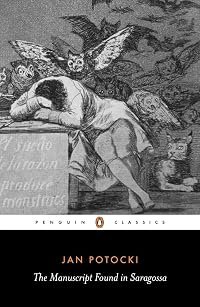
The Manuscript Found in Saragossa
by Jan Potocki
On This Page
Description
Alphonse, a young Walloon officer, is travelling to join his regiment in Madrid in 1739. But he soon finds himself mysteriously detained at a highway inn in the strange and varied company of thieves, brigands, cabbalists, noblemen, coquettes and gypsies, whose stories he records over sixty-six days. The resulting manuscript is discovered some forty years later in a sealed casket, from which tales of characters transformed through disguise, magic and illusion, of honour and cowardice, of show more hauntings and seductions, leap forth to create a vibrant polyphony of human voices. Jan Potocki (1761-1812) used a range of literary styles - gothic, picaresque, adventure, pastoral, erotica - in his novel of stories-within-stories, which, like the Decameron and Tales from the Thousand and One Nights, provides entertainment on an epic scale. show lessTags
Recommendations


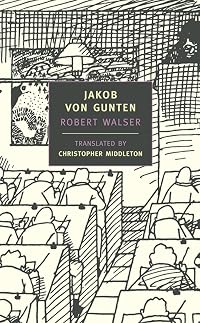
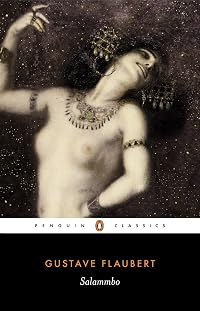
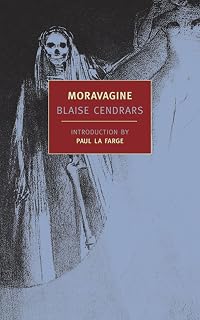


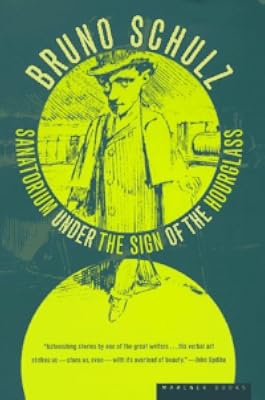






Member Recommendations
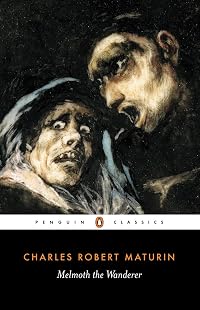
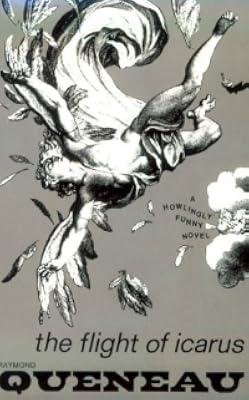
slickdpdx Another extraordinary frame story. Whereas Saragossa is like a string of beads, Melmoth is like a Russian doll. Maturin takes you down eight frames (story within a story within a story within a story within a story within a story etc. etc. etc.) before resurfacing.
20
bezoar44 I personally liked the Manuscript Found in Saragossa, and not the Illuminatus! Trilogy, but they shared a skewed, surreal aesthetic and a fascination with conspiracies.

Member Reviews
Opening the Goodreads app the other day I was served this quotation from Jonathan Safran Foer: "my life story is the story of everyone I've ever met." I think that's about as good an encapsulation of this unruly, beguiling novel as you could wish for. Everyone's story is everyone else's story; everything is linked; identity is defined in relation to others, if not exclusively by others. If this sounds confusing, it is. Velasquez, the eccentric geometer, surely speaks for every reader of The Manuscript Found in Saragossa when he complains "I have tried in vain to concentrate all my attention on the Gypsy Chief's words but I am unable to discover any coherence whatsoever in them. I do not know who is speaking and who is listening." I've show more read the book three times now, and the incoherence is only very slightly less.
But as Pynchon said, "why should things be easy to understand?" I love this novel because, like Pynchon's novels, it takes the world's incomprehensible profusion head-on and doesn't try to make a morsel of it. Other frame stories like the Thousand and One Nights and the Canterbury Tales use their frames like picture frames, as containers for art, or, like Frankenstein and Wuthering Heights, as literary devices to situate the story in relation to the reader. But Manuscript is different: the frame is an integral part of the art; or rather, the art and the frame are one and the same. The principal raconteur of this frame-story par excellence, and the closest thing it has to a focal point, is the protean Pandesowna aka Avadoro aka the Gypsy Chief ("in changing my name I had also changed my outward appearance"). As a child he almost drowns in a cauldron of ink: pace Obelix and Achilles, the perfect superhero origin story for a super-fabulist. And as a self-designated "gypsy", he's compelled to wander, to defer conclusion, like his own wandering narratives and, of course, the Wandering Jew who tags along intermittently with our merry, motley crew.
"My life story". Life is a story, and its characters are as real as we are. But how real are we? Except for a couple of stand-alone tales near the beginning, from a book in Alphonse's father's library (and somehow like an orchestra tuning up), every story here is the story of a life, told by a character in someone else's story. Characters from one person's story show up in another's reality, because that reality is itself a story. No story exists in isolation. Manuscript emphasies stories as things that are told — it's always relevant who's telling the story; every tale is a performance. Which means there's no doctrinal form, that they might vary in a retelling, to a different audience, in a different place. "Perhaps" says the Gypsy Chief when Alphonse points out that a story he (the Chief) once heard closely resembles one Alphonse read in a book, "Romati took his story from that book. He may have made it up. But what is certain is [...] it's not important whether a story is true or not."
The nesting is obsessive, demented, dizzyingly deep. But it's the only way: stories need to work backwards in time, because a conventional forward-moving narrative doesn't really explain why things are happening. It's the unanswerable why of the annoying brat, but if its reiteration is confounding, that's because things are confounding. The perceptive Velasquez again: "all the gypsy's stories begin in a simple enough way and you think you can already predict the end. But things turn out quite differently." Or as his crush, the witty Rebecca, says, "continual surprises don't keep one's interest in the story alive. One can never foresee what will happen subsequently." In other words, one has to go back. All stories are retrospective, branching, inconclusive. The book is full of subterranean scenes, and reading Manuscript, pushing through the nested narratives, is like tunnelling (some might say boring) down through layers of reality in search of some elusive foundation or point of origin.
The book is full of seductions, physical and spiritual, and one of its motifs is the tension between the absurd code of honour Alphonse inherits from his father and the temptations of his Moorish (and very moreish) cousins Emina and Zubeida. But as they wander the enchanted landscape of the Sierra Morena, all the "first level" characters are seduced by stories, frustrated, like Shahriyar in the Arabian Nights, by the nightly deferrals. Rebecca's rather stuck-up brother Uzeda expresses the plenipotent nature of narrative when he explains the Kabbalah: "words strike the air and the mind, they act on the senses and on the soul [...] they are the true intermediaries between matter and every order of intelligence." Hervas the obsessional scholar dedicates the very first volume of his 100-vol. universal encyclopedia to grammar. It's as though stories are an intoxicating, seducing compound from which the characters are trying to extract the active ingredient — but like bees around some stupefying flower, or Pandesowna with the tintero largo, end up losing themselves in their obsession.
Many kinds of obsession are on display, to the extent that Manuscript becomes a kind of democracy of the deranged. Alphonse's duel-obsessed dad; the crazed polymath Hervas; the Kabbalist siblings raised by an equally unhinged father; Pacheco the demoniac whose three speeches are bracketed by, in order, a terrible cry, a ghastly howl, a terrible cry, a ghastly howl, a long wail, and a terrible howl; Pandesowna's ink-addled progenitor (fathers seem to be another theme...) But all these lunatics (even the quidnunc Busqueros, as close to a villain as the book contains) are sympathetic to some degree, perhaps because their craziness is a reaction to a crazy world of conspiracies and ramified connections. It isn't paranoia if they really are out to get you — and the Inquisition really was out to get you. Persecution induces dissembling, secret societies, "occult" (in the sense of hidden as well as woo) activity, fiction in general — story as distraction or deception. Manuscript also tracks the revolutionary spore that was in the air of its 18th century setting, and had bloodily fruited in America and France by the time of the novel's publication. The nobility among whom most of the stories are set is deeply incestuous (perhaps even more so than the narrative with its overlapping plots), as if turning in on itself in anticipation of the coming social changes. So they're another kind of secret society. Not to mention Potocki's own rumoured incest (Potocki's life is arguably the real frame for the Manuscript).
All this blather, though, risks obscuring what I love most about this shaggiest of dog stories: its zest for life, for the experience of being in the world. It's just such a big beating heart of a book. Alphonse sums it up to himself one morning:
I was awoken just after dawn by the chirping of the cicadas, which is particularly lively and cheerful in Andalusia. I had become sensitive to the beauties of nature. I left my tent to see the effect of the first rays of sun on the vast horizon. My thoughts turned to Rebecca. 'She is right,' I said to myself, 'to prefer the concrete joys of this mortal life to idle speculation about an ideal world to which we shall all sooner or later belong. Does not this world offer us physical sensations and pleasurable impressions in enough variety to occupy us during the time of our short life?'
This gentle mockery of Enlightenment rationalism and concomittant pleasure in the physical world pops up again and again. Sometimes it's the recusant Rebecca, freed from the tedious abstractions of the Kabbalah, poking fun at the various monomaniacs around her, like Alphonse's dad ("if your father hadn't duelled with eleven officers a quarrel might well have arisen. This he did very well to avoid"); or there are Potocki's frequent digs at Velasquez's naive scientism, like the scene where the combined charms of Antonia and Marita fail to penetrate his primes and logarithms. Scholastics, says Hervas, is "the art of conducting a proof completely independently of common sense." As for the Church, it's even more useless at explaining things, figuring as a morbid instrument of chastisement, sunderer of lovers, and general fun-sponge (from Romati's story: "I am so far from superstition and credulity that theology is perhaps the only branch of knowledge that I have consistently neglected"). Understanding comes, if it comes at all, through companionship, shared experience, shared wanderings, and stories that stave off dreariness and maybe, as for Scheherazade, death. Maybe, after all the stories, we're no wiser than when we started (despite Potocki's bow-tied conclusion), but that's absolutely okay with me. Maybe by my tenth read-through I'll even figure out what the hell is going on. show less
But as Pynchon said, "why should things be easy to understand?" I love this novel because, like Pynchon's novels, it takes the world's incomprehensible profusion head-on and doesn't try to make a morsel of it. Other frame stories like the Thousand and One Nights and the Canterbury Tales use their frames like picture frames, as containers for art, or, like Frankenstein and Wuthering Heights, as literary devices to situate the story in relation to the reader. But Manuscript is different: the frame is an integral part of the art; or rather, the art and the frame are one and the same. The principal raconteur of this frame-story par excellence, and the closest thing it has to a focal point, is the protean Pandesowna aka Avadoro aka the Gypsy Chief ("in changing my name I had also changed my outward appearance"). As a child he almost drowns in a cauldron of ink: pace Obelix and Achilles, the perfect superhero origin story for a super-fabulist. And as a self-designated "gypsy", he's compelled to wander, to defer conclusion, like his own wandering narratives and, of course, the Wandering Jew who tags along intermittently with our merry, motley crew.
"My life story". Life is a story, and its characters are as real as we are. But how real are we? Except for a couple of stand-alone tales near the beginning, from a book in Alphonse's father's library (and somehow like an orchestra tuning up), every story here is the story of a life, told by a character in someone else's story. Characters from one person's story show up in another's reality, because that reality is itself a story. No story exists in isolation. Manuscript emphasies stories as things that are told — it's always relevant who's telling the story; every tale is a performance. Which means there's no doctrinal form, that they might vary in a retelling, to a different audience, in a different place. "Perhaps" says the Gypsy Chief when Alphonse points out that a story he (the Chief) once heard closely resembles one Alphonse read in a book, "Romati took his story from that book. He may have made it up. But what is certain is [...] it's not important whether a story is true or not."
The nesting is obsessive, demented, dizzyingly deep. But it's the only way: stories need to work backwards in time, because a conventional forward-moving narrative doesn't really explain why things are happening. It's the unanswerable why of the annoying brat, but if its reiteration is confounding, that's because things are confounding. The perceptive Velasquez again: "all the gypsy's stories begin in a simple enough way and you think you can already predict the end. But things turn out quite differently." Or as his crush, the witty Rebecca, says, "continual surprises don't keep one's interest in the story alive. One can never foresee what will happen subsequently." In other words, one has to go back. All stories are retrospective, branching, inconclusive. The book is full of subterranean scenes, and reading Manuscript, pushing through the nested narratives, is like tunnelling (some might say boring) down through layers of reality in search of some elusive foundation or point of origin.
The book is full of seductions, physical and spiritual, and one of its motifs is the tension between the absurd code of honour Alphonse inherits from his father and the temptations of his Moorish (and very moreish) cousins Emina and Zubeida. But as they wander the enchanted landscape of the Sierra Morena, all the "first level" characters are seduced by stories, frustrated, like Shahriyar in the Arabian Nights, by the nightly deferrals. Rebecca's rather stuck-up brother Uzeda expresses the plenipotent nature of narrative when he explains the Kabbalah: "words strike the air and the mind, they act on the senses and on the soul [...] they are the true intermediaries between matter and every order of intelligence." Hervas the obsessional scholar dedicates the very first volume of his 100-vol. universal encyclopedia to grammar. It's as though stories are an intoxicating, seducing compound from which the characters are trying to extract the active ingredient — but like bees around some stupefying flower, or Pandesowna with the tintero largo, end up losing themselves in their obsession.
Many kinds of obsession are on display, to the extent that Manuscript becomes a kind of democracy of the deranged. Alphonse's duel-obsessed dad; the crazed polymath Hervas; the Kabbalist siblings raised by an equally unhinged father; Pacheco the demoniac whose three speeches are bracketed by, in order, a terrible cry, a ghastly howl, a terrible cry, a ghastly howl, a long wail, and a terrible howl; Pandesowna's ink-addled progenitor (fathers seem to be another theme...) But all these lunatics (even the quidnunc Busqueros, as close to a villain as the book contains) are sympathetic to some degree, perhaps because their craziness is a reaction to a crazy world of conspiracies and ramified connections. It isn't paranoia if they really are out to get you — and the Inquisition really was out to get you. Persecution induces dissembling, secret societies, "occult" (in the sense of hidden as well as woo) activity, fiction in general — story as distraction or deception. Manuscript also tracks the revolutionary spore that was in the air of its 18th century setting, and had bloodily fruited in America and France by the time of the novel's publication. The nobility among whom most of the stories are set is deeply incestuous (perhaps even more so than the narrative with its overlapping plots), as if turning in on itself in anticipation of the coming social changes. So they're another kind of secret society. Not to mention Potocki's own rumoured incest (Potocki's life is arguably the real frame for the Manuscript).
All this blather, though, risks obscuring what I love most about this shaggiest of dog stories: its zest for life, for the experience of being in the world. It's just such a big beating heart of a book. Alphonse sums it up to himself one morning:
I was awoken just after dawn by the chirping of the cicadas, which is particularly lively and cheerful in Andalusia. I had become sensitive to the beauties of nature. I left my tent to see the effect of the first rays of sun on the vast horizon. My thoughts turned to Rebecca. 'She is right,' I said to myself, 'to prefer the concrete joys of this mortal life to idle speculation about an ideal world to which we shall all sooner or later belong. Does not this world offer us physical sensations and pleasurable impressions in enough variety to occupy us during the time of our short life?'
This gentle mockery of Enlightenment rationalism and concomittant pleasure in the physical world pops up again and again. Sometimes it's the recusant Rebecca, freed from the tedious abstractions of the Kabbalah, poking fun at the various monomaniacs around her, like Alphonse's dad ("if your father hadn't duelled with eleven officers a quarrel might well have arisen. This he did very well to avoid"); or there are Potocki's frequent digs at Velasquez's naive scientism, like the scene where the combined charms of Antonia and Marita fail to penetrate his primes and logarithms. Scholastics, says Hervas, is "the art of conducting a proof completely independently of common sense." As for the Church, it's even more useless at explaining things, figuring as a morbid instrument of chastisement, sunderer of lovers, and general fun-sponge (from Romati's story: "I am so far from superstition and credulity that theology is perhaps the only branch of knowledge that I have consistently neglected"). Understanding comes, if it comes at all, through companionship, shared experience, shared wanderings, and stories that stave off dreariness and maybe, as for Scheherazade, death. Maybe, after all the stories, we're no wiser than when we started (despite Potocki's bow-tied conclusion), but that's absolutely okay with me. Maybe by my tenth read-through I'll even figure out what the hell is going on. show less
'The Manuscript Found in Saragossa' has been on my to-read list for at least a decade and I have no recollection of how it got there. I haven't come across any convenient library copies and most of those on eBay are heavily abridged. Finally I found an affordable second hand copy with all 600 pages. It was worth waiting for! What an absolutely delightful, hilarious, strange, philosophical, gothic novel. The labyrinthine narrative begins like this: a young Walloon officer named Alphonse is journeying across a Spanish desert. After losing his companions, he takes refuge in an empty inn. There he meets and is seduced by two mysterious and beautiful women who claim to be his cousins. He wakes up the next morning under a gallows, between the show more corpses of two bandits. Alphonse is understandably concerned that he may have had a threesome with ghosts, vampires, zombies, or demons. Pondering this mystery, he continues his journey and encounters a series of voluble personages who tell him their life stories.
These autobiographical tales invariably contain the stories of others nested within them, to the point that the reader gets three stories deep. The characters themselves comment on this and make suggestions like, "I have always thought that novels and other works of that kind should be written in several columns like chronological tables." It takes a skilled writer to make such an intricate structure work without completely confusing the reader. I admit that the novel is best read in large chunks so as to keep track of who is talking, but nonetheless found it easier to follow than expected simply because it's so entertaining. The stories involve all manner of amusing drama, including duels, war, banditry, thwarted love, cross-dressing, vengeance, secret marriages, and geometry. The characters all have distinctive and often hilariously deadpan voices, such as:
As the novel continues, the reader starts to see linkages between the stories and with Alphonse's strange experience. It's very satisfying to pull threads together and notice how stories overlap. As befits a novel of this length, there is a whole lot going on. I was fascinated by the clever and ambiguous combination of religious, supernatural, philosophical, and scientific themes, which evoke the Enlightenment better than any non-fiction I've read on the topic (which admittedly isn't much). The reader is treated to accounts from a cabbalist of his magical powers and a lecture from a geometer on how all human knowledge can be divided into subjects. Better still, these two characters discuss such topics with each other and other characters. Meanwhile, Alphonse puzzles as to whether he had a supernatural experience or was manipulated by humans for unknown reasons. The reader gets the sense of a world trying to reconcile old beliefs and new discoveries through dialogue. Potocki is a very funny writer, so everyone and everything is mocked at least a little. This manifests in farcical scenes of medical students pretending to be ghosts as they steal corpses from a graveyard for dissection, as well as discussions like this:
Potocki's comedy and melodrama are based upon great insight. For every amusing bit of byplay, there is a remarkable aside like this:
None of the tales have an obvious or heavy-handed moral message. Some end tragically, some happily, some ambiguously. Nobody is utterly villainous or utterly heroic, although Busqueros is utterly annoying. Nobody is a totally reliable narrator either. One character is, allegedly, the Wandering Jew of myth:
I've never read a novel quite like this one. The intricate structure conveys a wonderful sense of polyphony, diverse perspectives, curiosity, discovery, and demystification. The excitement of intellectual enquiry via debate is prominent amid the emotional turmoil of love, betrayal, and loss. On top of this, it manages to be both spicy and hilarious, a combination which very few novels achieve. The introduction also notes that the author and composition of the book were as mysterious as its content. Potocki had a tumultuous and exciting life, which undoubtedly informed the stories his characters tell. 'The Manuscript Found in Saragossa' was apparently written some time between the 1790s and his death by suicide in 1815. It was composed in French but no complete original manuscript survives (or at least none had been found when this 1996 edition was published). The complete version has been pieced together using a Polish translation. I found the English translation readable and atmospheric, giving the novel a tone I really loved. I highly recommend following the hapless Alphonse as he wanders into a web of intrigue, adventure, intellectual investigation, and bickering. I don't know how obscure this novel is in the 21st century, but it deserves to be very well known. I intend to tell everyone willing to discuss books with me about it. show less
These autobiographical tales invariably contain the stories of others nested within them, to the point that the reader gets three stories deep. The characters themselves comment on this and make suggestions like, "I have always thought that novels and other works of that kind should be written in several columns like chronological tables." It takes a skilled writer to make such an intricate structure work without completely confusing the reader. I admit that the novel is best read in large chunks so as to keep track of who is talking, but nonetheless found it easier to follow than expected simply because it's so entertaining. The stories involve all manner of amusing drama, including duels, war, banditry, thwarted love, cross-dressing, vengeance, secret marriages, and geometry. The characters all have distinctive and often hilariously deadpan voices, such as:
"Signor Zoto," Monaldi replied, "It is somewhat surprising that you have not got the heart to administer any punishment at all to your wife but you are prepared to waylay men at the edge of a wood. But everything is possible and this is far from the only such contradiction hidden in the human heart. I am ready to introduce you to my friends [who are bandits] but you must first commit at least one murder."
As the novel continues, the reader starts to see linkages between the stories and with Alphonse's strange experience. It's very satisfying to pull threads together and notice how stories overlap. As befits a novel of this length, there is a whole lot going on. I was fascinated by the clever and ambiguous combination of religious, supernatural, philosophical, and scientific themes, which evoke the Enlightenment better than any non-fiction I've read on the topic (which admittedly isn't much). The reader is treated to accounts from a cabbalist of his magical powers and a lecture from a geometer on how all human knowledge can be divided into subjects. Better still, these two characters discuss such topics with each other and other characters. Meanwhile, Alphonse puzzles as to whether he had a supernatural experience or was manipulated by humans for unknown reasons. The reader gets the sense of a world trying to reconcile old beliefs and new discoveries through dialogue. Potocki is a very funny writer, so everyone and everything is mocked at least a little. This manifests in farcical scenes of medical students pretending to be ghosts as they steal corpses from a graveyard for dissection, as well as discussions like this:
"Good Lord," said the cabbalist to Senor Don de Velasquez the geometer, "if you don't yourself know the feeling of impatience you must have observed it occasionally in those with whom you have dealings."
"That is so," replied Velasquez. "I have often observed impatience in others, and it seems to me to be a feeling of unease which never ceases growing, without there appearing to be any law that governs the growth. One may say, however, that in general terms it is in inverse ratio to the square of the force of inertia. So that if I am twice as difficult to move to impatience as you are, I will only suffer one degree of it at the end of the first hour while you will suffer four. The same applies to all emotions which can be looked on as motive forces."
Potocki's comedy and melodrama are based upon great insight. For every amusing bit of byplay, there is a remarkable aside like this:
Like everything in this world, religions are subject to a slow, continuous force which tends continually to change their form and nature, with the result that after some centuries a religion that is still thought of as the same ends up by offering different things for men to put their faith in: allegories whose meaning has been lost, dogmas which no longer are fully believed.
None of the tales have an obvious or heavy-handed moral message. Some end tragically, some happily, some ambiguously. Nobody is utterly villainous or utterly heroic, although Busqueros is utterly annoying. Nobody is a totally reliable narrator either. One character is, allegedly, the Wandering Jew of myth:
I then spoke and asked the Jew what was the charm he found in such wilderness.
"Not seeing any humans," he replied. "And if I do meet some lost traveller or a family of Arabs, I know the lair of a lioness who is rearing her young. I lead her towards her prey and have the pleasure of seeing her devour them under my very eyes."
"You seem to have a somewhat bad character, Senor Ahasuerus," said Velasquez.
"I warned you," said the cabbalist. "He's the greatest scoundrel on earth."
"If you had lived eighteen hundred years," said the wanderer, "you wouldn't be any better than I am."
"I hope to live longer and be better than you," said the cabbalist. "But enough of these disagreeable thoughts. Continue with your story."
I've never read a novel quite like this one. The intricate structure conveys a wonderful sense of polyphony, diverse perspectives, curiosity, discovery, and demystification. The excitement of intellectual enquiry via debate is prominent amid the emotional turmoil of love, betrayal, and loss. On top of this, it manages to be both spicy and hilarious, a combination which very few novels achieve. The introduction also notes that the author and composition of the book were as mysterious as its content. Potocki had a tumultuous and exciting life, which undoubtedly informed the stories his characters tell. 'The Manuscript Found in Saragossa' was apparently written some time between the 1790s and his death by suicide in 1815. It was composed in French but no complete original manuscript survives (or at least none had been found when this 1996 edition was published). The complete version has been pieced together using a Polish translation. I found the English translation readable and atmospheric, giving the novel a tone I really loved. I highly recommend following the hapless Alphonse as he wanders into a web of intrigue, adventure, intellectual investigation, and bickering. I don't know how obscure this novel is in the 21st century, but it deserves to be very well known. I intend to tell everyone willing to discuss books with me about it. show less
A blend of Arabian Nights (in its structure and mythology) and Don Quixote (in its itinerant adventures and strict system of Honour), this epic tapestry is storytelling at its most traditionally compelling and is also definitely sexier than either with its hints (and perhaps central mystery!) of threesomes with potential demons!
How does one even critique stories of this form, of the medieval-ancient style of story-within-a-story set out with only the intention to dizzify and entertain its readers? Like 1001 nights, this is designed to be a classic with standout stories throughout, and perhaps better than 1001 with an overarching story that sought to link together the plots/meaning of its mini-tales.
Mystery and mysticism abound, as do show more swashbucklings and seductions. The range of settings, of characters, of plots, Potocki astounds me with the depth of his imagination and the interconnectedness of the worlds that he builds.
This gothic erotic mystery was ambitious, with fillers which were clearly included to pad it out to the required 66 days of storytelling. It's entertaining in its bite-sized story-inside-a-story portions, but also rewarding in how these stories jigsaw-puzzle together. It really recaptures for me the feeling of reading as a child where I wasn't aware of good writerly stuff of prose or whatever, and only cared about a great story.
An exceptional work where Potocki got to show off on his storytelling artistry and all the different genres he can pull off. show less
How does one even critique stories of this form, of the medieval-ancient style of story-within-a-story set out with only the intention to dizzify and entertain its readers? Like 1001 nights, this is designed to be a classic with standout stories throughout, and perhaps better than 1001 with an overarching story that sought to link together the plots/meaning of its mini-tales.
Mystery and mysticism abound, as do show more swashbucklings and seductions. The range of settings, of characters, of plots, Potocki astounds me with the depth of his imagination and the interconnectedness of the worlds that he builds.
This gothic erotic mystery was ambitious, with fillers which were clearly included to pad it out to the required 66 days of storytelling. It's entertaining in its bite-sized story-inside-a-story portions, but also rewarding in how these stories jigsaw-puzzle together. It really recaptures for me the feeling of reading as a child where I wasn't aware of good writerly stuff of prose or whatever, and only cared about a great story.
An exceptional work where Potocki got to show off on his storytelling artistry and all the different genres he can pull off. show less
Teszek egy bátortalan és eleve kudarcra ítélt kísérletet arra, hogy ennek a könyvnek a tartalmát összefoglaljam. Szóval. Van ez a fiatal elbeszélő, aki valamikor a XVIII. század derekán elindul Madridba, hogy csatlakozzon a vallon ezredhez. Rohadt bátor srácról beszélünk, annyira bátor, hogy a Sierra Morenán keresztül akar Madridba menni, holott köztudott, hogy a Sierra Morena tele van szellemekkel, démonokkal meg vámpírokkal, de úgy tele van, hogy ha feldobsz egy krumplit (miért pont krumplit?), akkor óhatatlanul egy szellemet, démont vagy vámpírt találsz el, amin az nyilván megsértődik. Szóval ne dobálj krumplit. Rögtön találkozik is két akasztott emberrel (aminek később jelentősége lesz), show more aztán összefut két csodaszép leányzóval, akik távoli rokonai, és nagyon akarnak ám valamit a fiatalembertől, de olyasvalamit, hogy annak a puszta gondolatától elpirulok, pedig láttam én már karón varnyút. Tekintve azonban, hogy két lánnyal az ember egyszerre csak abban az esetben egyesülhet a házasság szent kötelékében, ha muzulmán, ezért a hölgyemények elkezdik kapacitálni hősünket, hogy vegye fel az iszlám hitet. (Nehéz nyomósabb érvet elképzelni az iszlám hit mellett, mondhatnánk erre, de nem mondjuk, mert nem vagyunk mi olyanok.) A fiatalember nem áll kötélnek, ugyanakkor kiderül, hogy a házasság szent köteléke nélkül is lehet ám egyesülni (minő felfedezés!), ám ennek nem várt következménye van: hősünk ugyanis a… khm… tevékenység után arra ébred, hogy a két akasztott ember bitófája alatt fekszik. (Ugye mondtam, hogy jelentősége lesz?) Mivel többször is megismétli a kellemdús kísérletet, ugyanazzal az eredménnyel, arra a következtetésre jut, hogy lehet, a lányok kísértő démonok. Bár jobb volna, ha nem azok lennének, mert hősünk szívesen kísérletezne tovább velük - szóval bizakodik. Miközben bizakodik, azért halad is valamerre, és útja során találkozik cigányvajdákkal, kabalistákkal, tudósokkal és nemesekkel, sőt, magával a bolygó zsidóval is, akikkel hosszas beszélgetésekbe elegyedik, miközben a Sierra Morena rejtélyes, nagy hatalmú ura, Gomeléz sejk a háttérben sandán a szakállába mosolyog. Vajon min mosolyog a sejk? És mi van a két unokahúgocskával? Démonok vagy nem démonok? Nem mindegy ám az, mert ha démonok, akkor buktuk a templomi esküvőt. Mondjuk ha csak muzulmánok, akkor is.
Valahogy így. Az van ugyanis, hogy Potocki egyszerűen röhögve dobja sutba az átlátható cselekményszövést. A regény legszembetűnőbb strukturális jellemzője, hogy (hasonlatosan az Ezeregyéjszakához) törzsszövegének minimum háromnegyede mesékből áll. Ezt úgy kell elképzelni, hogy hősünk megy, mendegél, és találkozik X. lovaggal. X. lovag elkezdi mesélni saját élettörténetét. Aztán másnap jön Y., a remete, és ő is elkezdi mesélni az élettörténetét. Csakhogy beesteledik, menni kell a szereplőknek hajcsikálni, a mese félbeszakad. Másnap aztán Y. folytatja. De lehet, hogy X. Akármelyikük is folytatja, egyszer csak azon kapja magát az olvasó, hogy X. a saját történetében találkozik Z.-vel, aki szintén elkezd a mesén belül mesélni, Y. pedig a saját meséjében W.-vel fut össze, aki szintúgy mesébe kezd, és azt sem zárhatjuk ki, hogy W. a mesében elhelyezett meséjében még összefut valakivel, akinek szintén mesélhetnékje van. Hát így. Nem csoda, hogy még a szereplők se mindig értik, éppen melyik történetbe csatlakoztak be, pláne, hogy ezen történetek szereplői egy idő után elkezdenek átjárni a párhuzamos mesékbe, olyan kiborító katyvaszt eredményezve, hogy attól az embernek füle-farka kettéáll. Egy biztos: soha nem éreztem még jobban szükségét, hogy valami hálózati ábra-szerűséget szerkesszek a szöveg mellé, hátha akkor tudni fogom, ki kivel van.
És mégis, az elviselhetetlenség határát súroló fragmentáltság ellenére nem tudtam magam kivonni a szöveg bája alól. Potocki a laikusok nagy fene bátorságával egyszerre használ fel kihalásra ítélt irodalmi formákat (vegyük észre: megírásának ideje nem sokkal előzi meg a Vörös és feketét, vagy épp Hugo regényeit), ugyanakkor bizonyos aspektusaiban (különösen a termékeny káosz használatában) megdöbbentően modern. Látványosan törekszik valamiféle univerzalitásra – egyszerre akar tudományról, vallásról, mágiáról és kísértetekről regélni, ezotériát és matematikát és történelmet igyekszik egy porondra ereszteni, aztán lássuk, mi jön ki az egészből. Ha sikerül az olvasónak eleresztenie elvárásait arról, hogyan is kéne kinéznie egy „rendes” regénynek, nagy élvezetet talál majd ebben a szövegben. show less
Valahogy így. Az van ugyanis, hogy Potocki egyszerűen röhögve dobja sutba az átlátható cselekményszövést. A regény legszembetűnőbb strukturális jellemzője, hogy (hasonlatosan az Ezeregyéjszakához) törzsszövegének minimum háromnegyede mesékből áll. Ezt úgy kell elképzelni, hogy hősünk megy, mendegél, és találkozik X. lovaggal. X. lovag elkezdi mesélni saját élettörténetét. Aztán másnap jön Y., a remete, és ő is elkezdi mesélni az élettörténetét. Csakhogy beesteledik, menni kell a szereplőknek hajcsikálni, a mese félbeszakad. Másnap aztán Y. folytatja. De lehet, hogy X. Akármelyikük is folytatja, egyszer csak azon kapja magát az olvasó, hogy X. a saját történetében találkozik Z.-vel, aki szintén elkezd a mesén belül mesélni, Y. pedig a saját meséjében W.-vel fut össze, aki szintúgy mesébe kezd, és azt sem zárhatjuk ki, hogy W. a mesében elhelyezett meséjében még összefut valakivel, akinek szintén mesélhetnékje van. Hát így. Nem csoda, hogy még a szereplők se mindig értik, éppen melyik történetbe csatlakoztak be, pláne, hogy ezen történetek szereplői egy idő után elkezdenek átjárni a párhuzamos mesékbe, olyan kiborító katyvaszt eredményezve, hogy attól az embernek füle-farka kettéáll. Egy biztos: soha nem éreztem még jobban szükségét, hogy valami hálózati ábra-szerűséget szerkesszek a szöveg mellé, hátha akkor tudni fogom, ki kivel van.
És mégis, az elviselhetetlenség határát súroló fragmentáltság ellenére nem tudtam magam kivonni a szöveg bája alól. Potocki a laikusok nagy fene bátorságával egyszerre használ fel kihalásra ítélt irodalmi formákat (vegyük észre: megírásának ideje nem sokkal előzi meg a Vörös és feketét, vagy épp Hugo regényeit), ugyanakkor bizonyos aspektusaiban (különösen a termékeny káosz használatában) megdöbbentően modern. Látványosan törekszik valamiféle univerzalitásra – egyszerre akar tudományról, vallásról, mágiáról és kísértetekről regélni, ezotériát és matematikát és történelmet igyekszik egy porondra ereszteni, aztán lássuk, mi jön ki az egészből. Ha sikerül az olvasónak eleresztenie elvárásait arról, hogyan is kéne kinéznie egy „rendes” regénynek, nagy élvezetet talál majd ebben a szövegben. show less
I found this book fascinating, readable, delightful . . . and confusing. The manuscript found in Saragossa (the manuscript that is, not the book) was written in the 18th century by a young Walloon officer, Alphonse, after he was sent to Spain (apparently at that time both Spain and Belgium were ruled by the Hapsburgs; thanks, Wikipedia). He has to travel to meet his regiment in Madrid and chooses a route across the La Morena mountains in Andalusia despite having been warned against it. Shortly after he starts off, his mule driver and servant desert him, and he seeks shelter and food at an abandoned inn. After midnight strikes, when he knows ghosts come out, there is a knock on his door and a black woman invites him to follow her, which show more he does, through corridor after corridor, until he reaches a lavishly appointed room, and then two beautiful young Moorish women appear and invite him to eat. They then tell their story: they are part of a group of Islamic people who stayed in hiding in Spain after the expulsion of 1492 and they are Alphonse's cousins. If he will convert to Islam, they will be his wives; he refuses. The next morning he wakes up sleeping under a gallows with two hanging men.
And so his adventures begin, and this wonderfully entertaining novel too. In the course of it, Alphonse will meet such delightful characters as a hermit, a crazy man, a gypsy chief, a kabbalist and his sister (also trained in Kabala), a mathematician who believes that everything (even love) can be explained by systems of equations and numbers, and even the Wandering Jew. Over the next 65 days, each of these people will tell his or her story, interspersed with nested stories of people they encountered over their lives, and their stories are often spread out over several days. Because there stories involve so many characters, and their connections are not always clear, I found at times I was struggling to remember who was who. My Penguin edition has a guide to the stories, listing the various chapters in which various characters tell their stories, but a guide to some of the secondary characters would have been helpful as well.
The stories are always lively, and involve love, often unrequited or dangerous in some way, treachery, spying, deceit (a lot of people pretending to be someone else), duels, history, colonial adventures, intellectual and religious exploration, and a lot more. The gypsy chief's story, spread out over many chapters, is particularly filled with adventure and, indeed, suspense. Potocki obviously was immersed in many fields, because this book covers such a breadth of topics. Until the ending is revealed, there are aspects of this novel that seem supernatural -- to the characters and to the reader -- but all is explained in the last chapter.
I learned of this book through a review here on LT last year; I'm glad it turned out to be as fun as this review made it sound. show less
And so his adventures begin, and this wonderfully entertaining novel too. In the course of it, Alphonse will meet such delightful characters as a hermit, a crazy man, a gypsy chief, a kabbalist and his sister (also trained in Kabala), a mathematician who believes that everything (even love) can be explained by systems of equations and numbers, and even the Wandering Jew. Over the next 65 days, each of these people will tell his or her story, interspersed with nested stories of people they encountered over their lives, and their stories are often spread out over several days. Because there stories involve so many characters, and their connections are not always clear, I found at times I was struggling to remember who was who. My Penguin edition has a guide to the stories, listing the various chapters in which various characters tell their stories, but a guide to some of the secondary characters would have been helpful as well.
The stories are always lively, and involve love, often unrequited or dangerous in some way, treachery, spying, deceit (a lot of people pretending to be someone else), duels, history, colonial adventures, intellectual and religious exploration, and a lot more. The gypsy chief's story, spread out over many chapters, is particularly filled with adventure and, indeed, suspense. Potocki obviously was immersed in many fields, because this book covers such a breadth of topics. Until the ending is revealed, there are aspects of this novel that seem supernatural -- to the characters and to the reader -- but all is explained in the last chapter.
I learned of this book through a review here on LT last year; I'm glad it turned out to be as fun as this review made it sound. show less
Unlike many so called classic texts I have read this one doesn't seem to have dated much. At least not in its first half. The writing is thought by scholars to have begun about 1809. As Salman Rushdie says in an attached blurb "...it reads like the most brilliant modern novel." I think that might be an effect of the recent English translation offered here that seems to give the text such a contemporary feel, like a modern-day historic novel.
The premise is that in the 1760s a Walloon officer named Alphonse (commissioned by Philip V) while traveling on leave in Andalucia, for centuries an Islamic land until the Reconquista, finds himself skirting a realm of ghosts, phantoms, specters, kindly bandits, storytelling gypsies and cabbalists. show more Because he does not at first succumb to the erotic offerings of these creatures--he has a very obnoxious sense of personal honor--he is able to preserve enough presence of mind to chronicle the many weird goings on.
The book is full of the so called Magic Realism used by Garcia Marquez and Rushdie himself. There are stories nested within stories nested within stories. The narrative is very straightforward. The characters wake up, go out, have dinner, come home, have sex, go to sleep, get up in the morning, and so on, and all of this action occurs during the briefest passages of text. There is the sense of the action moving full-tilt, almost out of control, but never really. It is only the impression created by the author's highly compressed style.
Among the treats offered by the narrative are vast underground hideouts carved out of the stone, sun-scorched landscapes à la Don Quixote, convincing erotic encounters between men and women, abrupt murders, sometimes by the score. At a haunted inn phantoms show up at the stroke of midnight, though it is not known from whence the tolling comes. A motif of two men hanged on a gibbet, supposedly brothers of the bandit Zoto, who tells his story here, recurs throughout the early pages. At night the men leave the gibbet and get into mischief.
There are strange elixirs to be drunk, seeming transportations through time and space, usually during a dream. On the whole the book a kind of onieric wonderland where men are men and women are women of a thankfully extinct old school, except when they're murdering succubi who only wish to eat young men because of the wonderful effect their blood has on the demonic constitution.
Then the Walloon officer succumbs, as he must, to the charms of the two Muslim women, who from the start have told him they are his cousins. A man who watches their erotic encounter sees only Alphonse sexually intimate with the two hanged men. From then on Alphonse seems to take some leave of his senses and is never sure if those Muslim women are his cousins / defacto wives or not. He sees them here in a pair of gypsy sisters, there in two women walking in the desert, but again it's not them. Later, he casts caution to the wind when he goes to meet them in an underground chambre d'amour. Who can blame him? It's either go insane or enjoy great if perhaps demonic sex with hot sisters!
In the meantime the gypsy leader tells his story, the geometer or mathematician tells his, the Wandering Jew tells his, the two Muslim "cousins" tell theirs, the male cabbalist tells his, the female cabbalist tells hers, and so on. All of the characters seek to tell stories that seem realistically within their realm of competence/experience. It is only the geometer's tale that seems to falter in the mid to late stages. One gets the impression that author Potocki had committed himself to a line of disquisition that he could not sustain. An astonishing novel of enormous complexity that is nevertheless highly readable, even difficult to put aside when sleep calls. Please read it.
PS. Some time later I began reading Matthew G. Lewis's The Monk. It seems unlikely that it was not a model for Potocki. show less
The premise is that in the 1760s a Walloon officer named Alphonse (commissioned by Philip V) while traveling on leave in Andalucia, for centuries an Islamic land until the Reconquista, finds himself skirting a realm of ghosts, phantoms, specters, kindly bandits, storytelling gypsies and cabbalists. show more Because he does not at first succumb to the erotic offerings of these creatures--he has a very obnoxious sense of personal honor--he is able to preserve enough presence of mind to chronicle the many weird goings on.
The book is full of the so called Magic Realism used by Garcia Marquez and Rushdie himself. There are stories nested within stories nested within stories. The narrative is very straightforward. The characters wake up, go out, have dinner, come home, have sex, go to sleep, get up in the morning, and so on, and all of this action occurs during the briefest passages of text. There is the sense of the action moving full-tilt, almost out of control, but never really. It is only the impression created by the author's highly compressed style.
Among the treats offered by the narrative are vast underground hideouts carved out of the stone, sun-scorched landscapes à la Don Quixote, convincing erotic encounters between men and women, abrupt murders, sometimes by the score. At a haunted inn phantoms show up at the stroke of midnight, though it is not known from whence the tolling comes. A motif of two men hanged on a gibbet, supposedly brothers of the bandit Zoto, who tells his story here, recurs throughout the early pages. At night the men leave the gibbet and get into mischief.
There are strange elixirs to be drunk, seeming transportations through time and space, usually during a dream. On the whole the book a kind of onieric wonderland where men are men and women are women of a thankfully extinct old school, except when they're murdering succubi who only wish to eat young men because of the wonderful effect their blood has on the demonic constitution.
Then the Walloon officer succumbs, as he must, to the charms of the two Muslim women, who from the start have told him they are his cousins. A man who watches their erotic encounter sees only Alphonse sexually intimate with the two hanged men. From then on Alphonse seems to take some leave of his senses and is never sure if those Muslim women are his cousins / defacto wives or not. He sees them here in a pair of gypsy sisters, there in two women walking in the desert, but again it's not them. Later, he casts caution to the wind when he goes to meet them in an underground chambre d'amour. Who can blame him? It's either go insane or enjoy great if perhaps demonic sex with hot sisters!
In the meantime the gypsy leader tells his story, the geometer or mathematician tells his, the Wandering Jew tells his, the two Muslim "cousins" tell theirs, the male cabbalist tells his, the female cabbalist tells hers, and so on. All of the characters seek to tell stories that seem realistically within their realm of competence/experience. It is only the geometer's tale that seems to falter in the mid to late stages. One gets the impression that author Potocki had committed himself to a line of disquisition that he could not sustain. An astonishing novel of enormous complexity that is nevertheless highly readable, even difficult to put aside when sleep calls. Please read it.
PS. Some time later I began reading Matthew G. Lewis's The Monk. It seems unlikely that it was not a model for Potocki. show less
There's a moment, about a halfway through, in which the recursive flashbacks interacted to reveal the narrator's own faulty perceptions that I thought this might be the most brilliant book ever written.
The difficulty, though, is that the narratives only overlap for short periods, and nothing ever ties together as tightly as is promised. As with Maturin's [b:Melmoth the Wanderer|207313|Melmoth the Wanderer|Charles Maturin|https://i.gr-assets.com/images/S/compressed.photo.goodreads.com/books/1373051517l/207313._SY75_.jpg|200656], I'm not 100% certain if the reader ever even gets cleanly back to the framing device. It feels as though at some point the frames within frames within frames became lost enough that one could never make it all show more the way home.
I like that Maturin book more than I like this one, which might be a prose issue, or might be because I found Maturin's British version of Christian and Hebrew mythologies and fairytales more interesting than the Spanish ones featured here. I'm still glad I read both, but I'm not sure who I'd push Zaragosa on.
Warning about the Amazon Kindle version: it was scanned (and perhaps translated?) by computer with no human interaction. Paragraphs repeat several times, and sex-based pronouns (him, his, her, hers) switch randomly enough to cause confusion. show less
The difficulty, though, is that the narratives only overlap for short periods, and nothing ever ties together as tightly as is promised. As with Maturin's [b:Melmoth the Wanderer|207313|Melmoth the Wanderer|Charles Maturin|https://i.gr-assets.com/images/S/compressed.photo.goodreads.com/books/1373051517l/207313._SY75_.jpg|200656], I'm not 100% certain if the reader ever even gets cleanly back to the framing device. It feels as though at some point the frames within frames within frames became lost enough that one could never make it all show more the way home.
I like that Maturin book more than I like this one, which might be a prose issue, or might be because I found Maturin's British version of Christian and Hebrew mythologies and fairytales more interesting than the Spanish ones featured here. I'm still glad I read both, but I'm not sure who I'd push Zaragosa on.
Warning about the Amazon Kindle version: it was scanned (and perhaps translated?) by computer with no human interaction. Paragraphs repeat several times, and sex-based pronouns (him, his, her, hers) switch randomly enough to cause confusion. show less
Members
- Recently Added By
Lists

Metafiction
86 works; 23 members

Best Gothic Fiction
110 works; 31 members

Favorite Long Books
330 works; 41 members

100 Books to Read in a Lifetime (That Are Older Than 200 Years)
415 works; 176 members

Favourite 19th century fiction
257 works; 60 members

Picaresque Novels
22 works; 9 members

Story Within a Story
65 works; 17 members

Stories featuring characters who are mathematicians
42 works; 5 members

Best Horror Mega-List
342 works; 6 members

Speculative Fiction from around the World
610 works; 18 members

Translingualism
191 works; 4 members

1001 Books You Must Read Before You Die
1,448 works; 1,136 members

Jones and Newman's Horror: Another 100 Best Books
100 works; 7 members

Franklit
95 works; 1 member

Polnische Romantik
9 works; 1 member
Author Information

Some Editions
Awards and Honors
Series
Belongs to Publisher Series
Work Relationships
Common Knowledge
- Canonical title
- The Manuscript Found in Saragossa
- Original title
- Manuscrit trouvé à Saragosse
- Alternate titles
- Manuscrito encontrado em Saragoça (PT) (PT)
- Original publication date
- 1804-1805 (first part ∙ 13 days, printed proofs) (first part ∙ 13 days, printed proofs); 1813 (Paris, 4 vol., days 12-56 with lacunae, titled Avadoro: histoire espagnole) (Paris, 4 vol., days 12-56 with lacunae, titled Avadoro: histoire espagnole); 1814 (Paris, 3 vol., days 1-10, 14, titled Dix journées de la vie d'Alphonse van Worden) (Paris, 3 vol., days 1-10, 14, titled Dix journées de la vie d'Alphonse van Worden); 1847 (complete Polish translation) (complete Polish translation); 1958 (Gallimard|Caillois|incomplete, approx. one fourth of the text) (Gallimard | Caillois | incomplete, approx. one fourth of the text); 1989 (Corti|René Radrizzani| [1805]) (Corti | René Radrizzani | [1805]) (show all 7); 2006 (Peeters|François Rosset and Dominique Triaire| [1810]) (Peeters | François Rosset and Dominique Triaire | [1810])
- People/Characters
- Alphonse van Worden; Emina; Zubeida
- Important places
- Sierra Morena, Spain
- Related movies
- Rekopis znaleziony w Saragossie (1965 | IMDb)
- First words
- As an officer in the French army, I found myself at the seige of Saragossa. A few days after its fall, I was proceeding towards a remote corner of the town when I noticed a small, well-built house which appeared to me not to... (show all) have been searched as yet by any Frenchman.
- Last words
- (Click to show. Warning: May contain spoilers.)Mijn overwinning heeft nooit meer dan twee getuigen gehad en zal er ook nooit meer hebben; ze was er mij niet minder dierbaar om.
(Click to show. Warning: May contain spoilers.)I have copied it out in my own hand and put it in an iron casket - in which one day my heirs will find it. - Original language
- French
- Disambiguation notice
- There are two different complete French edition of this work,
one based on the parts printed but remained unpublished in 1805, several French manuscripts and a complete Polish translation of 1847 (back-translated in French... (show all) for the first critical edition in French, Corti, 1989, ed. René Radrizzani);
another one based on a different set of French manuscripts by the editors, François Rosset and Dominique Triaire (Peeters, 2006), dated 1810, with a text completely reconceived by the author
Classifications
- Genres
- Fiction and Literature, General Fiction, Horror, Fantasy
- DDC/MDS
- 813 — Literature & rhetoric American literature in English American fiction in English
- LCC
- PQ2019 .P87 .M313 — Language and Literature French, Italian, Spanish and Portuguese literatures French literature Modern literature 18th century
- BISAC
Statistics
- Members
- 1,768
- Popularity
- 12,485
- Reviews
- 34
- Rating
- (4.06)
- Languages
- 17 — Catalan, Czech, Danish, Dutch, English, Estonian, French, German, Greek, Hungarian, Italian, Lithuanian, Polish, Portuguese, Russian, Serbian, Spanish
- Media
- Paper, Audiobook, Ebook
- ISBNs
- 90
- ASINs
- 24