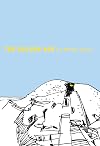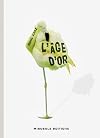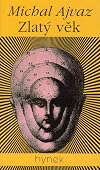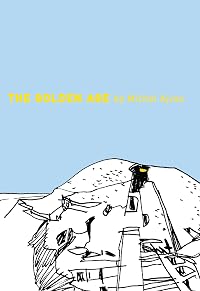
The Golden Age
by Michal Ajvaz
On This Page
Description
Heir to the philosophical-fantastical tradition of Borges, Calvino, and Perec, The Golden Age is Michal Ajvaz's greatest and most ambitious work.
Tags
Recommendations

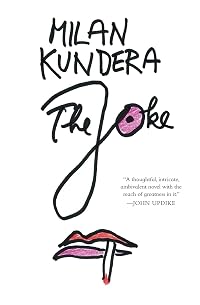
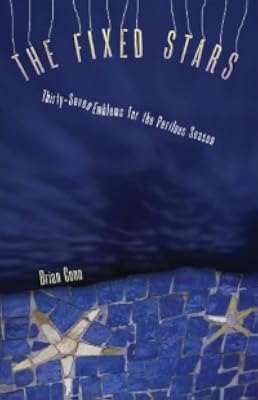
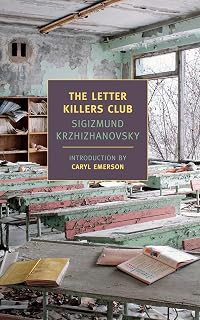



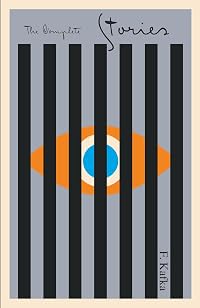
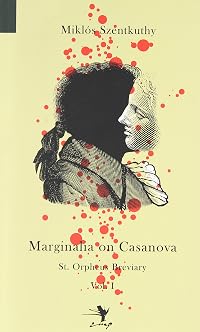
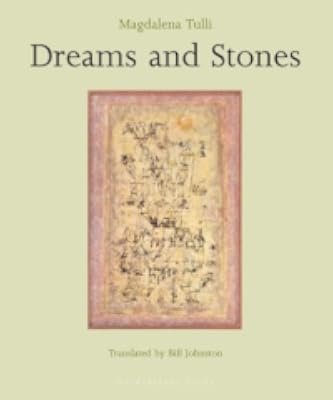
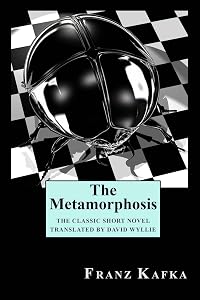
Member Recommendations

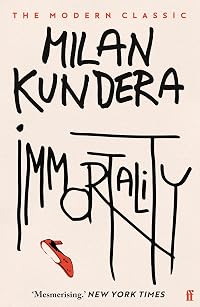
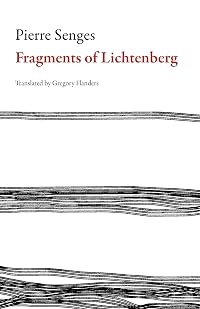
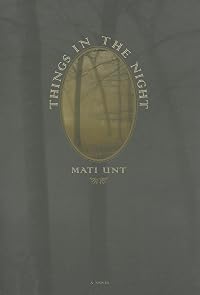
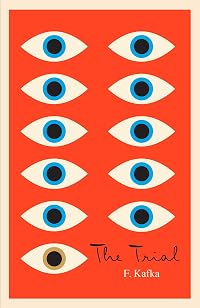
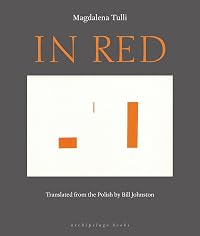
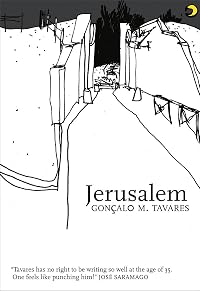
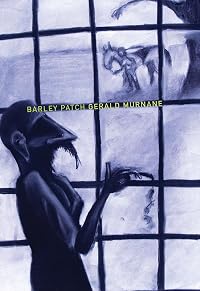
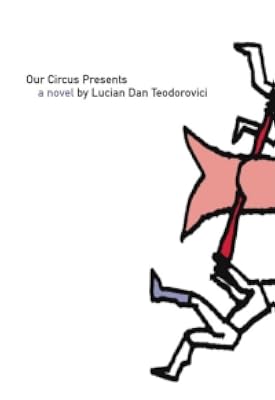
CGlanovsky Metafiction involving the creation of fairy-tale worlds.

CGlanovsky Faux travelogues of fictitious island cultures detailing the intricacies of their geography, governance, cuisine, art, etc.

bluepiano Another excellent novel of many stories.
Member Reviews
Finshing this novel put me into a snit simply because though I wanted to read more of it there was no more of it to read. It's not that Golden Age ia great book or one of my favourites; it's that it was one of the most absorbing ones I'd read for some time.
The first 50 or so pages comprise mostly descriptions and explanations of the ways of the islanders and there were moments I became impatient with near-repetitiveness of the same points and the expanding upon them: yes, yes, I get it, lack of boundaries is important to these people, let's move on now. But my impatience faded early on, partly because both Ajvaz and his characters used such creative ways to achieve the islanders' way of life, partly because the author was portraying show more subtly different facets of these people, partly because I felt sure that this section was laying a sturdy foundation for what was to follow, and most of all because I was becoming transfixed. And as you'll have gathered if you've been looking up the book, the rest of the book is a series of stories written by the islanders, most memorable of which is the tale of a cat burglar, a serif on the Galaries Lafayette sign, and a painting that I'd give my little finger to see, a tale that seemed to me a tribute to Life A User's Manual.
As you usually ought not for translated works, don't take seriously reviews & blurb comparing this to books by Borges/Calvino. show less
The first 50 or so pages comprise mostly descriptions and explanations of the ways of the islanders and there were moments I became impatient with near-repetitiveness of the same points and the expanding upon them: yes, yes, I get it, lack of boundaries is important to these people, let's move on now. But my impatience faded early on, partly because both Ajvaz and his characters used such creative ways to achieve the islanders' way of life, partly because the author was portraying show more subtly different facets of these people, partly because I felt sure that this section was laying a sturdy foundation for what was to follow, and most of all because I was becoming transfixed. And as you'll have gathered if you've been looking up the book, the rest of the book is a series of stories written by the islanders, most memorable of which is the tale of a cat burglar, a serif on the Galaries Lafayette sign, and a painting that I'd give my little finger to see, a tale that seemed to me a tribute to Life A User's Manual.
As you usually ought not for translated works, don't take seriously reviews & blurb comparing this to books by Borges/Calvino. show less
The Golden Age is very difficult to describe. The jacket identifies it as "a novel" but it certainly pushes at the edge of that definition. I would identify it as 300 pages of experimental fiction.
One of the major themes is the emergence and submergence of structure from and into nothingness. True to form, The Golden Age demonstrates this principle nicely, as the best approximations of traditional narrative arrive only as temporary digressions from the main thrust of the book. Not coincidentally, these are also the most interesting and readable sections.
Most of the 300 pages is spent simply describing, in a rather abstract way, the primary setting of the island and its inhabitants. There are virtually no characters or plot to speak of. show more (There are people with names, and a few sporadic events, but it would be a dramatic overstatement to call any character a protagonist or to try to link the events together meaningfully.) This leaves the majority of the book as description of a fictitious setting. But alas, the setting itself is as close it is possible to be a non-setting: an island where the only details are transitory and everything is in permanent flux. There is no history and barely any reality! The reader who looks for a central narrative will be disappointed.
There is some relief towards the end of the book, but only some. From the aforementioned non-story emerges a dozen or so genuine stories (with characters, plot, setting and all.) However, most of these simply fade into other stories or end abruptly as the reader is lurched back into the narrator's descriptions and musings. So the author's premise becomes realized: structure emerges from nothing and is then submerged again.
This is not to say the book is bad or unreadable. It is thought-provoking and funny. There are occasional passages of beauty, and the prose is clear without sounding overly-formal (thanks much to the translator Andrew Oakland.) It is apparent that the author is exploring the implications of particular philosophical ideas, and that fiction just happens to be the means he has chosen for such exploration. (Certainly not rare in fiction.)
As long as the reader knows to expect "some fiction" with little more structure than that, and doesn't hope for some coherent story to emerge, this is an engaging read. But it is neither a fun piece of genre fiction nor an important, life-changing work. It's a weird chunk of experimental fiction, so be prepared to take it as such. show less
One of the major themes is the emergence and submergence of structure from and into nothingness. True to form, The Golden Age demonstrates this principle nicely, as the best approximations of traditional narrative arrive only as temporary digressions from the main thrust of the book. Not coincidentally, these are also the most interesting and readable sections.
Most of the 300 pages is spent simply describing, in a rather abstract way, the primary setting of the island and its inhabitants. There are virtually no characters or plot to speak of. show more (There are people with names, and a few sporadic events, but it would be a dramatic overstatement to call any character a protagonist or to try to link the events together meaningfully.) This leaves the majority of the book as description of a fictitious setting. But alas, the setting itself is as close it is possible to be a non-setting: an island where the only details are transitory and everything is in permanent flux. There is no history and barely any reality! The reader who looks for a central narrative will be disappointed.
There is some relief towards the end of the book, but only some. From the aforementioned non-story emerges a dozen or so genuine stories (with characters, plot, setting and all.) However, most of these simply fade into other stories or end abruptly as the reader is lurched back into the narrator's descriptions and musings. So the author's premise becomes realized: structure emerges from nothing and is then submerged again.
This is not to say the book is bad or unreadable. It is thought-provoking and funny. There are occasional passages of beauty, and the prose is clear without sounding overly-formal (thanks much to the translator Andrew Oakland.) It is apparent that the author is exploring the implications of particular philosophical ideas, and that fiction just happens to be the means he has chosen for such exploration. (Certainly not rare in fiction.)
As long as the reader knows to expect "some fiction" with little more structure than that, and doesn't hope for some coherent story to emerge, this is an engaging read. But it is neither a fun piece of genre fiction nor an important, life-changing work. It's a weird chunk of experimental fiction, so be prepared to take it as such. show less
Michal Ajvaz is a Czech author of science fiction and fantasy, whose works have only just begun to be translated into English-- this is the second. It concerns an unnamed narrator who visits a strange island in the Atlantic Ocean. The back cover informs me that Ajvaz has published on Borges and Derrida, and this should come as no surprise to anyone who reads The Golden Age. The inhabitants of the island have a very poststructuralist attitude-- it is a decentered world where language is unstable, truth is unstable, stories are unstable, hierarchy is unstable, and there is no center. Of course, a poststructuralist would point out that the whole world is this way, not just the island, and that comes through here, too. On his return to show more civilization, the narrator notices bits of the island cropping up in Europe, little signs of a destabilized existence.
There's an early part of the book where the narrator says that some people have called the island Kafkaesque, but he rejects that, saying that K. in The Castle (for example) is always looking for a leader he cannot find-- the difference is that the islanders never look for their leader, never worry that their language changes, that their stories are unstable. As one of my friends pointed out, it feels like an early reader of his text said it sounded like The Castle, and he threw this in to explain why it was totally different. I suppose Ajvaz is right here, this isn't Kafka-- but only because it actually reminds me of Italo Calvino. There's a similar preoccupation with the mechanics of storytelling, with the way we construct what we know, as you find in If on a winter's night a traveler. Stories start and stop and digress all over the place. There's a great bit where the narrator leads off a paragraph with:
I wrote that last paragraph, dear reader, late yesterday evening. Now it is nine in the morning and I'm sitting at my computer over a cup of strong, hot coffee. I would be glad if you would try to visualize for a moment the inconspicuous division between paragraphs, the negligible white space between the night-time period applied in resignation and encroached upon by the foam of sleep on the one hand, and the tense and impatient early-morning capital on the other, and to see these as a negative of last night, so that you might summon from this negative all its blackness and push it between paragraphs.... All manner of things changed during the night... (124)
It feels like a typical postmodern move, but it's a great one, and I don't think I've seen it before (which doesn't make it original, of course, but it's still fun). I read that paragraph aloud to the first person I met after reading that page, though she just mocked its use of the "dear reader" device.
The problem with the book is that despite being about story, it doesn't have a story. Much of the novel, the first half especially, is a description of various aspects of island life, which are sometimes neat, but often dull. Oh, it has stories, bits where the narrator interpolates tales he's heard about the island or even that just remind him of the island. One of these was my favorite part, about a Parisian who chases a jewel thief and ends up clambering across the letters of an art gallery sign in pursuit, when the thief slips and falls-- and her life is saved when she grabs onto a serif! Thank goodness it wasn't a sans serif font. This is fun in itself, but she then tells him about an artist who contains incredibly complex stories into seemingly simple paintings (she stole his jewelry to buy one of the artist's paintings), explicating one of many stories contained within the painting. Too neat!
The second half of The Golden Age is taken up with excerpts from the Book, a communal piece of writing from the island that the inhabitants can add bits to whenever they like. Though this is a story, and thus easier to glom onto than the narrator's long descriptions of island life, it's an irrelevant story, so it largely succeeds on whether or not you find it interesting. I didn't find the main narrative of the Book interesting, but there were subcomponents of it that were neat: the woman ordered to make a statue out of water, the man who became obsessed with the doings of an alien planet he could see in his telescope (again, very Calvinoesque, as it reminded me of one of the tales in Cosmicomics), and best of all, the man who always goes to the newsstand but is given a rabbit instead of a newspaper. Good fun, all, but these gems are buried in a tedious tale of political intrigue in a made-up world. It's hard to invest as a reader in made-up worlds within made-up worlds.
In the end, The Golden Age is an interesting poststructuralist project... but as a result, it's hard to actually enjoy reading it. There are flashes of brilliance, but they're scattered throughout some tedious description and irrelevant stories. Though it's probably completely antithetical to Ajvaz's project here, what this book actually needs is a narrative. show less
There's an early part of the book where the narrator says that some people have called the island Kafkaesque, but he rejects that, saying that K. in The Castle (for example) is always looking for a leader he cannot find-- the difference is that the islanders never look for their leader, never worry that their language changes, that their stories are unstable. As one of my friends pointed out, it feels like an early reader of his text said it sounded like The Castle, and he threw this in to explain why it was totally different. I suppose Ajvaz is right here, this isn't Kafka-- but only because it actually reminds me of Italo Calvino. There's a similar preoccupation with the mechanics of storytelling, with the way we construct what we know, as you find in If on a winter's night a traveler. Stories start and stop and digress all over the place. There's a great bit where the narrator leads off a paragraph with:
I wrote that last paragraph, dear reader, late yesterday evening. Now it is nine in the morning and I'm sitting at my computer over a cup of strong, hot coffee. I would be glad if you would try to visualize for a moment the inconspicuous division between paragraphs, the negligible white space between the night-time period applied in resignation and encroached upon by the foam of sleep on the one hand, and the tense and impatient early-morning capital on the other, and to see these as a negative of last night, so that you might summon from this negative all its blackness and push it between paragraphs.... All manner of things changed during the night... (124)
It feels like a typical postmodern move, but it's a great one, and I don't think I've seen it before (which doesn't make it original, of course, but it's still fun). I read that paragraph aloud to the first person I met after reading that page, though she just mocked its use of the "dear reader" device.
The problem with the book is that despite being about story, it doesn't have a story. Much of the novel, the first half especially, is a description of various aspects of island life, which are sometimes neat, but often dull. Oh, it has stories, bits where the narrator interpolates tales he's heard about the island or even that just remind him of the island. One of these was my favorite part, about a Parisian who chases a jewel thief and ends up clambering across the letters of an art gallery sign in pursuit, when the thief slips and falls-- and her life is saved when she grabs onto a serif! Thank goodness it wasn't a sans serif font. This is fun in itself, but she then tells him about an artist who contains incredibly complex stories into seemingly simple paintings (she stole his jewelry to buy one of the artist's paintings), explicating one of many stories contained within the painting. Too neat!
The second half of The Golden Age is taken up with excerpts from the Book, a communal piece of writing from the island that the inhabitants can add bits to whenever they like. Though this is a story, and thus easier to glom onto than the narrator's long descriptions of island life, it's an irrelevant story, so it largely succeeds on whether or not you find it interesting. I didn't find the main narrative of the Book interesting, but there were subcomponents of it that were neat: the woman ordered to make a statue out of water, the man who became obsessed with the doings of an alien planet he could see in his telescope (again, very Calvinoesque, as it reminded me of one of the tales in Cosmicomics), and best of all, the man who always goes to the newsstand but is given a rabbit instead of a newspaper. Good fun, all, but these gems are buried in a tedious tale of political intrigue in a made-up world. It's hard to invest as a reader in made-up worlds within made-up worlds.
In the end, The Golden Age is an interesting poststructuralist project... but as a result, it's hard to actually enjoy reading it. There are flashes of brilliance, but they're scattered throughout some tedious description and irrelevant stories. Though it's probably completely antithetical to Ajvaz's project here, what this book actually needs is a narrative. show less
 This review was written for LibraryThing Early Reviewers.
A novel of inaction, lassitude and unfinished business that turns out to be stuffed with incident. The narrator explains the strange culture and geography of the Atlantic island that was his home for three years--the place is nameless because the local language shifts so frequently that nothing sticks, and the inhabitants are mostly noted for their apparent indolence--and freely admits that his story barely qualifies as such, with no climax or even plot to speak of, and risks boring his scanty readership. But along the way, the book becomes a modern 1001 Nights, with digressive tales nested within tales, each topping the last in invention. A jewel thief makes a daring escape across a snowy roof; an astronomer loses himself in the lives show more of the otherworldly creatures he observes through his telescope; generations of royalty are destroyed by poisons, magic and plain old violence . . . far more goes on, in fact, than would seem to fit inside of The Golden Age's 300 pages.
What it all adds up to is another question, of course. The islanders would be befuddled by our search for "meaning" in any of this, which would seem to be at least part of Ajvaz's point. The book is actually quite provocative in its philosophical approach, and calls into question many of the assumptions of Western civilization, directly in its discussion of island life and even more potently through its atypical approach to narrative. In terms of sophistication and importance, Swift and Kafka are the names that are brought to mind. There's a sharp picture of modern life lurking behind the apparently unstructured surrealism. I especially liked the glimpse of budding, then fading romance that's captured in the narrator's almost offhanded mentions of his erstwhile island paramour.
I've probably made The Golden Age sound like pretty heavy going, but it's not. Though the details are often baroque, the language is clear and uncomplicated, and though it can give rise to serious reflection, Ajvaz doesn't ever seem to be taking himself too seriously. Just on the level of sheer imagination, it's tremendously enjoyable, outdoing the wildest productions of the SF and fantasy world. Take note, genre authors--this is where the bar's been set. Anyone with an interest in writing that lies outside the mainstream should take a look at what Ajvaz is up to. show less
What it all adds up to is another question, of course. The islanders would be befuddled by our search for "meaning" in any of this, which would seem to be at least part of Ajvaz's point. The book is actually quite provocative in its philosophical approach, and calls into question many of the assumptions of Western civilization, directly in its discussion of island life and even more potently through its atypical approach to narrative. In terms of sophistication and importance, Swift and Kafka are the names that are brought to mind. There's a sharp picture of modern life lurking behind the apparently unstructured surrealism. I especially liked the glimpse of budding, then fading romance that's captured in the narrator's almost offhanded mentions of his erstwhile island paramour.
I've probably made The Golden Age sound like pretty heavy going, but it's not. Though the details are often baroque, the language is clear and uncomplicated, and though it can give rise to serious reflection, Ajvaz doesn't ever seem to be taking himself too seriously. Just on the level of sheer imagination, it's tremendously enjoyable, outdoing the wildest productions of the SF and fantasy world. Take note, genre authors--this is where the bar's been set. Anyone with an interest in writing that lies outside the mainstream should take a look at what Ajvaz is up to. show less
This review was written for LibraryThing Early Reviewers.Of the nearly one hundred books I read last year, I only gave four a 5-star rating. One of those four was Ajvaz's The Other City, the first of his books to come to my attention. Thus I approached The Golden Age with that mix of excitement and trepidation that comes when you start exploring an author's work after loving your first experience: will the rest of the author's writing compare?
I was happy to find that my second Ajvaz was also a great read, almost matching The Other City in terms of pure enjoyment and far surpassing it in terms of intriguing ideas. The Golden Age is a book of digressions, asides, vignettes, and half forgotten memories, and through it all Ajvaz shows you how he sees stories, and reveals how you see stories as show more well. The book begins as a travelogue of an island whose inhabitants have a penchant for finding meaning in meaninglessness and vice versa. It has some great writing, but the beginning is a bit slow, even though the themes explored here will echo throughout the rest of the book.
The book picks up when the narrator begins to discuss the book of the island, a huge amorphous tome that evolves with the islanders themselves. Within the book are inserts that lead to other stories, which often contain inserts of their own, and those their own, etcetera. Often times the narrative gets three or four story layers deep, with each narrative bleeding into the others in interesting ways. Along the journey Ajvaz shows how we change stories, and how they change us, how tales fade and are reborn or reimagined, how texts can have no center, or how each section is its own center. The act of reading is an act of creation just as the act of writing is, and both are ephemeral. Ajvaz shows this with elegance and subtlety.
All of these ideas might be interesting, but you might worry that they are not enough on their own to support a story. Luckily, the writing of The Golden Age is beautiful and the stories that make up the majority of the book are delightfully fun to read. I was especially taken by one story where a man pursues a thief over the rooftops of Paris and finds himself in a situation where letters have become object (it makes sense if you read the story). High above the streets, as the neon lights turn the falling snowflakes purple around them, the thief explains why she is out stealing. Etcetera.
Though it starts out slowly by the end of the book I loved it. If you are new to Ajvaz I recommend starting with The Other City as it presents a more traditional narrative.
Now that I have read these two there are no more works by Ajvaz in English. The obvious question thus becomes who do I have to bribe or kill to get more of these books translated? show less
I was happy to find that my second Ajvaz was also a great read, almost matching The Other City in terms of pure enjoyment and far surpassing it in terms of intriguing ideas. The Golden Age is a book of digressions, asides, vignettes, and half forgotten memories, and through it all Ajvaz shows you how he sees stories, and reveals how you see stories as show more well. The book begins as a travelogue of an island whose inhabitants have a penchant for finding meaning in meaninglessness and vice versa. It has some great writing, but the beginning is a bit slow, even though the themes explored here will echo throughout the rest of the book.
The book picks up when the narrator begins to discuss the book of the island, a huge amorphous tome that evolves with the islanders themselves. Within the book are inserts that lead to other stories, which often contain inserts of their own, and those their own, etcetera. Often times the narrative gets three or four story layers deep, with each narrative bleeding into the others in interesting ways. Along the journey Ajvaz shows how we change stories, and how they change us, how tales fade and are reborn or reimagined, how texts can have no center, or how each section is its own center. The act of reading is an act of creation just as the act of writing is, and both are ephemeral. Ajvaz shows this with elegance and subtlety.
All of these ideas might be interesting, but you might worry that they are not enough on their own to support a story. Luckily, the writing of The Golden Age is beautiful and the stories that make up the majority of the book are delightfully fun to read. I was especially taken by one story where a man pursues a thief over the rooftops of Paris and finds himself in a situation where letters have become object (it makes sense if you read the story). High above the streets, as the neon lights turn the falling snowflakes purple around them, the thief explains why she is out stealing. Etcetera.
Though it starts out slowly by the end of the book I loved it. If you are new to Ajvaz I recommend starting with The Other City as it presents a more traditional narrative.
Now that I have read these two there are no more works by Ajvaz in English. The obvious question thus becomes who do I have to bribe or kill to get more of these books translated? show less
Jorge Luis Borges confined his fiction to extremely brief pieces that leave the reader desperate for more. In fact, the subject of his writing was often the intimation of non-existent full-length books through the device of fictitious synopses. The books Borges conjured up were often possessed of novel structures, innovative modes of presenting narratives that elegantly complimented the content matter of his fictional authors. Here in Ajvaz's novel we have what can only have been the man's attempt to write the sort of thing Borges only hinted at. There are others out there, books that speak to the same ambition (Thomas Wharton's Salamander, for one) and like them Ajvaz's book suffers from the same creeping tedium spared us by Borges's show more wisdom and forebearance. Let me say, quickly, that I liked this book. Its shortcomings were inevitable inasmuch as it aspires to the Borgesian example. It is like a circle drawn with a compass compared with the archetypal, Platonic "Circle", only an imperfect projection of the unattainable. By rendering his creations (such as the works of Herbert Quain) as pure works of the imagination, Borges could simply state that their literary convolutions were successful, whereas Ajvaz had to actually make them successful. He performs admirably. Borges believed that a book whose merit consists in a single clever notion need not couch itself in 10,000 lines of dense prose when you could rather state the clever idea and ask us to imagine the book in which it resides. All the baggage that accompanies Ajvaz's cleverness was sometimes tiring to wade through. Part of his point was digression, but not every digression worked. What saved him was the wealth of memorable images and concepts he was able to sprinkle throughout the text. While they were no real substitute for a plot, they were still engaging, and it is safe to say that it is his felicity for surreal juxtaposition that makes him more than a Slavic incarnation of a Borges-that-might-have-been. Several images from this book will stick with me for a long time to come.
Finally, there was the last 20% of the book! The whole rest of the book, I felt, was paving the way for this. He pulls us jarringly (but not unpleasantly) into and out of a series of intersecting stories. These are as plot driven as the preceding 200 pages had been nearly plotless. They are as brutal, magical, emotional, and tragic as fairy tales. The stories contain one another and he leaves one plot line for another for dozens of pages only to return to it again, and along the way he hints (like a good Borgesian) at the existence of other digressions he is declining to lead us down. The rate at which I consumed the pages of this book increased exponentially as I approached the end. It almost sounds like the work as a whole was unbalanced, but no; best of all, the quality of these last pages is underpinned by the investments made in the beginning and throughout the middle. You come to realize that even the duller moments were to establish atmosphere. It was all worthwhile in the end. Well done. show less
Finally, there was the last 20% of the book! The whole rest of the book, I felt, was paving the way for this. He pulls us jarringly (but not unpleasantly) into and out of a series of intersecting stories. These are as plot driven as the preceding 200 pages had been nearly plotless. They are as brutal, magical, emotional, and tragic as fairy tales. The stories contain one another and he leaves one plot line for another for dozens of pages only to return to it again, and along the way he hints (like a good Borgesian) at the existence of other digressions he is declining to lead us down. The rate at which I consumed the pages of this book increased exponentially as I approached the end. It almost sounds like the work as a whole was unbalanced, but no; best of all, the quality of these last pages is underpinned by the investments made in the beginning and throughout the middle. You come to realize that even the duller moments were to establish atmosphere. It was all worthwhile in the end. Well done. show less
Review based on ARC:
This dense little book took me much longer to read than I had anticipated by both the length and the description. I expected a light romp through the everyday experiences of the islanders and a longer foray into the "book" around which the island appears to be focused. Instead, I found an intellectual, philosophical, and incredibly thoughtful mock travelogue. The island of which the narrator speaks has an influential method of living, which pervades every aspect of the islanders lives, from their history, to the food that they eat and how they prepare it, to their so-called occupation, to their architecture, etc. This is initially described by the narrator, but as the travelogue proceeds, it becomes ever more show more apparent how pervasive the islanders' life view is.
The only exception to the islanders' seemingly lackadaisical and irreverent style of living seems to be their "book" -- the one "artform" that appears on the island. The book is what most of the reviews seem to focus on, logically so. Although "the book" itself is not really discussed and experienced until at least halfway through the travelogue, it is the most interesting and even unique aspect of the islanders life. Yet, even though "the book" is not really discussed until later in the travelogue, the first half of the travelogue is clearly necessary as background, so that "the book" is fully understood and appreciated. "The book" itself is interesting, but the tales within are absolutely fascinating. The reader almost feels as if he is losing sight of the beginning of any given tale, as it spins and diverges, but Ajvaz is skilled at bringing his reader full circle -- even if we need to wait a few more pages than is common. The wait, as Ajvaz himself notes, is often worth it, and the tale (within the tale within the tale...) is always rewarding.
Michal Ajvaz is a master at his art and has created a world that operates almost completely outside of most societal norms. He is adamant that he imparts no overall judgment either on the islanders or on the rest of the world, and I was convinced of his assertion. For me, the best parts were the divergent tales, both within "the book" and without. However, although the rest of the travelogue was not as "fun" as those tales, they were interesting and necessary to the whole.
I would not categorize this as "light reading," but I would highly recommend to anyone who is looking for something different, something a little chewy, and something to make you pause and think. show less
This dense little book took me much longer to read than I had anticipated by both the length and the description. I expected a light romp through the everyday experiences of the islanders and a longer foray into the "book" around which the island appears to be focused. Instead, I found an intellectual, philosophical, and incredibly thoughtful mock travelogue. The island of which the narrator speaks has an influential method of living, which pervades every aspect of the islanders lives, from their history, to the food that they eat and how they prepare it, to their so-called occupation, to their architecture, etc. This is initially described by the narrator, but as the travelogue proceeds, it becomes ever more show more apparent how pervasive the islanders' life view is.
The only exception to the islanders' seemingly lackadaisical and irreverent style of living seems to be their "book" -- the one "artform" that appears on the island. The book is what most of the reviews seem to focus on, logically so. Although "the book" itself is not really discussed and experienced until at least halfway through the travelogue, it is the most interesting and even unique aspect of the islanders life. Yet, even though "the book" is not really discussed until later in the travelogue, the first half of the travelogue is clearly necessary as background, so that "the book" is fully understood and appreciated. "The book" itself is interesting, but the tales within are absolutely fascinating. The reader almost feels as if he is losing sight of the beginning of any given tale, as it spins and diverges, but Ajvaz is skilled at bringing his reader full circle -- even if we need to wait a few more pages than is common. The wait, as Ajvaz himself notes, is often worth it, and the tale (within the tale within the tale...) is always rewarding.
Michal Ajvaz is a master at his art and has created a world that operates almost completely outside of most societal norms. He is adamant that he imparts no overall judgment either on the islanders or on the rest of the world, and I was convinced of his assertion. For me, the best parts were the divergent tales, both within "the book" and without. However, although the rest of the travelogue was not as "fun" as those tales, they were interesting and necessary to the whole.
I would not categorize this as "light reading," but I would highly recommend to anyone who is looking for something different, something a little chewy, and something to make you pause and think. show less
This review was written for LibraryThing Early Reviewers.Members
- Recently Added By
Lists

Books written in uncommon languages
97 works; 8 members

Speculative Fiction from around the World
610 works; 18 members
Author Information

27+ Works 538 Members
Some Editions
Awards and Honors
Series
Belongs to Publisher Series
Common Knowledge
- Canonical title
- The Golden Age
- Original title
- Zlatý věk
- Original publication date
- 2001
Classifications
- Genres
- Fiction and Literature, General Fiction, Fantasy
- DDC/MDS
- 891.8635 — Literature & rhetoric Literatures of other languages East Indo-European and Celtic literatures West and South Slavic languages (Bulgarian, Slovene, Polish, Czech, Slovak, Serbo-Croatian, and Macedonian) Czech Czech fiction 1900–1989
- LCC
- PG5039.1 .J83 .Z39 — Language and Literature Slavic languages and literatures. Baltic languages. Albanian language Slavic. Baltic. Albanian Slavic Czech
- BISAC
Statistics
- Members
- 207
- Popularity
- 158,527
- Reviews
- 12
- Rating
- (3.61)
- Languages
- Czech, English, French, Japanese
- Media
- Paper, Ebook
- ISBNs
- 5
- ASINs
- 2