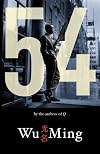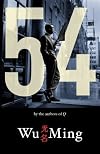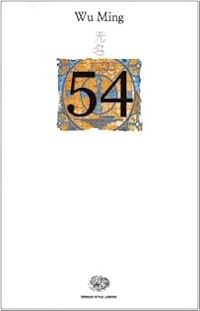
54
by Wu Ming
On This Page
Description
In Hollywood, Cary Grant has grown weary of cinema's glamour, but Her Majesty's Secret Service will break his malaise with a bizarre diplomatic mission. In Naples, Lucky Luciano fixes horse races and begins to lay the foundation for the global heroin trade. And in Bologna, a bartender searches for true love and his missing communist father. It is 1954--the height of the Cold War--and these three are on a path toward an intersection that will involve the nascent KGB, Joseph McCarthy, Frances show more Farmer, Parisian lowlifes, Marshal Tito, David Niven, James Bond, and a very special television set called the McGuffin Electric. This book is a political thriller, a comic spy caper, a romance, and a social satire.--From publisher description. show lessTags
Recommendations








Member Recommendations
Member Reviews
Spring, 1954. Stalin is dead, the cold war is starting to take the shape it would hold for a generation to come, Joe McCarthy is kicking commie ass and taking names, the French are in trouble in Indochina, and in the free territory of Trieste between Italy and Slovenia the big boys are trying to wrap up the last of the unresolved border disputes following WWII. Of course, to do this, it helps if they have Tito on their side. And so the MI6 call in Tito's favourite movie star to convince him... yes, it's Cary Grant, secret agent. Meanwhile, Lucky Luciano and his gang are setting up the world's heroin trade, a young Triestean is searching for his father who disappeared into Yugoslavia during the partisan years, a poor American TV set gets show more stolen and keeps changing owners, and a bunch of old Italians sit around at their local bar solving the world's problems over an espresso.
If this all sounds both confusing and insane, that's because it is... sorry, I meant to say, that's because it is the plot of a very ambitious 550-page novel condensed into a few sentences. Wu Ming, AKA Luther Blissett, the collective pseudonym of no less than five Italian writers, have managed something quite impressive here: it's a novel that almost manages to balance a... I mean several political thriller plots with a wild sense of humour, an underlying metaphor of the beginning US domination of the Western world both in terms of military and culture (if slightly hamfisted - there's an American TV set full of heroin, ferchrissakes, talk about your Trojan horse), a lament for/satire of the failure of democratic socialism in the post-fascist age, an attempt to sketch the outlines of a "post-war" half-century which would start with 20 years of war in Vietnam and end in Iraq and Afghanistan, plus a just all-around entertaining riff on spy and war novels. Basically, they're trying to write V, The Odyssey, Casino Royale, Underworld, Pereira Declares and The Godfather all at once. And have fun with all of them.
And the thing is, they almost manage to keep it together, anchor it just enough in reality and history to make even the more madcap parts believable. Obviously, it sprawls. With five writers working together, you have five people wanting their favourite bits in, so it gets overwritten; and with a bunch of storylines stretching out from Mexico to Dien Bien Phu and from Hollywood to Dubrovnik, with literally dozens of protagonists, they end up working just a little too hard to tie them all together. But damnit, it's flawed, but it works. For one thing, because they keep coming back to their characters and building the plot from them rather than the other way around. Even Cary Grant isn't in it as the movie star, he's in it as the struggling 50-year-old soon-to-be-has-been who's never reconciled himself with the working-class lad Archie Leach who wanted to be an actor, a living embodiment of both class, cultural and personal conflicts. You laugh at them, yes, but you smile with them and wince for them too. For another, it's so much fun that like political or philosophical ideals, it just makes you want to believe in it even when you know it's not practically feasible. In the end, of course, nothing here changes history in any big way (the last scene notwithstanding). Most of the time, individuals - even dozens of individuals working in separate storylines - don't change the world at large. Some of them die, some of them run away, some just stay at home and do their job, and the world marches on towards what we have today. But damnit, it's entertaining. It captures a world on the cusp of something, that wants to go in several different directions, but for reasons that become painfully clear end up going in a direction very few of them actually want to go. Takes out the warmth, leaves in the fire. show less
If this all sounds both confusing and insane, that's because it is... sorry, I meant to say, that's because it is the plot of a very ambitious 550-page novel condensed into a few sentences. Wu Ming, AKA Luther Blissett, the collective pseudonym of no less than five Italian writers, have managed something quite impressive here: it's a novel that almost manages to balance a... I mean several political thriller plots with a wild sense of humour, an underlying metaphor of the beginning US domination of the Western world both in terms of military and culture (if slightly hamfisted - there's an American TV set full of heroin, ferchrissakes, talk about your Trojan horse), a lament for/satire of the failure of democratic socialism in the post-fascist age, an attempt to sketch the outlines of a "post-war" half-century which would start with 20 years of war in Vietnam and end in Iraq and Afghanistan, plus a just all-around entertaining riff on spy and war novels. Basically, they're trying to write V, The Odyssey, Casino Royale, Underworld, Pereira Declares and The Godfather all at once. And have fun with all of them.
And the thing is, they almost manage to keep it together, anchor it just enough in reality and history to make even the more madcap parts believable. Obviously, it sprawls. With five writers working together, you have five people wanting their favourite bits in, so it gets overwritten; and with a bunch of storylines stretching out from Mexico to Dien Bien Phu and from Hollywood to Dubrovnik, with literally dozens of protagonists, they end up working just a little too hard to tie them all together. But damnit, it's flawed, but it works. For one thing, because they keep coming back to their characters and building the plot from them rather than the other way around. Even Cary Grant isn't in it as the movie star, he's in it as the struggling 50-year-old soon-to-be-has-been who's never reconciled himself with the working-class lad Archie Leach who wanted to be an actor, a living embodiment of both class, cultural and personal conflicts. You laugh at them, yes, but you smile with them and wince for them too. For another, it's so much fun that like political or philosophical ideals, it just makes you want to believe in it even when you know it's not practically feasible. In the end, of course, nothing here changes history in any big way (the last scene notwithstanding). Most of the time, individuals - even dozens of individuals working in separate storylines - don't change the world at large. Some of them die, some of them run away, some just stay at home and do their job, and the world marches on towards what we have today. But damnit, it's entertaining. It captures a world on the cusp of something, that wants to go in several different directions, but for reasons that become painfully clear end up going in a direction very few of them actually want to go. Takes out the warmth, leaves in the fire. show less
Sono rimasto confuso e felice nel seguire per 600 e più pagine un testo che (pregiudizievolmente) pensavo fosse un pastiche abborracciato a cinque mani.
Invece... è un'opera stupenda (opus magnum, dice la 4^ di copertina), straboccante di riferimenti locali e internazionali, dalle tangenze interne imprevedibili, ma puntuali.
Scritto a cinque mani ma con unica testa, è cosi' immaginario da essere per converso decisamente credibile.
La difficoltà di dover seguire parecchie storie contemporaneamente è ripagata dalla storia stessa, che come un maxi-puzzle lentamente trova la sua definizione quasi naturalmente. L'assenza di forzature, ecco: se fosse successo davvero sarebbe andata esattamente cosi'.
Commoventi i riferimenti alla show more Resistenza e i dialoghi del Bar Aurora. Azzeccatissimi i riporti dialettali. show less
Invece... è un'opera stupenda (opus magnum, dice la 4^ di copertina), straboccante di riferimenti locali e internazionali, dalle tangenze interne imprevedibili, ma puntuali.
Scritto a cinque mani ma con unica testa, è cosi' immaginario da essere per converso decisamente credibile.
La difficoltà di dover seguire parecchie storie contemporaneamente è ripagata dalla storia stessa, che come un maxi-puzzle lentamente trova la sua definizione quasi naturalmente. L'assenza di forzature, ecco: se fosse successo davvero sarebbe andata esattamente cosi'.
Commoventi i riferimenti alla show more Resistenza e i dialoghi del Bar Aurora. Azzeccatissimi i riporti dialettali. show less
That’s ‘54’ as in 1954, not the NY nightclub, and the name “Wu MingâÂ? allegedly means âÂÂno nameâÂ? in Mandarin. In fact, âÂÂWu MingâÂ? isnâÂÂt a Chinese writer at all, but a collective of four or five writers in Italy. ItâÂÂs pretty fascinating â youâÂÂve got the Cold War, Lucky Luciano, Italian postwar Commies, the KGB, Cary Grant on a mission for MI6, and a brilliantly named McGuffin Electric television set. Rich detail, thoroughly engrossing, and definitely not recommended for anyone not prepared to see Commies portrayed as actual human beings. Gets a big murky at the end, but it was well worth the trip.
Anche questo Wu Ming mi è durato parecchio, più della mia solita media. Non è un dato positivo, eppure mi è piaciuto. Forse più di testa che di cuore, ammettiamolo, ma mi è piaciuto. C'è un'idea di fondo divertente, intrigante, la costruzione di un intreccio nel vero senso della parola, con i fili che si incontrano, si allontanano, e si reintrecciano in un altro modo.
E poi qui si ricostruisce un mondo, quello dell'A.D. 1954, che è lontano da noi come i tempi dei dinosauri. La gente, dico la gente comune, era così diversa da sembrare di un altro pianeta. Io stessa, se non l'avessi conosciuta nella letteratura, non me la sarei figurata.
Un libro da leggere, soprattutto da parte di chi è troppo giovane per avere anche solo show more sentito l'odore di un mondo completamente diverso, ma che incredibilmente è il mondo da cui è nato questo.
Mi manca l'emozionalità, in questi romanzi, inutile girarci attorno, io non la sento. Non so perché, ma non rido, non canto e non piango, leggendo Wu Ming. Ragiono, rifletto, confronto... e ogni tanto può anche bastare. show less
E poi qui si ricostruisce un mondo, quello dell'A.D. 1954, che è lontano da noi come i tempi dei dinosauri. La gente, dico la gente comune, era così diversa da sembrare di un altro pianeta. Io stessa, se non l'avessi conosciuta nella letteratura, non me la sarei figurata.
Un libro da leggere, soprattutto da parte di chi è troppo giovane per avere anche solo show more sentito l'odore di un mondo completamente diverso, ma che incredibilmente è il mondo da cui è nato questo.
Mi manca l'emozionalità, in questi romanzi, inutile girarci attorno, io non la sento. Non so perché, ma non rido, non canto e non piango, leggendo Wu Ming. Ragiono, rifletto, confronto... e ogni tanto può anche bastare. show less
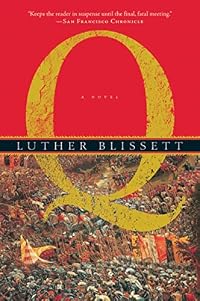
An excellent adventure interweaving fact and fiction. Really works, albeit with a bit of farce thrown in for good measure. It is an apt follow-on from the writing team's first book, "Q"
From the GIAP newsletter:
Nope, they sure don't like us!
A few notes on the differences between European and American reviews of Q and 54,
appended with the Washington Post and the AV Club reviews of 54
Qed. Business as usual. The Washington Post says that 54 is a disaster and our novels suck anyway. The AV Club says we badly need an editor :-) Both reviewers seem to think that our novels are nothing other than self-parodies, impassionate postmodernist jokes, tongue-in-cheek intellectual divertissements. In the US we are rarely described as "writers" or "novelists": they usually call us "intellectuals".
That's the same way The Washington Post had welcomed Q, ie as the umpteenth example of a postmodernist anti-novel.
We are perfectly aware show more that, once it's been written, a text does not belong to its author(s) anymore. However, we can't help but comparing European and American reviews of both Q and 54. Believe us, it's a fascinating thing to do.
Most Europeans reviewers (including some who didn't like the books) tend to think that we've made efforts to tell epic tales of social conflict and make statements about the value of folk/popular culture for everyday resistance to power. They tend to think that our novels are passionate, not cold. They're able to grasp the social and historical background, and think that our books are sincere (albeit critical) tributes to our forefathers and foremothers, ie to the lower classes of our continent. That's what readers have found in both books, and it's also the way we feel about our work. Of course there's irony, and sarcastic passages. Certainly not everything is to be taken at face value, but the tone is generally warm and there's passion. We tried to put our feelings, our fondnesses and even our family traditions into the job. And our family traditions are mostly about class war... which has long become a repressed subject in the US public discourse.
On the contrary, the majority of American reviewers find our books bleak and 100% ironic, overburdened with postmodernism and intellectual posturing. In a way, they are persuaded that we despise our readers and want to take the piss out of them ("Q has enjoyed bestseller status throughout Europe. I can only wonder if the authors are laughing"). This will sound bizarre to those who know how far we go out of our way to keep the dialogue alive in our community, through hundreds of meetings, open projects, and literary jam-sessions on the web.
Another curious thing: whereas in Italy and Europe our books are popular best-sellers, most American reviewers tend to find them very high-brow and difficult to read.
What the hell is going on here? Are those books printed on litmus paper? Do they tell us something important on the cultural differences between the two worlds? Is the Atlantic Ocean broadening farther on?
Once again: don't get us wrong. We are not complaining that American critics don't like us. This isn't about the quality of our writing: it's about the difference between the European and American perception of the nature of our books. We are intrigued by that difference, and wonder about the causes. And we're talking only about critics and professional reviewers. We don't have enough feedback from US readers to tell something meaningful about their perception of our work.
Is there some freakonomic rationale for this situation? What do y'all think? Can you give us a hint, a hand, an explanation?
Maybe it isn't that American critics don't like us: maybe they can't like us. Maybe our books are too "provincial", crammed as they are with references to an Italian and pan-European background. Those references are easily understood in Latin America, because those peoples share many features with us, but they're missed completely in the US. Maybe. This is just a conjecture.
Anyway: with this kind of welcome, there seems to be no chance for us on the American book marketplace. We already knew that, and we expected nothing different. Pre-reviews were good (albeit some of them were slightly out of focus), but reviews are quite another thing. We already know that the novel we're writing right now, Manitouana, will be mercilessly torn apart in the US (granted that it's published at all). It's a tragic novel of anabasis and exodus, set in the 1770's on both shores of the Atlantic. It's the first episode of a triptych on the whereabouts of the American revolution... They're gonna hate our guts more than ever.
Never mind, we'll stick to Europe, the Commonwealth and Latin America :-)
You can read the abovementioned reviews here:
http://www.wumingfoundation.com/italiano/54/54_washington_post.htm show less
Nope, they sure don't like us!
A few notes on the differences between European and American reviews of Q and 54,
appended with the Washington Post and the AV Club reviews of 54
Qed. Business as usual. The Washington Post says that 54 is a disaster and our novels suck anyway. The AV Club says we badly need an editor :-) Both reviewers seem to think that our novels are nothing other than self-parodies, impassionate postmodernist jokes, tongue-in-cheek intellectual divertissements. In the US we are rarely described as "writers" or "novelists": they usually call us "intellectuals".
That's the same way The Washington Post had welcomed Q, ie as the umpteenth example of a postmodernist anti-novel.
We are perfectly aware show more that, once it's been written, a text does not belong to its author(s) anymore. However, we can't help but comparing European and American reviews of both Q and 54. Believe us, it's a fascinating thing to do.
Most Europeans reviewers (including some who didn't like the books) tend to think that we've made efforts to tell epic tales of social conflict and make statements about the value of folk/popular culture for everyday resistance to power. They tend to think that our novels are passionate, not cold. They're able to grasp the social and historical background, and think that our books are sincere (albeit critical) tributes to our forefathers and foremothers, ie to the lower classes of our continent. That's what readers have found in both books, and it's also the way we feel about our work. Of course there's irony, and sarcastic passages. Certainly not everything is to be taken at face value, but the tone is generally warm and there's passion. We tried to put our feelings, our fondnesses and even our family traditions into the job. And our family traditions are mostly about class war... which has long become a repressed subject in the US public discourse.
On the contrary, the majority of American reviewers find our books bleak and 100% ironic, overburdened with postmodernism and intellectual posturing. In a way, they are persuaded that we despise our readers and want to take the piss out of them ("Q has enjoyed bestseller status throughout Europe. I can only wonder if the authors are laughing"). This will sound bizarre to those who know how far we go out of our way to keep the dialogue alive in our community, through hundreds of meetings, open projects, and literary jam-sessions on the web.
Another curious thing: whereas in Italy and Europe our books are popular best-sellers, most American reviewers tend to find them very high-brow and difficult to read.
What the hell is going on here? Are those books printed on litmus paper? Do they tell us something important on the cultural differences between the two worlds? Is the Atlantic Ocean broadening farther on?
Once again: don't get us wrong. We are not complaining that American critics don't like us. This isn't about the quality of our writing: it's about the difference between the European and American perception of the nature of our books. We are intrigued by that difference, and wonder about the causes. And we're talking only about critics and professional reviewers. We don't have enough feedback from US readers to tell something meaningful about their perception of our work.
Is there some freakonomic rationale for this situation? What do y'all think? Can you give us a hint, a hand, an explanation?
Maybe it isn't that American critics don't like us: maybe they can't like us. Maybe our books are too "provincial", crammed as they are with references to an Italian and pan-European background. Those references are easily understood in Latin America, because those peoples share many features with us, but they're missed completely in the US. Maybe. This is just a conjecture.
Anyway: with this kind of welcome, there seems to be no chance for us on the American book marketplace. We already knew that, and we expected nothing different. Pre-reviews were good (albeit some of them were slightly out of focus), but reviews are quite another thing. We already know that the novel we're writing right now, Manitouana, will be mercilessly torn apart in the US (granted that it's published at all). It's a tragic novel of anabasis and exodus, set in the 1770's on both shores of the Atlantic. It's the first episode of a triptych on the whereabouts of the American revolution... They're gonna hate our guts more than ever.
Never mind, we'll stick to Europe, the Commonwealth and Latin America :-)
You can read the abovementioned reviews here:
http://www.wumingfoundation.com/italiano/54/54_washington_post.htm show less
www.wumingfoundation.com
Members
- Recently Added By
Lists

Italian Literature
556 works; 41 members
Author Information

88+ Works 4,541 Members
Some Editions
Awards and Honors
Awards
Series
Belongs to Publisher Series
Stile libero [Einaudi] (948)
Common Knowledge
- Canonical title*
- 54
- Original title
- 54
- Alternate titles*
- Cinquantaquattro
- Original publication date
- 2002
- People/Characters
- Cary Grant; Josip Broz Tito
- Important places
- Bologna, Emilia Romagna, Italia; Napoli, Campania, Italia; Trieste, Friuli-Venezia Giulia, Italia; Palm Springs, California, USA
- Important events
- Cold War
- Original language*
- Italiano
*Some information comes from Common Knowledge in other languages. Click "Edit" for more information.
Classifications
- Genres
- Fiction and Literature, General Fiction, Historical Fiction, Suspense & Thriller
- DDC/MDS
- 853.92 — Literature & rhetoric Italian, Romanian & related literatures Italian fiction 1900- 21st Century
- LCC
- PQ4923 .U2 .A15 — Language and Literature French, Italian, Spanish and Portuguese literatures Italian literature Individual authors, 2001-
- BISAC
Statistics
- Members
- 564
- Popularity
- 52,195
- Reviews
- 9
- Rating
- (3.72)
- Languages
- 7 — Dutch, English, German, Greek, Italian, Portuguese, Spanish
- Media
- Paper
- ISBNs
- 16
- ASINs
- 3