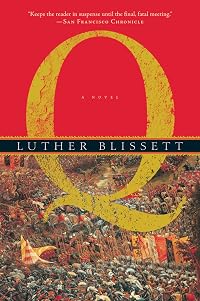
Q
by Wu Ming
On This Page
Description
In 1517, Martin Luther nails his ninety-five theses to the door of Wittenburg Cathedral, and a dance of death begins between a radical Anabaptist with many names and a loyal papal spy known mysteriously as "Q." In this brilliantly conceived literary thriller set in the chaos of the Reformation-an age devastated by wars of religion-a young theology student adopts the cause of heretics and the disinherited and finds himself pursued by a relentless papal informer and heretic hunter. What begins show more as a personal struggle to reveal each other's identity becomes a mission that can only end in death. show lessTags
Recommendations















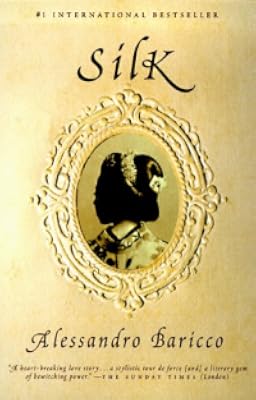


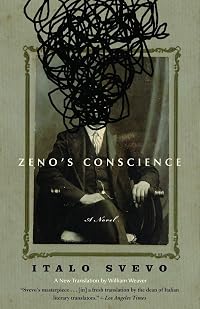
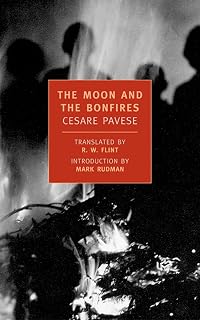
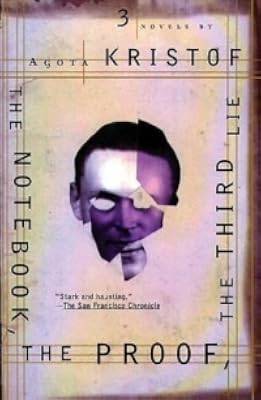

















Member Recommendations

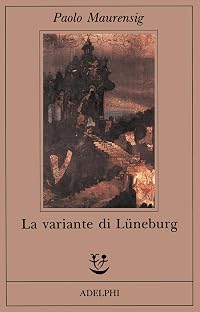
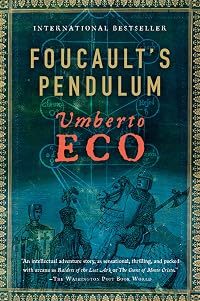
Panairjdde The plot is similar (a gnostic dwarf at the service of a Roman Catholic cardinal at the beginning of the XVIth century), but more lighthearthed and less historically researched

Panairjdde I enjoyed the same atmosphere, even if the setting and the mechanism of the plot is different
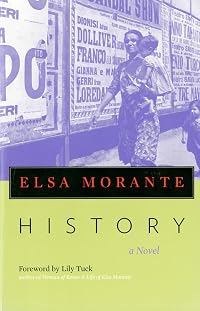
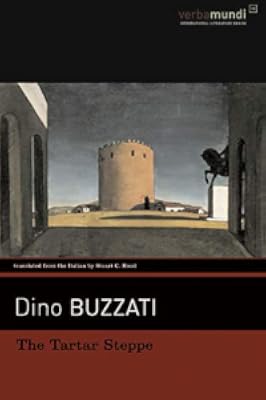
bookmomo Same sense of place, same detailed descriptions of nature and surviving in harsh nature. It takes place in roughly the same area, only earlier in time.
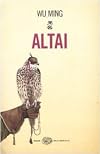
Panairjdde Altai is the sequel, sort of, set several years later with another main character.
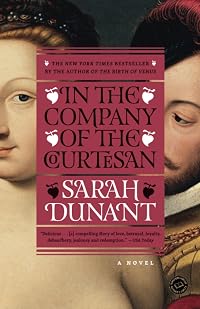
M_Clark Since there are not that many novels set in the Reformation, I thought readers of "Q" might enjoy The Relic Master which is set at the same time. In contrast to "Q" it is written in a much more straight-forward style and is actually funny in spots.
Member Reviews
We were diligent sowers of the seed, lighting the spark of war against those who had usurped the Word of God, the tormentors of His people. I saw scythes hammered into swords, hoes becoming lances and simple men leaving the plough to become fearless warriors. I saw a little carpenter carving a great crucifix and guiding Christ's troops like the captain of the most invincible army. I saw all this and I saw those men and women take up their own faith and turn it into a banner of revenge. Love seized our hearts with that one fire that flamed within us all; we were free and equal in the name of God, and we would smash the mountains, stop the world, kill all our tyrants in order to realise His kingdom of peace and brotherhood.
The protagonist show more starts off as a radical student at Wittenburg University, and becomes a soldier in the cause of religious reform, moving through Northern Europe, travelling under many different names and sometimes having to go into hiding. Despising the Lutherans as having become as much a part of the establishment as the Catholic church, he hooks up with the more extreme Anabaptists, travelling with various preachers and agitators, inciting peasants and townspeople to rebel against the aristocrats and merchants who oppress them. In later years, his methods become more indirect, as he perpetrates a fraud on the bankers who finance the people in power, and becomes involved in publishing and distributing a banned book, "The Benefit of Christ Crucified", in the hope of influencing the opinions of Catholic intellectuals and the more moderate cardinals and ensuring the election of a sympathetic pope, who will curb the powers of the inquisition.
Decades of intrigues and attacks, betrayals and retreats, rashness and remorse, are rushing together all of a sudden. The prophets and the king of a single, tragic day; cardinals and popes, and new popes; bankers, princes, merchants and preachers; men of letters, painters and spies, and counsellors and pimps. Everywhere, involving everyone, the same war.
The story covers nearly forty years of the Reformation, portraying it as social revolution as much as religious reform, if not more so. It skips backwards and forwards in time, but each of the short chapters is dated, so I found it easy to follow. Gert from the Well's story is interspersed with letters from the Catholic spy known as Q or Qoelet, who is working for the Vatican to counter the plots of its foes, whether they be Anabaptists, Lutherans or indeed the Holy Roman Emperor himself.
The name of the footballer Luther Blissett was used as a nom de plume by various artists and radicals around the world during the 1990s, as part of the loosly organised "Luther Blissett Project. "Q" was written by a collective of four Italian anarchists, who have since written another novel under the name Wu Ming.
It is an utterly fascinating story, which leaves the reader with lots to think about - what happened in Munster really reminded me of "Animal Farm". While I was reading the early parts of this book, I was also reminded about the pet hen in "Sredni Vashtar" by Saki. The Houdan hen was never drawn into the cult of Sredni Vashtar. Conradin had long ago settled that she was an Anabaptist. He did not pretend to have the remotest knowledge as to what an Anabaptist was, but he privately hoped that it was dashing and not very respectable. I think Conradin should be very satisfied with his choice. show less
The protagonist show more starts off as a radical student at Wittenburg University, and becomes a soldier in the cause of religious reform, moving through Northern Europe, travelling under many different names and sometimes having to go into hiding. Despising the Lutherans as having become as much a part of the establishment as the Catholic church, he hooks up with the more extreme Anabaptists, travelling with various preachers and agitators, inciting peasants and townspeople to rebel against the aristocrats and merchants who oppress them. In later years, his methods become more indirect, as he perpetrates a fraud on the bankers who finance the people in power, and becomes involved in publishing and distributing a banned book, "The Benefit of Christ Crucified", in the hope of influencing the opinions of Catholic intellectuals and the more moderate cardinals and ensuring the election of a sympathetic pope, who will curb the powers of the inquisition.
Decades of intrigues and attacks, betrayals and retreats, rashness and remorse, are rushing together all of a sudden. The prophets and the king of a single, tragic day; cardinals and popes, and new popes; bankers, princes, merchants and preachers; men of letters, painters and spies, and counsellors and pimps. Everywhere, involving everyone, the same war.
The story covers nearly forty years of the Reformation, portraying it as social revolution as much as religious reform, if not more so. It skips backwards and forwards in time, but each of the short chapters is dated, so I found it easy to follow. Gert from the Well's story is interspersed with letters from the Catholic spy known as Q or Qoelet, who is working for the Vatican to counter the plots of its foes, whether they be Anabaptists, Lutherans or indeed the Holy Roman Emperor himself.
The name of the footballer Luther Blissett was used as a nom de plume by various artists and radicals around the world during the 1990s, as part of the loosly organised "Luther Blissett Project. "Q" was written by a collective of four Italian anarchists, who have since written another novel under the name Wu Ming.
It is an utterly fascinating story, which leaves the reader with lots to think about - what happened in Munster really reminded me of "Animal Farm". While I was reading the early parts of this book, I was also reminded about the pet hen in "Sredni Vashtar" by Saki. The Houdan hen was never drawn into the cult of Sredni Vashtar. Conradin had long ago settled that she was an Anabaptist. He did not pretend to have the remotest knowledge as to what an Anabaptist was, but he privately hoped that it was dashing and not very respectable. I think Conradin should be very satisfied with his choice. show less
This fascinating book tells the story of the middle years of the 16th century in Europe, through the voices of two protagonists. One is a Protestant, who over the course of the book becomes increasingly allied to the Anabaptists, one of the most extreme Protestant sects. The Anabaptists, who practiced re-baptism and preached social and ecclesiastical anarchy, were hated and persecuted by the followers of Luther and Calvin no less than by the servants of the Pope. The other protagonist is a spy in the service of a powerful cardinal who provides a narrative of the events in Germany and Italy and also acts as an agent provocateur. These two mortal enemies share a surprisingly similar world view of a world which is foreign to us in this show more century, and yet some reviewers have read Luther Blisset's book as a metaphor of Europe in teh 20th century.
The real names of the protagonists are never revealed, and they each go by various aliases throughout the book, which can be a bit confusing at times. The book is translated from the Italian, and contains explicit scatological language which will not come as a surprise to anyone who has studied the writings and sayings of Luther, but which sound strange to modern ears on the lips of Protestant preachers and their congregations.
Q provides an interesting slant on the Protestant reformation for anyone interested in this period. It also provides an interesting perspective on the participation and survival of Sephardic Judaism in Europe.
One really great thing about this book is that it is licensed under Creative Commons. This means that the text can be legally reproduced in electronic form, provided the author and copyright notice are acknowledged. Hopefully this is the way of publishing in the future. show less
The real names of the protagonists are never revealed, and they each go by various aliases throughout the book, which can be a bit confusing at times. The book is translated from the Italian, and contains explicit scatological language which will not come as a surprise to anyone who has studied the writings and sayings of Luther, but which sound strange to modern ears on the lips of Protestant preachers and their congregations.
Q provides an interesting slant on the Protestant reformation for anyone interested in this period. It also provides an interesting perspective on the participation and survival of Sephardic Judaism in Europe.
One really great thing about this book is that it is licensed under Creative Commons. This means that the text can be legally reproduced in electronic form, provided the author and copyright notice are acknowledged. Hopefully this is the way of publishing in the future. show less
I smile. No plan can take everything into account. Other people will raise their heads, others will desert. Time will go on spreading victory and defeat among those who pursue struggle.
There is a scene in Alan Bennett's History Boys where the instructor tells his students, if you want to know about Stalin you should study Henry VIII. I felt similar illustrations throughout this sprawling epic. Recurring tensions and responses proliferate through history. Well over a month was spent with Q, a month occupied otherwise by the World Cup and numerous intrigues into the depths of Derrida and Foucault. The baggy novel concerns millenarianism but in the befogged era of the religious wars and the Reformation. Street Fighting Men battle princes show more and papal guards, while revolutions orange and velvet give way to failed Springs and betrayed Thaws. The narrative as such concerns two men, equally unknown with protean noms-de-guerre: they act observe and operate for the opposing forces in this weird rethink of early modernity.
Luther Blissett is the pseudonym for four politically radical Italian novelists who will later in another incarnation be known as Wu Ming. This creative endeavor finds its historical subject in a most messy marriage, one that gleams even as it oozes. show less
There is a scene in Alan Bennett's History Boys where the instructor tells his students, if you want to know about Stalin you should study Henry VIII. I felt similar illustrations throughout this sprawling epic. Recurring tensions and responses proliferate through history. Well over a month was spent with Q, a month occupied otherwise by the World Cup and numerous intrigues into the depths of Derrida and Foucault. The baggy novel concerns millenarianism but in the befogged era of the religious wars and the Reformation. Street Fighting Men battle princes show more and papal guards, while revolutions orange and velvet give way to failed Springs and betrayed Thaws. The narrative as such concerns two men, equally unknown with protean noms-de-guerre: they act observe and operate for the opposing forces in this weird rethink of early modernity.
Luther Blissett is the pseudonym for four politically radical Italian novelists who will later in another incarnation be known as Wu Ming. This creative endeavor finds its historical subject in a most messy marriage, one that gleams even as it oozes. show less
It's a long book,and I sense could have been shorter to its own advantage. I happen to know a little about the radical Reformation players who populate its pages. I can't understand the authors' portrayal of Hans Denck, who based on everything I've read was a gentle soul and perhaps much more of an influence in moving Hans Hut and others like him away from the violence of Thomas Muentzer. I did not understand why the authors mentioned Obbe Philips only briefly and somewhat dismissively, since his (and his brother Dirk's) connection to Menno Simons will be very important to subsequent Anabaptist history. Menno isn't even mentioned. I think the authors had it right in that David Joris for a moment attempts to combine Anabaptist visions show more and include the remnants of Muenster. As I understand it he has to leave the north fairly quickly to flee to Basle. The authors have him operating openly there under his real name, but this seems very unlikely. As I understand it, he directed the DavidJorist sect from afar, clandestinely under the name of Jan of Bruges, and that even his own family was unaware of his former life and the deception which was discovered after his death. I hope it isn't too much of a spoiler (quit reading immediately if you are very sensitive), to say that
I loved the surprise ending. show less
I loved the surprise ending. show less
Sicuramente una lettura appassionante, alterna alti (Munster) e bassi (Venezia e in generale tutta la parte finale). In certi casi lo stile dei vari autori tende a prevalere sulla storia (mi riferisco ad esempio a tutta la prima parte), ma nonostante le 640 pagine � una lettura che, superate le prime difficolt��, scorre molto velocemente.
This was touted somewhere as a cross between a Le Carré spy novel and The Name of the Rose, I don't think it reaches the heights of either. By the time the central question of the novel heats up, it's practically over, and the main character's travels across the religious wars of Europe just aren't that interesting.
How can someone make money out of a book like this? It is released under Creative Common license, which means everyone can spread it, also in parts, as long as it is clearly stated who the author is. But there is no clear author. Luther Blisset is not a physical person; it is a collective name behind which several authors are hidden. I have read other things from Luther Blisset, but this is definitively something different, and something better. This is a novel about the dark era of Reformation. It is clear that Luther's ideas worked only because they served the interests of some german princes. Luther trait was clear to everyone from the beginning. He revolted to the pope only to create his own church. Others continued with his ideas, show more added some better. In the Netherlands communions were formed were goods were shared among everyone, and where unions were not formalized by weddings. Kids would not be baptized, because it does not make any sense to force a faith on them. But all these theological disputes, all the battles in Münster, the Concilio in Trento, were just a big farce. Everything actually revolved around the power battles between Carl V and the Pope, the Sultan Suliman the Greatl behind them the bankers, as always.
At the end of the book, only the consciousness that religion is the food for the stupid, and that history commands our acts much more than we would like to. show less
At the end of the book, only the consciousness that religion is the food for the stupid, and that history commands our acts much more than we would like to. show less
Members
- Recently Added By
Published Reviews
ThingScore 38
Set Les Miserables in Reformation Europe, with Javert reporting to an evil cardinal instead of the prefect of police, and you’ll have something of this book.
added by melonbrawl
Rich religious history is turned into bloated, tedious fiction in this Reformation-age epic produced by four anonymous writers lurking behind a pseudonym.
added by melonbrawl
Lists

Best Historical Fiction
620 works; 262 members

Italian Literature
558 works; 43 members

Favorite Long Books
330 works; 42 members

1990s
309 works; 17 members

One Letter Titles
31 works; 4 members

Books discovered on LibraryThing
256 works; 36 members
One Letter Books
26 works; 1 member
Author Information

Some Editions
Awards and Honors
Awards
Series
Belongs to Publisher Series
Work Relationships
Common Knowledge
- Canonical title
- Q
- Original publication date
- 1999; 2004 [English]
- Important places
- Venice, Veneto, Italy; Münster, North Rhine-Westphalia, Germany; Bad Frankenhausen, Thuringia, Germany
- Dedication
- To Marco Morri
- First words
- On the first page it says: 'In the fresco I'm one of the figures in the background.' (Prologue)
Almost blindly. (Chapter 1) - Last words
- (Click to show. Warning: May contain spoilers.)This means that no one will have died in vain, not even he who, with his final gesture, is teaching you this lesson.
Your Eye
Q (final chapter)
(Click to show. Warning: May contain spoilers.)Do not advance the action according to a plan. (Epilogue) - Original language
- Italian
Classifications
- Genres
- Fiction and Literature, General Fiction, Historical Fiction
- DDC/MDS
- 853.914 — Literature & rhetoric Italian, Romanian & related literatures Italian fiction 1900- 20th Century 1945-1999
- LCC
- PQ4862 .L47 .Q213 — Language and Literature French, Italian, Spanish and Portuguese literatures Italian literature Individual authors, 1961-2000
- BISAC
Statistics
- Members
- 1,963
- Popularity
- 10,860
- Reviews
- 42
- Rating
- (3.99)
- Languages
- 15 — Basque, Chinese, Czech, Danish, Dutch, English, French, German, Greek, Italian, Japanese, Polish, Portuguese, Russian, Spanish
- Media
- Paper, Ebook
- ISBNs
- 39
- ASINs
- 11