On This Page
Description
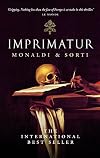
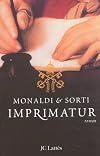
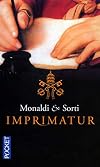
11 September 1683, Rome. Rome is a city on a knife-edge. The citizens wait anxiously for news of the outcome of the Battle of Vienna, as the Islamic forces of the Ottoman Empire lay siege to the defenders of Catholic Europe. Meanwhile a suspected outbreak of plague causes a famous Roman tavern to be placed under quarantine. Among this detained in the Locanda Donzello is the mysterious Atto Melani, a spy in the service of the French king. With the help of the young serving boy, he discovers a show more secret passage leading to a network of tunnels under the city. Their nocturnal journeys into the Roman underworld lead them to some startling discoveries about the deadly enmity between Pope Innocent XI and Louis XIV, and a plot to unleash a weapon of mass destruction in the battle between Islam and the West. Meticulously researched and brilliantly conceived, Imprimatur contains startling revelations that have been concealed for centuries. It is a captivating thriller that sheds new light on the power struggles of 17th-century Europe, the repercussions of which are still felt today.First published to great controversy in Italy in 2002, Imprimatur was boycotted by the Italian press and publishing world. Despite this, the novel has become a European bestseller; it has been translated into 20 languages with editions published in 45 countries. Over 1 million copies have been sold to date. show lessTags
Recommendations




























Member Recommendations
Panairjdde I enjoyed the same atmosphere, even if the setting and the mechanism of the plot is different
bookmomo Lush historical novels, with a lot of "real" history
Member Reviews
This novel has been constructed in a fashion suitable for presenting circumstantial evidence that undermines the generally accepted understanding of the political history of late seventeenth century Europe, and in particular it implicates a highly regarded Pontiff in financial transactions that would not only call into question his credentials as a pastoral leader, but also his commitment to the Catholic Church.
Given the book was designed for a particular purpose other than telling a story it does have some attributes that could lead to irritation in the reader’s mind, but while one could quibble over issues like the coincidental circumstances that bring together so many vital players in the story I think it more than compensates for show more such possible flaws with its erudite presentation of the material, the clever weaving of several plot lines, and the intricate way in which the action is worked into the historical realities of the period. We are treated not only to a history lesson, but are also educated in the nature of life in Rome of the 1680s.
The overriding thought I was left with having read the novel was that we know nothing of the past for certain, and, in fact, probably know very little about the present either. As one of the main characters reflects towards the end of the book, “It’s not that newspapers are quite useless: they are simply not made for searchers after the truth”. show less
Given the book was designed for a particular purpose other than telling a story it does have some attributes that could lead to irritation in the reader’s mind, but while one could quibble over issues like the coincidental circumstances that bring together so many vital players in the story I think it more than compensates for show more such possible flaws with its erudite presentation of the material, the clever weaving of several plot lines, and the intricate way in which the action is worked into the historical realities of the period. We are treated not only to a history lesson, but are also educated in the nature of life in Rome of the 1680s.
The overriding thought I was left with having read the novel was that we know nothing of the past for certain, and, in fact, probably know very little about the present either. As one of the main characters reflects towards the end of the book, “It’s not that newspapers are quite useless: they are simply not made for searchers after the truth”. show less
Shut up in an inn in the past, far in the past, well before last Tuesday, a bunch of people are worried they have covid but covid tests haven't been invented yet, becuase it's the past, and they can't go out, so they must go down, down into the underground where David Bowie and a bunch of muppets help them solve mysteries such as 'If I was in the past and I had the big thing of cinnamon I use every day to put a pinch in the family porridge how rich would I be?' The answer will shock and surprise you. Docked a star for all the notes at the end being printed smaller and making my eyes owie. Star put back because I am a cinnamon gazillionaire in the past and I can afford a few stars.
Love, love, love!!! That's not to say it was love at first sight. I had to work hard to make my way through the first few chapters and get used to the dense, rich rhetoric, crammed to overfull with historical details, names, tangents etc. And I admit, at times I just had to tell myself to keep reading without worrying too much about taking in all the information being thrown at me, otherwise I would have lost sight of the story and given up.
That said, this is a book definitely worth the effort. It takes you on a journey through a long lost historical landscape, weaving politics, philosophy, music, medicine, espionage and the plague. You find yourself drawn in and enriched by the experience. I thoroughly recommend this book, especially show more for people who like complex sentences as much as they like complex ideas. show less
That said, this is a book definitely worth the effort. It takes you on a journey through a long lost historical landscape, weaving politics, philosophy, music, medicine, espionage and the plague. You find yourself drawn in and enriched by the experience. I thoroughly recommend this book, especially show more for people who like complex sentences as much as they like complex ideas. show less
There's a slow read, and there's an interminable one. This fell in the latter for me. Far too long and convoluted, I tried hard but had to skim the final quarter. Could have been so much better with an editor's sharp knife.
What an intricately woven tale ... religion, faith, medicine, the arcane and mysterious, weapons of mass destruction, the heart of the establishment and the very fringes of society - how did Monaldi and Sorti fit so much between the covers of one book? and yet it is complete and beguiiling - not like those books which attempt to include so much that they fall apart.
This book is not for everyone, some may find some of the aspects offensive, but if you like historical fiction which delights on accurate facts and detail yet has believable characters at it's heart this probably should be your next read . Don't expect to tear through it quickly some sections will take slow Reading to absorb the important details.
This book is not for everyone, some may find some of the aspects offensive, but if you like historical fiction which delights on accurate facts and detail yet has believable characters at it's heart this probably should be your next read . Don't expect to tear through it quickly some sections will take slow Reading to absorb the important details.
An intricate, slow moving thriller set in Rome during the second half of the 17th century. The novel has a 'confined space' structure so often used by Agatha Christie and others (the protagonists are confined to an inn suspected of carrying the plague).
The primary 'detective', Atto Melani - spy, castrato, schemer - could be a significant fictional character, but is not drawn vividly enough for my taste and has too few foibles to be memorable. There are too many characters giving too little to the narrative. And why the revelation at the end of the book - PLOT SPOILER HERE! - that the narrator is a dwarf? I did not see what that brought to the book as a whole.
An interesting and successful device is the use of lists. Almost every meal and show more discussion is accompanied by a list of ingredients, people, places or artefacts. The impact of these strange and often unknown items is to reveal the otherness of this historical world and its sophistication. We often see this period in history as less 'civilised' than our own and this device serves to reveal it as different, not lesser.
The first in a series, I am not generally encouraged to read on. show less
The primary 'detective', Atto Melani - spy, castrato, schemer - could be a significant fictional character, but is not drawn vividly enough for my taste and has too few foibles to be memorable. There are too many characters giving too little to the narrative. And why the revelation at the end of the book - PLOT SPOILER HERE! - that the narrator is a dwarf? I did not see what that brought to the book as a whole.
An interesting and successful device is the use of lists. Almost every meal and show more discussion is accompanied by a list of ingredients, people, places or artefacts. The impact of these strange and often unknown items is to reveal the otherness of this historical world and its sophistication. We often see this period in history as less 'civilised' than our own and this device serves to reveal it as different, not lesser.
The first in a series, I am not generally encouraged to read on. show less
A beautifully written intriguing book set in the XVII. century. Feels like the mixture of Eco's The Name of the Rose and Merle's Fortune de France. What seems to be a minor mystery at the beginnig grows into something that can change the flow of the entire european history....
Members
- Recently Added By
Lists

Best Historical Fiction
620 works; 261 members

Historical Fiction
889 works; 90 members

Books Set in Italy
167 works; 19 members

Top Five Books of 2017
757 works; 231 members

Italian Literature
556 works; 41 members

Banned or Challenged Books
400 works; 41 members

Books Set in Rome
98 works; 2 members

Viral Outbreaks and Pandemics
82 works; 8 members
Author Information

18 Works 2,015 Members

10 Works 1,982 Members
Some Editions
Awards and Honors
Notable Lists
Series

Common Knowledge
- Canonical title
- Imprimatur
- Original title
- Imprimatur
- Original publication date
- 2002; 2008 [UK]
- People/Characters
- Atto Melani; Robert de Visée; Nicolas Fouquet
- Important places
- Roma, Lazio, Italia
- Epigraph*
- Divinatorische Deutungen des Arkanums Gericht
- Original language
- Italian
*Some information comes from Common Knowledge in other languages. Click "Edit" for more information.
Classifications
- Genres
- Fiction and Literature, Historical Fiction, Suspense & Thriller
- DDC/MDS
- 853.92 — Literature & rhetoric Italian, Romanian & related literatures Italian fiction 1900- 21st Century
- LCC
- PQ4913 .O53 .I48 — Language and Literature French, Italian, Spanish and Portuguese literatures Italian literature Individual authors, 2001-
- BISAC
Statistics
- Members
- 863
- Popularity
- 31,370
- Reviews
- 26
- Rating
- (3.42)
- Languages
- 16 — Czech, Danish, Dutch, English, French, German, Hungarian, Italian, Polish, Portuguese, Russian, Croatian, Slovenian, Spanish, Turkish, Ukrainian
- Media
- Paper, Audiobook, Ebook
- ISBNs
- 51
- ASINs
- 7