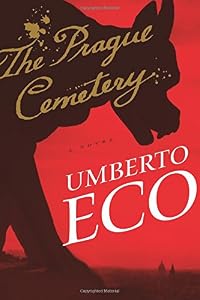
The Prague Cemetery
by Umberto Eco
On This Page
Description
"19th-century Europe--from Turin to Prague to Paris--abounds with the ghastly and the mysterious. Jesuits plot against Freemasons. In Italy, republicans strangle priests with their own intestines. In France, during the Paris Commune, people eat mice, plan bombings and rebellions in the streets, and celebrate Black Masses. Every nation has its own secret service, perpetrating conspiracies and even massacres. There are false beards, false lawyers, false wills, even false deaths. From the show more Dreyfus Affair to the Protocols of the Elders of Zion, the Jews are blamed for everything. One man connects each of these threads into a massive crazy-quilt conspiracy within conspiracies. Here, he confesses all, thanks to Umberto Eco's ingenious imagination--a thrill-ride through the underbelly of actual, world-shattering events. "-- show lessTags
Recommendations






Member Recommendations
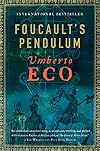
bookmomo Two brilliant conspiracy stories, with heaps of secrets and scret societies, wicked or plain mad characters. Both well written.
141



SnootyBaronet Ranting anti-Semitic protagonists


Member Reviews
Eco enjoys himself writing a spoof late-nineteenth-century adventure story, complete with ingeniously repurposed period engravings, that sends up all the great conspiracy theories of the period (freemasons, Jesuits, Dreyfus, satanism, Protocols of the elders of Zion, communists, etc.) by ingeniously linking them all to a single fictional character, the professional police-informer and forger of legal documents Simone Simonini, a Piedmontese exile living in Paris. (It's a kind of inversion of the plot of Foucault's pendulum.)
Simone is trying to get to the bottom of a strange memory loss he's been experiencing, which seems to have something to do with the occasional visits to his apartment of the Abbé Dalla Piccola. Maybe he can achieve show more something by applying techniques he's been told about by a young Austrian doctor he chatted to in a restaurant — what was he called, Froïde or something like that...?
All very silly, and as overcomplicated as only Eco can achieve, but of course it does also have a serious point to make about how the effects of a story in the real world can be entirely unrelated to its truth, or even plausibility, or to the circumstances of its creation. If you write something that sustains and reinforces the prejudices of (some of) the public, there's a good chance they will believe it and act on it, even if it's later exposed as a forgery or a cynical falsification. show less
Simone is trying to get to the bottom of a strange memory loss he's been experiencing, which seems to have something to do with the occasional visits to his apartment of the Abbé Dalla Piccola. Maybe he can achieve show more something by applying techniques he's been told about by a young Austrian doctor he chatted to in a restaurant — what was he called, Froïde or something like that...?
All very silly, and as overcomplicated as only Eco can achieve, but of course it does also have a serious point to make about how the effects of a story in the real world can be entirely unrelated to its truth, or even plausibility, or to the circumstances of its creation. If you write something that sustains and reinforces the prejudices of (some of) the public, there's a good chance they will believe it and act on it, even if it's later exposed as a forgery or a cynical falsification. show less
To review an ECO novel is always a pleasure. There is no fundamental way of knowing how you are going to feel after turning the last page of an ECO novel and The Prague Cemetery is no exception. To describe exactly what this book encompasses and the implications (as you will find with any of the authors work) is impossible. Our protagonist could be responsible for some of the most tragic events of the last two-hundred years. Including events that unfolded decades beyond him. This story is SO indicative to current events that it will make your head spin. All of the characters, excluding, the main one are actual historical figures and all events are historical events. From the unification of Italy as a nation to the Paris Commune, the show more desire of one man (or many) to implicate, depredate, humiliate and downplay a race will become a lifelong occupation that spans multiple generations. Is he behind them, part of them, imagining them or being made to believe he is responsible when someone else might be pulling the strings? The outcome will leave you wondering and long after turning the last page you will change your mind repeatedly and question what you have determined the outcome is in accordance to what you think you may know….but you will feel incomplete because you know there is something missing that you are unaware of. And this is where you encounter not only the spectre of the character walking off the pages but also the writer tearing at your brain and bombarding you with ambiguous, twisted and broken answers. But do not fret. This is exactly what the author wants. You are going to fall into his trap and when you trip over that invisible precipice it will be a very long fall. Welcome to the world of UMBERTO ECO. show less
The Prague Cemetery is something like a more anti-heroic Fight Club set in late 19th-century Paris, using a diary framework to provide a thorough excavation of the self-dissociated central character. The Piedmontese Simone Simonini is as vile a creature as one can imagine, guilty of venal crimes that he sees through to their murderous conclusions, and of a great misdeed to bear fruit over succeeding generations. He is a double-crossing pseudo-spy, filled with misogyny, antisemitism, paranoia, and avarice. At one point, contemplating an author he has met, Simonini remarks, "I have been told that the great storytellers always portray themselves in their characters" (275). Such an adage invites application to the author of The Prague show more Cemetery himself, but why or how would Umberto Eco want to be compared to Simonini?
As a career forger who has been enlisted by the intelligence apparatuses of various powers, most often to fabricate "evidence" damning those they'd like to do away with, Simonini plagiarizes novels for his "historical" documents. Eco plagiarizes history for his novel. (He assures us that Simonini is the only fictional character of substance in the whole thing.) Eco's agenda like Simonini's is didactic and propagandistic. Simonini wants to warn his readers about the Jews and their plots; Eco wants to warn us about antisemitism and its cultural conditions.
The fabrication of political scapegoats to suffer the outrages of authoritarian violence is not limited to the 20th-century antisemitic movements which are shown being incubated in this novel. Russian secret police have a part to play in The Prague Cemetery, and I would encourage those who read this book today to observe the persecution of gays and lesbians in Russia by means of cultural capital produced in America: the "family values" and anti-"homosexualist" rhetoric crafted by right-wing churches and think tanks. (Scott Lively is one of today's more obvious Simone Simoninis.)
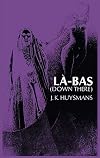
Bereft of any nobler motivation, Simonini takes his chief enjoyment in life from food. The novel has occasional raptures of gastronomical detail, reminiscent of Huysmanns' diabolical 1890s novel La-Bas (which also includes--a clef--some of Eco's historical characters). A surprising but effective feature is an assortment of full-page illustrations from period engravings, at the rate of roughly one per chapter.
The Prague Cemetery does resume a number of themes from Eco's Foucault's Pendulum. But in this case, the seemingly more bizarre facts are even more authentic, and the moral upshot is more persuasive and important. Those who enjoy the historical elements of this story and don't mind adding a bit of whimsy to the incendiary past can continue on without diachronic interruption to Thomas Pynchon's Against the Day. show less
As a career forger who has been enlisted by the intelligence apparatuses of various powers, most often to fabricate "evidence" damning those they'd like to do away with, Simonini plagiarizes novels for his "historical" documents. Eco plagiarizes history for his novel. (He assures us that Simonini is the only fictional character of substance in the whole thing.) Eco's agenda like Simonini's is didactic and propagandistic. Simonini wants to warn his readers about the Jews and their plots; Eco wants to warn us about antisemitism and its cultural conditions.
The fabrication of political scapegoats to suffer the outrages of authoritarian violence is not limited to the 20th-century antisemitic movements which are shown being incubated in this novel. Russian secret police have a part to play in The Prague Cemetery, and I would encourage those who read this book today to observe the persecution of gays and lesbians in Russia by means of cultural capital produced in America: the "family values" and anti-"homosexualist" rhetoric crafted by right-wing churches and think tanks. (Scott Lively is one of today's more obvious Simone Simoninis.)
Bereft of any nobler motivation, Simonini takes his chief enjoyment in life from food. The novel has occasional raptures of gastronomical detail, reminiscent of Huysmanns' diabolical 1890s novel La-Bas (which also includes--a clef--some of Eco's historical characters). A surprising but effective feature is an assortment of full-page illustrations from period engravings, at the rate of roughly one per chapter.
The Prague Cemetery does resume a number of themes from Eco's Foucault's Pendulum. But in this case, the seemingly more bizarre facts are even more authentic, and the moral upshot is more persuasive and important. Those who enjoy the historical elements of this story and don't mind adding a bit of whimsy to the incendiary past can continue on without diachronic interruption to Thomas Pynchon's Against the Day. show less
This is a difficult read for many reasons. Most of all because it is full of disgusting bile. Every anti-Semitic trope is here, many times over. You name it, the Elders of Zion, Illuminati, Masons, big noses, curly hair, usury, moneylenders, Christ killers, blood suckers, etc., etc., etc. It goes on and on. It has two redeeming values, it's beautifully put together by an expert and hopefully I'll never need to go back to it again - once is more than enough.
And reading this in the time of Trump adds another level of concern. This is full of conspiracy theories. We're shown over and over how these narratives are recycled ad nauseum. Each time another twist is added making each revision harder and harder to believe anyone is going to show more believe this nonsense - but their ability to persist makes it even more disheartening.
The story is set in nineteenth century Europe, starting in parts of Italy prior to unification and moving to Paris trying to stay a step ahead of ….many people. The protagonist is a forger who trades in false documents, such as wills, etc. There are many references to real people and groups such as Garibaldi, Napoleon III, Zola, Dumas, various popes, Marat, Eifel, Marx, Froid(sic), Carbonari, Jesuits, The Commune, Masons, gendarmes, Prussians, and of course Dreyfus. And real places such as Les Halles, Louvre, Eifel Tower, Vatican City, Rome, Palermo, Piedmont, Sicily, and of course Prague.
An important feature of this book are it's illustrations. Almost every fifth page is a full page black and white ink drawing in the style of Daumier. Every one has a sentence from the book as it's caption. According to the illustration credits virtually all of them are from the personal collection of the author. The author also includes a guide to the story and the plot to help the reader as the story is told from three points of view, a narrator, the protagonist, Captain Simonini and his split personality. Abbe Dalla Picolla. They never see each other but exchange information by leaving entries in a diary. Often they wonder whether they might be the same person. Given that the illustrations were in the author's collection I wondered if this book had been story boarded by having all of this put up on a wall like modern crime stories where the detective is trying to connect all the dots. I couldn't get that image out of my mind as I read.
Bottom line, read this if you must. It's beautifully constructed and will push your mind. Just be prepared to feel the need to take a shower. show less
And reading this in the time of Trump adds another level of concern. This is full of conspiracy theories. We're shown over and over how these narratives are recycled ad nauseum. Each time another twist is added making each revision harder and harder to believe anyone is going to show more believe this nonsense - but their ability to persist makes it even more disheartening.
The story is set in nineteenth century Europe, starting in parts of Italy prior to unification and moving to Paris trying to stay a step ahead of ….many people. The protagonist is a forger who trades in false documents, such as wills, etc. There are many references to real people and groups such as Garibaldi, Napoleon III, Zola, Dumas, various popes, Marat, Eifel, Marx, Froid(sic), Carbonari, Jesuits, The Commune, Masons, gendarmes, Prussians, and of course Dreyfus. And real places such as Les Halles, Louvre, Eifel Tower, Vatican City, Rome, Palermo, Piedmont, Sicily, and of course Prague.
An important feature of this book are it's illustrations. Almost every fifth page is a full page black and white ink drawing in the style of Daumier. Every one has a sentence from the book as it's caption. According to the illustration credits virtually all of them are from the personal collection of the author. The author also includes a guide to the story and the plot to help the reader as the story is told from three points of view, a narrator, the protagonist, Captain Simonini and his split personality. Abbe Dalla Picolla. They never see each other but exchange information by leaving entries in a diary. Often they wonder whether they might be the same person. Given that the illustrations were in the author's collection I wondered if this book had been story boarded by having all of this put up on a wall like modern crime stories where the detective is trying to connect all the dots. I couldn't get that image out of my mind as I read.
Bottom line, read this if you must. It's beautifully constructed and will push your mind. Just be prepared to feel the need to take a shower. show less
Eco is a master at writing historical fiction with a clear and special relevance to the present day and with an accurate representation of the past.
The book is presented as the journal of Captain Simonini, originally from Italy, but a long time resident in Paris, written at the end of the 19th century and describes his life and work. Europe is awash with conspiracy theories, espionage, secret organisations and always the need to find scapegoats to blame when things go wrong.
Simonini has become and expert forger and is much in demand to create wills and other legal documents to support his clients’ claims. He is also drawn in to the darker worlds of conspiracy and espionage where he begins to create documents and paper trails with a show more distinct anti-Semitic bent. This activity ultimately causes him to write the notorious Protocols of the Elders of Zion, an entirely fictitious and disproved work that, nevertheless, became a founding element in the anti-semitism movement in the 20th century and was taken up by Adolf Hitler and the Nazi Party.
Eco does two things with this book. The first is to provide an extraordinarily factual historic background to the narrative; almost every character and event in the book is part of the historic record. The second and most important thing is to show how totally ridiculous, almost comical, these conspiracies and ‘documented revelations’ were. As I read this book today I kept asking myself how anyone could fall for, let alone believe, such twaddle.
This is an important book in the fight against racism and against anti-semitism in particular. It shows how the gullible and unscrupulous both can be used by and use what we would today call trolling to achieve the key aim of deflecting blame and responsibility for some perceived failure onto the wholly innocent. That Eco does this with such humour is a mark of his greatness as an author. show less
The book is presented as the journal of Captain Simonini, originally from Italy, but a long time resident in Paris, written at the end of the 19th century and describes his life and work. Europe is awash with conspiracy theories, espionage, secret organisations and always the need to find scapegoats to blame when things go wrong.
Simonini has become and expert forger and is much in demand to create wills and other legal documents to support his clients’ claims. He is also drawn in to the darker worlds of conspiracy and espionage where he begins to create documents and paper trails with a show more distinct anti-Semitic bent. This activity ultimately causes him to write the notorious Protocols of the Elders of Zion, an entirely fictitious and disproved work that, nevertheless, became a founding element in the anti-semitism movement in the 20th century and was taken up by Adolf Hitler and the Nazi Party.
Eco does two things with this book. The first is to provide an extraordinarily factual historic background to the narrative; almost every character and event in the book is part of the historic record. The second and most important thing is to show how totally ridiculous, almost comical, these conspiracies and ‘documented revelations’ were. As I read this book today I kept asking myself how anyone could fall for, let alone believe, such twaddle.
This is an important book in the fight against racism and against anti-semitism in particular. It shows how the gullible and unscrupulous both can be used by and use what we would today call trolling to achieve the key aim of deflecting blame and responsibility for some perceived failure onto the wholly innocent. That Eco does this with such humour is a mark of his greatness as an author. show less
Umberto Eco's latest novel, The Prague Cemetery (translated into English by Richard Dixon and published in America by Houghton Mifflin Harcourt, 2011) is decidedly not for the easily offended. It's a brilliant examination of 19th-century conspiracies and the prejudice and hatred which brought them into being. Eco examines, contextualizes and offers up a fictional (but entirely plausible) explanation for a wide range of historical conspiracies, from the Dreyfuss Affair to the composition of the Protocols of the Elders of Zion to the unification of Italy and the Franco-Prussian War. Think of this as the conspiracy that ties all the rest together.
The book's main character is Simone Simonini, a thoroughly loathsome fellow. A forger by show more trade, he's employed by the secret police departments of various countries to create documents and arrage sting operations that will ensare whoever happens to be the enemy at that particular moment. Many chapters are presented as entries from Simonini's diary; these alternate with sections written (and printed in a different font) by Abbé Dalla Piccola, a priest who seems to be able to recall portions of Simonini's life and career that he himself has forgotten. The two may or may not be the same person (you'll have to read the book to find out for yourself just what their relationship truly is). And an omniscient narrator occasionally breaks in to move the narrative foward a bit when the diary trails off or becomes (these chapters are printed in a third font, which is quite helpful).
Eco writes that the only fictional character in the book is Simonini himself; most of the rest of those here were real people who did pretty much what Eco has them do in the book. Only someone with as wide a literary reach as Eco would be able to pull off a book like this, with its broad overview of European history, politics, economics, religion and literary culture all wrapped up into a single character's life story. The period illustrations (most from his own collection) added throughout the text do much to enhance the text. Simonini's rapturous ravings about food were delightful to read; even though the man's a true piece of work, he can still wax rhapsodic about a good meal.
Hate is a powerful thing, and Eco has represented some of its many manifestations expertly. Not a light-hearted book, or one likely to give you good dreams, but a novel that will make you think, told by one of the smartest storytellers of our time.
http://philobiblos.blogspot.com/2011/11/book-review-prague-cemetery.html show less
The book's main character is Simone Simonini, a thoroughly loathsome fellow. A forger by show more trade, he's employed by the secret police departments of various countries to create documents and arrage sting operations that will ensare whoever happens to be the enemy at that particular moment. Many chapters are presented as entries from Simonini's diary; these alternate with sections written (and printed in a different font) by Abbé Dalla Piccola, a priest who seems to be able to recall portions of Simonini's life and career that he himself has forgotten. The two may or may not be the same person (you'll have to read the book to find out for yourself just what their relationship truly is). And an omniscient narrator occasionally breaks in to move the narrative foward a bit when the diary trails off or becomes (these chapters are printed in a third font, which is quite helpful).
Eco writes that the only fictional character in the book is Simonini himself; most of the rest of those here were real people who did pretty much what Eco has them do in the book. Only someone with as wide a literary reach as Eco would be able to pull off a book like this, with its broad overview of European history, politics, economics, religion and literary culture all wrapped up into a single character's life story. The period illustrations (most from his own collection) added throughout the text do much to enhance the text. Simonini's rapturous ravings about food were delightful to read; even though the man's a true piece of work, he can still wax rhapsodic about a good meal.
Hate is a powerful thing, and Eco has represented some of its many manifestations expertly. Not a light-hearted book, or one likely to give you good dreams, but a novel that will make you think, told by one of the smartest storytellers of our time.
http://philobiblos.blogspot.com/2011/11/book-review-prague-cemetery.html show less
We realized we had gone too far; the idea of a three-headed devil who banqueted with the leader of the Italian government was difficult to swallow.
The protagonist of Umberto Eco's novel is not a sympathetic character. His first words to the reader are in the form of an epic rant in which he disparages and reviles every single group he can think of; women, Jews, Catholics, Germans, the French, Jesuits, and Freemasons are among those singled out for his disgust. And Simonini never does a single thing to endear himself to the reader.
And that's my quibble with this outrageous, conspiracy-driven book. It's similar to Foucault's Pendulum, being full of arcane plots and secret societies, and to Baudolino with an opportunistic main character show more who deals in forgeries. But while Casaubon and Baudolino were engaging characters despite their flaws, Simonini is a guy who inspires only a mild distaste. With a complex plot that requires concentration and a good grasp of nineteenth century European history (among other things), I needed someone to hold on to through the cyclone of events and obscure references.
Simonini gets his professional start forging wills and titles for an unscrupulous lawyer, until that gentleman dies and leaves Simonini his business, in an unexpected will. Simonini is then asked to implicate his friends in an imaginary plot, which then lead to an assignment with Garibaldi's forces in the South of Italy and on to further work in Paris. Simonini is less a spy than someone who is able to enjoy the reputation of a spy and to convey that reputation into a steady income. But his masterpiece, one that takes much of his life to complete and use appropriately, involves an imaginary meeting of rabbis in the Jewish cemetery in Prague in which they agree on a series of protocols that will allow them to control the world.
The conspiracies that Simonini is involved in are fantastic. More than a few times I'd be reading along and think, "hey, that sounds a little like that scandal/affair/coup," only to realize that it was that scandal/affair/coup and that Eco has the entire event based on Simonini's forgeries and groups with devious intentions.
This is a book I struggled with in part because my grasp of the history of that time is shallow and unsteady. I'd like to reread this book in a few years, with a bit of advance reading under my belt. I suspect I will like it more with a second reading. show less
The protagonist of Umberto Eco's novel is not a sympathetic character. His first words to the reader are in the form of an epic rant in which he disparages and reviles every single group he can think of; women, Jews, Catholics, Germans, the French, Jesuits, and Freemasons are among those singled out for his disgust. And Simonini never does a single thing to endear himself to the reader.
And that's my quibble with this outrageous, conspiracy-driven book. It's similar to Foucault's Pendulum, being full of arcane plots and secret societies, and to Baudolino with an opportunistic main character show more who deals in forgeries. But while Casaubon and Baudolino were engaging characters despite their flaws, Simonini is a guy who inspires only a mild distaste. With a complex plot that requires concentration and a good grasp of nineteenth century European history (among other things), I needed someone to hold on to through the cyclone of events and obscure references.
Simonini gets his professional start forging wills and titles for an unscrupulous lawyer, until that gentleman dies and leaves Simonini his business, in an unexpected will. Simonini is then asked to implicate his friends in an imaginary plot, which then lead to an assignment with Garibaldi's forces in the South of Italy and on to further work in Paris. Simonini is less a spy than someone who is able to enjoy the reputation of a spy and to convey that reputation into a steady income. But his masterpiece, one that takes much of his life to complete and use appropriately, involves an imaginary meeting of rabbis in the Jewish cemetery in Prague in which they agree on a series of protocols that will allow them to control the world.
The conspiracies that Simonini is involved in are fantastic. More than a few times I'd be reading along and think, "hey, that sounds a little like that scandal/affair/coup," only to realize that it was that scandal/affair/coup and that Eco has the entire event based on Simonini's forgeries and groups with devious intentions.
This is a book I struggled with in part because my grasp of the history of that time is shallow and unsteady. I'd like to reread this book in a few years, with a bit of advance reading under my belt. I suspect I will like it more with a second reading. show less
Members
- Recently Added By
Published Reviews
ThingScore 64
Eco's mastery of the milieu is evident on every page of "The Prague Cemetery."
added by bookfitz
If the creation of Simone Simonini is meant to suggest that behind the credibility-straining history lurks a sick spirit compounded of equal parts self-serving cynicism and irrational malice, who can argue? And even if the best parts of “The Prague Cemetery” are those he did not invent, Eco is to be applauded for bringing this stranger-than-fiction truth vividly to life.
added by Shortride
The real story, then, is one that “The Prague Cemetery” hints at but does not for all its polymath erudition manage to capture: our impotence in the face of an obvious forgery, an absurd pastiche against which the ramparts of reason afford astonishingly feeble protection.
added by rab1953
Lists

Best Spy Fiction
156 works; 103 members

Best Historical Fiction
620 works; 261 members

Historical Fiction
889 works; 91 members

Italian Literature
556 works; 41 members

Best Books Involving Satan
63 works; 24 members
EU Fiction: 1950-2022
223 works; 70 members

Fiction Featuring Real People
81 works; 17 members

Books set in Prague
40 works; 1 member

SHOULD Read Books!
354 works; 9 members

KayStJ's to-read list
1,616 works; 11 members

Books Read in 2021
5,361 works; 113 members

A Smorgasbord of Culinary Fiction
221 works; 94 members

Novels with a city or town in the title
61 works; 1 member
Author Information

500+ Works 115,067 Members
Umberto Eco was born in Alessandria, Italy on January 5, 1932. He received a doctorate of philosophy from the University of Turin in 1954. His first book, Il Problema Estetico in San Tommaso, was an extension of his doctoral thesis on St. Thomas Aquinas and was published in 1956. His first novel, The Name of the Rose, was published in 1980 and won show more the Premio Strega and the Premio Anghiar awards in 1981. In 1986, it was adapted into a movie starring Sean Connery. His other works include Foucault's Pendulum, The Island of the Day Before, Baudolino, The Prague Cemetery, and Numero Zero. He also wrote children's books and more than 20 nonfiction books including Serendipities: Language and Lunacy. He taught philosophy and then semiotics at the University of Bologna. He also wrote weekly columns on popular culture and politics for L'Espresso. He died from cancer on February 19, 2016 at the age of 84. (Bowker Author Biography) show less
Some Editions
Awards and Honors
Awards
Series
Belongs to Publisher Series
Work Relationships
Is contained in
Contains
Was inspired by
Common Knowledge
- Canonical title
- The Prague Cemetery
- Original title
- Il cimitero di Praga
- Original publication date
- 2010 (original Italian) (original Italian)
- People/Characters
- Simone Simonini; Giuseppe Garibaldi; Sigmund Freud; Eugene Vintras; Diana Vaughan; Leo Taxil (show all 7); Dr. Bataille
- Important places
- Turin, Piedmont, Italy; Palermo, Sicily, Italy; Paris, France; Prague, Bohemia; Prague, Czech Republic
- Important events
- Expedition of the Thousand (1860 | 1861); Franco-Prussian War (1870 | 1871); Paris Commune (1871); Italian Risorgimento (1815 | 1871); Dreyfus Affair; Taxil Hoax
- Epigraph
- Since these episodes are necessary, indeed form a central part of any historical account, we have included the execution of one hundred citizens hanged in the public square, two friars burned alive, and the appearance of a co... (show all)met—all descriptions that are worth a hundred tournaments and have the merit of diverting the reader's mind as much as possible from the principal action.
—Carlo Tenca, La ca' dei cani, 1840 - First words
- A passerby on that gray morning in March 1897, crossing, at his own risk and peril, place Maubert, or the Maub, as it was known in criminal circles (formerly a center of university life in the Middle Ages, when students flock... (show all)ed there from the Faculty of Arts in Vicus Stramineus, or rue du Fouarre, and later a place of execution for apostles of free thought such as Étienne Dolet), would have found himself in one of the few spots in Paris spared from Baron Haussmann's devastations, amid a tangle of malodorous alleys, sliced in two by the course of the Bièvre, which still emerged here, flowing out from the bowels of the metropolis, where it had long been confined, before emptying feverish, gasping and verminous into the nearby Seine.
- Quotations
- Gli uomini non fanno mai il male così completamente ed entusiasticamente come quando lo fanno per convinzione religiosa.
La gente crede solo a quello che sa già, e questa era la bellezza della Formula Universale del Complotto.
People are never so completely and enthusiastically evil as when they act out of religious conviction
Listening doesn't mean trying to understand. Anything, however trifling, may be of use one day. What matters is to know something that others don't know you know. - Last words
- (Click to show. Warning: May contain spoilers.)For heaven's sake, I'm not yet a decrepit old fool.
- Publisher's editor*
- Bompiani
- Blurbers
- Ozick, Cynthia
- Original language
- Italian
- Canonical DDC/MDS
- 853.914
- Canonical LCC
- PQ4865.C6
*Some information comes from Common Knowledge in other languages. Click "Edit" for more information.
Classifications
- Genres
- General Fiction, Fiction and Literature, Historical Fiction
- DDC/MDS
- 853.914 — Literature & rhetoric Italian, Romanian & related literatures Italian fiction 1900- 20th Century 1945-1999
- LCC
- PQ4865 .C6 — Language and Literature French, Italian, Spanish and Portuguese literatures Italian literature Individual authors, 1961-2000
- BISAC
Statistics
- Members
- 5,145
- Popularity
- 2,659
- Reviews
- 174
- Rating
- (3.36)
- Languages
- 30 — Bulgarian, Catalan, Chinese, Czech, Danish, Dutch, English, Estonian, Finnish, French, German, Greek, Hebrew, Hungarian, Italian, Japanese, Latvian, Lithuanian, Creek, Norwegian (Bokmål), Norwegian, Polish, Portuguese, Romanian, Russian, Serbian, Slovak, Spanish, Swedish, Turkish
- Media
- Paper, Audiobook, Ebook
- ISBNs
- 107
- ASINs
- 41