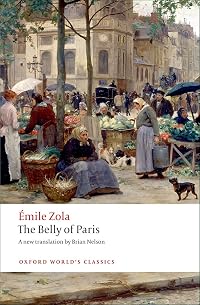
The Belly of Paris
by Émile Zola
Les Rougon-Macquart (publication order) (3), Les Rougon-Macquart (Zola's recommended reading order) (11)
On This Page
Description
Respectable people... What bastards!'Unjustly deported to Devil's Island following Louis-Napoleon's coup-d'øtat in December 1851, Florent Quenu escapes and returns to Paris. He finds the city changed beyond recognition. The old Marchø des Innocents has been knocked down as part of Haussmann's grand programme of urban reconstruction to make way for Les Halles, the spectacular new food markets. Disgusted by a bourgeois society whose devotion to food is inseparable from its devotion to the show more Government, Florentattempts an insurrection. Les Halles, apocalyptic and destructive, play an active role in Zola's picture of a world in which food and the injustice of society are inextricably linked.The Belly of Paris (Le Ventre de Paris) is the third volume in Zola's famous cycle of twenty novels, Les Rougon-Macquart. It introduces the painter Claude Lantier and in its satirical representation of the bourgeoisie and capitalism complements Zola's other great novels of social conflict and urban poverty. show lessTags
Recommendations




































Member Recommendations

Member Reviews
Florent is on his last legs. He has escaped from French Guiana and made his way back to France after seven hellish years on Devil's Island. He's starved, fainting, and unsure where in Paris he is—everything has changed since he was deported. He is picked up from a dead faint by a peasant woman who is bringing her farm produce to Les Halles. Thus he arrives in Paris starving, but on a bed of plump vegetables.
This dichotomy of overabundance and want is heightened when Florent arrives on the doorstep of his half-brother, Quenu. Quenu and his wife, Lisa, own a charcuterie and are the epitome of bourgeois respectability. They are fat, prosperous, and unconcerned with the idealism that drives Florent. They take him in, as is only right, show more but pressure him to settle down into their way of life. Florent tries, getting a job at Les Halles, but the excess and gluttony of the markets is a pressure on his soul. To him, the sights and smells of the dead and dying animals, the grotesque bellies and breasts of the stall keepers, and the petty smallness of thought reflect all that is rotten in the Second Empire. Soon his thoughts turn to revolution.
Although The Belly of Paris was the third book Zola wrote in the Rougon-Macquart cycle, I am reading it as the eleventh in Zola's recommended order. Thus is is closer to the books coming up which feature some of the same characters, yet I think it would have been interesting to read it right after The Kill. The themes mirror each other in some ways. Saccard's grasping passion for making money is akin to the gluttonous desires that drive the success of Les Halles. In addition, Baron Hausman's remaking of Paris, which plays a prominent role in The Kill, is similar to the capitalist grandiosity of Les Halles, which replaces the traditional markets.
I liked this book, although I found it stressful to know what was going to happen to Florent, when he is so childishly oblivious to his fate. In the primal battle between the Fat and the Thin (Zola's terms), Florent is doomed. show less
This dichotomy of overabundance and want is heightened when Florent arrives on the doorstep of his half-brother, Quenu. Quenu and his wife, Lisa, own a charcuterie and are the epitome of bourgeois respectability. They are fat, prosperous, and unconcerned with the idealism that drives Florent. They take him in, as is only right, show more but pressure him to settle down into their way of life. Florent tries, getting a job at Les Halles, but the excess and gluttony of the markets is a pressure on his soul. To him, the sights and smells of the dead and dying animals, the grotesque bellies and breasts of the stall keepers, and the petty smallness of thought reflect all that is rotten in the Second Empire. Soon his thoughts turn to revolution.
Although The Belly of Paris was the third book Zola wrote in the Rougon-Macquart cycle, I am reading it as the eleventh in Zola's recommended order. Thus is is closer to the books coming up which feature some of the same characters, yet I think it would have been interesting to read it right after The Kill. The themes mirror each other in some ways. Saccard's grasping passion for making money is akin to the gluttonous desires that drive the success of Les Halles. In addition, Baron Hausman's remaking of Paris, which plays a prominent role in The Kill, is similar to the capitalist grandiosity of Les Halles, which replaces the traditional markets.
I liked this book, although I found it stressful to know what was going to happen to Florent, when he is so childishly oblivious to his fate. In the primal battle between the Fat and the Thin (Zola's terms), Florent is doomed. show less
Not suitable for vegetarians; may contain large quantities of animal fats, sugar, carbohydrates, nuts, gluten, rampant capitalism, etc.
In this third volume of the Rougon-Macquart cycle, readers couldn't avoid noticing what an extraordinary kind of writer Zola was (in case they hadn't spotted it already...). The novel is composed exactly like one of those Flemish kitchen-scene paintings where 80% of the canvas is covered with vividly-rendered fruit & veg, poultry, fish, and meat, usually with a muscular kitchen-maid doing something nasty to a duck, and a lot of gleaming copper pans. And when you look really closely, somewhere in the background through a doorway you will spot a narrative going on - usually Christ in the house of Mary and show more Martha, or the Road to Emmaus.
Zola takes us on a gloriously overpowering virtual-reality tour of the sights, smells, textures and sounds of Paris's central food market, Les Halles, as rebuilt in magnificent Second Empire cast-iron and glass by Victor Baltard in the 1850s and 60s. Everywhere we look there is sensory overload as we are manoeuvred around piles of cabbages and turnips, mountains of fresh fish, vast displays of charcuterie, a competition of smelly cheeses, piles of animal carcasses, cellars full of pigeons and ducks, drains running with offal, and hundreds of traders, butchers, porters and market officials rushing around in a desperate hurry. All the drama and excitement of how you manage to feed a city of over a million people in this strange modern world. It's often said that Zola - like Thomas Hardy - was only a novelist because the cinema wasn't invented in time for him, but when you read this, it's pretty clear that Zola would have found the cinema's limitation to reproducing sound and vision only far too restrictive. He needs to be able to address all our senses from all directions at once to get his effect.
Somewhere in between all this high-pressure trading in perishable wares, there is a story going on, a typical Zola story of a hapless well-intentioned individual crushed under Napoleon III's regime, but it's tucked away so far in the background that we're made to realise just how little an individual human's fate counts for in the middle of the capitalist euphoria of booming Paris. Everything is about production, consumption, and excess, and Zola doesn't hesitate to milk it. In what's probably the most memorable scene in a novel that consists almost entirely of memorable scenes, the unfortunate Florent is telling what should be the exciting tale of how he escaped from the inhuman conditions of Devil's Island, but Florent's brother, now a charcutier, is busy making boudin, and Zola keeps distracting us and the other listeners from Florent's attempts to survive in the Guyanan jungle with the complex and difficult process of preparing blood-sausage. In the end, only his five-year-old niece, fascinated by "l’histoire du monsieur qui a été mangé par les bêtes", is actually listening to Florent. show less
In this third volume of the Rougon-Macquart cycle, readers couldn't avoid noticing what an extraordinary kind of writer Zola was (in case they hadn't spotted it already...). The novel is composed exactly like one of those Flemish kitchen-scene paintings where 80% of the canvas is covered with vividly-rendered fruit & veg, poultry, fish, and meat, usually with a muscular kitchen-maid doing something nasty to a duck, and a lot of gleaming copper pans. And when you look really closely, somewhere in the background through a doorway you will spot a narrative going on - usually Christ in the house of Mary and show more Martha, or the Road to Emmaus.
Zola takes us on a gloriously overpowering virtual-reality tour of the sights, smells, textures and sounds of Paris's central food market, Les Halles, as rebuilt in magnificent Second Empire cast-iron and glass by Victor Baltard in the 1850s and 60s. Everywhere we look there is sensory overload as we are manoeuvred around piles of cabbages and turnips, mountains of fresh fish, vast displays of charcuterie, a competition of smelly cheeses, piles of animal carcasses, cellars full of pigeons and ducks, drains running with offal, and hundreds of traders, butchers, porters and market officials rushing around in a desperate hurry. All the drama and excitement of how you manage to feed a city of over a million people in this strange modern world. It's often said that Zola - like Thomas Hardy - was only a novelist because the cinema wasn't invented in time for him, but when you read this, it's pretty clear that Zola would have found the cinema's limitation to reproducing sound and vision only far too restrictive. He needs to be able to address all our senses from all directions at once to get his effect.
Somewhere in between all this high-pressure trading in perishable wares, there is a story going on, a typical Zola story of a hapless well-intentioned individual crushed under Napoleon III's regime, but it's tucked away so far in the background that we're made to realise just how little an individual human's fate counts for in the middle of the capitalist euphoria of booming Paris. Everything is about production, consumption, and excess, and Zola doesn't hesitate to milk it. In what's probably the most memorable scene in a novel that consists almost entirely of memorable scenes, the unfortunate Florent is telling what should be the exciting tale of how he escaped from the inhuman conditions of Devil's Island, but Florent's brother, now a charcutier, is busy making boudin, and Zola keeps distracting us and the other listeners from Florent's attempts to survive in the Guyanan jungle with the complex and difficult process of preparing blood-sausage. In the end, only his five-year-old niece, fascinated by "l’histoire du monsieur qui a été mangé par les bêtes", is actually listening to Florent. show less
Una solenne indigestione di odori, colori, sapori, una sovrabbondanza rubensiana che nutre, soffoca e infine uccide. Uccide la coscienza, asfissiata dal grasso della opulenta borghesia mercantile di Parigi, che gravita intorno al suo ventre enorme, i Mercati generali, dove, ogni giorno, si riversano gli ortaggi, la frutta, le carni, i pesci, i formaggi che servono a nutrire la metropoli.
E in questo cosmo chiuso e gravato da tutti i suoi odori si svolge la vicenda di due fratellastri, uno grasso e bottegaio e uno magro e sognatore.
Alla fine il magro, come un corpo estraneo, verrà cancellato da questo immenso ventre, mandato al bagno penale, dimenticato, e il ventre potrà continuare tranquillo la sua non vita digestiva.
E in questo cosmo chiuso e gravato da tutti i suoi odori si svolge la vicenda di due fratellastri, uno grasso e bottegaio e uno magro e sognatore.
Alla fine il magro, come un corpo estraneo, verrà cancellato da questo immenso ventre, mandato al bagno penale, dimenticato, e il ventre potrà continuare tranquillo la sua non vita digestiva.
3.5 stars
I was both glutted, and gutted, by this third novel in les Rougon Macquart series, for the book swings from utter starvation to a surfeit of every imaginable food. It is Zola's intent to demonstrate the gluttony of state by juxtaposing it against the misery of the working poor; in both cases, I became queasy with despair, for there is never a just answer to the injustice of life.
While the contrasts worked well in the broader context of outlining the inherent sins of the Second Empire, it did not work all that well in procuring enough sympathy for the right side -- for it seems Zola lost himself in the very descriptiveness of gluttony. Rather than portraying it as a disease, he almost became the disease in an ironic twist of show more descriptive excess, revelling in the very lechery of his language. Page after page after page of endless descriptions of food became the nausea of the book. I found it to be quite a slog, at one point, and almost gave it up. The irony not lost on me is that I should be reading this throughout the days of Lent. (Even as a recovering catholic, I feel the weight of the purple shroud on my shoulders at this time of year. See what I mean? Now I'm doing it too -- indulging in the excess of language. It's really such a weighty book, and leaves no room for the imagination.)
Overcome by the sights and smells of Les Halles, I could not even summon the requisite sympathy for Florent, our hapless would-be protagonist. His story is overdone as well -- the luckless hero who walks right back into his own worst nightmare, pulled along more by inertia than determination to seek true justice. This character befuddled me utterly because he doesn't seem to fit, at all, into Zola's master plan: that of painting the revolutionary heroes with empathy and spirit. Instead, he comes across as a dejected and already-defeated malingerer.
I, in turn, was quite -- defeated -- by this novel. Someday I may return to it, and work my way through it again to see if it comes across more clearly. Perhaps I would have more luck if I sipped it accompanied by a pure broth.
As other reviewers have noted, this story has been done better by Dickens and Hugo. In Dickens, for one, it is a far, far better tale, told with less indigestion.
If there had been less food for thought, it might have merited a 4 star rating. show less
I was both glutted, and gutted, by this third novel in les Rougon Macquart series, for the book swings from utter starvation to a surfeit of every imaginable food. It is Zola's intent to demonstrate the gluttony of state by juxtaposing it against the misery of the working poor; in both cases, I became queasy with despair, for there is never a just answer to the injustice of life.
While the contrasts worked well in the broader context of outlining the inherent sins of the Second Empire, it did not work all that well in procuring enough sympathy for the right side -- for it seems Zola lost himself in the very descriptiveness of gluttony. Rather than portraying it as a disease, he almost became the disease in an ironic twist of show more descriptive excess, revelling in the very lechery of his language. Page after page after page of endless descriptions of food became the nausea of the book. I found it to be quite a slog, at one point, and almost gave it up. The irony not lost on me is that I should be reading this throughout the days of Lent. (Even as a recovering catholic, I feel the weight of the purple shroud on my shoulders at this time of year. See what I mean? Now I'm doing it too -- indulging in the excess of language. It's really such a weighty book, and leaves no room for the imagination.)
Overcome by the sights and smells of Les Halles, I could not even summon the requisite sympathy for Florent, our hapless would-be protagonist. His story is overdone as well -- the luckless hero who walks right back into his own worst nightmare, pulled along more by inertia than determination to seek true justice. This character befuddled me utterly because he doesn't seem to fit, at all, into Zola's master plan: that of painting the revolutionary heroes with empathy and spirit. Instead, he comes across as a dejected and already-defeated malingerer.
I, in turn, was quite -- defeated -- by this novel. Someday I may return to it, and work my way through it again to see if it comes across more clearly. Perhaps I would have more luck if I sipped it accompanied by a pure broth.
As other reviewers have noted, this story has been done better by Dickens and Hugo. In Dickens, for one, it is a far, far better tale, told with less indigestion.
If there had been less food for thought, it might have merited a 4 star rating. show less
By turns gross, gruesome, smelly, and wonderful. This is Zola's portrayal of the Les Halles food market of Paris in the mid to late 19th century. The market itself, in its vibrancy of color, activity, and architecture is given as a metaphor for life in the Second Empire. It is a symbol of plenty and prosperity, perhaps broadly reflective of the social reforms and the promise of industrialization of France at the time. But Les Halles has another side as well: the hidden spaces where animals are killed and processed for sale, where stinky cheeses are fermented, where waste water and blood and mud and worse washes through. Zola presents this contrast, captured in his wonderfully evocative naturalist style of writing as a conflict between show more what he calls the "Fats" and the "Thins."
The "Fats" as portrayed in the book are those who are complacent and happy with their lives under Napoleon III, who rose to power as the result of a coup d'état in 1851. The social reforms elevated some who, as Zola presents them, became more interested in preserving what they had gained without acknowledging the expense. The "Thins" are the have nots or those who are unhappy with the loss of freedoms and voice. Les Halles is used to highlight a dual understanding of the "Fat" being both the result of comfort and complacency from having ones needs amply met but also a more insidious sense of "fattening" as animals are before being processed into food.
Les Halles is the belly of Paris, the stomach that processes food that fuels the life of the city just as the contents of the market fuel the lives of people who purchase its goods. But behind the stalls and displays of plenty are the more violent and gruesome processing, chewing, and disposal of waste that are necessary entailments of the metaphor. And discontent with the socio-political reality that those processes represent is not easily sustained when people are happy with what they have and are suspicious of activities that threaten what they perceive to be the good life.
This was another book in the Rogoun Macquart series, this time following two descendents on the Macquart side: Lisa Quenu and her nephew Claude Lantier. Although the Macquart side is portrayed as having the constitutional predisposition to addiction and vice, I'm convinced that Zola's is not reducing those descendents to their family traits because although they make questionable choices it is easy to see how the stimulus is social and political. show less
The "Fats" as portrayed in the book are those who are complacent and happy with their lives under Napoleon III, who rose to power as the result of a coup d'état in 1851. The social reforms elevated some who, as Zola presents them, became more interested in preserving what they had gained without acknowledging the expense. The "Thins" are the have nots or those who are unhappy with the loss of freedoms and voice. Les Halles is used to highlight a dual understanding of the "Fat" being both the result of comfort and complacency from having ones needs amply met but also a more insidious sense of "fattening" as animals are before being processed into food.
Les Halles is the belly of Paris, the stomach that processes food that fuels the life of the city just as the contents of the market fuel the lives of people who purchase its goods. But behind the stalls and displays of plenty are the more violent and gruesome processing, chewing, and disposal of waste that are necessary entailments of the metaphor. And discontent with the socio-political reality that those processes represent is not easily sustained when people are happy with what they have and are suspicious of activities that threaten what they perceive to be the good life.
This was another book in the Rogoun Macquart series, this time following two descendents on the Macquart side: Lisa Quenu and her nephew Claude Lantier. Although the Macquart side is portrayed as having the constitutional predisposition to addiction and vice, I'm convinced that Zola's is not reducing those descendents to their family traits because although they make questionable choices it is easy to see how the stimulus is social and political. show less
The Belly of Paris will delight some and infuriate others. As I make my way through Zola's landmark 20-volume series, I find I am in the former category.
In fact, 'delight' would be too loose a term. I'm positively enchanted. Here, Zola does what he does best: restricts his narrative playing field to a single geographic location in a specific time, but infuses it with all of the complexity of the city, the country, the era, and of every social class. ("Events overlapping each other", as Lawrence Durrell once wrote, "crawling over one another like wet crabs in a basket.")
Belly has several direct links to other volumes in the series through recurring characters, but the novel also stands alone. In his justly famous "literary symphonies", show more Zola spills liberal amounts of ink describing the great Les Halles in microscopic detail, ruminating on every possible type of food avaialble - much as he did with flowers in The Sin of Abbe Mouret. The imagery of the children growing up literally amongst the waste piles and sewers of Les Halles, the grubby interactions between its denizens, and the mere fact that every page is - for those of us living 150 years later - a laser-sharp history lesson... I mean, gosh, there's so much to be found here.
While the novel stands alone, it shouldn't have to. Zola's Rougon-Macquart is a heady project to tackle, but it rewards many times over. I recently moved house, and found myself discussing the series with the moving men (naturally!). One of them likened the series to that great 2000s TV series The Wire and I think he was right on point. While we won't meet most of this rugged and rich cast of characters again in the other 19 novels, we are constantly reminded of them. Their various political views, their social interactions and attitudes toward one another, and Les Halles, the great beast itself, looming over their lives, and creating a human hothouse within. Every character in the series can be connected to many others through thought, word, or deed, and the same is true of place.
A fascinating read. show less
In fact, 'delight' would be too loose a term. I'm positively enchanted. Here, Zola does what he does best: restricts his narrative playing field to a single geographic location in a specific time, but infuses it with all of the complexity of the city, the country, the era, and of every social class. ("Events overlapping each other", as Lawrence Durrell once wrote, "crawling over one another like wet crabs in a basket.")
Belly has several direct links to other volumes in the series through recurring characters, but the novel also stands alone. In his justly famous "literary symphonies", show more Zola spills liberal amounts of ink describing the great Les Halles in microscopic detail, ruminating on every possible type of food avaialble - much as he did with flowers in The Sin of Abbe Mouret. The imagery of the children growing up literally amongst the waste piles and sewers of Les Halles, the grubby interactions between its denizens, and the mere fact that every page is - for those of us living 150 years later - a laser-sharp history lesson... I mean, gosh, there's so much to be found here.
While the novel stands alone, it shouldn't have to. Zola's Rougon-Macquart is a heady project to tackle, but it rewards many times over. I recently moved house, and found myself discussing the series with the moving men (naturally!). One of them likened the series to that great 2000s TV series The Wire and I think he was right on point. While we won't meet most of this rugged and rich cast of characters again in the other 19 novels, we are constantly reminded of them. Their various political views, their social interactions and attitudes toward one another, and Les Halles, the great beast itself, looming over their lives, and creating a human hothouse within. Every character in the series can be connected to many others through thought, word, or deed, and the same is true of place.
A fascinating read. show less
Il flusso che minaccia di espandersi anarchicamente, misto di passioni e di cibo, il desiderio dei corpi e il sogno delle anime, l’insieme delle pulsioni anarchiche, che queste forze sperano di controllare, vengono canalizzate in un quadro razionale, destinato a dar loro un ordine. Vogliono imporre lo spazio regolatore della “superficie”, la moderna architettura delle Halles (i cui vari padiglioni sono in costruzione mentre si svolge la vicenda), contro la minaccia del “sotterraneo” e l’esplosione delle cospirazioni. (introduzione, p. 6)
(Un’idea sul naturalismo):
Claude era estasiato da quella baraonda; si perdeva dietro a un effetto di luce, o a un gruppo di bluse, oppure a un carro che stava scaricando. Alla fine uscirono show more fuori. Procedendo sempre lungo la strada principale furono avvolti a un tratto da un delizioso profumo che si spandeva tutt’intorno e sembrava seguirli. Erano in mezzo al mercato dei fiori. Nello spiazzo, a destra e a sinistra, alcune donne stavano sedute davanti a canestri quadrati, pieni di mazzi di rose, di violette, di dalie, di margherite. I mazzi si scurivano come macchie di sangue, o impallidivano dolcemente in grigi di notevole delicatezza. Vicino a una cesta, una candela accesa spandeva su tutto il buio li’ intorno un’intensa melodia di colori: le screziature vivaci delle margherite, il rosso sanguigno delle dalie, i riflessi bluastri delle violette, la viva carnalita’ delle rose. (61-2)
Florent andava e veniva, nell’odore del timo intiepidito dal sole. Era profondamente felice per la quiete e l’armonia della campagna. Da quasi un anno ormai aveva visto soltanto ortaggi pestati dagli scossoni dei carretti, strappati dalla terra il giorno prima, ancora sanguinanti. Era contento di ritrovarli li’, a casa loro, tranquilli in mezzo al terriccio, intatti e in piena forma. … Allora le Halles che aveva lasciato quella mattina gli parvero un vasto ossario, un luogo di morte cosparso soltanto di cadaveri, un carnaio maleodorante e in via di decomposizione. … Claude aveva ragione alle Halles tutto agonizzava. La terra era la vita, l’eterna culla, la salvezza del mondo. (280)
Intorno a lei, nell’angusta bottega, stava ammassata la frutta. Dietro, lungo la mensola, c’erano file di meloni, di cantalupi coperti di bozzi, poponi dalle trine grigie, culs de singes dalle gobbe nude. Tutta quella bella frutta in mostra, disposta delicatamente nei cesti, tonda come guance ascose, ricordava visi di fanciulle appena intravisti dietro una cortina di foglie; specialmente le pesche, quelle rosseggianti di Montreuil, dalla buccia fine e candida come la pelle delle ragazze del nord; e le pesche del meridione, arse e gialle come il colorito delle ragazze della Provenza. Le albicocche, adagiate sul muschio, assumevano toni ambrati, il colore del sole al tramonto che infiamma le nuche delle brune, dove s’increspa la lanugine dei capelli. (304-5) show less
(Un’idea sul naturalismo):
Claude era estasiato da quella baraonda; si perdeva dietro a un effetto di luce, o a un gruppo di bluse, oppure a un carro che stava scaricando. Alla fine uscirono show more fuori. Procedendo sempre lungo la strada principale furono avvolti a un tratto da un delizioso profumo che si spandeva tutt’intorno e sembrava seguirli. Erano in mezzo al mercato dei fiori. Nello spiazzo, a destra e a sinistra, alcune donne stavano sedute davanti a canestri quadrati, pieni di mazzi di rose, di violette, di dalie, di margherite. I mazzi si scurivano come macchie di sangue, o impallidivano dolcemente in grigi di notevole delicatezza. Vicino a una cesta, una candela accesa spandeva su tutto il buio li’ intorno un’intensa melodia di colori: le screziature vivaci delle margherite, il rosso sanguigno delle dalie, i riflessi bluastri delle violette, la viva carnalita’ delle rose. (61-2)
Florent andava e veniva, nell’odore del timo intiepidito dal sole. Era profondamente felice per la quiete e l’armonia della campagna. Da quasi un anno ormai aveva visto soltanto ortaggi pestati dagli scossoni dei carretti, strappati dalla terra il giorno prima, ancora sanguinanti. Era contento di ritrovarli li’, a casa loro, tranquilli in mezzo al terriccio, intatti e in piena forma. … Allora le Halles che aveva lasciato quella mattina gli parvero un vasto ossario, un luogo di morte cosparso soltanto di cadaveri, un carnaio maleodorante e in via di decomposizione. … Claude aveva ragione alle Halles tutto agonizzava. La terra era la vita, l’eterna culla, la salvezza del mondo. (280)
Intorno a lei, nell’angusta bottega, stava ammassata la frutta. Dietro, lungo la mensola, c’erano file di meloni, di cantalupi coperti di bozzi, poponi dalle trine grigie, culs de singes dalle gobbe nude. Tutta quella bella frutta in mostra, disposta delicatamente nei cesti, tonda come guance ascose, ricordava visi di fanciulle appena intravisti dietro una cortina di foglie; specialmente le pesche, quelle rosseggianti di Montreuil, dalla buccia fine e candida come la pelle delle ragazze del nord; e le pesche del meridione, arse e gialle come il colorito delle ragazze della Provenza. Le albicocche, adagiate sul muschio, assumevano toni ambrati, il colore del sole al tramonto che infiamma le nuche delle brune, dove s’increspa la lanugine dei capelli. (304-5) show less
Members
- Recently Added By
Lists

Best of French Literature
138 works; 27 members

French Books
102 works; 15 members

19th Century
190 works; 16 members

A Novel Cure
742 works; 23 members

feasting on fiction
24 works; 5 members
Paris, City of Lights
103 works; 17 members

Books Read in 2022
5,166 works; 112 members

Bibliografia essenziale
86 works; 2 members

Books Referenced by Izetbegovic's Islam Between East and West
233 works; 2 members

Books We Love to Reread
688 works; 296 members
Talk Discussions
Past Discussions
The Belly of Paris by Zola in Author Theme Reads (July 2013)
Author Information

685+ Works 35,793 Members
Zola was the spokesperson for the naturalist novel in France and the leader of a school that championed the infusion of literature with new scientific theories of human development drawn from Charles Darwin (see Vol. 5) and various social philosophers. The theoretical claims for such an approach, which are considered simplistic today, were show more outlined by Zola in his Le Roman Experimental (The Experimental Novel, 1880). He was the author of the series of 20 novels called The Rougon-Macquart, in which he attempted to trace scientifically the effects of heredity through five generations of the Rougon and Macquart families. Three of the outstanding volumes are L'Assommoir (1877), a study of alcoholism and the working class; Nana (1880), a story of a prostitute who is a femme fatale; and Germinal (1885), a study of a strike at a coal mine. All gave scope to Zola's gift for portraying crowds in turmoil. Today Zola's novels have been appreciated by critics for their epic scope and their visionary and mythical qualities. He continues to be immensely popular with French readers. His newspaper article "J'Accuse," written in defense of Alfred Dreyfus, launched Zola into the public limelight and made him the political conscience of his country. (Bowker Author Biography) show less
Some Editions
Series

Les Rougon-Macquart (publication order)
21 works (3)

Les Rougon-Macquart (Zola's recommended reading order)
20 works (11)
Belongs to Publisher Series
Work Relationships
Common Knowledge
- Canonical title
- The Belly of Paris
- Original title
- Le Ventre de Paris
- Original publication date
- 1873
- People/Characters
- Florent; Lisa Quenu (nee Macquart); Claude Lantier
- Important places
- Paris, France
- First words
- Au milieu du grand silence, et dans le désert de l’avenue, les voitures de maraîchers montaient vers Paris, avec les cahots rythmés de leurs roues, dont les échos battaient les façades des maisons, endormies aux deux b... (show all)ords, derrière les lignes confuses des ormes.
Amidst the deep silence and solitude prevailing in the avenue several market gardeners' carts were climbing the slope which led towards Paris, and the fronts of the houses, asleep behind the dim lines of elms on either side o... (show all)f the road, echoed back the rhythmical jolting of the wheels. - Last words
- (Click to show. Warning: May contain spoilers.)– Quels gredins que les honnêtes gens !
- Respectable people... What bastards! - Original language
- French
Classifications
Statistics
- Members
- 1,358
- Popularity
- 17,572
- Reviews
- 35
- Rating
- (3.95)
- Languages
- 11 — Czech, Dutch, English, French, German, Greek, Hungarian, Italian, Russian, Spanish, Swedish
- Media
- Paper, Audiobook, Ebook
- ISBNs
- 115
- ASINs
- 40