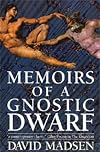
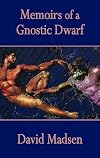
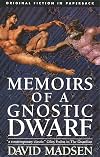
Memoirs of a Gnostic Dwarf
by David Madsen
On This Page
Description
Included in The Guardian's one thousand novels to read before you die.It is a baroque masterpiece.Tags
Recommendations




























Member Recommendations
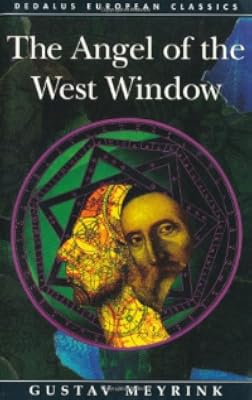
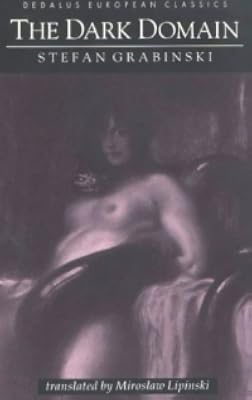
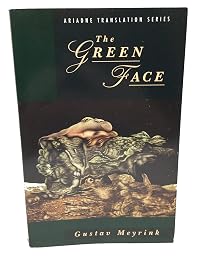
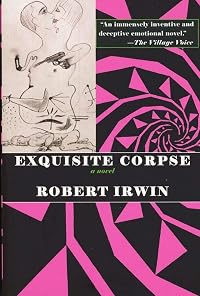
Panairjdde Same period, close themes, but better storyline and a darker atmosphere.

paradoxosalpha Imaginative historical fiction involving crypto-gnostic conspiracies
Member Reviews
Surprisingly and delightfully, this novel is exactly what the title promises. Set in the early 16th century e.v., it consists of the memoirs of a dwarf serving as a chamberlain in the court of Leo X, the Medici pope. The book recounts his rescue from his impoverished origins by a post-Catharist Gnostic underground, and his subsequent involvement in various intrigues. The rituals of the Gnostic Brotherhood are beautifully rendered and worthwhile reading in their own right. Everything in the text, including vivid episodes of carnality, spirituality, and atrocity, seems calculated to illustrate the philosophical premises of the Gnostic creed embraced by the narrator.
E.G.C. members will find that the historical aspects of the story provide show more a context for our Gnostic saints Alexander VI and Ulrich von Hutten—both of whom are the subjects of incidental and unflattering references.
The publisher notes that “Madsen” is the nom de plume of a religious scholar who specializes in studies of Gnosticism. The author has clearly taken on the literary mode in order to give play to his most detailed speculations about Gnostic continuation, and has in the process created a marvelous piece of art. show less
E.G.C. members will find that the historical aspects of the story provide show more a context for our Gnostic saints Alexander VI and Ulrich von Hutten—both of whom are the subjects of incidental and unflattering references.
The publisher notes that “Madsen” is the nom de plume of a religious scholar who specializes in studies of Gnosticism. The author has clearly taken on the literary mode in order to give play to his most detailed speculations about Gnostic continuation, and has in the process created a marvelous piece of art. show less
With a title like that you just have to pick it up off the bookshop shelf, if only to see what it's about. It's about a lot of things, some of them downright bizarre, and if I had to sum it up in just a few words I would have to describe it as a gothic codpiece-ripper.
History has remembered the first of the Medici popes, Leo X, as a man of culture who patronised artists such as Rafael and Michelangelo, began the building of the current St Peter's and was in no small part responsible for the collections of art and manuscripts now contained in the Vatican libraries. But there's a dark side to everything, or so it seems.
Leonine Rome is depicted as a city not just of profound corruption, symbolised by the syphilitic arse of the Pope show more himself, the result of being buggered too often by the young men procured for him from the Roman slums, and displayed by a Pope spread-eagled on his bed with his underpants round his ankles and suffering the indignity of a doctor's diagnostic finger up his fundament (that's "arse" to you), but also of pockets of gnostic heresy which reach into the heart of power and influence within the Church through the presence of Peppe, the Gnostic Dwarf of the title, who is both bosom confidant of, and procurer of well-hung young men for, His Holiness.
The collision of the rarified world of astounding power and wealth which was the Renaissance Papal court with the equally astounding world of back-street vice, brutality and human degradation in which everything and everyone is for sale creates a juxtaposition rather like dropping a bejewelled crown into a public privy. And in this world which is no more than a universal freak show, the Papal court floats majestically on a sea of shit.
The other thread to this work concerns the deadly feud between the Gnostic Master of Rome and a troublesome Inquisitor, and of the terrible and cataclysmic climax to that feud.
Violent, often disturbing, shocking and horrifying, suffused with "the evil that men do" and, in the words of another critic, "fruity and filthy", this is not your average holiday read. It is, however, a truly original and inspired piece of fiction for the reader willing to withstand an assault on his sense of moral certitude. show less
History has remembered the first of the Medici popes, Leo X, as a man of culture who patronised artists such as Rafael and Michelangelo, began the building of the current St Peter's and was in no small part responsible for the collections of art and manuscripts now contained in the Vatican libraries. But there's a dark side to everything, or so it seems.
Leonine Rome is depicted as a city not just of profound corruption, symbolised by the syphilitic arse of the Pope show more himself, the result of being buggered too often by the young men procured for him from the Roman slums, and displayed by a Pope spread-eagled on his bed with his underpants round his ankles and suffering the indignity of a doctor's diagnostic finger up his fundament (that's "arse" to you), but also of pockets of gnostic heresy which reach into the heart of power and influence within the Church through the presence of Peppe, the Gnostic Dwarf of the title, who is both bosom confidant of, and procurer of well-hung young men for, His Holiness.
The collision of the rarified world of astounding power and wealth which was the Renaissance Papal court with the equally astounding world of back-street vice, brutality and human degradation in which everything and everyone is for sale creates a juxtaposition rather like dropping a bejewelled crown into a public privy. And in this world which is no more than a universal freak show, the Papal court floats majestically on a sea of shit.
The other thread to this work concerns the deadly feud between the Gnostic Master of Rome and a troublesome Inquisitor, and of the terrible and cataclysmic climax to that feud.
Violent, often disturbing, shocking and horrifying, suffused with "the evil that men do" and, in the words of another critic, "fruity and filthy", this is not your average holiday read. It is, however, a truly original and inspired piece of fiction for the reader willing to withstand an assault on his sense of moral certitude. show less
This is a hard novel to categorize. It's part historical fiction, part tragic-comedy, part treatise on gnostic thought, and it's part historical lecture on European renaissance-era religion and politics. But somehow it works.
In essence, "Memoirs of a Gnostic Dwarf" is a story of the mysticism of Gnostic thought, orbiting around the interesting and sometimes madcap reign of Pope Leo X, Giovanni de Medici. Peppe (the dwarf) serves as narrator by providing glimpses of his youth, his introduction to Gnosticism, love, and education, which ultimately lands him in a circus, and then the 'court' of Leo X (itself not an actual circus, though one could make that arguement based on Peppe's descriptions).
Peppe is more tragic than comic. He show more ruminates on his physically painful youth (did I mention he has a rather large hump on his back?) "In the beginning was the pain, and the pain was with me, and the pain was me. It constituted the entirety of my burgeoning consciousness."
And one can't help but make comparisons to George R.R. Martin's own tortured dwarf, Tyrion Lannister. Peppe's mother, in a drunken fit, says, "God knows, I should have suffocated you at birth." Peppe responds in his narrative, "There was a time when I would have wholeheartedly agreed with this; now, however, I am rather glad that she did not suffocate me at birth. Strange, isn't it, how one can always learn to love oneself, however ghastly one is?"
Madsen displays a large and complex vocabulary which dually proves the literate nature of the writer as well as the value of having an e-reader with a built-in dictionary. His writing is big, bold and vividly descriptive.
In one particularly expressive scene, Peppe's only love is tortured for heresy. His description displays well Madsen's vibrant writing abilities: "...what followed fills me with anguish; the memory of it grips my heart like an icy vice. As I write, I know that tears will soon come. A huge and heavy sadness covers me like a shroud, and I cannot shake it off; indeed, I do not want to - for every act of recall, every rearoused memory of what they did to her, merits the expiation of a fresh agony of the soul. A sword pierced and entered the fabric of my psyche that day, and it is there still, for I feel its blade, as sharp and as deadly as ever, move between the infinitesimal spaces where socket meets socket and joint meets joint."
The middle third of the book, author David Madsen focuses much of his time on the political wranglings of and around the papal states. I'm always very appreciative of the historic angle of any historical fiction, however the complications surrounding the Vatican, Spain and France come at the cost of any real propullsion of Peppe's story.
The themes are rather large and heavy, and several plot lines are laced with overt sexual activities. Some may argue that it's gratuitous, but I would respond that it works effectively with the overall tone and themes of the novel.
What is Gnosticism, the reader may ask. One needn't wait long as Peppe provides his definition early in the story. "We hold that there are two equally-matched powers in the universe, one good and the other evil, and these are perpetually at war with one another. The good power created spirit, while the evil power created matter. Matter...corporeal form, the body, flesh, is evil...The devil (or at least a devil) created this world and it is hell." show less
In essence, "Memoirs of a Gnostic Dwarf" is a story of the mysticism of Gnostic thought, orbiting around the interesting and sometimes madcap reign of Pope Leo X, Giovanni de Medici. Peppe (the dwarf) serves as narrator by providing glimpses of his youth, his introduction to Gnosticism, love, and education, which ultimately lands him in a circus, and then the 'court' of Leo X (itself not an actual circus, though one could make that arguement based on Peppe's descriptions).
Peppe is more tragic than comic. He show more ruminates on his physically painful youth (did I mention he has a rather large hump on his back?) "In the beginning was the pain, and the pain was with me, and the pain was me. It constituted the entirety of my burgeoning consciousness."
And one can't help but make comparisons to George R.R. Martin's own tortured dwarf, Tyrion Lannister. Peppe's mother, in a drunken fit, says, "God knows, I should have suffocated you at birth." Peppe responds in his narrative, "There was a time when I would have wholeheartedly agreed with this; now, however, I am rather glad that she did not suffocate me at birth. Strange, isn't it, how one can always learn to love oneself, however ghastly one is?"
Madsen displays a large and complex vocabulary which dually proves the literate nature of the writer as well as the value of having an e-reader with a built-in dictionary. His writing is big, bold and vividly descriptive.
In one particularly expressive scene, Peppe's only love is tortured for heresy. His description displays well Madsen's vibrant writing abilities: "...what followed fills me with anguish; the memory of it grips my heart like an icy vice. As I write, I know that tears will soon come. A huge and heavy sadness covers me like a shroud, and I cannot shake it off; indeed, I do not want to - for every act of recall, every rearoused memory of what they did to her, merits the expiation of a fresh agony of the soul. A sword pierced and entered the fabric of my psyche that day, and it is there still, for I feel its blade, as sharp and as deadly as ever, move between the infinitesimal spaces where socket meets socket and joint meets joint."
The middle third of the book, author David Madsen focuses much of his time on the political wranglings of and around the papal states. I'm always very appreciative of the historic angle of any historical fiction, however the complications surrounding the Vatican, Spain and France come at the cost of any real propullsion of Peppe's story.
The themes are rather large and heavy, and several plot lines are laced with overt sexual activities. Some may argue that it's gratuitous, but I would respond that it works effectively with the overall tone and themes of the novel.
What is Gnosticism, the reader may ask. One needn't wait long as Peppe provides his definition early in the story. "We hold that there are two equally-matched powers in the universe, one good and the other evil, and these are perpetually at war with one another. The good power created spirit, while the evil power created matter. Matter...corporeal form, the body, flesh, is evil...The devil (or at least a devil) created this world and it is hell." show less
This is an excellent book, I don't really think I can do it justice with a review. It's extremely witty, erudite, moving and weird. It's full of lurid imagery, dastardly medieval plotting, bawdy humour and grotesque characters. A very satisfying read - have passed it on to many friends who enjoyed it just as much as me.
Intriguing title, promising beginnigs, bad ending.
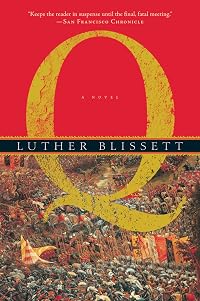
I took it off the shelf because the title was interesting and because it looked like a book I like very much, Q, but in the end the storyline was dull and not enough challenging.
I took it off the shelf because the title was interesting and because it looked like a book I like very much, Q, but in the end the storyline was dull and not enough challenging.
"Nacido en las marginales calles del Trastévere del siglo XVI, el enano Giuseppe Amadonelli, Peppe,nos relata sus memorias de manera desenfadada y un tanto escatológica. Los maltratos psicológicos, su conocimiento de la fe gnóstica así como su venta a un circo de seres deformes con el que recorrerá todo el país serán sus experiencias antes de entrar al servicio del papa León X como su chambelán y confidente.
A través de los ojos del enano contrahecho conoceremos la situación política y religiosa de la Italia del Renacimiento, donde lo grotesco de los personajes que conviven en la vida de Peppe, los momentos personales de León X y las conspiraciones papales llevadas a cabo a su alrededor son narrados de forma grotesca y show more mordaz pero con una erudición poco habitual."
(edit. promo.)
El libro tenía buena pinta, pero no he podido acabarlo. Parece que David Madsen es el seudónimo de un teólogo y eso se nota cuando te brasea con lo del gnosticismo. De todas formas, ello tampoco me hubiera importado si no fuera porque parece que mete todo ello como con calzador, incluso los datos históricos de la novela parecen metidos como para demostrarnos que ocurrió en esa época.
No me ha parecido muy natural y con la de libros que hay para leer, he pasado de acabarla. De todas formas, como he desistido en la página 239 y no llego a lo de los cincuenta libros al año ni de coña (vaya ritmo bananero que llevo) pues lo meto en la balda de LT y tan ancho. O no?
(lo que no voy a tener es la desvergüenza de ratearlo porque igual le bajo la media de estrellitas y tampoco me parece bien, igual tenía un último capítulo épico y yo poniéndolo por los suelos) show less
A través de los ojos del enano contrahecho conoceremos la situación política y religiosa de la Italia del Renacimiento, donde lo grotesco de los personajes que conviven en la vida de Peppe, los momentos personales de León X y las conspiraciones papales llevadas a cabo a su alrededor son narrados de forma grotesca y show more mordaz pero con una erudición poco habitual."
(edit. promo.)
El libro tenía buena pinta, pero no he podido acabarlo. Parece que David Madsen es el seudónimo de un teólogo y eso se nota cuando te brasea con lo del gnosticismo. De todas formas, ello tampoco me hubiera importado si no fuera porque parece que mete todo ello como con calzador, incluso los datos históricos de la novela parecen metidos como para demostrarnos que ocurrió en esa época.
No me ha parecido muy natural y con la de libros que hay para leer, he pasado de acabarla. De todas formas, como he desistido en la página 239 y no llego a lo de los cincuenta libros al año ni de coña (vaya ritmo bananero que llevo) pues lo meto en la balda de LT y tan ancho. O no?
(lo que no voy a tener es la desvergüenza de ratearlo porque igual le bajo la media de estrellitas y tampoco me parece bien, igual tenía un último capítulo épico y yo poniéndolo por los suelos) show less
Sep 4, 2007Spanish
Heiter, frech und feist wird hier die päpstliche Geschichte bis zur letzten Furunkel durchgearbeitet.
Aug 19, 2007German
Members
- Recently Added By
Lists

The Guardian's 1000 Novels Everyone Must Read
1,005 works; 551 members

Fiction Featuring Real People
81 works; 17 members

Troublesome bodies
110 works; 7 members

Books With the Most Memorable Titles
478 works; 158 members
Author Information
4 Works 369 Members
Awards and Honors
Notable Lists
Series
Belongs to Publisher Series
Common Knowledge
- Canonical title
- Memoirs of a Gnostic Dwarf
- Original publication date
- 1995
- People/Characters
- Giuseppe the Dwarf; Leo X, 1475-1521
- Important places
- Vatican City; Rome, Italy
- Dedication
- A Michele, Cuor' Addorato Mio
- First words
- Clementissime Domine, cuius inenarrabilis est virtus
- Last words
- (Click to show. Warning: May contain spoilers.)Who knows?
Classifications
Statistics
- Members
- 252
- Popularity
- 128,846
- Reviews
- 7
- Rating
- (3.67)
- Languages
- 8 — Dutch, English, French, German, Italian, Lithuanian, Portuguese, Spanish
- Media
- Paper, Ebook
- ISBNs
- 12
- ASINs
- 3