The Zen Doctrine of No-Mind: The Significance of the Sutra of Hui-neng (Wei-lang)
by Daisetz Teitaro Suzuki
Rider pocket editions
On This Page
Description
Dedicated largely to the teaching of Hui Neng, this volume covers the purpose and technique of Zen training, and goes further into the depths of Zen than any other work of modern times. Here we find no reliance on scripture or a Savior, for the student isshown how to go beyond thought in order to achieve a state of consciousness beyond duality.Tags
Recommendations


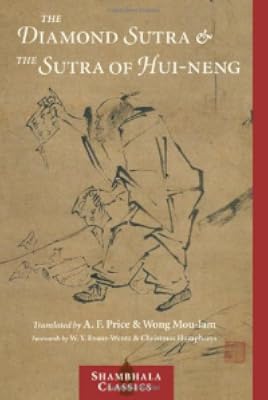
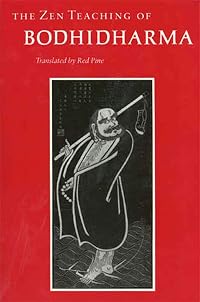


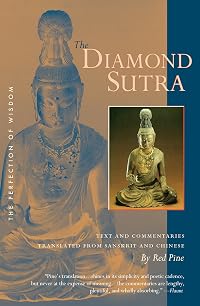
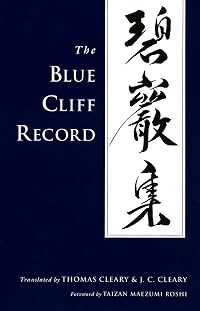



















Member Reviews
D.T. Suzuki is arguably the most prolific popularizer of Zen in West from the early to mid twentieth century and The Zen Doctrine of No-Mind is among his best. Though criticized for his lack of experience in practice and his very Western education, I'd argue that this puts him in a strong position to provide scholarship to a Western audience unfamiliar with the often difficult and cryptic teachings of Zen Buddhism. In this work, Suzuki analyzes Hui-Neng's Platform Sutra, an early, pivotal Chan/Zan text that formalized the shift in thought and practice, away from practices and thinking promoting a gradualist view of awakening to those promoting sudden awakening. The dichotomy between these two paths would go on to characterize much of show more Zen thinking and practice up through the present day. show less
Zen Doctrine of No Mind: Of all the modern works on Zen, this book is unique. Through careful pacing, D.T. Suzuki generates the state of No Mind in the reader. To read this book is to not only understand it, but to directly contact the Zen Mind. This is not a hip or facile text, but one that stands on its own next to the great Sutras of earlier ages. Read as meditation, and meditating as one reads, this book is a mighty sword. Read for information alone, it will perhaps arouse the desire to meditate and attend to the art of mindfulfness
Dedicated largely to the teaching of Hui Neng, this volume covers the purpose and technique of Zen training, and goes further into the depths of Zen than any other work of modern times. Here we find no reliance on scripture or a Savior, for the student is shown how to go beyond thought in order to achieve a state of consciousness beyond duality.
'No Mind' doctrine is deep and dense.
One of the most famous Zen masters was Hui-neng (638-713) and this work is largely concerned with his teaching. However, this volume delves into the whole purpose and technique of Zen training, and in the view of many, goes further into the depths of Zen than any other work of modern times.
Within the realm of Zen Buddhism, we find no reliance on scripture or a savior, for the student is shown how to go beyond thought in order to achieve, a state of consciousness beyond duality. Clearly written, this book shows the wisdom and experience of the author, while elucidating the fundamentals of Zen.
Knowledge of Zen buddhism in the West is largely due to the work of the late D.T. Suzuki. He attained his Zen enlightenment in Japan at 27, taught show more and wrote for 65 years, and was a frequent visitor in the United States and Europe. Honored throughout the world for his rare combination of profound scholarship and personal enlightenment, Dr. suzuki will long be remembered as one of the outstanding minds in spiritual attainment of the 20th century.
Edited by Christmas Humphreys. show less
Within the realm of Zen Buddhism, we find no reliance on scripture or a savior, for the student is shown how to go beyond thought in order to achieve, a state of consciousness beyond duality. Clearly written, this book shows the wisdom and experience of the author, while elucidating the fundamentals of Zen.
Knowledge of Zen buddhism in the West is largely due to the work of the late D.T. Suzuki. He attained his Zen enlightenment in Japan at 27, taught show more and wrote for 65 years, and was a frequent visitor in the United States and Europe. Honored throughout the world for his rare combination of profound scholarship and personal enlightenment, Dr. suzuki will long be remembered as one of the outstanding minds in spiritual attainment of the 20th century.
Edited by Christmas Humphreys. show less
9.78088E 12
Dec 15, 2022French
Members
- Recently Added By
Author Information

152+ Works 7,006 Members
A student of the Zen master Shaku Soen, who addressed the 1893 World's Parliament of Religions held in Chicago, D. T. Suzuki did more to introduce Zen to Westerners than any other representative of that tradition. Shaku Soen sent the young Suzuki to America in 1897 to help Paul Carus translate the Chinese text the Dao De Jing. Suzuki remained in show more America for about a decade, working at Carus' Open Court Publishing Company outside Chicago. After Suzuki returned to Japan, he married an American woman, Beatrice Lane, in 1911, and they began publishing an English journal, The Eastern Buddhist, in 1921. During this time in Japan, Suzuki translated into Japanese a number of Swedenborgian texts. He traveled to China in 1934, and he went to London in 1936 to attend the World Congress of Faiths. Suzuki recognized that the West had much to offer the East, but like Swami Vivekananda, he was convinced that the East had much to offer the West in its religion and philosophy. On this basis he was motivated to write about Zen in English. Suzuki wrote about 30 books in English and many more in Japanese. Suzuki's first books in English were a translation of Ashvaghosha's Discourse on the Awakening of Faith in the Mahayana (1900) and Outlines of Mahayana Buddhism (1907). A practitioner of Rinzai Zen Buddhism, Suzuki, in his writings about the ultimate experience of satori and the meditative use of koans, made Zen terms almost household words in the United States. In the early part of the twentieth century, Suzuki devoted himself to the propagation of Zen via his writings. After World War II he became a noted lecturer on Zen at American and European universities. That Suzuki's work was effective can be seen in the fact that Zen was picked up in the 1950s by California beatniks, producing what was termed Beat Zen. From that time on, Americans increasingly began to go to Japan to study Zen, and more Zen masters began to come to the United States to teach. The earliest institutions devoted to the practice of Zen in America were established in San Francisco in 1928, in Los Angeles in 1929, and in New York City in 1931. Zen centers remain an important part of the American urban scene, and several of them have established rural Zen retreat centers. (Bowker Author Biography) show less
Series

Common Knowledge
- Canonical title
- The Zen Doctrine of No-Mind: The Significance of the Sutra of Hui-neng (Wei-lang) (Wei-lang)
Classifications
- Genres
- Religion & Spirituality, Nonfiction, General Nonfiction, Philosophy
- DDC/MDS
- 294.3927 — Religion Other religions Dharmic religions Buddhism Buddhism - Branches and schools Mahayana Buddhism Zen Buddhism
- LCC
- BQ9299 .H854 .L6375 — Philosophy, Psychology and Religion Buddhism Buddhism Modifications, schools, etc. Special modifications, sects, etc. Zen Buddhism
- BISAC
Statistics
- Members
- 242
- Popularity
- 134,679
- Reviews
- 8
- Rating
- (4.10)
- Languages
- English, French
- Media
- Paper
- ISBNs
- 5
- ASINs
- 9