On This Page
Description
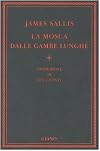
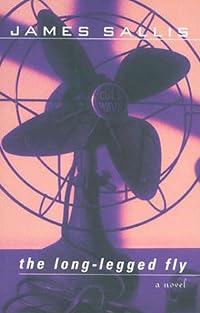
In steamy New Orleans, black private detective Lew Griffin has once again taken on a seemingly hopeless missing-person case. The trail takes him through the underbelly of the French Quarter with its bar girls, pimps, and tourist attractions. As his search leads to one violent dead end and then another, Griffin is confronted with the prospect that his own life has come to resemble those of the people he is attempting to find. Waking in a hospital after an alcoholic binge, Griffin finds show more another chance in a nurse who comes to love him, but again he reverts to his old life in the mean streets among the predators and their prey. When his son vanishes, Griffin searches back through the tangles and tatters of his life, knowing that he must solve his personal mysteries before he can venture after the whereabouts of others. show lessTags
Recommendations
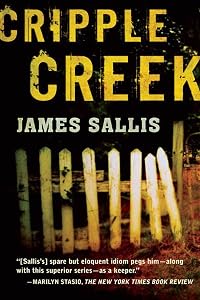

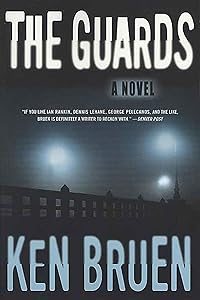
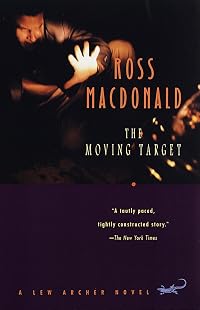

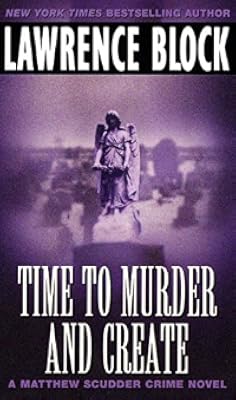
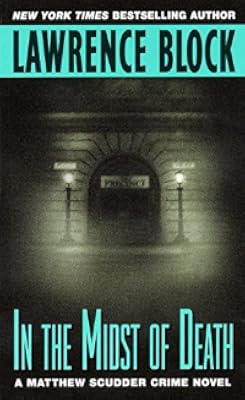
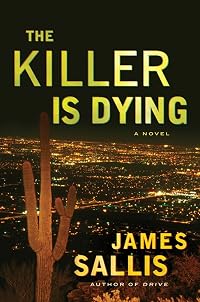

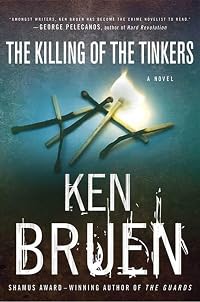
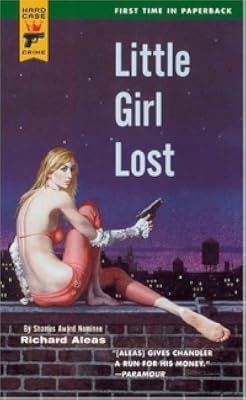
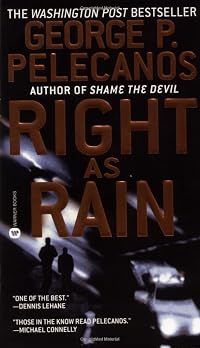





Member Recommendations
nsblumenfeld The Long-Legged Fly and Heroes Die are in entirely different genres -- one's a sff novel, the other's a crime novel, featuring a sometime PI in New Orleans -- with very different styles, but they've got a similarly successful mix of fast-paced hard-hitting story and introspect. They've also received similar reactions from friends who've read them: some get nothing more out of them than macho tough-guy posturing, while those with good taste find so much more than that. Each is a highlight of its respective genre, and both are highly recommended.
Member Reviews
Upon James Sallis' death recently, I decided that I should re-read at least the first book in his Lew Griffin series; I read the series decades ago. (I must have liked them because all the used-book copies I bought then are still on my shelves.)
I still like them.
The missing-persons cases that Lew Griffin investigates are pretty intense and horrific - unbelievable street scenes, crime scenes, hospital scenes, love scenes. But the books are so atmospheric, and Girffin is an interesting, thoughtful, caring, well-read character.
The book is broken up into four sections - 1964, 1970, 1984 and 1990. Each involves a different case, a different stage in Lew Griffin's life (usually as he's emerging from going off the rails because of bad show more decisions and bad behavior) and, often, a new woman in his life.
Griffin goes through many stages, and ends up writing novels himself. He also is dealing with an unsolved missing-person case - his son.
Griffin is a writer, and this is one though of his that I liked: I looked at her then, the way she held the toast. ... It's never ideas, but simple things, that break our hearts: a falling leaf that plunges us into our own irredeemable past, the memory of a young woman's ankle, a single smile among unknown faces, a madeleine, a piece of toast. show less
I still like them.
The missing-persons cases that Lew Griffin investigates are pretty intense and horrific - unbelievable street scenes, crime scenes, hospital scenes, love scenes. But the books are so atmospheric, and Girffin is an interesting, thoughtful, caring, well-read character.
The book is broken up into four sections - 1964, 1970, 1984 and 1990. Each involves a different case, a different stage in Lew Griffin's life (usually as he's emerging from going off the rails because of bad show more decisions and bad behavior) and, often, a new woman in his life.
Griffin goes through many stages, and ends up writing novels himself. He also is dealing with an unsolved missing-person case - his son.
Griffin is a writer, and this is one though of his that I liked: I looked at her then, the way she held the toast. ... It's never ideas, but simple things, that break our hearts: a falling leaf that plunges us into our own irredeemable past, the memory of a young woman's ankle, a single smile among unknown faces, a madeleine, a piece of toast. show less
Lew Griffin is a black private investigator in New Orleans. The Long-Legged Fly gives us views of Lew's life at four different times: 1964, 1970, 1984, and 1990. We see his situation change from poverty to relative comfort, with the primary common thread being his searches for missing persons.
Lew is a fascinating character, only somewhat educated but seemingly quite literate and introspective in a rather fatalistic way. He has a capacity for self-destruction, but he also attracts devoted friends and lovers who are in his life from one time period to another.
Griffin narrates his own story; his voice changes somewhat from one section to the next, but is recognizably his own. Sallis's style is lyrical and lovely, requiring Lew to see, show more reflect, and say more than a typical hard-boiled Marlowe type. It seems that perhaps Lew's experiences in the first three sections are preparing him for what he must deal with in the final section, which might be a matter more of acceptance than of heroic action. Has Lew found his ultimate missing person, his sense of himself as a man?
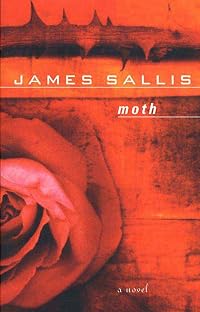
Sallis has written several more Lew Griffin novels, as well as other fiction and poetry. I'm curious how they fit with the timeline and apparent resolution of the current volume. I have added the next one, Moth, to my ever-growing to-read list.
The Long-Legged Fly is fairly short, and its chapters tend to run just a few pages. We dip into Lew's life and thoughts, rather than settling in for long stays or wallowing in his emotions. I believe this is intended to mirror Lew's approach and experience of life: like the fly of Yeats's poem, Lew's mind flits sliently over the stream. This does not mean that he fails to experience things deeply, simply that his particular genius (what, exactly, is it?) requires, like Caesar's, Helen's, or Michelangelo's, silence in which to develop. show less
Lew is a fascinating character, only somewhat educated but seemingly quite literate and introspective in a rather fatalistic way. He has a capacity for self-destruction, but he also attracts devoted friends and lovers who are in his life from one time period to another.
Griffin narrates his own story; his voice changes somewhat from one section to the next, but is recognizably his own. Sallis's style is lyrical and lovely, requiring Lew to see, show more reflect, and say more than a typical hard-boiled Marlowe type. It seems that perhaps Lew's experiences in the first three sections are preparing him for what he must deal with in the final section, which might be a matter more of acceptance than of heroic action. Has Lew found his ultimate missing person, his sense of himself as a man?
Sallis has written several more Lew Griffin novels, as well as other fiction and poetry. I'm curious how they fit with the timeline and apparent resolution of the current volume. I have added the next one, Moth, to my ever-growing to-read list.
The Long-Legged Fly is fairly short, and its chapters tend to run just a few pages. We dip into Lew's life and thoughts, rather than settling in for long stays or wallowing in his emotions. I believe this is intended to mirror Lew's approach and experience of life: like the fly of Yeats's poem, Lew's mind flits sliently over the stream. This does not mean that he fails to experience things deeply, simply that his particular genius (what, exactly, is it?) requires, like Caesar's, Helen's, or Michelangelo's, silence in which to develop. show less
Review of first two books in the series, The long-legged Fly and Moth:
pp
"Other people's roaches, other place's roaches, run for cover when you turn the lights on. You ever seen any different? But not here, man. New Orleans roaches are more liable to drop to one knee and give out with a chorus of 'Swanee.'"
These are the first two books in a new-to-me detective series set in New Orleans. Although the books are very noirish, the author is also a poet, and the writing is sometimes lyrical, and there are many literary references. The prose in these books is a delight to read.
In the first book, Lew Griffin, the detective, works on a series of cases separated by a number of years, beginning in 1964. (This was 4 years before I went to live in show more New Orleans). There's tons of New Orleans references and atmosphere, which I really liked. There's a number of recurring characters, including NOPD officer Don Walsh, and prostitute with a heart of gold La Verne.
In the first section, 1964, Lew is asked to find a missing civil rights leader. In 1970 he's hired by a couple from rural Mississippi to find their teenage daughter. In 1984, he's just out of detox and is in a serious relationship with Vicky a Scottish nurse. He is making a living doing collection work when his former roommate from a half-way house asks him to find his missing sister. And when we catch up with Lew again in 1990, we find he has written a novel about a cajun detective in New Orleans, when his ex-wife Jane asks him to help find their son David who has gone missing. The interesting thing about Lew's cases is that they are not always solved, or at least not solved in a way that the bad guys receive their due and the missing person is returned. The book ends, "It's not midnight. It's not raining."
And the first line of the second book is, "It was midnight, it was raining." This is a more conventional detective story, with a sustained rather than episodic plot, though it also begins as a missing persons case. Lew's friend LaVerne has died of cancer, and he learns that for some time before her death she had been searching for the daughter she was estranged from. Her husband asks Lew to help find the daughter, and he follows her trail to rural Mississippi, where she has given birth to a crack-addicted premature baby.
I'll be continuing to read this series. There are several more.
3 1/2 stars show less
pp
"Other people's roaches, other place's roaches, run for cover when you turn the lights on. You ever seen any different? But not here, man. New Orleans roaches are more liable to drop to one knee and give out with a chorus of 'Swanee.'"
These are the first two books in a new-to-me detective series set in New Orleans. Although the books are very noirish, the author is also a poet, and the writing is sometimes lyrical, and there are many literary references. The prose in these books is a delight to read.
In the first book, Lew Griffin, the detective, works on a series of cases separated by a number of years, beginning in 1964. (This was 4 years before I went to live in show more New Orleans). There's tons of New Orleans references and atmosphere, which I really liked. There's a number of recurring characters, including NOPD officer Don Walsh, and prostitute with a heart of gold La Verne.
In the first section, 1964, Lew is asked to find a missing civil rights leader. In 1970 he's hired by a couple from rural Mississippi to find their teenage daughter. In 1984, he's just out of detox and is in a serious relationship with Vicky a Scottish nurse. He is making a living doing collection work when his former roommate from a half-way house asks him to find his missing sister. And when we catch up with Lew again in 1990, we find he has written a novel about a cajun detective in New Orleans, when his ex-wife Jane asks him to help find their son David who has gone missing. The interesting thing about Lew's cases is that they are not always solved, or at least not solved in a way that the bad guys receive their due and the missing person is returned. The book ends, "It's not midnight. It's not raining."
And the first line of the second book is, "It was midnight, it was raining." This is a more conventional detective story, with a sustained rather than episodic plot, though it also begins as a missing persons case. Lew's friend LaVerne has died of cancer, and he learns that for some time before her death she had been searching for the daughter she was estranged from. Her husband asks Lew to help find the daughter, and he follows her trail to rural Mississippi, where she has given birth to a crack-addicted premature baby.
I'll be continuing to read this series. There are several more.
3 1/2 stars show less
C' mon, another tough, hard-drinking self destructive private eye? Yes, but in the capable hands of this very inventive author, he has taken this well-worn character and injected him with new life. His flawed hero is black, highly intelligent and coping with racism in New Orleans during the early 1960s. If you are looking for a fresh take in this genre, give this baby a try!
Moody, improvisatory, and poetic, this first book in the Lew Griffin series is a set of short stories loosely joined, and over the course of it we get to know something about the narrator, a writer, loan collector, lost soul, and finder of lost women. The language is lovely. The stories are vignettes. Characters flare on the page so we can glimpse something of them and of Lew, and then go out. The short first chapter seems to be leaves gathered up from someone else's stories, perhaps one of the crime novels Lew writes. The overall effect is rather like Lew's take on the way we make up our lives: "by bits and pieces, a piece of a book here, a song title or lyric there, scraps of people we've known, clips from movies, imagining ourselves show more and living into that image, then going on to another and yet another, improvising our way from day to day through the years we call a life." The final line (as an alert 4MA reader pointed out) is a quote from Beckett's Malone. It's fairly typical of the book that literary references have taken residence in the story, but if you don't know them they seem to just be a natural part of Lew's life - as if Beckett was writing about him. It skirts pretentiousness, but the richness of the voice avoids it. show less
I didn't know before I started that PI Lew Griffin was black. Then I didn't find out until I'd finished that author James Sallis was white.
Maybe it doesn't matter, but I've read too many of Walter Mosley's books about Easy Rawlins, some of which share a historical setting with parts of this book, not to compare the two and be concerned about appropriation and authenticity.
Sure, Sallis is playing with narrative and storytelling, but I'm not sure that saves him. This was an unsettling read and I'm not sure if I shall try another.
Maybe it doesn't matter, but I've read too many of Walter Mosley's books about Easy Rawlins, some of which share a historical setting with parts of this book, not to compare the two and be concerned about appropriation and authenticity.
Sure, Sallis is playing with narrative and storytelling, but I'm not sure that saves him. This was an unsettling read and I'm not sure if I shall try another.
stylistically, loved this book. Nice noir feel throughout. About a black P.I in New Orleans, with stories taking place in the 60's, 70's 80's and 890's. Or is it about New Orleans itself, or race, or the U.S. or the author. If you don't mind a bit of philosophy and have you tube to check out all the blues and jazz mentioned. well worth the read
Members
- Recently Added By
Lists

Best Noir Fiction
160 works; 14 members

Books Read in 2013
1,630 works; 51 members
Author Information

76+ Works 3,305 Members
James Sallis is a poet, music critic, biographer, and author. A lifelong student of the work of Chester Himes, he lives in Phoenix, Arizona.
Awards and Honors
Awards
Series

Belongs to Publisher Series
Work Relationships
Is contained in
Common Knowledge
- Canonical title
- The Long-Legged Fly
- Original title
- The Long-Legged Fly
- Original publication date
- 1992
- People/Characters
- Lew Griffin
- Important places
- New Orleans, Louisiana, USA
- Dedication
- To Karyn
- First words
- "Hello, Harry." His sick eyes slid in the light.
- Last words
- (Click to show. Warning: May contain spoilers.)It is not midnight. It is not raining.
Classifications
Statistics
- Members
- 262
- Popularity
- 123,897
- Reviews
- 11
- Rating
- (3.64)
- Languages
- 5 — English, French, German, Italian, Spanish
- Media
- Paper, Audiobook, Ebook
- ISBNs
- 27
- ASINs
- 11