On This Page
Description
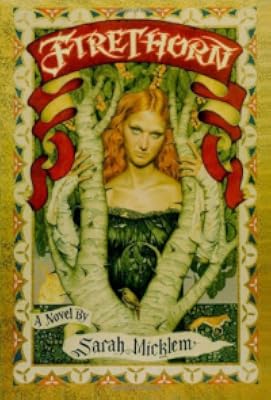
Firethorn, the first volume in an epic trilogy, is a stunning debut. Sarah Micklem has introduced an unforgettable heroine into the fantasy pantheon. Loving, reckless, and indomitable, Firethorn travels through an imaginary world as real as history and as marvelous as legend. Firethorn flees a life of drudgery to live alone in the forest, relying on her knowledge of herb lore to survive. She returns transformed, indebted to the god who saved her life, and blessed -- or cursed -- with uncanny show more abilities and a nagging sense of destiny. After a few nights of dalliance with Sire Galan, a high-caste warrior on his way to join the king's army, Firethorn seizes the chance to go with him, only to find she has exchanged one form of servitude for another. The army readies for war in the vast encampment of the Marchfield, where men prey on each other and women dare go nowhere alone. Among the lowborn harlots and the highborn dames of the camp, Firethorn learns to use her gifts as a healer, venturing into realms of dream and shadow. Desire drew Firethorn and Sire Galan together, but love binds them -- a love that has no place in the arrangement between a warrior and his sheath. When Galan makes a wager with disastrous consequences, Firethorn uses her gifts to intervene in his fate and learns just how hard it can be to tell honor from dishonor, justice from vengeance. Sarah Micklem has written an extraordinary tale -- at once magical and earthbound, beautiful and violent. She immerses readers in a remarkably imagined world where gods are meddlesome, the highborn uphold their privileges with casual brutality, and a woman's only recourse may be the strength she finds within. show lessTags
Recommendations
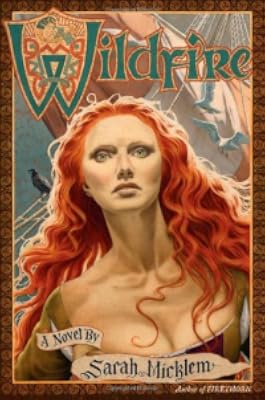



Member Recommendations
by ligature
Member Reviews
I am wildly in love with this book. It is told through the eyes of Firethorn, a foundling mudchild who grows up under the kind but stern tutelage of a Dame of the Blood. Firethorn learns herblore and pride from the Dame, but after her mistress's death she is adrift. Too proud and grief-stricken to serve under the Dame's nephew (who rapes her, btw--this is not a cozy book), she runs away to the Kingswood. She lives there for a year, nearly starving poisoning herself on berries in the meantime. Finally, she crawls back to the mudpeople's village.
A chance meeting with Sire Galen, a bold and handsome knight passing through, leads her to link her fortunes to his. She follows him to war. Their passion for each other is in constant battle show more with their prideful natures and the vast gulf between their stations.
Micklem has written a remarkable book. It is not a romance, although love and lust play powerful roles in the plot and Firethorn's motivations. It is not accurate medieval history, although Micklem's detailed and nuanced world seems an alternate to our own. It is not even fantasy, because it is never clear if Firethorn's herbal remedies and incantations are magic, science, or coincidence. It is an often brutal, sometimes sweet, tale of a young woman surviving in a society that holds her unclean and unworthy. The battles, tourneys and love scenes are intense, but no more so than the roiling inner life of the main character. I could barely take my eyes off the pages, and in fact I ended up being half an hour late to work today because I needed to finish it. show less
A chance meeting with Sire Galen, a bold and handsome knight passing through, leads her to link her fortunes to his. She follows him to war. Their passion for each other is in constant battle show more with their prideful natures and the vast gulf between their stations.
Micklem has written a remarkable book. It is not a romance, although love and lust play powerful roles in the plot and Firethorn's motivations. It is not accurate medieval history, although Micklem's detailed and nuanced world seems an alternate to our own. It is not even fantasy, because it is never clear if Firethorn's herbal remedies and incantations are magic, science, or coincidence. It is an often brutal, sometimes sweet, tale of a young woman surviving in a society that holds her unclean and unworthy. The battles, tourneys and love scenes are intense, but no more so than the roiling inner life of the main character. I could barely take my eyes off the pages, and in fact I ended up being half an hour late to work today because I needed to finish it. show less
Although this book has some of the trappings of a historical/fantasy romance, it isn't one. "Gritty" has been overused of late, but this book is well-described thus.
Perhaps by writing in the first person it's easier to keep the narrative level. Both amazing and horrible things happen, yet Firethorn, our narrator, is very matter-of-fact about most of them.. which makes the ones that affect her deeply have even more impact.
Also, unlike other series such as "Game of Thrones" and "The Hunger Games", I do not get the feeling from the writing that the author is delighting herself with just how "gritty" she can be. I can see a lot of research went into being able to depict a fantasy (only because of the existence of magic; a denizen of the show more Middle Ages might not find this book fantasy at all) Middle Ages from the POV of one of its least-valued members socially, and illuminate the world and society via that perspective. Very, very well-done!
I just ordered the second book in this trilogy; the third doesn't seem to be out yet. I hope it gets written and published!
Also, as an aside, the society looks somewhat ripe for a peasant rebellion; maybe when the Big Cheeses are away at war? I am ALWAYS keen to read of a good peasant rebellion in fantasy novels, rather than having everything be all about the nobles, or one peasant lad or lass who- such a surprise!- turns out to be Noble after all! show less
Perhaps by writing in the first person it's easier to keep the narrative level. Both amazing and horrible things happen, yet Firethorn, our narrator, is very matter-of-fact about most of them.. which makes the ones that affect her deeply have even more impact.
Also, unlike other series such as "Game of Thrones" and "The Hunger Games", I do not get the feeling from the writing that the author is delighting herself with just how "gritty" she can be. I can see a lot of research went into being able to depict a fantasy (only because of the existence of magic; a denizen of the show more Middle Ages might not find this book fantasy at all) Middle Ages from the POV of one of its least-valued members socially, and illuminate the world and society via that perspective. Very, very well-done!
I just ordered the second book in this trilogy; the third doesn't seem to be out yet. I hope it gets written and published!
Also, as an aside, the society looks somewhat ripe for a peasant rebellion; maybe when the Big Cheeses are away at war? I am ALWAYS keen to read of a good peasant rebellion in fantasy novels, rather than having everything be all about the nobles, or one peasant lad or lass who- such a surprise!- turns out to be Noble after all! show less
Firethorn is a self-named woman, tutored by the Dame of the house and touched by the gods. When Sire Galen asks to take her away to the war, she leaps at the chance to escape the drudgery of her world. But little does she know it's hard to keep love alive in the middle of war where there's arrogance and wagers and little love for women.
I actually picked this book up because I read the second book first on accident.
I hate this book. It is written without too many flaws, the grammar is sound and the sentence structures flow well. The action is done correctly and I do want to the turn the pages to find out what happens next. But oh my freaking goodness, the amount of misogyny found is this books is mind blowing to me. It confuses me that show more this book is written by a woman.
Women are whores in this book, useless except for acting as men's decorations, or sex of course. There's no way to say no to a man's advance unless you have a man to guard against. What the heck? There are so many lines in this book that make me so freaking angry. The way the men talk to the women. The way the women talk about themselves. The way anyone treats women. And the worst of all, there is no character that even mentions these problems - as if the issues are common and acceptable. Argh, I can't even. It's fine if it's done for some sort of commentary on women and war, but if this type of misogyny is treated as acceptable without any counter philosophy or objection, it's as if the reader should accept it as well.
Micklem tries to pass Firethorn as a strong independent female character, but really all she amounts to is a girl hanging onto a sugar daddy, really.
This book is all about sex and trying to be the man's favorite girl. There is literally no plot except that.
The only redeeming factor is that I was interested enough in the magic system and healing draughts.
But that will never be enough for me to overcome the fact that this book treats women as second-class citizens. No, probably worse. Like objects.
One star. Not for writing style or not being interesting, but because there is an underlying (enormous!) problem with the whole presentation of characters.
Not recommended at all unless you just love reading about how women are not worth anything except for sex. show less
I actually picked this book up because I read the second book first on accident.
I hate this book. It is written without too many flaws, the grammar is sound and the sentence structures flow well. The action is done correctly and I do want to the turn the pages to find out what happens next. But oh my freaking goodness, the amount of misogyny found is this books is mind blowing to me. It confuses me that show more this book is written by a woman.
Women are whores in this book, useless except for acting as men's decorations, or sex of course. There's no way to say no to a man's advance unless you have a man to guard against. What the heck? There are so many lines in this book that make me so freaking angry. The way the men talk to the women. The way the women talk about themselves. The way anyone treats women. And the worst of all, there is no character that even mentions these problems - as if the issues are common and acceptable. Argh, I can't even. It's fine if it's done for some sort of commentary on women and war, but if this type of misogyny is treated as acceptable without any counter philosophy or objection, it's as if the reader should accept it as well.
Micklem tries to pass Firethorn as a strong independent female character, but really all she amounts to is a girl hanging onto a sugar daddy, really.
This book is all about sex and trying to be the man's favorite girl. There is literally no plot except that.
The only redeeming factor is that I was interested enough in the magic system and healing draughts.
But that will never be enough for me to overcome the fact that this book treats women as second-class citizens. No, probably worse. Like objects.
One star. Not for writing style or not being interesting, but because there is an underlying (enormous!) problem with the whole presentation of characters.
Not recommended at all unless you just love reading about how women are not worth anything except for sex. show less
Firethorn is a self-named woman, tutored by the Dame of the house and touched by the gods. When Sire Galen asks to take her away to the war, she leaps at the chance to escape the drudgery of her world. But little does she know it's hard to keep love alive in the middle of war where there's arrogance and wagers and little love for women.
I actually picked this book up because I read the second book first on accident.
I hate this book. It is written without too many flaws, the grammar is sound and the sentence structures flow well. The action is done correctly and I do want to the turn the pages to find out what happens next. But oh my freaking goodness, the amount of misogyny found is this books is mind blowing to me. It confuses me that show more this book is written by a woman.
Women are whores in this book, useless except for acting as men's decorations, or sex of course. There's no way to say no to a man's advance unless you have a man to guard against. What the heck? There are so many lines in this book that make me so freaking angry. The way the men talk to the women. The way the women talk about themselves. The way anyone treats women. And the worst of all, there is no character that even mentions these problems - as if the issues are common and acceptable. Argh, I can't even. It's fine if it's done for some sort of commentary on women and war, but if this type of misogyny is treated as acceptable without any counter philosophy or objection, it's as if the reader should accept it as well.
Micklem tries to pass Firethorn as a strong independent female character, but really all she amounts to is a girl hanging onto a sugar daddy, really.
This book is all about sex and trying to be the man's favorite girl. There is literally no plot except that.
The only redeeming factor is that I was interested enough in the magic system and healing draughts.
But that will never be enough for me to overcome the fact that this book treats women as second-class citizens. No, probably worse. Like objects.
One star. Not for writing style or not being interesting, but because there is an underlying (enormous!) problem with the whole presentation of characters.
Not recommended at all unless you just love reading about how women are not worth anything except for sex. show less
I actually picked this book up because I read the second book first on accident.
I hate this book. It is written without too many flaws, the grammar is sound and the sentence structures flow well. The action is done correctly and I do want to the turn the pages to find out what happens next. But oh my freaking goodness, the amount of misogyny found is this books is mind blowing to me. It confuses me that show more this book is written by a woman.
Women are whores in this book, useless except for acting as men's decorations, or sex of course. There's no way to say no to a man's advance unless you have a man to guard against. What the heck? There are so many lines in this book that make me so freaking angry. The way the men talk to the women. The way the women talk about themselves. The way anyone treats women. And the worst of all, there is no character that even mentions these problems - as if the issues are common and acceptable. Argh, I can't even. It's fine if it's done for some sort of commentary on women and war, but if this type of misogyny is treated as acceptable without any counter philosophy or objection, it's as if the reader should accept it as well.
Micklem tries to pass Firethorn as a strong independent female character, but really all she amounts to is a girl hanging onto a sugar daddy, really.
This book is all about sex and trying to be the man's favorite girl. There is literally no plot except that.
The only redeeming factor is that I was interested enough in the magic system and healing draughts.
But that will never be enough for me to overcome the fact that this book treats women as second-class citizens. No, probably worse. Like objects.
One star. Not for writing style or not being interesting, but because there is an underlying (enormous!) problem with the whole presentation of characters.
Not recommended at all unless you just love reading about how women are not worth anything except for sex. show less
This one started off slow, but once I got used to the period style, I was hooked, and ended up thoroughly enjoying it, possibly more than I expected. The book is basically a romance set in a sort of alternate medieval times. What little touches of fantasy are present are very subtle. Overall the book is pretty straightforward period literature. Class and the structure of this little society were a big part of the book, and everything was very well drawn, down to the last detail. I'm glad to know it's a planned trilogy... I'm curious to see What Happens Next.
Either this book is a work of pure genius or it is an utter failure...which of these it is I do not know, yet. The biggest problem with the book, for me, is a structural one. Obviously, this book is in the fantasy genre. In every book there must be conflict and resolution. In the fantasy world this conflict often comes in the form of the "ultimate good vs. the ultimate evil." The problem with this book? It is set up as a trilogy so I do not expect to see any resolution prior to book three. However, I fail to see where the conflict is. The author seems to have defied the traditional form and opted for (I have no idea). At the end of book one we still have no idea what the major conflict of the trilogy is going to be. Which means you've show more just read a 563 pg. introduction (not exactly purposeful reading). Secondly, Micklem sets up a rather complex world and gives no introduction to this world. Many authors of fantasy works will introduce the altered world piece by piece explaining (through the text) as you go along. Micklem just throws you in and for pages upon pages you are swimming in a world that you can't fully grasp. You almost need the 563 pages to get a grip on the structure and protocols of the world she has created. Because the book has introduces no major conflict the book becomes a quasi vignette of this fantasy world; it becomes only about life (in general) within this world. This presents a problem because (just like all life) it can be rather dull and slow moving at times. However, because she gives us a 563 page introduction both the characters and the world are richly and strongly drawn. I can give no advice on reading or not reading the book. For me, this book will only be a success if the second in her series is "AMAZING." I will admit I am somewhat turned off to reading the second due to the lack of common structure and conflict in the first (I will read it...just not right away). I would not side with the critics that gave the novel a starred review. If you can stand a vignette, a 563 page introduction to a world and characters...give it a try. show less
A solid book, though nothing incredible. I'll give this book points for being a unique take on the fantasy genre, but it just wasn't all that compelling and unfortunately dragged at times. I'm happy I've read it, but I likely won't continue the series.
Members
- Recently Added By
Lists

al.vick-series
381 works; 2 members
Author Information
3+ Works 547 Members
Awards and Honors
Distinctions
Series

Common Knowledge
- Canonical title
- Firethorn
- Original title
- Firethorn
- Original publication date
- 2004-05-25
- People/Characters
- Griffon Riddell; Kazi Faron; Colton Neeley; Max Jacobs; Canyon Metcalf
- Dedication
- To Cornelius Eady
- First words
- I took to the Kingswood the midsummer after the Dame died.
- Last words
- (Click to show. Warning: May contain spoilers.)Like so many foolish mortals, I fancied myself to have a sail, an oar, I dared ask mercy of the wind, I thought that by striving I might turn this way or that, when all the while I went where I was bound to go, carried willy-nilly on the great swell, scratching a little vanishing wake over the surface.
- Publisher's editor
- Ulman, Juliet
Classifications
Statistics
- Members
- 431
- Popularity
- 71,740
- Reviews
- 20
- Rating
- (3.55)
- Languages
- Dutch, English, German
- Media
- Paper, Ebook
- ISBNs
- 10
- ASINs
- 2