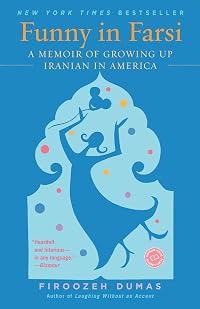
Funny in Farsi: A Memoir of Growing Up Iranian in America
by Firoozeh Dumas
On This Page
Description
In 1972, when she was seven, Firoozeh Dumas and her family moved from Iran to Southern California, arriving with no firsthand knowledge of this country beyond her father’s glowing memories of his graduate school years here. More family soon followed, and the clan has been here ever since. Funny in Farsi chronicles the American journey of Dumas’s wonderfully engaging family: her engineer father, a sweetly quixotic dreamer who first sought riches on Bowling for Dollars and in Las Vegas, show more and later lost his job during the Iranian revolution; her elegant mother, who never fully mastered English (nor cared to); her uncle, who combated the effects of American fast food with an army of miraculous American weight-loss gadgets; and Firoozeh herself, who as a girl changed her name to Julie, and who encountered a second wave of culture shock when she met and married a Frenchman, becoming part of a one-couple melting pot. In a series of deftly drawn scenes, we watch the family grapple with American English (hot dogs and hush puppies?—a complete mystery), American traditions (Thanksgiving turkey?—an even greater mystery, since it tastes like nothing), and American culture (Firoozeh’s parents laugh uproariously at Bob Hope on television, although they don’t get the jokes even when she translates them into Farsi). Above all, this is an unforgettable story of identity, discovery, and the power of family love. It is a book that will leave us all laughing—without an accent. From the Hardcover edition. show lessTags
Recommendations
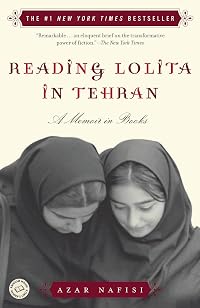
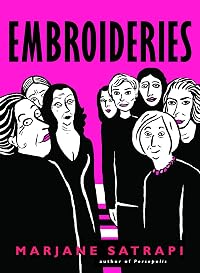
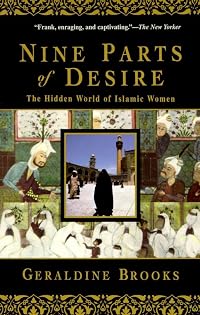
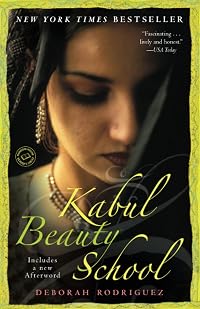






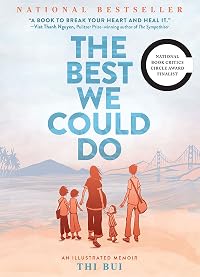
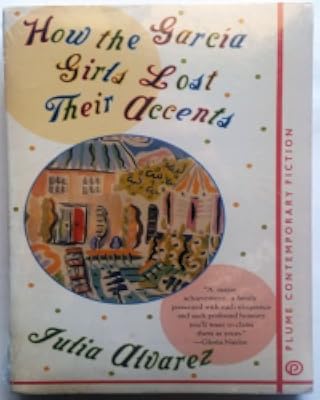
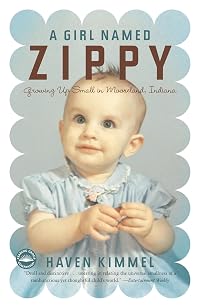
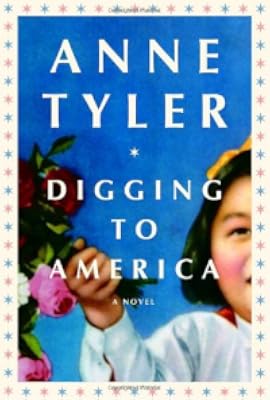



Member Recommendations
Member Reviews
Funny in Farsi, A Memoir of Growing Up in Iranian in America by Firoozeh Dumas (pp 187). Julie, as young Firoozeh called herself for several years because no American could pronounce her name, has written about her mostly-American but heavily Iranian-influenced upbringing with a delightfully comedic touch. Her life after coming to America at age 9 covers a pre-Revolution childhood when virtually no one had heard of Iran, let alone could locate it on a map, to the immediate post-Shah years when she, her family, and everyone from Iran were pariahs in the U.S., to more recent times when Iranians have become one of the most affluent and educated groups of immigrants in America (and who started calling themselves Persians to blunt American show more discrimination). The author captures the stresses of living in America—especially from a young person’s vantage point—-knowing very little English, with a Mother who knew none, and a father who only spoke technical engineering. Her stories capture the absurdities of entry into and life in a different society, the mostly unintentional but sometimes intentional meanness of people because one is different, comical observations of her immediate and extended family, contrasts between small town Iranian and affluent (by comparison) American life, her marriage to a Frenchman (hence the Dumas in her name), and so much more. Firoozeh truly has a gift for seeing most every aspect of life through a comedic lens, and I only hope much of that occurred in-the-moment rather than just retrospectively, given all that she put up with. I can’t say my having travelled briefly through Iran in the mid-70s gave me any real insight into her stories, but the ever slight connection made me a bit more sympathetic to her absurdly fun and endearing observations about her life. show less
My high school aged daughter had to read this book this year for her English class. When she first brought the class syllabus home, I noticed that I had read most of her required reading myself and generally enjoyed it. This title, though, was one of the few I hadn't already read although I certainly owned it. So I made a point of pulling it off my shelf and reading it before my daughter did. Dumas' memoir about being Iranian in America, growing up as not one thing or another but a sort of hybrid who feels out of place is funny and entertaining but thoughtful and insightful as well.
Dumas' family emigrated to the US for her father's engineering job in the early 1970s, when very few people in the US had heard of the Middle Eastern show more country. Told in short, funny, self-contained chapters, Dumas captures the slightly out of kilter life of an immigrant and the way that the US perception of Iranians changed after the Iranian hostage crisis and the Iranian Revolution. She focuses on life within her family, how her parents adapted (or didn't) to their new home, the cultural misunderstandings, and the ways in which they maintained ties to their familiar culture even half a world away. Covering many years, from her childhood to young adulthood and her eventual marriage to a Frenchman, Dumas' brief chapters showcase her lovable and quirky family, the kindness and the suspicion she encountered as an Iranian, and the entertaining, oftentimes self-deprecating, results of culture clash.
This slight memoir is light, filled with a sense of humor, and is, as the title promises, truly funny. Dumas recounts her relatives' quirky foibles and the ways in which they try to adjust to American culture. She recounts her memories with love and her stories highlight a universality amongst human beings no matter which part of the world they hail from and where the wind takes them. She is forgiving of the ignorance of people about her homeland and the clueless way that some people treat immigrants. Many of the chapters offer brief glimpses into life in pre-revolutionary Iran as compared to life in the US and Dumas has managed to strike a nice balance between the good and positive in each place even as she acknowledges imperfections and prejudices, offering only brief nods to the politics of the day then and now. A warm, endearing, and affectionately written memoir, this is a delightful look at difference, ethnicity, and culture. show less
Dumas' family emigrated to the US for her father's engineering job in the early 1970s, when very few people in the US had heard of the Middle Eastern show more country. Told in short, funny, self-contained chapters, Dumas captures the slightly out of kilter life of an immigrant and the way that the US perception of Iranians changed after the Iranian hostage crisis and the Iranian Revolution. She focuses on life within her family, how her parents adapted (or didn't) to their new home, the cultural misunderstandings, and the ways in which they maintained ties to their familiar culture even half a world away. Covering many years, from her childhood to young adulthood and her eventual marriage to a Frenchman, Dumas' brief chapters showcase her lovable and quirky family, the kindness and the suspicion she encountered as an Iranian, and the entertaining, oftentimes self-deprecating, results of culture clash.
This slight memoir is light, filled with a sense of humor, and is, as the title promises, truly funny. Dumas recounts her relatives' quirky foibles and the ways in which they try to adjust to American culture. She recounts her memories with love and her stories highlight a universality amongst human beings no matter which part of the world they hail from and where the wind takes them. She is forgiving of the ignorance of people about her homeland and the clueless way that some people treat immigrants. Many of the chapters offer brief glimpses into life in pre-revolutionary Iran as compared to life in the US and Dumas has managed to strike a nice balance between the good and positive in each place even as she acknowledges imperfections and prejudices, offering only brief nods to the politics of the day then and now. A warm, endearing, and affectionately written memoir, this is a delightful look at difference, ethnicity, and culture. show less
Originally published at TheBibliophage.com.
Firoozeh Dumas’ memoir about growing up Iranian in California, Funny in Farsi, is a lighthearted look at her 1970s and 80s immigrant experience. Imagine moving to a country where you don’t speak the language, and everyone is geographically challenged with no idea of where your home country is located on the globe. While Dumas isn’t the only person to have such an experience, she makes her story unique with humor and pathos.
Her father figures as the largest character in the memoir, sometimes surpassing the author herself with his quirky attitudes and behaviors. Dumas’ dad thinks he’s going to win a million dollars, and he loves the adulation he gets from his family around the world. show more But he’s also supportive of his kids, his nieces and nephews, and seems like a genuinely warmhearted guy. Everybody has an uncle or a dad like this—maybe both, like I do!
Lately I’ve tried to read more books about the immigrant experience, since my family is many generations distant from ours. There are multitudes of experiences I’d like to understand more about, and reading is the best way to learn IMHO. Funny in Farsi isn’t a book that sets out to teach others. It isn’t heavy on conclusions or politics. Instead, Dumas let’s you draw those conclusions yourself as she shares her memories. Let me be clear, I’m not saying this approach is better or worse, it’s just different from a book like [b:In the Country We Love: My Family Divided|25666051|In the Country We Love My Family Divided|Diane Guerrero|https://images.gr-assets.com/books/1461758898s/25666051.jpg|45489189] by Diane Guerrero. And that’s okay.
Dumas has a period in her teenage years where she decides to be called “Julie” because her Persian name is a constant challenge to people who don’t speak Persian. When I read this, I had to laugh because several of my husband’s family members have two names like this—one Anglo and one Japanese. In Dumas’ case it was fairly short lived, and part of her story is about the challenge of transitioning back to her Persian first name.
Lest you think the whole book is funny, know that Dumas also discusses the impact of the Iranian Revolution and the hostage crisis on her life. Everything changed for her family as these events unfolded. Their financial position, and especially the way their family was viewed here in America. Imagine watching the news for those hundreds of hostage days, and knowing this was happening in your country. Dumas tells this part of her story with an astute perspective.
Dumas has an easy writing style and an authentic voice. I’d absolutely pick up another of her books, especially another audiobook. Although she’s not a professional narrator, Dumas does a great job of telling her stories. And you can be sure she always pronounces her name correctly! show less
Firoozeh Dumas’ memoir about growing up Iranian in California, Funny in Farsi, is a lighthearted look at her 1970s and 80s immigrant experience. Imagine moving to a country where you don’t speak the language, and everyone is geographically challenged with no idea of where your home country is located on the globe. While Dumas isn’t the only person to have such an experience, she makes her story unique with humor and pathos.
Her father figures as the largest character in the memoir, sometimes surpassing the author herself with his quirky attitudes and behaviors. Dumas’ dad thinks he’s going to win a million dollars, and he loves the adulation he gets from his family around the world. show more But he’s also supportive of his kids, his nieces and nephews, and seems like a genuinely warmhearted guy. Everybody has an uncle or a dad like this—maybe both, like I do!
Lately I’ve tried to read more books about the immigrant experience, since my family is many generations distant from ours. There are multitudes of experiences I’d like to understand more about, and reading is the best way to learn IMHO. Funny in Farsi isn’t a book that sets out to teach others. It isn’t heavy on conclusions or politics. Instead, Dumas let’s you draw those conclusions yourself as she shares her memories. Let me be clear, I’m not saying this approach is better or worse, it’s just different from a book like [b:In the Country We Love: My Family Divided|25666051|In the Country We Love My Family Divided|Diane Guerrero|https://images.gr-assets.com/books/1461758898s/25666051.jpg|45489189] by Diane Guerrero. And that’s okay.
Dumas has a period in her teenage years where she decides to be called “Julie” because her Persian name is a constant challenge to people who don’t speak Persian. When I read this, I had to laugh because several of my husband’s family members have two names like this—one Anglo and one Japanese. In Dumas’ case it was fairly short lived, and part of her story is about the challenge of transitioning back to her Persian first name.
Lest you think the whole book is funny, know that Dumas also discusses the impact of the Iranian Revolution and the hostage crisis on her life. Everything changed for her family as these events unfolded. Their financial position, and especially the way their family was viewed here in America. Imagine watching the news for those hundreds of hostage days, and knowing this was happening in your country. Dumas tells this part of her story with an astute perspective.
Dumas has an easy writing style and an authentic voice. I’d absolutely pick up another of her books, especially another audiobook. Although she’s not a professional narrator, Dumas does a great job of telling her stories. And you can be sure she always pronounces her name correctly! show less
Funny in Farsi is the amusing memoir of Firoozeh, who moved with her parents and siblings from Iran to California at the age of seven. She describes with clever turns of phrase and a lighthearted tone the many ways in which her middle eastern family experienced culture shock, confusion and linguistic challenges over the years, but doesn't neglect to include the instances by which they became conscious of our shared humanity, regardless of native origin.
The first chapter or two felt a bit like watching a stand-up set, with the suspicion that some details were possibly embellished for comedic effect. Eventually, either the author became more skilled at realistically portraying funny episodes, or I stopped noticing. This slim, whimsical show more volume is a quick read, and would also make a great addition to a high school classroom. show less
The first chapter or two felt a bit like watching a stand-up set, with the suspicion that some details were possibly embellished for comedic effect. Eventually, either the author became more skilled at realistically portraying funny episodes, or I stopped noticing. This slim, whimsical show more volume is a quick read, and would also make a great addition to a high school classroom. show less
Funny in Farsi is a memoir by a woman who grew up in both Iran and the United States. Her family moved to the United States in 1972, when Firoozeh Dumas was seven years old. Neither she or her mother spoke any English, although her father had some experience with the country from graduate school. After two years, they moved back to Iran, but later returned to the United States. More family members followed until almost all of the family was living in California. Funny in Farsi is a collection of antecedents and stories about Firoozeh Dumas’s life and family.
The best thing about Funny in Farsi is that true to the title, it’s hilarious. I was laughing out loud at many parts and got some strange looks from people around me. One of my show more favorite parts was the chapter where she talked about her uncle, who was visiting them from Iran. While in America, he developed a taste for fast food. Perhaps unsurprisingly, it wasn’t too long before the clothes he brought with him no longer fit. When it became time for him to go back to Iran, he decided to lose weight. His method? Call the numbers on TV adds promising quick weight loss. This resulted in him being sent a full body reflective suit which he was supposed to wear before meals. He decided that it would be far more effective to wear the suit all day long.
While most of the book is funny, there are a few more sobering sections, mostly relating to the Iranian Revolution. When her family first came to the United States, she found Americans overwhelmingly friendly and welcoming. Then the hostage crisis happened. Overnight, her father lost his job and anti-Iranian bumper stickers began appearing.
Firoozeh Dumas’s warmth and humor shine on every page of Funny in Farsi. I loved reading it and would highly recommend it.
Originally posted on The Illustrated Page. show less
The best thing about Funny in Farsi is that true to the title, it’s hilarious. I was laughing out loud at many parts and got some strange looks from people around me. One of my show more favorite parts was the chapter where she talked about her uncle, who was visiting them from Iran. While in America, he developed a taste for fast food. Perhaps unsurprisingly, it wasn’t too long before the clothes he brought with him no longer fit. When it became time for him to go back to Iran, he decided to lose weight. His method? Call the numbers on TV adds promising quick weight loss. This resulted in him being sent a full body reflective suit which he was supposed to wear before meals. He decided that it would be far more effective to wear the suit all day long.
While most of the book is funny, there are a few more sobering sections, mostly relating to the Iranian Revolution. When her family first came to the United States, she found Americans overwhelmingly friendly and welcoming. Then the hostage crisis happened. Overnight, her father lost his job and anti-Iranian bumper stickers began appearing.
“Throughout his job ordeal, my father never complained. He remained an Iranian who loved his native country but who also believed in American ideals. He only said how sad it was that people so easily hate an entire population simply because of the actions of a few. And what a waste it is to hate, he always said. What a waste.”
Firoozeh Dumas’s warmth and humor shine on every page of Funny in Farsi. I loved reading it and would highly recommend it.
Originally posted on The Illustrated Page. show less
I love a good memoir and this one by a woman who came to America from Iran in the 1970s was wonderful. Just enough humor to balance stories with a more serious tone. In America, she was met with kindness and open arms, but that doesn’t mean there wasn’t also bullying. Cultural differences brought some hilarious moments, but others were more painful. She also talks about her marriage to a French man. I’d love to read more of her work.
I only have a handful of authors who if they wrote something, by default, I would go out of my way to find it and read it: Firoozeh is one of them. It's odd because she doesn't spark my imagination or fire up my brain ... she just enchants the heart.
Building short stories from her life and her family, she weaves a story and giving me a peek into an Iran that is not all desert, hardcore Muslim, and evil.
Members
- Recently Added By
Lists

Books Read in 2021
5,361 works; 114 members

NPR Readers Poll: 100 Favorite Funny Books
100 works; 5 members
Author Information

4+ Works 2,205 Members
Awards and Honors
Awards
Distinctions
Common Knowledge
- Original publication date
- 2003-06-17
- People/Characters
- Firoozeh Dumas
- Important places
- Iran; California, USA
- Dedication
- To my father, Kazem, who loves to tell stories.
And to my mother, Nazireh. - First words
- When I was seven, my parents, my fourteen-year-old brother, Farshid, and I moved from Abadan, Iran, to Whittier, California.
Classifications
- Genres
- Biography & Memoir, Nonfiction, General Nonfiction
- DDC/MDS
- 979.4900491550092 — History & geography History of North America Great Basin and Pacific Slope region of United States California Southern Counties
- LCC
- E184 .I5 .D86 — History of the United States United States Elements in the population Afro-Americans
- BISAC
Statistics
- Members
- 1,383
- Popularity
- 17,166
- Reviews
- 64
- Rating
- (3.68)
- Languages
- English
- Media
- Paper, Audiobook, Ebook
- ISBNs
- 8
- UPCs
- 1
- ASINs
- 6