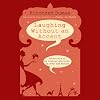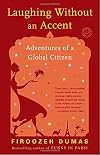
Laughing Without an Accent: Adventures of an Iranian American, at Home and Abroad
by Firoozeh Dumas
On This Page
Description
NEW YORK TIMES BESTSELLER * "There's such warmth to Dumas' writing that it invites the reader to pull up a seat at her table and smile right along with her at the quirks of her family and Iranians and Americans in general."--Booklist In the New York Times bestselling memoir Funny in Farsi, Firoozeh Dumas recounted her adventures growing up Iranian American in Southern California. Now she again mines her rich Persian heritage in Laughing Without an Accent, sharing stories both tender and show more humorous on being a citizen of the world, on her well-meaning family, and on amusing cultural conundrums, all told with insights into the universality of the human condition. (Hint: It may have to do with brushing and flossing daily.) With dry wit and a bold spirit, Dumas puts her own unique mark on the themes of family, community, and tradition. She braves the uncommon palate of her French-born husband and learns the nuances of having her book translated for Persian audiences (the censors edit out all references to ham). And along the way, she reconciles her beloved Iranian customs with her Western ideals. Explaining crossover cultural food fare, Dumas says, "The weirdest American culinary marriage is yams with melted marshmallows. I don't know who thought of this Thanksgiving tradition, but I'm guessing a hyperactive, toothless three-year-old." On Iranian wedding anniversaries: "It just initially seemed odd to celebrate the day that 'our families decided we should marry even though I had never met you, and frankly, it's not working out so well.'" On trying to fit in with her American peers: "At the time, my father drove a Buick LeSabre, a fancy French word meaning 'OPEC thanks you.'" Dumas also documents her first year as a new mother, the familial chaos that ensues after she removes the television set from the house, the experience of taking fifty-one family members on a birthday cruise to Alaska, and a road trip to Iowa with an American once held hostage in Iran. Droll, moving, and relevant, Laughing Without an Accent shows how our differences can unite us--and provides indelible proof that Firoozeh Dumas is a humorist of the highest order. Praise for Laughing Without an Accent "Dumas is one of those rare people: a naturally gifted storyteller."--Alexander McCall Smith "Laughing Without an Accent is written . . . as if Dumas were sharing a cup of coffee with her reader as she relates her comic tales. . . . Firoozeh Dumas exudes undeniable charm [as she] reveals a zeal for culture--both new and old--and the enduring bonds of a family filled with outsize personalities."--San Francisco Chronicle "[Dumas is] like a blend of Anne Lamott and Erma Bombeck."--Bust "Humorous without being sentimental, [Dumas] speaks to the American experience."--The Plain Dealer show lessTags
Recommendations
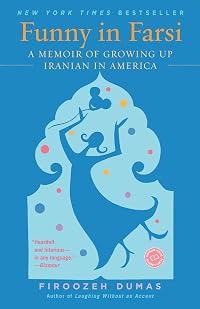
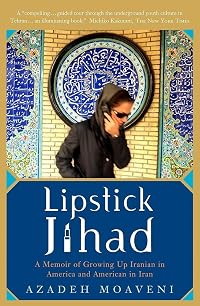

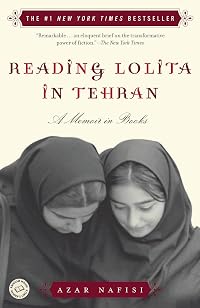



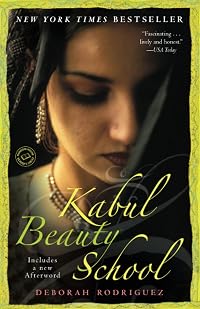



























Member Recommendations

Member Reviews
Laughing Without an Accent is a collection of memoirs by Firoozeh Dumas, a woman who moved from Iran to America before the revolution. The book is by turns funny, serious, and inspirational.
The stories are conversational in tone and vary from Dumas’s childhood recollections of life in Iran to attending school in the United States to her experiences as a mother. Reading the first chapter, I discovered that she’d published a prior set of memoirs which had been very successful in Iran, despite an entire chapter being censored. Laughing Without an Accent stands on it’s own, show more but I do really want to get a hold of her first book, Funny in Farsi.
So many of Dumas’s antecedents are hilarious. I love her descriptions of why all the men in her family wear navy blue velar jogging suits to the time when her French husband decided to cook Christmas dinner for her parents. I also love stories from her childhood, such as how she’d entertain herself by listening in on the shared phone line or how every evening her family would go out on the apartment’s balcony and watch the excitement at the neighboring police show, which once contained an entire wedding party who’d been arrested for excessive honking.
Although much of Laughing Without an Accent is funny, other points are more serious. Sometimes Dumas is sharing advice and wisdom that’s been important to her own life. Other times she’s talking about difficulties she’s faced. After the revolution in Iran and the beginnings of the hostage situation, Dumas’s father was unemployable and much of American was actively hostile and hateful to Iranians.
I definitely recommend Laughing Without an Accent. It’s different from the normal sort of book I read, but I am very glad I picked it up. Even when she’s describing difficulties in her life, there’s just so much humanity in the way she writes. If you ever come across a copy of Laughing Without an Accent, I would encourage you to pick it up.
Originally posted on The Illustrated Page. show less
“. . . to deny someone an education is not just a crime but a sin, because you are denying that person the opportunity to realize who he or she is meant to be.”
The stories are conversational in tone and vary from Dumas’s childhood recollections of life in Iran to attending school in the United States to her experiences as a mother. Reading the first chapter, I discovered that she’d published a prior set of memoirs which had been very successful in Iran, despite an entire chapter being censored. Laughing Without an Accent stands on it’s own, show more but I do really want to get a hold of her first book, Funny in Farsi.
So many of Dumas’s antecedents are hilarious. I love her descriptions of why all the men in her family wear navy blue velar jogging suits to the time when her French husband decided to cook Christmas dinner for her parents. I also love stories from her childhood, such as how she’d entertain herself by listening in on the shared phone line or how every evening her family would go out on the apartment’s balcony and watch the excitement at the neighboring police show, which once contained an entire wedding party who’d been arrested for excessive honking.
“My father always said that hatred is a waste and never an option. He learned this growing up in Ahwaz, Iran, in a Muslim household. I have tried my best to pass the same message to my children, born and raised in the United States. Ultimately, it doesn’t matter where we learn that lesson. It’s just important that we do.”
Although much of Laughing Without an Accent is funny, other points are more serious. Sometimes Dumas is sharing advice and wisdom that’s been important to her own life. Other times she’s talking about difficulties she’s faced. After the revolution in Iran and the beginnings of the hostage situation, Dumas’s father was unemployable and much of American was actively hostile and hateful to Iranians.
“It all happened so fast. It seemed like on Monday, everyone was asking us if our carpets really do fly. Then on Friday, those same people were putting “I Play Cowboys and Iranians” bumper stickers on their cars. I was fourteen, and all this sudden hatred really got me thinking. What type of person would make bumper stickers announcing hatred?”
I definitely recommend Laughing Without an Accent. It’s different from the normal sort of book I read, but I am very glad I picked it up. Even when she’s describing difficulties in her life, there’s just so much humanity in the way she writes. If you ever come across a copy of Laughing Without an Accent, I would encourage you to pick it up.
Originally posted on The Illustrated Page. show less
Firoozeh Dumas has written a very funny, immensely insightful memoir about growing up as an Iranian living in America. Dumas immigrated to America at the age of seven with her mother, father and brother and so retains memories of both her childhood in the small Iranian town of Abadan as well as her youth in California.
Laughing Without An Accent is Dumas’ second novel (she published Funny in Farsi in 2003 to rave reviews). It is a collection of vignettes which give the reader insight into the melding of cultures and the struggles (often humorous) of immigrants living in the United States. Her stories reflect the difference between the generations in how immigrants adapt to life in another culture - and her affectionate and hilarious show more reflections on her parents were some of my favorite parts of the book, such as when Dumas and her French husband host Christmas at their home in San Francisco:
'My parents always buy wrapping paper on sale, paying attention only to the pretty colors. As Francois held his stack of gifts, all emblazoned with “Happy Birthday!” and “Congratulations, Graduate!” he looked a bit puzzled. A steep learning curve lay head of him.' -From Laughing Without An Accent, page 97-
Dumas’ memoir strikes just the right balance between lightheartedness and reflection on deeper issues. When she shares that “the only time I felt like a complete foreigner was in college,” the reader sympathizes. Likewise, her recollections of the Iranian Hostage Crisis and how it impacted her family filled me with dismay at the prejudice towards immigrants which came about as a result of that event.
Witty, warm and compassionate - Laughing Without An Accent is a memoir worth reading.
Recommended show less
Laughing Without An Accent is Dumas’ second novel (she published Funny in Farsi in 2003 to rave reviews). It is a collection of vignettes which give the reader insight into the melding of cultures and the struggles (often humorous) of immigrants living in the United States. Her stories reflect the difference between the generations in how immigrants adapt to life in another culture - and her affectionate and hilarious show more reflections on her parents were some of my favorite parts of the book, such as when Dumas and her French husband host Christmas at their home in San Francisco:
'My parents always buy wrapping paper on sale, paying attention only to the pretty colors. As Francois held his stack of gifts, all emblazoned with “Happy Birthday!” and “Congratulations, Graduate!” he looked a bit puzzled. A steep learning curve lay head of him.' -From Laughing Without An Accent, page 97-
Dumas’ memoir strikes just the right balance between lightheartedness and reflection on deeper issues. When she shares that “the only time I felt like a complete foreigner was in college,” the reader sympathizes. Likewise, her recollections of the Iranian Hostage Crisis and how it impacted her family filled me with dismay at the prejudice towards immigrants which came about as a result of that event.
Witty, warm and compassionate - Laughing Without An Accent is a memoir worth reading.
Recommended show less
Firoozeh boasts that she would be the ideal party guest. She does have a gift of finding common ground with people. Not sure how she pulls it off. But she a warming wit that avoids being nasty. OK, she does take some punches at her family and Lindsay Lohan.
This is a collection of short stories which jump all over the place in time line and subject. Normally, I dislike this format making the pace choppy and shallow. Somehow she delightfully writes her way to something delightful.
Here is my favorite part:
...if empowerment were as simple as being able to show skin, Paris Hilton would be the most enlightened woman in the United States. Having freedom does not automatically mean we all make good choices. Freedom is a rope; some make a show more ladder out of it and climb out of the box they're put in; some make a noose; and others make a stripper pole."
I would love to host a party with Firoozeh as a guest. show less
This is a collection of short stories which jump all over the place in time line and subject. Normally, I dislike this format making the pace choppy and shallow. Somehow she delightfully writes her way to something delightful.
Here is my favorite part:
...if empowerment were as simple as being able to show skin, Paris Hilton would be the most enlightened woman in the United States. Having freedom does not automatically mean we all make good choices. Freedom is a rope; some make a show more ladder out of it and climb out of the box they're put in; some make a noose; and others make a stripper pole."
I would love to host a party with Firoozeh as a guest. show less
Laughing Without an Accent is Fizooreh Dumas’ follow-up to her first book, Funny in Farsi. Both serve as anecdotal memoirs of situations Dumas faced as an Iranian growing up in the United States and eventually marrying a Frenchman. The book covers a vast time period; the youngest story is from when she was a six-year-old girl living in Iran, the oldest from events which probably took place mere months before the book was published. The stories are in no particular order; some reference events that took place in others.
The vignettes are curious glimpses into a culture that is foreign to most Americans. For example, the first chapter of the book deals with Dumas’ attempts to have her book translated into Persian (the major language in show more Iran). The author was passionate about those in her home country reading her works as they were written, so she went about seeking her own translator rather than relying on the lowest common denominator. She recounts the roadblocks that were thrown in front of her, as well as how well the book was received once it was actually published in Iran. It’s a wonderful beginning to establishing a relationship with a foreign culture, rather than fearing and vilifying it.
Some of the anecdotes are not so foreign, such as parents buying gifts for their children that the children abhor. Through these stories, Dumas illustrates that while she is from a different culture, the distinctions aren’t as numerous as the similarities. That is what is important about this book, and why it is crucial that Americans read it: understanding is the beginning of acceptance. In the book, Dumas describes her family’s reaction to and treatment during the Iranian hostage crisis. She speaks of their horror at the situation and her subsequent friendship with one of the hostages. In some ways, Dumas is brave; in her own way, she is standing up for the normal, everyday Iranians who only want to live their lives in peace. At the same time, by insisting her books be published in Iran, she is showing them that Americans aren’t a people to fear. It is a phenomenal thing for one woman to do, and she does it incredibly well.
Perhaps the best element of Dumas’ work is her sense of humor. It is apparent that most of the anecdotes are intended to be humorous; she fully expects the reader to laugh along with her about the nuances of her culture. However, it is not a malicious laughter - Dumas respects and loves her background, and she is not trying to make fun of it. It is charming and affectionate, full of love and life. Both Laughing Without an Accent and Funny in Farsi are funny and sentimental without being cheesy. The vignette style makes them incredibly easy to read, and the message is equally relevant in today’s tense atmosphere: we are all different, yet we are the same.
Originally posted at Curled Up With a Good Book and reprinted at http://www.skrishnasbooks.com show less
The vignettes are curious glimpses into a culture that is foreign to most Americans. For example, the first chapter of the book deals with Dumas’ attempts to have her book translated into Persian (the major language in show more Iran). The author was passionate about those in her home country reading her works as they were written, so she went about seeking her own translator rather than relying on the lowest common denominator. She recounts the roadblocks that were thrown in front of her, as well as how well the book was received once it was actually published in Iran. It’s a wonderful beginning to establishing a relationship with a foreign culture, rather than fearing and vilifying it.
Some of the anecdotes are not so foreign, such as parents buying gifts for their children that the children abhor. Through these stories, Dumas illustrates that while she is from a different culture, the distinctions aren’t as numerous as the similarities. That is what is important about this book, and why it is crucial that Americans read it: understanding is the beginning of acceptance. In the book, Dumas describes her family’s reaction to and treatment during the Iranian hostage crisis. She speaks of their horror at the situation and her subsequent friendship with one of the hostages. In some ways, Dumas is brave; in her own way, she is standing up for the normal, everyday Iranians who only want to live their lives in peace. At the same time, by insisting her books be published in Iran, she is showing them that Americans aren’t a people to fear. It is a phenomenal thing for one woman to do, and she does it incredibly well.
Perhaps the best element of Dumas’ work is her sense of humor. It is apparent that most of the anecdotes are intended to be humorous; she fully expects the reader to laugh along with her about the nuances of her culture. However, it is not a malicious laughter - Dumas respects and loves her background, and she is not trying to make fun of it. It is charming and affectionate, full of love and life. Both Laughing Without an Accent and Funny in Farsi are funny and sentimental without being cheesy. The vignette style makes them incredibly easy to read, and the message is equally relevant in today’s tense atmosphere: we are all different, yet we are the same.
Originally posted at Curled Up With a Good Book and reprinted at http://www.skrishnasbooks.com show less
I have loved everything this author has written - even a recent article on pain management. This is no exception. She has a unique perspective, having straddled two different cultures in the midst of changeful times on both sides...
I don't remember the last time I read a book that made me laugh out loud. As I read this book, I laughed often as I recognized myself and my family within the pages.
In this collection of essays, Dumas describes her experiences growing up in Iran and her life in the U.S. Dumas' writing is honest, light, and laced with humor. Her stories are simple, yet powerful. This book is a fabulous reminder that our similarities far out weigh our differences- regardless of our cultural background. I can't wait to read "Funny in Farsi."
In this collection of essays, Dumas describes her experiences growing up in Iran and her life in the U.S. Dumas' writing is honest, light, and laced with humor. Her stories are simple, yet powerful. This book is a fabulous reminder that our similarities far out weigh our differences- regardless of our cultural background. I can't wait to read "Funny in Farsi."
I read Funny in Farsi several years ago, and was meaning to get around to this. Finally did when they put it on the feature rack at the library, probably prompted by the arrest/disappearance of her Iranian translator. This was highly readable, a bit compulsive, even. Essays about her experiences, shedding some light on modern American culture (including the translation: “Shake'N'Bake” just doesn't). Really gifted writer.
Members
- Recently Added By
Lists

Penguin Random House
458 works; 4 members

Books Read in 2021
5,361 works; 113 members
Author Information

4+ Works 2,209 Members
Classifications
- Genres
- Nonfiction, Biography & Memoir, Travel, General Nonfiction
- DDC/MDS
- 910.4 — History & geography Geography & travel modified standard subdivisions of Geography and travel Pirates & Shipwrecks
- LCC
- E184 .I5 .D864 — History of the United States United States Elements in the population Afro-Americans
- BISAC
Statistics
- Members
- 301
- Popularity
- 105,821
- Reviews
- 14
- Rating
- (3.76)
- Languages
- English
- Media
- Paper, Audiobook, Ebook
- ISBNs
- 4
- ASINs
- 6