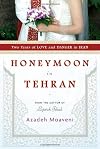
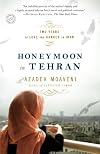
Honeymoon in Tehran: Two Years of Love and Danger in Iran
by Azadeh Moaveni
On This Page
Description
The Iranian-American author describes her return to Iran as a reporter for "Time" magazine, her marriage to an Iranian man, the repressive Iranian society and its impact, and her family's decision to leave Iran.Tags
Recommendations
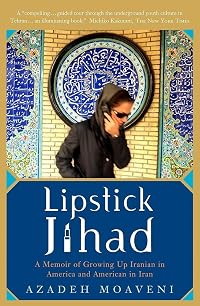

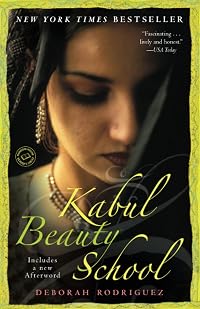

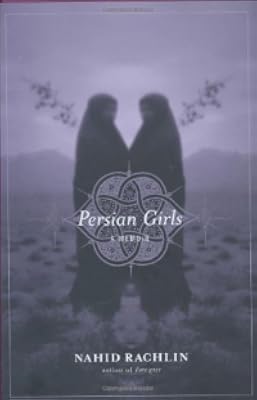

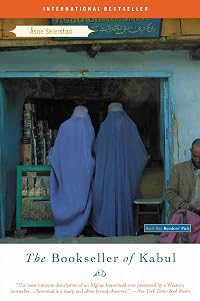
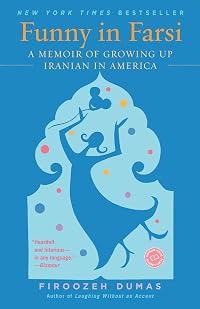
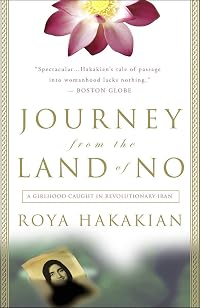
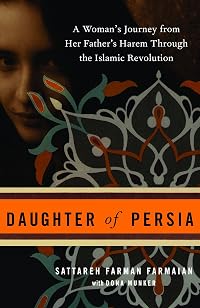
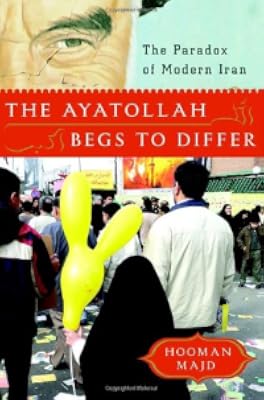


















Member Recommendations
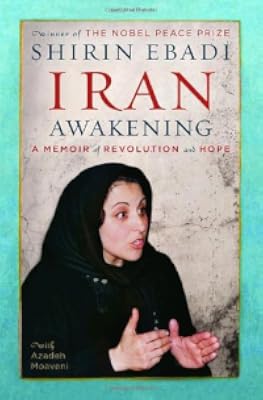
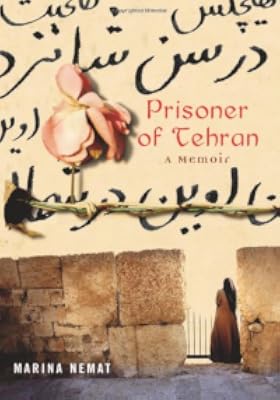
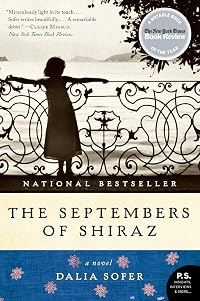
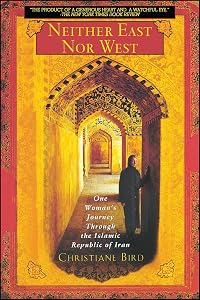
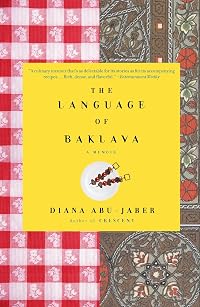
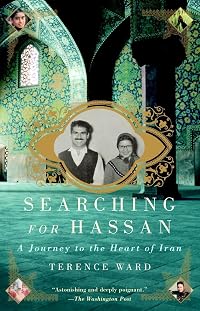
elbakerone Another excellent book that deals with contemporary politics and dire situations for journalists around the world.
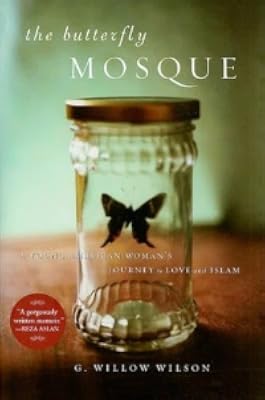
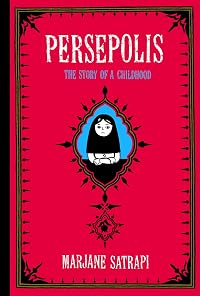
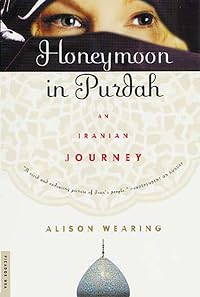
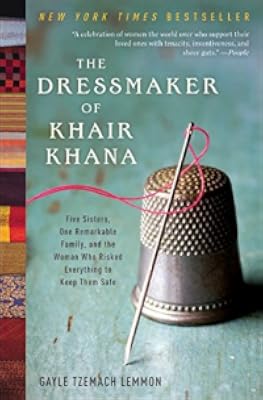
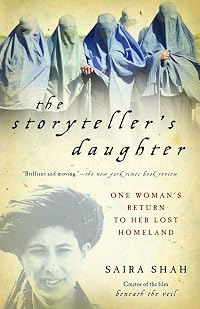
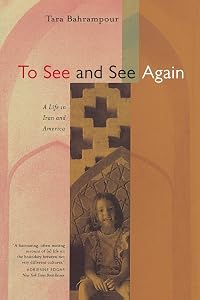
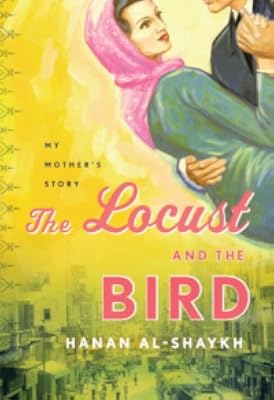
elbakerone Both these books explore the themes of Western women living in Middle Eastern countries and adjusting to a new culture.
Member Reviews
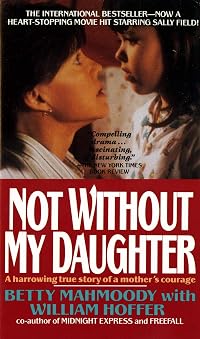
A really interesting take on living in Iran written by an Iranian-American. The feeling of being 'sort of' at home in a place but 'sort of' a foreigner in equal measure resonates with anyone who has lived abroad. Her feelings about her religion and her love of country swing back and forth during her time there. It is not a one sided portrayal of Iran, like 'Not Without My Daughter' , not is it politically correct, as she takes swipes at things about Iran as well as views on the country westerners have.
The book gave me an expanded view on the country, its politics ( way more complicated than I had envisioned) and the very complicated life there.
On a lighter note, after reading about the wedding 'industry' in Iran, I think a film about show more it could give 'My Big Fat Greek Wedding' a run for their money! show less
The book gave me an expanded view on the country, its politics ( way more complicated than I had envisioned) and the very complicated life there.
On a lighter note, after reading about the wedding 'industry' in Iran, I think a film about show more it could give 'My Big Fat Greek Wedding' a run for their money! show less
I was slow to pick up Honeymoon in Tehran, thinking that I should read Lipstick Jihad first. Finally, I just started reading, and I am so glad I did. What a fascinating book! It's like a cross between Confessions of a Shopaholic and The Economist. Moaveni, a young upper class Iranian-American, enjoys the cosmopolitan high life of Tehran, while at the same time evaluating the rise, and fall, of Ahmadinejad's popularity with the eye of an experienced journalist. The triumphs and trials of her life lend color to the reporting that might otherwise be a bit daunting for a casual reader. I look forward to going back to read Lipstick Jihad now.
 This review was written for LibraryThing Early Reviewers.
What I appreciate most about memoirs set in a foreign country is that headlines filled with words and facts take on a personal face and I can experience the culture and the situations as they have been lived by another person. Flesh and bones are added to the skeleton that I glimpse through the media. Such was the case for me when I read “Honeymoon in Tehran.” Written by Azadeh Moaveni, a reporter for Time Magazine, this book chronicles her experience of returning to the land of her heritage to cover the happenings at a time of governmental transition. Through her interactions with relatives, friends and connections I saw how the political situation impacted the average life of a resident of Tehran. Her experiences with the show more Intelligence branch of the government were very revealing as to the amount of control that is exerted on citizens and foreigners alike. As she went about her work, she also went about her life, socializing with friends, meeting new people, forming friendships and falling in love. It is through these interpersonal connections that I learned the most.
The book reads easily, written in a “reporting, journalistic style.” It is clear and concise and does not bog down. What I did miss was a personal sense of Azadeh herself. Somehow, her factual documentation minimized a sense of her personhood for me so I was not as deeply pulled in to her personal experiences as I have been in other memoirs, such as “Tears of the Desert” by Halima Bashir or “The Translator” by Daoud Hari. That said, it was a very enlightening and well-written memoir. show less
The book reads easily, written in a “reporting, journalistic style.” It is clear and concise and does not bog down. What I did miss was a personal sense of Azadeh herself. Somehow, her factual documentation minimized a sense of her personhood for me so I was not as deeply pulled in to her personal experiences as I have been in other memoirs, such as “Tears of the Desert” by Halima Bashir or “The Translator” by Daoud Hari. That said, it was a very enlightening and well-written memoir. show less
This review was written for LibraryThing Early Reviewers.I was a tad suspicious, initially, that this would be just another typical expose of a 'strange and exotically scary' foreign country, written with a clear agenda, and clearly for an American audience... but, overall, I was fairly happily mistaken.
First. The timing of this book was FANTASTIC, in my opinion, what with its publication coming right after the US's 2008 presidential election and just before Iran's upcoming one (this June 2009).
Reading Moaveni's take on Ahmadinejad's unexpected rise to power in 2005 has heightened my awareness of the US media's coverage of Iran as that election date approaches.
And, regarding other reviews, I didn't find Moaveni's attention to politics in the opening chapters offputting at all, probably show more because 1) I like politics, and 2) she relates her memories of Iran's social and political climate in the fairly light tone of a 'hip' young journalist. It's not dry or hard to read at all. And her descriptions of interactions with a wide range of Iranians show how complex that society is... NOT a flat, dark, simplistically negative, nuke-obsessed 'axis of evil' but a multifaceted world where the gap between the haves and have-nots is notably more pronounced than here in the US (even as the current economic crisis highlights our own problems with political and financial corruption).
Anyway, on that note -- Moaveni's account of how shocked many upperclass and expat Iranians were by Ahmadinejad's sudden ascent also prompted me to think back on recent political happenings here in the States from a different angle. Her shock about his rise led me to recall, more than once, the Sarah Palin phenomenon here last summer. (From whence her sudden rebel/rockstar aura? Did so much of the public *really* believe that a return to religion was what we needed...?) Last fall many people I knew were horrified to think that, with the US on such shaky ground in so many ways, the majority of the public might choose to back a smalltown evangelical type mayor for the nation's second highest office... thus suddenly the bizarre points of similarity between tensions in the US in 08 and Moaveni's reaction to Ahmadinejad in 2005 really stood out to me. This helped make 'Honeymoon in Tehran' resonate and seem strangely more relevant to a US reader.
Finally, I was intrigued by Moaveni's depiction of the clash/disconnect between the socially conservative religious fundamentalism and dualistic rhetoric used by characters like Ahmadinejad, versus the day-to-day shades of grey coloring the frustrations of young people in Tehran (who, according to Moaveni, largely don't give a hoot about their leaders' rants against Israel and the West; they just want to be able to get decent jobs, marry, pay the rent, and be happy... like Moaveni herself, and like most of us.)
This probably isn't destined to be remembered as a classic, or even semi-classic memoir, but it was a pretty good read regardless. show less
First. The timing of this book was FANTASTIC, in my opinion, what with its publication coming right after the US's 2008 presidential election and just before Iran's upcoming one (this June 2009).
Reading Moaveni's take on Ahmadinejad's unexpected rise to power in 2005 has heightened my awareness of the US media's coverage of Iran as that election date approaches.
And, regarding other reviews, I didn't find Moaveni's attention to politics in the opening chapters offputting at all, probably show more because 1) I like politics, and 2) she relates her memories of Iran's social and political climate in the fairly light tone of a 'hip' young journalist. It's not dry or hard to read at all. And her descriptions of interactions with a wide range of Iranians show how complex that society is... NOT a flat, dark, simplistically negative, nuke-obsessed 'axis of evil' but a multifaceted world where the gap between the haves and have-nots is notably more pronounced than here in the US (even as the current economic crisis highlights our own problems with political and financial corruption).
Anyway, on that note -- Moaveni's account of how shocked many upperclass and expat Iranians were by Ahmadinejad's sudden ascent also prompted me to think back on recent political happenings here in the States from a different angle. Her shock about his rise led me to recall, more than once, the Sarah Palin phenomenon here last summer. (From whence her sudden rebel/rockstar aura? Did so much of the public *really* believe that a return to religion was what we needed...?) Last fall many people I knew were horrified to think that, with the US on such shaky ground in so many ways, the majority of the public might choose to back a smalltown evangelical type mayor for the nation's second highest office... thus suddenly the bizarre points of similarity between tensions in the US in 08 and Moaveni's reaction to Ahmadinejad in 2005 really stood out to me. This helped make 'Honeymoon in Tehran' resonate and seem strangely more relevant to a US reader.
Finally, I was intrigued by Moaveni's depiction of the clash/disconnect between the socially conservative religious fundamentalism and dualistic rhetoric used by characters like Ahmadinejad, versus the day-to-day shades of grey coloring the frustrations of young people in Tehran (who, according to Moaveni, largely don't give a hoot about their leaders' rants against Israel and the West; they just want to be able to get decent jobs, marry, pay the rent, and be happy... like Moaveni herself, and like most of us.)
This probably isn't destined to be remembered as a classic, or even semi-classic memoir, but it was a pretty good read regardless. show less
This review was written for LibraryThing Early Reviewers.Azadeh Moaveni's book is a contemplation of her tortured feelings for Iran. Although born and raised in California by Iranian parents, she feels uniquely at home in Iran. That Iran is also governed by a repressive regime forms the heart of her conflict. What is especially interesting about her story is that she was married and had a child in Tehran. These very personal, life changing events are seen through the lens of love/hate she feels for the country. At first, reading the book, her confusion at being denied certain freedoms was mystifying to me "You're in Iran!" I wanted to yell. But as I read on, I realized that she really wanted to give her homeland the benefit of the doubt, and spends much of the book telling stories of the show more friendliness and common sense of the people, the deliciousness of the food and the rich cultural history of Iran. There is quite a bit of suspense in her story that keeps you reading. For those who read and enjoyed Reading Lolita in Tehran, or Moaven's first book, Lipstick Jihad, I would highly recommend this book. show less
This review was written for LibraryThing Early Reviewers.Honeymoon in Tehran is the kind of book I would encourage most Americans to read, especially since it provides so much insight into a country that so many Americans view as a dangerous enemy. Moaveni is an American journalist born to Iranian immigrant parents but who still feels a distinct connection to the land of her heritage. She worked for many years as a foreign correspondent for Time magazine, investigating everything from Iranian pop culture to politics to human rights issues. Her latest memoir, after Lipstick Jihad, chronicles her move to Iran from Lebanon when she meets the man she will eventually marry. Moaveni, perhaps because of her American/Iranian heritage, is particularly effective at describing Iranian life from a show more perspective that resonates with American readers. She reflects the disconnect between the Iranian people, who often hold very modern views about everything from diplomacy to romance, and the Iranian government of religious dictators. Although her story is obviously unique, and filtered through her own perspective, Honeymoon in Tehran nevertheless offers us all an opportunity to better understand a country and a people who, for better or worse, will continue to factor greatly into the American political landscape for years to come. A fascinating book about a very important region. show less
This review was written for LibraryThing Early Reviewers.This book is a truly excellent memoir. If you’re looking for a memoir that details the struggles and censorship that modern Iranians (particularly women) are facing, it delivers. It is chock full of complicated patriotism, scathing social observations and balanced political commentary. But if contemporary romance is your thing, it has that too. The novel spans two years as President Ahmadinejad rises to power, and the author meets the love of her life. I won’t spoil the ridiculous and creative ways in which she is oppressed and frankly harassed, but to say it isn’t easy to start a family in Tehran.
It’s obviously well-written, as Moaveni is an accomplished journalist and author. And for me, the best parts of Azadeh Moaveni’s show more Honeymoon in Tehran are when her journalistic approach to her tale slips, and we are treated to her voice as a woman and a mom delivering the story’s most powerful moments. Highly recommended! show less
It’s obviously well-written, as Moaveni is an accomplished journalist and author. And for me, the best parts of Azadeh Moaveni’s show more Honeymoon in Tehran are when her journalistic approach to her tale slips, and we are treated to her voice as a woman and a mom delivering the story’s most powerful moments. Highly recommended! show less
Members
- Recently Added By
Lists

Best Autobiographies and Memoirs
370 works; 67 members

Radical Islam/Islamism
75 works; 6 members

All Things Iran/Persia
64 works; 1 member

Books Read in 2014
2,343 works; 89 members

Female Author
1,234 works; 67 members

Middle Eastern Literature & Non-Fiction
99 works; 3 members
Author Information

4+ Works 1,807 Members
Common Knowledge
- Original publication date
- 2009-02
- People/Characters
- Azadeh Moaveni; Arash Zeini; Mahmoud Ahmadinejad; Mr. X
- Important places
- Tehran, Iran; Iran
- Epigraph
- Why cling to one life
till it is soiled and ragged?
The sun dies and dies
squandering a hundred lives
every instant
God has decreed life for you
and He will give
anot... (show all)her and another and another.
-- Mowlana Jalaleddin Rumi - Dedication
- For Arash
- First words
- In the late spring of 2005, I returned to Iran to report on the country's presidential election.
- Last words
- (Click to show. Warning: May contain spoilers.)They are a reminder that though today Iranians are diminished by the cruel laws of unjust tyrant, it has not always been so, and thus will not always be.
- Publisher's editor
- Ebershoff, David; Schwoeri, Lindsey
- Blurbers
- Shteyngart, Gary; Nasr, Vali; Ardalan, Davar
Classifications
- Genres
- Nonfiction, Biography & Memoir, General Nonfiction, Religion & Spirituality
- DDC/MDS
- 305.4889155073092 — Society, government, & culture Social sciences, sociology & anthropology Social group - Age, Gender, Ethnicity Women Specific groups of women Indigenous women
- LCC
- E184 .I5 .M624 — History of the United States United States Elements in the population Afro-Americans
- BISAC
Statistics
- Members
- 254
- Popularity
- 127,707
- Reviews
- 40
- Rating
- (3.82)
- Languages
- English, Italian
- Media
- Paper, Audiobook, Ebook
- ISBNs
- 11
- ASINs
- 3