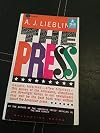
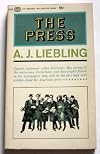
The Press
by A. J. Liebling
On This Page
Tags
Recommendations












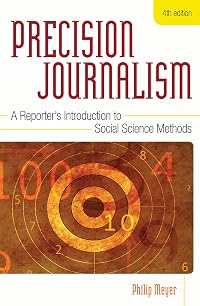


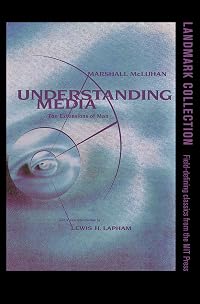
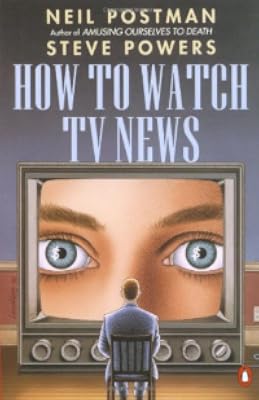


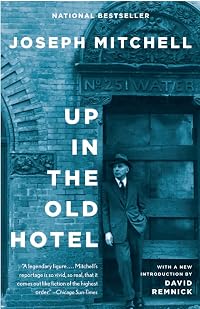






Member Recommendations

Member Reviews
While there's no question that LIebling knew his subject -- he covered it for years for the New Yorker -- it's rather hard to warm up to this collection. The sneers are almost audible, those that are directed at newspapers and newspaper owners Liebling doesn't like. Many bon mots in here (like the description of the New York Sun showing up on the World-Telegram's masthead like canary feathers on the chin of a cat), but it doesn't quite balance out the nasty taste of vinegar.
Ratings
Members
- Recently Added By
Published Reviews
The last section of this Library of America volume is devoted to Liebling's essays about the press. The man loves newspapers, but has no illusions about them: "The function of the press in society is to inform, but its role is to make money." Back in the 1950s Liebling noticed that more and more cities were becoming one-newspaper towns, with a resulting loss of the competitiveness needed for show more good journalism. What would he say now? show less
added by John_Vaughan
Author Information

34+ Works 2,439 Members
A. J. Liebling was an urbane and prolific journalist whose style, incorporating first-person narrative, street talk, and exuberant metaphor, became a model for the New Journalism of the 1960's and later. Although he came from a genteel New York family, he was fascinated by the irreverent underworld all his life and made it his special subject. show more After being expelled from Dartmouth College for refusing to attend chapel, Liebling graduated from Columbia University's Pulitzer School of Journalism in 1925 and then worked for various newspapers, including The New York Times, which fired him, and the New York World, before he found his metier at The New Yorker magazine in 1935. It was there that he developed his signature style and did his best work, writing about a wide range of subjects, from the city's characters to gastronomy to boxing to the London Blitz and the Normandy invasion. A born raconteur with a fertile imagination, Liebling carved out a territory between objective reporting and fiction, which so many other journalists have mined since. Yet he could also produce straight war reportage fine enough to merit receiving the Legion of Honor from a grateful France in 1952. Starting in 1945, Liebling wrote a widely admired column for The New Yorker called "The Wayward Pressman," in which he criticized American journalism's priorities and performance. This was probably the first such column in U.S. journalism. During the 1950s and 1960s, he also wrote book reviews for Esquire. Besides his massive newspaper and magazine output, Liebling wrote about 20 books. He was married three times, the last time to the writer Jean Stafford. (Bowker Author Biography) show less
Work Relationships
Classifications
- Genres
- Nonfiction, General Nonfiction
- DDC/MDS
- 071.3 — Computer science, information & general works News media, journalism & publishing Journalism and newspapers in North America United States
- LCC
- PN4867 .L48 — Language and Literature Literature (General) Literature (General) Journalism. The periodical press, etc. By region or country
Statistics
- Members
- 115
- Popularity
- 283,235
- Reviews
- 1
- Rating
- (3.68)
- Languages
- English
- Media
- Paper
- ISBNs
- 3
- ASINs
- 4