
Mitchell Stephens
Author of A History of News
About the Author
Mitchell Stephens is Professor of Journalism and Mass Communication at New York University
Works by Mitchell Stephens
Tagged
Common Knowledge
- Birthdate
- 1949-08-16
- Gender
- male
- Education
- Haverford College
UCLA - Occupations
- journalist
professor - Organizations
- Arthur L. Carter Journalism Institute, New York University
- Nationality
- USA
- Birthplace
- New York, New York, USA
- Places of residence
- Alpine, New Jersey, USA
- Associated Place (for map)
- USA
Members
Reviews

Stephens' book is a broad survey of the history of disbelief, almost wholly focused on the Western world. As such, it fills an empty spot in my personal library. I have plenty of books that provide arguments against the belief in an all-powerful god or against particular religions, but none of them provide a history of the freethinking individuals throughout the centuries who, sometimes at the cost of their own lives, refused to bow down to religious orthodoxy. Most of the individuals who show more have advanced the cause of disbelief can't strictly be called atheists, but each contributed to a modern world (at least in the West) where questioning religion, or just ignoring it, is a viable, non-dangerous choice. There are rough spots here, although not in Stephens' narrative, which is smooth and surprisingly compelling reading. The problems arise from what some flourishings of Atheism have led to, i.e., the excesses of the French Revolution, Soviet Communism, Chinese Communism, Pol Pot, to name a few. Stephens' conclusion is that in these cases, atheism or perhaps just opposition to the established order became a religion in itself and as such practiced the same excesses as the Inquisition or Hitler's Germany. My own unfortunate conclusion is that just because someone has properly rejected belief in a supernatural god doesn't mean that he (or she) is a better, more just person, not subject to the same petty jealousies or outright evil impulses. After all, how many of us would love to punch Pat Robertson in the nose? Nevertheless, most of the atheists, agnostics, and doubters Stephens discusses did contribute to advancements in science and thinking without which the modern world would not be possible.
To his credit, Stephens shines a light on the good and bad of each player in the story. This is no utopian version of the benefits of atheism. This book will introduce readers to some familiar characters, such as Thomas Paine, Karl Marx, and Percy Bysshe Shelley, along with some perhaps unfamiliar ones such as the French priest Jean Meslier who left a testament after his death in 1729 that totally rejected religion and the church he has been serving. All in all, it is a fascinating story that will enlighten almost any reader. There are no easy answers at the book's end. Stephens recognizes that the absence of god and religion creates a void that many people have to fill with something else. One, more harmless, example is yoga. I think Stephens is also right on target at the book's conclusion when he says that while the number of individuals willing to identify themselves as atheists has increased, that what is more striking about modern non-belief is the number of individuals who now just feel that religion is irrelevant. There isn't even a need to take a stance of non-belief anymore; there are just other better ways to spend your time.
The non-argumentative nature of this book may disappoint some non-believers looking for more ammunition to use against believers, or to shore up their own doubt. But Stephens' even-handed discussion of the question of faith deserves to be read in the same thoughtful manner in which he wrote it. Highly recommended! show less
To his credit, Stephens shines a light on the good and bad of each player in the story. This is no utopian version of the benefits of atheism. This book will introduce readers to some familiar characters, such as Thomas Paine, Karl Marx, and Percy Bysshe Shelley, along with some perhaps unfamiliar ones such as the French priest Jean Meslier who left a testament after his death in 1729 that totally rejected religion and the church he has been serving. All in all, it is a fascinating story that will enlighten almost any reader. There are no easy answers at the book's end. Stephens recognizes that the absence of god and religion creates a void that many people have to fill with something else. One, more harmless, example is yoga. I think Stephens is also right on target at the book's conclusion when he says that while the number of individuals willing to identify themselves as atheists has increased, that what is more striking about modern non-belief is the number of individuals who now just feel that religion is irrelevant. There isn't even a need to take a stance of non-belief anymore; there are just other better ways to spend your time.
The non-argumentative nature of this book may disappoint some non-believers looking for more ammunition to use against believers, or to shore up their own doubt. But Stephens' even-handed discussion of the question of faith deserves to be read in the same thoughtful manner in which he wrote it. Highly recommended! show less
 This review was written for LibraryThing Early Reviewers.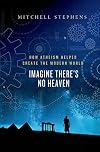
It seems hard to believe that we had to wait until 2014 for an author to borrow John Lennon's direct, potent lyric for a title. The conditional, subjunctive mood of that title is appropriate, given that this is not nearly as polemical a critique of religion as the subtitle would suggest. Open atheists do figure heavily in the story, but it is also a history of skepticism, doubt, and surreptitious unbelief as much as it is a story which in certain ways culminates with such figures as Madalyn show more Murray O'Hair and Richard Dawkins.
Still, the author's position is clear enough: critiques of religion, in his opinion, have freed the modern world from ideas and behaviors which long ago served an evolutionary purpose but which are no longer necessary. He offers a threefold framework for his history of atheism: skeptical questioning ("how can this be?"), pleasure-seeking (crudely put, a "seize the day" mentality), and rationalism ("why should this be so?"). At points, he is inclined to add a fourth: the belief that religion is often, or even primarily, a tool of oppression. In other words, individual liberty, artistic and academic freedom, and the advancement of science and technology through experimentation are all implied to be things which, in a modern (Western) world still blighted by religion, would not exist as we presently enjoy them.
Stephens has managed to synthesize quite a bit of scholarship on a variety of historical figures and movements and offers a lively sprint through centuries of history in relatively few pages. It is doubtful that serious scholars of religion will find much new here, or that committed religious believers will find the arguments convincing, but readers curious about the history of unbelief and looking for a place to start will likely find this book approachable and engaging. show less
Still, the author's position is clear enough: critiques of religion, in his opinion, have freed the modern world from ideas and behaviors which long ago served an evolutionary purpose but which are no longer necessary. He offers a threefold framework for his history of atheism: skeptical questioning ("how can this be?"), pleasure-seeking (crudely put, a "seize the day" mentality), and rationalism ("why should this be so?"). At points, he is inclined to add a fourth: the belief that religion is often, or even primarily, a tool of oppression. In other words, individual liberty, artistic and academic freedom, and the advancement of science and technology through experimentation are all implied to be things which, in a modern (Western) world still blighted by religion, would not exist as we presently enjoy them.
Stephens has managed to synthesize quite a bit of scholarship on a variety of historical figures and movements and offers a lively sprint through centuries of history in relatively few pages. It is doubtful that serious scholars of religion will find much new here, or that committed religious believers will find the arguments convincing, but readers curious about the history of unbelief and looking for a place to start will likely find this book approachable and engaging. show less
This review was written for LibraryThing Early Reviewers.Mitchell Stephens' new book purports to explain "how atheism helped create the modern world.” And I have to admit that he does a good job of doing just that, explaining how the willingness of people throughout history to risk their careers, their families, their standing in their communities, their freedom, and even their lives in order to test what their societies and their religions have presented as incontrovertible truths have led us to ever increasing knowledge about ourselves and show more about our universe. Mr. Stephens makes his point through introducing his readers not only to already-famous historical figures but also to figures who have mostly escaped fame but who nevertheless deserve fame for what they risked and for what they accomplished.
I have only minor quibbles with Mr. Stephens' book. He sometimes strays from presenting his evidence in chronological order, which at times makes it difficult to see which person's thoughts spurred the next person down the line to build upon those earlier thoughts. Mr. Stephens also, with rare exceptions, concentrates on the societies of ancient Greece and Rome, enlightenment Europe, and 19th and 20th century United States. This is presumably due, in part, to the fact that these places and periods have left us a more complete written record than others have. This is also presumably due to the fact that Mr. Stephens' readers are more likely to be well acquainted with these places and periods than others, allowing them to better gauge his arguments if he concentrates on them. And this is also presumably due to the fact that including stories from the many other societies and periods throughout world history would have led to an unmanageably long book. So his focus is understandable. Still, Mr. Stephens presents enough tantalizing glimpses of other societies and periods to make one wish that he had produced that longer book, which also would have avoided the risk of leading readers to conclude that atheism and questioning societal truths has historically been a Western perogative.
Such minor quibbles aside, Mr. Stephens has written a book that is likely not only to entertain and educate his readers but also to lead them to want to read even more about the fascinating people and places and times he memorializes. What more can one ask for from a book but entertainment, education, and a map to additional reading? Highly recommended. show less
I have only minor quibbles with Mr. Stephens' book. He sometimes strays from presenting his evidence in chronological order, which at times makes it difficult to see which person's thoughts spurred the next person down the line to build upon those earlier thoughts. Mr. Stephens also, with rare exceptions, concentrates on the societies of ancient Greece and Rome, enlightenment Europe, and 19th and 20th century United States. This is presumably due, in part, to the fact that these places and periods have left us a more complete written record than others have. This is also presumably due to the fact that Mr. Stephens' readers are more likely to be well acquainted with these places and periods than others, allowing them to better gauge his arguments if he concentrates on them. And this is also presumably due to the fact that including stories from the many other societies and periods throughout world history would have led to an unmanageably long book. So his focus is understandable. Still, Mr. Stephens presents enough tantalizing glimpses of other societies and periods to make one wish that he had produced that longer book, which also would have avoided the risk of leading readers to conclude that atheism and questioning societal truths has historically been a Western perogative.
Such minor quibbles aside, Mr. Stephens has written a book that is likely not only to entertain and educate his readers but also to lead them to want to read even more about the fascinating people and places and times he memorializes. What more can one ask for from a book but entertainment, education, and a map to additional reading? Highly recommended. show less
This review was written for LibraryThing Early Reviewers.Everyone knows curiosity killed the proverbial cat. Yet it likely also is responsible for the death of God, at least in many people. Although that death may not have been premeditated, it is the result of a natural human tendency to seek explanations. Moreover, Mitchell Stephens suggests, were it not for atheist thought, Western civilization may never have seen the scientific revolution or the "Age of Reason."
Stephens makes a strong case for his view in Imagine There's No Heaven: How Atheism show more Helped Create the Modern World, an exploration of the impact of atheist thought on Western civilization. Put simply, he shows that these ideas were engaged in a "virtuous cycle" with growing exploration and understanding of the natural world.
Although Imagine There's No Heaven examines several mainsprings of disbelief and their development, it seems clear the linchpin is our innate desire to understand the world around us. The same could even be said for religion. Even earliest man wanted explanations for why certain things happened or what caused them. Given the methods available, a god was as valid an explanation as anything. But knowledge is a formidable thing. We notice that seasons seem to be associated with movement of the Sun and the stars. We then ask why they are moving. As Galileo and others discovered, the correct answer may threaten religious beliefs. But a correct answer leads, in turn, to more questions, including efforts to validate or invalidate prior answers. As Stephens observes, "Questioning -- doubt -- is where atheism begins."
Stephens looks at how, although perhaps slow to develop, this cycle led to what we now call "the scientific method." Equally important, once Isaac Newton's Principia Mathematica launched the scientific revolution, the cycle was even more active. As Neil deGrasse Tyson suggested in the opening episode of the reboot of Cosmos, two words may best describe the scientific method: "question everything." That approach would necessarily encompass or involve gods and religious beliefs. "Religion explains. Science explains," writes Stephens. "After Newton it became hard to deny that -- on many subjects at least -- science explains better."
Yet Imagine There's No Heaven also points out atheism's impact beyond natural science. It explores how the writings of various atheists or similarly inclined individuals influenced political thought, especially prior to and after the French Revolution. These ideas were in part founded on tolerance and included justice, freedom, equal rights and other democratic ideals. This in turn reinforces the virtuous cycle because, as Stephens notes, tolerance requires taking a step back from our own beliefs. He is not blind, though, to the adverse effects some ideas had, pointing out the role some atheistic concepts played in the French Revolutions "Reign of Terror."
In that respect, while Stephens is an advocate, he does not appear to be overly biased. There may be a few times he could be accused of overreaching and cherry picking, but Imagine There's No Heaven is a thoughtful examination. Perhaps more important to the reader, the book explores its topic from pre-Grecian times to the 21st Century through the stories and ideas of specific individuals, some famous and some unknown to most. As such, it makes what could be a dry topic much more readable and easier to comprehend.
Ultimately, some may wonder why it takes a book to point out atheism's impact on Western civilization if it, in fact, was as influential as Stephens claims. Wouldn't it be part of our history classes or generally recognized? After all, we're certainly aware of religion's role in history. Here, Stephens makes a telling point.
Even if we ignore the destruction of "blasphemous" material throughout history, hand copying was necessary to reproduce texts before the printing press. Where was most of that copying done? In monasteries. Thus, early books, plays and other writings considered even slightly irreligious weren't at the top of the reproduction list, making them few and far between by the time Gutenberg's invention allowed mass distribution. For several centuries after that, the church dominated European society and life. As a result, comparatively speaking, atheism's role in ideas and culture may appear to be only a recent development. Imagine There's No Heaven is a strong step in correcting that record.
(Originally posted at A Progressive on the Prairie.) show less
Stephens makes a strong case for his view in Imagine There's No Heaven: How Atheism show more Helped Create the Modern World, an exploration of the impact of atheist thought on Western civilization. Put simply, he shows that these ideas were engaged in a "virtuous cycle" with growing exploration and understanding of the natural world.
Although Imagine There's No Heaven examines several mainsprings of disbelief and their development, it seems clear the linchpin is our innate desire to understand the world around us. The same could even be said for religion. Even earliest man wanted explanations for why certain things happened or what caused them. Given the methods available, a god was as valid an explanation as anything. But knowledge is a formidable thing. We notice that seasons seem to be associated with movement of the Sun and the stars. We then ask why they are moving. As Galileo and others discovered, the correct answer may threaten religious beliefs. But a correct answer leads, in turn, to more questions, including efforts to validate or invalidate prior answers. As Stephens observes, "Questioning -- doubt -- is where atheism begins."
Stephens looks at how, although perhaps slow to develop, this cycle led to what we now call "the scientific method." Equally important, once Isaac Newton's Principia Mathematica launched the scientific revolution, the cycle was even more active. As Neil deGrasse Tyson suggested in the opening episode of the reboot of Cosmos, two words may best describe the scientific method: "question everything." That approach would necessarily encompass or involve gods and religious beliefs. "Religion explains. Science explains," writes Stephens. "After Newton it became hard to deny that -- on many subjects at least -- science explains better."
Yet Imagine There's No Heaven also points out atheism's impact beyond natural science. It explores how the writings of various atheists or similarly inclined individuals influenced political thought, especially prior to and after the French Revolution. These ideas were in part founded on tolerance and included justice, freedom, equal rights and other democratic ideals. This in turn reinforces the virtuous cycle because, as Stephens notes, tolerance requires taking a step back from our own beliefs. He is not blind, though, to the adverse effects some ideas had, pointing out the role some atheistic concepts played in the French Revolutions "Reign of Terror."
In that respect, while Stephens is an advocate, he does not appear to be overly biased. There may be a few times he could be accused of overreaching and cherry picking, but Imagine There's No Heaven is a thoughtful examination. Perhaps more important to the reader, the book explores its topic from pre-Grecian times to the 21st Century through the stories and ideas of specific individuals, some famous and some unknown to most. As such, it makes what could be a dry topic much more readable and easier to comprehend.
Ultimately, some may wonder why it takes a book to point out atheism's impact on Western civilization if it, in fact, was as influential as Stephens claims. Wouldn't it be part of our history classes or generally recognized? After all, we're certainly aware of religion's role in history. Here, Stephens makes a telling point.
Even if we ignore the destruction of "blasphemous" material throughout history, hand copying was necessary to reproduce texts before the printing press. Where was most of that copying done? In monasteries. Thus, early books, plays and other writings considered even slightly irreligious weren't at the top of the reproduction list, making them few and far between by the time Gutenberg's invention allowed mass distribution. For several centuries after that, the church dominated European society and life. As a result, comparatively speaking, atheism's role in ideas and culture may appear to be only a recent development. Imagine There's No Heaven is a strong step in correcting that record.
(Originally posted at A Progressive on the Prairie.) show less
This review was written for LibraryThing Early Reviewers.You May Also Like


Associated Authors
Statistics
- Works
- 8
- Members
- 356
- Popularity
- #67,309
- Rating
- 3.6
- Reviews
- 13
- ISBNs
- 24
- Languages
- 1
