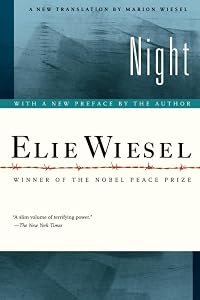
Night, with the Nobel Peace Prize Acceptance Speech
by Elie Wiesel
On This Page
Description
Born in the town of Sighet, Transylvania, Elie Wiesel was a teenager when he and his family were taken from their home in 1944 to the Auschwitz concentration camp, and then to Buchenwald. [This book] is the terrifying record of Elie Wiesel's memories of the death of his family, the death of his own innocence, and his despair as a deeply observant Jew confronting the absolute evil of man.Tags
Recommendations
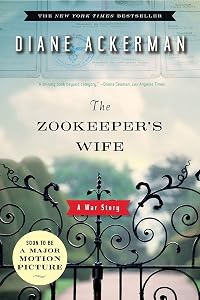

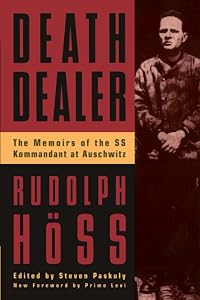
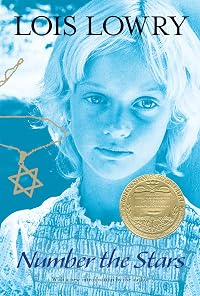
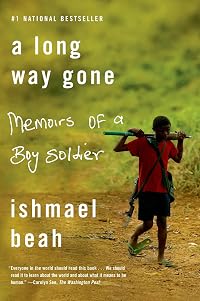






Member Reviews
"Night," Elie Wiesel's nightmarish account of his experience in the concentration camps at Auschwitz and Buchenwald, challenges the reader to imagine a world in which an entire class of people was marked for extermination. Beginning with his family's removal from their home in Hungary to a ghetto in 1944 and ending with the liberation of Buchenwald just over a year later, Wiesel is unsparing in his descriptions of the horrors of the Holocaust. Separated from most of his family, he clings to his father as they endure torture, humiliation, starvation, and exposure at the hands of the SS. He describes in horrific detail the murder of thousands in the crematoria of Auschwitz, as well as the myriad ways in which the Nazis degraded and show more dehumanized the Jews in an effort to crush their spirit. Wiesel also discusses the loss of his (once deeply held) Jewish faith as he rages at a God who would allow these atrocities to take place.
"Night" doesn't let us off the hook for a second. It ends bleakly, with no hint of redemption—for that, I understand, we have to read the next two volumes in Wiesel's trilogy—and I found myself half-pretending it was fiction just to get through some of the more disturbing passages. But I think the power of the story and the emotions and moral introspection it provokes make it undeniably valuable—even indispensable—as a work of literary nonfiction.
As a teaching tool, the book would lend itself to a multidisciplinary ELA/history unit on World War II or the Holocaust. I also envision discussing it in the context of some of the great questions of moral philosophy, such as the problem of evil. In an honors class of juniors and seniors, the film "Night and Fog" would be an excellent supplementary text to help students visualize the atrocities of the concentration camps. "Night" also has also a wealth of literary elements to excavate, such as foreshadowing, symbolism (fire, bread, night), and "character" arc; in fact, I think the book could be discussed as a work of literature as productively as any novel. show less
"Night" doesn't let us off the hook for a second. It ends bleakly, with no hint of redemption—for that, I understand, we have to read the next two volumes in Wiesel's trilogy—and I found myself half-pretending it was fiction just to get through some of the more disturbing passages. But I think the power of the story and the emotions and moral introspection it provokes make it undeniably valuable—even indispensable—as a work of literary nonfiction.
As a teaching tool, the book would lend itself to a multidisciplinary ELA/history unit on World War II or the Holocaust. I also envision discussing it in the context of some of the great questions of moral philosophy, such as the problem of evil. In an honors class of juniors and seniors, the film "Night and Fog" would be an excellent supplementary text to help students visualize the atrocities of the concentration camps. "Night" also has also a wealth of literary elements to excavate, such as foreshadowing, symbolism (fire, bread, night), and "character" arc; in fact, I think the book could be discussed as a work of literature as productively as any novel. show less
Night is unlike any other Holocaust book I have read. I am a student of history, and the majority of the 100 books I read each year are non-fictional, and most of those are history. I am especially interested in the Second World War, since my Father was a veteran of it, and of the Holocaust. I have read dozens of books about the Holocaust and have visited the United States Holocaust Memorial Museum many times. Most of what I have read and seen show the absolute horror of the Holocaust, along with the off-setting stories of faith and kindness. I have been fascinated by the juxtaposing. In Night, there is no juxtaposing, and Wiesel tells the raw story of what happened, as do other books, but in Night the anger, the unbridled and show more unrelenting and unforgiving anger of Wiesel is so strong it is palpable. He rallies, like Job, against G-d. And he is merciless in his depictions of those who are so merciless in the camps. He spares nothing in his descriptions of those who spared no-one. There are a few kind individuals mentioned, but most of the book is a condemnation of all those around him, and of his own very person. His father was beaten to death in the bunk adjacent to him, and he did nothing to prevent it. "His last word had been my name. He had called out to me and I had not answered." It is clear that the book is written to show the world all those who are guilty, explicitly or implicitly, in the murder of millions, but Wiesel counts himself among that number. A powerful lesson that we are all responsible. In his speech accepting the Nobel Peace Prize, Elie Wiesel said it succinctly, " There may be times when we are powerless to prevent injustice, but there must never be a time when we fail to protest." show less
Eliezer was 15 years old when he, his sister and his parents were taken prisoner by the Nazis and deported from their home in Sighet, Transylvania, for the crime of being Jewish. Upon arrival to the concentration camp of Auschwitz, Eliezer and his father were separated from Eliezer’s mother and sister, never to see them again. To survive the most inhumane conditions imaginable and to avoid immediate death, Eliezer and his father desperately tried to keep up their strength, thereby demonstrating to the Nazis their usefulness in their ability to work. Each day brought new horrors, torture, starvation, exposure, exhaustion, and illness. Constantly, death hovered over them and the other prisoners. Their challenge: how to avoid the show more physical and emotional damage that hastened that almost certain death.
The author does a stunning job of presenting the difficult subject of the Holocaust. He follows a father and son as they move from a religiously-observant life in Transylvania to the agonizingly slow and painful experience of deportation and imprisonment in a series of concentration camps. To make this story more acceptable, the author makes it neither long nor frightfully graphic. It presents in clear detail the movements and emotions of one young man caught in an unreal world and how he suffers in his attempt to survive. What causes the greatest sadness and horror to the reader is the slow realization of the degree to which man can inflict physical and emotional pain on another human being with little or no remorse. It is a difficult lesson but one which needs to be taught, understood, and remembered by all people. Elie Wiesel begins this terrible education with Night. show less
The author does a stunning job of presenting the difficult subject of the Holocaust. He follows a father and son as they move from a religiously-observant life in Transylvania to the agonizingly slow and painful experience of deportation and imprisonment in a series of concentration camps. To make this story more acceptable, the author makes it neither long nor frightfully graphic. It presents in clear detail the movements and emotions of one young man caught in an unreal world and how he suffers in his attempt to survive. What causes the greatest sadness and horror to the reader is the slow realization of the degree to which man can inflict physical and emotional pain on another human being with little or no remorse. It is a difficult lesson but one which needs to be taught, understood, and remembered by all people. Elie Wiesel begins this terrible education with Night. show less
'Night' is Elie Wiesel's account of his childhood experiences in a Hungarian ghetto and the Nazi death camps of Auschwitz and Buchanwald. The book begins in 1941 in Sighet, Transylvania, where 15 year old Eliezer, a devout Jewish teenager, studies the Talmud and dreams of mysticism. His whole world alters drastically when Hungarian authorities, collaborating with the Nazis, deport the Jewish community in the town into packed cattle cars heading for Auschwitz.
"Men to the left! Women to the right!" With these ordinary commonplace words, Eliezer's world is torn asunder. His mother and sisters vanish forever, leaving him with only his father to cling to. They endure forced labour, starvation and beatings but just as Allied forces approach show more offer hopes of salvation, the prisoners are forced on a death march to Buchenwald in the depth of winter.
Wiesel keeps his narrative sparse, plain and simple. There are no flowery tangents or metaphors, the book isn't littered with statistics but nonetheless each sentence is yet another hammer blow on the reader's emotions. His matter-of-fact simplicity makes the horror more acute.
"We received no food. We lived on snow; it took the place of bread."
In many respects this book told me little that I don't already know about the terrible conditions and savagery that the detainees had to endure but what sets this book apart from other Holocaust accounts that I've read is its unflinching examination of the slow erosion of faith in the face of absolute evil. As Eliezer asks: "Where is God now? Where is He?" It's this spiritual crisis that forms the philosophical backbone of the memoir. There is anger obviously, not just at the Nazis and the Kapos who worked for them but also the town's elders who ignored the prior warnings, the world for its silence and in particular at God. Just how could an all powerful and all seeing deity allow this inhumanity to happen?
This book was originally written in Yiddish and that version was apparently significantly longer, so perhaps its the translation that's at fault not the original, but here the final third felt hurried and seemed to lack the emotional impact the first two-thirds. Despite its faults I still believe that this book deserves to be more widely read. Not so that you can admire the author's skill but because it soon becomes increasingly difficult to look away whether or not you believe in God. show less
"Men to the left! Women to the right!" With these ordinary commonplace words, Eliezer's world is torn asunder. His mother and sisters vanish forever, leaving him with only his father to cling to. They endure forced labour, starvation and beatings but just as Allied forces approach show more offer hopes of salvation, the prisoners are forced on a death march to Buchenwald in the depth of winter.
Wiesel keeps his narrative sparse, plain and simple. There are no flowery tangents or metaphors, the book isn't littered with statistics but nonetheless each sentence is yet another hammer blow on the reader's emotions. His matter-of-fact simplicity makes the horror more acute.
"We received no food. We lived on snow; it took the place of bread."
In many respects this book told me little that I don't already know about the terrible conditions and savagery that the detainees had to endure but what sets this book apart from other Holocaust accounts that I've read is its unflinching examination of the slow erosion of faith in the face of absolute evil. As Eliezer asks: "Where is God now? Where is He?" It's this spiritual crisis that forms the philosophical backbone of the memoir. There is anger obviously, not just at the Nazis and the Kapos who worked for them but also the town's elders who ignored the prior warnings, the world for its silence and in particular at God. Just how could an all powerful and all seeing deity allow this inhumanity to happen?
This book was originally written in Yiddish and that version was apparently significantly longer, so perhaps its the translation that's at fault not the original, but here the final third felt hurried and seemed to lack the emotional impact the first two-thirds. Despite its faults I still believe that this book deserves to be more widely read. Not so that you can admire the author's skill but because it soon becomes increasingly difficult to look away whether or not you believe in God. show less
This memoir, in a paradox of sorts, so beautifully captures the most horrendous human actions in a frighteningly personal way. It is difficult to understand the reality of these words, yet Wiesel makes them so human. After being discouraged from feeding his father Wiesel speaks to his conscious: "He was right, I thought in the most secret region of my heart, but I dared not admit it. It's too late to save your old father" (p. 105). These painful choices that no person should ever have to make force any reader to look around wherever they may be reading and feel grateful. While this book is read in many middle school classes, the intense subject matter makes me want to reserve it for upper high school classes. I think it is hard for show more anyone, even adults, to truly comprehend all of this book. A maturity is required in reading it to maintain a respect for his words. Night would fit in perfectly in a World War II unit and would be ideal to expand the concept of imagery in a high school class. show less
Elie Wiesel has written a harrowing story of his experiences during the Holocaust with such chilling detail and emotion that it leaves you haunted long after the last page has been turned. His memories of his family and what they were forced to go through under the hands of such hatred and cruelty is horrifying. The strength of familial bonds is visible in his relationship with his father and how they help one another cope with the situations that they are faced with. While the cruelty of what they were forced to experience is horrifying, I would have to say that his growing lack of emotions is equally disturbing. Wiesel’s simple writing allows his experience to speak for itself. His honesty of just what he went through enables show more readers to get an idea of just what experiences he went through.
This is an unforgettable and difficult read, but at the same time it is a must-read. We must remember what horrors that mankind has forced upon fellow mankind so that we do not repeat the actions of the past. show less
This is an unforgettable and difficult read, but at the same time it is a must-read. We must remember what horrors that mankind has forced upon fellow mankind so that we do not repeat the actions of the past. show less
Night is an account of 15-year old Eli Wiesel's imprisonment in Auschwitz in 1944, followed by a death march and eventual liberation. Wiesel's mother and sisters are exterminated by the Nazis, while he is left to scrap for survival with his ailing father. It is a personal account describing his evolving religious belief and desperation to stay with a father who needs his protection. The focus is not on how the concentration camps are run, but on emotive scenes of the young and old being eliminated, bullying within the camp hierarchy, and the prisoners' raw fight for survival.
If this were the first and only Holocaust memoir I had read, I would have rated it highly. But I read Night just after Primo Levi's memoirs, and it pales in show more comparison. Published around ten years after Levi's If This Is a Man, I expected more. But what truly irks me is dishonesty. Night came about after many iterations: first the original 860-page Yiddish, then a 260-page abridgement, third a 180-page French translation, and finally 115-page English translation of the French. Critics say what's lost in translation is a change in emphasis from a Yiddish account for Jewish readers attacking Germans to a French translation aimed at Christians more critical of God than the Nazi regime. To me the message and impact of such a work should be universal. We're talking about humanity here, not propaganda: there should be no need to edit for readership, and it's disappointing this has likely happened here.
Levi describes events and characters as they are, while Wiesel dwells on his personal journey in an evocative fashion designed primarily, if not exclusively, to shock. The pace of Wiesel's narrative is fast, detail somewhat lacking, the dialogue likely fictional. Wiesel himself has admitted Night incorporates fictional elements. In my opinion, invest some more time to tackle If This Is a Man, or another recommended Holocaust memoir, and return to Night for a more emotional journey, or to complete an Oprah Book Club challenge. show less
If this were the first and only Holocaust memoir I had read, I would have rated it highly. But I read Night just after Primo Levi's memoirs, and it pales in show more comparison. Published around ten years after Levi's If This Is a Man, I expected more. But what truly irks me is dishonesty. Night came about after many iterations: first the original 860-page Yiddish, then a 260-page abridgement, third a 180-page French translation, and finally 115-page English translation of the French. Critics say what's lost in translation is a change in emphasis from a Yiddish account for Jewish readers attacking Germans to a French translation aimed at Christians more critical of God than the Nazi regime. To me the message and impact of such a work should be universal. We're talking about humanity here, not propaganda: there should be no need to edit for readership, and it's disappointing this has likely happened here.
Levi describes events and characters as they are, while Wiesel dwells on his personal journey in an evocative fashion designed primarily, if not exclusively, to shock. The pace of Wiesel's narrative is fast, detail somewhat lacking, the dialogue likely fictional. Wiesel himself has admitted Night incorporates fictional elements. In my opinion, invest some more time to tackle If This Is a Man, or another recommended Holocaust memoir, and return to Night for a more emotional journey, or to complete an Oprah Book Club challenge. show less
Members
- Recently Added By
Author Information

132+ Works 50,239 Members
Eliezer "Elie" Wiesel was born in Sighet, Romania on September 30, 1928. In 1944, he and his family were deported along with other Jews to the Nazi death camp Auschwitz. His mother and his younger sister died there. He loaded stones onto railway cars in a labor camp called Buna before being sent to Buchenwald, where his father died. He was show more liberated by the United States Third Army on April 11, 1945. After the war ended, he learned that his two older sisters had also survived. He was placed on a train of 400 orphans that was headed to France, where he was assigned to a home in Normandy under the care of a Jewish organization. He was educated at the Sorbonne and supported himself as a tutor, a Hebrew teacher and a translator. He started writing for the French newspaper L'Arche. In 1948, L'Arche sent him to Israel to report on that newly founded state. He also became the Paris correspondent for the daily Yediot Ahronot. In this capacity, he interviewed the novelist Francois Mauriac, who urged him to write about his war experiences. The result was La Nuit (Night). After the publication of Night, Wiesel became a writer, literary critic, and journalist. His other books include Dawn, The Accident, The Gates of the Forest, The Jews of Silence: A Personal Report on Soviet Jewry, and Twilight. He received a numerous awards and honors for his literary work including the William and Janice Epstein Fiction Award in 1965, the Jewish Heritage Award in 1966, the Prix Medicis in 1969, and the Prix Livre-International in 1980. He received the Nobel Peace Prize in 1986 for his work in combating human cruelty and in advocating justice. He had a leading role in the creation of the United States Holocaust Memorial Museum in Washington, D. C. He died on July 2, 2016 at the age of 87. (Bowker Author Biography) show less
Work Relationships
Contains
Common Knowledge
- Canonical title
- Night, with the Nobel Peace Prize Acceptance Speech
- Important events
- World War II; Holocaust
Classifications
- Genres
- Biography & Memoir, Nonfiction, General Nonfiction
- DDC/MDS
- 940.5318092 — History & geography History of Europe History of Europe 1918- World War II, 1939-1945 Social, political, economic history; Holocaust Holocaust Standard subdivisions History, geographic treatment, biography Biography
- LCC
- D810 .J4 .W513 — History of Europe, Asia, Africa and Oceania History (General) World War II (1939-1945)
- BISAC
Statistics
- Members
- 18,431
- Popularity
- 339
- Reviews
- 393
- Rating
- (4.29)
- Languages
- English, French, Spanish
- Media
- Paper
- ISBNs
- 1
- ASINs
- 5