On This Page
Description
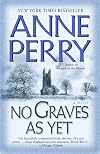
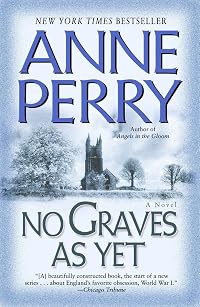
Fiction. Suspense. Thriller. Historical Fiction. HTML:Through Anne Perry’s magnificent Victorian novels, millions of readers have enjoyed the pleasures and intrigue of a bygone age. Now, with the debut of an extraordinary new series, this New York Times bestselling author sweeps us into the golden summer of 1914, a time of brief enchantment when English men and women basked in the security of wealth and power, even as the last weeks of their privileged world were swiftly passing. Theirs show more was a peace that led to war.On a sunny afternoon in late June, Cambridge professor Joseph Reavley is summoned from a student cricket match to learn that his parents have died in an automobile crash. Joseph’s brother, Matthew, as officer in the Intelligence Service, reveals that their father had been en route to London to turn over to him a mysterious secret document—allegedly with the power to disgrace England forever and destroy the civilized world. A paper so damning that Joseph and Matthew dared mention it only to their restless younger sister. Now it has vanished.
What has happened to this explosive document, if indeed it ever existed? How had it fallen into the hands of their father, a quiet countryman? Not even Matthew, with his Intelligence connections, can answer these questions. And Joseph is soon burdened with a second tragedy: the shocking murder of his most gifted student, beautiful Sebastian Allard, loved and admired by everyone. Or so it appeared.
Meanwhile, England’s seamless peace is cracking—as the distance between the murder of an Austrian archduke by a Serbian anarchist and the death of a brilliant university student by a bullet to the head of grows shorter by the day.
Anne Perry is a sublime master of suspense. In No Graves As Yet, her latest haunting masterpiece, she reminds us that love and hate, cowardice and courage, good and evil are always a part of life, in our own time as well as on the eve of the greatest war the world has ever known. show less
Tags
Recommendations





Member Reviews
This novel is the first in a series and one I have been planning to read for some time. I want to fit in some WWI related fiction and non-fiction in this and the next couple years. Generally speaking I enjoy Anne Perry's mystery novels, but sometimes they disappoint. This one, unexpectedly, did. I can't quite pin down why this didn't gel for me, but I have some ideas. I didn't latch onto the main characters and I know that is part of the reason. I liked several of the portrayals of secondary characters however. The book seemed much too stretched out and even almost boring at times. One of the main characters is a former minister and now professor and he has a lot of long drawn out angst over things. Everyone is way too overwrought, show more scenes seem over-dramatized and over-written. Nearly every conversation seemed to have the anxiety level amped to 11. The story begins when four adult children lose their parents in a single motorcar accident. But was it an accident?
This book takes place beginning in the summer before the outbreak of hostilities and it ends when war is declared. There is a missing document, supposedly one that would rock the world if revealed. An interesting look at English life at the dawn of war, despite the weakness of the storytelling (and the story itself). This just did not strike me as well written compared to other Perry novels I have read. It isn't a bad book, but not a very good one I think. The book picked up a little towards the end, but the ending I thought was rather unsatisfying. Despite this I think I'll give the second book in the series a try as that seems to be where the direct WWI stuff happens. show less
This book takes place beginning in the summer before the outbreak of hostilities and it ends when war is declared. There is a missing document, supposedly one that would rock the world if revealed. An interesting look at English life at the dawn of war, despite the weakness of the storytelling (and the story itself). This just did not strike me as well written compared to other Perry novels I have read. It isn't a bad book, but not a very good one I think. The book picked up a little towards the end, but the ending I thought was rather unsatisfying. Despite this I think I'll give the second book in the series a try as that seems to be where the direct WWI stuff happens. show less
Anne Perry is so good at creating the atmosphere of tragic transition; the point in the story (or in history) in which you know something terrible and life shattering is about to happen, but the innocent folks of the past (and the guilty ones too) have no idea.
So we have England just at the edge of WWI, and deaths, and a plot, and the washed golden light. I do miss my favorite characters from the Pitt and Monk novels, who by this novel must surely all be dead. The characters in No Graves Yet are sympathetic and faintly clueless and determined to do good or evil and often confused by it; the descriptive writing is sheer delight, and the plot very...well, this plot was very structured, and I saw the structure pretty quickly (which meant, show more yes, I thought I knew who done it and then was properly twisted aside). It's kind of like laying a trail of bread crumbs and then...wait, you really you had a wolf following you
But I digress. Perry's fans will like this one, I do, and I will look for the next in the series as well. show less
So we have England just at the edge of WWI, and deaths, and a plot, and the washed golden light. I do miss my favorite characters from the Pitt and Monk novels, who by this novel must surely all be dead. The characters in No Graves Yet are sympathetic and faintly clueless and determined to do good or evil and often confused by it; the descriptive writing is sheer delight, and the plot very...well, this plot was very structured, and I saw the structure pretty quickly (which meant, show more yes, I thought I knew who done it and then was properly twisted aside). It's kind of like laying a trail of bread crumbs and then...wait, you really you had a wolf following you
But I digress. Perry's fans will like this one, I do, and I will look for the next in the series as well. show less
1st of 5 in series. I picked up this mystery series on the recommendation of a friend. I know so little about World War I, and I thought a good mystery novel(s) would make it all more palatable.
This first book has lots of mystery whodunit stuff. In case you have not yet read the series, I will say that I have read 4 of the 5 books, and I still don't know. The first volume also deals with academic life at Cambridge, St. John's College, specifically.
It is difficult to appreciate the incredible changes that were wrought in British society because of this war. Did they try to go back to the status quo? No doubt. But Perry does a pretty good job at lifting up some of the many issues of the early 20th century. Now, in the early 21st century show more in the United States, we are still dealing with unresolved feelings over women in politics, blacks in politics, and men in subordinate (to women) roles. show less
This first book has lots of mystery whodunit stuff. In case you have not yet read the series, I will say that I have read 4 of the 5 books, and I still don't know. The first volume also deals with academic life at Cambridge, St. John's College, specifically.
It is difficult to appreciate the incredible changes that were wrought in British society because of this war. Did they try to go back to the status quo? No doubt. But Perry does a pretty good job at lifting up some of the many issues of the early 20th century. Now, in the early 21st century show more in the United States, we are still dealing with unresolved feelings over women in politics, blacks in politics, and men in subordinate (to women) roles. show less
I've always enjoyed Anne Perry's Victorian mysteries -- she does deep research, and her novels show it in their immersive reality. Her first World War I novel does not disappoint, bringing 1914 into sharp focus: an England unwittingly on the edge of war, a world half-modern and half-traditional.
Joseph Reavley, the main character, is likable, and an Anglican priest/college professor is in a surprisingly good position for amateur detecting. But "amateur detecting" does Joseph a disservice, because the plot makes the Reavleys' pursuit of the truth more a driving need than a hobby. It's a good story, and told with Perry's usual sense of moral shadings and human passions. I look forward to reading the next one in the series, and especially show more to seeing what little sister Judith Reavley gets up to in the tumult and change of wartime.
Note on audio edition: The narrator does great accents, but is often overwrought when characters get emotional. Shouty men and shrieky women. show less
Joseph Reavley, the main character, is likable, and an Anglican priest/college professor is in a surprisingly good position for amateur detecting. But "amateur detecting" does Joseph a disservice, because the plot makes the Reavleys' pursuit of the truth more a driving need than a hobby. It's a good story, and told with Perry's usual sense of moral shadings and human passions. I look forward to reading the next one in the series, and especially show more to seeing what little sister Judith Reavley gets up to in the tumult and change of wartime.
Note on audio edition: The narrator does great accents, but is often overwrought when characters get emotional. Shouty men and shrieky women. show less
I'm a fan of Anne Perry's William Monk and Thomas & Charlotte Pitt series. She evokes time and place so well in these Victorian era series that I was hesitant to start this first book in a new series set during the World War I era. I was afraid it wouldn't measure up, so I let it sit on my bookshelf for several years before finally picking it up this week. I discovered that my instincts were right. This is not Anne Perry at her best. She exchanges the realm of detective novels for the world of espionage without substantially altering her writing style. Unfortunately the subtle introspection that works so well in her detective series becomes overwrought melodrama as the characters contemplate international instability, national security, show more and the possibility of war. While the murders are resolved by the end of the book, there is a larger plot thread that will obviously be continued in the next book of the series. I'm curious about how this thread will play out, but I'm not sure I want to devote any more time to a mediocre series when there are so many other books on my TBR list that seem more appealing. show less
My generation seems to be more aware of the history of WWII than WWI so this series became of particular interest to me. Having discovered Anne Perry's writing through her Christmas mysteries, I am very appreciative of the way she is able to craft her stories with descriptive language that truly pulls the reader into the feelings of each character. In this novel, I found her poignant writing in expressing grief to be very meaningful.
Without providing a spoiler, this story was more enlightening to me as my husband and I had recently watched The Crown Season 2, Episode 6, "Vergangenheit."
Without providing a spoiler, this story was more enlightening to me as my husband and I had recently watched The Crown Season 2, Episode 6, "Vergangenheit."
The Reavley siblings--Joseph, Matthew, and Judith--are devastated by the death of their parents in an automobile accident. When the scene is examined, it appears their demise may have been aided by parties unknown to them. Mr. Reavley planned to share a document of world significance with his son Matthew who works in intelligence. Archduke Franz Ferdinand's assassination occurs early in the story. Soon another friend is killed. Joseph, a Cambridge professor and clergyman, takes a lead role investigating. With a mixture of cozy and espionage genres, this novel just doesn't achieve success in either genre. It's too political for lovers of cozies and too quaint for readers of espionage. Perry's Inspector Monk series is for more enjoyable.
Members
- Recently Added By
Lists

World War I Fiction
94 works; 15 members

Books Read in 2014
2,344 works; 89 members
Author Information

199+ Works 55,104 Members
Anne Perry was born Juliet Hume on October 28, 1938 in Blackheath, London. Sent to Christchurch, New Zealand to recover from a childhood case of severe pneumonia, she became very close friends with another girl, Pauline Parker. When Perry's family abandoned her, she had only Parker to turn to, and when the Parkers planned to move from New Zealand, show more Parker asked that Perry be allowed to join them. When Parker's mother disagreed, Perry and Parker bludgeoned her to death. Perry eventually served five and a half years in an adult prison for the crime. Once she was freed, she changed her name and moved to America, where she eventually became a writer. Her first Victorian novel, The Cater Street Hangman, was published in 1979. Although the truth of her past came out when the case of Mrs. Parker's murder was made into a movie (Heavenly Creatures), Perry is still a popular author and continues to write. She has written over 50 books and short story collections including the Thomas Pitt series, the William Monk series, and the Daniel Pitt series. Her story, Heroes, won the 2001 Edgar Award for Best Short Story. Her title's Blind Justice and The Angel Court Affair made The New York Times Best Seller List. (Bowker Author Biography) show less
Some Editions
Awards and Honors
Distinctions
Series

Work Relationships
Common Knowledge
- Canonical title
- No Graves As Yet
- Original publication date
- 2003
- People/Characters
- Joseph Reavley; Judith Reavley; Matthew Reavley
- Important places
- University of Cambridge, Cambridge, Cambridgeshire, England, UK; Cambridge, Cambridgeshire, England, UK
- Important events
- Assassination of Archduke Franz Ferdinand (1914-06-28)
- Dedication
- Dedicated to my grandfather, Captain Joseph Reavley, who served as chaplain in the trenches during the Great War.
- First words
- It was a golden afternoon in late June, a perfect day for cricket.
- Quotations
- ‘The lamps are going out all over Europe. We shall not see them lit again in our lifetime.’
- Last words
- (Click to show. Warning: May contain spoilers.)Judith buried her head in his shoulder, and Matthew reached out around her to take Joseph's hand and grip it.
Classifications
Statistics
- Members
- 937
- Popularity
- 28,513
- Reviews
- 28
- Rating
- (3.47)
- Languages
- 6 — Dutch, English, French, German, Italian, Spanish
- Media
- Paper, Audiobook, Ebook
- ISBNs
- 38
- ASINs
- 6