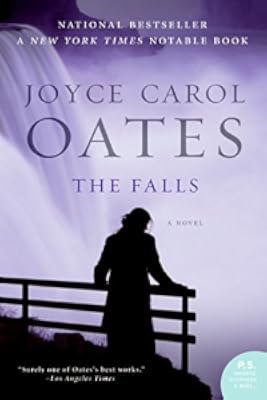
The Falls
by Joyce Carol Oates
On This Page
Description
A man climbs over the railings and plunges into Niagara Falls. A newlywed, he has left behind his wife, Ariah Erskine, in the honeymoon suite the morning after their wedding. "The Widow Bride of The Falls", as Ariah comes to be known, begins a relentless, seven day vigil in the mist, waiting for his body to be found. At her side throughout, confirmed bachelor and pillar of the community Dirk Burnaby is unexpectedly transfixed by the otherworldly gaze of this plain, strange woman, falling in show more love with her though they barely exchange a word. What follows is their passionate love affair, marriage, children, and a seemingly perfect existence.But the tragedy by which their life together began shadows them, damaging their idyll with distrust, greed, and even murder. What unfurls is a drama of parents and their children; of secrets and sins; of lawsuits, murder, and eventually redemption.
. show less
Tags
Recommendations
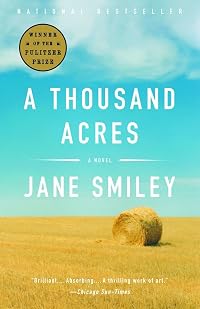
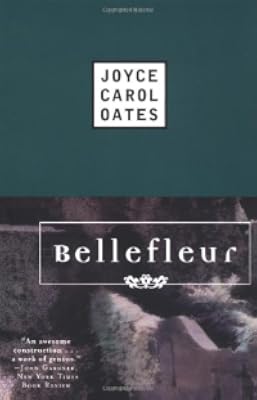
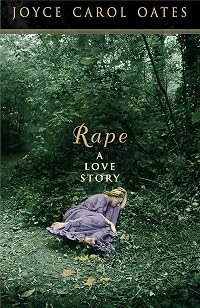
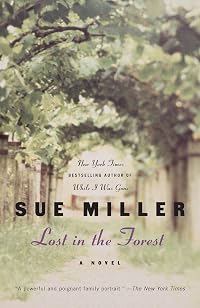

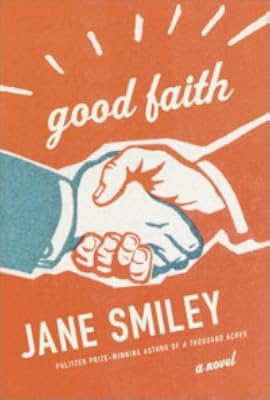
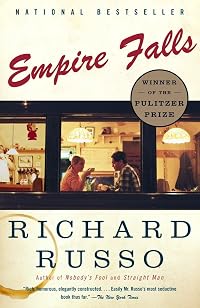
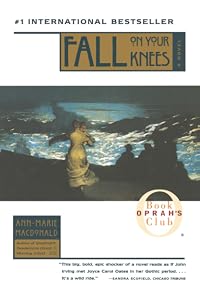
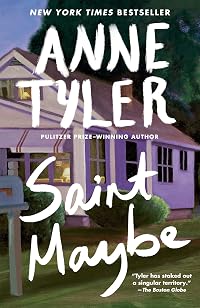

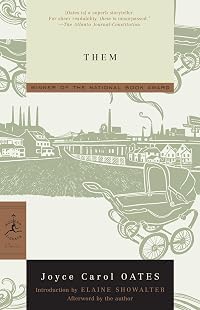
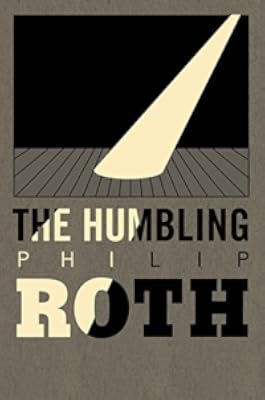
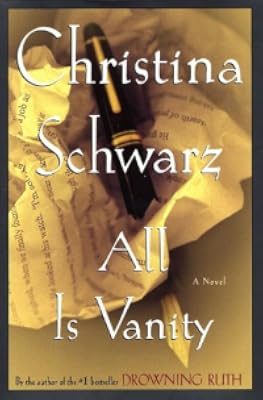
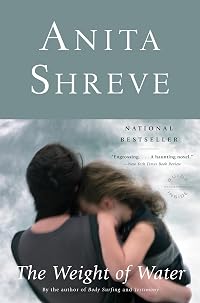

Member Recommendations
bnbookgirl takes place in same area
Member Reviews
Ariah Burnaby is a conundrum. Not just to those around her but to me after hundreds of pages. Rarely have I spent so much time reading about a character and depart at the end feeling that I never got to really know them. Still, I very much enjoyed this book. I kept wanting to understand or see if she'd ever divulge something to explain it all. She didn't. To the end, she was ever Ariah. They sympathy I felt for her in the beginning was stripped away as the story moves along & her children, Chandler, Royall & Juliet come into their own & she is seen through them. I wanted each of the three to get away simply as a mechanism of personal survival. It was compelling reading. I very much wanted to know if any would discover that she was the show more legendary lady by The Falls waiting for her fallen first husband to be returned by the churning waters. But the mystery of Dirk Burnaby was likely all that could really be handled & that was well done.
This is going to be on my almost favorites list because while I likely won't read it again, it was a great read & will have me reflecting upon its characters for years. Also, I'm a sucker for a Niagara Falls setting. I think this was the first novel I've read of Joyce Carol Oates & I have to say that I very much liked it. show less
This is going to be on my almost favorites list because while I likely won't read it again, it was a great read & will have me reflecting upon its characters for years. Also, I'm a sucker for a Niagara Falls setting. I think this was the first novel I've read of Joyce Carol Oates & I have to say that I very much liked it. show less
The book seemed to me three books somewhat oddly pieced together: the first on marriage (and the arbitrariness of marriage), the second on the Love Canal scandal which is based on fact, and the third on the effects of parent's broken lives on their children.
I loved the first part which peaked for me in the "7 July 1950" chapter ("She would say yes. Yes with her eager wiry little body like a nerved-up cat's fitting itself to the man...."). I thought the struggle to expose the Love Canal scandal was "OK" but these chapters had the book feeling like a movie to me, one which I wouldn't be particularly inclined to see. The novel started crumbling in the lives of the children, with silly episodes like the hostage crisis and the inexplicable show more sex in the cemetery.
I know I'm simplifying here and there are threads that tie the book together (moreover, real life is not one pretty bundled package!), but this is my impression, and the themes that did recur throughout, like the ominous nature of Niagara Falls, seemed forced particularly in the later chapters.
Quotes:
On marriage:
"Two trembling young people at the altar being blessed like cattle about to be slaughtered by a common butcher. Bonded by terror yet strangely oblivious of each other."
"Not jus the women have domesticated us for their own purposes, they make us feel guilty as hell when the domestication doesn't take."
"They surprised each other less often in their lovemaking. There must have been a day, an hour, when they made love during the daytime for the final time; when they made love impulsively somewhere other than their big, comfortable bed for the final time..."
"Was this the basic principle of domestic life, of the terrible need to propagate one's kind? The human wish, as in a fairy tale, to live longer than one's lifetime, through one's children. To live longer than one is allotted, and to matter. To matter deeply, profoundly to someone."
"Royall said, disgusted, 'Christ's sake, Mom! If I wanted a 'sweet' wife I'd marry a chocolate bunny. I'd go to bed with fucking Fannie Farmer.'"
On suicide:
"As Dirk Burnaby once said, you had to have a deep, mysterious soul to want to destroy yourself. The shallower you are, the safer."
On death:
"The cemetery, Royall decided, was like a city. It continued the injustice of the city and of life. Most of the grave markers were ordinary stone, weather-worn and soiled with bird lime, while others were more expensive, larger, made of granite or marble with shiny engraved facades."
On the 50's:
"It was 1950 and everyone was pregnant."
And on the Love Canal:
"Women having miscarriages, babies born with bad hearts, missing parts of their colons, you ascribe to more 'congenital deficiencies.' When the state finally ordered blood tests for the Love Canal residents, finally in 1971, in the Armory, people were asked to come at 8 A.M. and waited all day, and at 5 P.M. half were still waiting. There was a 'needle shortage.' 'Nurse shortage.' Three hundred blood samples were 'contaminated.' Lab results were 'inconclusive' - 'misfiled'. Some of us have been criticized for suggesting these doctors are not much different from the Nazi doctors doing experiments on human beings, but I hold to that charge." show less
I loved the first part which peaked for me in the "7 July 1950" chapter ("She would say yes. Yes with her eager wiry little body like a nerved-up cat's fitting itself to the man...."). I thought the struggle to expose the Love Canal scandal was "OK" but these chapters had the book feeling like a movie to me, one which I wouldn't be particularly inclined to see. The novel started crumbling in the lives of the children, with silly episodes like the hostage crisis and the inexplicable show more sex in the cemetery.
I know I'm simplifying here and there are threads that tie the book together (moreover, real life is not one pretty bundled package!), but this is my impression, and the themes that did recur throughout, like the ominous nature of Niagara Falls, seemed forced particularly in the later chapters.
Quotes:
On marriage:
"Two trembling young people at the altar being blessed like cattle about to be slaughtered by a common butcher. Bonded by terror yet strangely oblivious of each other."
"Not jus the women have domesticated us for their own purposes, they make us feel guilty as hell when the domestication doesn't take."
"They surprised each other less often in their lovemaking. There must have been a day, an hour, when they made love during the daytime for the final time; when they made love impulsively somewhere other than their big, comfortable bed for the final time..."
"Was this the basic principle of domestic life, of the terrible need to propagate one's kind? The human wish, as in a fairy tale, to live longer than one's lifetime, through one's children. To live longer than one is allotted, and to matter. To matter deeply, profoundly to someone."
"Royall said, disgusted, 'Christ's sake, Mom! If I wanted a 'sweet' wife I'd marry a chocolate bunny. I'd go to bed with fucking Fannie Farmer.'"
On suicide:
"As Dirk Burnaby once said, you had to have a deep, mysterious soul to want to destroy yourself. The shallower you are, the safer."
On death:
"The cemetery, Royall decided, was like a city. It continued the injustice of the city and of life. Most of the grave markers were ordinary stone, weather-worn and soiled with bird lime, while others were more expensive, larger, made of granite or marble with shiny engraved facades."
On the 50's:
"It was 1950 and everyone was pregnant."
And on the Love Canal:
"Women having miscarriages, babies born with bad hearts, missing parts of their colons, you ascribe to more 'congenital deficiencies.' When the state finally ordered blood tests for the Love Canal residents, finally in 1971, in the Armory, people were asked to come at 8 A.M. and waited all day, and at 5 P.M. half were still waiting. There was a 'needle shortage.' 'Nurse shortage.' Three hundred blood samples were 'contaminated.' Lab results were 'inconclusive' - 'misfiled'. Some of us have been criticized for suggesting these doctors are not much different from the Nazi doctors doing experiments on human beings, but I hold to that charge." show less
Finally, a Joyce Carol Oates book that I could finish and not hate the characters. Finally Joyce Carol Oates creates characters that handle their grief and shame in ways that many people do. Finally a Joyce Carol Oates book that has women characters who aren't weirdos.
I have read a couple of JCO titles in the past and had come to the conclusion that she was an author of overwrought prose who secretly hated women and needed to write fiction in order to vent her spleen. This novel was different. At first, I thought, here I go again, down the only road JCO knows, but as soon as Dirk Burnaby came into the novel things changed for the better and then the history and story of the early days of the Love Canal catastrophe captured my attention. show more From there it was a book that I couldn't wait to get to on my daily commutes. I believe that the author uses Niagara Falls as a way to explore suicide, unexpected death and its accompanying shock and grief. Even though the novel also explores environmental disaster, the primary theme is grief. In this novel, Ariah Burnaby is married and widowed on the same day. Since she is a spinster this is a great humiliation as well as a shock. Then she meets Dirk Burnaby and finds happiness. Until, he becomes involved in a serious litigation - the Love Canal case. Tradgey strikes Ariah again. How she deals with this grief comprises the rest of the novel. She completely closes off herself and her family from any contact with their past and creates a cocoon of illusion around "her family." This is a state of affairs with which her children have to find their way. And it ain't easy. In the end, I discovered a novel by JCO that I actually liked, filled with a family that found a way to grow and become something in the face of great tragedy.
The recorded version of this novel was spare but effective. The narrator did a fine job of varying her voice that helped to differentiate the characters for the listener. show less
I have read a couple of JCO titles in the past and had come to the conclusion that she was an author of overwrought prose who secretly hated women and needed to write fiction in order to vent her spleen. This novel was different. At first, I thought, here I go again, down the only road JCO knows, but as soon as Dirk Burnaby came into the novel things changed for the better and then the history and story of the early days of the Love Canal catastrophe captured my attention. show more From there it was a book that I couldn't wait to get to on my daily commutes. I believe that the author uses Niagara Falls as a way to explore suicide, unexpected death and its accompanying shock and grief. Even though the novel also explores environmental disaster, the primary theme is grief. In this novel, Ariah Burnaby is married and widowed on the same day. Since she is a spinster this is a great humiliation as well as a shock. Then she meets Dirk Burnaby and finds happiness. Until, he becomes involved in a serious litigation - the Love Canal case. Tradgey strikes Ariah again. How she deals with this grief comprises the rest of the novel. She completely closes off herself and her family from any contact with their past and creates a cocoon of illusion around "her family." This is a state of affairs with which her children have to find their way. And it ain't easy. In the end, I discovered a novel by JCO that I actually liked, filled with a family that found a way to grow and become something in the face of great tragedy.
The recorded version of this novel was spare but effective. The narrator did a fine job of varying her voice that helped to differentiate the characters for the listener. show less
The Falls by Joyce Carol Oates
Fiction
A woman wakes up on the first day of her honeymoon, a widow. One of the darkest ladies of letters strikes again. The real protagonist of this meandering hell is Niagara Falls. Oates captures everything about the falls in her prose and effectively transports the reader to this Mecca of tourists and suicides. You can smell the falls, hear them, look into their depths, and above all, wish you were there. The question on the lips of everyone at the beginning of this book is, "why would anyone commit suicide?" Joyce Carol Oates commences to provide many possible reasons for this. At the end of the book the question has become, "How do so many people survive?"
Recommended by Geo, July 2005
Fiction
A woman wakes up on the first day of her honeymoon, a widow. One of the darkest ladies of letters strikes again. The real protagonist of this meandering hell is Niagara Falls. Oates captures everything about the falls in her prose and effectively transports the reader to this Mecca of tourists and suicides. You can smell the falls, hear them, look into their depths, and above all, wish you were there. The question on the lips of everyone at the beginning of this book is, "why would anyone commit suicide?" Joyce Carol Oates commences to provide many possible reasons for this. At the end of the book the question has become, "How do so many people survive?"
Recommended by Geo, July 2005
The most compelling character in Joyce Carol Oates’s “The Falls” is the title character. Niagara Falls, the power and drama of the waterfalls…and the hypnotic aspect of one of nature’s most amazing creations…in that character I found beauty and intrigue.
“The most treacherous corner of Goat Island, as it was the most beautiful and enthralling. Here the rapids go into a frenzy. White frothy churning water shooting up fifteen feet into the air. Hardly any visibility. The chaos of a nightmare. The Horseshoe Falls is a gigantic cataract a half-mile long at its crest, three thousand tons of water pouring over the gorge each second. The air roars, shakes. The ground beneath your feet shakes. As if the very earth is beginning to show more come apart, disintegrate into particles, down to its molten center. As if time has ceased. Time has exploded. As if you’ve come too near to the radiant, thrumming, mad heart of all being. Here, your veins, arteries, the minute precision and perfection of your nerves will be unstrung in an instant. Your brain, in which you reside, that one-of-a-kind repository of you, will be pounded into its chemical components: brain cells, molecules, atoms. Every shadow and echo of every memory erased.”
“Maybe that’s the promise of The Falls? The secret?”
Sorry that quote was so long – but there’s no place to stop once you fall under the spell of those words. I’ve never been to Niagara Falls – but after reading that part, I find myself mentally forcing myself away from the edge, psychically wiping drops of heavily churned water from my skin. I am there, I feel the sounds, and my eyes are drawn into the massive amounts of water and spray and sheer force.
Whenever Oates takes us back to the falls – my interest is piqued once again. During the rest of the book, as we meet damaged character after damaged character…my interest wanes. As I have said before (and will no doubt say many times again), my fatal flaw as a reader is that I have to feel some connection to at least one of the characters in the book to really want to keep reading the book. None of the (human) characters in this book connected with me.
I did feel sympathy and interest for Ariah, “The Widow Bride of the Falls” until her character abruptly changed, or manifested itself. The idea that a groom, one day after marrying, would throw himself into Niagara Falls is quite a hook. Ariah’s feelings about this event were compelling, to say the least. But once her life takes a more conventional turn, she seems to be a different person. Instead of sympathy, I started to feel revulsion.
Which is fine… So then we enter the minds of other characters, her second husband, her children… These people have so many problems, so much despair, and seem unable to relate to their lives, their world. Maybe Oates takes us too far into their minds, into the deepest, darkest parts of their soul, where things live that no one wants to even think about, let alone talk about. Maybe I ended up knowing too much about them to connect to them.
Again, this is fine…for some readers. Oates brings forth some real truths – some we may not want to acknowledge – but ones that exist, nonetheless.
“You yearn to hurt them sometimes. Those who love you too much.”
And there’s another quote (which I now an unable to find for the life of me) that says something like “the world is torn between those who fight to be loved more and those who fight to be loved less”. This book contains multiple examples of this – inappropriate loves, shameful loves, unforgiving loves, doomed loves…
All worthy of examination…but maybe I just don’t have the stomach for such a process. Oates is such a descriptive and evocative writer…I just don’t think I am eager to see the world she describes or handle the emotions she evokes. show less
“The most treacherous corner of Goat Island, as it was the most beautiful and enthralling. Here the rapids go into a frenzy. White frothy churning water shooting up fifteen feet into the air. Hardly any visibility. The chaos of a nightmare. The Horseshoe Falls is a gigantic cataract a half-mile long at its crest, three thousand tons of water pouring over the gorge each second. The air roars, shakes. The ground beneath your feet shakes. As if the very earth is beginning to show more come apart, disintegrate into particles, down to its molten center. As if time has ceased. Time has exploded. As if you’ve come too near to the radiant, thrumming, mad heart of all being. Here, your veins, arteries, the minute precision and perfection of your nerves will be unstrung in an instant. Your brain, in which you reside, that one-of-a-kind repository of you, will be pounded into its chemical components: brain cells, molecules, atoms. Every shadow and echo of every memory erased.”
“Maybe that’s the promise of The Falls? The secret?”
Sorry that quote was so long – but there’s no place to stop once you fall under the spell of those words. I’ve never been to Niagara Falls – but after reading that part, I find myself mentally forcing myself away from the edge, psychically wiping drops of heavily churned water from my skin. I am there, I feel the sounds, and my eyes are drawn into the massive amounts of water and spray and sheer force.
Whenever Oates takes us back to the falls – my interest is piqued once again. During the rest of the book, as we meet damaged character after damaged character…my interest wanes. As I have said before (and will no doubt say many times again), my fatal flaw as a reader is that I have to feel some connection to at least one of the characters in the book to really want to keep reading the book. None of the (human) characters in this book connected with me.
I did feel sympathy and interest for Ariah, “The Widow Bride of the Falls” until her character abruptly changed, or manifested itself. The idea that a groom, one day after marrying, would throw himself into Niagara Falls is quite a hook. Ariah’s feelings about this event were compelling, to say the least. But once her life takes a more conventional turn, she seems to be a different person. Instead of sympathy, I started to feel revulsion.
Which is fine… So then we enter the minds of other characters, her second husband, her children… These people have so many problems, so much despair, and seem unable to relate to their lives, their world. Maybe Oates takes us too far into their minds, into the deepest, darkest parts of their soul, where things live that no one wants to even think about, let alone talk about. Maybe I ended up knowing too much about them to connect to them.
Again, this is fine…for some readers. Oates brings forth some real truths – some we may not want to acknowledge – but ones that exist, nonetheless.
“You yearn to hurt them sometimes. Those who love you too much.”
And there’s another quote (which I now an unable to find for the life of me) that says something like “the world is torn between those who fight to be loved more and those who fight to be loved less”. This book contains multiple examples of this – inappropriate loves, shameful loves, unforgiving loves, doomed loves…
All worthy of examination…but maybe I just don’t have the stomach for such a process. Oates is such a descriptive and evocative writer…I just don’t think I am eager to see the world she describes or handle the emotions she evokes. show less
I think Joyce Carol Oates is the genius of our generation. She is the American woman writer of our times who expresses the angst and the character of people of the 20th century, and now into the 21st century. There's not a book she's written that isn't worthwhile reading and discussing in a bookgroup or study.
"The Falls," is the story of a family who lives in Niagra Falls and experiences the trials and traumas of ordinary, disfunction; as well as the political history that blankets their town. It's a history of the Falls, too, and a history of what created the Love Canal...the poisonous run-off of radioactive chemicals that made such a turmoil that the American side of the Falls was split from the Canadian side.
I've visited the Falls, show more and the contrast between the Love Canal side and the other is like visiting a ghost town or ghetto to a city in a garden state. Strange and decidedly a warning of things possible with chemical poisoning of waters by big business.
The storyline of this novel is engaging, to say the least, and the tension between family members and lovers is keenly felt as you read.
I highly recommend "The Falls" to everyone! show less
"The Falls," is the story of a family who lives in Niagra Falls and experiences the trials and traumas of ordinary, disfunction; as well as the political history that blankets their town. It's a history of the Falls, too, and a history of what created the Love Canal...the poisonous run-off of radioactive chemicals that made such a turmoil that the American side of the Falls was split from the Canadian side.
I've visited the Falls, show more and the contrast between the Love Canal side and the other is like visiting a ghost town or ghetto to a city in a garden state. Strange and decidedly a warning of things possible with chemical poisoning of waters by big business.
The storyline of this novel is engaging, to say the least, and the tension between family members and lovers is keenly felt as you read.
I highly recommend "The Falls" to everyone! show less
I loved this book. It captures the experience of being a sheltered woman before and during second wave feminism so well. Ariah strongly reminded me of one of my aunts and she's heartbreaking, especially when seen through the lense of her grown and nearly grown children.
I also have to admit that I love reading books set in upstate New York. It feels like home.
I also have to admit that I love reading books set in upstate New York. It feels like home.
Members
- Recently Added By
Lists

Books Read in 2016
4,666 works; 197 members

Llibres que he llegit el 2025
81 works; 2 members
Author Information

475+ Works 63,292 Members
Joyce Carol Oates was born on June 16, 1938 in Lockport, New York. She received a bachelor's degree in English from Syracuse University and a master's degree in English from the University of Wisconsin. She is the author of numerous novels and collections of short stories. Her works include We Were the Mulvaneys, Blonde, Bellefleur, You Must show more Remember This, Because It Is Bitter, Because It Is My Heart, Solstice, Marya : A Life, and Give Me Your Heart. She has received numerous awards including the National Book Award for Them, the PEN/Malamud Award for Excellence in Short Fiction, and the F. Scott Fitzgerald Award for Lifetime Achievement in American Literature. She was a finalist for the 2015 Pulitzer Prize for Fiction with her title Lovely, Dark, Deep. She also wrote a series of suspense novels under the pseudonym Rosamond Smith. In 2015, her novel The Accursed became listed as a bestseller on the iBooks chart. She worked as a professor of English at the University of Windsor, before becoming the Roger S. Berlind Distinguished Professor of Humanities at Princeton University. She and her late husband Raymond J. Smith operated a small press and published a literary magazine, The Ontario Review. (Bowker Author Biography) Joyce Carol Oates is one of the most eminent and prolific literary figures and social critics of our times. She has won the National Book Award and several O. Henry and Pushcart prizes. Among her other awards are an NEA grant, a Guggenheim fellowship, the PEN/Malamud Lifetime Achievement Award, and the F. Scott Fitzgerald Award for Lifetime Achievement in American Literature. (Publisher Provided) show less
Some Editions
Awards and Honors
Distinctions
Notable Lists
Series
Belongs to Publisher Series
Otavan kirjasto (182)
Common Knowledge
- Canonical title
- The Falls
- Original title
- The Falls
- Original publication date
- 2004-08-02
- Important places
- Niagara Falls, New York, USA; New York, USA
- Epigraph*
- Den grymma skönheten hos Fallen / Som ropar till dig... / Ge upp! - M. L. Trau, "The Ballad of the Niagara", 1931
- Dedication
- To Nancy Van Goethem and Larry Joseph
- First words
- At the time unknown, unnamed, the individual who was to throw himself into the Horseshoe falls appeared to the gatekeeper of the Goat Island Suspension Bridge at approximately 6:15 am.
- Last words
- (Click to show. Warning: May contain spoilers.)Look a second time, they're gone.
- Blurbers
- Updike, John; Gardner, John
*Some information comes from Common Knowledge in other languages. Click "Edit" for more information.
Classifications
Statistics
- Members
- 2,101
- Popularity
- 9,864
- Reviews
- 53
- Rating
- (3.64)
- Languages
- 10 — Danish, English, Finnish, French, German, Italian, Norwegian (Bokmål), Portuguese, Spanish, Swedish
- Media
- Paper, Audiobook, Ebook
- ISBNs
- 45
- UPCs
- 1
- ASINs
- 12