On This Page
Description
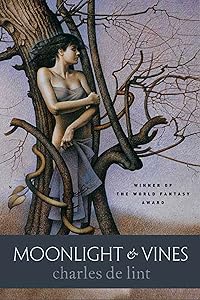
Familiar to Charles de Lint's ever-growing audience as the setting of the novels Memory & Dream, Trader, and Someplace To Be Flying, Newford is the quintessential North American city, tough and streetwise on the surface and rich with hidden magic for those who can see.Now de Lint returns to this extraordinary city for a third volume of short stories set there, including several never before published in book form. Here is enchantment under a streetlamp: the landscape of urban North America show more as only Charles de Lint can show it. "Blending Lovecraft's imagery, Dunsany's poetry, Carroll's surrealism, and Alice Hoffman's small-town strangeness," wrote Interzone on Dreams Underfoot, de Lint's Newford tales are "a haunting mixture of human warmth and cold inevitability, of lessons learned and prices to be paid."
At the Publisher's request, this title is being sold without Digital Rights Management Software (DRM) applied.
. show less
Tags
Recommendations












Member Reviews
These stories with their often grim urban setting folded lightly with a whip of fantasy do bear up under repeated readings. Charles de Lint can almost make one feel that even when all real hope is gone, say after death, a step in a positive direction is still possible.
A remarkable collection of stories by this master and leader in the urban fantasy genre. This book is my first set of de Lint's short stories and I was suitably impressed. Several of them delve into the lives of the gay and lesbian culture in Newford, several of the main characters repeat (such as Jilly), and the final short story seems a bit, um, autobiographical? Maybe? Maybe that's one of his gifts to us, his fans, to reveal a little bit about what makes Charles de Lint who he is. And if so, thank you.
There is such a range of characters here: artists, journalists, musicians, and guns for hire. And such an exploration of the magic that is in our world if we only look at it: the amoral Fae, the gift of death, the afterlife, and small show more people who only want to receive the gift that will release them from their burden. Each story in its own way, however brief, brings every day closer to magic. Let us take that as a sign. show less
There is such a range of characters here: artists, journalists, musicians, and guns for hire. And such an exploration of the magic that is in our world if we only look at it: the amoral Fae, the gift of death, the afterlife, and small show more people who only want to receive the gift that will release them from their burden. Each story in its own way, however brief, brings every day closer to magic. Let us take that as a sign. show less
This collection of short stories by Charles de Lint had stories of somewhat uneven quality. Perhaps, since I've read so much de Lint (and this was a second read of this volume for me) I've simply come to hold him to a higher standard. The short story "Held Safe by Moonlight and Vines," from which the book takes its title, is one of my favorites, and I enjoyed several of the others, particularly in the second half of the book, but I felt that a few were not as strong as I've come to expect from de Lint. Overall, a good read. The worst de Lint is still better than most of what's out there; he's an amazing writer.
The grimness is relentless. Although happy endings are the rule rather than the exception – or at least optimistic ones – almost every single character either is going through hell or has gone through hell. It’s nothing new with this book that the number of happy childhoods among his characters can be counted on one hand. (One character did have a happy childhood – but then her entire family was murdered when she was twelve. Another who enjoyed her childhood was made to feel guilty about it because she was such a minority.) The number of characters who were molested or beaten as children is too high to keep track of without an abacus. And a great many stories are written in the first person, which can intensify the show more grimness.
Also, I hesitate to say it in this age of rampant Political Correctness, but I’m not entirely happy that a very great many of characters in this collection specifically, and in his writing in general, are lesbian. (*insert Seinfeld quote here*) I feel like I have to defend the fact that I’m a little tired of it, but I refuse to, except to say that it’s kind of the same thing as if he had a great many characters who were … oh, any given demographic. If the same number of characters were bartenders or Tibetan monks I might start getting annoyed. In this case, to be honest, my feeling after the umpteenth story featuring a lesbian stripper or a lesbian dominatrix (about which world I had NO interest, and I would have skipped the story had I known – I hated that one for several reasons, and that aspect was a big one. And it was just a weak story) or a woman who “doesn’t think she waltzes, but would rather like to try” … was that if I wanted to read about sapphic relationships I’d go to the gay and lesbian section of Barnes and Noble and shop. (Or, you know, go wander through slash fanfic online. No, wait, that would just make me open a vein.) Where was I before that sea of parentheses? (“To take arms against a sea of parentheses, and by closing end them…” Hee!) Oh. Right. Either grim or gay, or, often, both.
Not to belabor it, but the population of women who start off in their stories straight and end up in bed with another woman was still growing when I put the book down. Seriously? Sir? Fantasize on your own time, if that’s what this is all about. It’s getting old.
Also, while the stories are never less than beautifully written, this lot just doesn’t satisfy for some reason. The end of the ghost story “In the Pines” was … silly, which was a true shame as that would otherwise be my favorite story among what I’ve read (“strollops”!). “Saskia” … I don’t know. Find a flesh and blood girl, man. “The Big Sky” also failed a bit in the end, to me, and I just didn’t enjoy the tenor of it; “Birds” had some really nice moments but the premise seemed too … something, or not enough something, and, yet again, I was a little annoyed by the ending; “Moonlight and Vines” had a bit of a pat ending (and did the boy in the story, who could have been a great character, really have to fondle himself quite so often?); “Shining Nowhere but in the Dark” had some great moments, but … well. “If I Close My Eyes Forever” was the S&M story (consider yourself warned); “Passing” was another “hey! I like the girls!” (to paraphrase Tara Maclay) story.
I think one thing that threads all through De Lint’s writing is what bugged the heck out of me about Edward Eager’s Magic or Not? – pick one! I much prefer something like the stories of the Crow Girls, or Bones, etc., where the magic is undeniable, even if some characters choose to continue to deny it. That was yet another reason I was put off by “Shining Nowhere”, and “Passing” too for that matter – the characters’ decisions in the end to accept the magic made them somehow weaker, in my eyes, not stronger. In a review out in the ‘verse (I really need to start making a note of where I find these things) someone pointed out that a sort of theme of these stories is “first encounters with magic”; it’s a theme of a lot of his work. It’s another groove that became a little well-worn here: “Either I’m losing my mind or something weird is going on.”
Taken individually, encountered in the original anthologies most of them were first published in, they might have been the gems I talked about last time I wrote a De Lint-centered post. But I don’t know. Taken en masse, these exemplify the reasons my first reaction to short stories is reluctance. It’s like a box of chocolates from a store that caters to a thoroughly foreign culture: you really, really never know what you’re going to get. The next thing you bite into might be a peanut butter cup or an English toffee (I wonder if I can still quote the X-Files version of “life is like a box of chocolates”?), or a chocolate-covered palm weevil grub or chili pepper. Someone, somewhere might like it, but I, emphatically, do not.
This isn’t going to be one of the books I don’t finish; it’ll hang out by my bed and I’ll probably read another story here and there. But I’m taking a break. show less
Also, I hesitate to say it in this age of rampant Political Correctness, but I’m not entirely happy that a very great many of characters in this collection specifically, and in his writing in general, are lesbian. (*insert Seinfeld quote here*) I feel like I have to defend the fact that I’m a little tired of it, but I refuse to, except to say that it’s kind of the same thing as if he had a great many characters who were … oh, any given demographic. If the same number of characters were bartenders or Tibetan monks I might start getting annoyed. In this case, to be honest, my feeling after the umpteenth story featuring a lesbian stripper or a lesbian dominatrix (about which world I had NO interest, and I would have skipped the story had I known – I hated that one for several reasons, and that aspect was a big one. And it was just a weak story) or a woman who “doesn’t think she waltzes, but would rather like to try” … was that if I wanted to read about sapphic relationships I’d go to the gay and lesbian section of Barnes and Noble and shop. (Or, you know, go wander through slash fanfic online. No, wait, that would just make me open a vein.) Where was I before that sea of parentheses? (“To take arms against a sea of parentheses, and by closing end them…” Hee!) Oh. Right. Either grim or gay, or, often, both.
Not to belabor it, but the population of women who start off in their stories straight and end up in bed with another woman was still growing when I put the book down. Seriously? Sir? Fantasize on your own time, if that’s what this is all about. It’s getting old.
Also, while the stories are never less than beautifully written, this lot just doesn’t satisfy for some reason. The end of the ghost story “In the Pines” was … silly, which was a true shame as that would otherwise be my favorite story among what I’ve read (“strollops”!). “Saskia” … I don’t know. Find a flesh and blood girl, man. “The Big Sky” also failed a bit in the end, to me, and I just didn’t enjoy the tenor of it; “Birds” had some really nice moments but the premise seemed too … something, or not enough something, and, yet again, I was a little annoyed by the ending; “Moonlight and Vines” had a bit of a pat ending (and did the boy in the story, who could have been a great character, really have to fondle himself quite so often?); “Shining Nowhere but in the Dark” had some great moments, but … well. “If I Close My Eyes Forever” was the S&M story (consider yourself warned); “Passing” was another “hey! I like the girls!” (to paraphrase Tara Maclay) story.
I think one thing that threads all through De Lint’s writing is what bugged the heck out of me about Edward Eager’s Magic or Not? – pick one! I much prefer something like the stories of the Crow Girls, or Bones, etc., where the magic is undeniable, even if some characters choose to continue to deny it. That was yet another reason I was put off by “Shining Nowhere”, and “Passing” too for that matter – the characters’ decisions in the end to accept the magic made them somehow weaker, in my eyes, not stronger. In a review out in the ‘verse (I really need to start making a note of where I find these things) someone pointed out that a sort of theme of these stories is “first encounters with magic”; it’s a theme of a lot of his work. It’s another groove that became a little well-worn here: “Either I’m losing my mind or something weird is going on.”
Taken individually, encountered in the original anthologies most of them were first published in, they might have been the gems I talked about last time I wrote a De Lint-centered post. But I don’t know. Taken en masse, these exemplify the reasons my first reaction to short stories is reluctance. It’s like a box of chocolates from a store that caters to a thoroughly foreign culture: you really, really never know what you’re going to get. The next thing you bite into might be a peanut butter cup or an English toffee (I wonder if I can still quote the X-Files version of “life is like a box of chocolates”?), or a chocolate-covered palm weevil grub or chili pepper. Someone, somewhere might like it, but I, emphatically, do not.
This isn’t going to be one of the books I don’t finish; it’ll hang out by my bed and I’ll probably read another story here and there. But I’m taking a break. show less
I don't know if you do this or not, but sometimes seeing all the books I have yet to read and long to read again (who's lucky enough to have the time for that?) the only thing that comforts me is to get up and run my fingers along the bookcase. As passionate book lovers, we can't possibly read everything we want to, but sometimes knowing it just exists is enough.
Tonight I pulled my Charles de Lint books down off the shelf and experienced the giddiness I first felt upon discovering his wonderful work years ago.
All of his writing is heartfelt, magical and Mr. de Lint is so in tune with the human spirit he seems both masculine and feminine. His Newford stories, in particular, touch the soul. After his novel Memory and Dream (I can't show more possibly sing its praises enough) Moonlight & Vines is my next favorite of his.
This is the kind of fiction that makes you wish it were real and the characters inside your very best friends. show less
Tonight I pulled my Charles de Lint books down off the shelf and experienced the giddiness I first felt upon discovering his wonderful work years ago.
All of his writing is heartfelt, magical and Mr. de Lint is so in tune with the human spirit he seems both masculine and feminine. His Newford stories, in particular, touch the soul. After his novel Memory and Dream (I can't show more possibly sing its praises enough) Moonlight & Vines is my next favorite of his.
This is the kind of fiction that makes you wish it were real and the characters inside your very best friends. show less
De Lint's short story collections always feel like good visits with old friends and new. Urban fantasy for thinking readers who want a bit more depth than the latest ab-worthy cover model vs. [insert monster here].
every now and then when i winnow out my collection (a hard and bloody process) i consider getting rid of this or some of my other de lint and then i re-read "crow girls" and i change my mind. de lint writes with such love and sympathy for his characters -- it isn't that he doesn't allow bad things to happen to them, he does, but they happen because they have to, not because de lint is forcing the character through a mangle in order to make a compelling or striking story. he evokes a very real, very emotional reaction from his readers -- either that, or you don't care for him because the characters and the setting don't speak to you.
Members
- Recently Added By
Author Information

196+ Works 43,502 Members
Charles de Lint, an extraordinarily prolific writer of fantasy works, was born in the Netherlands in 1951. Due to his father's work as a surveyor, the family lived in many different places, including Canada, Turkey, and Lebanon. De Lint was influenced by many writers in the areas of mythology, folklore, and science fiction. De Lint originally show more wanted to play Celtic music. He only began to write seriously to provide an artist friend with stories to illustrate. The combination of the success of his work, The Fane of the Grey Rose (which he later developed into the novel The Harp of the Grey Rose), the loss of his job in a record store, and the support of his wife, Mary Ann, helped encourage de Lint to pursue writing fulltime. After selling three novels in one year, his career soared and he has become a most successful fantasy writer. De Lint's works include novels, novellas, short stories, chapbooks, and verse. He also publishes under the pseudonyms Wendelessen, Henri Cuiscard, and Jan Penalurick. He has received many awards, including the 2000 World Fantasy Award for Best Collection for Moonlight and Vines, the Ontario Library Association's White Pine Award, as well as the Great Lakes Great Books Award for his young adult novel The Blue Girl. His novel Widdershins won first place, Amazon.com Editors' Picks: Top 10 Science Fiction & Fantasy Books of 2006. In 1988 he won Canadian SF/Fantasy Award, the Casper, now known as the Aurora for his novel Jack, the Giant Killer. Also, de Lint has been a judge for the Nebula Award, the World Fantasy Award, the Theodore Sturgeon Award and the Bram Stoker Award. (Bowker Author Biography) show less
Some Editions
Awards and Honors
Awards
Series

Work Relationships
Is contained in
Contains
Common Knowledge
- Canonical title
- Moonlight and Vines
- Original title
- Moonlight and Vines
- Original publication date
- 1999
- People/Characters
- Saskia Madding; Christy Riddell; Jilly Coppercorn; Geordie Riddell
- Important places
- Newford (fictitious city)
- Original language
- English
Classifications
Statistics
- Members
- 1,175
- Popularity
- 21,408
- Reviews
- 13
- Rating
- (4.03)
- Languages
- English
- Media
- Paper, Ebook
- ISBNs
- 6
- ASINs
- 2