
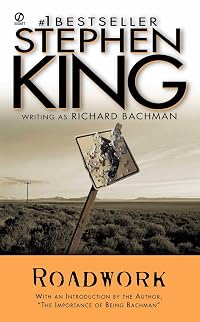
Roadwork
by Stephen King
On This Page
Description
What happens when one good-and-angry man fights back is murder—and then some…. Bart Dawes is standing in the way of progress. A new highway extension is being built right over the laundry plant where he works—and right over his home. The house he has lived in for twenty years…where he has made love with his wife…played with his son…. But before the city paves over that part of Dawes’ life, he’s got one more party to throw—and it’ll be a blast…. With an Introduction by show more the Author, “The Importance of Being Bachman” show lessTags
Recommendations














Member Reviews
In my rereading of King's work, this, along with Eyes of the Dragon and The Tommyknockers, was one of the novels I was kind of dreading, because, though I remembered very little of the novel, I distinctly remember being somewhat bored with it and flat out not liking it much.
Yeah, well, that was the young me. The unmarried me. The me that hadn't been a father. The me that had been too young to, on occasion, look back on his life and wonder what it all meant.
This time, this novel resonated quite strongly with me. Yes, it's a touch dated now, but that current of despair, that feeling that the world is moving too fast, that it's moving on, that everything is in a slow decline...all of that resonates with my feeling for the world right now, show more forty-two years after the events detailed in the novel.
Don Henley has a line that, I think, describes Bart Dawes perfectly. In his song, New York Minute he sings
He had a home
The love of a girl
But men get lost sometimes
As years unfurl
One day he crossed some line
And he was too much in this world
That despair of knowing too much, of seeing the rot and sickness that everyone else seems either too blind to see, or simply refuse to acknowledge, that, to me, is Bart Dawes.
Goddamn. King, you did it again. You made me hurt for a fictional character. show less
Yeah, well, that was the young me. The unmarried me. The me that hadn't been a father. The me that had been too young to, on occasion, look back on his life and wonder what it all meant.
This time, this novel resonated quite strongly with me. Yes, it's a touch dated now, but that current of despair, that feeling that the world is moving too fast, that it's moving on, that everything is in a slow decline...all of that resonates with my feeling for the world right now, show more forty-two years after the events detailed in the novel.
Don Henley has a line that, I think, describes Bart Dawes perfectly. In his song, New York Minute he sings
He had a home
The love of a girl
But men get lost sometimes
As years unfurl
One day he crossed some line
And he was too much in this world
That despair of knowing too much, of seeing the rot and sickness that everyone else seems either too blind to see, or simply refuse to acknowledge, that, to me, is Bart Dawes.
Goddamn. King, you did it again. You made me hurt for a fictional character. show less
Stephen King hat wohl mal behauptet, dass „Sprengstoff“ nicht zu seinen guten Büchern gehören würde. Dem kann ich so nicht ganz zustimmen. Für mich war die Geschichte extrem fesselnd und an Stellen von so einer Traurigkeit und Hoffnungslosigkeit durchzogen, dass es mir fast das Herz brach. Dabei nimmt King Bachman den Leser mit auf eine Reise in die Psyche eines Mannes, der nach einem traumatischen Erlebnis (der Tod seines Sohnes Charlie) auf einen Abgrund zusteuert, dem er, und das weiß man relativ schnell, nicht ausweichen kann. Man steht hilflos neben Dawes, der mit der Irrationalität seines Handelns und der Extreme seiner Gedanken in manchen Momenten einfach nur beängstigend ist. Man reiht sich ein in die Riege seiner show more Mitmenschen, die genauso hilflos und ratlos daneben stehen. Die nicht zu ihm durchdringen können und irgendwann aus reinem Selbstschutz den Rückzug antreten. Wer mit psychisch kranken Menschen im engeren Umfeld mal zu tun hatte, weiß, welcher Spagat das ist und welche Auswirkungen es auf einen selbst hat. Dabei kann man es besonders Dawes‘ Frau Mary nicht vorwerfen, dass sie irgendwann geht. Wenn man dabei noch die Zeit betrachtet, in der das Buch handelt (1973), als die Rolle der Frau sich zwar gerade im Umbruch befand aber dieser Umbruch gerade für verheiratete Frauen Ende 30 nicht so leicht war, dann bekommt alles eine stärkere Bedeutung. Sicherlich stellt Dawes dabei seine Frau als jemanden hin, der unecht und unehrlich nur so dahin driftet. Aber seine Sicht auf die Dinge ist extrem verzerrt und Mary sagt in einem Gespräch auch etwas, das besonders mich als Frau angesprochen hat, nämlich dass sie damals, als sie schwanger wurde, sich für die Vernunft entschieden hatte und dabei sich selbst zurückgestellt hat Das ist etwas, das mich an King fasziniert. Er schreibt Figuren, die einfach echt sind, auch wenn man ihre Handlungen teilweise kopfschüttelnd beobachtet und nicht nachvollziehen kann. Trotzdem wirken seine Figuren wie echte Menschen und das bringt seinen Büchern meiner Meinung nach immer ein gewisses Gewicht bei. Dawes‘ Abstieg ist endgültig. Man weiß, dass es kein Happy End geben wird und auch nicht geben kann. Die Menschen um ihn herum dringen nicht zu ihm durch und auf mich wirkt er wie jemand, der schon lange den Entschluss gefasst hat, dass es aus ist. Der Verlust seiner Arbeit (selbst verantwortet im übrigen) und der bevorstehende Abriss seines Hauses sind nur weitere Katalysatoren. Ich denke, die Entscheidung ist schon gefallen, als Charlie starb und Dawes und Mary unterschiedliche Wege gingen, um mit diesem Verlust fertig zu werden. Nicht über ihren Sohn zu reden hatten aber beide gemein. Das Ganze kombiniert damit, dass er 40 ist, die besten Jahre seines Lebens hinter sich hat (meint er), die Welt sich um ihn in einem Tempo weiterbewegt, mit dem er nicht mehr Schritt halten kann und die natürliche Angst des Menschen vor Veränderung, sind nur weitere Tropfen ins Fass, das eh schon kurz vorm Überlaufen ist.
Fazit
Ein starkes Buch, das den Leser mitnimmt und trotzdem nur beobachten lässt. Das es dem Leser ermöglicht, emotional investiert zu sein oder auch nur kopfschüttelnd daneben zu stehen. Dass King meint, es sei nicht sein bestes Werk, schön und gut. Ich persönlich fand es gut. Hätte ich es als Teenager gelesen, hätte es mir wahrscheinlich nicht gefallen. Aber jetzt, da ich selbst in Dawes‘ Alter bin und das Leben mir genau wie ihm bestimmte Steine in den Weg geworfen hat, sehe ich das Buch wohl mit anderen Augen als ich es früher hätte sehen können. show less
Fazit
Ein starkes Buch, das den Leser mitnimmt und trotzdem nur beobachten lässt. Das es dem Leser ermöglicht, emotional investiert zu sein oder auch nur kopfschüttelnd daneben zu stehen. Dass King meint, es sei nicht sein bestes Werk, schön und gut. Ich persönlich fand es gut. Hätte ich es als Teenager gelesen, hätte es mir wahrscheinlich nicht gefallen. Aber jetzt, da ich selbst in Dawes‘ Alter bin und das Leben mir genau wie ihm bestimmte Steine in den Weg geworfen hat, sehe ich das Buch wohl mit anderen Augen als ich es früher hätte sehen können. show less
In the early 1970s, during the height of the energy crisis, the government decides to extend a highway through an unnamed Midwestern city, claiming the right of Eminent Domain. Many homes will be torn down, businesses closed, people left hunting for jobs. And right in the thick of things is Barton George Dawes, tasked with trying to find both a new house for he and his wife and a new building for his company, an industrial laundry. But nothing goes smoothly for Bart, and the pressures to start over in a new place, the government's stepping in to take away what's his, and the too-soon death of his son to a brain tumor subtly start to take their toll on his psyche. He buys two guns, not sure what he plans on doing with them, but almost show more instinctually, he starts down a path pitting him against the new highway extension and the government and potentially destroying his once happy marriage.
"Roadwork" is a slow-paced story, with a surprisingly likable anti-hero. When Bart first made his appearance, his purchasing the guns is fairly innocuous -- a man walking into a gun shop to buy something for his brother, an amateur hunter. But I could tell something was off kilter with him, something not quite definable but it made me want to continue reading, to find out what exactly he has in mind when he buys the guns. I empathized with him as he struggled with the impending loss of his home and his job, with his trying to come to grips with his son's death. He also acted honorably when picking up a female hitchhiker, offering her enough money to get to Las Vegas and declining her offers to sleep with him for it. I found myself liking him more and more so that, by the time I understood just what he had planned -- even knowing the potential outcomes -- I was cheering for him.
For anyone who's never read anything by King because the horror factor keeps you away, this is a good novel to ease you into his work. show less
"Roadwork" is a slow-paced story, with a surprisingly likable anti-hero. When Bart first made his appearance, his purchasing the guns is fairly innocuous -- a man walking into a gun shop to buy something for his brother, an amateur hunter. But I could tell something was off kilter with him, something not quite definable but it made me want to continue reading, to find out what exactly he has in mind when he buys the guns. I empathized with him as he struggled with the impending loss of his home and his job, with his trying to come to grips with his son's death. He also acted honorably when picking up a female hitchhiker, offering her enough money to get to Las Vegas and declining her offers to sleep with him for it. I found myself liking him more and more so that, by the time I understood just what he had planned -- even knowing the potential outcomes -- I was cheering for him.
For anyone who's never read anything by King because the horror factor keeps you away, this is a good novel to ease you into his work. show less
Roadwork is one of Bachman's books. Never been big on this alter ego of King. Richard or Dick just writes King but not as good. I'm well aware Bachman was a long-term idea and exists as a person who isn't King to King. So I'm not alone in believing he's a different person. Often Bachman is even regarded as a person who wrote these stories and King as an editor or such.
Roadwork is a crawl. It drags on and on. We're traversing months with our main character who talks to a "Fred" who doesn't exist and "Fred" talks back to George. George is a bit hard to catch, as the whole book we have Barton George Dawes being called Bart. But in his head he talks to Fred. It is revealed somewhere, very briefly, that Fred is the middle name of his dead show more son, Charlie. So during this book he is having talks about guns and violence with his dead son. This often gets confusing because he calls other people Fred and often slips and says his reply to his son out loud, and to other people as well.
These very confusing things aside, Roadwork is one of the least scary books to come from a horror writer. Barton spends his whole remaining life in the book refusing to surrender his house. Not only does everyone else move on and handle fine, or pack, but he puts a home over his marriage, his job, his friendships. Everything is less sacred to Barton than his memories of his son which he could still very likely pack up. These memories are even in the final scenes, things like his wife's favorite paintings and pictures are still up, Charlie's stuff remains. It's clear he had mementos he could have carried with him.
He is entrenched in these memories and past that he discusses atrocities with Charlie, a child still in his mind. He locks everyone out. He refuses help. He allows himself to disintegrate to many depths. When his wife leaves for a bit, that seems to barely affect him. He sleeps with a woman he takes home named Olivia and then spends the aftermath regarding how she is tighter and nicer feeling than Mary, his wife. He feels no remorse and instead jerks off regularly.
Each page is a repeating cycle. People try to help him and he shoves them away. His wife asks are they divorcing and he dodges her. She suggests therapy, but he lies and dodges her attempts to help. He begins doing illegal purchases, he dabbles in deals with the mob. He destroys equipment. Barton is far too old for this, but he's long gone.
By the end, Charlie is the only reason he doesn't kill people with guns, and he would if Charlie's hallucinated words weren't in his head saying don't. Barton has thrown it all away, love, family, and friends, and in the end, he pulls the trigger on himself.
I'm well aware that this book was King struggling with his mother's cancer, but the ending sure makes it feel as if this was an allegory for grief and struggling, the only way to not feel bad is to just not be. In many ways Roadwork is about shutting everyone away and dying. How King survived what really reads as a suicidal idealization mixed with no cure or fix and refusing medicine isn't the usual King message. Bachman's books often feel like their messages aren't in the right place.
Furthermore, hitting this point for me. The post-death moments of Barton George Dawes... Everyone moves on, nobody really remembers the incident, his last moments. His interview. Life goes on without him. But to really nail that coffin too tightly to escape, Barton's death was meaningless. The roadwork was found to be unnecessary. He could have kept his home, his wife, his friends, all of it. His descent into madness due to the roadwork was entirely avoidable.
Maybe had he done any other way it wouldn't have happened.
Barton/George did everything to himself and pushed everyone away to bury himself in a hole that he didn't even need to bunker down in.
Roadwork is depressingly pointless. Nobody really dies but off screen people, and our main POV. At the end of the book I found myself wondering if anything had really happened. Had Barton even existed, because in the lives of everyone but Mary, it really feels like he didn't at all.
And everything could have been handled if therapy or intervention had been performed. show less
Roadwork is a crawl. It drags on and on. We're traversing months with our main character who talks to a "Fred" who doesn't exist and "Fred" talks back to George. George is a bit hard to catch, as the whole book we have Barton George Dawes being called Bart. But in his head he talks to Fred. It is revealed somewhere, very briefly, that Fred is the middle name of his dead show more son, Charlie. So during this book he is having talks about guns and violence with his dead son. This often gets confusing because he calls other people Fred and often slips and says his reply to his son out loud, and to other people as well.
These very confusing things aside, Roadwork is one of the least scary books to come from a horror writer. Barton spends his whole remaining life in the book refusing to surrender his house. Not only does everyone else move on and handle fine, or pack, but he puts a home over his marriage, his job, his friendships. Everything is less sacred to Barton than his memories of his son which he could still very likely pack up. These memories are even in the final scenes, things like his wife's favorite paintings and pictures are still up, Charlie's stuff remains. It's clear he had mementos he could have carried with him.
He is entrenched in these memories and past that he discusses atrocities with Charlie, a child still in his mind. He locks everyone out. He refuses help. He allows himself to disintegrate to many depths. When his wife leaves for a bit, that seems to barely affect him. He sleeps with a woman he takes home named Olivia and then spends the aftermath regarding how she is tighter and nicer feeling than Mary, his wife. He feels no remorse and instead jerks off regularly.
Each page is a repeating cycle. People try to help him and he shoves them away. His wife asks are they divorcing and he dodges her. She suggests therapy, but he lies and dodges her attempts to help. He begins doing illegal purchases, he dabbles in deals with the mob. He destroys equipment. Barton is far too old for this, but he's long gone.
By the end, Charlie is the only reason he doesn't kill people with guns, and he would if Charlie's hallucinated words weren't in his head saying don't. Barton has thrown it all away, love, family, and friends, and in the end, he pulls the trigger on himself.
I'm well aware that this book was King struggling with his mother's cancer, but the ending sure makes it feel as if this was an allegory for grief and struggling, the only way to not feel bad is to just not be. In many ways Roadwork is about shutting everyone away and dying. How King survived what really reads as a suicidal idealization mixed with no cure or fix and refusing medicine isn't the usual King message. Bachman's books often feel like their messages aren't in the right place.
Furthermore, hitting this point for me. The post-death moments of Barton George Dawes... Everyone moves on, nobody really remembers the incident, his last moments. His interview. Life goes on without him. But to really nail that coffin too tightly to escape, Barton's death was meaningless. The roadwork was found to be unnecessary. He could have kept his home, his wife, his friends, all of it. His descent into madness due to the roadwork was entirely avoidable.
Maybe had he done any other way it wouldn't have happened.
Barton/George did everything to himself and pushed everyone away to bury himself in a hole that he didn't even need to bunker down in.
Roadwork is depressingly pointless. Nobody really dies but off screen people, and our main POV. At the end of the book I found myself wondering if anything had really happened. Had Barton even existed, because in the lives of everyone but Mary, it really feels like he didn't at all.
And everything could have been handled if therapy or intervention had been performed. show less
Roadwork is one of the scariest books Stephen King--originally using the Richard Bachman pseudonym--has ever written. It's unlike the vast majority of his work in that there is not a single monster, no aliens, nothing supernatural to make it so. Rather, the fear felt by the reader comes from the acute psychological discomfort of watching a formerly complacent and successful middle manager methodically lose his mind in the face of impending, inevitable change.
The story opens with Bart Dawes, manager of a large commercial laundry outfit, purchasing some guns. As he does so, we are privy to the violent and disturbing conversation he's having inside his head. As is so often the case with Stephen King, who has no qualms about telegraphing show more the end early on, we know that this one is going to end badly, almost certainly with a bang. What we don't know is how moved we will be by that time, having become attached to this pathetic wretch of a man who can't come to terms with the ineluctable march of progress.
The change Bart Dawes is grappling with is a freeway connector which is to be built through his town. Not only is the laundry he manages to be torn down to make way, but his own home is scheduled for the wrecking ball, as well. Bart knows that what's coming will come, yet rather than accept things and move on he refuses. At no point does he ever seem to believe that his refusal will halt the process, yet still, he will not make a move. And as he digs in at home and at work (where he's supposed to be closing the deal on a new facility), in the back of his mind violence is bubbling.
Roadwork is sad and disturbing, and if King's introduction ("The Importance of Being Bachman") is to be believed, could only have come from the rainy day pen of his alter-ego. show less
The story opens with Bart Dawes, manager of a large commercial laundry outfit, purchasing some guns. As he does so, we are privy to the violent and disturbing conversation he's having inside his head. As is so often the case with Stephen King, who has no qualms about telegraphing show more the end early on, we know that this one is going to end badly, almost certainly with a bang. What we don't know is how moved we will be by that time, having become attached to this pathetic wretch of a man who can't come to terms with the ineluctable march of progress.
The change Bart Dawes is grappling with is a freeway connector which is to be built through his town. Not only is the laundry he manages to be torn down to make way, but his own home is scheduled for the wrecking ball, as well. Bart knows that what's coming will come, yet rather than accept things and move on he refuses. At no point does he ever seem to believe that his refusal will halt the process, yet still, he will not make a move. And as he digs in at home and at work (where he's supposed to be closing the deal on a new facility), in the back of his mind violence is bubbling.
Roadwork is sad and disturbing, and if King's introduction ("The Importance of Being Bachman") is to be believed, could only have come from the rainy day pen of his alter-ego. show less
Well then. As much as it pains me to do this, I calls 'em like I sees 'em, and this was an effort in futility on just about all fronts.
Now I know, I know, the Bachman books are depressing and dark and bleak and grim. I know all that. I expected it, and was even looking forward to it. But this... This was almost painfully tedious to get through. It was so pointless. So futile.
I've read all of the Bachman books, and they've all been dark and grim and whatnot... but they've all had a point. I didn't feel like the same could be said about Roadwork. Maybe I missed it, but it seems to me that this is a story about a man who stubbornly, stupidly, and blindly refuses change, and determines to stick it out to the bloody end. He gives not a show more single thought to anyone else he might hurt, like his wife, or his employees, or innocent bystanders, or police officers simply doing their jobs.
No. Why think about them? Fuck them. He ain't leaving his house. He don't wanna. They ain't gonna make him. Right, Fred? Right, George.
So there.
Excuse me while I go bash my face into a brick wall so I can better empathize with Bart Dawes.
One last thing. The audio reader for this book was... just... really bad. Dawes was OK, but every other character sounded like they should have been a cartoon. Mr. Ordner, the boss, would have been one of those big burly bulldogs in a 3 piece suit with a smoldering cigar in one hand and a drink in the other. Mr. Magliore would be a fatcat Get It Man, whose right hand man would be a lanky tomcat with big ears, sharp claws, and showing ribs. Mary Dawes would be a whiny, foofy poodle.
This is how I saw these characters while listening to this guy read.
It did not help my enjoyment of the story. show less
Now I know, I know, the Bachman books are depressing and dark and bleak and grim. I know all that. I expected it, and was even looking forward to it. But this... This was almost painfully tedious to get through. It was so pointless. So futile.
I've read all of the Bachman books, and they've all been dark and grim and whatnot... but they've all had a point. I didn't feel like the same could be said about Roadwork. Maybe I missed it, but it seems to me that this is a story about a man who stubbornly, stupidly, and blindly refuses change, and determines to stick it out to the bloody end. He gives not a show more single thought to anyone else he might hurt, like his wife, or his employees, or innocent bystanders, or police officers simply doing their jobs.
No. Why think about them? Fuck them. He ain't leaving his house. He don't wanna. They ain't gonna make him. Right, Fred? Right, George.
So there.
Excuse me while I go bash my face into a brick wall so I can better empathize with Bart Dawes.
One last thing. The audio reader for this book was... just... really bad. Dawes was OK, but every other character sounded like they should have been a cartoon. Mr. Ordner, the boss, would have been one of those big burly bulldogs in a 3 piece suit with a smoldering cigar in one hand and a drink in the other. Mr. Magliore would be a fatcat Get It Man, whose right hand man would be a lanky tomcat with big ears, sharp claws, and showing ribs. Mary Dawes would be a whiny, foofy poodle.
This is how I saw these characters while listening to this guy read.
It did not help my enjoyment of the story. show less
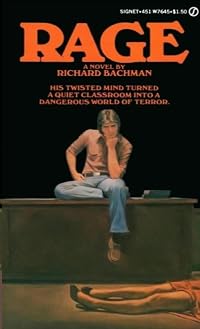
Every time I look at my list of Stephen King books I want to read, I whittle it down a little more and a little more. This one survived the stack, but I wish it didn't. Maybe because I liked the theme of it, like Rage and The Long Walk. Written around the same time too, and published under the Bachman pseudonym. Like Rage, there is nothing supernatural and it's about a guy getting his revenge Charles Bronson style. Or at least it was supposed to be.
From the beginning there is a promise that this is going to end in tremendous violence. In a one-man standoff against the government, standing up for what he believes in. The little guy who won't be pushed off his land, who won't be evicted from his memories in the face of progress. But it show more takes WAY too long to get there. And then it's only fifteen pages at the end. The part you came to see is buried under overwritten prose, Maine catechisms, and wool-gathering. The book is more about the main character toodling around while he doesn't make plans to evacuate his place of work and home in lieu of a new freeway they are building. Not to mention the content is outdated now (the energy crisis, making a big deal of buying a TV, laundry facilities).
The tension is so strung out by the end the climax sags like a Las Vegas showgirl's chest. The main character doesn't do anything but gripe and drink -- two Stephen King staples -- letting the time until 90,000 words are written expire. His wife leaves him, his friends abandon him. It brings up interesting issues, but I can recall at least two Star Trek episodes that dealt with this exact issue in a much more entertaining way. show less
From the beginning there is a promise that this is going to end in tremendous violence. In a one-man standoff against the government, standing up for what he believes in. The little guy who won't be pushed off his land, who won't be evicted from his memories in the face of progress. But it show more takes WAY too long to get there. And then it's only fifteen pages at the end. The part you came to see is buried under overwritten prose, Maine catechisms, and wool-gathering. The book is more about the main character toodling around while he doesn't make plans to evacuate his place of work and home in lieu of a new freeway they are building. Not to mention the content is outdated now (the energy crisis, making a big deal of buying a TV, laundry facilities).
The tension is so strung out by the end the climax sags like a Las Vegas showgirl's chest. The main character doesn't do anything but gripe and drink -- two Stephen King staples -- letting the time until 90,000 words are written expire. His wife leaves him, his friends abandon him. It brings up interesting issues, but I can recall at least two Star Trek episodes that dealt with this exact issue in a much more entertaining way. show less
Members
- Recently Added By
Lists

Stephen King Bibliography
77 works; 3 members

KING of Scare
48 works; 2 members

Eerie eTales
192 works; 3 members
Stephen King books
81 works; 1 member
Talk Discussions
Past Discussions
May 2010's SK Flavor of the Month - The Bachman Books, Roadwork and The Running Man in King's Dear Constant Readers (July 2010)
Author Information

966+ Works 867,771 Members
Stephen King was born in Portland, Maine, on September 21, 1947. After graduating with a Bachelor's degree in English from the University of Maine at Orono in 1970, he became a teacher. His spare time was spent writing short stories and novels. King's first novel would never have been published if not for his wife. She removed the first few show more chapters from the garbage after King had thrown them away in frustration. Three months later, he received a $2,500 advance from Doubleday Publishing for the book that went on to sell a modest 13,000 hardcover copies. That book, Carrie, was about a girl with telekinetic powers who is tormented by bullies at school. She uses her power, in turn, to torment and eventually destroy her mean-spirited classmates. When United Artists released the film version in 1976, it was a critical and commercial success. The paperback version of the book, released after the movie, went on to sell more than two-and-a-half million copies. Many of King's other horror novels have been adapted into movies, including The Shining, Firestarter, Pet Semetary, Cujo, Misery, The Stand, and The Tommyknockers. Under the pseudonym Richard Bachman, King has written the books The Running Man, The Regulators, Thinner, The Long Walk, Roadwork, Rage, and It. He is number 2 on the Hollywood Reporter's '25 Most Powerful Authors' 2016 list. King is one of the world's most successful writers, with more than 100 million copies of his works in print. Many of his books have been translated into foreign languages, and he writes new books at a rate of about one per year. In 2003, he received the National Book Foundation Medal for Distinguished Contribution to American Letters. In 2012 his title, The Wind Through the Keyhole made The New York Times Best Seller List. King's title's Mr. Mercedes and Revival made The New York Times Best Seller List in 2014. He won the Edgar Allan Poe Award in 2015 for Best Novel with Mr. Mercedes. King's title Finders Keepers made the New York Times bestseller list in 2015. Sleeping Beauties is his latest 2017 New York Times bestseller. (Bowker Author Biography) Stephen King is the author of more than thirty books, all of them worldwide bestsellers. Among his most recent are "Hearts in Atlantis", "The Girl Who Loved Tom Gordon", "Bag of Bones", & "The Green Mile". "On Writing" is his first book of nonfiction since "Danse Macabre", published in 1981. He served as a judge for Prize Stories: The Best of 1999, The O. Henry Awards. He lives in Bangor, Maine with his wife, novelist Tabitha King. King's book, The Bazaar of Bad Dreams: Stories, made the 2015 New York Times bestseller list. (Publisher Provided) show less
Some Editions
Awards and Honors
Distinctions
Series
Belongs to Publisher Series
Heyne Allgemeine Reihe (01/6762)
Work Relationships
Is contained in
Common Knowledge
- Canonical title
- Roadwork
- Original title
- Roadwork
- Original publication date
- 1981
- People/Characters
- Barton George Dawes
- Important places
- Stati Uniti d'America
- Epigraph*
- Ich weiß nicht warum, Sie wissen nicht warum.
Höchstwahrscheinlich weiß Gott es auch nicht.
Das ist Sache der Regierung.
Straßeninterview zum Vietnamkrieg, etwa 1967
Gestern Nacht Schlug der Regen an mein Fenster
Ich ging durch das dunkle Zimmer und glaubte im Licht der Straßenlampe
Den Geist unseres Jahrhunderts auf der Straße zu sehen
Der uns sagte, daß wir alle am Rande ... (show all)des Abgrunds stehen.
Al Steward - Dedication*
- Zur Erinnerung an Charlotte Littlefield
Sprüche 31, 10-28 - First words
- I don't know why.
- Quotations
- Are you going to tell me I hurt the corporation? I don't think even you are capable of such a lie. After a corporation gets to a certain size, nothing can hurt it. It gets to be an act of God. When things are good it makes a ... (show all)huge profit, and when times are bad it just makes a profit, and when things go to hell it takes a tax deduction.
- Last words
- (Click to show. Warning: May contain spoilers.)Then the shocked, tear-streaming face of Mary Dawes fills the screen; she is looking with drugged and horrified bewilderment of the forest of microphones being thrust into her face, and we have been brought safely back to human things once more.
- Original language
- English
- Canonical DDC/MDS
- 813.54
- Canonical LCC
- PS3561.I483
*Some information comes from Common Knowledge in other languages. Click "Edit" for more information.
Classifications
Statistics
- Members
- 2,235
- Popularity
- 8,983
- Reviews
- 31
- Rating
- (3.34)
- Languages
- 17 — Bulgarian, Czech, Danish, Dutch, English, Finnish, French, German, Hungarian, Italian, Japanese, Norwegian (Bokmål), Polish, Portuguese, Spanish, Swedish, Turkish
- Media
- Paper, Audiobook, Ebook
- ISBNs
- 80
- ASINs
- 15